News from the Middle East

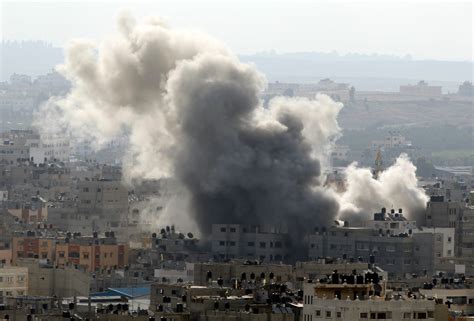
We are very fortunate to live comfortably here in Edinburgh with a lovely view of Arthur’s Seat. But I find the nightly news broadcasts from the Middle East harrowing. Especially the contributions of Jeremy Bowen and Fergal Keane to theNews at Ten. There was a heartbreaking piece the other night about a very small boy who had been pulled from the rubble in Gaza. Then the camera panned down to show that he had no feet. No lower legs. And a slightly older girl with a serene face, who might have been his sister. Her back injuries mean that she may never walk again.
God’s Promise to Abraham
God chose Abram. He called him from his home town of Ur in the Chaldees, and promised that he would go with him and bless him and turn his descendants into a great nation [Genesis 12]. More specifically God promised that God would give to Abram’s descendants”this land, from the river of Egypt to the great river the Euphrates” [Genesis 15:18] The promises is reiterated two chapters later: “… the whole land of Canaan, where you are now an alien, I will give as an everlasting possession to you and your descendants after you; I will be their God”. [Genesis 17] It is on the basis of this promise, and these verses in Genesis, that Israel, and their right-wing, American-Christian supporters, claim the Israelis’ inalienable right to possess the land of Palestine.
But it is not quite that simple. First, it is not clear to me that Abram was a Jew. He was born in Ur of the Chaldees, in northern Mesopotamia, and his ancestors were most probably moon-worshippers. Although Abram is acknowledged as a patriarchal figure in the three great monotheistic religions of the Middle East, he lived long before the exodus from Egypt and the giving of the Torah, which are generally regarded as the defining events in Jewish history.
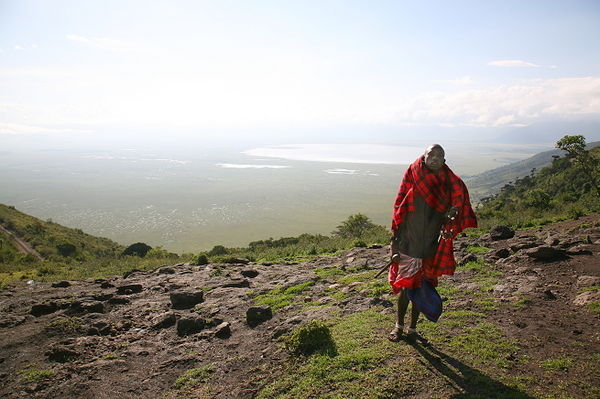
More relevantly Abram and his family lived a semi-nomadic life in the hill country of Palestine, moving with his flocks between Shechem, and Bethel, and Hebron. He didn’t actually own any land until his wife Sarah died. At which point he chose to purchase the cave in Hebron where Sarah was buried [Genesis 23]. The Biblical account underlines that he did not want to receive the burial cave as a gift; a formal contract was drawn up in the presence of witnesses for the purchase of Ephron’s field in Machpelah near Mamre [Genesis 23: 17-18].
Jacob’s sons left the land to settle in Egypt, escaping from a famine and under the protection of Joseph who has become an important official there. Generations later the Israelites return to the land, initially under the leadership of Moses, and complete the conquest of the land under his successor Joshua. The Biblical book of Joshua is unattractive reading. But Israeli politicians quote from it to support their claim to the West Bank. And the Israeli government made the book of Joshua, the story of the military occupation, compulsory reading in all schools.
In other words Palestine has not belonged to the Jews and their ancestors since time immemorial. The land had been a gift from God. Of which they took possession in a military campaign.
A conditional promise
When he gave the land to the Israelites under Joshua, God was fulfilling the promise made to Abraham several centuries earlier. In part because the inhabitants of the land were ‘abominable’, and because Canaan was a corrupt society with a degraded religion. [Leviticus 18: 24-27]
But God’s gift was conditional. If they were disobedient and turned their backs on him, he would punish them as severely as those who had gone before them. “”And if you defile the land, it will vomit you out as it vomited out the nations that were before you”. [Leviticus 18:28] God specifically warned them not to absorb the Canaanite culture: “when you enter the land the Lord your God is giving you, do not learn to imitate the detestable ways of the nations there”. [Deuteronomy 18:9]. [What Dennis Lennon used to call ‘the urge to merge’.] The children of Israel were not to assume that they had the right to live in the land for ever regardless of the way they lived; it would be possible for them to forfeit the land if they turned away from God. And this warning was emphasised at the dedication of Solomon’s Temple: “If you or your sons turn away from me and do not observe the commands and decrees that I have given you and go off to serve other gods … then I will cut off Israel from the land I have given them”. [[1 Kings 9: 6-7]
These were no idle threats. When the Assyrians invaded the northern kingdom of Israel in 721 BC and captured the capital Samaria, the people of Israel were sent into exile and scattered. An exile from which they never returned. A century later, when the Babylonian army captured Jerusalem in 597 BC, the people of Judah went into exile; the king was deported, the temple left in ruins. “By the rivers of Babylon we sat and wept when we remembered Zion …”. [Psalm 137] God was applying the sanctions which he had written into the covenant long ago. And although the exiles were later permitted to return by Cyrus, the Jews had no king and only a limited amount of land around Jerusalem. It was effectively the end of the independent state of [Judah and] Israel.
The Messiah and the Land
In Mary’s Song, the Magnificat, Mary declares that God is now fulfilling the promises made to Abraham and his descendants. [Luke 1: 54-55] Similarly, after the birth of John the Baptist, his father Zechariah praises God who has “raised up a horn of salvation for us … to remember his holy covenant, the oath he swore to our father Abraham” [Luke 1: 68-75] But Jesus himself had remarkably little to say about the land. In the Sermon on the Mount, Jesus, borrowing an expression from Psalm 37, declares: “blessed are the meek, for they will inherit the earth”. Apart from predicting the fall of Jerusalem and the destruction of the Temple [Mark 13], Jesus has nothing to say about the land. When in Matthew 8 Jesus enlarges on words from Psalm 107 and from Isaiah 43, he seems to be clearly referring to the end times, when men of all races from the north, south, east, and west, will all be gathered into the kingdom of God.
Where the book of Joshua describes the gradual conquest of the land starting from Jericho, the Acts of the Apostles describes the gradual spread of the Christian church outwards from Jerusalem to the rest of the Mediterranean world. The risen Jesus commands the disciples: “… you will be my witnesses in Jerusalem, and in all Judea and Samaria, and to the ends of the earth”. [Acts 1:8] They are to be a light to the Gentiles. Paul the great apostle to the Gentiles shows no interest in the land, which is totally absent from his letters. For Paul, political freedom for the Jewish people has nothing to do with the kingdom of God. The author of the Letter to the Hebrews makes clear that Abraham and his successors “were longing for a better country – a heavenly one”. [Hebrews 11:16] Once the New Testament writers had understood that God’s promises were fulfilled in Jesus, they ceased to look forward to a return to the land and a restored Jewish state.
Where now ?
Looking at the Bible can help us to see that ‘God’s land for God’s chosen people’ is a seductive slogan, but at best a misleading half-truth. But the Bible offers no clear way forwards.
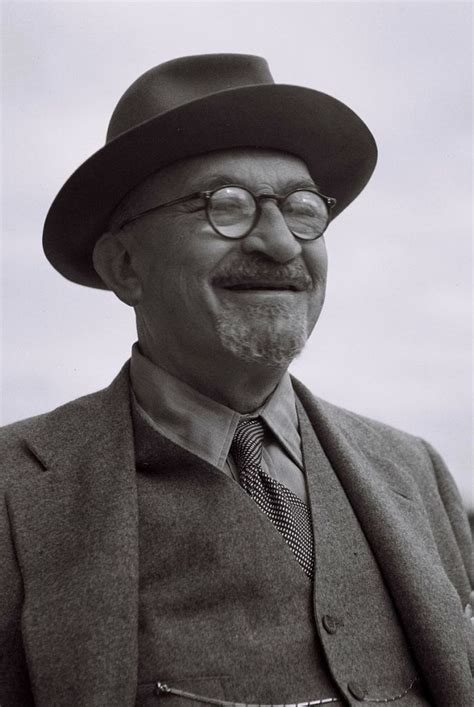
Chaim Weizmann, a Russian Jewish leader of the Zionist movement, who settled in Britain in 1904 and was one of the architects of the Balfour Declaration, was at pains to underline what he felt should be the inclusive nature of the future Jewish homeland:
“The Zionists are not demanding in Palestine monopolies or exclusive privileges … It always was and remains a cardinal principle of Zionism as a democratic movement that all races and sects in Palestine should enjoy full justice and liberty …
“ Palestine must be built up without violating the legitimate rights of the Arabs … not a hair of their heads shall be touched”.
As an ordained minister in the Church of England I can believe in many strange things. But I do not think that a democratic, federal state in which Israelis and Palestinians are equal under the law, are guaranteed religious freedom, and have equal voting rights is ever going to be realistic.
So we are back with a two-state solution, with the two states of Israel and Palestine existing side by side, as the least bad option. The problem is that no progress has been made since the talks brokered by John Kerry, the then Secretary of State, collapsed in 2014. And the [illegal] proliferation of Jewish settlers in the West Bank has made that solution even more difficult.

A two-state solution is anathema to Netanyahu and his right-wing allies. But he may not be in power for much longer. Mahmoud Abbas, the leader of the Palestinian Authority, is ineffectual and lacks credibility. He is 87, and, after being elected for a four-year term, has been in power for 19 years. His notional successor is in prison in Israel serving five life sentences for murder.
As Christians we need to go on praying for a ceasefire and an end to the fighting. But we need to pray too for the emergence of a new generation of leaders on both sides. Who will find the moral energy and the political will to work towards a two-state solution that will not involve acts of terrorism and the repeated killing of innocent women and children.
November 2023
 Through a glass darkly