60 years ago: the killing of President Kennedy
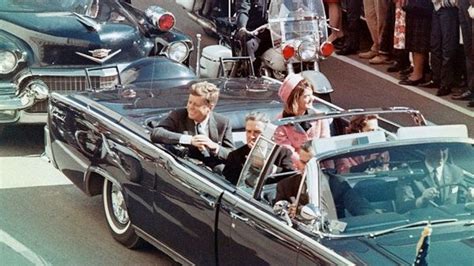
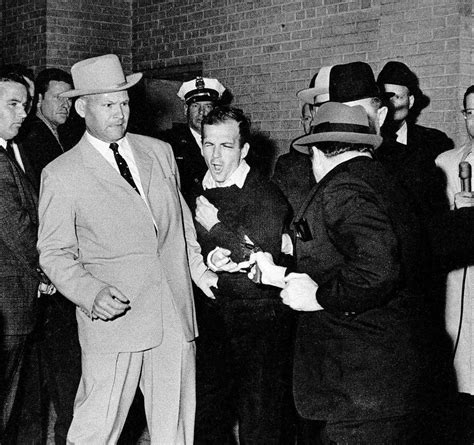
There was a programme on tv a few days ago about the shooting of President Kennedy. Which happened in Dallas, Texas, on November 22nd, 1963, exactly 60 years ago today. The official story is that Kennedy was shot by a lone gunman, Lee Harvey Oswald, a 24-year old former US Marine, firing from the Texas School Book Depository. Oswald had lived in both the Soviet Union and in Belarus, and had unclear links to Castro’s Cuba. An hour or two after the shooting of the President, Oswald, who had also shot a Dallas policeman, was arrested in a Dallas cinema showing the film War is Hell. Two days later Oswald was shot while in police custody by Jack Ruby, a local nightclub owner. Ruby died in prison in 1967 of a pulmonary embolism while awaiting retrial.
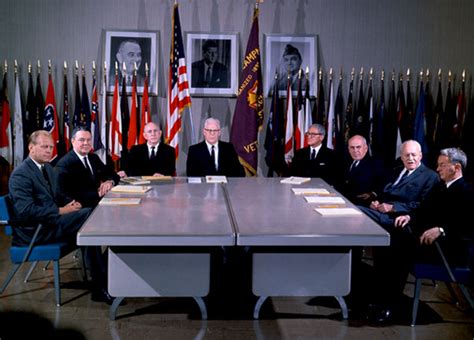
The killing of Kennedy was carefully investigated by the Warren Commission, set up by [President] Lyndon Johnson. The report ran to 888 pages with 26 volumes of supporting documents. The report concluded that there was no conspiracy; and that both Oswald and Ruby acted entirely alone. But a substantial number of Americans believe that there was a conspiracy. That Kennedy was killed at the instigation of the Soviets. Or Cuba. Or with the connivance of the FBI. Or of the CIA. Or was killed by the Mob. In retaliation for a host of perceived slights. The television programme was based on extensive interviews with doctors at the Parkland Memorial Hospital. To which Kennedy and his wife were driven.. And where the President was declared dead at 1.00pm local time.
None of the doctors present in the autopsy room at Parkland Hospital are still alive. But the consensus of these doctors was that the post-mortem carried out at Bethesda Naval Hospital was rigged. That the two doctors in charge were seriously under-qualified. That the injuries described at Bethesda did not correspond to what they had seen in the autopsy room in Dallas. They insisted that the post mortem failed to acknowledge that Kennedy was shot in the front, in the neck, as well as from the back, in the head. Which means that there must have been a second gunman involved. Most probably from behind the picket fence on the grassy knoll in Dealey Plaza.
I guess it doesn’t matter that much now. But I’ll look at Jim Garrison’s book, on which the film JFK was based, when I can find a second-hand copy. Kennedy was a more flawed character than we knew at the time. He put himself about with a variety of people, mainly women; some of whom were clearly linked to the Mafia. But he was young and attractive, and surrounded by a bunch of talented people and good speech-writers. And he seemed, in an era of Macmillan and de Gaulle and and Krushchev, to offer the hope of a new and better world. As I look at the likely presidential candidates in the States now, I think his death was a tragedy.
60 years ago: elsewhere in the world
Two other people died on the day that President Kennedy was shot. Aldous Huxley died of laryngeal cancer aged 69 in California. Huxley was an English writer and philosopher who wrote some 50 books, most of which have faded from public sight. He was quite briefly an incompetent teacher of French at Eton where George Orwell was among his pupils. I remember reading Brave New World about 60 years ago without much enjoyment or profit. His other novels, Chrome Yellow and Antic Hay, were on my father’s bookshelves in the sitting room. After emigrating to the States in 1937, Huxley became increasingly interested in eastern religion; and he became a Vedantist alongside his friends Gerald Heard and Christopher Isherwood. He also developed an interest in mescaline and other psychedelic drugs; and I was intrigued to learn that, at his own request, his wife injected him with two generous doses of LSD just a few hours before his death,

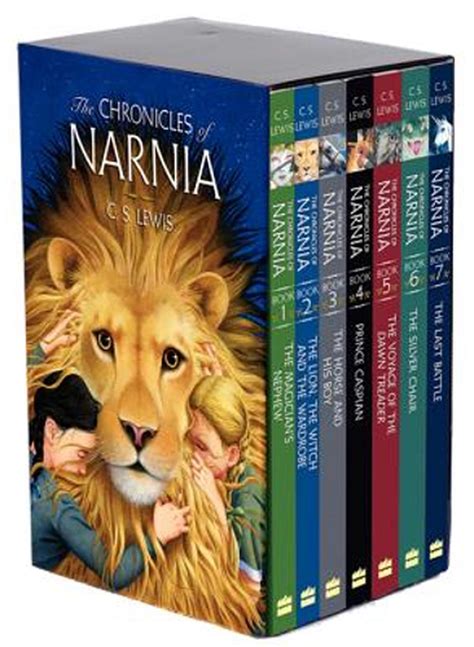
And CS Lewis died in Oxford on the same day, of kidney failure, a few days before his 65th birthday. I think it is unlikely that CS Lewis ever experimented with LSD. Or any other psychedelic drugs. Though he did drink a a lot of beer and for much of his life was a heavy smoker. Lewis was a literary scholar, who held academic posts at both Oxford and Cambridge. His pupils at Magdalen, Oxford, included John Betjeman, who loathed him, and Ken Tynan, who had a lifelong admiration for him. CS Lewis came back to the [Anglican] faith in his early thirties, through the work of the Scottish writer George MacDonald, and through the influence of JRR Tolkien and other friends. And is best known for his Christian books such as The Chronicles of Narnia and The Screwtape Letters. Unlike Huxley, Lewis’s reputation and sales figures have grown very substantially since his death. In the past few decades Lewis has become one of the most influential Christian apologists of his time. And Mere Christianity was voted the ‘best book of the century’ by Christianity Today in 2000.
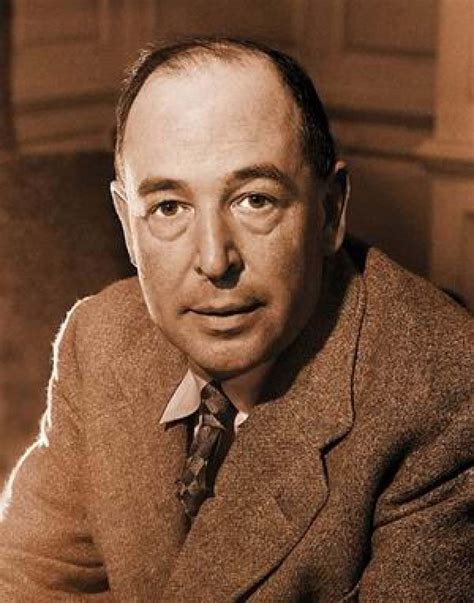
I have a bit of a blind spot about Lewis. His writing doesn’t attract me. And AN Wilson’s life of Lewis put me off him. But one of these days I’ll perhaps have another look at The Problem of Pain. And maybe at The Great Divorce.
What I was really interested in in November 1963 or thereabouts was Anti-Fascism in the English Public Schools, 1933-’39. About which I wrote what may be the definitive [if rather slim] work. But more of that another time …
November 2023
 Through a glass darkly