Clearing out

So, we are busy clearing stuff out in anticipation of selling the house and moving to a retirement apartment in Hexham. [Spoiler alert: We won’t move to Hexham, but it was the only thing that McCarthy and Stone could offer when I looked on their website for a retirement apartment in or around Edinburgh.] Susie has consulted the little girls about what stuffed animals we should retain. I am thinking of putting out a luminously pink shirt that I last wore to brother Peter’s Thanksgiving ceremony. The dress code was: pink and lime green. And I am thinking of another wardrobe cull to see what clothes can go to Edinburgh Direct Aid.

Yesterday’s men
On the bookshelves I found a copy of John Cole’s As it seemed to me: political memoirs [published in 1995]. It was a 50th birthday present from Mike and Wendy. And I hadn’t opened it for about thirty years.
John Cole was an Ulsterman, born in Belfast in 1927, a political journalist for some thirty years on The Guardian, before becoming deputy editor of The Observer in 1975. He is now best remembered as the BBC’s political correspondent from 1981 to 1992, and he wrote his political memoirs shortly after he retired. As a young reporter he recalls being sent to Belcoo on the Fermanagh border in the late 1940s to witness the arrival of the British Prime Minister. “When Clem Attlee arrived at the border, his wife was driving the car. There was no police escort. The biggest danger to the British Prime Minister was from his wife, who had a reputation as an eccentric driver, but the roads were blessedly empty … … the customs officials in Belcoo, no respecters of rank, required Mrs Attlee to open the suitcases in her car boot, presumably to ensure that she and Prime Minister were not making a killing out of imported nylon stockings, then in short supply”.
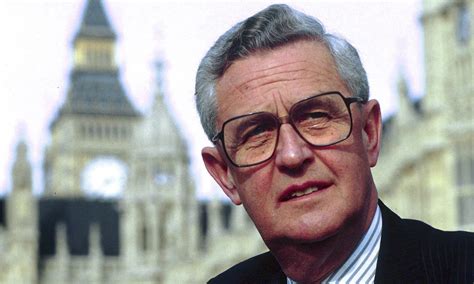
It all seems quite a long time ago. When politicians and journalists were able to enjoy close friendships, because of, or in spite of, political differences. Cole was an Ulster Protestant, a practising Christian, who specialised in labour relations and economic policy. As a young journalist he became friendly with George Woodcock, General Secretary of the TUC and a great admirer of John Maynard Keynes. Woodcock had come from a harsh industrial background, starting work in a Lancashire cotton mill when he was twelve. But he subsequently won a TUC scholarship to Oxford, where he took a First in PPE, and embarked on a long TUC career which stretched from the era of Keynes, Bevan, and Cripps to that of Macmillan and Wilson. One of his cherished ideas was that the government should maintain a high and stable level of employment. But within three years of his death in 1979, cooperation between government and unions was just a historical relic and 3 million people were unemployed.
Cole also developed a friendship with Harold Wilson who became leader of the Labour Party following the early death of Hugh Gaitskell in January 1963. Wilson flattered Cole by declaring that they were both professional economists. But invariably added that he, Wilson, had obtained the only double-starred first in Economics at Oxford between the wars. With both Woodcock and Wilson, Cole wrestled with the perennial British problem of how to achieve economic growth without giving rise to wage inflation. A problem that successive chancellors of both parties failed to solve.
On the Conservative benches Cole became friends with Reginald Maudling whom he rated highly. It was Maudling who, reputedly, took no part in student politics at Oxford, but who then told Harold Nicholson that he was attracted by a career in politics and asked Nicholson which party he should join ! Maudling is now remembered mainly [by me] as a greedy man who got mixed up with John Poulson and other crooks, which eventually forced him out of front-line politics. He and his wife took to drink, and he died of alcoholic poisoning at the early age of 61. But during his political career Maudling had been successively Colonial Secretary, Chancellor of the Exchequer, Deputy Leader of the Tory Party and Home Secretary. And was twice a credible leadership candidate; first in October 1963 when there was talk of his succeeding Harold Macmillan, before the ‘emergence’ of Lord Home; and again in 1965 when Maudling lost narrowly to Edward Heath.
George Woodcock had felt that Maudling was a man with whom he could do business, but Heath’s victory marked the beginning os a reaction against the prevailing Keynsian economics and an end to what had become known as ‘Butskellism’, a broad consensus on economic policy that encouraged nationalisation, strong trade unions, heavy regulation, high taxes, and an extensive welfare state. What remained of this consensus disappeared with the arrival of Margaret Thatcher.
Cole is largely sympathetic to Wilson’s two premierships, both of which struggled with successive economic crises and the debilitating fear of devaluation of the pound. Which he suggests should have been voluntarily undertaken in 1964 rather than forced on the government in 1976. Wilson was a kind man, witty and generally good humoured, who had come into politics in order to improve the lot of his country and his fellow citizens. He exemplified the dictum [I forget whose it is] that the Labour party is best led from the Left of centre towards Right of centre policies. With hindsight, one of Wilson’s great achievements was to keep Britain out of Vietnam. But he was suspicious of plotters, and too aware of potential rivals within the party, which made for complicated relationships with Jim Callaghan and, more obviously, with Roy Jenkins. John Cole notes that Wilson had few Cabinet intimates; the unpredictable Dick Crossman, Barbara Castle, author of the much criticised In Place of Strife, and later Peter Shore. When Harold Wilson resigned in March 1976 [I was having dinner with two OUP authors in Le Havre], there were many fanciful stories about his being forced out by MI5 plotters. John Cole suggests a less dramatic explanation: he no longer believed that there was a simple solution to Britain’s problems within the timescale available to man of his age. And so he made way for [an older man, then aged 64] James Callaghan.
Something that John Cole omits, which my mother was pleased to tell people, is that she and James Callaghan had started work in the Inland Revenue on the same day in [I think] 1929. And that she had got a higher mark than him in the Civil Service entrance exam. Callaghan is one of the few politicians who was successively Chancellor of the Exchequer, Home Secretary, Foreign Secretary, and then Prime Minister. Later on in life my mother always sent him a birthday card, and was invariably delighted to get a friendly response.
Lost leaders
What John Cole hints at, if obliquely, is that Wilson, who had been elected leader in 1963 as the candidate of the Left, was initially reluctant to promote right wing Gaitskellites. Notably the brilliant but unpredictable George Brown; and more significantly both Roy Jenkins and Tony Crosland. Tensions between Left and Right persisted in the Labour Party. When Callaghan resigned as leader after losing the 1979 election, Michael Foot was persuaded to stand, disastrously for the party’s election prospects. Cole reflects on the gaggle of ‘lost leaders’.
Roy Jenkins
Roy Jenkins was one of the most accomplished politicians of the mid-20th century. He was born in south-east Wales, the son of a National Union of Mineworkers official; and was educated at Balliol College, Oxford, where his friends and contemporaries included Tony Crosland, with whom there was brief romantic attachment, Denis Healey, and Ted Heath. Towards the end of the war Jenkins worked briefly as a code-breaker at Bletchley Park, and was elected to the Commons at a by-election in 1948. He was the ‘Baby of the House’. With Labour in opposition during the 1950s Jenkins wrote well-received political biographies, including Sir Charles Dilke and H.H.Asquith. He also wrote The Labour Case in 1959, in which he set out a list of necessary progressive social reforms: the abolition of the death penalty, decriminalisation of homosexuality, the abolition of the Lord Chamberlain’s powers of theatre censorship, liberalisation of the licensing and betting laws, liberalisation of the divorce laws, legalisation of abortion, decriminalisation of suicide and more liberal immigration laws. It was a radical programme. But not necessarily a socialist one.
After the 1964 election Jenkins became Minister of Aviation, and then in 1965 Home Secretary, the youngest in that office since Churchill. He immediately embarked on a programme of liberal reform. He made space for David Steel’s bill on the legalisation of abortion. And he supported Leo Abse’s bill for the decriminalisation of homosexuality. By the end of 1966 Jenkins was the rising star of the Labour Party. The Guardian hailed him as “the best Home Secretary of the century”. And the Sunday Times called him “Wilson’s most likely successor”. [In later years Margaret Thatcher and Norman Tebbit blamed him for family breakdowns and the decline of respect for authority.]

Jenkins served in Wilson’s administrations as Chancellor of the Exchequer from 1967-70, and Shadow Chancellor and Deputy Leader from 1970, and then as Home Secretary for a second time. But he polled badly in the election for Wilson’s successor in March 1976, and his libertarian social views and his outspoken pro-European stance caused him to be increasingly out of step with the majority of Labour Party activists. [His insistence of having ‘a proper dinner’ and his impressive knowledge of claret probably didn’t help either !] From 1977 to 1981 Jenkins served in Brussels as the President of the European Commission. At the Commission he promoted closer economic and monetary union, which led to the coming of the single currency, the Euro, while conceding that this would involved the diminution of national sovereignty.
Towards the end of Jenkins’ time in Brussels, the Labour party formally adopted a unilateralist defence policy, called for further nationalisation, and for the withdrawal of Britain from the EEC. In March 1981 Jenkins joined David Owen, Bill Rodgers, and Shirley Williams, known as the Gang of Four, in issuing the Limehouse Declaration. Which brought into being the SDP. He was returned to the Commons in March 1982 at the Glasgow Hillhead by-election, but his somewhat portentous style led to frequent heckling from the Labour party’s ‘awkward squad’ [“Roy, your flies are open again …”]. I heard him speak at an SDP rally in Witney, Oxfordshire, in the early 1980s and his delivery was quite pompous, not helped by a slight lisp. During his days in Brussels he was known as ‘le roi Jean Quinze’. He died in 2003, aged 82, a life peer, Chancellor of Oxford University, Order of Merit etc etc.. He was a radical and a visionary and a social democrat. But he never led the party which he had served with distinction..
Tony Crosland
Tony Crosland was a different kettle of fish. His parents were members of the Plymouth Brethren. At Oxford he took degrees in both Greats and PPE, was President of the Union, and before becoming a member of parliament taught Economics at Oxford. His pupils included Tony Benn. As CAR Crosland he was the author of the influential book The Future of Socialism [published 1956], which marked him out as a moderate, a moderniser, and a Gaitskellite. The book rejected the idea of further nationalisation, and argued rather for promoting equality of opportunity, and prioritising social services and an end to poverty.
In the 1963 leadership election, Crosland declared it was a “choice between a crook [Wilson] and a drunk [George Brown]; voting first for James Callaghan and then, reluctantly for Brown. Under Wilson Crosland served in a variety of Cabinet jobs. But he was disappointed not to become Chancellor in the 1967 reshuffle. It went to Roy Jenkins. In 1970, on the eve of the election, John Cole wrote an article urging Wilson to make Tony Crosland Chancellor of the Exchequer. But when Ted Heath won his unexpected victory, blamed on England’s losing to Germany in the World Cup in Brazil, it didn’t happen. And Labour went back into opposition.
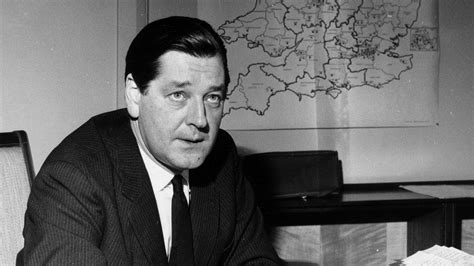
When Labour returned to power in 1974 he became Secretary for the Environment. After Wilson’s resignation Crosland supported James Callaghan, again, and was rewarded by becoming Foreign Secretary. in April 1976. His time at the Foreign Office was taken up with the Cod War and relations with Rhodesia. in February 1977 he died very suddenly of a brain haemorrhage, aged 58.
John Cole writes: “His early death has inevitably cast around him a penumbra of ’what might have been’, like that which envelops the memory of Iain Macleod among a generation of Tories. In each case. death caused huge loss to the causes they served. Each generation in politics produces too few leaders of the highest qualities in mind and character that we can accept phlegmatically their disappearance from the scene.”
Denis Healey
Healey had a slightly different trajectory. He was at Balliol with Ted Heath, whom he succeeded as President of the JCR, and Jenkins, to whom he was never close. He joined the Communist Party at Oxford, but left again a few years later. During the Second War he served in the Royal Engineers in North Africa and Sicily, was a beach-master at the Anzio landings, and was twice mentioned in dispatches. After the war he turned his back on a prospective academic career.
From 1945 Healey became foreign policy advisor and International Secretary of the Labour Party, a role which brought him into contact with a whole generation of European socialists. He was elected to the House of Commons in 1952, becoming a friend and supporter of Hugh Gaitskell. After Gaitskell’s death, he voted first for James Callaghan and then for Harold Wilson.
In Wilson’s first administration Healey became Secretary of State for Defence. He oversaw Britain’s withdrawal from East of Suez, reduced spending on overseas commitments, but prioritised a commitment to NATO. The government sold arms to South Africa, a policy which he later regretted.
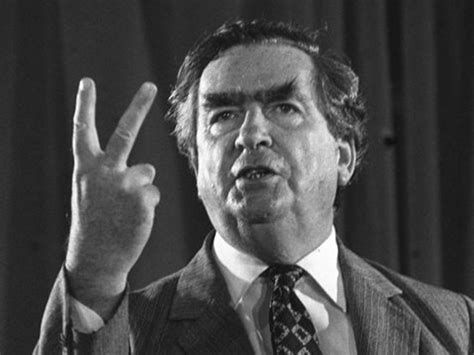
In Wilson’s second administration Healey became Chancellor of the Exchequer, and continued in that role under James Callaghan. When Callaghan stood down in 1980, Healey was the favourite to win the leadership election. In September 1980 an opinion poll had suggested that Healey would make a better prime minister than Margaret Thatcher [45% to 39%]. He was the obvious successor to Callaghan. But in the event he lost to Michael Foot, proposed by Neil Kinnock as the candidate of the Left. Healey served under the unelectable Foot as Deputy Leader and as Shadow Foreign Secretary. In 1992 he stood down as an MP after 40 years in the Commons, and became Baron Healey of Riddlesden in West Yorkshire. His bushy eyebrows and piercing wit made him popular with the general public. He swam 20 lengths every morning in his outdoor swimming pool in Sussex, and died in his sleep in 2015 at the age of 98. Many people in the Labour Party thought he was “the best prime minister they never had”. And I think they are right.

Envoi
I shouldn’t really be wandering down memory lane. I should be outside working in the garden.

John Cole says that Jenkins and Healey were both gifted men, and hard-working when engaged on something they thought worthy of their talents. He reflects briefly on the ‘what might have been’ if the Gang of Four had stayed and fought within the Labour Party as opposed to creating the SDP. All schoolboys like picking imaginary ‘best ever’ cricket teams. In the same vein, I like to imagine a Labour government of, say, 1983, with Denis Healey as Prime Minister, Jenkins at the Foreign Office, Tony Crosland as Chancellor, Shirley Williams at the Home Office, with David Owen and Roy Hattersley and John Smith and others waiting in the wings. It would have been a formidable collection of political talent. And a striking contrast to the Commons today, which seems to be populated largely by juvenile leads and never-wazzers, by populists and chancers and demagogues.
May 2024
 Through a glass darkly