En Marche
We are just back from a family holiday in Barneville-Carteret [see TaGD 126]. As a resort it reminds me strongly of French life of an earlier age.

My first French textbook, starting the language at CH in 1956, was called En Marche. The following year we progressed to the second book En Route. My guess is that both books were published just before, or perhaps a little after, the First World War. They featured a young French boy – Toto Lépine. “Voici Toto. Bon jour, Toto. Voici son père. Bon jour, Monsieur Lépine. Et voici sa maman. Bon jour, Madame Lépine.” The life of the Lépine family offered a picture of France that was rather different from the country that I first visited a few years later, as a hitchhiker, in the early 1960s. And different from the Paris where Susie and I lived in the 1970s.
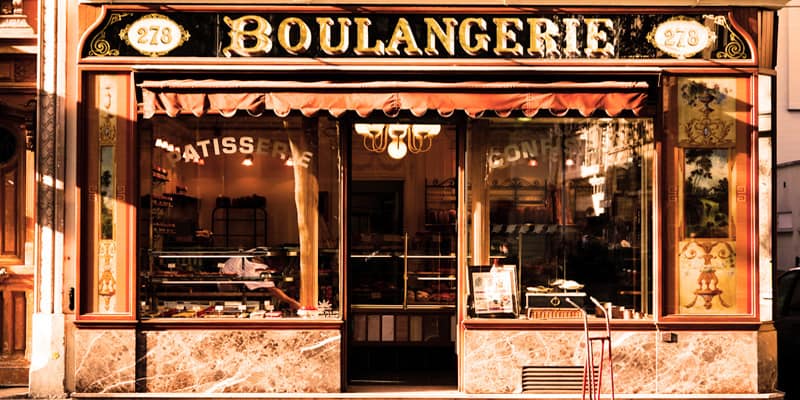
The Lépine family lived in a suburb of Paris, equipped with a good range of shops. In the mornings they bought their bread at la boulangerie. Cue a photo of a man in a beret with a baguette. Later in the day Madame Lépine would do her shopping by visiting in turn l’épicerie, la boucherie, and le marchand aux quatre saisons. If any of the family were unwell she visited la pharmacie. At the weekend Monsieur Lépine might visit la quincaillerie. Perhaps for a new hammer and some nails. And on the way home he might stop for a glass of wine at l’auberge and a chat with l’aubergiste. The supermarché, which served virtually all our needs in Paris in the 1970s, did not yet exist. There were restaurants, but seemingly neither cafés nor bars. And there was certainly no question of Le Drugstore, a passingly fashionable meeting place in Paris in 1975, one found at St Germain dès Près and another at the lower end of the Champs Elysées.
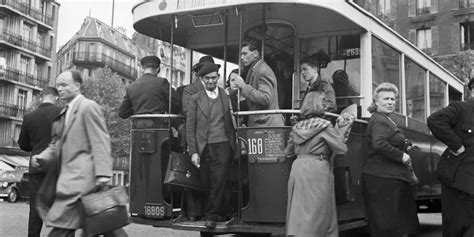
I don’t recall the Lépine’s running a car. Though Toto may well have had a bicycle.Which he would have used for weekend excursions to the Jardin de Luxembourg. Around Paris the family travelled by bus. There were two kinds of bus top; the arrêts fixes and the arrêts facultatifs, from which you had to sign to the bus driver. At either bus stop you tore off a ticket from the strip when you arrived, so that the queue could mount the bus in an orderly fashion ! [Show them a queue, and they haven’t a clue !] On the bus itself smokers could stand and smoke on an open-air platform at the back.
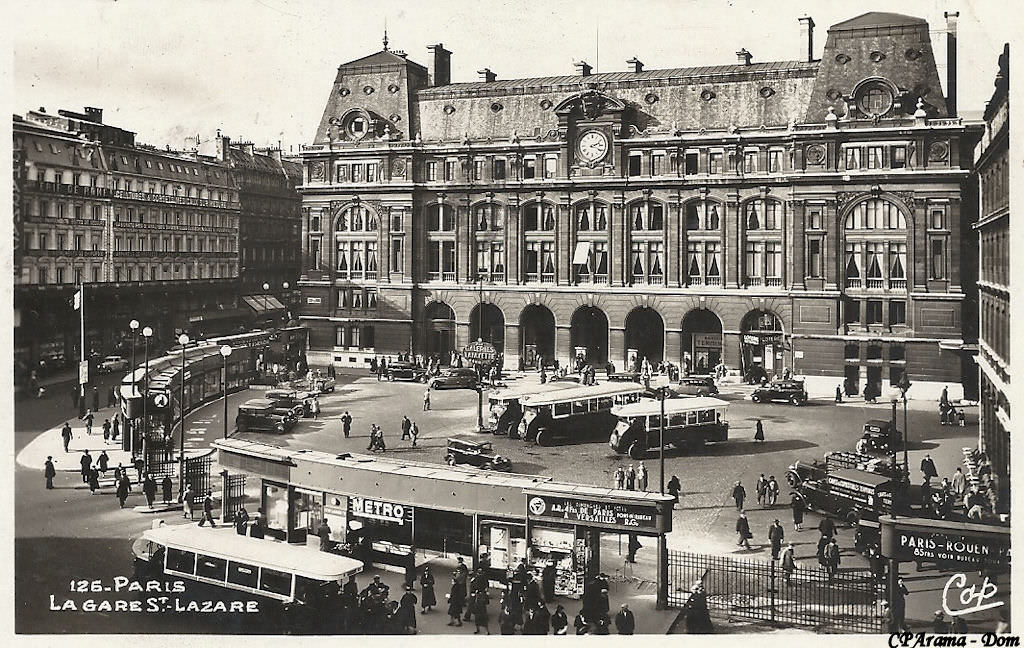
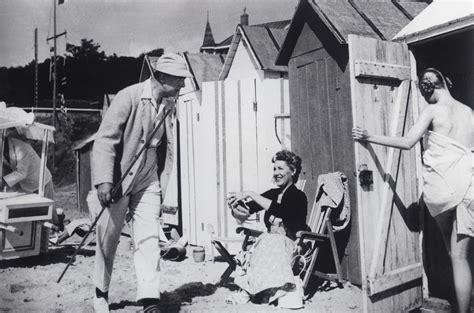
For their summer holidays the family would make their annual visit to Granville, taking the steam train from the Gare St Lazare. [I’ve never been to Granville, which was quite close to us last week; but Joanna went there aged about 3 months from Paris with Susie.] I don’t recall what the Lépine family did there. But I think there were illustrations of ice cream cornets and candy floss, , and shrimping nets, and small pleasure boats. All this came back to me in Carteret last week. The Lépines might well have gone there in the 1930s or the 1950s, in the days when there was a station and a train service; and they would have stayed demi-pension for two weeks in one of the hotels on the front. And would certainly have rented a beach hut. Where they would doubtless have listened to the metéo on a poste de TSF. But perhaps I’m getting confused with Jacques Tati’s 1953 film M Hulot’s Holiday ? [I want to believe that I am too young to remember and appreciate Tati. Who in my memory looked very like Général de Gaulle. But I enjoyed seeing Jour de Fête when a full colour version was reissued in the mid-1990s.]
Charles Trenet
We know that remembering things wrongly is a sign of ageing. But equally as you grow older you start to remember events and conversations that never actually happened. I was never really into French pop music; beyond watching Françoise Hardy in the summer of 1962 singing Tous les garçons et les filles.
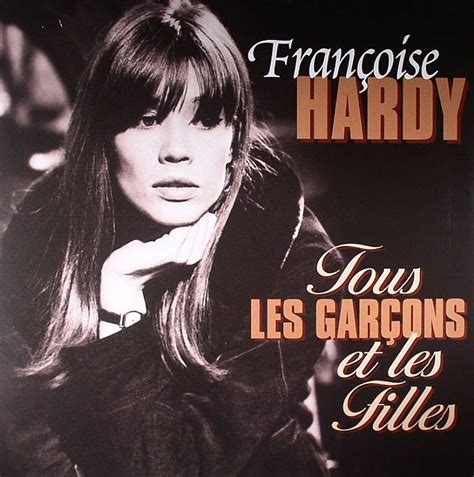
Tous les garçons et les filles de mon âge
Se promènent dans la rue deux par deux
Tous les garçons et les filles de mon âge
Savent bien ce que c’est qu’être heureux
Et les yeux dans les yeux
Et la main dans la main
Ils s’en vont amoureux
Sans peur du lendemain
Oui mais moi, je vais seule
Par les rues, l’âme en peine
Susie unlike me did her degree in French, and was enthusiastic about people like Jacques Brel [Belgian] and Georges Brassens, Who always sings too fast for me to catch the words.
My favourite period French singer is Charles Trenet. To whom I have been listening in recent days. Louis Charles August Claude Trenet was born in Narbonne in May 1913. He started writing songs for Benno Vigny in 1933, and then performing with the Swiss pianist Johnny Hess. By the late 1930s Trenet was topping the bill at music halls in Marseille and Paris, as well as making some five feature films. After the armistice in 1940 Trenet took refuge in the Free Zone in the south. But later returned to the occupied capital, and was enrolled alongside Tino Rossi and Edith Piaf to tour the German Reich in order to boost the morale of French prisoners. In the course of a long career Trenet is said to have composed over a thousand songs. The best known is probably La mer [1946], translated into English as Beyond the sea. He ostensibly retired in 1975, the year that Susie and I began our time in Paris, but he made a series of regular come-backs ending in a farewell performance at the Salle Pleyel in Paris in 1999.
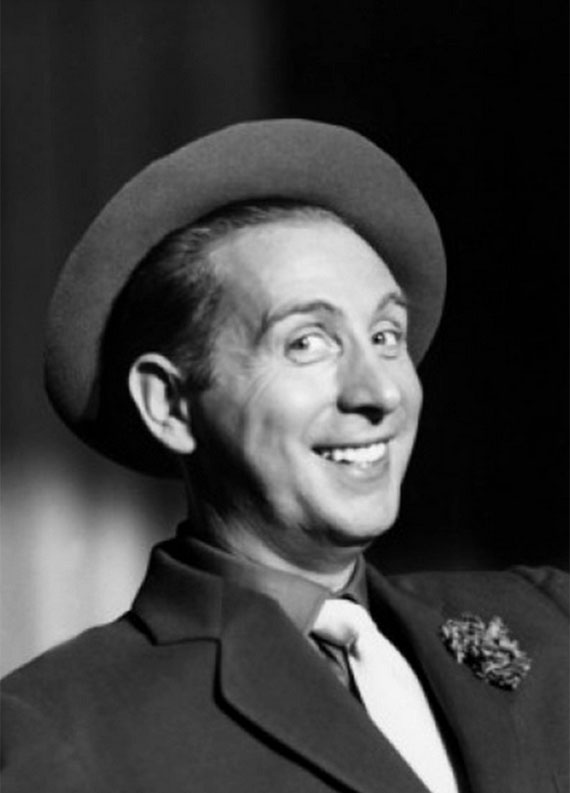
When I listen to some Trenet songs I can almost recall making Friday evening visits to the Paris music hall in the inter-war years. Such as Le grand café [1938]. With an overpowering smell of scent and caporal tobacco.
Au Grand Café vous entrez par hasard
Tout ébloui par les lumières du boul’vard
Bien installé devant la grande table
Vous avez bu, quelle soif indomptable
De beaux visages fardés vous disaient bonsoir
Et la caissière se levait pour mieux vous voir
Vous étiez beau vous étiez bien coiffé
Vous avez fait beaucoup d’effet
Beaucoup d’effet au Grand Café. … …
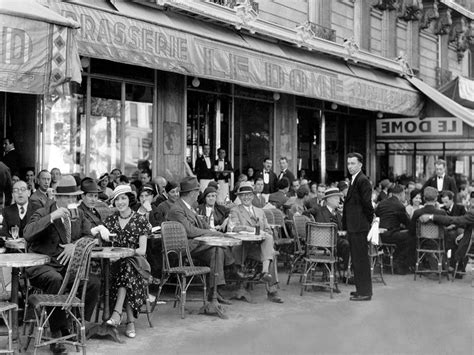
And Moi, j’aime le music hall [1955]. With me standing open-mouthed near the back among the velvet drapes.
Mais depuis mille neuf cent
Si les jongleurs n’ont pas changé,
Si les p’tits toutous frémissants
Sont restés bien sages sans bouger
Debout dans une pose peu commode
Les chansons ont connu d’autres modes.
Et s’il y a toujours Maurice Chevalier,
Édith Piaf, Tino Rossi et Charles Trenet
Il y aussi et Dieu merci
Patachou, Brassens, Léo Ferré. … …
Envoi
Enough of this nostalgia and false memory. There is a general election going out out there. So far it has been pretty unedifying. And I hope to write something about it next week.
June 2024
 Through a glass darkly