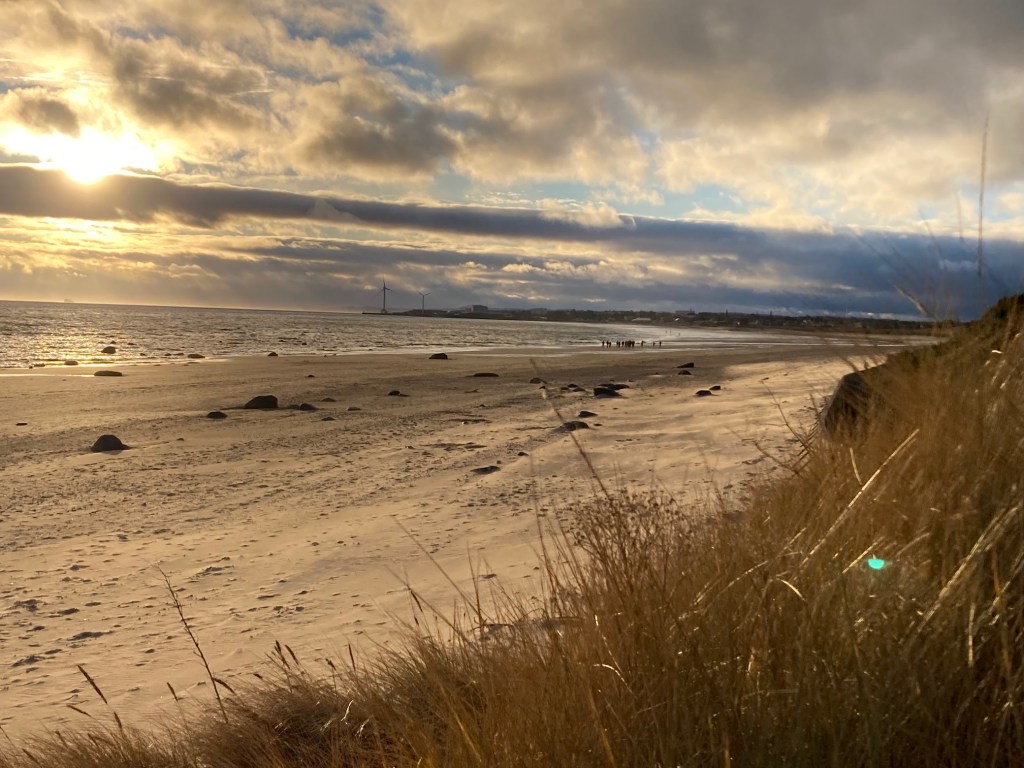
We spent Christmas at Homelands at Lundin Links, enjoying time with Craig and Amelia and Eloïse, and the hospitality of Jan and Colin and Kitty. It was mild and dry, and our room looked across the links golf course to the coastal path of the Firth of Forth.
Remembering the Sixties
October 1962 is where the book begins. [It ends 600 pages later with the funeral of Winston Churchill in January 1965.] In the Observer Penelope Gilliatt praised Sean Connery in the newly released Dr No for playing James Bond as a gentle send-up “full of submerged self-parody”. But Philip Larkin went to see it in Hull, “a pretty poor film” with Connery “a cross between an out of work Irish actor and an assistant lecturer in physics”.

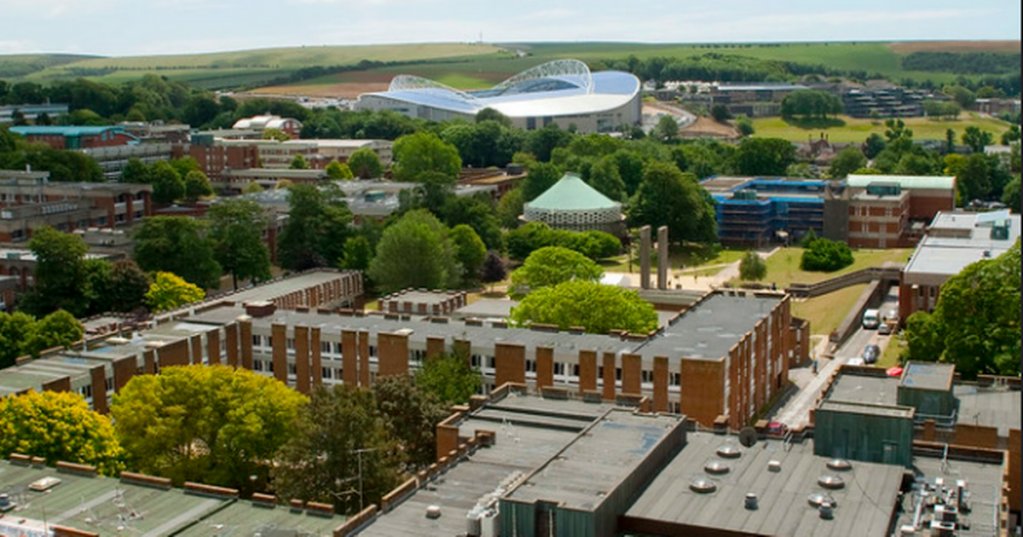
At Highbury little Bangor City lost 1-2 to mighty Napoli in the European Cup Winners Cup. Sir Keith Joseph, the newly appointed housing minister, told the Tory party conference in Llandudno that the current rate of slum clearance was 600,000 to 700,000 houses a year, and that he was pinning his hopes for future housing targets on industrialised [or system] building. One party delegate, Mr J. Addey of Huddersfield, insisted “our cry should not be slum clearance, but central heating and hot water for Coronation Street”. John Osborne wrote a diatribe in Tribune about the Common Market, “a desolate affair of obsessive shopping and guzzling”. Sussex University opened the doors of its modern and very expensive buildings, designed by Sir Basil Spence, at Falmer outside Brighton. A member of the University Grants Committee later reflected: “if only we had looked after the Spences, the pounds would have taken care of themselves”.
Prime Minister Harold Macmillan visited the new BMC [British Motor Corporation] plant at Bathgate in West Lothian, and hailed it as a new chapter in Scottish industrial life. Alf Ramsey from Ipswich Town became the new England football manager. He was enthusiastically greeted in the Daily Express as “a man with a mind like a combination of a camera and a computer … …a man able to persuade a camel that it is really a Derby winner”. Love Me Do entered the hit parade at number 27, and the Beatles made their first television appearance, shown only on Granada. At midnight on October 22nd President John F. Kennedy announced that Soviet missile sites had been irrefutably detected in Cuba. Two days later 500 demonstrators clashed with the police outside the US Embassy in Grosvenor Square. The Cuban Missile crisis seared itself into the memory of young people. “I remember walking to college [Ealing Art College]”, wrote Pete Townshend, aged 17, future rock star, in his diary, “and thinking , ‘This is the end of the world, I am going to die’. I was actually a bit pissed off when nothing happened”.
The book is David Kynaston’s A Northern Wind: Britain 1962-65, which I have been reading on loan from the Fountainhall Road library. Kynaston is a cricket lover and social historian, and the book is one of a series, Tales of a New Jerusalem, telling the story of Britain from Clement Attlee’s election in 1945 to the advent of Margaret Thatcher in 1979. The book is a pot pourri of stories and news items culled from a wide range of sources, including unpublished diaries from the period. It revisits familiar events – the Cuban Missile crisis, the Big Freeze, the assassination of JFK – while at at the same time bringing glimpses into the lives of everyday people living through those years. Kynaston traces an anti-Establishment mood epitomised by the BBCs controversial That Was The Week That Was, first broadcast in November 1962, fronted by the [then unknown] 23 year-old David Frost with a classless accent and an ambitious hair-cut. Other recurrent themes include the shifting nature of the Welfare State, slowly becoming more responsive to the needs of its users, and the rise of consumer culture, marked by the arrival of the Habitat chain and of brutalist shopping centres like Birmingham’s Bull Ring [opened in January 1963, demolished and rebuilt in 2003].
I was 17 in October 1962, a would-be historian at Christ’s Hospital, acknowledging a poor set of A level results that summer, and working slowly towards Oxbridge entrance exams the following autumn. My history teacher was Michael Cherniavsky, a medievalist, a White Russian, the product of Westminster School and Balliol. He affected double-breasted, chalk-striped suits, spoke with a slight lisp, and gave his historians a great deal of intellectual curiosity. He was a Humean rationalist, and probably voted liberal. Which made him practically a Commie in the eyes of some of his fellow members of staff.

He would have encouraged our enthusiasm for TW3. And he would I think have been sympathetic to the views of Morris Carstairs, professor of Psychology at Edinburgh, whose 1963 Reith Lectures had the overall title This Island Now [taken from an Auden poem]. In his third, Sunday evening lecture Carstairs asserted: “I believe we may be mistaken in our alarm over young people’s sexual experimentation … … It seems to me that our young people are rapidly turning our own society into one in which sexual experience, with precautions against contraception, is becoming acceptable as a sensible preliminary to marriage; a preliminary which makes it more likely that marriage, when it comes, will be mutually considerate and mutually satisfying experience”. Reaction to the lecture was explosive, from both the Catholic Marriage Advisory Council and the Salvation Army, and from readers of the Daily Telegraph. [Morris Carstairs and his wife, who were friends of Susie’s parents, came to lunch with Susie and me in Paris just over a decade later. But I don’t recall discussing any of this stuff.]

Susie and Morris Carstairs, Fountainhall Road, Edinburgh
The 1964 election
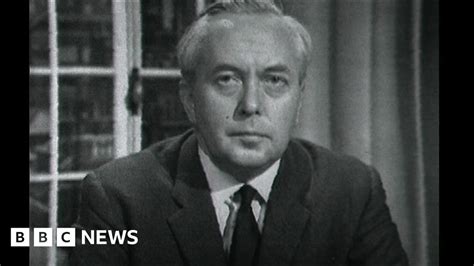
1964 was election year. Harold Wilson was the 47-year-old grammar school boy and former Oxford academic who had been one of the youngest ever Cabinet ministers in 1947, and who had easily beaten the impetuous [loose cannon] George Brown to become leader of the Labour Party in January 1963. “Able but dangerous” was Macmillan’s verdict on Wilson. Macmillan himself was now on the sidelines after prostate problems, and the Tories were led by Sir Alec Douglas-Home, characterised by Wilson as “the fourteenth Earl of Home”, a patrician Old Etonian, landowner, and former cricketer from the Scottish Borders, who had renounced his peerage the previous year and won a by-election at Kinross. Like my brother Paul I was a member of the Putney YS [Young Socialists], a group that had [as I recall] been banned from the party for IS [Trotskyite] leanings. Together we had campaigned, effectively as it turned out, for Hugh Jenkins [not Roy Jenkins] to become MP for Putney. I remember attending an election rally at Wandsworth Town Hall and, when Wilson arrived late as was normal, the YS liaison officer, Tony Booth [father of Cherie Blair] got up and made a wonderfully intemperate speech about hanging bankers from the nearest lamp-posts.
October 1964 began with riots in the television room of Barlinnie Prison in Glasgow, and on the streets of Belfast sparked by Ian Paisley. Gallup gave Labour a 4% lead in the polls, and a fired-up, semi-sober George Brown made an effective party political broadcast. In Brixton John Major took on speaking engagements for the Tory candidate whose voice had given out. Robert Maxwell roared round the villages of the nascent Milton Keynes in a red Land Rover, telling anyone listening that “I like you am a council house tenant”. In Chester the Labour agent, John Prescott, despaired of his fruity-voiced, Old Etonian candidate Anthony Blond. Nicholas Fairbairn campaigned in Edinburgh Central looking every inch a Tory in a square bowler and a double-breasted waistcoat with a great gold watch fob. The Labour candidate in East Fife was the 26-year-old solicitor John Smith, just two years after winning the Observer debating competition mace. In Poplar the Tory candidate, Kenneth Baker, made the Conservative case to a quizzical docker and was met with the question, “Mate, what have I got to conserve ?” In Smethwick the Conservative candidate, Peter Griffiths, standing against the somewhat aloof Patrick Gordon Walker, put immigration clearly at the centre of his campaign. And stickers and leaflets with the racist message “If you want a n—- for a neighbour, vote Liberal or Labour” appeared on the streets.
By polling day Joe Coral had Labour at 9-4 to win, and the stock market suffered its worst fall [5.5%] for many years. Turnout was a respectable 77.1%, down on 1959 but up on 1955. Election Specials on both BBC and ITV were overwhelmingly male affairs, and the Canadian analyst Robert McKenzie announced “We’re in for a hard day’s night”. Smethwick went to Peter Griffiths with a 7.2% swing to the Conservatives. Captain Robert Maxwell was in at Buckingham. Harold Wilson had a highly increased majority in Huyton. Shirley Williams was in at Hitchin. Ted Dexter lost in Cardiff. Robin Day interviewing Barbara Castle, hoarse after campaigning, told her that her voice reminded him of Lauren Bacall. At 3.58am there were shots of Wilson going to the Palace to kiss the Queen’s hand. Labour were back in power after thirteen years in political exile. But it was a close-run thing as they finally had an overall majority of only four.
The end of an era
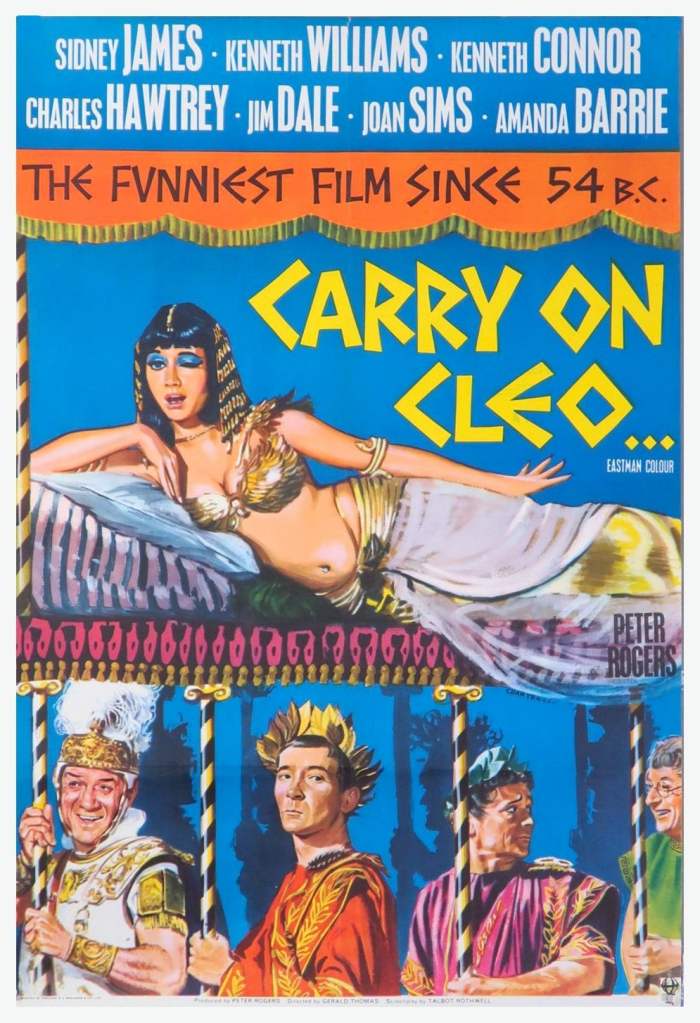
“Sorry, old cock” were the immortal words of Reggie Maudling to the incoming Chancellor, Jim Callaghan, who discovered a trade deficit running at £800 million, twice what had been expected. A week later Callaghan’s emergency budget increased social expenditure, pensions and benefits, and promised to introduce a corporation tax and an amplified capital gains tax. “I think the most frightening thing”, wrote Virginia Potter in her diary, “is that we have two Hungarians [Nicholas Kaldor and Thomas Balogh] as economists behind Wilson and Callaghan – Expect they are Communists !”. Through November 1965 the country moved into a full scale sterling crisis. The threat of devaluation was only averted by a $3 billion dollar credit from foreign central banks. Churchill’s imminent ninetieth birthday was celebrated by the BBC with a variety programme, scripted by Terence Rattigan and presented by Noël Coward. It was the last classic episode of Wednesday evening’s Z-Cars scripted by the great John Hopkins. Carry on Cleo opened in Leicester Square, and on BBC 2 Terry and Bob made their first appearance as The Likely Lads. A week before Christmas the House of Commons, after an emotional eight-hour debate, voted by 355 votes to 174 to abolish capital punishment for all types of murder.
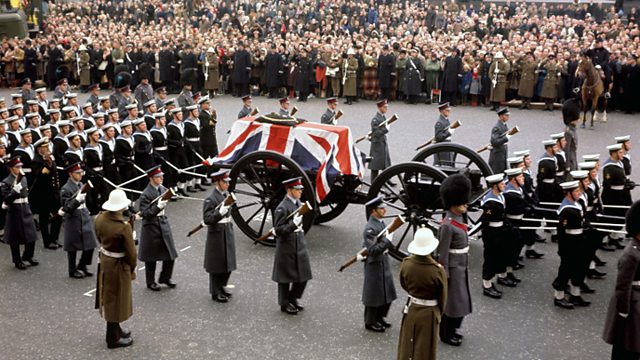
“Churchill lies dying”, wrote Phyllis Willmott in her diary on Friday, January 22nd, 1965, “And even though I barely noticed the man at his finest hour – he always seemed to overdo things in the eyes of the full-blooded younger me – there is a sense of history’s leaving in his dying.” On Monday 25thThe Times devoted its front page to the news [of Churchill’s death] rather than advertisements for the first time since the Great War, while the Daily Telegraph had black-edged columns. Enormous numbers of people queued in the bitter cold to see Sir Winston’s body lie in state in Westminster Hall before a funeral in St Paul’s cathedral. “I say aren’t they going it for the funeral !”, commented Philip Larkin to Monica Jones, “It’ll be like the Duke of Wellington, won’t it”. Richard Dimbleby commented characteristically [fruitily] on the funeral procession, speaking of “its richness, it’s colour, and its pride, and its intense solemnity and feeling and love.” After the service a launch took the coffin to Festival Pier, from where it was taken to Waterloo station and onwards by train to Bladon, adjacent to Woodstock, in Oxfordshire. Why Waterloo ? And not Paddington ? It was said to be Churchill’s own decision, to be one in the eye for General de Gaulle, who was present as one of the distinguished foreign mourners.
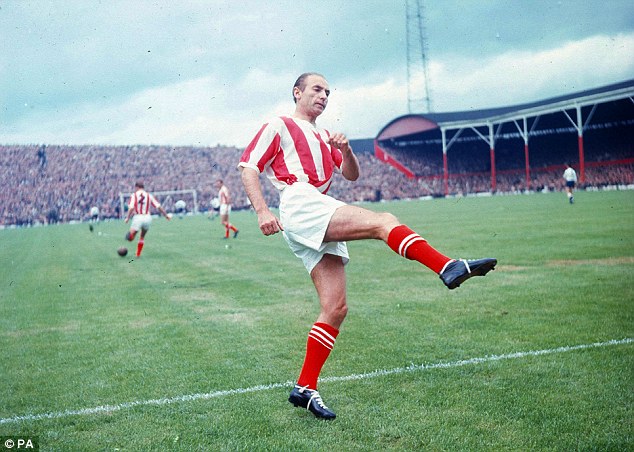
The following weekend [Sir] Stanley Matthews, at the age of fifty, played his last match for Stoke City at the Victoria Ground. He was the oldest footballer to play in the First Division. Stoke beat Fulham 3-1, and at the end of the season, 33 years after first playing for Stoke, he reluctantly hung up his boots. “Churchill and Matthews: the passing of two mid-century icons”, writes Kynaston. “The end of a post-war era ? Yes, in some sense undeniably.”
Envoi
I have derived great pleasure from this book. It is short on analysis, and long on memories. It is tempting to try and tie in some of these events with what was happening in my own life; a final twelve months at CH, writing about Anti-Fascism in the English Public Schools, 1933-39 for a Trevelyan scholarship, working for 6 months at County Hall at the south end of Westminster Bridge, hitch-hiking to Istanbul and back, starting on what turned out to be three largely idle and unprofitable years at Balliol. But I threw away all my remaining [and not very exciting] diaries prior to 1988 a year or so ago. “The past is a foreign country; they do things differently there,” wrote L.P. Hartley at the start of The Go-Between. That is not entirely true. Peter Griffiths’ campaign in Smethwick in 1964 finds echoes in the racism of some of the nastier current Tories and their friend the unspeakable Farage. And the present Labour government’s inability to kick-start economic growth is reminiscent of Labour’s inability to improve the country’s economy in the autumn of 1964.
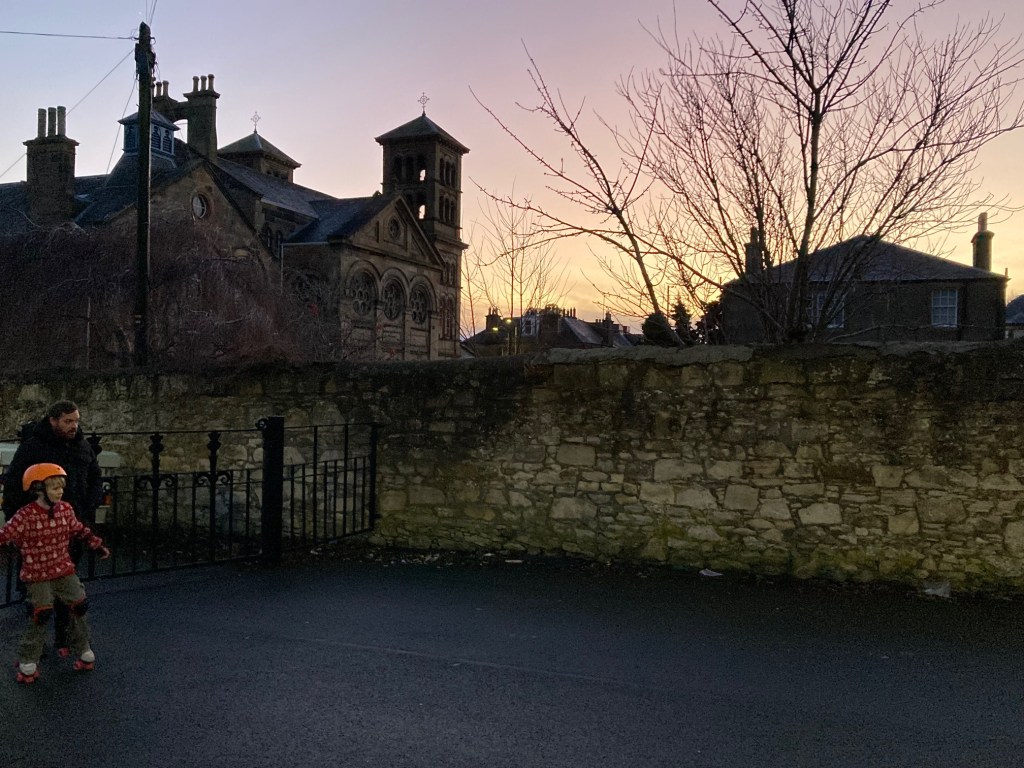
Here in Edinburgh it is snowing lightly on New Year’s Day. I wonder what the year ahead might bring. And i want to pray for hope and optimism, and for a whole host of people and places.
January 2025
 Through a glass darkly