The summer is ebbing away. It was good to see Roy and Shona, the third and last set of Lyon visitors. Susie and I limp around each of us with a set of walking poles. We have both been preoccupied with the idea of going to the NordOrthopaedics clinic in Lithuania for a hip replacement. They have a very professional website, and our friend Robin, in Northern Ireland, has been there for two knee replacements and speaks very highly of them. They offer a package that includes surgery, followed by accommodation and daily physiotherapy for about a third of the cost of similar treatment in the UK. Stop press news is that they have just declined to take me on as a patient. On the grounds of age and various health conditions. But Susie is hoping to be taken on for surgery this month or next. Conveniently Ryan Air fly direct from Edinburgh to Kaunas. And I will hope to go with her as prime carer. And tourist.
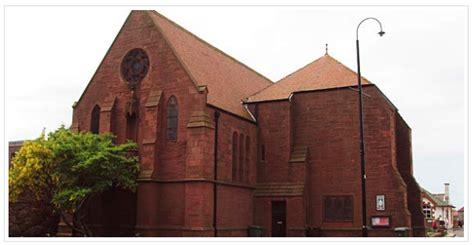
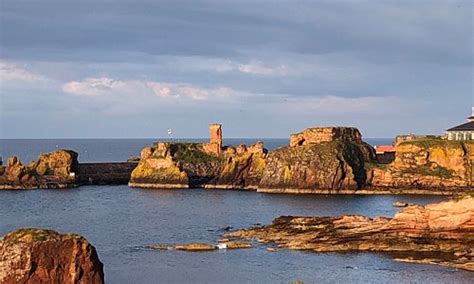
Meanwhile we were at Dunbar again last Sunday for me to lead worship and preach at St Anne’s. As I told them, it is the only place where I have been invited to preach this year. Which suggests that they are very discriminating ? Or possibly bit desperate ? Dunbar is said to be the sunniest seaside place in Scotland. Which may be true.
Spain
Spain for many people means beaches, sand and sunshine and Sangria. And maybe sex. But when I was growing up, for me Spain conjured a more sombre picture. My attention was taken by images of the Spanish civil war; street fighting in Madrid, the German bombing of Guernica, the retreat of the Republicans across the river Ebro. My imagination was caught by a variety of writers and artists who supported and fought for the Republicans and the International Brigades; John Cornford and Julian Bell and Esmond Romilly. And George Orwell’s Homage to Catalonia. It was a long time before I realised that most of the men who fought for the International Brigades were unemployed workers from Glasgow and from Tyneside. Rather than Cambridge intellectuals.
Hugh Thomas’s substantial book on The Spanish Civil War was published in 1961. It was his first book and the first comprehensive history of the war in English. Generally the reviews were very favourable. Though some thought the author had paid little attention to the Spanish archives.[And some critics doubted his competence in the Spanish language.] And some critics thought that he had favoured story telling over historical analysis. I remember that I read it while I was still at school, but I retain little of the detail. My paperback copy disintegrated some years ago. But I have a dozen or so books on the Spanish Civil War on my shelves, many of them relating to the International Brigades. And it is time that I looked more carefully at them. Starting with Antony Beevor’s 1982 book, which like Thomas offers a sweeping narrative history of the war.
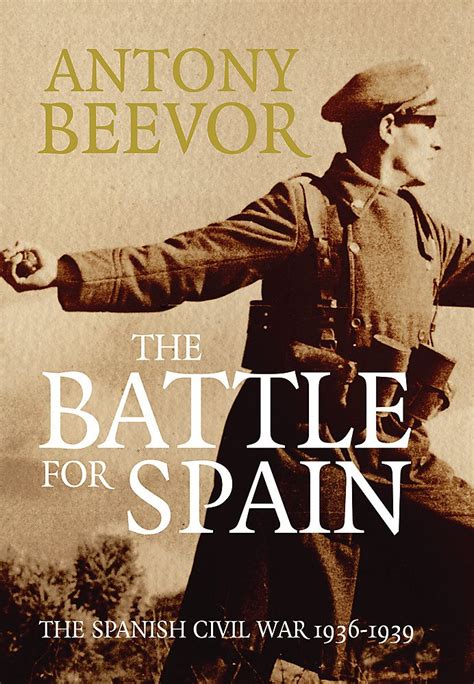
Anthony Beevor: The Battle for Spain, 1936-39
The book starts with a summary history of the Old Spain and the Second Republic. Beevor stresses this war was not just left versus right; it was also state centralism v. regional independence, and authoritarianism v. freedom of the individual. The nationalists were more coherent because they were right wing, centrist, and authoritarian at the same time. Whereas the Republic embraced a host of mutual suspicions; communist authoritarians v. regionalists and libertarians.
In February 1936 the Popular Front won a very narrow electoral victory. Which they interpreted as a mandate for revolutionary change. Violence and assassination attempts followed. In response, in July, the generals planned an uprising starting in Spanish Morocco. Franco was flown from the Canary Islands to Casablanca in French Morocco. Aeroplanes were needed to transport the Army of Africa to Spain. Hitler supplied Junkers 52s; the first such airlift in history. General Sanjurjo, a potential Nationalist leader, was killed in a plane crash in Portugal.
What might have been simply a contested coup became a lengthy civil war. The Nationalists’ greatest asset was the 40,000 men of the Army of Africa, plus para-militaries, making a total of c.130,000 officers and men. The Republic counted on some 50,000 soldiers, 22 generals, and 7,000 officers, plus para-militaries; a total of c.90,000 men. At the start the Republic had the advantage of the large cities, the mining areas, most of the navy and merchant navy, two-thirds of the mainland territory, the gold reserves, and the citrus fruit export trade from Valencia, a major currency earner.
There were violent killings on both sides. The ‘Red Terror’ was directed against the Church. But not universally. In Ronda victims were thrown over a cliff. The killings in ‘White Spain’ were primarily directed against trade union leaders, officials of the Republic, civil governors and other officials. The worst killing was by Colonel Yague’s troops in Badajoz. Which became the first great propaganda battle of the war.

By August 1936 it was as if two separate nations were at war. The rebel generals needed rapid victories to demonstrate their success to the world. The most important factor was the effective campaign of the Army of Africa. Colonel Yague, the most dynamic of the nationalist leaders, was to drive north along the Portuguese border and then north-east on Madrid. By contrast the republican militias lacked cohesion and training and self-discipline. They were also short of arms and ammunition. The republican commanders had little to offer except for outdated ‘big offensive’ strategies left over from the First World War.
The Civil War becomes International
Both sides needed weapons from abroad. But Eden immediately declared an arms embargo without waiting for other countries to respond. The Nationalists turned to their natural allies, Germany and Italy. Mussolini immediately sent a squadron of bombers, transport planes, and a ship-load of fuel and ammunition. Within a fortnight it became clear that while the nationalists would receive aid from Germany and from Italy, the democracies would refuse arms to the Republic. Which could count only on support from the USSR and Mexico.
The Nationalists needed a formalised state structure. In October 1936 France was invested with powers as Head of the Spanish State in a ceremony at Burgos. For the next 40 years October 1st was celebrated as the ‘Day of the Caudillo’. The Non-Intervention Committee met in London in October. Its existence and every action served the cause of the Nationalists.
In autumn 1936 the defence of Madrid became a rallying call for anti-fascists throughout Europe. The USSR sent quantities of tanks and fighters and ammunition; paid for by the gold reserves of the Banco de Espana. Alongside supplying materiel, the Comintern oversaw the recruitment of volunteers for the International Brigades. Across the whole war some 30,000-plus men from 53 different countries served in the Brigades. Much publicity was given to the middle-class intellectuals who were killed – John Cornford, Julian Bell and others; the vast majority of British volunteers were manual workers or had been unemployed. Soviet tanks and the International Brigades contributed to the defence of Madrid. Which settled into a cold, hungry siege.

The fighting continues
Winter 1936 saw fierce fighting to the west of Madrid, the Battle of the Corunna Road. Where John Cornford and Ralph Fox were killed. The Nationalists were reinforced by the German Condor Legion, 4 squadrons of German fighters and 4 squadrons of German bombers; and by a corps of Italian infantry. In January 1937 the Nationalists made attempts to cut the Madrid-Valencia road, leading to the Battles of Jarama and Guadalajara. They were held by the militia columns now re-formed into a more conventional army and by the International Brigades.
Beevor is good on the military campaigns that followed for the next two years. The Nationalists made good progress in the north The speed of their victory in the Basque campaign was much aided by the German Condor Legion. Who mercilessly bombed the undefended, historic city of Guernica in April 1937. The destruction of the city had a tremendous effect internationally. But Bilbao fell in June 1937 leading to the Basque surrender. German engineers moved into the Basque factories and steel mills. What they produced now went to Germany to pay the Luftwaffe’s expenses for destroying the region.
The offensive in the Guadaramma, in May 1937, was the first major Republican offensive of the war. There was unrest among the International Brigades who felt they were being sacrificed for little benefit. Losses among anarchists and POUM were very heavy. George Orwell was wounded, with took him out of the war. The following Republic offensive, in July, at Brunete was a failure. George Nathan, commander of the British battalion, and Julian Bell were both killed.
The route to disaster
By the end of 1937 the superiority of the Nationalists was evident. For the first time in the war they had parity in numbers; between 650,000 and 700,000 men on each side. But their conquest of the Cantabrian coast brought industrial and economic prizes. Their troops were better led. And their air force was greatly superior both in numbers and in quality.

In December 1937, in snowy, Siberian conditions the Republicans took Teruel. But after bitter fighting in winter weather the city was retaken by the Nationalists in February 1938. In April 1938 the Nationalists pushed east to the sea, cutting the Republic in two. The Republic sued for peace in April 1938, but Franco demanded unconditional surrender and the war raged on.

In July 1938 the Republicans launched an all-out offensive to reconnect their territories, the Battle of the Ebro. They mustered some 80,000 men, but lacked artillery and air support. The offensive failed when the republicans failed to exploit their initial success. By August the attack was a failure.
Elsewhere the sacrifices on the Ebro were virtually ignored by Europe, as it moved to the brink of war over Czechoslovakia. The Munich agreement ended the hopes of Negrin that Britain and France would intervene to aid the Republic. In September Negrin announced the unconditional withdrawal of the International Brigades. In October there was a dramatic farewell parade down the Diagonal in Barcelona. They left behind 10,000 dead and 7,600 missing.
In January-February 1939 Franco’s forces conquered Catalonia in a whirlwind campaign. Barcelona fell in January, Girona in February. In February the UK and France recognised the Franco regime. Only Madrid remained in Republican hands. In March 1939 there was a mini civil war within the civil war. By the end of March the Nationalists occupied Madrid. The war was over.
Some reflections
The Republicans, soldiers, women, and children streamed across the border into France. Where they were treated with great suspicion and held in internment camps, on stretches of coastline with minimal food and facilities. Koestler wrote of Le Vernet “from a point of view of food, installations, and hygiene, it was worse than a Nazi concentration camp”. After the Occupation of France in 1940, Franco asked Pétain to extradite 3,600 Republicans leaders. The Vichy regime agreed to extradite a very few, some of whom were executed. Franco was sympathetic to Germany during the Second World War, and sent a division of Falange volunteers to fight Russia alongside the Wehrmacht. In July 1945 Franco issued a decree which conceded a general pardon for prisoners from the civil war. On April 17th, 1948, Franco formally ended the state of war in Spain.
As Beevor notes, it is a rare war in that it has been written about more by the losers than by the winners. The violence of the war created a great impression abroad. Many left-wingers and intellectuals saw it as an early struggle agains Fascism, which thus anticipated the Second World War. The cults of virility and death went hand in hand. The support for the Nationalists of the Germans and the Italians, especially the Luftwaffe Condor Legion, were crucial. The Junkers 87 was the most important psychological weapon. Soviet intervention helped save Madrid in November 1936. But the People’s Army was badly led, relied exclusively on set-piece offensives, and was a victim of its own propaganda. The British-inspired policy of Non-Intervention was a hypocritical failure, which generated much passion and criticism. Neither side could be terrified into submission. But the end of the war was perhaps inevitable after the catastrophic defeat of the Republican forces on the river Ebro in the summer of 1938.
Envoi
I’ll be reading my way through a small collection of books on the Spanish Civil War in the coming months. Most but not all of them about the International Brigades. And remembering my first sight of the country, a disastrous late summer holiday trip to Spain in the early 1970s along with my friend David. And I’ll be looking at a Lonely Planet Guide to Lithuania, in the hope that Susie can book hip surgery at the NordOrthopaedics Clinic in the next month or two. Of which more anon.
September 2025
 Through a glass darkly
Thank you for jogging my interest in the Spanish civil war. It is a salutary reminder of the burden of history carried by the happy Spanish friends and colleagues whom I knew so well at the Commission.
Your mention of the victims in Ronda who were thown over a cliff led me down a rabbit hole. Unlike most such exercises, this one turned out to be worth the detour, because it brought me to an article by University of Kent anthropologist John Corbin, in The Journal of Interdisciplinary History Vol 25, No 4 (Spring 1995) 609-625, which I accessed on JSTOR.
Corbin carried out field research in Spain and the 17 pages of his Truth and Myth in History: An Example from the Spanih Civil War make good reading. They examine the history and mythology surrounding the Red Terror in Ronda in 1936, and in particular the story to which you refer. The primary sources in English appear to be Ernest Hemingway’s For Whom the Bell Tolls and Hugh Thomas’s The Spanish Civil War of 1965. Corbin provides an insightful analysis of how the tale told relates to the historical event and the situations of its telling. He does so in a way that could not fail to interest any thoughtful student of the Bible.
I cite the opening paragraph:
“Any story of a past event is determined only in part by the event itself. The story is also determined by the circumstances in which it is told. The teller always constructs the story to suit the circumstances of the telling – the audience, the time, the place, the teller’s identity and sense of what is appropriate. The teller selects from the possible elements of the tale those that best suit the circumstances of the telling. Any story of the past has a double construction and a double truth. The truth of the tale told is its historical truth; the truth of its telling is its mythical truth.”
Well, we may feel that we have heard this before. Yet it is fascinating to see it worked out, as different interests and objectives influence the telling of the story.
I commend his article to anyone contemplating a holiday in Andalusia, or to any thoughtful student of scripture facing the discomfort of a tight-packed Ryan Air flight to Estonia.
LikeLike
Thank you. That is really very interesting. Clearly the Spanish Civil War attracted skilled propagandists on both sides. I think Koestler wrote somewhere about concocting a news report on a military action which he had not witnessed. And where it later transpired that his account of the action was geographically impossible. I had not checked the Ronda story. And I did not realise that Hemingway’s For whom the bell tolls may have been the source of this myth.
LikeLike