I bought a diary last week, a Quo Vadis executive planning diary. As a sign of confidence in the future. But I don’t have anything to put in it yet. Except for the dates of the [grand-] children’s birthdays. And the programme for next year’s Six Nations rugby matches.
STOP PRESS And the date of the installation of the New Rector at St Anne’s, Dunbar. Invite just received.
Facebook reminds me that we were in Kiev for Christmas four years ago, in 2021. Spending Advent and Christmas doing locum ministry at the small Anglican church there. The Russian troops invaded some five weeks after we left. FB asks if I want to re-post some of the photos. But I don’t. The following year, 2022, our much loved daughter Joanna was coming to the end of her life in Florence Nightingale hospice at Stoke Mandeville. And I stupidly, not believing that she was going to die, stayed in Chantilly on locum work until December 18th. I saw her in the hospice on December 19th and 20th, and she died very early in the morning of December 21st. We miss her every day.
For Christmas 2023 we were both back in Chantilly, and were joined for Christmas Day by Craig and Amelia and Eloïse. Lunch came mainly from Picard, as I recall. Last year, 2024, were were across in Fife for Christmas. Enjoying the hospitality of Jan and Colin and their family. And again with Craig and the girls.
This year Jem and Anna, and Freya and Oskar, are coming up to Edinburgh for Christmas. And we are looking forward to seeing them all. Needless to say, it doesn’t feel like Christmas. We haven’t been down into the centre of town to see the lights in Princes Street. The Carol Service at St Peter’s was last Sunday evening, but with driving wind and rain I stayed at home. And the Service of Readings and Carols at Newington Trinity is not until the Sunday after Christmas. Which may be a nationwide Presbyterian quirk. Or possibly just local [invented] tradition.
With several decades of hindsight I guess the classic Christmases of my memory were from about 1953 to about 1959. From when I was eight to about thirteen. My maternal grand-father had retired from the Great Western Railway, failing to qualify by six months for the desired gold watch. [Given, I think, for fifty years of service.] My grand-parents moved on retirement to Bradford-on-Avon, to a big and distinctive house on the side of the hill above Holy Trinity, sharing it with a great-aunt and great-uncle.
The two families fell out and rarely spoke. We invariably went there for Christmas, sitting down to lunch [always chicken as I recall; turkeys had not yet been discovered] with about thirteen or fourteen aunts and uncles and cousins. And home-made parsnip wine for the grown-ups. Lunch was preceded by a [BCP] church service at Holy Trinity. Always cold and excruciatingly dull. Followed by a walk, men and children only, up the hill towards Turleigh. We always wanted it to snow. And sometimes it did ! After tea there were games, always General Post, in the front sitting room [‘the board room’], followed by presents and tea and Christmas cake and yule log. One of the reasons it came to an end was the arrival of television. Black and white, and programmes only from 5 o’clock to 6 o’clock in those days. But already a great disruptor. As screens no doubt will be next week.
Advent, as we all know, is the season of waiting. [I may have posted an Advent sermon on this site a year ago ?] Waiting for Christ’s return, date and place unknown. After a gap of several weeks I have got back to reading David Smith’s book, God and Mammon. He notes that in the thirteenth and fourteenth centuries, Europe was visited by recurrent plagues, including the Black Death. The population of Europe shrank. And England and France fought each other recurrently in the Hundred Years War. And in consequence there was an outbreak of millenarian movements, as Christians looked eagerly towards Christ’s imminent return and the ushering in of God’s direct rule on earth. Looking at the television news I could be tempted in that direction too.
I’ll finish David’s book after Christmas and will write more about it then. Meanwhile I’ve been re-reading Anthony Powell’s [pronounced Pole, I believe] Dance to the Music of Time. I’m six books in so far. And convinced that Powell may be one of the most over-rated authors of his generation. Yes, he’s literate and stylish and sometimes witty. And it is no doubt an accurate picture of upper class and upper middle class England between the wars. A group of friends meet recurrently at dinner parties and restaurants and family gatherings. The two wartime books could stand alone. But generally more and more characters appear, each one more boring than the last. The narrator, Nick Jenkins, seems to me to be a bloodless, Eton and Oxford publisher. And the women are largely two-dimensional. The scenes only really come alive when Widmerpool appears, the pompous, self-important, socially gauche but upwardly mobile friend from school. Some years ago I saw the BBC 1997 adaptation, in which Widmerpool was wonderfully played by Simon Russell Beale. And Miranda Richardson was memorable as the femme fatale Pamela Flitton.
In the wider world Trump continues to amaze and horrify with his breath-taking ignorance and his infantile vocabulary. It looks as if Ukraine will be the victims of his obsessive deal making and his limited attention span. A poorly selected and poorly coached England cricket team is being outplayed by the Australians. And, closer to home, Scottish hospital doctors are going on strike shortly. Which won’t advance my hip surgery. I am lining up a few books to read in the new year, and wondering how soon we might get to Biarritz for a few days.
A very Happy Christmas and a peaceful New Year to all who are reading this.
We are home in Edinburgh again. It is quite nice being at home. And Jem made a big effort to be in Edinburgh to meet us off the flight from Kaunas. Which was great. He is not long back from running the Frankfurt Marathon. See below. Susie was a bit nervous in advance about the return flight; as, when you travel with Passenger Assistance on Ryan Air, you are invariably allocated a window seat. Apparently on the grounds that, if there were to be an emergency, you wouldn’t be holding up able-bodied passengers trying to evacuate the aircraft. So they say. But squeezing into a window seat post-op [or even pre-op] can be quite tricky. I found my seat 32A extremely uncomfortable and spent much of the flight standing up at the back of the plane.
Kaunas was generally a positive experience. The professionalism and the post-op physio sessions, and the communication and the customer service generally, at the Nord Orthopaedics Clinic was excellent. As satisfied customers fall over themselves to tell you on the Nord Clinic Users’ Facebook page. We enjoyed sharing experiences with other Clinic patients over breakfast and in the reception rooms at the Kaunas Hotel. Those we spoke to came from Edinburgh, the Scottish Borders, Brighton, Oxford, South Wales, Anglesey, and various parts of Canada. Everyone is willing to share their stories; of the post-op lollipop, and of the Day Three/Four dip in morale. But I do draw the line at looking at people’s photos of their post-op scars.
While Susie was taken off for daily physio at the Clinic, I shuffled round central Kaunas with a single walking stick. The town centre feels quite affluent. There was no begging. And no litter. And people on the streets are predominantly young. There are a lot of attractive young women with long hair, usually tied back, and long legs. A lot of the young men look like basketball players. People are almost universally dressed in black; padded jackets, padded coats, and parkas. And most people wear thick-soled boots and shoes, suggesting that winter brings plenty of rain and snow.
There is a profusion of coffee shops, offering soups and cake as well as good coffee. We ate spicy soup and grilled prawns in a kind of fusion restaurant. And enough ice-cream to feed a family of four, sprinkled with a whole packet of M&Ms. In a Georgian restaurant an enormous television showed an interminable programme of Georgian folk music, a kind of Georgian River Dance. I kept expecting to see the two Ronnies on the end of the chorus line. It was the kind of ethnic show that they sent up mercilessly. In the bar across the road, which offered excellent soup and home-brewed beer, the television was usually basketball and occasionally German football. We were late to discover the Italian restaurant, Il Piccolo Ristorante, just round the corner from the hotel.
On a Sunday afternoon I went to a service at the International Reformed Church of Kaunas. It was planted in 2022 by the Evangelical Reformed Church of Lithuania to reach out to a growing number of internationals in Kaunas, mainly but not entirely students. The service was in English, led by the pastor who is from New Zealand. He preached from 1 Peter 5 on the activity of the devil, ‘prowling round like a roaring lion looking for someone to devour‘. It transpired very quickly that the pastor’s wife knew people whom we know at church here in Edinburgh. Over an informal meal after the service I enjoyed talking to Frank, the pastor, and to Thomas, a Frenchman from Cherbourg, who taught both in a school and in the university in Kaunas. I really enjoyed being back in an international church.
I read my first ever book by a Lithuanian, a novel called Shades of Grey. It might be best described as Anne Frank meets Danny Finkelstein’s Mum and Dad. The narrator is a young Lithuanian girl who is deported from Kaunas by the Russians in 1941. She is separated from her father, who we presume to be dead, and spends time with her mother and her younger brother in appalling conditions on a farm camp in Siberia before being moved on to a desolate gulag within the Arctic Circle. The author. Ruta Sepetys, is a Lithuanian-American, born of Lithuanian parents in Michigan in 1967, the author of several acclaimed books of historical fiction. I found Shades of Grey rather simple, or simplistic, but I now see it was originally written for children and young adults. It is considered a roman à clef, and she has clearly mined a lot of Lithuanian survivors’ stories.
I have also started to read David Smith’s new book, God or Mammon: the Critical Issue confronting World Christianity, which has been lying fallow in our sitting room for a few months. It is an ambitious book, which starts with the liberation of the Hebrew slaves from Egypt, and then explores the way in which their distinctive concern for social justice is eroded throughout the Old and New Testaments by contact with the surrounding kingdoms and imperial states. What Dennis Lennon used to call ‘the urge to merge’. What follows is a wide-ranging survey of movements in Christianity which reflect the church’s struggle to counter a pervasive, materialistic world culture. It is a big book and [for me] a slow read. More about it later.
These are transitional days back here in Edinburgh. There are a lot of soggy leaves down in the garden. We didn’t get to church on Sunday, but watched the Remembrance Ceremony at the Cenotaph, which I always find very moving. Susie is trying to establish a daily routine of exercises, icing, and some gentle walking. I had an appointment at the Orthopaedic Clinic at the Lauriston yesterday. Sadly it didn’t advance any intervention. But it was with a programme called Prehab, whose task is to prepare the elderly and the infirm for surgery. I came away with much good advice about Exercises, and Healthy Eating and Weight Reduction, and Mental Wellbeing. Some of the advice may have come a bit late. I am currently in charge of cooking, and we now have a retro diet of shepherd’s pie, and carrot & ginger soup, and baked potatoes. And a few estimable Charlie Bigham ready meals. All just right for November !
Susie was being picked up for her op at 8.35am. She was on a strict fast and looked enviously at my cup of tea. Which left me to have a shower and go down to the breakfast room in the basement. Where I talked to my neighbours from Anglesey. And supplemented my scrambled egg and bacon with a bowl of mixed fruit, pineapple and melon and mandarin orange.
It was a cold dry morning in Kaunas. I started my walking tour by the bridge across the river at the foot of the Aleksoto funicular on the other bank. There was no easy way to cross the dual carriageway road to access the bridge. I read somewhere that this was once the longest bridge in the country. But that is difficult to credit since the river is no wider than the Thames in London or the Rhône in Lyon. The adjacent church, overlooking the river, is the Vytautas the Great church.
Just round the corner is the House of Perkünas. It was probably a rich merchant’s house and dates from the late fifteenth century. Like all the old buildings here it is built with distinctive red brick.
The Old Town square [the Rotusés alksté] is lined with fifteenth and sixteenth century merchant’s houses with the graceful seventeenth century Town Hall in the middle. Access is currently limited as the whole square is being resurfaced by a clutch of mechanical diggers and an army of men in hard hats.
Just north of the square is Kaunas Castle, a bastion against Teutonic attacks, which sits pleasingly in a dry, grassy moat. The adjacent church is St George the Martyr, a former monastery, sacked at intervals down the centuries.
Returning towards the New Town is the St Peter and St Paul cathedral, the largest Gothic church in Lithuania. The elaborate interior is a striking contrast to the sober exterior. I sat in a pew at the back of the nave, said a prayer for Susie and lit a candle. And fell asleep for a few minutes. After which it was time to go in search of a light lunch at a nearby bakery and coffee shop.
I spoke to Susie on What’s App earlier this afternoon. Early indications are fine and she sounded well. More news to follow in a day or two.
PS
This is all yesterday’s news. Last night I had excellent pulled beef soup and garlic bread at the restaurant across the street. Today I limped a few thousand steps in the other direction, to the railway station, to explore the possibility of a day trip to Vilnius. Meanwhile Susie has started on her 7 days of intensive physio. She is already walking 20 yards or so and had negotiated a flight of stairs, up and down. Which all sounds good.
David very kindly took us to the airport in Edinburgh. Where we benefitted from passenger assistance. One of the pushers told us about his hip replacement experience in Kirkcaldy. The flight was uneventful. We arrived here in the dark, I moved my watch forward two hours to Eastern European time, and we were met at the airport and were brought to the hotel. We are in Kaunas, in Lithuania. Where the Hotel Kaunas is going to be our home for the next ten days. Susie is booked for hip replacement at the Nord Orthopaedics clinic tomorrow. I am here [don’t laugh] as her support and prime carer.
The hotel is on Freedom Boulevard [Laisves aléja] a two kilometre, tree-lined, traffic-free street that cuts through the New Town. Our room is on the 5th floor. Breakfast is served downstairs in the basement. A generous buffet is laid out the length of a long wall. There is enough scrambled egg and bacon and sausage [three kinds – avoid the half-sized orange ones] to satisfy the dreams of a Scandinavian truck driver. Lots of fruit and pastries. And good coffee.
Kaunas is the second city of Lithuania. It is situated at the confluence of the Nemunas and Neris rivers. Between the two wars Kaunas was the capital of Lithuania when Poland annexed Vilnius. It was named European Capital of Culture in 2022, and is known for its innovations in the art and design fields. Kaunas is also known as the home of basketball. The driver who collected Susie this morning for her pre-op at the Clinic was unusually tall. The city is divided into two parts: the Old Town, with a medieval castle, some handsome churches, cobbled streets, and a plethora of restaurants and coffee shops; and the New Town, which features most of the city’s museums and a number of attractive art-deco buildings. Many of the numerous restaurants and coffee shops are decorated with impressive piles of orange pumpkins.
All this remains to be discovered. Today was essentially transitional. I limped as far as the cobbled square of the Old Town. In a heavy drizzle. My omniscient I-phone tells me that it will rain for much of the next few days. Which is disappointing. I would much prefer it to be cold and dry. Meanwhile I hope to learn a few more words of Lithuanian. And if all else fails I brought some books with me to read.
Late windfall apples and leaves are down in the garden. It gets light later and dark earlier. And we are constantly tempted to override the heating soon after lunch. The fragile peace in Gaza is still holding. Thank God ! A reproach to people like me that doubted whether anything good could come from a meeting between Trump and Netanyahu. A new Archbishop of Canterbury has emerged. Her great strength may be that she is not an Old Etonian. If the church was determined to appoint a woman, then I think that either the bishop of Chelmsford or the bishop of Gloucester would have been a more exciting appointment. I don’t doubt that Dame Sarah Mullally will nail her colours firmly to the middle of the road. And that may not be wholly a bad thing.
Sunny Sunday lunch at the Prestonfield House hotel
Travelling
When I was growing up we never went abroad as a family. Holidays were spent with my grand-parents, first at Minety, between Swindon and Cheltenham, where my maternal grandfather was the station master on the GWR, and then after he retired at Bradford-on-Avon. Which in the 1950s and 1960s was a magical place with a Saxon church, and a chapel on the bridge, and a medieval tithe barn. And the river Avon and the canal. And lots of honey-coloured houses and not many people.
Bradford on Avon
I didn’t go abroad until Paul and I went to France in 1961. I was just sixteen, and we spent a week in a UNESCO hostel in Paris, in the 13ème, and then hitchhiked down to the Med and back. The whole three weeks was a revelation. Though we came back tired and hungry. And I think Paul had picked up a flea in the youth hostel at Fontainebleau. We were away for exactly 3 weeks. And it cost us £15 each. At a time when there were between 12 and 13 francs to the pound.
For a few years after that I kept a list of the countries I had visited. Initially France, Belgium, the Netherlands, Germany, and Switzerland. A few years later I hitched to Istanbul, and added Yugoslavia, as was, and Bulgaria and Turkey to the list. And made a point of hitching back via Italy, as a girl I knew was doing a course in Perugia, and made a detour to take in San Marino. In subsequent years I haven’t added greatly to the list. Though in the past decade we have made a first trip to the United States, wonderful but never again, and to Ukraine. Which we left six weeks before the Russian troops invaded.
In the past 18 months I’ve scarcely travelled out of Edinburgh. Apart from the Men’s Retreat down at Maresdous last autumn. Any travelling has been vicarious through a variety of books. In past weeks I’ve been frequently in Spain, with the International Brigades in the Jarama Valley. And then a few days travelling the length of the river Amur, the longest river in the world that I had never heard of. My companion along the river was Colin Thubron, much the same age as me, and author of a shelf of travel books mainly set along the Silk Road and in the former Soviet Union. The secret source of the river is in the Mongolian mountains, close to the birthplace of Genghis Khan, ruler of the biggest contiguous land empire in history. For much of its length the river is the border between Russia and China, traditional enemies who dislike and distrust each other. And it eventually it empties into the Okhotsk Sea opposite Sakhalin island. But – in ten days time we shall be travelling ourselves, and breaking new ground for us, to Lithuania.
River Amur
Richard Baxell: Unlikely Warriors
Continuing my looking back at the Spanish Civil War, I have been reading Richard Baxell’s book,Unlikely Warriors: the British in the Spanish Civil War in the Struggle against Fascism. This is a big book by an academic historian, based on a PhD thesis supervised by Paul Preston at the LSE. It reads a bit like a doctoral thesis, and runs to 450 pages and to more than 2,000 footnotes. When it came out in 2015 it was the most recent and fullest account of the British who fought in Spain. [Spoiler alert: there is now a more recent book, sitting unread on my shelves.]
British Union of Fascists
The early chapters of Baxell’s book set the context in the UK with polarised politics and a desire to defeat the [Mosleyite] Blackshirts. The book reminds us that those who volunteered for Spain were motivated as much by concern about what was happening in the UK as they were about the rise of Hitler and Mussolini. From 1933 onwards members of the Labour movement and trade unionists increasingly involved themselves in anti-Fascist demonstrations. Walter Gregory, who became a company commander in Spain, was injured while disrupting a British Union of Fascists meeting in Nottingham. George Watters, who fought with the British battalion at Jarama, was involved in anti-Mosley demonstrations in Edinburgh. The biggest concentration of Jews in pre-war Britain was in London’s East End; and a number of those who fought in the Brigades were involved in countering the big Mosleyite march in East London in October 1936, the Battle of Cable Street.
The Battle of Cable Street, 1936
Baxell offers a detailed narrative of the history of the International Brigades: their early, crucial role in the defence of Madrid in December 1936; the long, bloody slog at Jarama, in February-March 1937; the fighting in bitter winter conditions at Teruel, December 1937 to January 1938; and the final costly fighting around the Ebro in the summer of 1938. The story is well told, though more maps would have been helpful for the reader Their last action, on the Ebro near Gandesa, was as bloody as any that the British Battalion had fought. All that followed was a final emotional farewell parade in the streets of Barcelona in October 1938 in front of a huge, cheering crowd.
The closing chapters of the book tell the story of what happened next for the Brigaders. Baxell notes that some remained in Nationalist prisons until after the end of the war. When they returned home many who had served in Spain were systematically excluded from joining the armed forces. John Longstaff, who resigned from his job as an engineer to join up, was told by the colonel in charge of recruitment “we are under instruction not to recruit anyone who fought with the International Brigade.” Likewise James Maley and John Peet, who both volunteered for the RAF, were both rejected because of their time in Spain. The policy was apparently put in place by MI5 in January 1939.
Bernard Knox, an American working with the French resistance in Brittany was told by senior officers, “you were a premature anti-Fascist.” Tom Wintringham, the ‘English Captain’, called repeatedly for the creation of a citizens’ army; and set up a guerrilla training school in Osterley in west London, where the instructors included former Brigaders. [I bought a Penguin Special on Guerilla Warfare by Bert ‘Yank’ Levy, a machine gunner in the British Battalion, in a charity shop in Morningside of all places a couple of years ago.] Originally a private enterprise it was later taken over by the War Office. There is evidence that some of those who fought in Spain were recruited as Communist spies. Alexander Foote, a driver and courier in Spain, was recruited as a Red Army intelligence agent in Switzerland.
Malcom Dunbar, the Cambridge educated and very capable Chief of Staff for the Fifteenth Brigade, was drafted into the army as a private and never rose above the rank of sergeant. But Bill Alexander was recommended for officer training at Sandhurst, and served with distinction in North Africa, Italy, and Germany. The gifted linguist David Crook, though a known member of the Communist party, was interviewed [in French, Spanish, and German] by the RAF, and promptly offered an Intelligence job in the Far East. Those who served as doctors with the International Brigades were almost universally welcomed into the British Army. And sought to apply lessons learnt in Spain.
James Robertson Justice
Bernard Knox returned to Harvard, took his doctorate on Greek narrative tragedy, and became Director of Harvard’s Center for Hellenic Studies. Nathan Clark, of the Clark’s Shoes family, invented the ubiquitous desert boot, supposedly based on the footwear he had observed while serving in Spain as an ambulance driver. Regardless of his record in Spain James Robertson Justice became one of the best-known faces of the British cinema in the 1960s and 1970s. Laurie Lee’s death in 1997 provoked a vigorous debate as whether he had ever fought with the International Brigade. There is evidence that he did serve in the Brigade, but his writings about his time in Spain are thought to be largely fictional. The death of Jack Jones, the powerful trade union leader, in 2009 revived the accusation that he had been a Communist agent. The accusation is unproven.
Laurie Lee
Cardiff postscript: meeting a Brigader
Back in 1972 or 1973 I went down to Cardiff to see an author who was writing a book for George Allen & Unwin on the National Giro. It was, I suspect, an extraordinarily dull book. By an academic who might have been called the Robert Maxwell Professor of Creative Accounting. But while I was there I went to call on a former International Brigader. He was living by himself in somewhat reduced circumstances, and had kept a cup of tea warm for me in a jam-jar next to the coal fire. He had been long-term unemployed in the 1930s, and through his union [I think] had signed up for the International Brigades. Now some forty years later he was writing his recollections of the war, writing in pencil in an old exercise book. What sticks in my mind is that he had been shot in the balls, and then invalided out with only one testicle. What he was writing was sadly unpublishable. [Though with a dedicated helper/editor, and with access to a picture library, it might have been possible to salvage something. But I was not that person.] I made some excuses, took him to the pub to buy him a couple of pints and a steak and kidney pie; and I dropped him off at the local psycho-geriatric hospital so that he could visit his wife. Who was a long-term resident there. We had no subsequent contact. I still feel guilty about the encounter.
As a change from reading books about the Spanish Civil War, we had an occasional outing in a Car Club car. Susie drove, as I can’t get my left leg under the steering wheel. We took garden rubbish to the recycling centre, bought Green Goddess compost from Caledonian Recycling, and some inexpensive wine from ALDI. Mainly Viognier and South African sauvignon blanc. And then we drove down to the cafe at Cockenzie House for lunch, the world’s biggest sandwich. And had a little walk along by the sea to Port Seton.
The International Brigades
“Many have heard it on remote peninsulas,
On sleepy plains, in the aberrant fisherman’s islands,
In the corrupt heart of the city,
Have heard and migrated like gulls or the seeds of a flower
They clung like burrs to the long expresses that lurch
Though the unjust lands, through the night, through the alpine tunnel;
They floated over the oceans;
The walked the passes: they came to present their lives.”
W.H. Auden
I guess it was the International Brigades that first drew my attention to the Spanish Civil War. Specifically I think it was Julian Symons book on The Thirties, which I read at school, and then Jessica Mitford’s very readable Hons and Rebels. Jessica Mitford, always known as Decca, was the second youngest of the celebrated Mitford sisters. Partly as a reaction to her fascist-leaning sister Unity, known as Boud, she carved hammer and sickle emblems on the windows of the family home. In early 1937 she eloped with her second cousin, Esmond Romilly, a nephew of Winston Churchill, public school rebel and schoolboy editor of Out of Bounds. They were married at Bayonne. Romilly had made his way to Spain the previous year and had fought with the nascent International Brigades in the defence of Madrid and at the battle of Boadilla.
Jessica ‘Decca’ Mitford and Esmond Romilly
Vincent Brome: The International Brigades
Esmond Romilly and John Cornford, characterised by Val Cunningham as “two public school bruisers” both feature prominently in Vincent Brome’s book, which [published in 1965] claimed to be the first comprehensive history of the International Brigades. [John Cornford, Cambridge educated poet and communist, was killed in December 1936 fighting at Lopera near Cordoba. Esmond Romilly survived Spain, returned to London later in 1937 to work as a croupier and as a copywriter, emigrated with Jessica to the United States in 1939, and was killed in November 1941 flying as an observer with the Royal Canadian Air Force.]
John Cornford
The Brigades, Brome explains, were composed of thousands of volunteers who came, more or less spontaneously, from a variety of countries to fight against Franco’s Nationalist rebels. Several people are credited with the originating the idea of the International Brigades; Thorez, the leader of the French Communist Party; Tom Wintringham, who was in Spain with a British medical unit; Dimitrov, the Bulgarian head of the Comintern. Early volunteers, including many Eastern Europeans who had been expelled from their own countries for revolutionary activities, were organised to travel via Paris. Josip Broz [later Marshal Tito] was at the main Brigade offices in rue Lafayette. In Britain there were recruitment centres at the Communist Party HQ in King Street, and at a cafe in the Mile End Road. Groups were escorted across Paris to nondescript hotels. Sometimes in French berets and dungarees. British and Americans were in the minority. Volunteers came from Germany, France, Italy, Poland, Ireland, Mexico, Latvia, and Yugoslavia. Groups travelled south by train, and were escorted in groups across the mountainous Pyrenees.
The first significant action of the Brigades was the Battle for Madrid which began in November 1936. The city was threatened by the Nationalist advance from the west. Then arrived the XIth International Brigade, roughly 2,000 men, predominantly German, French, and Belgian. Including John Cornford. “Here in Madrid is the universe frontier that separates Liberty and slavery. It is here in Madrid that two incompatible civilisations undertake their great struggle: love against hate, peace against war, the fraternity of Christ against the tyranny of the Church … … This Madrid. It is fighting for Spain, for Humanity, for Justice …” declared Madrid Radio. Later in November the hastily assembled XIIth Brigade arrived. Including Esmond Romilly. The Brigades were successful at a cost in holding the Nationalists in the battle for the university city.
The British battalion went into action at Christmas 1936. Its leaders included George Nathan, a former British army officer, who had been the only Jewish officer in the Brigade of Guards; Fred Copeman, a former seaman who had been one of the leaders of the Invergordon Mutiny; Wilf Macartney, the first commander of the British battalion; to be succeeded by Tom Wintringham. In early 1937 the Nationalists made successive attempts to encircle Madrid and cut its major access roads.
Brome offers a broad narrative of the military involvement of the Brigades. They fought at Las Rozas on the Madrid-Corunna road in January 1937. The British Battalion were heavily involved in the Battle of Jarama, in February 1937. Both sides lost about 20,000 men. With the International Brigades being hardest hit. Both sides claimed victory. The Madrid-Valencia road remained in Republican hands. Later in 1937 the Brigades fought at Brunete, where George Nathan was killed by a bomb; and then on the Aragon front around Belchite. Where Hemingway visited them.
Volunteers could not be expected to conform to the disciplinary standards of a regular army. Many Brigaders clamoured to be released from service. But requests were invariably turned down. Stephen Spender visited Spain in 1937 to try and secure the release of his friend Jimmy Younger, who had joined the Communist party and volunteered under Spender’s influence. Deserters from the Brigades suffered re-education and were occasionally shot. Brigaders were not allowed to go home in case they spread stories of widespread dissatisfaction.
From 1937 there were numerous political conspiracies between Communists, Socialists, and Anarchists. In November 1937 the Brigades were formally incorporated into the Spanish army. Brigaders were encouraged to improve their dress and appearance, to learn Spanish, and to salute officers. Not all of which was appreciated.
After their defeat and terrible losses in the winter fighting at Teruel, the Republicans decided in July 1938 to attack across the river Ebro, to restore communication between Catalonia and the rest of republican Spain. In spite of early successes, the attack was a failure.
The battle of the Ebro
As the battle of the Ebro approached its grim climax, there was an announcement that the International Brigades were to be withdrawn. In part a decision of the Non-Intervention Committee. On October 17th, 1938, reckoned to be the second anniversary of the International Brigades, there was a big parade in Albacete. Followed in November by a great farewell parade on Barcelona. The Communist La Pasionaria made a speech: “Comrades … You can go proudly. You are history. You are legend. You are the heroic example of democracy’s solidarity and universality. We shall not forget you …” The League of Nations Commission calculated that there were 12,673 volunteers in the Republican forces from twenty nine countries. Roughly half of them were repatriated by January 1939. When the Republic collapsed many of the remaining International Brigaders fled across the border in France. Some 5,000 Brigaders were held in basic camps round Argeles and Saint-Cyprien with inadequate water supplies and no sanitation. The Germans and Italians had no homeland to go to. Some made their way to Mexico. Others to North Africa.
Brome’s book is a good read. I was found a second-hand copy a few years ago, sold off by a college library in Aberdeen. But in truth the book is based on a rather thin set of sources, almost entirely in English, and it deals really only with the British and American brigaders. There are other books, newer and, I hope, better, which I will get down to looking at in the coming weeks.
William Rust: Britons in Spain
Bill Rust was the Daily Worker’s correspondent with the International Brigades in 1936-38. [He subsequently became Editor of the Daily Worker from 1939 to 1949, when he died of a heart attack at the age of 45.] His book on the Brigades offers a sketchy narrative history of the British Battalion of the XVth Brigade, majoring on Jarama, Teruel, and the Ebro, with an incomplete Roll of Honour. The book was written before the end of the Civil War, follows the [Communist] Party Line, and minimises the in-fighting among the Republicans. The book ends with the tumultuous welcome of some 300 Brigaders at Victoria station in December 1938.
Bill Alexander: British Volunteers for Liberty: Spain 1936-39
Bill Alexander [born in 1910] was a lifelong Communist and political activist. After doing chemistry at Reading University, he became an industrial chemist. He volunteered for the International Brigades in 1937, and fought with the British Battalion at Brunete and at Teruel. He commanded the British Brigade at the start of the Battle of the Ebro, but was badly wounded and invalided home in June 1938. He fought in North Africa during the Second World war, and then worked as a full-time organiser for the CPGB. His book on the British volunteers was published in 1982, some fifty years after the war. The book is published by Lawrence and Wishart [like Bill Rust’s book], and follows the Communist party line. It is straightforward narrative history. He is very critical of the inadequate trenches of the Anarchists. The book contains a Roll of Honour of 526 volunteers who died in Spain. Mainly rank and file. In a final chapter, he asks ‘Was it all worthwhile ?’ And echoes La Pasionaria: ‘Better to die on your feet than to live for ever on your knees’.
A first trip to Spain
Our trip was conceived in the Museum Tavern, across the road from where I worked as a commissioning editor at George Allen & Unwin, down the street from the British Museum. This is the very early 1970s. David hadn’t been away on any summer holiday. And nor had I. He had an igloo-shaped, two man tent, with inflatable tent poles. I had a company car, a Monza Red Fiat 124. [Chosen by me instead of the standard company Cortina. It was a bad choice. The gear box collapsed within a year. And the job collapsed not very long afterwards.] So off we went.
The Museum Tavern
We crossed via Newhaven-Dieppe and headed south for the sunny Mediterranean. I did all the driving, and David sat in the passenger seat complaining of toothache.Our first night was in a Relais-Routiers somewhere south of Bordeaux. The food was OK, but the hotel next to the main road was very noisy. Our first night in Spain was at San Sebastian. There might have been a beautiful view from the campsite. But it rained all night, and in the morning there was a heavy, clinging sea mist. Like an Edinburgh haar, but more so. We were obviously on the wrong side of the country. As we crossed Spain, we spent a night at Huesca. Where there was an unsuccessful, predominantly anarchist offensive in June 1937. George Orwell fought there with POUM. He was shot in the neck and scarred for life, but survived.We didn’t see him. But we did spend the evening with a bunch of Australian girls. All unaccountably called Frecks.
Mequinenza
The next day we passed through Mequinenza, on the borders of Aragon and Catalonia. There had been fierce fighting there during the Battle of the Ebro in 1938, and it looked as if nothing had happened there since. Nothing moved. We reached the Med somewhere near the Ebro estuary, grey clouds and a grey sea. After a couple of days camping in Peniscola, mainly spent drinking cuba librés and reading Malcolm Lowry’s Under the Volcano, I developed a recurrence of a pilonidal abscess. David as a onetime medical student cautioned against Spanish surgeons. “You don’t know where their scalpels have been.” We drove home through Barcelona. The cafe where we ordered omelettes gave us doughnuts. We didn’t have the language to complain. A couple of days later we limped back into London. I booked into the Nelson Hospital to have my abscess drained. While David, whose toothache was now miraculously cured, went climbing in North Wales.
I’ve never consciously wanted to be a vegetarian. But we visited cousin David’s allotment the other week and he gave us some excellent tomatoes and some handsome beetroot. So I made beetroot crumble with shallots and goat’s cheese. And it was very good ! And then someone else gave us an handful of courgettes. And I made courgette bake with gruyère cheese and parmesan and lots of eggs. And it was delicious ! And I made it again. After all those vegetables it was a pleasure to go out to Sunday lunch for Ali’s birthday at The Canny Man in Morningside. And I had a generous plate of rare roast beef with roast vegetables and a Yorkshire pudding as big as a small spaceship.
Party Conference season
It is that time of year when the political parties gather their faithful remnant for party conferences. Which always used to be at Blackpool or at Brighton. Last week it was the Reform Party in Birmingham. I just don’t get it with Nigel Farage. Recent opinion polls give him a 35% share of the electorate, suggesting that if there were a general election tomorrow, which there won’t be, the Reform party would win a landslide victory with over 400 seats, the Labour party would have fewer than 100 seats, and the Tories would be virtually wiped out. Even sane commentators like Fraser Nelson seem to be talking of Farage as the possible next prime minister.
How can this be ? It is of course partly because support for the two old parties has slumped. The Tories have been on a downward spiral ever since Boris’s landslide victory back in December 2019. [It wasn’t my fault. I was in Ankara at the time. And my postal vote never arrived.] Boris’s time ended in disgrace, and things got even worse under the unspeakable Liz Truss. Whose brief tenure did lasting harm both to the Tory party’s standing in the country and to the economy. The Labour party since their electoral victory just fourteen months ago have promised more than they have delivered. They have failed to revive a stagnant economy. [Why does a Labour prime minister repeatedly state that his top priority is to achieve economic growth ?] Their decision to make public support for Palestine Action a terrorist offence was a grievous mistake, which may yet be overturned in the courts. And in recent days the resignation of Angela Rayner and the sacking of Peter Mandelson [see more below] have substantially damaged the party’s image. But even so …
Farage appeared on stage in Birmingham to drum rolls and clouds of dry ice. He purports to be a ‘man of the people’, promising like his friend Trump to drain the swamp of corruption and elitism. But during his years in the European Parliament in Brussels he was best known for silly stunts in the chamber, and for massaging the expenses he claimed from an institution he claimed to despise. Now back in the UK he has set up a private company in order to reduce tax liability on his substantial income from media work. Tax management ? Or tax evasion ? When his constituents claimed he was an absentee MP, he promised to buy a house in the constituency. Which he did. What he initially failed to mention was that, since he himself has a reputed £3 million property empire, the house would be bought in the name of his partner in order to minimise stamp duty. Not very different from the behaviour of Angela Rayner whom he excoriated.
The Reform Party
Even if you think that Farage is a competent enough politician, which I don’t, the Reform Party remains essentially a one-man band. Much was made at Birmingham of a ‘major new defector from the Tories’. This turned out to be Mad Nad, Noreen Dorries. Better known for her previous iteration as a drooling cheer-leader for Boris. She lectured the conference on the importance of loyalty.
The other high level former Tory woman present was Andrea Jenkyns. She came onto stage in a sequinned trouser suit shouting the word of a song she wrote as a teenager, I’m an insomniac. I wondered whether she was dyslexic and the song was really I’m some maniac. It was toe-crushingly awful.
Glowering in the wings was Ann Widdecombe. A guest on Have I got News for You last week, recalling her appearance on StrictlyCome Dancing, wondered, “Why was her partner mopping the floor with her ?” The ever pompous Jacob Rees-Mogg told the conference that he wouldn’t be joining Reform. But that he was happy to act as a consultant. Advising on what ? Gender fluidity ? Youth culture ? Tax evasion ?
Peter Mandelson
I don’t dislike Keir Starmer. And I wish him well. But he doesn’t seem to have the right political instincts. And he seems pliable in the hands of his advisors.
The questions surrounding Peter Mandelson’s appointment as Ambassador to the United States rumble on. Who knew what ? And when ? Lawyers will no doubt argue over the small print. But anyone who knew anything about Mandelson’s previous track record would know that he was an accident waiting to happen.
Mandelson rose without trace [as Willie Rushton used say of David Frost]. He was born into a middle class Jewish family in Hampstead Garden Suburb in 1953, read PPE at Oxford, was a youthful Labour councillor in Lambeth Borough Council, and then worked for a few years as a television producer. In 1985 Neil Kinnock appointed him as Labour’s Director of Communications. In that role he commissioned a slick party political broadcast Kinnock – The Movie for the 1987 general election. Which Labour lost. He became MP for Hartlepool in 1992, and after John Smith’s sudden death he stage-managed Blair’s campaign for the leadership against Gordon Brown. In order to conceal his role he was given the pseudonym of Bobby.
In 1998 Mandelson was appointed Secretary of State for Trade and Industry. But he was forced to resign because of a scandal involving an undisclosed loan from Geoffrey Robinson, a Cabinet colleague whose affairs his department was investigating. After a year in the wilderness Mandelson was appointed Secretary of State for Northern Ireland. But early in 2001 he was forced to resign a second time following allegations that he had improperly canvassed support for a British passport application from a wealthy Indian businessman.
In 2004 Mandelson stood down as an MP, and became Britain’s European Commissioner taking the trade portfolio. During his years as a Commissioner there were a serious of complaints about inappropriate contacts; with Paul Allen, the co-founder of Microsoft; with Diego Della Valle, a shady Italian tycoon; with Nat Rothschild; and with the Russian oligarch, Oleg Deripaska, on whose yacht he holidayed off Corfu.
Mandelson may be a gifted public relations man with an impressive range of contacts. But he is a slippery customer, with a well documented taste for the company of very rich people of doubtful morals. And economical with the truth Hence his friendships with Trump and with Jeffrey Epstein. Fawning on Trump clearly came easily to him. But as Ambassador he was always a high risk appointment.
Envoi
I am working slowly through a shelf of books on the Spanish Civil War. Of which more anon. After near drought conditions for months I am now waiting for a dry day or two to cut the grass. And the triffid-like chincherinchee on the upper patio is now taller than Susie.
The summer is ebbing away. It was good to see Roy and Shona, the third and last set of Lyon visitors. Susie and I limp around each of us with a set of walking poles. We have both been preoccupied with the idea of going to the NordOrthopaedics clinic in Lithuania for a hip replacement. They have a very professional website, and our friend Robin, in Northern Ireland, has been there for two knee replacements and speaks very highly of them. They offer a package that includes surgery, followed by accommodation and daily physiotherapy for about a third of the cost of similar treatment in the UK. Stop press news is that they have just declined to take me on as a patient. On the grounds of age and various health conditions. But Susie is hoping to be taken on for surgery this month or next. Conveniently Ryan Air fly direct from Edinburgh to Kaunas. And I will hope to go with her as prime carer. And tourist.
Meanwhile we were at Dunbar again last Sunday for me to lead worship and preach at St Anne’s. As I told them, it is the only place where I have been invited to preach this year. Which suggests that they are very discriminating ? Or possibly bit desperate ? Dunbar is said to be the sunniest seaside place in Scotland. Which may be true.
Spain
Spain for many people means beaches, sand and sunshine and Sangria. And maybe sex. But when I was growing up, for me Spain conjured a more sombre picture. My attention was taken by images of the Spanish civil war; street fighting in Madrid, the German bombing of Guernica, the retreat of the Republicans across the river Ebro. My imagination was caught by a variety of writers and artists who supported and fought for the Republicans and the International Brigades; John Cornford and Julian Bell and Esmond Romilly. And George Orwell’s Homage to Catalonia. It was a long time before I realised that most of the men who fought for the International Brigades were unemployed workers from Glasgow and from Tyneside. Rather than Cambridge intellectuals.
Hugh Thomas’s substantial book on The Spanish Civil War was published in 1961. It was his first book and the first comprehensive history of the war in English. Generally the reviews were very favourable. Though some thought the author had paid little attention to the Spanish archives.[And some critics doubted his competence in the Spanish language.] And some critics thought that he had favoured story telling over historical analysis. I remember that I read it while I was still at school, but I retain little of the detail. My paperback copy disintegrated some years ago. But I have a dozen or so books on the Spanish Civil War on my shelves, many of them relating to the International Brigades. And it is time that I looked more carefully at them. Starting with Antony Beevor’s 1982 book, which like Thomas offers a sweeping narrative history of the war.
Anthony Beevor: The Battle for Spain, 1936-39
The book starts with a summary history of the Old Spain and the Second Republic. Beevor stresses this war was not just left versus right; it was also state centralism v. regional independence, and authoritarianism v. freedom of the individual. The nationalists were more coherent because they were right wing, centrist, and authoritarian at the same time. Whereas the Republic embraced a host of mutual suspicions; communist authoritarians v. regionalists and libertarians.
In February 1936 the Popular Front won a very narrow electoral victory. Which they interpreted as a mandate for revolutionary change. Violence and assassination attempts followed. In response, in July, the generals planned an uprising starting in Spanish Morocco. Franco was flown from the Canary Islands to Casablanca in French Morocco. Aeroplanes were needed to transport the Army of Africa to Spain. Hitler supplied Junkers 52s; the first such airlift in history. General Sanjurjo, a potential Nationalist leader, was killed in a plane crash in Portugal.
What might have been simply a contested coup became a lengthy civil war. The Nationalists’ greatest asset was the 40,000 men of the Army of Africa, plus para-militaries, making a total of c.130,000 officers and men. The Republic counted on some 50,000 soldiers, 22 generals, and 7,000 officers, plus para-militaries; a total of c.90,000 men. At the start the Republic had the advantage of the large cities, the mining areas, most of the navy and merchant navy, two-thirds of the mainland territory, the gold reserves, and the citrus fruit export trade from Valencia, a major currency earner.
There were violent killings on both sides. The ‘Red Terror’ was directed against the Church. But not universally. In Ronda victims were thrown over a cliff. The killings in ‘White Spain’ were primarily directed against trade union leaders, officials of the Republic, civil governors and other officials. The worst killing was by Colonel Yague’s troops in Badajoz. Which became the first great propaganda battle of the war.
By August 1936 it was as if two separate nations were at war. The rebel generals needed rapid victories to demonstrate their success to the world. The most important factor was the effective campaign of the Army of Africa. Colonel Yague, the most dynamic of the nationalist leaders, was to drive north along the Portuguese border and then north-east on Madrid. By contrast the republican militias lacked cohesion and training and self-discipline. They were also short of arms and ammunition. The republican commanders had little to offer except for outdated ‘big offensive’ strategies left over from the First World War.
The Civil War becomes International
Both sides needed weapons from abroad. But Eden immediately declared an arms embargo without waiting for other countries to respond. The Nationalists turned to their natural allies, Germany and Italy. Mussolini immediately sent a squadron of bombers, transport planes, and a ship-load of fuel and ammunition. Within a fortnight it became clear that while the nationalists would receive aid from Germany and from Italy, the democracies would refuse arms to the Republic. Which could count only on support from the USSR and Mexico.
The Nationalists needed a formalised state structure. In October 1936 France was invested with powers as Head of the Spanish State in a ceremony at Burgos. For the next 40 years October 1st was celebrated as the ‘Day of the Caudillo’. The Non-Intervention Committee met in London in October. Its existence and every action served the cause of the Nationalists.
In autumn 1936 the defence of Madrid became a rallying call for anti-fascists throughout Europe. The USSR sent quantities of tanks and fighters and ammunition; paid for by the gold reserves of the Banco de Espana. Alongside supplying materiel, the Comintern oversaw the recruitment of volunteers for the International Brigades. Across the whole war some 30,000-plus men from 53 different countries served in the Brigades. Much publicity was given to the middle-class intellectuals who were killed – John Cornford, Julian Bell and others; the vast majority of British volunteers were manual workers or had been unemployed. Soviet tanks and the International Brigades contributed to the defence of Madrid. Which settled into a cold, hungry siege.
The fighting continues
Winter 1936 saw fierce fighting to the west of Madrid, the Battle of the Corunna Road. Where John Cornford and Ralph Fox were killed. The Nationalists were reinforced by the German Condor Legion, 4 squadrons of German fighters and 4 squadrons of German bombers; and by a corps of Italian infantry. In January 1937 the Nationalists made attempts to cut the Madrid-Valencia road, leading to the Battles of Jarama and Guadalajara. They were held by the militia columns now re-formed into a more conventional army and by the International Brigades.
Beevor is good on the military campaigns that followed for the next two years. The Nationalists made good progress in the north The speed of their victory in the Basque campaign was much aided by the German Condor Legion. Who mercilessly bombed the undefended, historic city of Guernica in April 1937. The destruction of the city had a tremendous effect internationally. But Bilbao fell in June 1937 leading to the Basque surrender. German engineers moved into the Basque factories and steel mills. What they produced now went to Germany to pay the Luftwaffe’s expenses for destroying the region.
The offensive in the Guadaramma, in May 1937, was the first major Republican offensive of the war. There was unrest among the International Brigades who felt they were being sacrificed for little benefit. Losses among anarchists and POUM were very heavy. George Orwell was wounded, with took him out of the war. The following Republic offensive, in July, at Brunete was a failure. George Nathan, commander of the British battalion, and Julian Bell were both killed.
The route to disaster
By the end of 1937 the superiority of the Nationalists was evident. For the first time in the war they had parity in numbers; between 650,000 and 700,000 men on each side. But their conquest of the Cantabrian coast brought industrial and economic prizes. Their troops were better led. And their air force was greatly superior both in numbers and in quality.
In December 1937, in snowy, Siberian conditions the Republicans took Teruel. But after bitter fighting in winter weather the city was retaken by the Nationalists in February 1938. In April 1938 the Nationalists pushed east to the sea, cutting the Republic in two. The Republic sued for peace in April 1938, but Franco demanded unconditional surrender and the war raged on.
In July 1938 the Republicans launched an all-out offensive to reconnect their territories, the Battle of the Ebro. They mustered some 80,000 men, but lacked artillery and air support. The offensive failed when the republicans failed to exploit their initial success. By August the attack was a failure.
Elsewhere the sacrifices on the Ebro were virtually ignored by Europe, as it moved to the brink of war over Czechoslovakia. The Munich agreement ended the hopes of Negrin that Britain and France would intervene to aid the Republic. In September Negrin announced the unconditional withdrawal of the International Brigades. In October there was a dramatic farewell parade down the Diagonal in Barcelona. They left behind 10,000 dead and 7,600 missing.
In January-February 1939 Franco’s forces conquered Catalonia in a whirlwind campaign. Barcelona fell in January, Girona in February. In February the UK and France recognised the Franco regime. Only Madrid remained in Republican hands. In March 1939 there was a mini civil war within the civil war. By the end of March the Nationalists occupied Madrid. The war was over.
Some reflections
The Republicans, soldiers, women, and children streamed across the border into France. Where they were treated with great suspicion and held in internment camps, on stretches of coastline with minimal food and facilities. Koestler wrote of Le Vernet “from a point of view of food, installations, and hygiene, it was worse than a Nazi concentration camp”. After the Occupation of France in 1940, Franco asked Pétain to extradite 3,600 Republicans leaders. The Vichy regime agreed to extradite a very few, some of whom were executed. Franco was sympathetic to Germany during the Second World War, and sent a division of Falange volunteers to fight Russia alongside the Wehrmacht. In July 1945 Franco issued a decree which conceded a general pardon for prisoners from the civil war. On April 17th, 1948, Franco formally ended the state of war in Spain.
As Beevor notes, it is a rare war in that it has been written about more by the losers than by the winners. The violence of the war created a great impression abroad. Many left-wingers and intellectuals saw it as an early struggle agains Fascism, which thus anticipated the Second World War. The cults of virility and death went hand in hand. The support for the Nationalists of the Germans and the Italians, especially the Luftwaffe Condor Legion, were crucial. The Junkers 87 was the most important psychological weapon. Soviet intervention helped save Madrid in November 1936. But the People’s Army was badly led, relied exclusively on set-piece offensives, and was a victim of its own propaganda. The British-inspired policy of Non-Intervention was a hypocritical failure, which generated much passion and criticism. Neither side could be terrified into submission. But the end of the war was perhaps inevitable after the catastrophic defeat of the Republican forces on the river Ebro in the summer of 1938.
Envoi
I’ll be reading my way through a small collection of books on the Spanish Civil War in the coming months. Most but not all of them about the International Brigades. And remembering my first sight of the country, a disastrous late summer holiday trip to Spain in the early 1970s along with my friend David. And I’ll be looking at a Lonely Planet Guide to Lithuania, in the hope that Susie can book hip surgery at the NordOrthopaedics Clinic in the next month or two. Of which more anon.
Drama on our doorstep yesterday afternoon. There was a major gorse fire on Arthur’s Seat, the volcanic hill just beyond the bottom of our garden. Our friends arriving from Lyon wondered if it was laid on for their entertainment. I set off to walk [limp] round the hill this morning. But it seems that some of the ground is still smouldering. A fire engine came past me in search of more water. And a police car told me that the top road was closed. So I walked to Duddingston instead.
Wilfred Thesiger: The Life of My Choice
Wilfred Thesiger was the last of the great British eccentric explorers, a product of the latter days of the British Empire. I have been reading his autobiography, The Life of My Choice, published in 1987. It’s the life of the man of a previous age.
Thesiger was born in Abyssinia where his father was the British Minister in June 1910. He was the first British child to be born there. His father had served as honorary Vice-Consul in Van during the Armenian massacres, had fought in the Boer War 1900-01 with the Imperial Yeomanry, and then rejoined the Consular Service to serve successively in Belgrade, St Petersburg, and Boma in the Belgian Congo. In 1909 he was appointed Minister in Addis Ababa. From his parents the young Thesiger inherited a close friendship with Ras Tafari, the future Emperor Haile Selassi, and a deep and abiding love for Abyssinia and its peoples. When he came to England for school in 1920 he found it strange to be in a country with no hyenas, no kudos, no oryx, and no eagles. He was the only boy at his prep school, St Aubyn’s, who knew nothing about cricket, and he was beaten regularly by the sadistic headmaster. During his second term his father died suddenly of a heart attack at the age of forty eight. His mother took a country house in remote Radnorshire.
Thesiger was at Eton, and then went up to Magdalen College, Oxford in autumn 1929.He boxed for Oxford for four years as a light-heavyweight winning three times against Cambridge. In the October 1930 he returned to Abyssinia as Honorary Attaché to the Duke of Gloucester to attend the coronation of Tafari as the Emperor Haile Selassie. Also present as a journalist was Evelyn Waugh, of whom Thesiger had never heard. “I disliked his grey suede shoes, his floppy bow-tie and the excessive width of his trousers; he struck me as flaccid and petulant and I disliked him on sight. Later he asked me if he could accompany me into the Danakil country, where I planned to travel. I refused. Had he come, I suspect that only one of us would have returned.”
After graduating at Oxford Thesiger returned to Abyssinia for a year. His first expedition was to explore the land of the Danakil, a murderous tribe among whom a man’s status depended on how many men he had killed and castrated. It was a ground-breaking journey made in the company of a small group of natives including armed soldiers. Thesiger had only rudimentary Amharic and basic Arabic, and relied on Omar, his trusted Somali headman. “Omar … would have been upset if I had shared meal with the camel-men … I had grown up accepting our servants as subordinates, distinct in colour, custom, and behaviour”.
After this first expedition Thesiger did a four-month course in Arabic at SOAS, and went out to join the Sudan Political Service, travelling up the Nile via Cairo and Luxor. From January 1935 he worked in the Sudan, initially based in Kutum in Northern Darfur, where he and one other official administered an area of sixty thousand square miles, inhabited by a mix of Berber, African, and Arab tribes. His role involved extensive travelling around the region, mainly by camel, building relationships with tribal chiefs, and dispensing justice. And shooting lions which were then regarded as troublesome vermin by Darfur herdsmen. Thesiger remained in Sudan until the outbreak of the Second World War. In 1938 he made an expedition to Tibesti, the little known mass of mountains on the border of Chad and Libya, which extend two hundred and fifty miles from east to west and contain the highest peaks in the Sahara. Again Thesiger travelled by camel with a small group, Idris Daud, his teenage headman and five other Zaghawa tribesmen. In remote French Equatorial Africa a local chief warned that Britain’s policy of allowing uncontrolled immigration of Jews into Palestine was laying up troubles for the future. A prescient warning from an unlikely source.
When war breaks out Thesiger is commissioned as a Bimbashi in the Sudan Defence Force. He serves under [Major] Orde Wingate, at that time best known for leading Jewish night squads against Arab guerrillas. Wingate was a passionate Zionist, regarded by military authorities as a security risk for passing information to Jewish leaders. Thesiger describes him as arrogant, ill-disciplined, and resentful of authority; an idealist and a fanatic. Who would have been better suited to the time of the Crusades. Later in the war Thesiger served with the SOE [Special Operations Executive] in Syria and with the SAS [Special Air Service] and the Long Range Desert Group in North Africa. In 1943 he resigned his commission to work as Political Advisor to Crown Prince Asia Wossen.
Thesiger’s best-known expeditions took place after the war. Between 1945 and 1950 he made unprecedented travels across the Empty Quarter of Saudi Arabia, sharing the vanishing way of life of the Bedouin tribesmen. And he later lived among the indigenous peoples of the marshlands of southern Iraq. These experiences are described in his two best-known books, Arabian Sands [1959] and The Marsh Arabs [1964]. Both of which I read a long time ago. In addition he travelled extensively in Iran, French West Africa, Afghanistan, and Pakistan. He spent his latter years living among the Samburu tribesmen of Northern Kenya and writing a succession of travel books. Critics say that the quality of his books deteriorated. He died in Surrey in 2003 leaving a vast collection of photographs and negatives to the Pitt-Rivers Museum in Oxford.
Thesiger was a child of the British Empire. His father presided over the mud huts of the British Legation in Addis Ababa. His uncle was Viceroy of India. As a six-year-old he experienced the spectacular victory celebrations as Haile Selassie marked his conquest of the old ruler and received homage from the Abyssinian nobility and some sixty thousand fighting men. These early experiences gave him “a lifelong craving for barbaric splendour, for savagery and colour and the throb of drums, and … … a lasting veneration for long-established custom and ritual, from which would derive later a deep-seated resentment of Western innovation in other lands, and a distaste for the drab uniformity of the modern world.” Thesiger’s motives for enduring the torments of travel were complex and intriguing. He hated the materialism of the West and sought an alternative in the austerity of traditional Arab life. He wanted to experience freedom and comradeship, to test himself during hardship and danger in unexplored countries
Women are conspicuously absent from this book. Apart from his much loved mother on whom he doted. Like T.E. Lawrence, whom he greatly admired, Thesiger had close relationships with young Arab servant boys. In his Seven Pillars of Wisdom Lawrence had glorified “friends quivering together in the yielding sand with intimate hot limbs in supreme embrace”. Equally Thesiger’s books contain seductive photos of androgynous young Arabs. When a Vanity Fair interviewer boldly asked if he had been in love with them, he replied that he did love them, “as long as you don’t mean physical love”. His attachment was “the sort of love you give to your brothers and your family.” Some modern commentators are doubtful about this firm rejection of homosexuality. But I think for Thesiger celibacy was probably part of the penance of the desert. Which for him, as for Lawrence, was a place of purification. Remote from the uncleanness of the ‘civilised’ world.
Remembering Mrs Minchin
I’ve never been to Ethiopia and my personal experience of the British Empire is nil. But -when I was at Christ Church, Duns, in the 1990s, one of my regular Home Communion visits was to Mrs [Kathleen Winifred] Minchin, who lived at Easter Cruxfield, an isolated farmhouse out in East Berwickshire. Mrs Minchin [it never occurred to me to call her anything else] was a child of the Empire. Her father, Colonel William Molesworth CBE, had been Governor General of the Andaman islands and was subsequently Surgeon to the Viceroy. She had been born in Salem, Madras, but the family had a house in Poona. As child she was staying with her grand-parents in Queenstown in southern Ireland and recalled being taken out of the house to see the Titanic on her maiden voyage. Her only brother, William ‘Moley’ Molesworth, flew with Albert Ball in the Royal Flying Corps, was credited with 18 kills and won the MC and Bar.
She herself was married, in Simla, to Alfred Alyson Minchin, described by her as ‘a box wallah’. [I think her father would have preferred her to have married an Army Officer !] The marriage foundered, and she came home to Berwickshire to live with her father to whom she was very attached. Of their two children the younger , I think, [and favourite] son, Lieutenant Henry Desmond Penkivel Minchin, was killed fighting in Normandy in 1944. I used to have a slim volume of his not-terribly-good poetry. Privately published. There is an idealised portrait of him in a stained glass window in Christ Church. Mrs Minchin lived by herself in this big house until March 1998, and when she died at the age of 102, I buried her in the family plot at Preston [Edrom] in Berwickshire. I wrote an obituary of Mrs Minchin for The Berwickshire News when she died, but her surviving son Pat thought it best ‘not to make a fuss’ and so it was not submitted for publication. Mrs Minchin’s only grandson, Ronald, had died in his mid-fifties a couple of years earlier. Most probably from alcohol poisoning. Tragic. I took his funeral too.
So, President Trump’s five-day golfing holiday here has come to an end. For his round at his Trump Turnberry course he seemed to be accompanied by an extraordinary number of golf buggies including possibly the world’s only armour-plated buggy, presumably a precaution against another assassination attempt. There were very few actual shots of his golf. Word is that he cheats at golf as in many other things. At one golf course he was known as Pele, a reference to his regularly kicking his ball back onto the fairway to a more favourable lie. His bulk and his headwear make him look increasingly like Robert Maxwell, another galloping crook. [Though Maxwell to his credit spoke half a dozen languages well. And, unlike Trump, inherited no money from his father.]
Trump and Keir Starmer are polar opposites in many ways. But I guess we should be grateful that they seem to have forged a decent working relationship. Which might help ramp up pressure on Trump as regards what is happening in Gaza. [And in Ukraine.] I can hardly bring myself to watch the television news from Gaza. I wrote a somewhat intemperate letter to the Church Times a week ago, criticising General Synod, and the House of Bishops, and the UK government for their pusillanimous response to what Israel and the IDF have been doing for many months. Glyn Paflin e-mailed me to check on my postal address. But they didn’t publish the letter. Disappointing.
Madeleine Bunting: The Model Occupation
One of the more interesting books that I was given for my birthday is Madeleine Bunting’s The Model Occupation: The Channel Islands under German Rule. Bunting, born in 1964, studied History at Cambridge and at Harvard, and then joined The Guardian where she worked as a news reporter, leader writer, religious affairs editor, and columnist. She is the author of five books of non-fiction and two novels. The Model Occupation, first published in 1995, was her first book.
German troops arrived on the Channel Islands in June 1940, a few days after the fall of France. Two British battalions had been withdrawn a week or two earlier. It had seemingly been assumed by the British authorities that the war would not reach the islands, and the German troops disembarked from their troopships unopposed. Preparations made by the German High Command in France for a battle for the islands proved unnecessary. Contrary to expectations, the German troops were received with polite deference by the islanders. Numbers were small initially, but by Christmas 1940 there were roughly two thousand Germans on Jersey and a similar number on Guernsey.
This was to be a model occupation, The cordial relations between the German commander and the island authorities were matched by the polite helpfulness of the islanders and the law-abiding soldiers. It soon became apparent that there was no need for German soldiers to carry weapons or to wear a steel helmet. After the fighting in Poland, and the Low Countries, and in France, and the tense expectation of an imminent invasion of England, the Channel Islands must have seemed like a holiday camp to the Germans. They enjoyed the white beaches and the bright blue sea. At the beginning there was plenty of food, and the shops were stocked with goods long unobtainable back in Germany – stockings, shoes, make-up, chocolates – to send home to loved ones. The island shop-keepers, glad of the custom, accepted their Reichsmarks happily enough.
But it was an occupation nonetheless. The bailiffs of the islands had instructions from London to take over the civil administration, co-ordinating with the German military authorities, while trying to ensure that their actions were in accordance with the Hague conventions. But to some people the bailiffs’ actions seemed more like collaboration. And some of their measures are disturbing. When some islanders painted V for Victory graffiti on road signs across the islands, the bailiff offered a £25 reward for information leading to a conviction. And when two German soldiers were killed in a modest British raid on the islands, the bailiffs agreed to supply a list of the names of two hundred British-born islanders, who were subsequently deported to internment camps in France and Germany. From 1941 came a series of anti-Jewish measures. Which included the forced registration of all Jewish residents of the islands. Three Jewish women were deported from Guernsey in January 1942 and all three died in Auschwitz.
The book received glowing reviews on publication. Hugh Trevor-Roper wrote, in the Sunday Telegraph, that it is “a masterly work of profound research and reflection, objective and humane”. [I am a bit surprised that anyone took Trevor-Roper seriously in 1995 after he had, in 1983, as a director of The Times, rushed to authenticate the forged Hitler Diaries, which the Sunday Times had paid good money to serialise. A misjudgement that caused Private Eye to refer to him as Hugh Very-Ropey. Or Lord Facre.] Norman Stone wrote in The Times, “Madeleine Bunting is a superb chronicler of what happened … if you want a classic example of the dilemma of resistance, here it is”. But the book was highly controversial, and provoked a furious controversy on the islands, where some critics thought it was inappropriate to dig up details of what looked like a shameful past. In her Epilogue Bunting acknowledges that the story sits uneasily alongside the preferred, Churchillian post-War image of Britain as a country fighting alone ‘on the beaches and on the landing grounds’. The islands’ experience contradicted Britain’s complacent assumptions about the distinctiveness of the British from the rest of Europe. Under occupation the British had behaved much as the French, the Dutch, or the Danish.
Perhaps the saddest story concerns the fate of the several thousand slave labourers, Russian, Ukrainian, North Africans and Spanish Republicans, who were brought to camps on Alderney. About sixteen thousand prisoners were brought to the islands to work on the fortifications, and they lived and worked, and died, under appalling conditions. Bunting traces some of the Russian survivors who made it back with great difficulty to their home villages. Where as ‘repatriates’ they were accused of collaborating with the Germans and treated as traitors. Some were imprisoned in Stalinist camps and other conscripted into labour battalions.
It is an interesting and controversial book by a gifted writer.
Francis Beckett: Stalin’s British Victims
Earlier in the month, when I was still only in my seventies, I read this book by Francis Beckett.
In the 1920s and 1930s there were several hundred British and foreign communists living in Moscow. Among them was Bill Rust, a Communist journalist and subsequent editor of the Daily Worker, who moved there in 1928 to work for the Comintern. Beckett tells the story [the book was published in 2004] of four women who were victims of Stalin’s grim purges. Rose Cohen, born in 1894, was the daughter of Polish immigrants in the East End. She worked for the Labour Research Department under Beatrice and Sidney Webb, was a suffragette, a feminist, and a founder member of the British Communist party. She was beautiful [the love of Harry Pollitt’s life; he proposed to her on numerous occasions], but in 1920 she married Max Petrovsky, a Ukrainian Jew who worked for the Comintern. From 1927 they moved to Moscow. Cohen and Petrovsky both worked for the Comintern and for the Moscow Daily News, and were considered a golden couple by the expatriate community in Moscow. But Petrovsky disappeared in April 1937 and was shot later that year. Rose was arrested in August 1937 and shot in November. It was only in 1956, after the death of Stalin, that Cohen’s fate became known. And she was posthumously rehabilitated.
Rosa Rust, Bill’s daughter by his first wife, was abandoned in Moscow; and was caught up in the ethnic cleansing of the Volga Germans, spending time in a forced labour camp. She eventually escaped from a copper mine in Kazakhstan in 1943, and was repatriated to Britain with the help of Georgi Dimitrov. In England she first learned English, and then worked for Tass, the Russian news agency as a translator, and married George Thornton, a young communist historian. She and her husband lived happily in Yorkshire for fifty years sharing a love of drama and poetry, and cricket, and walking by the sea. She died in 2000, still speaking English with a strong Russian accent.
Beckett’s story is equally fascinating. His father, John Beckett, was a Labour MP from 1924 to 1931. But he was strongly opposed to Ramsay MacDonald’s National Government, and joined Oswald Mosley’s British Union of Fascists, where he served as editor of the publications Action and Blackshirt. During the Second War he was interned in Brixton and on the Isle of Man, clashed with other BUF members and converted to Catholicism. Francis Beckett’s book on his father, The Rebel who lost his Cause – The Tragedy of John Beckett MP, was punished in 1999. Arguably another casualty of the 1930s.
Envoi
We have friends coming, from Gloucestershire and from Lyon, in the next few weeks. The grass needs cutting. And I am hobbling around, hoping to advance an appointment with a hip consultant. At present that first consultation still looks to be 32 weeks away, which will take us to January/February next year. Susie and I are looking with interest at the website of the Nord Orthopaedics Institute in Vilnius, Lithuania. Watch this space.


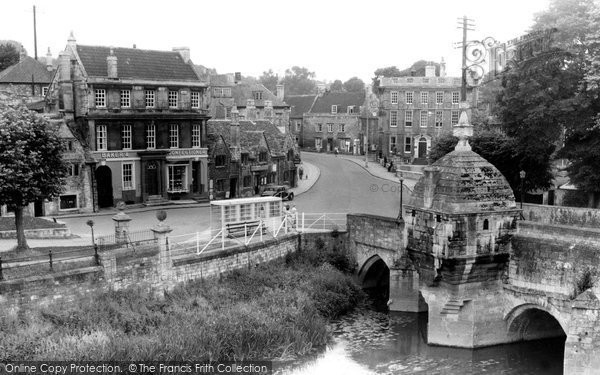
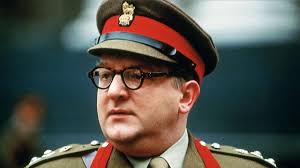
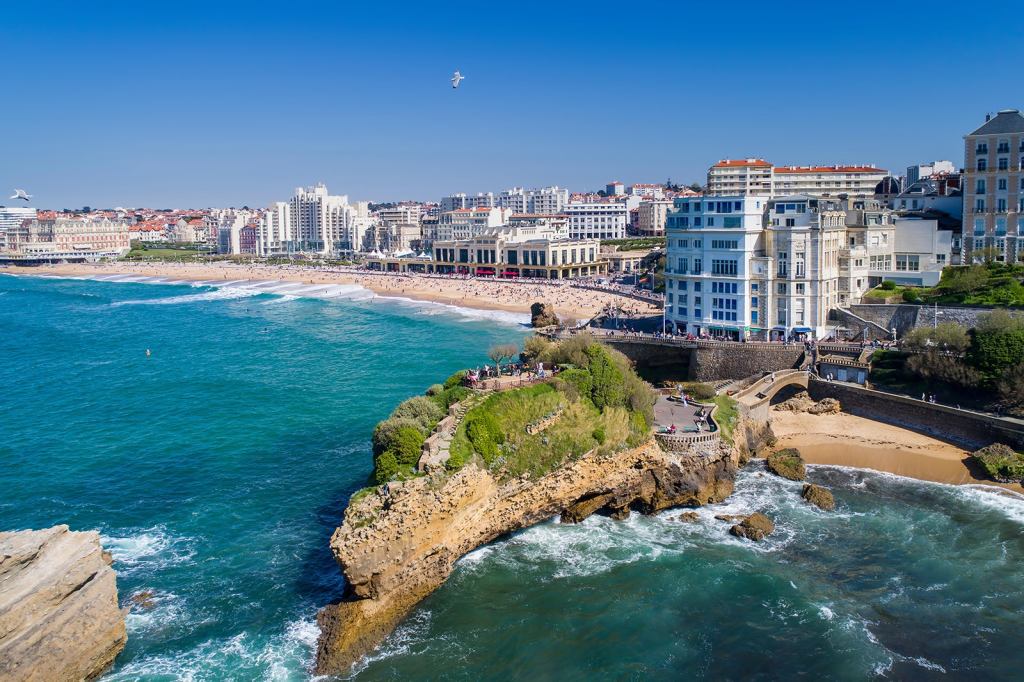
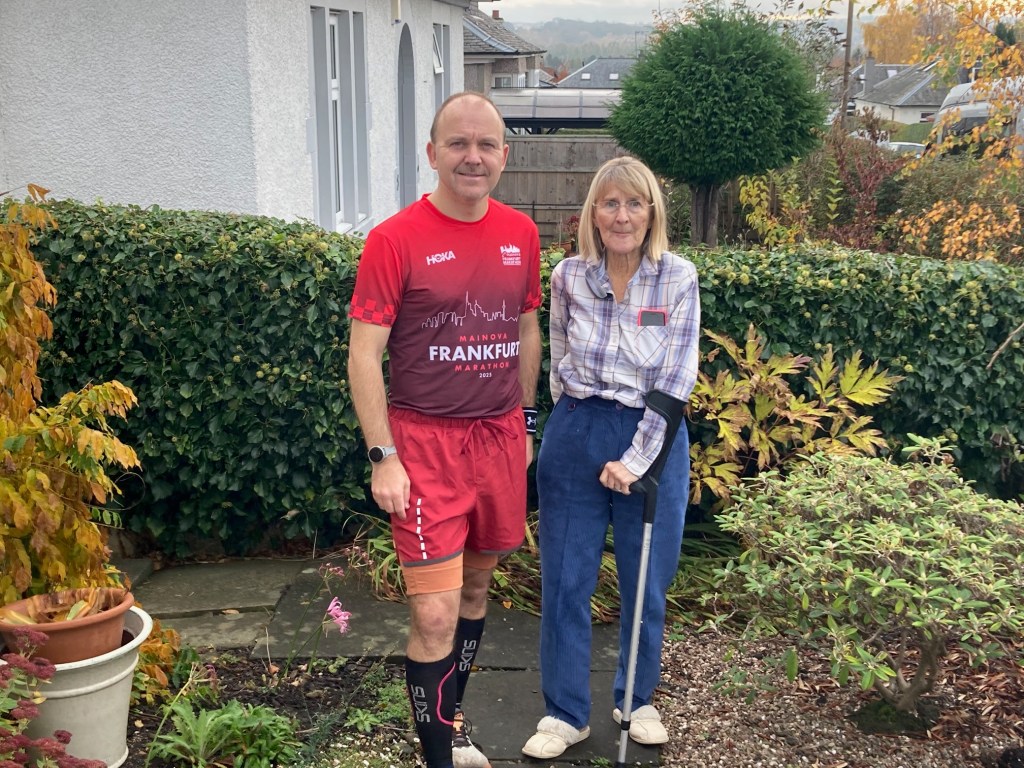

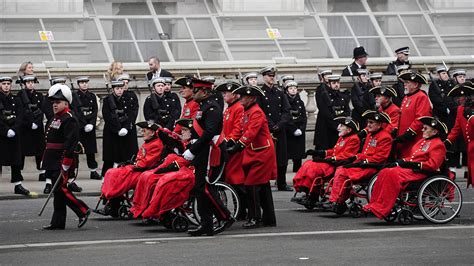
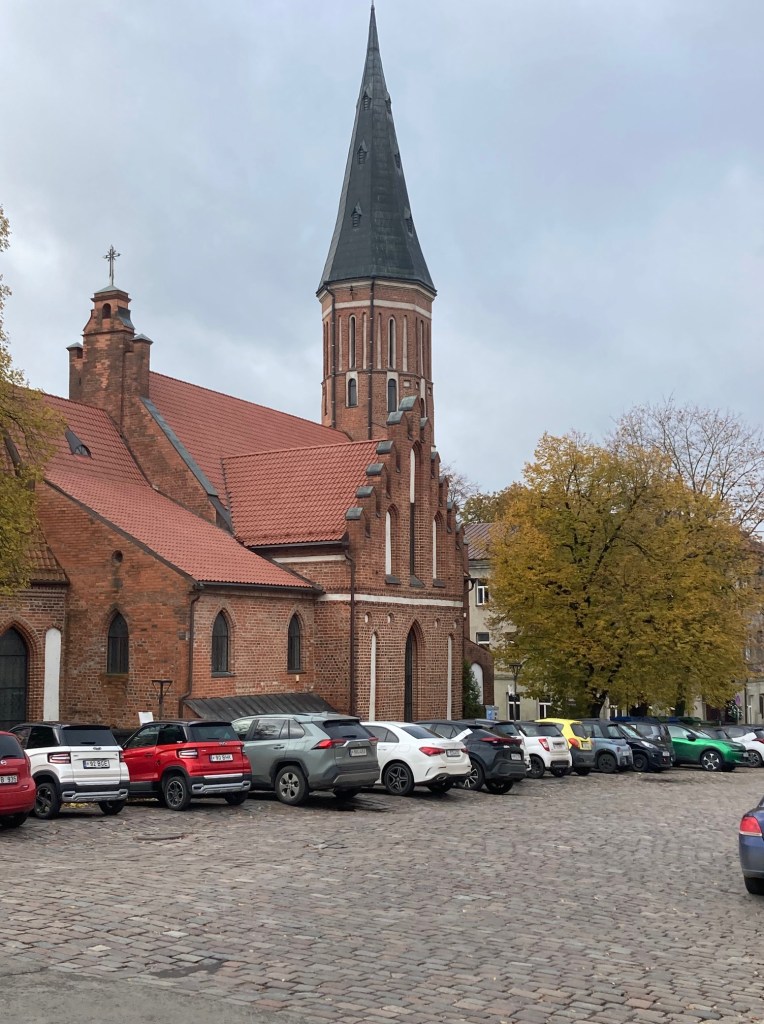
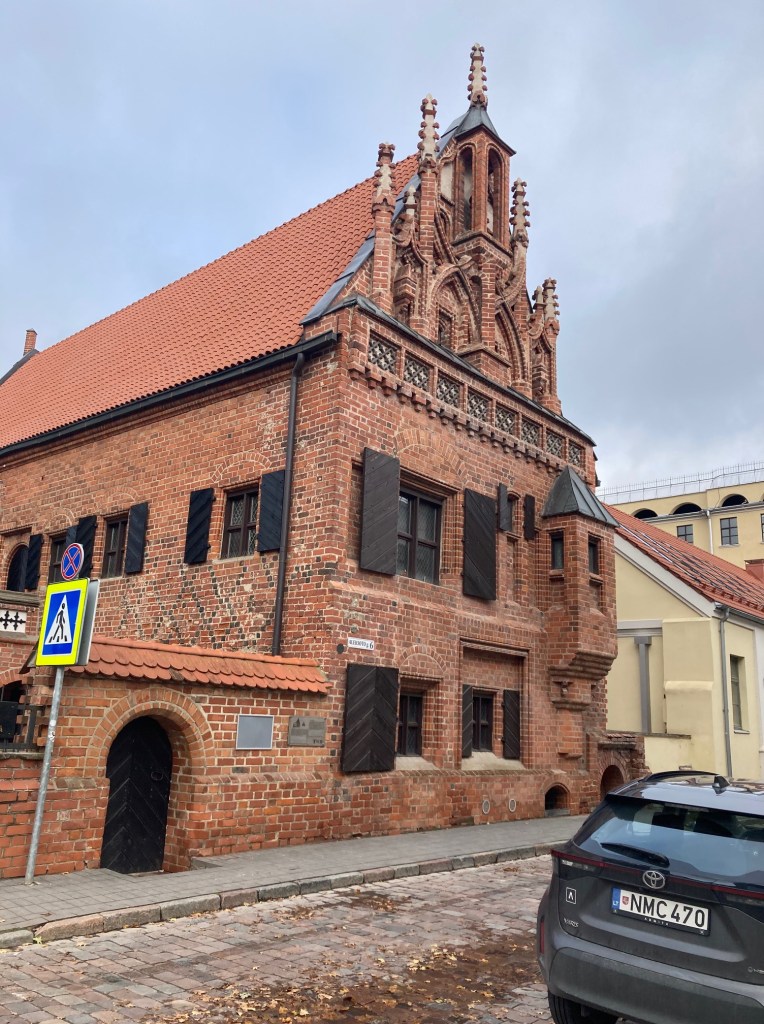


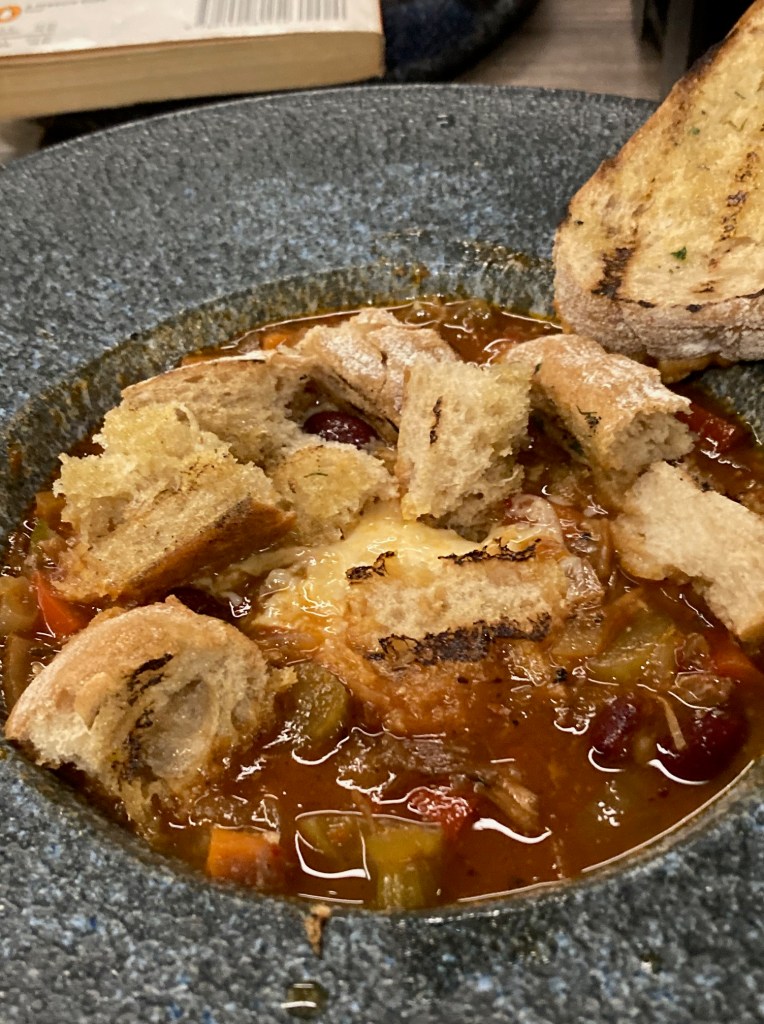

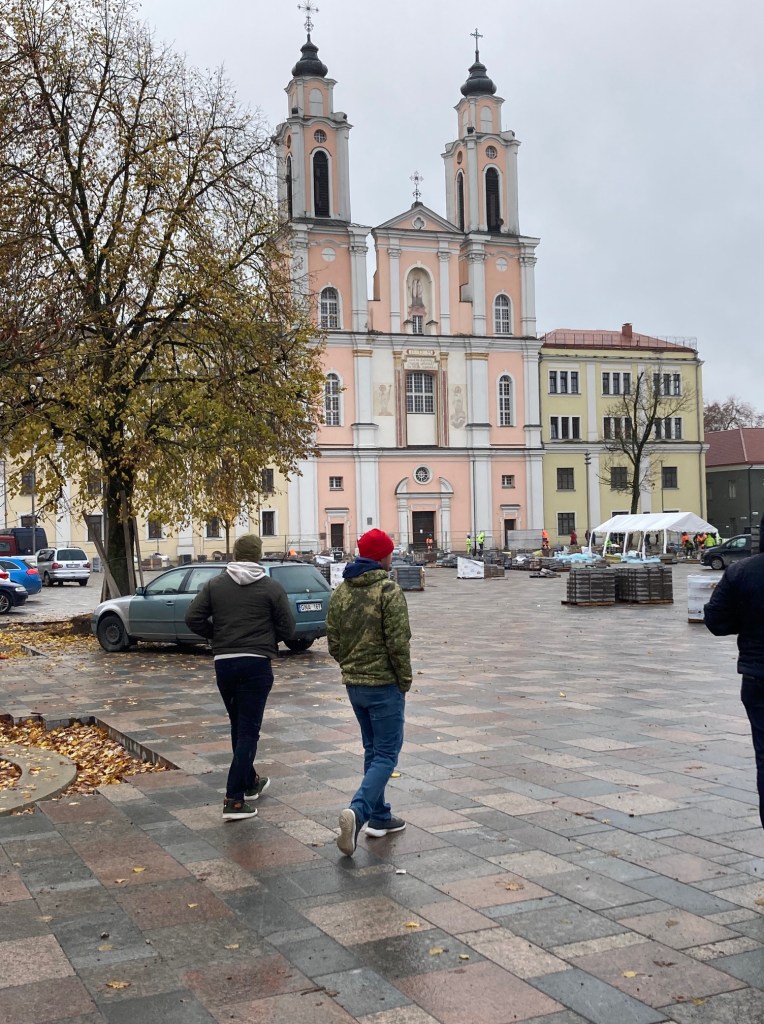


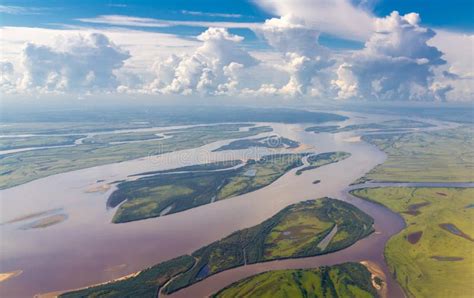


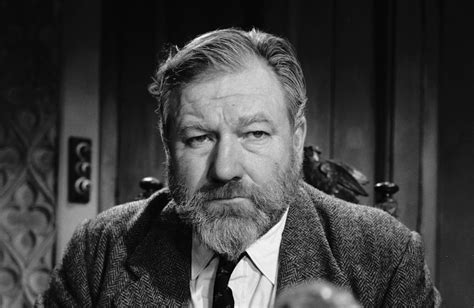
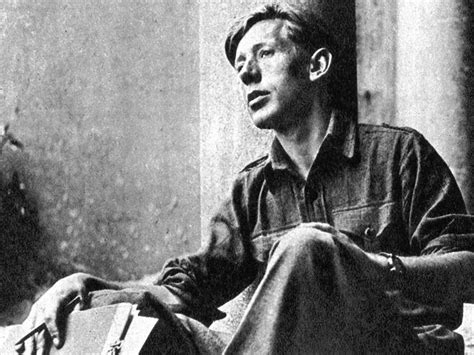
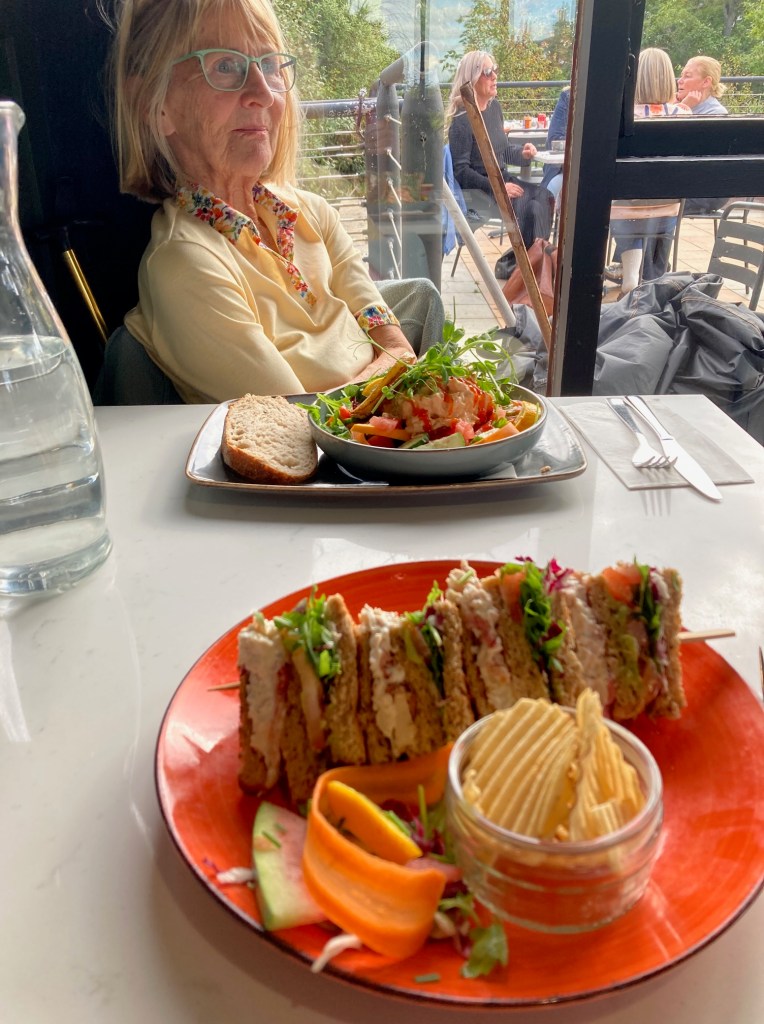


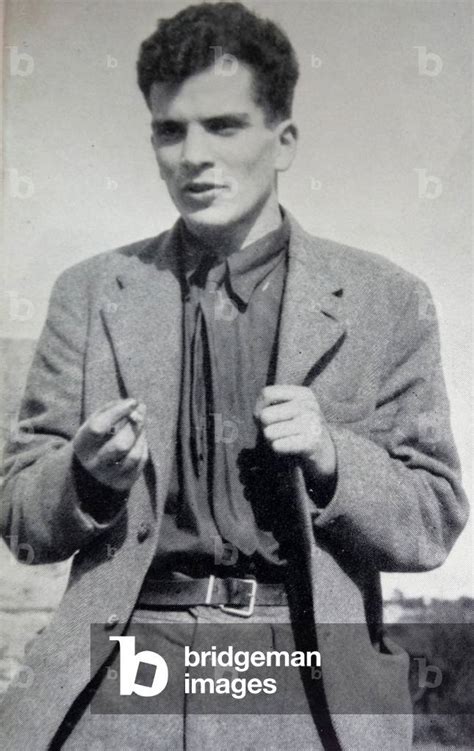
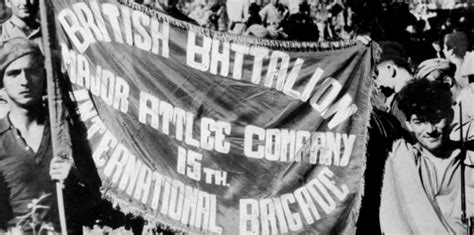
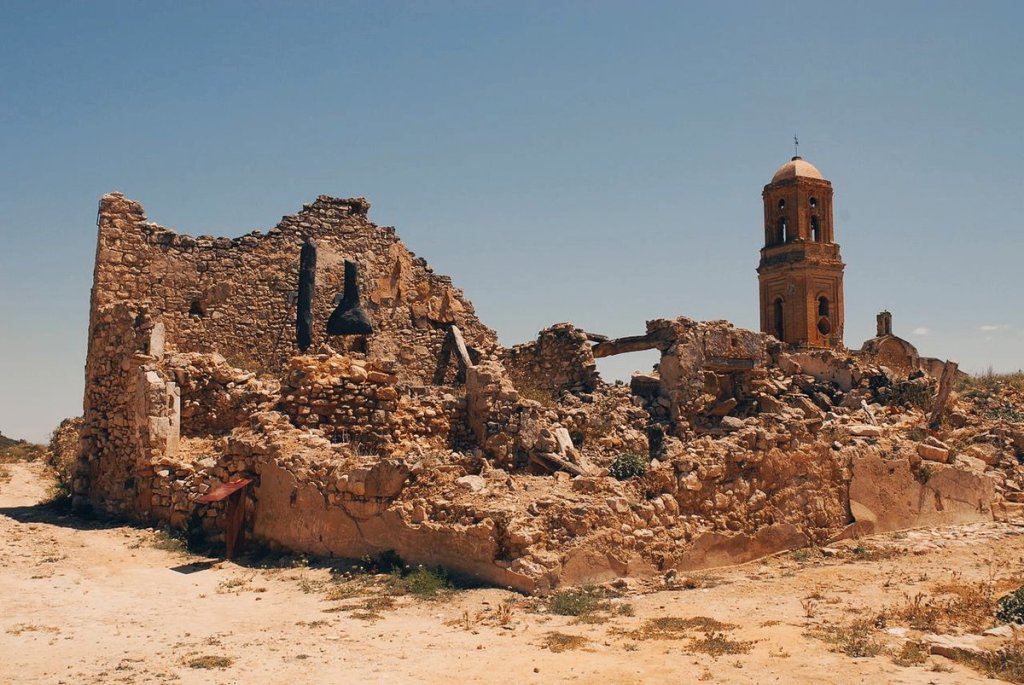

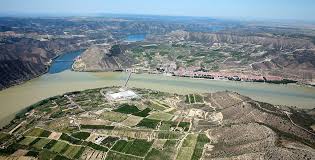
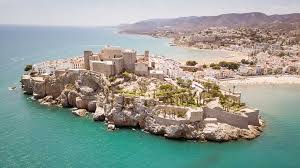
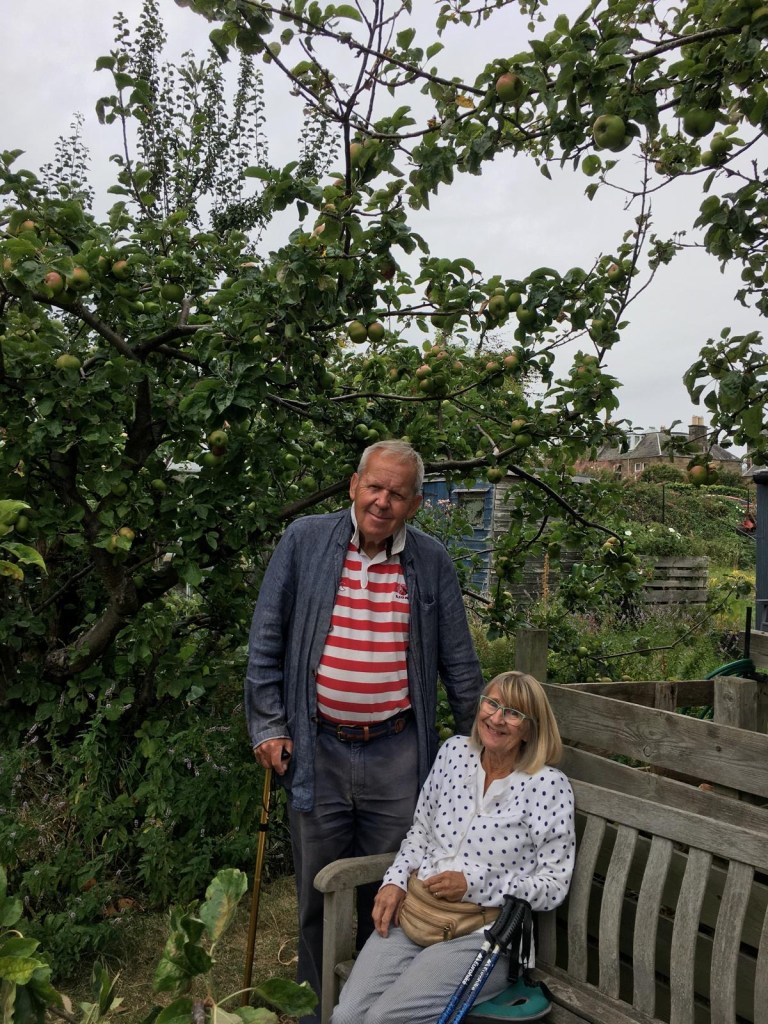
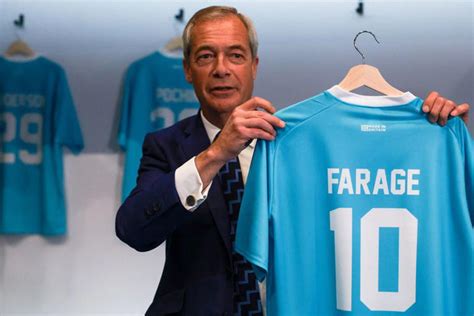
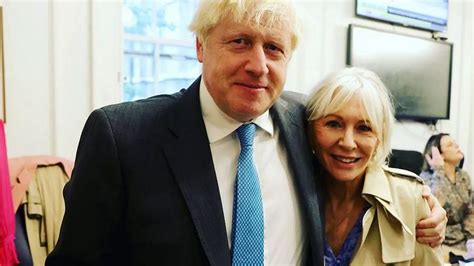
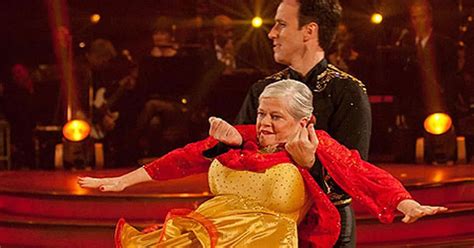
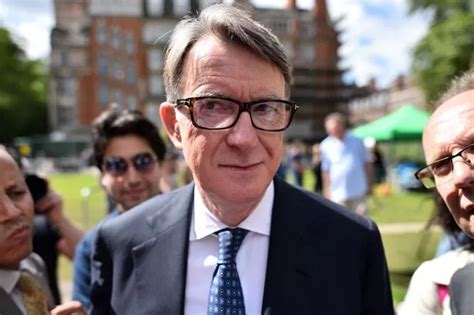

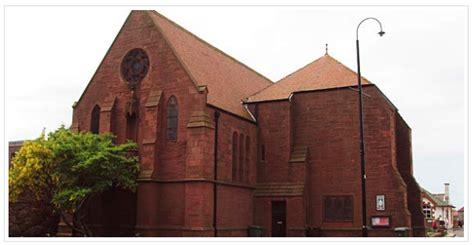
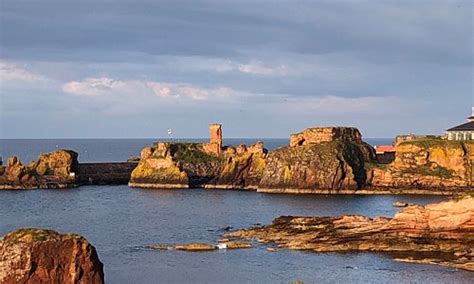
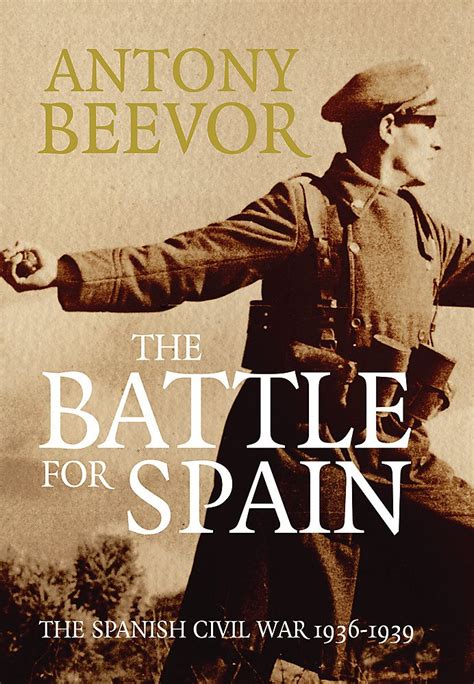


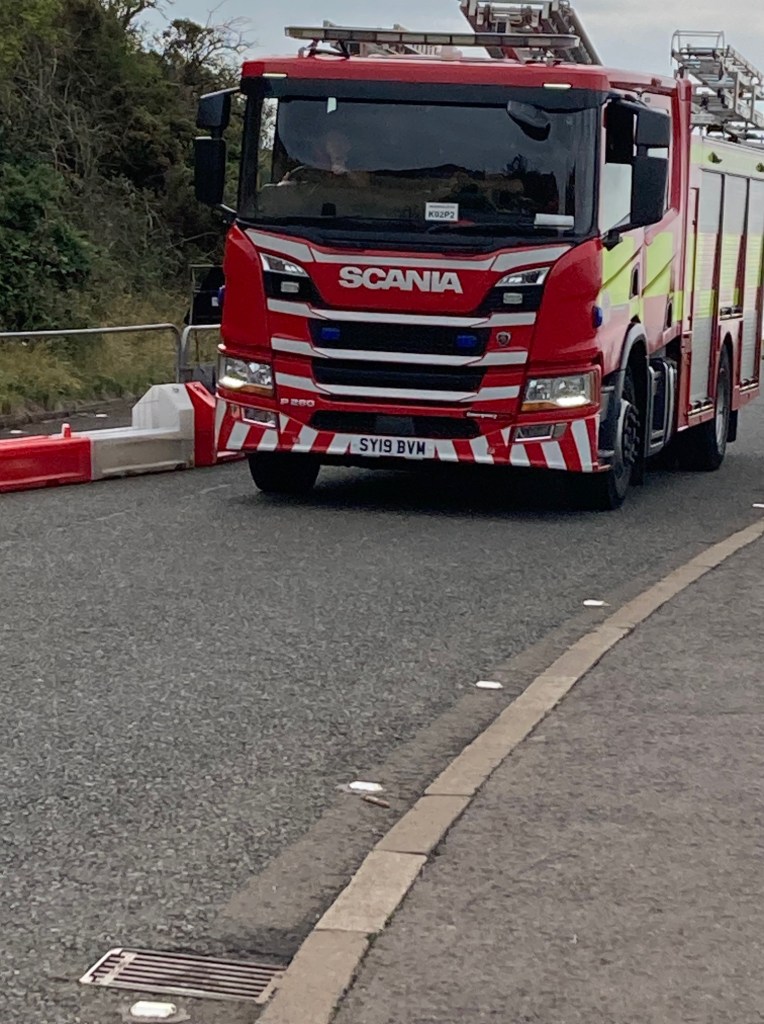
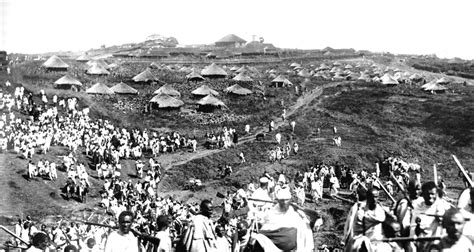
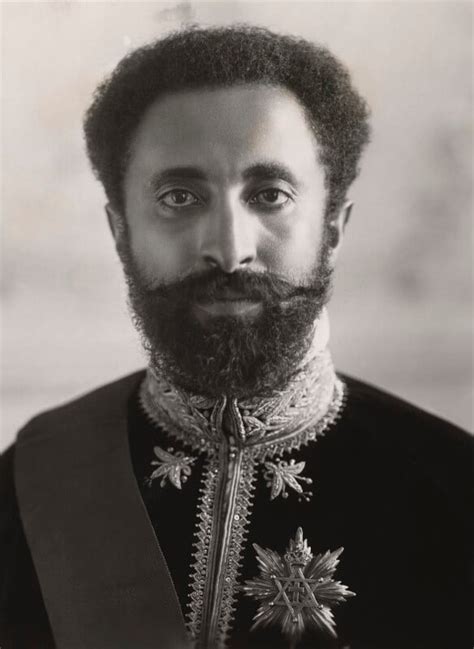
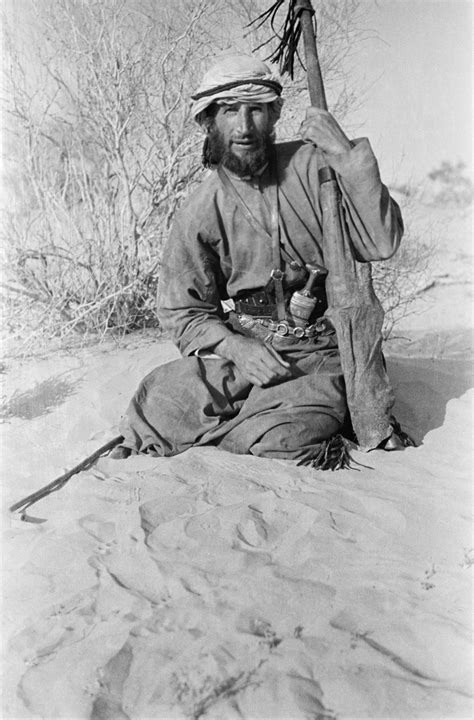
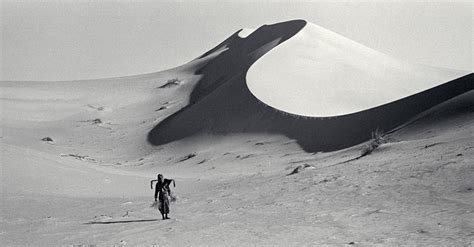
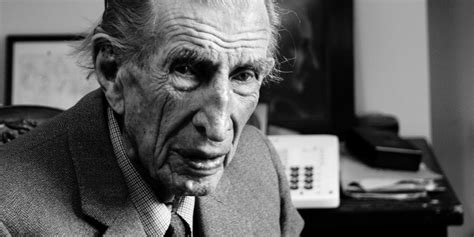
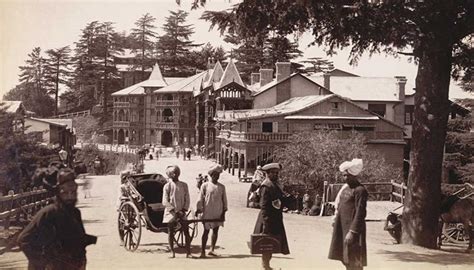

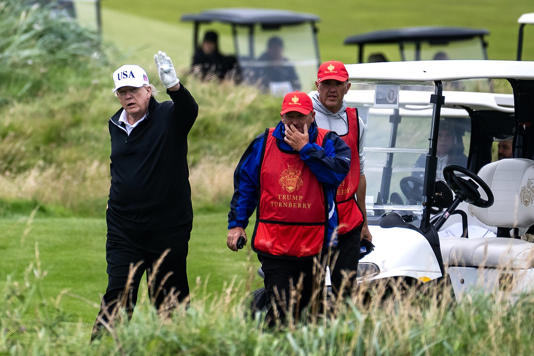
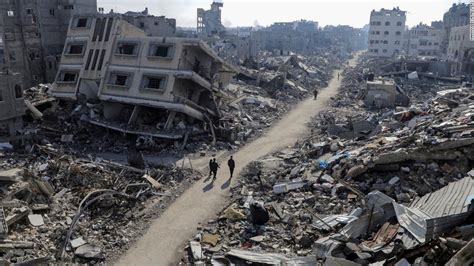

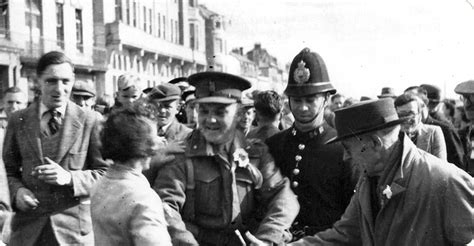
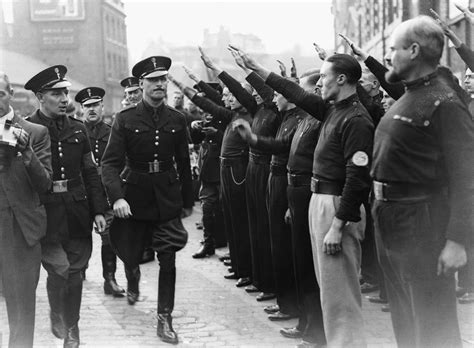
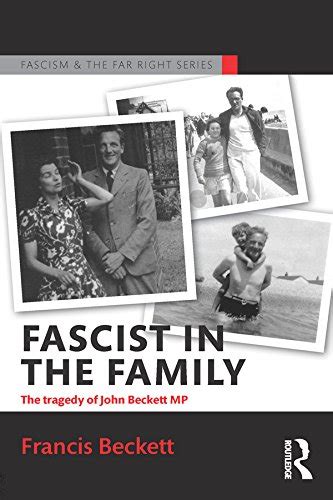
 Through a glass darkly