Through a glass darkly

The problem of suffering and evil

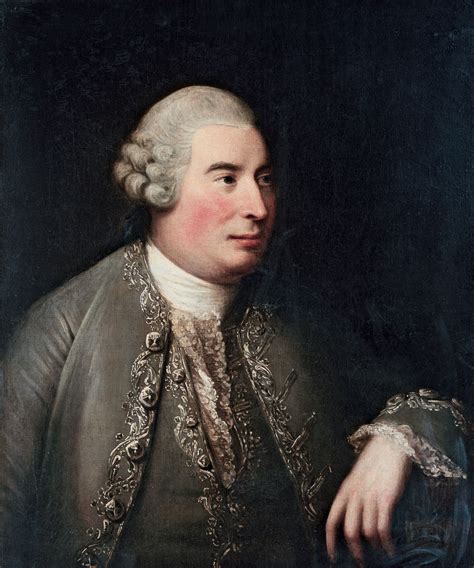
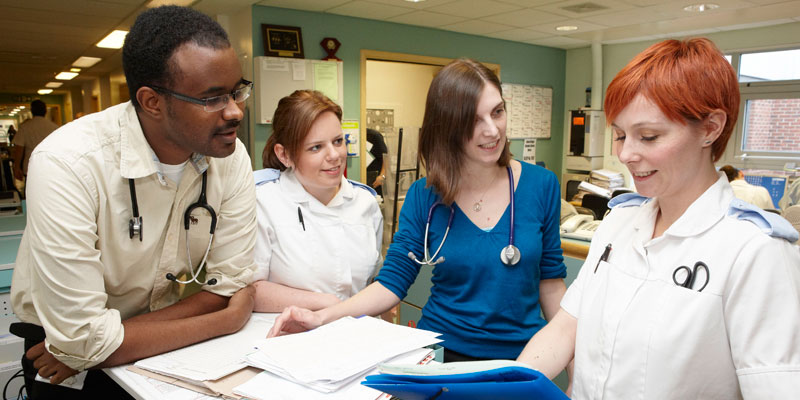
Exposure to too much COVID-19 stuff can induce compassion fatigue. Too many people dying, unevenly distributed here in the UK in terms of class and ethnicity. And too many deaths among people working in the NHS. The stories raise once again the age-long question of how we square our belief in a God who is all loving and all powerful with the existence around us of so much pain and suffering. The classic formulation of the problem is by the philosopher David Hume: “Is God willing to prevent evil but not able ? … Is he able but not willing ? … Is he both able and willing ?” This is the argument against God from evil. And for many people it is a compelling argument.

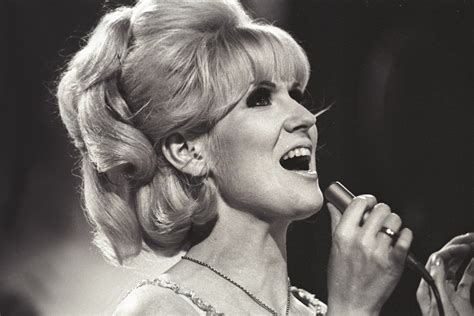
David Hume

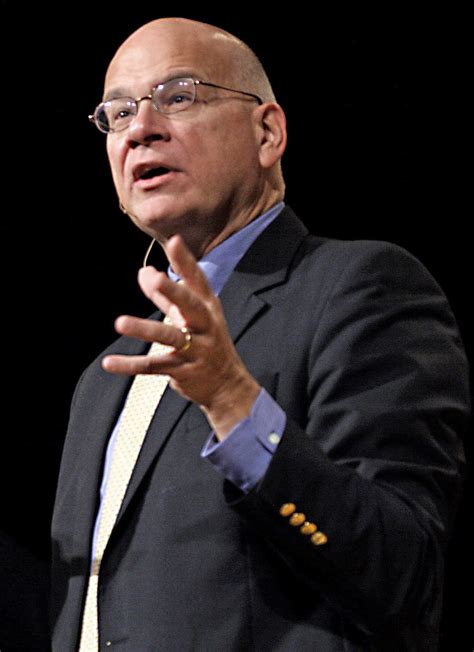
So, I’ve been using part of this locked-down period to look again at Tim Keller’s 2013 book Walking with God through Pain and Suffering. Keller is a New York pastor and church planter, who moved to Manhattan two decades ago to found Redeemer Presbyterian Church. [I’d like to say that I make a point of hearing him preach whenever  we are in New York. But the truth is that I’ve only once been in New York once on a Sunday, and we were fortunate enough to hear him preach at Redeemer Upper West Side, not far from our hotel. He was very good. He spoke about the importance of reconciliation and forgiveness, in a practical and challenging way.] Tim Keller has written a number of books, writing as a practising pastor rather than as a theologian, and I think he has recently stood down from church leadership to concentrate on training pastors and on the City to City programme.

Keller insists on the reality of unavoidable suffering. In ministry he found that pain and suffering were the main reason for people to turn away from God. He points us to CS Lewis: “God whispers to us in our pleasures, speaks in our conscience, but shouts in our pain.” Peter Berger says all peoples long to “bestow meaning on the experience of suffering and evil”. Every religion and every society must provide a discourse through which people can make sense of suffering. But modern secular culture provides no such tools.  In our contemporary secular culture the meaning of life is to be happy; and suffering has no meaningful part. Atheists like Richard Dawkins and Susan Jacoby claim that a secular view of life eliminates the ‘problem of evil’, and frees people to concentrate on making the world a better place. But Keller demonstrates that in the face of tragedy our society turns instinctively to God and to faith. Victor Frankl, a Jewish psychiatrist who survived the Nazi death camps, observed that many secular people turned to religion in the camps. And he adds: “when we have no meaning beyond personal happiness, suffering can lead very swiftly to suicide

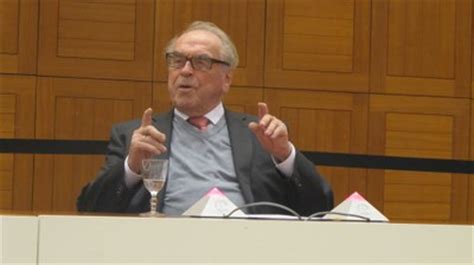
Tim Keller

Many objections to God’s existence are not philosophical, but visceral. We don’t want to believe in a God – who allows such dreadful  things to happen. We object to God because of things that offend against our strong moral and ethical instincts. But where do these instincts come from ? CS Lewis is the most famous example of what Keller calls ‘the boomerang effect’. “He came to realise that evil and suffering were a bigger problem for him as an atheist than as a believer in God.” Similarly, Andrea Palpant Dilley wrote in her 2012 book, Faith and Other Flat Tyres: Searching for God on the Rough Road of Doubt: “I left the church in part because I was mad at God about human suffering and injustice … And I came back to church because of the same struggle … To talk about justice, you have to talk about objective morality; and to talk about objective morality, you have to talk about God.” 

CS Lewis

Biblical perspectives

In the second part of his book Keller embarks on a long survey of what the Bible teaches us about suffering. He points us to some key aspects of Christian teaching: the doctrine of creation and the fall; our expectation of final judgement and renewal; and, crucially, the incarnation. Peter Berger comments: the essential Christian solution is that “the incarnate God is a God who suffers”. Keller is at pains to emphasise that, while Genesis 1-3 teaches us that suffering is the result of sin, the original sin of turning away from God; individual suffering is not the result of a particular sin. Bad people do not have worse lives than good people. Which brings us back again to Job, a good and upright man who suffered grievously. Many people have a desire to believe that ‘people deserve what they get and get what they deserve’. But the Bible totally rejects this view. Paradoxically we believe that God is sovereign, but that he exercises his sovereignty in such a way that human beings are responsible for their own actions and for the consequences of those actions. Don Carson comments: “It must be the case that God stands behind good and evil in different ways, that is, he stands behind  … them asymmetrically”.

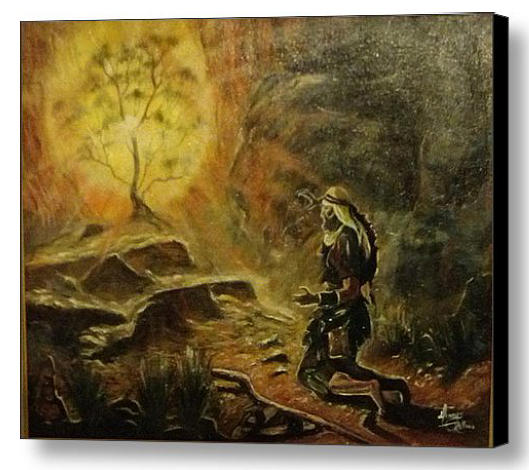
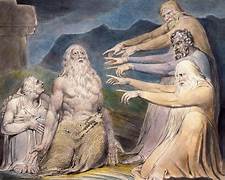
Job and his comforters

Keller is critical of many churches today who teach that God will make you happy, healthy, and prosperous. Contemporary secular culture is resistant to the idea that suffering can be useful. But Keller enlists contemporary psychologists Jonathan Haidt and James Davies who have evidence to show that suffering produces character, endurance and hope. Which is something that the Bible assumes. Where many therapists today encourage us to meet problems by turning away [and concentrating on e.g. popcorn and pina colada], Haidt and Davies both encourage us to confront suffering by walking steadily through the experience. The Bible teaches us that God uses suffering to build us up: to humble us and remove excessive pride; to change our relation to the good things in our lives [that is, to change our priorities]; and, thirdly, to strengthen our relationship with God. Again we hear that dictum  from CS Lewis: ‘God whispers to us in prosperity, but he shouts to us in adversity’. Suffering encourages us to pray. And Keller insists that the best preparation for suffering is a rich prayer life. 

There is of course a gap between the theory and the practice. John Feinberg [now a distinguished Professor of Theology] was a theological student who had written his thesis on the book of Job. But when his wife developed Huntington’s Chorea he wrote: “I had all these intellectual answers, but none of them made any difference as to how I felt.” Don Carson writes how Christians may have some theoretical idea of suffering, but when something jolts them to the core, it is not that those beliefs are irrelevant, but “the Christian must now learn how to use them”.

Practical steps for facing affliction

In the third part of the book, Keller provides some practical steps for facing affliction. We are all aware of [and sometimes sceptical about] the American fondness for Self-Help manuals. And in fairness Keller is anxious to underline that this is not that kind of book. I don’t want to explore this part of the book here.These are not discrete steps to be followed in the prescribed order. They are more some practical suggestions as to how we walk with God in our lives, particularly in the difficult times. Some suggestions as to how we try to orient ourselves so that suffering changes us for the better rather than the worse.

Envoi

Reading this book reminds me that thirty-plus years ago, as a student at Wycliffe Hall,  I was attached for a year to Michael Sobell House, a hospice attached to the Churchill Hospital in Oxford. It was an instructive time for me, as I am always a bit scared of hospitals and blood [especially my own]. During my time at Sobell House I met Simon, a man of 53,  who was dying of Motor Neurone Disease. He was a photographer, not a Christian, with his mental faculties all intact. But his body was giving up on him; and he got severe burns on his chest when lighted cigarettes fell from his mouth.  He was anxious to engage in conversation with me about my faith. At the same time I was writing an Old Testament essay: ‘When God answers Job out of the whirlwind, is his answer satisfactory ?’ Sadly Simon died before we had our promised conversation. But at the time I was aware that it might be difficult to find an answer that would satisfy Simon.

As deaths from COVID-19 in the UK push above 27,000, and as many commentators move towards discussion of the easing of the lock-down and start allocating blame for the political mishandling of the pandemic,  I sense the absence of Christian voices in the public arena. Local church congregations have been doing great things with zoomed services and delegated pastoral care, but there seems to have been no public expression of faith. Nor of lament. 

I’m not wanting Christians to have neat explanations for what is happening. Job’s three friends make long speeches in which they explain [justify] what had happened to him. Job knows that they are wrong; but he refuses to curse God and reject him as unjust. And when God does appear, he tells Job’s friends that their legalistic, self-justifying, retributive theology is simply wrong.

Pastoral care can be better expressed through sympathetic silence than by theological explanations. Something that I was pleased to learn.

Close to the end of his book, Keller says this is the most important thing: that the Bible tells us that God is “near to the broken-hearted” [Psalm 34:18].  God’s silence about Job’s sin is a wonderful declaration of love. Francis Anderson says: “This is the final answer to Job, and to all the Jobs of humanity. As an innocent sufferer, Job is the companion of God”. As Simon Ponsonby told the ICS [Intercontinental Church Society] Conference last week, our primary task at this time  is to know the love of God. And to share our knowledge and experience of that love with those around us.

May 2020
Through a glass darkly

Bouquets and Brickbats

A friend wrote to Susie to say that she heard I was blogging ‘to make sense of this COVID pandemic’. That’s not true. I am not able to offer a synoptic view. But, as we move into Week Five of the great lock-down, inspired by Piers Moron of the Daily Mail {probably the first time that phrase has been used in the English language ever, by anyone], here are my awards for inspirational behaviour over the past few weeks. And also a few, all too predictable, brickbats for people who have done stupid or shoddy things. Let’s take that latter group first and get them out of the way. Apologies to both my overseas readers; it is a very British list.

  1. Robert Jenrick

Robert Jenrick has been Tory MP for Newark since 2014. He is apparently the Secretary of State for Housing, Communities, and Local Government [no, I didn’t know before either]. He is, predictably, a commercial lawyer who, according to his website, makes money from advising businesses in London and Moscow. After being wheeled out on the tv as government spokesman to tell people to stay at home, he then drove 150 miles from his London home to his £1.2 million Herefordshire home [apparently that is only two of his three homes]. And he then drove a further 50 miles to visit his parents in Shropshire. And seems to have lied through his teeth when being  questioned about this.  [He claimed to be delivering food and prescriptions which had already been  delivered by their neighbours.] Another cabinet minister who thinks that the rules are only for other people.  I know the Chief Medical Officer for Scotland did something similar. But she resigned the same day as the news broke.

2. Tim Martin

Tim Martin is a British businessman, best known as the founder and chairman of Wetherspoons, a pub chain in Britain and Ireland. He owns 33.7 million shares in that company. He was a prominent Brexiteer, and was photographed with a pre-PM Boris Johnson as they both stood behind a bar pulling pints. He was reportedly £44 million richer after the Tory election win. As soon as the COVID-19 pandemic arrived he fired all his staff, apparently by text message, without apology or compensation. The unspeakable Philip Green of Arcadia did much the same. Shameless behaviour. Deux véritables salauds !

3. Jacob Rees-Mogg

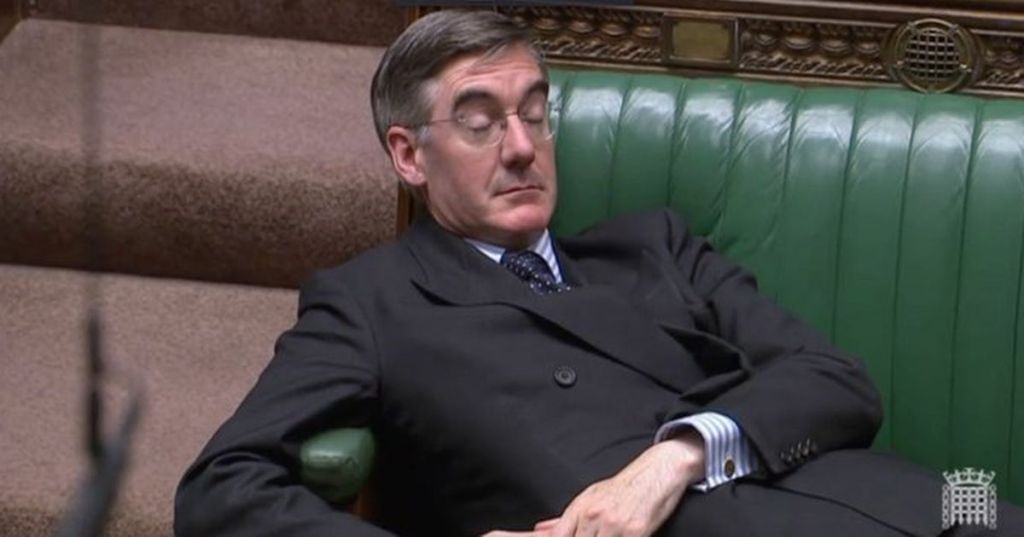
Jacob Rees-Mogg is a pin-striped Tory politician, currently serving as Leader of the House of Commons and Lord President of the Council. No-one ever mistook him for a Man of the People. Private Eye refers to him as the ‘MP for the 18th century’ He owns 15% of Somerset Capital Management, which reputedly earned him just over £1 million last year. Mark Asquith, the Fund Boss of Somerset Capital, is telling his investors that they can ‘make a killing out of the pandemic’. More deaths means fatter profits. This is despicable behaviour, even by the standards of the Tory Party and of end phase capitalism.

4. Joggers

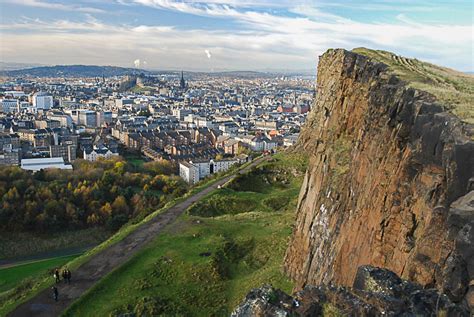
I walk round Arthur’s Seat every day, exchanging brief greetings with fellow walkers as we circle round each other. It is a lovely park right on our doorstep. The only menace are lycra-clad joggers of both sexes, who jog past within eighteen inches of my elbow. Invariably they have speakers in their ears making them deaf to any rebuke. And many of them have a strange, self-obsessed look on their faces, as if they are managing an unusually large bowel movement.

5.  President Trump

There’s not much left to say. The USA has the largest number of COVID-19 cases in the world, and a President who is patently out of his depth. His initial response was to worry about his re-election prospects. He then used racist language to label it as “that Chinese virus”. And he then gave his idiot son-in-law specific responsibility for dealing with it. Shades of Caligula and his horse.

Bouquets

1.The staff of the NHS

No quarrels about this. The NHS have been doing a great job, not always helped by shortages of testing kits and of PPE. We have prayed every morning for the past several weeks for the people who work in the NHS; remembering specifically a son-in-law and a daughter-in-law both working at Stoke Mandeville hospital, and a niece who started work as a nurse in Bristol two weeks ago. It has been good to stand and clap on Thursday evenings with the neighbours down our street.  

2.  Sainsbury’s delivery drivers

Lord Sainsbury never struck me as a philanthropist. [Is it true that British supermarkets operate with a substantial higher profit margin than their  equivalents in France or Belgium ?] But Sainsbury’s staff have worked hard throughout the crisis.  We have been grateful for their on-line delivery service and the cheerfulness of their drivers. And I guess that goes for our postmen and a whole lot of other delivery drivers.

3. The Queen

The Queen’s unprecedented broadcast to the nation last week was a perfect example of how to do these things. It was measured, affirmative, concerned, and not too long. She didn’t need to lick her finger to turn the page [Dominic Raab]. Nor did she attempt to deflect difficult questions to someone else [Matt Hancock].But then, as she acknowledged, she has been doing these broadcasts since 1940, since before they were born.

4.  Gareth Malone

Gareth’s afternoon on-line singing lessons have apparently picked up 150,000 followers. He is gifted, enthusiastic, and encouraging. The sessions are a perfect antidote to the government briefings, which go out at much the same time. I’d pick Gareth any day. And Jamie Oliver’s simple cookery recipes which turn up at odd times on Channel Four are equally positive. He too gives you the feeling that you can just got away and do it.

5.  The Titfield Thunderbolt

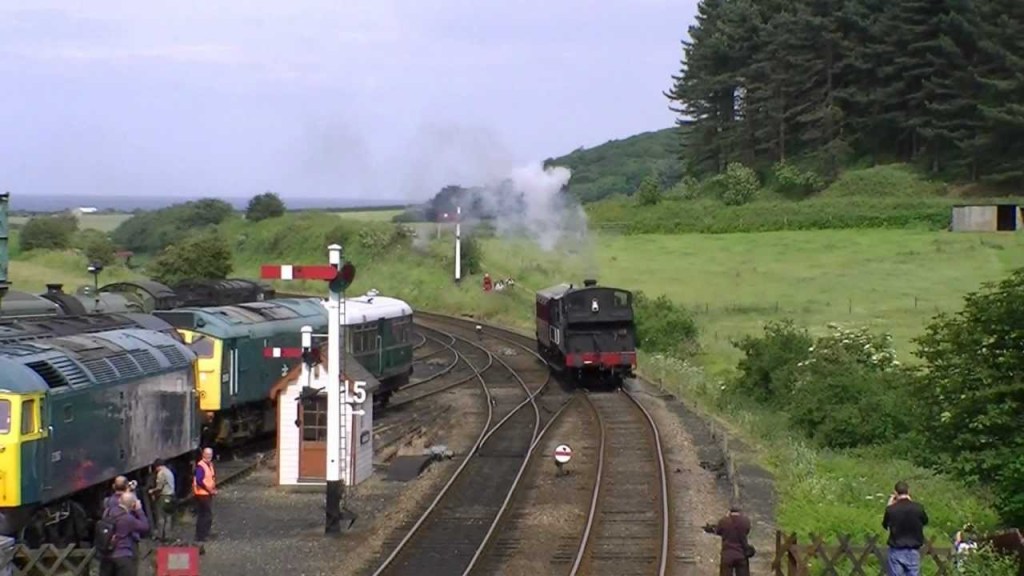
This bouquet really belongs to the Controller of BBC 2, for scheduling a series of classic Ealing comedies in mid-afternoon in Passion Week. I know the timing was a bit tricky, but that’s why we have the I-Player facility. The pick of the bunch, for me, may have been The Titfield Thunderbolt.

TEB Clarke’s script, about a group of villagers attempting to keep their railway line open after British Rail want to close it down, was apparently  inspired by the story of the Talyllyn Railway in Wales. My maternal grand-father worked for the GWR, and as a child I spent all my school holidays on a small station between Swindon and Kemble Junction.  And some of the scenes were filmed around Freshford and Limpley Stoke, close to where my grand-parents lived in retirement. Watching these elderly steam trains against the Somerset scenery was a great delight.

6.  Emily Maitlis

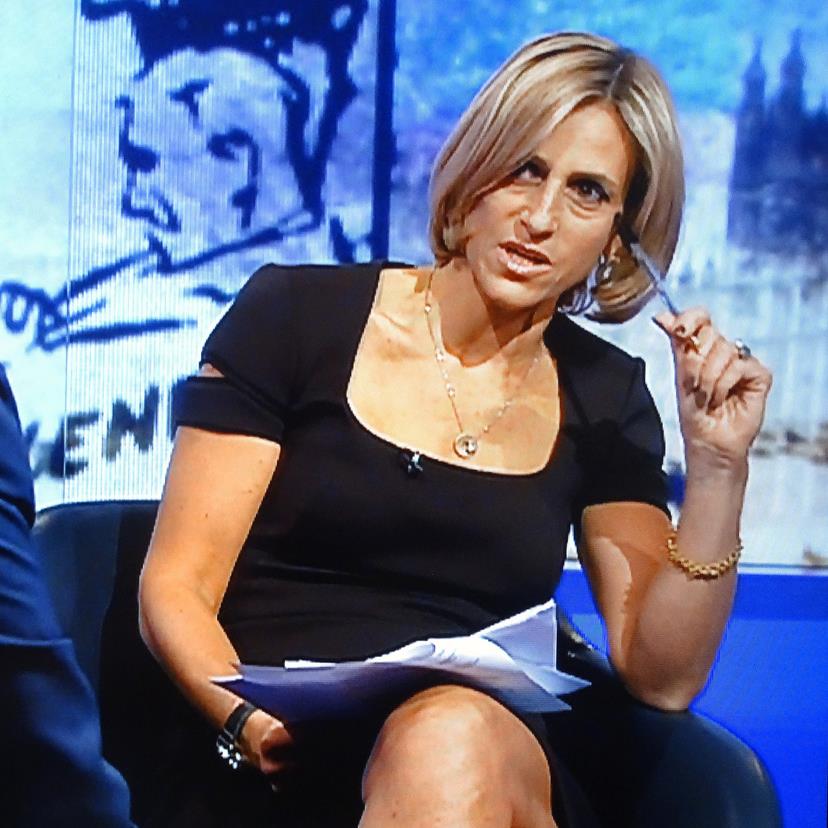
Emily Maitlis is a television journalist and regular presenter of Newsnight. She seems to be the first person to have disputed publicly the lazy assertion that COVID-19 is something that afflicts us all equally. That we are ‘all in his together’. “They tell us coronavirus is the ‘great leveller’, it’s not, it’s much, much harder if you’re poor…this is a myth which needs debunking,” she commented. “Those who have been on the front line right now, bus drivers, shelf stackers, nurses, care home workers, hospital staff and shopkeepers are disproportionately the lower paid members of our workforce. They are more likely to catch the disease because they are more exposed … …  Those who live in tower blocks and small flats will find the lockdown tougher. Those in manual jobs will be unable to work from home. This is a health issue with huge ramifications for social welfare, and it’s a welfare issue with huge ramifications for public health.”.

7. Jacinta Ardern

Jacinda Ardern is the New Zealand prime minister. It may well be easier to introduce social distancing in that more thinly populated country. But from a long way away it looks as if New Zealand’s elimination strategy, based on rigorous  quarantine testing at the borders, early adoption of social distancing and travel restrictions, and major investment in both testing and contact tracing, has been remarkably successful. The decisive and humane leadership of Ardern seems to have been a key factor in this policy. And she and members of her government are now taking a 25% pay-cut in solidarity with many who have lost their job and their income.

Going forwards

Will the COVID-19 outbreak significantly change our society ? Gloomily Matthew Parris thinks that nothing will change as a result of this pandemic. Peter Frankopan argues that the Black Death was a catalyst for social and economic change; that in the following decades of the fourteenth century urban wages rose, leading to better diets and better general health. It would be good to believe that a similar pattern may emerge. Archbishop Justin Welby has called, in recent days, not only for a different way of being church, but a different way of being society; for a more caring, and a more generous, and a fairer world. I guess that is something we could all be praying for. And perhaps an additional prayer that Boris will pick up a copy of Richard Wilkinson and Kate Pickett;’s book The Spirit Level: Why Equality is Better for Everyone as he and Carrie convalesce in their comfortable second home.

April 2020

Though a glass darkly

Dem bones, dem bones: the Easter message

My first ‘grown up’ Easter was in Paris in the mid-1970s. We went to church on Easter Day in the Eglise Réformée in the rue de l’Ouest in the 14th arrondissement and heard a visiting African choir sing A Toi la gloire, words by Edmond de Budry, music by Handel. It is a great Easter hymn, confidently proclaiming the risen Christ, and has become almost the go-to anthem of the French Reformed Church. The choir sang with smiling faces and with great conviction. And then we went and had lunch at the Brasserie Zeyer at Alésia, almost certainly eating gigot d’agneau.

In spite of the confident celebratory tone of Easter hymns, Easter can be a difficult time in church life. Christmas is a much more straightforward, more accessible event; lots of people are coming together for family gatherings, and many of them are pleased to sing the familiar Christmas carols. It is a well-known fact that the church Carol Service attracts both regular members and visitors, and it can be the latter group who complain more loudly when their favourite carol is omitted. Or when it is sung to ‘the wrong tune’. [O little town of Bethlehem is the usual candidate for this.] Easter by comparison has a more ambivalent feel about it. Regular church families are quite often away. Visitors may find it difficult to buy into a sermon that plunges them into unfamiliar waters; the sadistic awfulness of the Cross and the difficult notion of Resurrection life. And Easter promises to be an even more difficult event this year, with church buildings closed and the fact of COVID-19 dominating our television screens and fuelling our fears.

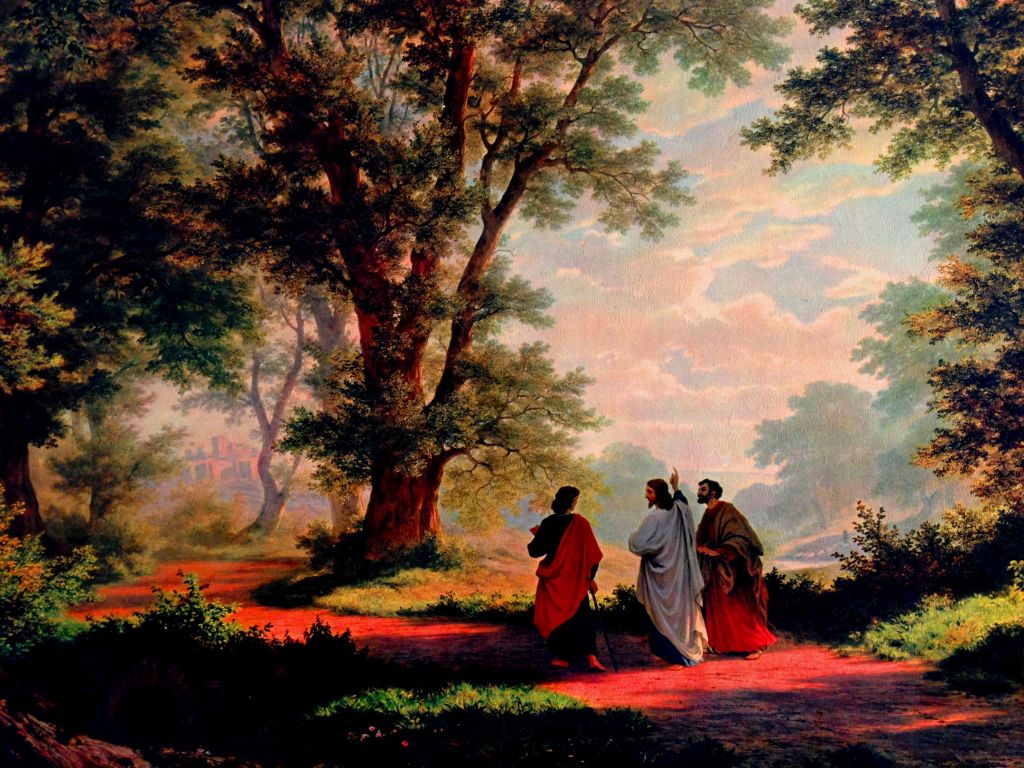
When I was a relatively new vicar [I was never a young minister; I was ordained in my 40s] I used to think it was my job on Easter Day to convince those who were in church, congregation and visitors, of the truth of the resurrection of Jesus. Which I would do by rehearsing the story of that first Easter and by marshalling the evidence. I was no doubt helped by Michael Green’s little book The Day Death Died. In that book Michael Green, the energetic and persuasive one-time Rector of St Aldate’s in Oxford [whose daughter once passed on to us two incorrectly sexed baby rabbits] lays out very clearly the evidence.The rolling away of the stone. The empty tomb. The message of the [one or two] angelic young men. The evidence of the Roman guards. The fragmentary testimony of Mary in the garden, and of the couple walking on the country road to Emmaus. The transformation of the disciples from a frightened rabble into, in John Drane’s words, ““a strong band of courageous witnesses and the nucleus of a constantly growing church”

As the years rolled by it dawned on me that this approach was not wholly satisfactory. Easter was not the day to argue people into the Kingdom. What was needed was something that connected more closely to our own lives and the world we inhabit. Preferably linked to a news item. So I think I once preached in Duns from a newspaper story about a badly burnt cat that had rescued her kittens from a house fire at great cost to herself. [No, I didn’t descend to talking about Easter bunnies; not as far as I can remember.]  If I were preaching this Easter I would certainly want to make reference to the COVID-19 story from Italy; the parishioners clubbed together to buy a ventilator for their elderly priest in hospital, and he gave it away to a younger patient. And then died.

A tour of bones

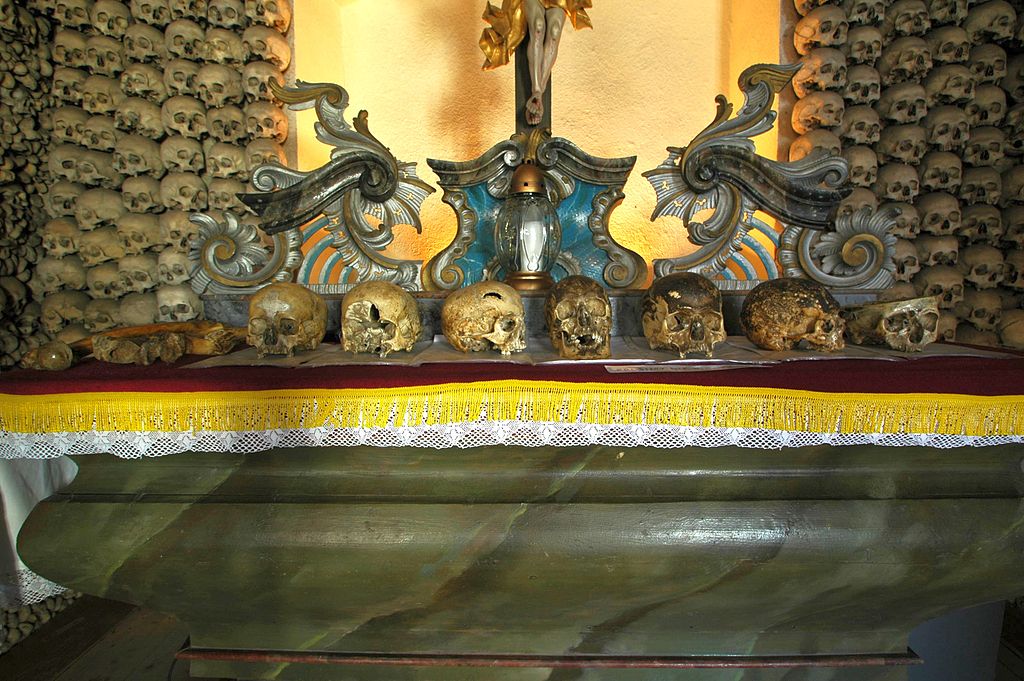
One of the most interesting Easter-themed books that I’ve come across in recent years is A Tour of Bones, a book by an American woman, Denise Inge, from a Mennonite background. One day she goes down into the basement of her house in Worcester [the Bishop’s Palace, her husband is the Bishop of Worcester]; then further down through a trap-door and finds herself surrounded by bones. “There are no neat bones. Instead, there is notbing here but the chaos of death; bones heaped upon bones in disarray, indignity upon indignity, jaw upon pelvis, femur upon cranium …” For this is an Anglo-Saxon charnel house.

Living in close proximity to all these skeletons causes Denise to ask a number of questions.  Why are we so bad at talking about death ? Even those who spend part of their professional lives sitting at hospital bedsides ? Why are clergy sometimes so inept at taking funerals ? Her friend Rachel, a consultant in palliative care, tells her: “Death … takes place more and more in hospitals and less in homes. Therefore people, children included, have less experience of death and dying; it becomes something that happens behind closed doors – and what we don’t see, we fear.”

And this becomes not just a philosophical/cerebral but a physical journey. As Denise sets out to visit four European charnel houses; all in places that are unfamiliar to her: Czermna, in Poland, in former Silesia; Sedlec in the Czech Republic; Hallstatt in Austria, a place where salt has been mined since the 2nd century BC; and Naters, an Alpine village, near the Simplon Pass in Switzerland. 

This is not the time or place to summarise the entire book. But the journey provokes significant questions.  “The power of the new, the shocking, the astonishing”, writes Stephen Cherry, in his book Barefoot Disciple, “is that it gets past our defences and starts to trouble us.”  Inevitably given her Christian background, Denise Inge starts to think about resurrection, wondering just what resurrection life might be like. Many people today who speak of ‘life after death‘ mean a life that follows immediately after bodily death. But this is not what it originally meant.  Scripture tells us rather that resurrection means ‘new life after a period of being dead’. In all these debates lies the basic tension between continuity and transformation – how much of the old is to be retained ?

Each of the sites visited provokes different questions. At Czermna the question is: Are the broken parts of your deep self being healed ?  At Sedlec: Have you found a lasting hope ?  At Hallstatt: What are the things for which you will be remembered ? These are not  questions which allow quick or easy answers. This is not the simple crossword puzzle. These are questions to live with. “The journey into bones has become a journey into the interior.”

When the travelling stops two things happen. First Denise’s father dies, of cancer of the liver. And then the baby she and her husband are going to adopt is taken from them. And then Denise herself is diagnosed with terminal cancer. Inoperable. Her questions about dying and living are thrown into a new and urgent perspective. 

For me the book is a poignant reflection on both dying and living. “During my travels bones have become for me a metaphor for the enduring and the essential, the deep things that remain once all the skin and the muscle of life is gone.” Paul Tillich has written about modern man’s fear of meaninglessness. “What I have been surprised to discover,” Denise Inge writes, “as these questions chase and wash over me is that preparing to live and preparing to die are in the end the same thing.” This book is not a sentimental tract. Nor is it an unambiguous declaration of faith

Fellowship this Easter

Like everyone else we won’t be doing any travelling this Easter. But thanks to Zoom, of which I had not heard just a month ago, we shall be able to join with Christian congregations in a variety of places. I was encouraged by Tim Keller’s message from New York this week, an exposition of Peter’s sermon at Pentecost in Acts 2. I was pleased to share in a virtual eucharist with Bishop Ian Paton and Carrie Applegarth from St Andrews on Maundy Thursday. And another with John Wilkinson and Paul Vrolijk later the same day from Holy Trinity, Brussels. We much appreciated the All Age Worship led by Natalie Jones in Brussels on Good Friday morning. We hope to look in again this Easter at Trinity, Lyon. And we hope to join in with St Marc’s, Grenoble, on Easter Day. I think Alan Golton will be preaching. And I’ll be praying for him and everyone else preaching that day, for the Easter message to be proclaimed with confidence and with imagination.

Easter Saturday, 2020

Through a glass darkly

Cold Turkey

Turkey doesn’t mean much in our life other than Christmas lunch. So Susie and I were pleasantly surprised to spend six wintery weeks in Turkey at the end of last year. I was locum chaplain at St Nicholas of Myra, the Anglican congregation in Ankara. But I soon learnt not to introduce myself with those words as lokum means Turkish Delight in the local language. For us, it really was Turkey for Christmas.

St Nicolas is a small, cosmopolitan congregation, which meets in an attractive chapel in the grounds of the British Embassy. It is a very security conscious country, and entrance to the embassy grounds is through an airport-style security gate. Those attending Sunday services need to register by the previous Wednesday, and all passports have to be checked at the gate. Last year there were some unfortunate tensions within the sizeable Iranian diaspora which had formed a substantial part of the Sunday congregation. As a consequence all Iranians were banned from the compound and the congregation shrunk dramatically. Numbers at Sunday services were quite small, a nucleus of British, South Africans, Dutch and Poles, all grown-ups, all staying afterwards for coffee and cake. There were more people at a family-friendly service on Christmas Day. And during our time there three different Ambassadors worshipped with us, which doesn’t happen here in Edinburgh. There was also a very moving afternoon service with the Iranian refugees held in the chapel in the former French Embassy. We sang in both English and Farsi, which may well have been the language of the Magi, the visitors from the east in Matthew 2.

Ankara is very much not a tourist city. It was just a tiny village, basically a railway junction, called Angora, until it became the capital of the infant Turkish Republic in 1923. Now is an enormous city, all built since 1926, currently somewhere between 5 and 6 million people, and is is extremely hilly. Our apartment was in Çankaya on the south side, quite high up, and with views north across the centre of the city. There are rolling waves [hills] of pale coloured, modern, apartment blocks; bisected by four-lane urban highways.There is much building going on. Where the ground is too steep to build there are vacant plots of grass and stones, often inhabited by big, wild dogs.

We took the high-speed train down to Istanbul for a few days. Just long enough for a trip up the Bosphorus and visits to Hagia Sophia and the enormous, sprawling Topkapi Palace. I was last there in 1964 as a hitch-hiker before university. In those days it was a faded, black-and-white, run-down city with a population of roughly 1 million.  It is now a huge, vibrant metropolis of between 15 and 16 million. My accompaniment in Istanbul was reading Orhan Pamuk’s melancholic, but seductive, memoirs of growing up in the city, Istanbul: memories and the city. He was born in 1952, so the dilapidated Ottoman city which he describes is more-or-less the city that I dimly remember.

Susie and I also managed a day trip to Konya, on Turkey’s other high-speed train; a couple of hours across the feature-less Anatolian plateau. It was a bitterly cold day as we travelled there at speeds of up to 250 kph. Konya is the Iconium visited by Paul and Barnabas in Acts 14, but there is little trace of its Christian history. It is better known as a place of pilgrimage for the Muslim world, a city that is dear to the hearts of pious Turks. It was the adopted home of Celaleddin Rumi, the 13th century Sufi mystic known as the Mevlana [the Master], and founder of the Mevlevi sect, better known as the Whirling Dervishes. Possibly because of the closeness of the word dervish to the word devilish, Susie and I were predisposed to be unsympathetic to the whole place. But the stone buildings were very dignified; a circular hall used for worship, surrounded by a latticed gallery, and a collection of pleasing, smaller mausoleums. And the extracts from Rumi’s writings spoke of an ascetic, prayerful rule of life, not unlike, say, the early Cistercians.

Back in Edinburgh our trip encourages me to read a few things. I started with Norman Stone’s Turkey: a short history. Stone was a Cambridge historian, an alcoholic, and a Thatcher apologist. [Question: Which was  his redeeming feature ?] It is short, an old-fashioned narrative history, enlivened by some striking phrases [Selim was a “cross between Moloch and Puck”]  and some entertaining diversions. I then ploughed through Atatürk: the rebirth of a nation, a lengthy biography of of the soldier-statesman Mustafa Kemal, who dragged his country from the Middle Ages into the 20th century. It is a favourable, but not uncritical account. Patrick Kinross notes his ambivalent attitude to women; his drinking habits; his intolerance of opposition.

And now I’ve just finished reading Giles Milton’s Paradise Lost: Smyrna 1922. [Giles Milton is the brother of Guy Milton, of Holy Trinity, Brussels.]This is a readable, well-paced, detailed account of the events that unfolded at Smyrna in September 1922. Smyrna was a prosperous, civilised, very cosmopolitan city. The city included European, Greek, Armenian, and Turkish quarters, and survived the 1914-18 war intact. But the Greek army, with the support of Lloyd-George occupied Smyrna in 1919, and then invaded Anatolia with the view of creating a Greater Greece. When the defeated Greek army fell back on the coast in 1922, Turkish troops and irregulars fell on Smyrna, slaughtered tens of thousands of Greek and Armenian refugees, and set fire to the city. It is an appalling story. From which  few people emerge with credit.

Now I’m going to look at Meander: East to West along a Turkish River by Jeremy Seal. According to the blurb, [the great] Robert Macfarlane says “This is a wonderful book by a wonderful writer”. So I think I’ll take that as a recommendation.

April 2020

Through a glass darkly

The daily round

Arthur’s Seat is the volcanic plug which we can see from our house on the south side of Edinburgh. I walk round it most days during this time of COVID-19 lock-down. These photos were taken on Saturday, March 28th 

  1. Arthur’s Seat from our garden

2.  Dalkeith Road – no traffic on Saturday morning

3.  The entrance to Holyrood Park

4.  Swans keeping their heads down at St Margaret’s Loch

5.  Dunsapie Loch looking south

6.  Dunsapie Loch looking north-east

7.  The jetty, Duddingston Nature Reserve

8.  The city of Edinburgh looking north-west

The daily round, the common task,

will furnish all we need to ask …

with apologies to John Keble

Through a glass darkly

Have we been here before ?

Susie gave me Peter Frankopan’s The Silk Roads: a new history of the world for my birthday. It’s a dense book of 600+ pages, so I’m reading it one chapter at a time. I’ve just reached the mid-14th century. As Frankopan tells the story, the Mongols had rapidly overrun the ancient Middle East and vast swathes of Asia, and had spared Europe only because there were richer pickings elsewhere. The Mongols were militarily dominant and politically astute. Under the Mongols trade blossomed: slaves, silk and cotton, frankincense, ambergris, glass, pepper and all kinds of spices, silver and other precious metals all flowed down the trade arteries. But something else also entered the bloodstream: disease. 

The arid and semi-arid landscapes of the Eurasian steppe were the perfect breeding ground for the bacterium Yersinia pestis. Plague was most effectively spread by animal hosts, sometimes camels, but more often by rats. Transmission to humans is most often the result of fleas vomiting bacilli into the bloodstream before feeding. Bacilli flowed to the lymph nodes, in the armpit or the groin, and produced swellings [buboes]  the size of an apple. Other organs are infected in turn leading to internal haemorrhaging and death. During the 1340s the plague flowed out of central Asia through Persia, the Middle East, the Arabian Peninsula, Egypt and Europe. The trading routes that connected the rest of the world to Europe became lethal highways of infection. A Mongol army laying siege to the Genoese post of Caffa on the Black Sea were struck by the plague and lobbed their corpses into the besieged city, It was an early example of biological warfare.

There was a widespread sense of coming to the End Times. Three-quarters of the population of Venice were killed by the plague. A French chronicler reported that “it rained frogs, snakes, lizards, scorpions and many other poisonous animals”. The King of England, Edward III, turned to prayer and fasting, and ordered his bishops to follow his example.  It is estimated that a third of the population of Europe died, some 25 million out of a population of about 75 million.This plague, commonly known as the Black Death, is sometimes labelled the worst single disaster to befall mankind since the Flood. 

Just over 30 years ago, as an Anglican ordinand, I was asked to write an essay: ‘AIDS is a manifestation of God’s wrath on present moral standards.Discuss. As a virus previously unknown, manifesting itself in previously obscure, opportunistic diseases, for which there was [then] no known vaccine or cure, AIDS was a phenomenon tailor-made for conspiracy theories. The Globe, an American tabloid, ran a lengthy cover-story in 1983 solemnly claiming that AIDS was part of King Tut’s curse, having followed a tour of Tut’s treasures to the United States in the late 1970s. Less fancifully we now think that AIDS was the product of a hitherto unknown virus from central Africa. As such it was not an unprecedented phenomenon. The American historian William McNeill has surveyed the history of infectious disease,, demonstrating the dramatic consequences of a ‘new disease’ circulating in human affairs. Writing at the end of the 1960s McNeill offered a prescient warning: “even without mutation, it is always possible that some hitherto obscure parasitic organism may escape its accustomed ecological niche … and expose the dense human population to some fresh and perchance devastating mortality”. Within a decade of his writing that, Dr Grethe Rask, a Danish surgeon came home to Denmark to die after working for four years in the primitive hospital of Abumonbazi in northern Zaire. She died of PCP in December 1977; almost certainly the first European to die of AIDS.

Are there lessons to learn from history ? About isolation ? The first public regulations for controlling the Black Death were only issued at Reggio in 1374. Only in 1383 did Marseille introduce a 40-day quarantine period; a period chosen for Biblical reasons. When the AIDS virus struck in North America, everyone said that “of course the gay bath-houses should have been closed earlier … of course the blood banks should have tested for blood sooner”. But by the time everyone agreed this, it was far too late. And about transmission ? The Black Death was carried by infected fleas and rats on a network of shipping throughout Europe. Improvements in ship design had made all-year-round sailing normal for the first time. The AIDS virus most probably originated in central Africa, as a mutant of an animal retrovirus. Its rapid global spread thereafter was made possible by the growth of inter-continental air travel. As Anthony Burgess noted at the time: “the world’s airlines are the great carriers of the disease”. Air travel is not only bad for the environment. It can have fatal consequences both for the passengers and for those with whom they come into contact.

Perhaps we do learn lessons from history. But, as Eric Morecambe famously said in another context: “not necessarily at the right speed or in the right order”.

Through a glass darkly

Gratitude, and Desert Places

We are living in unprecedented times, and none of us know quite how things will end. One of the unwanted side-effects of the current pandemic is that too many people are wanting to offer us their interpretation of events. The most bizarre, I suppose, is the unspeakable Trump who seems to imagine that the COVID-19 virus is a sinister weapon developed by the Chinese in order to undermine his business interests and to sabotage his chances of re-election as president. A little less far-fetched is the conviction that the virus is God’s judgement on a world that has turned away from his ways. I am as happy as anyone to denounce a culture that is too often characterised by anxiety, self-obsession, and greed. But, as Richard Holloway told us decades ago, when similar suggestions were made about the AIDS virus, the idea of God as a bomb-throwing terrorist simply will not do.

Here are two things that bear in on me in week two of the UK lock-down.

Gratitude

The late Oliver Sacks wrote a little book before he died in which he urged us to develop ‘an attitude of gratitude’. All prayer starts with  thanksgiving. So, I am grateful for life in all its fullness; for eyes to see, and ears to hear, and legs that work – in spite of the passing years. At a time when our movements are necessarily restricted I am grateful for a comfortable house on the south side of Edinburgh, and for a lovely garden. I am grateful to be able to walk out of the house into the park and to walk round Arthur’s Seat with stunning views; first over the Forth looking out towards North Berwick Law and the Bass Rock; and then over Duddingston village and Duddingston Loch towards the Lammermuir hills; and then finally over the city of Edinburgh itself. It takes me an hour and twenty minutes to walk round the hill. And when I get home I’m grateful that Sainsbury’s self-delivery continues to operate through the crisis. And I’m grateful that I have more books that I will be able to read even if the lock-down lasts for a year. Currently I’m reading Peter Frankopan’s The Silk Roads, a long overdue corrective to my western-European-centric view of history. And I’m reading Leap over a Wall, the late [great] Eugene Peterson’s 1997 book on the life of King David.

Desert places

Peterson writes about David’s years on the run, living on the edge of the desert, fleeing from the murderous intent of King Saul. He writes specifically about David’s time at En-Gedi, a remote spring on the edge of the wilderness above the Dead Sea. We were privileged to visit the Holy Land back in 2013, and were able to take in Masada and En-Gedi, and the Dead Sea on a day trip out from Jerusalem. The wilderness for David was frightening, a place of danger; but it was also a place of truth and a place of beauty. A place where he learnt more about himself.

There are two other wilderness stories in the Bible: the forty years that Moses led the Israelites through the desert, during which they were trained to discern between idols and the living God; and the forty days that Jesus fasted in the Judean wilderness, during which he learnt more about the true nature of his Messiahship. Deserts are both a physical reality and a spiritual metaphor. For many of us the COVID-19 pandemic is a wilderness experience. We feel cut off from family and friends. We are not clear about the future path. We are aware of our limited, human resources. For David the wilderness was a life-enhancing experience. A time when he learned a new dependence on God. “Take pity on me, God, take pity on me, for in you I take refuge … until the destruction is past.” [Psalm 57: 1] My prayer is that this difficult time, this desert experience, will enable us to look differently at the world around us. And we pray that for world leaders too.

Through a glass darkly

Shock ! Horror ! Retired vicar [b]logs on

As we move through the second week of the UK lock-down in response to the COVAID-19 virus, the world is moving into uncharted waters. We don’t know know what will happen next. We don’t know whether the awful scenes broadcast in recent days from Italy and Spain will be repeated here in the UK. Blustering Boris rehearses his Churchill impressions day by day on the telly, but he is not a man who inspires trust. I noticed a Guardian journalist yesterday looked nostalgically back to the days of John Major and Gordon Brown. Or even the days of Theresa May !

Here in Scotland shops and churches, pubs and gyms are all closed. There are very few people out on the streets. Even Arthur’s Seat, the volcanic plug which I can usually see from our windows on the south side of Edinburgh, has retreated behind a great mist. I walked round the hill earlier today, making a wide berth round other walkers, and reacting badly to joggers with plugs in both ears invading my personal space.

In this uncomfortable situation, I am grateful for a comfortable house and an attractive garden; for a loving wife; for Sainsbury’s delivery service bringing us food to eat [we seem to be old enough to qualify for preferential treatment]; and for enough books to read for the next several months. A blog for me is uncharted territory too. If anyone is reading this [aka Sid and Doris Bonkers as Private Eye used to say of the Neasden United supporters], then the likely threads will be a lament for our sadly diminished European links, some reflections on stuff that I am reading, usually history and travel, and some theology, and perhaps a few mordant comments on the current political scene. The little writing that I have done in the past has either been letters to family and friends or assembling church magazines and newsletters. I guess that what I write here will fall somewhere between the two. And so, as Doris Day used to sing many decades ago, Que sera, sera

Introduce Yourself (Example Post)

This is an example post, originally published as part of Blogging University. Enroll in one of our ten programs, and start your blog right.

You’re going to publish a post today. Don’t worry about how your blog looks. Don’t worry if you haven’t given it a name yet, or you’re feeling overwhelmed. Just click the “New Post” button, and tell us why you’re here.

Why do this?

  • Because it gives new readers context. What are you about? Why should they read your blog?
  • Because it will help you focus your own ideas about your blog and what you’d like to do with it.

The post can be short or long, a personal intro to your life or a bloggy mission statement, a manifesto for the future or a simple outline of your the types of things you hope to publish.

To help you get started, here are a few questions:

  • Why are you blogging publicly, rather than keeping a personal journal?
  • What topics do you think you’ll write about?
  • Who would you love to connect with via your blog?
  • If you blog successfully throughout the next year, what would you hope to have accomplished?

You’re not locked into any of this; one of the wonderful things about blogs is how they constantly evolve as we learn, grow, and interact with one another — but it’s good to know where and why you started, and articulating your goals may just give you a few other post ideas.

Can’t think how to get started? Just write the first thing that pops into your head. Anne Lamott, author of a book on writing we love, says that you need to give yourself permission to write a “crappy first draft”. Anne makes a great point — just start writing, and worry about editing it later.

When you’re ready to publish, give your post three to five tags that describe your blog’s focus — writing, photography, fiction, parenting, food, cars, movies, sports, whatever. These tags will help others who care about your topics find you in the Reader. Make sure one of the tags is “zerotohero,” so other new bloggers can find you, too.

Introduce Yourself (Example Post)

This is an example post, originally published as part of Blogging University. Enroll in one of our ten programs, and start your blog right.

You’re going to publish a post today. Don’t worry about how your blog looks. Don’t worry if you haven’t given it a name yet, or you’re feeling overwhelmed. Just click the “New Post” button, and tell us why you’re here.

Why do this?

  • Because it gives new readers context. What are you about? Why should they read your blog?
  • Because it will help you focus your own ideas about your blog and what you’d like to do with it.

The post can be short or long, a personal intro to your life or a bloggy mission statement, a manifesto for the future or a simple outline of your the types of things you hope to publish.

To help you get started, here are a few questions:

  • Why are you blogging publicly, rather than keeping a personal journal?
  • What topics do you think you’ll write about?
  • Who would you love to connect with via your blog?
  • If you blog successfully throughout the next year, what would you hope to have accomplished?

You’re not locked into any of this; one of the wonderful things about blogs is how they constantly evolve as we learn, grow, and interact with one another — but it’s good to know where and why you started, and articulating your goals may just give you a few other post ideas.

Can’t think how to get started? Just write the first thing that pops into your head. Anne Lamott, author of a book on writing we love, says that you need to give yourself permission to write a “crappy first draft”. Anne makes a great point — just start writing, and worry about editing it later.

When you’re ready to publish, give your post three to five tags that describe your blog’s focus — writing, photography, fiction, parenting, food, cars, movies, sports, whatever. These tags will help others who care about your topics find you in the Reader. Make sure one of the tags is “zerotohero,” so other new bloggers can find you, too.