Mountains
I am an awful wimp about heights. I used to think it was a severe case of vertigo. But now I think it is probably acrophobia; a state of great anxiety on tall buildings, mountain roads, cliffs and big bridges. A Christian psychotherapist once told me it was almost certainly related to child abuse. But whether as a victim or a perpetrator he was unwilling to say. As a child I baulked at going up the Monument in London; and as a teenager I wouldn’t go up St Stephen’s Tower [Big Ben] at the Houses of Parliament. I have never wanted to go up the Eiffel Tower. As for mountain roads, when I was much younger I hitched over the Simplon Pass. But two decades ago I had to have my hands prised off the wheel after driving from Bourg-en-Bresse to Geneva, with its longish elevated motorway section. And more recently on the bus from Interlaken Station up to Beatenberg, and again on the coach from Grand Junction up to Silverton, Colorado, I have had to travel with a covering over my head like an over-stimulated parrot.
So it is odd that I quite enjoy looking at mountains. From a safe distance. And perhaps more odd that I quite enjoy reading books by mountaineers and looking at the illustrations. Even when they make my toes curl. As in other areas of life, my choice of reading seems to be out of date. A bit retro. Several years ago I bought, and read, a second-hand copy of Eric Shipton’s classic, 1969 autobiography That Untravelled World. Which I have again been looking through on wet December afternoons.
Eric Shipton
Shipton was an interesting character. He was born in Ceylon in 1907; his father died when he was just three, and his mother’s remarriage was short-lived when his step-father died in the First World War. His mother was restless, and as a small child he moved around a lot between Ceylon, India, England, and France; guarding for the rest of his life valued memories of cross-Channel boats and Continental sleeper trains. He was sent at the age of eight to an English prep school of the era; corporal punishment was the norm, and from her bed the headmaster’s wife interrogated the boys daily on their bowel movements. After failing his Common Entrance Shipton was sent to Pyt House, an eccentric, minor public school in south Wiltshire. [Evelyn Waugh taught at the school a few years later when it had moved to Aston Clinton.] At school Shipton was dyslexic [would that disqualify you for Harrow ?], and excelled only in tree-climbing.
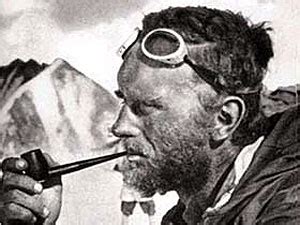
In later life Shipton considered that the two luckiest influences that shaped his life were, first, being a complete failure at school, which precluded the choice of a professional career in England; and secondly the Great Slump of the 1920s which ruined his prospects as a farmer in Kenya. In his teens Shipton had developed a lasting love of mountains: he spent a hiking holiday in the Jotunheimen with a Norwegian school friend; did his first guided climbs in Switzerland in 1924; and then embarked on two weeks intensive climbing with the French guide Elie Richard in the Dauphiné. It was his last visit to the Alps for three decades. In 1928 he arrived in Kenya to work as an apprentice on a coffee farm a hundred miles north of Nairobi. From his bungalow window Shipton looked out at the twin volcanic peaks of Mount Kenya. The mountain was first seen by a European in 1849. But it was first climbed only in 1899, by Halford Mackuinder, the only known ascent..
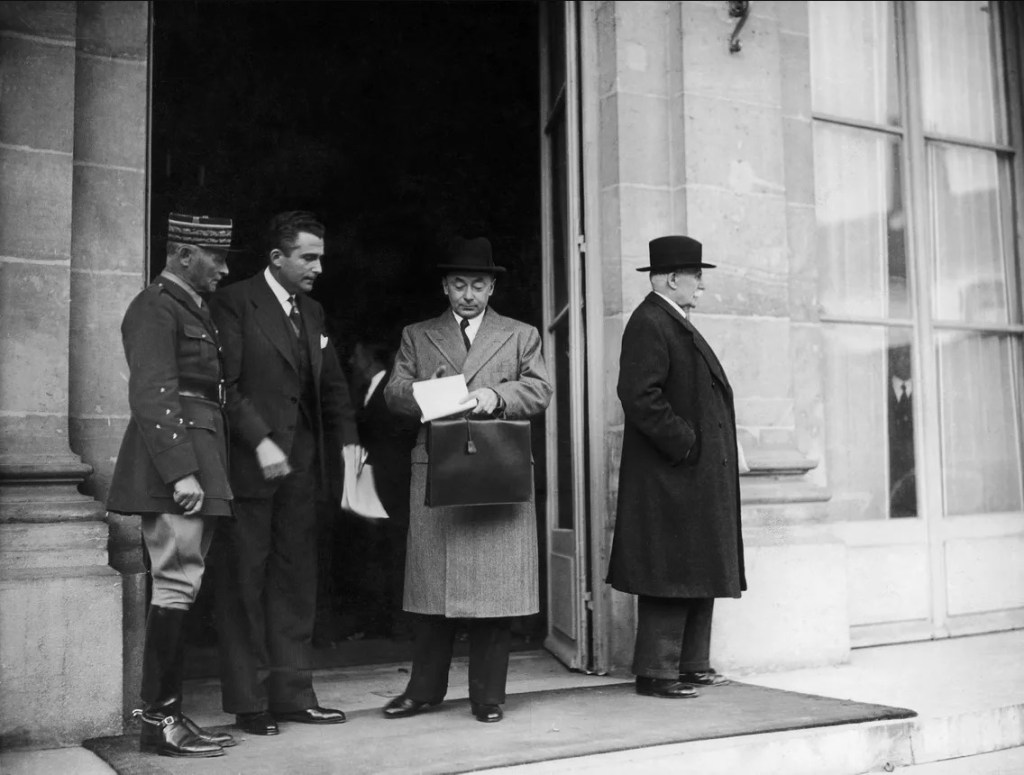
[Major] HW Tilman
After the First World War ex-soldiers were offered [free] plots of land in what was then British East Africa. One of the settlers was HW Tilman, who had drawn a plot 7,000 feet up close to the equator, and forty miles east of Lake Victoria. Tilman was from Wallasey, the son of a prosperous sugar merchant. He had been an outstanding pupil at Berkhamsted school, and might under other circumstances have progressed to Oxbridge. Instead he became, aged 16, a cadet at the Royal Military Academy in Woolwich; was commissioned in the Royal Field Artillery; and sailed aged not quite 18 for the Western Front. Like many who fought in that war he never spoke of his experiences. When the war ended he was not quite 21, had won an MC and Bar for ‘acts of exceptional gallantry’; and exhibited the shame and guilt of those who had survived when too many friends had died in the mud-filled trenches.
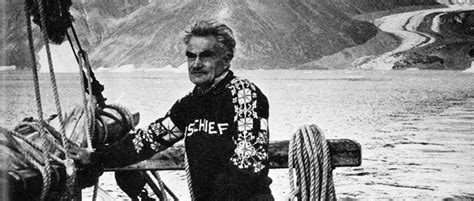
In Kenya, as it was now known, Tilman cleared land, built mud-brick houses, put acres under flax and then coffee, and built bridges made of timber baulks lashed together with war-surplus barbed wire. In 1924 he returned home for his brother’s funeral, and spent an enjoyable day climbing in the Lake District. One day at the end of the 1920s Tilman wrote to Shipton whose name he had seen in The East Africa Standard [Dear Shipton … … Yours sincerely, HW Tilman] to ask for some advice about how to go about climbing in Kenya.
Shipton and Tilman
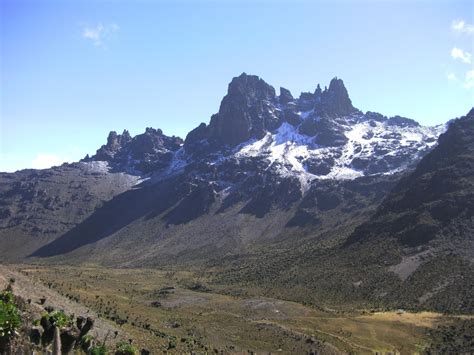
After that initial letter Shipton and Tilman joined forces to climb Kilimanjaro, the highest mountain in Africa, but really little more than a “somewhat gruelling walk”; to make the first traverse of the twin peaks of Mount Kenya, described by Shipton as :”probably the hardest climb I have ever done”; and then in January 1932, on their last African expedition, to climb the highest peaks of Ruwenzori, the mysterious range of mountains above the headwaters of the White Nile, on the borders of Uganda and the Congo. But this was only the beginning of their shared exploits.
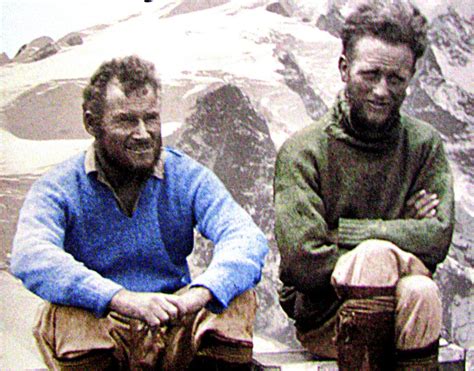
I have been reading Shipton and Tilman: The Great Decade of Himalayan Exploration by Jim Perrin, a climber, journalist, and mountain historian. It is essentially a joint biography of the two men, but the focus is on their travels together in the 1930s. Shipton is associated in particular with the Himalayas. He had made a first ascent of Kamet in 1931, then the highest mountain ever climbed, in an expedition led by Frank Smythe [another product of Berkhamsted school]. Shipton forged a warm friendship with Smythe, who then invited him to join the Everest expedition of 1933. The expedition ended in failure, turning back in some disarray because of bad weather. The younger climbers were critical of the old guard leadership. Shipton and others took the opportunity to indulge in some local exploration. Meanwhile Tilman had abandoned farming in Africa; bought himself a £6.00 bicycle and set off to cycle home to the UK from Uganda across the Belgian Congo, French Equatorial Africa, and French Cameroon. His map was torn from the back of a magazine. His diet was exclusively eggs, often bad, and coarse baking bananas.
A decade of exploration
Shipton was persuaded by Tom Longstaff, a choleric, red-haired doctor-turned-mountain explorer, to turn his attention to the Nanda Devi Sanctuary. In 1934 this was the fascinating challenge of the Himalayan region; a precipice-ringed valley which no European traveller had ever entered. Where all previous Everest expeditions had travelled with literally hundreds of porters, bearing Fortnum and Mason’s Stilton and tinned tongue and quails in aspic, Shipton, influenced again by Tom Longstaff, envisaged a more Spartan approach, dispensing with elaborate equipment and living largely off local produce. He believed that travelling light would make it easier to make contact with the local people. Tilman, now at a loose end in Wallasey, was an enthusiastic recruit for such an approach. Though his suggestion of bicycling to India was swiftly dismissed. The budget for their five months in India, accompanied by three Sherpas, turned out to be £140.00 each, including their fares out and back on a cargo vessel.
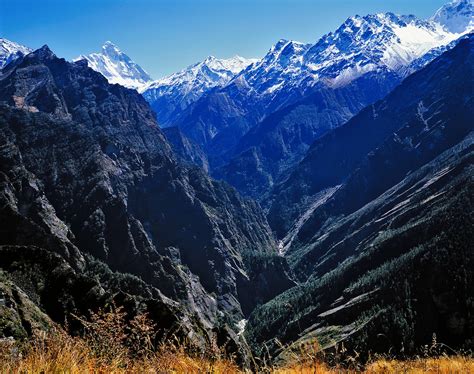
There is a detailed account of the 1934 expedition in Shipton’s Nanda Devi [published in 1936]. [For someone who was dyslexic he wrote six mountain travel books, many of which are still in print, and some forty-odd articles, mainly for the Alpine Journal.] Penetrating the Nanda Devi Sanctuary was a major struggle. The only access was through the Rishi Ganga valley; it was not the paradise they imagined, but a steep-sided gorge covered in dense bamboo forest where they progressed at the rate of a mile a day. After almost five months their boots were ragged and funds were running low. They lived and ate with the Sherpas as equals. “With these allies we hope one day to reach the summit of Mount Everest”, Shipton wrote; “without them we would have little chance of doing so”. The two Europeans continued to address each other as ‘Tilman’ and ‘Shipton’. After seven months almost continuously together “when I suggested it was time he called me ‘Eric’, he became acutely embarrassed, hung his head, and muttered ‘it sounds so damned silly’”.
The Nanda Devi adventure certainly made their name in explorers’ circles. When permission was unexpectedly granted for an exploratory Everest expedition in 1935, Shipton’s name went forwards as leader. Tilman reluctantly joined a team of six climbers. “I suspected that the root of his objection”, wrote Shipton, “was that, while he had been forced to accept my company, the prospect of having five companions was scarcely tolerable”. The expedition achieved little on Everest because of the snow conditions, but they enjoyed themselves exploring little-known peaks to the north-east of the mountain, and reached some twenty-six summits.
For the full-blown 1936 Everest expedition Tilman was discarded because of his [supposed] low altitude ceiling. He went instead back to Nanda Devi, where he and Noel Odell [also left out of the Everest team on the grounds of age] became the first pair to reach the summit. It was the finest achievement yet in the Himalayas. In his book, The Ascent of Nanda Devi, Tilman writes, after describing the view, “I believe we so far forgot ourselves as to shake hands on it”. On Everest Frank Smythe and Shipton were designated as the first summit pair, but an early monsoon and heavy snow caused the attempt to be abandoned.In a letter to a new lady friend, Pamela Preston, Shipton wished that he had been with Tilman and Odell “instead of wasting my time on this Everest business”.
In 1937 Shipton and Tillman made the second of their epic exploratory expeditions; to the Shaksgam River valley on the north side of the Karakoram range. To add credibility and expertise to the expedition they were joined by Michael Spender, an abrasive surveyor who had already been on Everest, and John Auden, a geologist from the Geological Survey of India. Both incidentally were the brothers of famous poets. The party had to be self-sufficient for four months and they rationed their food meticulously. They earnestly debated whether to take a knife each or one between two. Tilman argued that plates were unnecessary as everything could be eaten out of a mug. But it was agreed that eating curry and drinking tea at the same time demanded two receptacles. In the course of a gruelling four-month trip the party climbed few peaks, but they did much to disentangle the geography of a hitherto unknown region, accurately mapping the glaciers and high passes of an area that had previously been Blank on the Map, the title of Shipton’s 1938 book.
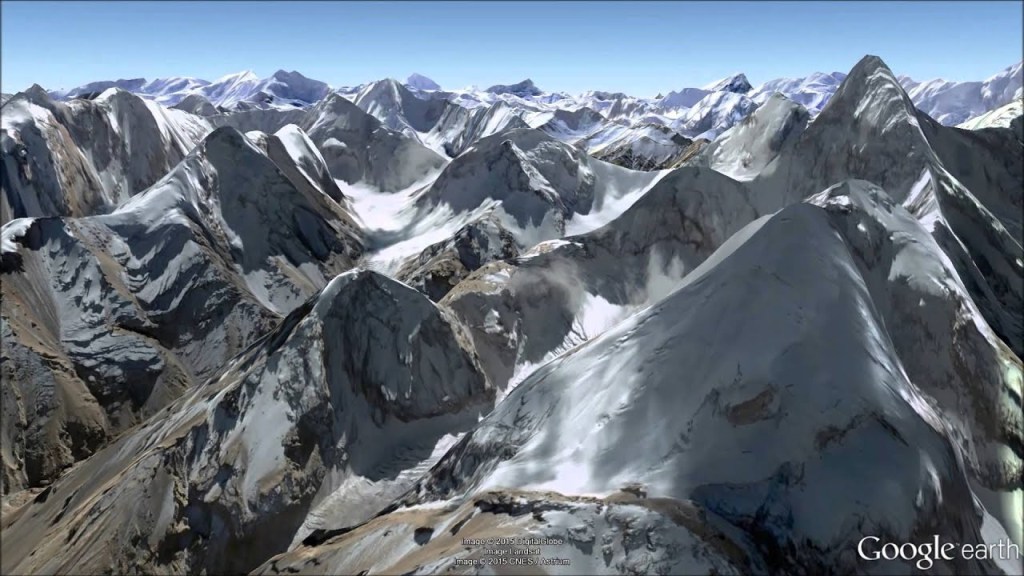
The final pre-war Everest expedition took place in 1938. This time Tilman was the designated leader, which ensured that there was Spartan provisioning. Tilman chose a team of seven, a lot for a man who described an expedition as “a party with too many people in it”. Frank Smythe and Peter Oliver complained continuously about the food. After a promising start, an early monsoon and exceptionally heavy snow defeated the expedition. “A vile waste of time” was Shipton’s verdict.
The following decades
Summer 1938 was the end of their explorations together. When the Second World War broke out, Shipton was in the wilderness of the Karakoram. He joined the Indian Army, and started without enthusiasm at Officers Training School in Southern India. In 1940 he was offered the post of HM Consul-General in Kashgar, in Sinkiang. There were subsequent postings to Persia, and to Vienna, a return to Kashgar, and then a posting to Kunming in southern China. It is not clear to what extent he may have been a player in the Great Game [that is, a spy].
By the 1950s Shipton was the most experienced Everest climber alive, and the obvious candidate to lead a British attempt on Everest, which some Britons thought as ‘their mountain’. On his return from China he led an expedition in 1951 to explore Mount Everest from the south, now that Nepal had opened up. The team included, at the last moment, the hitherto unknown New Zealand climber, Edmund Hillary. And he also led a training expedition to nearby Cho Oyu in 1952. But not everyone was convinced by Shipton’s leadership; there was a suspicion that he showed ‘inadequate drive’, that he might not be ‘hungry enough’ for a summit bid that was a matter of ‘national prestige’. In a manoeuvre that is still controversial Shipton was stabbed in the back, and was replaced by the military man, Colonel John Hunt, who was thought to be ‘more of a thruster’. After which he became Warden of the Outward Bound Mountain School in Eskdale, in the Lake District. The job was abruptly terminated when his marriage broken down, after which he was housed by a succession of lady friends. In the late 1950s and the 1960s Shipton made a series of gruelling expeditions to the Patagonian Ice Cap. Which are characterised by Peter Steele, his biographer, as “essays in masochism”. In the final decade of his life he became a celebrity guide and lecturer. He died peacefully in 1977, aged 70, and his ashes were scattered on the Fonthill Lakes.
Tilman rejoined the British Army when war broke out, was evacuated from Dunkirk, was promoted to major [a rank at which he conspired to remain], and led a ‘Jock column’ in North Africa. Finding the Western Desert too quiet for his liking, he volunteered for parachute training and fought with SOE with the partisans in Albania and later in Italy. After the war he turned to Himalayan and Central Asian climbing, which included an under-prepared, and unsuccessful, attempt with Shipton on Muzagh Ata in the remote Kun Lun mountains. For two years he was British Consul at Maymyo in the Shan Highlands of Central Burma, but his contract was not renewed. In 1953 he came home to Wales, and bought a small boat. For most of the following two decades he roamed the seas in a series of cutters, invariably living off frugal rations. On one occasion s younger crew mutinied at the lack of provisions. He was lost at sea in November 1977, in circumstances that are not entirely clear, somewhere between Rio and Port Stanley. He outlived Shipton by six months.
Envoi
They were in some ways an improbable couple. They were both happiest when breaking new ground in remote mountains; both happy to travel light and live off the land. They were both frugal. Their travels earned them recognition from fellow travellers and from the Royal Geographical Society. Tilman was shy and self-effacing; allegedly a misogynist; and taciturn in the extreme. Shipton though introverted was quite gregarious, enjoyed dancing, and had a complicated love life. Women fell for his blue eyes. And he fell for a succession of women, remaining friendly with them when the passion was over. It is not clear that this was a conventional friendship. But they had a quirky, humorous relationship which survived their extended travels together. As Jim Perrin concludes, “this was the greatest exploring partnership in British history”.
December 2020