When I was growing up, alpha was the first letter of the Greek alphabet. And the self-appellation of the risen Christ in Revelation 22. But for the past few decades it is best known as an extraordinarily successful course in Christian apologetics. Launched and resourced and promoted by that phenomenon of a church, Holy Trinity, Brompton.

Alpha has been around for the thirty five years of my ordained ministry. But my contact with it has been quite limited. During the 1990s we ran at least one Alpha course in Duns, as a joint enterprise between Christ Church, Duns [Scottish Episcopal] and the parish church [Church of Scotland]. It was promoted, if I remember correctly, as a refresher course for existing church members to encourage them in their faith. And I’m reasonably sure that we ran at least one Alpha course during our time in Lyon, 2000 to 2013. But I suspect that it was led by lay members of the congregation. And what I remember more clearly is that we used the Emmaus course with a small group of newcomers to the church. And that we ran more than one series of The Marriage Course, again led by laity, a marriage enrichment course which also derived from Holy Trinity, Brompton. I have some reservations about Alpha [see below]. But because the Alpha course been so successful I fell with interest on a book which I found a couple of weeks ago at the Faith Mission bookshop.
Repackaging Christianity: early days at Holy Trinity, Brompton
Repackaging Christianity is a 2022 book by Andrew Atherstone, Professor of Modern Anglicanism at Oxford, who has been on the staff at Wycliffe Hall since 2007. The book starts at Holy Trinity, Brompton, located in an elegant and genteel part of west London. It is close by Harrods, an icon of luxury, where HTB members allegedly do their shopping. For much of the twentieth century HTB was a ‘society church’, favoured by the Knightsbridge elite for christenings and weddings, and memorial services; which offered a very traditional form of worship with sound preaching and good music.
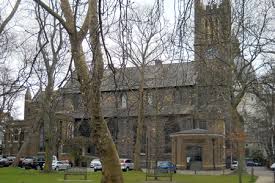
Holy Trinity, Brompton
But things changed significantly with the advent of Alexander ‘Sandy’ Millar, who was Vicar from 1985 to 2005. Millar was an upper class Scot [his father was a major general], educated at Eton and Trinity, Cambridge, who practised as a barrister for ten years before his ordination in 1976. Millar was much influenced in his early Christian life by his experience of charismatic ministry at the London Medical Mission [known in Soho as the London Miracle Mission]. And then by his contacts with Californian renewal movements, and in particular the ministry of John Wimber, the rock musician turned evangelist, the author of Power Evangelism and Power Healing.
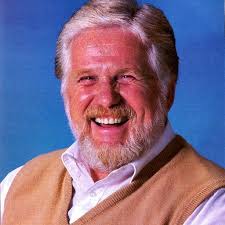
John Wimber
Meanwhile, in the mid-1970s, a remarkable group of conversions took place in Cambridge. This group included Nicky Gumbel and Nicky Lee, two old Etonians who had rooms next for to each other at Trinity. Both were converted at the Cambridge Inter-Collegiate Christian Union [CICCU], who had organised a major mission called Christ Alive led by David MacInnes. Gumbel, not yet fully persuaded, took advice from Jonathan Fletcher, a curate at the Round Church, Cambridge. Another new convert at CICCU was Ken Costa, a graduate law student at Queen’s College, of Lebanese and South African descent. And another was Justin Welby, another Old Etonian, who arrived at Trinity College in 1974, and who had been baptised as an infant at HTB. After graduating many of this group migrated to London to make their way in secular professions; Nicky Gumbel in law, Nicky Lee in teaching, Ken Costa in investment banking. They found their way to HTB, where they were strong attracted by Sandy Millar’s teaching.
From the mid-1970s the culture of HTB began to change, under the leadership first of Raymond Turvey and then of John Collins. HTB and its linked congregation of St Paul’s, Onslow Square, both began to see a growing, younger congregation and to plan for growth. In 1977 Turvey asked his new curate, Charles Marnham. another who had read law at Cambridge, to develop a Christian beginners’ course. This was the first edition of Alpha. Two years later, in 1979, HTB celebrated its 150th anniversary with a two-week Parish Mission. Supper party evangelism. The missioner was John Collins [David Watson had declined the invitation] and 105 supper parties were arranged during the two weeks. The following year HTB was instrumental in organising a one week Mission to London. This time David Watson was the main speaker. Amid the excitement Sandy Millar discerned that the Holy Spirit was beginning to renew the congregation, bringing “a new freedom, a new love, a new joy, and a new power”. God was promising that “very special days” lay ahead.

Sandy Millar
Repackaging Christianity: Alpha and the Building of a Global Brand
Nicky Gumbel trained for ordination at Wycliffe Hall, Oxford, from 1983 to 1986. [I arrived there in 1986 but don’t remember hearing his name.] Atherstone says that he was unhappy at Wycliffe; that he struggled with insecurity and a “lack of self-worth”, and that the academic study of theology with exposure to liberal theologians was threatening his faith. After college he found it difficult to find a curacy, and looked at nine possibilities before being allowed to return as curate to HTB. After powerful advocacy [prayer? ] from Sandy Millar and John Collins. In September 1990 Gumbel was given responsibility for Alpha. Atherstone suggests that he was reluctant to take it on, as he wanted to be involved in evangelism to those totally outwith the church. But he soon recognised the evangelistic value of the materials, and reshaped it as a course of ten sessions each based on a question. Starting with Who is Jesus ? and culminating in What about the church ? Each of the sessions was shaped around a shared meal, usually pasta. And there was a residential weekend, usually about half-way through the course, focussing on the Holy Spirit. Heavily influenced by John Wimber, the weekend was not an academic discussion, but moved directly to the question, How can I be filled with the Spirit ? Let’s do it.
Gumbel compared running Alpha to driving a sports car that had several previous owners. But under his leadership take-up of the course accelerated dramatically. By early 1992 there were over 200 people at the Wednesday evening Alpha. From HTB the course spread by word of mouth to churches in Milton Keynes, in Buckhurst Hill in Essex, to Southampton, and to Edinburgh. In the summer of 1993 came the first Alpha conference to help church leaders to set up their own courses. Over a thousand people packed HTB for this first conference, with delegates coming from across Britain and from as far afield as France, Germany, Spain, Switzerland, Singapore, New Zealand, and the United States.Among the delegates was Justin Welby, who brought four members from his parish in the Coventry Diocese. Who returned “buzzing and excited”.
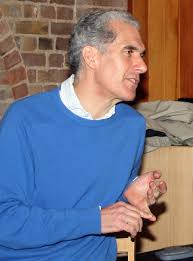
Nicky Gumbel
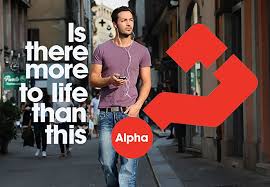
The bulk of Atherstone’s book is concerned with the marketing and the relentless growth of the Alpha course. There are a lot of facts and figures. In September 1998 Alpha posters were placed on 1,700 billboards in the UK. The whole promotion cost £682, 000. Local celebrities, well-known sportsmen, television and entertainment stars [Samantha Fox], and disgraced politicians [Jonathan Aitken] all featured in Alpha events and press cuttings.` ITV broadcast an Alpha course in 2000, fronted by Sir David Frost. But they got cold feet after seeing the early reviews. [The New Statesman thought it “the worst programme of the year”.] In 2005 Alpha hit cinema screens with a 60-second promotion featuring Bear Grylls along with a footballer and a model. From the mid-2000s Grylls, another Old Etonian, and ex-SAS soldier and adventurer, became synonymous with Alpha. He and Gumbel were good friends, and they played squash together four times a week.
One of the more interesting parts of the book [for me] is the way in which the Roman Catholic church embraced Alpha. After the materials were enthusiastically picked up by members of the CCR. the Catholic Charismatic Renewal movement. The Chemin Neuf community, another Catholic renewal community, founded in Lyon in 1973 by Laurent Fabre, were also early adopters. As was Charlie Cleverly, a church planter then working in the church in Belleville. Atherstone looks carefully at the modifications that Gumbel made to the course [particularly the chapter Why did Jesus die ?, in order to gain the approval of the French Catholic bishops. Which in turn offended Northern Ireland Protestants. It is clear that Gumbel negotiated a tricky tightrope.
Alpha: my reservations
There is no doubt that the Alpha course has been an enormous blessing to thousands of people, in a host of different countries and different confessional settings. People have come to a new and vibrant faith and lives have been transformed. I think, for example, of my [late] friend Alyson, who came to faith on an Alpha course HTB, was subsequently ordained, and had a very fruitful ministry in Paris and in churches in the Chichester and Newcastle dioceses. So – why am I bit sceptical.
First, it is just my prejudice. Can the world be transformed for the better by Old Etonian lawyers ? When Justin became Archbishop of Canterbury in 2013, I thought that with David Cameron as Prime Minister and Boris Johnson as Mayor of London, Justin might be one old Etonian too many.

Secondly, I was unhappy with the original Alpha teaching materials and the accompanying videos. The ten sessions were wholly propositional, overly didactic, taking no account of the learner’s own background. There was no attempt to find out where people were coming from, nor of how God might already be working in their lives. Rather, this is the teaching that you have to take on board to be a Christian. And the videos [which were later reshot] were lengthy monologues, largely devoid of colour or of humour. Although the course was said to be about ‘Asking questions’, there wasn’t any obvious space for doing so. Anecdotally, Tam, a military man attached to the Foreign Office, whose son I baptised in Kyiv three years ago, told me that he was once thrown off an Alpha course for asking too many questions.
Thirdly, I found the course intensely individualistic. It seemed to me to be all about my individual faith, about Me and Jesus. In the early versions [and this may well have been modified since], there was virtually nothing about Community, very little about the sacraments, nothing about Belonging. All I had to do was to invite the Holy Spirit into my life and to pray a prayer of commitment. But my experience in church life in the Scottish Borders and even more so in Lyon is that, in Grace Davey’s terms, Belonging can often precede Believing. That many people are attracted into a fellowship that offers love and support and encouragement. Especially in times of difficulty. Here again I am uneasy about Alpha. For me the concept of Journeying is a key metaphor; walking with Jesus in the way of the Cross. Does Alpha Christianity allow for times of suffering and of failure ? Or is it more akin, say, to the seductive promises of the Prosperity Gospel ?

Envoi
Atherstone suggests that Gumbel’s retirement from HTB in 2022 is another moment of transition in the Alpha story. Leaders are already looking forward to a mega celebration of the 2000th anniversary of the Resurrection in 2023. [I shall be 88.If still alive.] “Although born in English Anglicanism, Alpha now embraces every part of the global church from Peruvian Pentecostals to Japanese Catholics, and from Bulgarian Orthodox to Zambian Brethren”. Yes, there is much to be thankful for and to celebrate. But I am uneasy about the notion of a a future church that is populated and led by people reared on this rather narrow, and somewhat partial, repackaging of the Gospel. Buying into the package is not the way that I came to faith.
March 2025
 Through a glass darkly
I was led to your blog #147 when I googled Royal Albert Hall, David Watson, 1979. I thought that that was the year I accepted Christ at the conclusion of his evangelistic weekend in the Albert Hall. Then I learned from your blog that it wasn’t in 1979, and it wasn’t over a weekend! I had thought the day of my redemption was May 6, 1979, and now I learn that it must have been May 18, 1980! All I can say is, “Thank God, in Jesus Christ, that it happened at all!
My recollection was that it was in the balcony of HTB when I prayed the prayer of commitment with Lydia Fetto after attending David Watson’s conference over the weekend. Instead it must have been as a result of his preaching at HTB that Sunday morning, and/or perhaps that evening, BEFORE the conference began.
Ah well, there is no doubt that it was the Holy Spirit speaking through David Watson that led me to Christ at HTB so many years ago. I am grateful for your blog reminding me and correcting my memory as it was a significant turning point in my life. Thank you.
Mabel Ellis
LikeLike
Thanks, Mabel. That’s a good story. I only ever heard David Watson preach once; and that was in St Aldate’s, Oxford. At the end of the 1970s.
LikeLike