Books can be evocative. I clearly remember being given a paperback copy of John Le Carré’s Tinker Tailor, Sailor, Spy back in the mid-1970s by Mme Anne Warter, then Directrice of the Paris bookshop Nouveau Quartier Latin, and reading it with great excitement on the rather second-rate Silver Arrow train from the Gare du Nord up to Le Touquet. Later Le Carré books are linked to other memories. I read Little Drummer Girl while on a trip to an EFL conference in Groningen in 1983. And Single and Single during an ICS summer chaplaincy trip to Brittany in 1999.
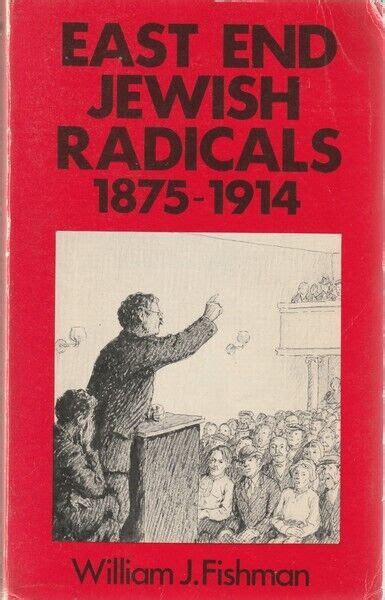
These past few days I’ve been turning the pages of a book that has been on my shelves for some 50 years. Seeing the red dust-jacket brings back memories of the author. But until last week I had never opened the book.
William J. Fishman
Bill Fishman was born in Stepney, the son of a Jewish immigrant tailor and grew up in London’s East End. He was educated at the Wandsworth Teacher Training College [where my father did a one-year training course after the war], and then at the LSE. After the war he gained rapid promotion as a teacher, and became principal of what became Tower Hamlets College of Further Education. In 1965 he spent a year as Schoolmaster Student at Balliol, and in 1967 he was Visiting Professor of History at Columbia University, New York. He subsequently resigned his job at Tower Hamlets to become Visiting Professor at the University of Wisconsin at Madison, and then Barnet Shine Memorial Research Fellow in Jewish Labour Studies at Queen Mary College, London.

I never met Bill at Balliol. Which is odd since he was a distinctive character; tall with dark wavy hair, heavy spectacles, and a loud voice. But I got to know him during my time at George Allen and Unwin, as we had a publishing agreement with the Acton Trust who at the time were sponsoring Bill’s research into late nineteenth century labour history. Bill introduced me to Bloom’s, the longstanding kosher Jewish restaurant in Whitechapel High Street. [It closed in 1996.] After a lunch of well-done salt beef with chips and latkes, Bill would lead us on a tour of the surrounding streets drawing attention to the sites of long gone anarchist printing presses and of Jack the Ripper murders.
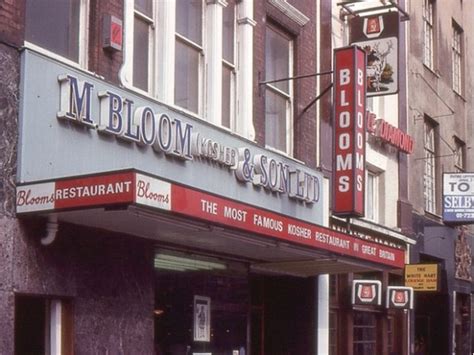
William J. Fishman: East End Jewish Radicals, 1875-1914
The publishing link with the Acton Trust did not survive my departure from George Allen and Unwin, and Bill’s book was published in 1975 by Duckworth, of the Old Piano Factory in Camden Town. [Duckworth, notable British literary publishers, was run at the time by Colin Haycraft, once described as “a one-man university press”, husband of the writer Alice Thomas Ellis, and the brother of John Haycraft, the founding director of International House language schools.]
East End Jewish Radicals tells the story of how London’s East End became the home to tens of thousands of Jewish immigrants, driven from Russia and eastern Europe by successive pogroms. They settled into the grim tenements of Whitechapel and Stepney and worked in tailoring sweatshops often under appalling conditions. Some of the immigrants had already been political radicals in Russia and they now sought radicalise and unite the Jewish workers of the East End.
Successive measures had eased the restrictions on Jews in public life: in 1833 Jews were allowed to practise at the Bar; in 1845 Jewish schools were permitted; from 1858 Jews could be elected to the Home of Commons; in 1871 the University Test Acts enabled Jews to graduate. But now in the 1870s the marked increase in the number of Jewish immigrants was a source of fear and embarrassment to Anglo-Jewry. Who felt threatened by the arrival of a mass of peculiarly clad, Yiddish-speaking paupers. A letter in the Pall Mall Gazette in February 1886 warned that “the foreign Jews of no nationality whatever are becoming a pest and a menace to the poor native-born East Ender”. The Jack the Ripper murders provoked a minor outbreak of Judophobia. After the third murder, an editorial in the East London Gazette declared that “no Englishman could have perpetrated such a horrible crime as that of Hanbury Street, and that it must have been done by a JEW – and forthwith the crowds began to threaten and abuse such of the unfortunate Hebrews as they found in the streets …”.
Against this background Jewish socialists and radicals assumed the role of fighting advocates for their people in the daily struggle against exploitation and prejudice. The earliest record of a Jewish workers’ organisation was a Union of Lithuanian Tailors founded in Whitechapel in 1872. In 1876 came the foundation of the first Hebrew Socialist Union. The secretary was Aron Lieberman, born in 1849 in the Grodno district of Russia, who had studied at the Petersburg Institute of Technology and at a rabbinical seminary in Vilna. Lieberman was a socialist prophet, fluent in Yiddish and classical Hebrew, rabidly anti-clerical, thoroughly committed to educating Jewish workers, and a scathing critic of the Jewish financial aristocracy. The brotherhood of man could only be achieved under Socialism. Lieberman subsequently moved to Berlin, was arrested in Vienna under anti-Socialist laws, and was imprisoned in Austria and in Prussia before being expelled back to England. Following an attractive [but married] young woman to New York, Lieberman was rejected by her and shot himself in a cheap lodging-house in Syracuse in November 1880.
Jewish immigration continued to rise between 1881 and 1891. The tolerance of the hosts diminished as numbers grew and the demands for work and for housing. In 1884 came the appearance of the Poilishe Yidl, the first Socialist newspaper in Yiddish. But this was supplanted a year later by the Arbeter Fraint [Worker’s Friend], a Yiddish monthly tabloid, open to all radicals, social democrats, communists, and anarchists. The paper was linked to an International Workers’ Educational Club, at 40 Berner Street, off the Commercial Road, which offered a base for radical and trade union movements in the East End.
The most influential leader in the decades before the First War was Rudolf Rocker, an unlikely phenomenon in Jewish life, born a Roman Catholic in Mainz in 1873, who for sixty years devoted himself to the Jewish working class and to Yiddish language and literature. As a young man Rocker was an apprentice bookbinder and a Social Democrat. His first contact with Jews and with Jewish radicals came in Paris in 1893 when he was invited to attend a Jewish Anarchist meeting. Anti-anarchist pressures drove him out of France. He came to London and in 1895 became Librarian of the First Section of the Communist Workers’ Educational Union [Marx, Engels, and William Liebknecht had been members]. In Shoreditch Rocker became intimate friends with Millie Witkop, an attractive young Jewish immigrant from Zlatopol in Ukraine. They thought to emigrate together to the States, but were held at Ellis Island as an unmarried couple. Rocker was a persistent critic of the bourgeois institution of marriage and a longstanding advocate of Free Love. The American Press was heavily critical of the Rockers, holding to the established American puritan ethic; and the couple were shipped back to England. Rocker became editor of the influential Yiddish periodical Germinal, a mouthpiece for libertarian socialism which temporarily replaced Arbeter Fraint.
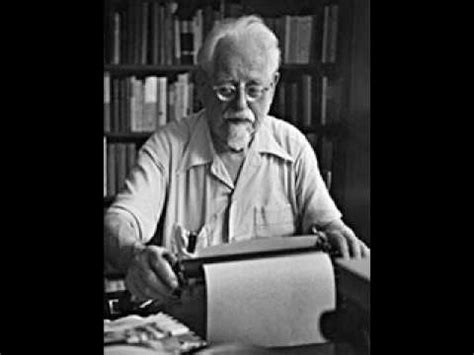
Rudolf Rocker
Fishman interviewed men and women who recalled Rudolf Rocker as “a handsome presence – tall, blonde, sturdy, recognisably German … … he opened up the vision to us of a new society – no persecution, no hunger, only warmth and generosity.” Social evenings were held in the Crown Hall in Reddens Road. There would be classical opera and Edelstadt’s lieder accompanied by an anarchist pianist, and afterwards Rocker would lecture on some topic of political or literary interest. The Russo-Japanese War and the Russian Revolution of 1905 brought new immigrants and political refugees. By 1906 the Rocker group opened a Workers’ Club in Jubilee Street, which included a gallery that accommodated 800 people, a library, adjoining classrooms, and a reading room.
Millie Sabel recalled some curious customers:
“I occasionally saw a small, intense man who sat alone at a table in the corner. He has slant eyes, balding reddish hair, drank Russian tea and spoke little. He was Lenin. There was also a handsome, dapper man who came later and helped paint the props at our theatrical – a quiet attractive comrade we called Peter the Lett. He was supposed to be Peter the Painter … … “ [subsequently thought to be the brains behind the robbery in December 1910 that led to the Sidney Street siege.]
The outbreak of war in August 1914 was a death blow to East End anarchism. As it was for the Second [Socialist] International. Though, as Fishman notes, in London’s West End French and German anarchists co-operated to open a Community soup kitchen to feed unemployed German workers. But shortly afterwards Rocker was interned for four long years, and was subsequently repatriated via Holland to Germany. His departure spelt the end of the London Jewish movement.
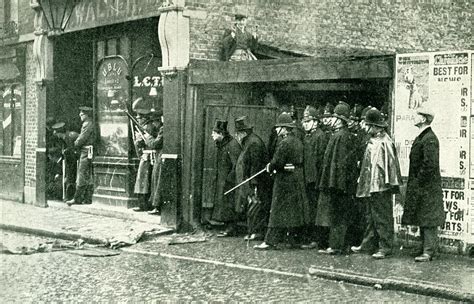
The siege of Sidney Street
There may be parallels to be drawn between radical Jewish immigrants who are the focus of this book and the radical Muslim immigrants of a century later. Firman notes the tension between the ideal of educative growth combined with militant action, as proposed by Kroptkin and Rocker, against the concept of ‘propaganda by the deed’ proposed by the men of violence. The murder of the three policemen in Sidney Street certainly forfeited a lot of support among the moderates. Though Peter the Painter became a legendary anti-hero in East End folklore. It is a fascinating and colourful story. But I fear that Fishman’s book scarcely does it justice. He was a lively and captivating speaker, but his writing style is rather dull. Which is why the book is now heading for the OXFAM shop.
Envoi
The garden looks a bit scruffy as we come to the end of ‘no mow May’. We have had ten days of strong winds and squally showers, and I am now waiting for a dry couple of days to cut the grass. But the roses are magnificent.

AbFab rose
We were sorry not to be away in Normandy with the family for summer half-term,, as we have been for the past three years. But we were delighted to see Craig and the girls, who were up in Scotland for a wedding. And delighted to share a big family meal with them for Amelia’s 14th birthday.
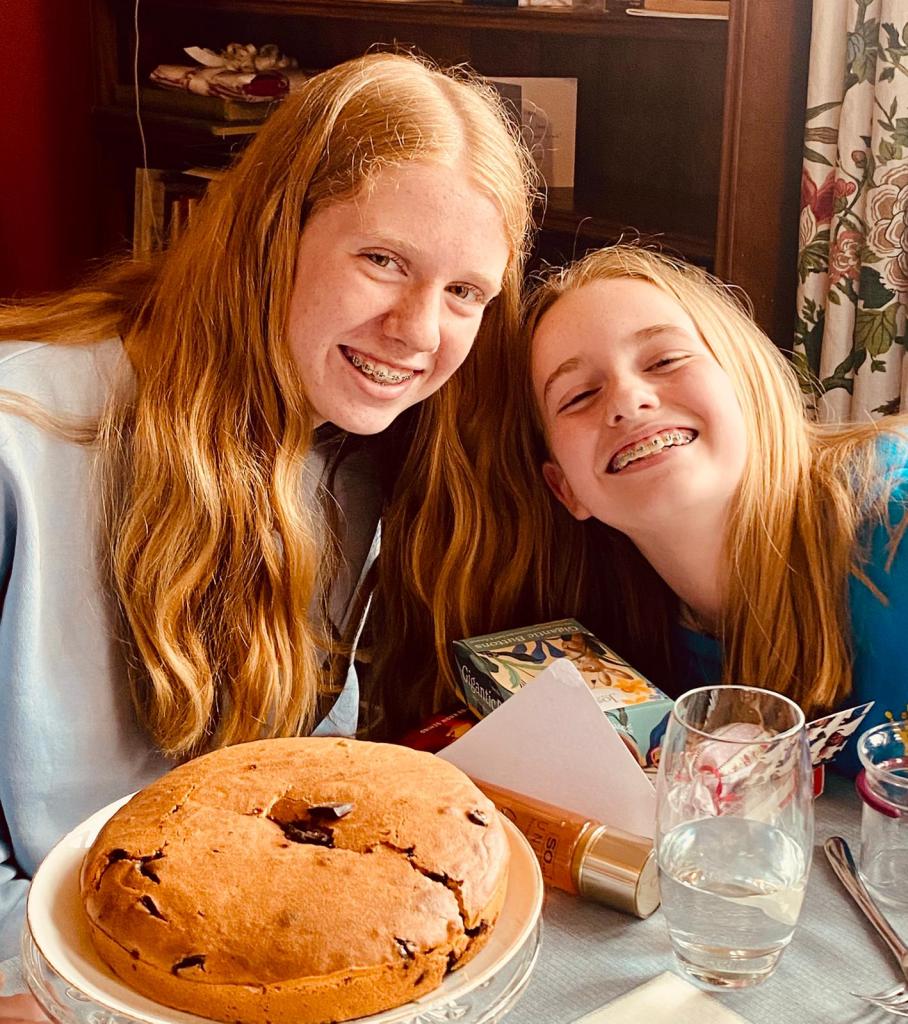
The girls, like all our grandchildren, are a delight. Joanna would be so proud of them.
June 2025

