Madeleine Bunting: The Plot: a Biography of My Father’s Acre
I have been reading a difficult to categorise book by Madeleine Bunting, a former Guardian journalist. The book is an oblique history of her father and the small plot of land that he loved on the edge of the North Yorkshire Moors. Her father, John Bunting, was born in London in 1927 and educated at Ampleforth where he subsequently taught Art. He was also a professional sculptor. On a remote corner of North Yorkshire he built a remembrance chapel.
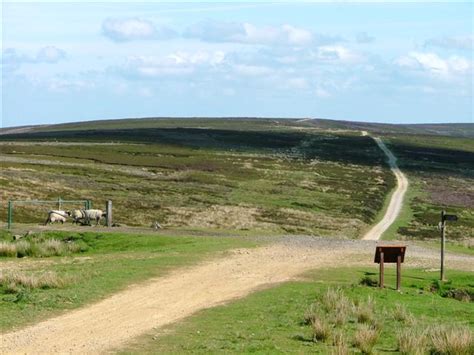
Bunting elegantly explores the history of the piece of land that her father loved. She begins with prehistoric burial mounds and earthworks, used for centuries as village boundaries, and inexpertly excavated in the late nineteenth century by the local Church of England vicar. When the Romans occupied Yorkshire in about 70 AD they built a Roman road across the high moors known as the Via Regalis. In later times this became the basis of the Hambleton Drovers’ Road, along which Scottish drovers, “described as thickset, hirsute men. shaggy, unkempt, wild, and fond of their drink”, drove sheep and cattle down from Scotland to market in York or in London.
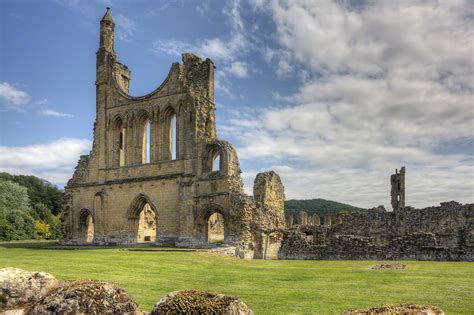
In 1137 a shaggy group of monks appeared in the area, having been forced to flee from Calder in Cumbria where they hd been raided by the Scots. They were members of an obscure group, the Savigniacs, later absorbed into the Cistercian order. The church that they built nearby at Byland Abbey was England’s biggest and most ambitious Cistercian church. Although the monastic calling was [notionally] a retreat from the world, the Cistercian monks developed on the North Yorkshire moors a highly successful sheep farming industry, collecting huge quantities of wool to export from Hull to merchants in Flanders and in Italy. Although the monastery was dissolved at the Reformation and the buildings crumbled, the practice of sheep farming continued, and subsequent generations continued to benefit from the ponds and ditches that the monks had built.
Even as Bunting’s father was building his chapel the landscape was being transformed by the Forestry Commission. During the 1950s the Commission embarked on some 60,000 acres of coniferous plantations, not native broadleaf trees, but mainly Sitka spruce and lodgepole pine. Bunting claims that this epidemic of planting was a belated response to the timber famine of the First World War, when the country was unable to import vast quantities of timber from Scandinavia, Russia, and Germany. But sadly the geometric blocks of conifers had a negative impact on the habitat for wildlife. And rising labour costs made the cost of felling these trees on steep hillsides uneconomic. The timber is good only for wood pulp or fencing.
For Bunting’s father North Yorkshire offered the opportunity to build his Promised Land. The Plot and the chapel that he built on it were an escape from the urban sprawl of twentieth century England. He lamented the ‘internal decay’ of rural England. He looked back to a world uncontaminated by arterial roads, pebbledash semis, and suburban streets. He was inspired by William Morris and shared his enthusiasm for traditional craft skills, for a world in which craftsmanship and art were intimately connected.
This is a delightful book, wide-ranging and multi-layered. It gives us a picture of Bunting’s complex father. But also a glimpse of the history of North Yorkshire; drove roads, medieval ruins, sheep farming, grouse shooting, acres of alien coniferous plantations. Of how we are shaped by the landscapes we inhabit. And of what it means to be English.
Renewing my passport
When did we first need passports to travel abroad ? The concept of being under a ruler’s protection while travelling in a country under another ruler goes back a long way. In the Old Testament, in the book of Nehemiah, at about 450 BC, Nehemiah who was working as cup-bearer to the Persian king was given letters by the king that requested that the rulers of lands across the Euphrates grant him safe passage.
Here in the UK the first mention of such a “safe conduct” document appears during the reign of Henry V, in an Act of Parliament dated 1414. Seemingly these could be granted by the king to anyone regardless of nationality. And foreign nationals could receive such documents free of charge while native English subjects had to pay. [Reform wouldn’t like that !] From 1540 the granting of travel documents became the business of the Privy Council. From 1794 responsibility for issuing passports passed to the Secretary of State and thence to the Home Office. But passports were not generally required for overseas travel until the first world war. [During the first world war enormous numbers of British men travelled abroad for the first time. But I have never understood that troops deployed overseas needed individual passports. A Great War forum on the internet tells me that troops in the First War only required an army daybook, and an additional pass authorising travel if they were travelling on their own.]
The first familiar, British blue passports were issued in 1920, and the format remained largely unchanged until they started to be replaced by the burgundy, European passports in 1988. [It was one of Boris’s first decrees that the British passports should return to a dark navy blue colour rather than the European burgundy. All part of ‘taking back control’. But it then transpired that these new, British, dark blue passports could only be printed in France !] The passports of many other countries are remarkably similar to the British model.
I have just renewed my passport. As a sign of hope in the future. It was all done on line, and was remarkably easy and quick. I have read many negative reports about the Passport Office in the media in recent years, but this time their performance was exemplary. The whole thing took no more than about ten days, including sending them an acceptable [improved] photo. And they e-mailed me a progress report at every stage.
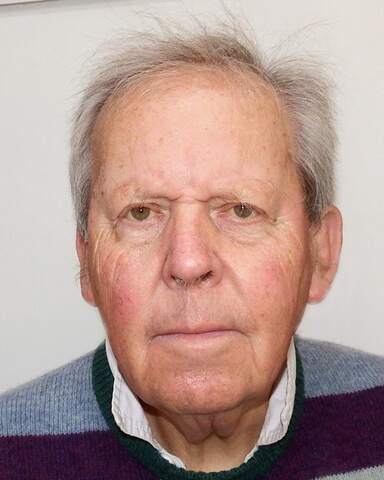
Of people born in the UK, apparently 80% have at least one passport. Which is, to me, a surprisingly high figure. The comparable figure for the United States is that only 37% of the population have a valid passport. And that 40% of Americans have never had any passport. Which, it is argued, is why Americans are so often ignorant about countries other than their own.
My passport history
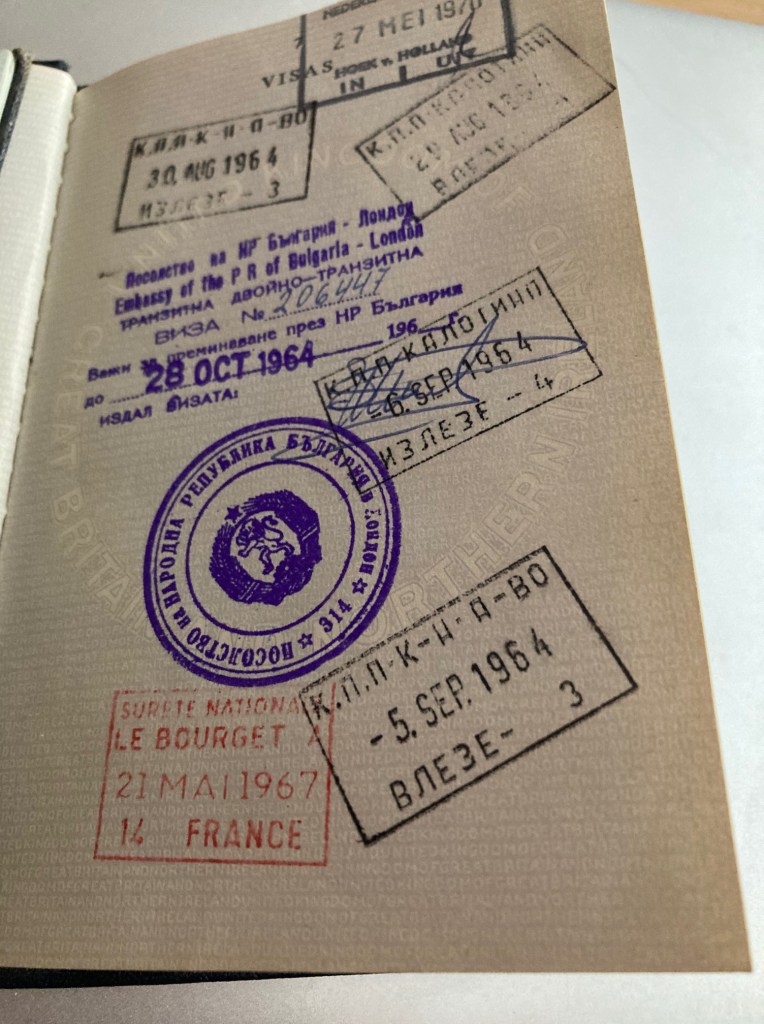
My first passport was issued in London, at the Passport Office in Petty France, in August 1961. For my first overseas trip across France, hitching from Paris down to the Med and back, with my brother Paul. It seems that passports were not regularly stamped in those days. But that first passport has entry and exit visas for Jugoslavia and Bulgaria, both issued in London for another hitching trip across Europe in 1964. In order to obtain the Bulgarian visa I had to make multiple visits to the Bulgarian Embassy in London. These included walking in St James Park with the wife of the Bulgarian press attaché, who told me that Sofia was a delightful, romantic city. A bit like Heidelberg !
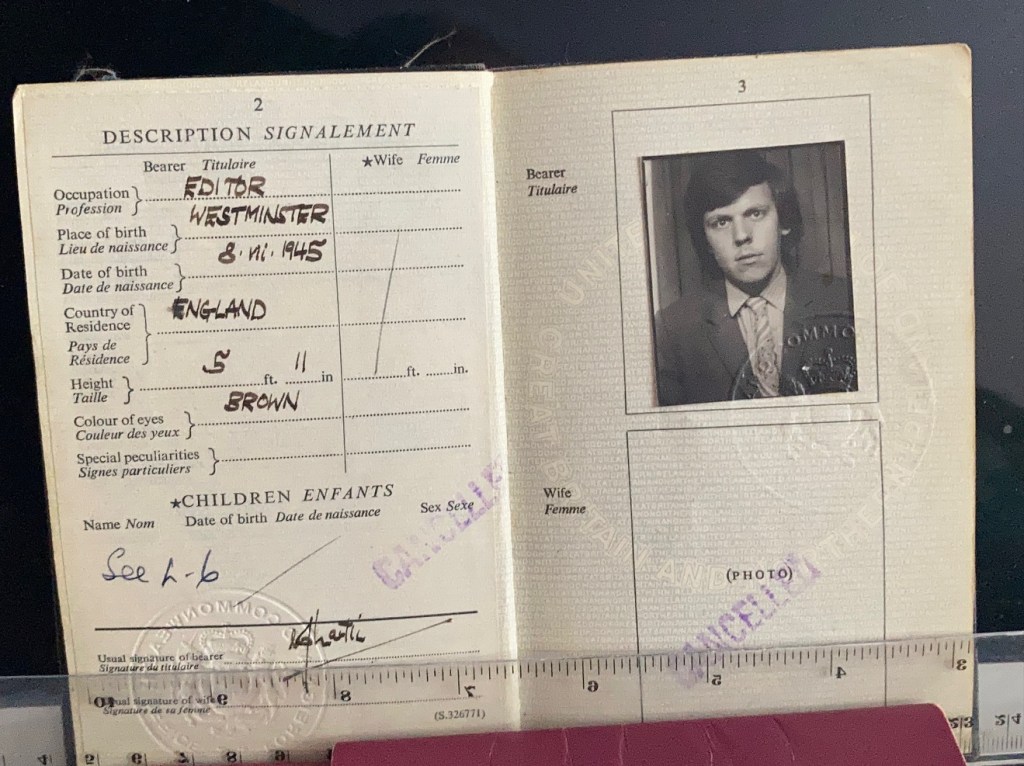
My second passport dates from July 1971. The few stamps are mainly from France and Spain, but also from Yugoslavia and Turkey. But exchange controls meant that [even quite small] sums of money taken out of the country are carefully recorded. And page 6 of this passport has the hand-written addition of Joanna Clare, a girl, born March 10th, 1977, recorded by someone at the British Embassy in Paris. Hand-written with no supporting official stamp.
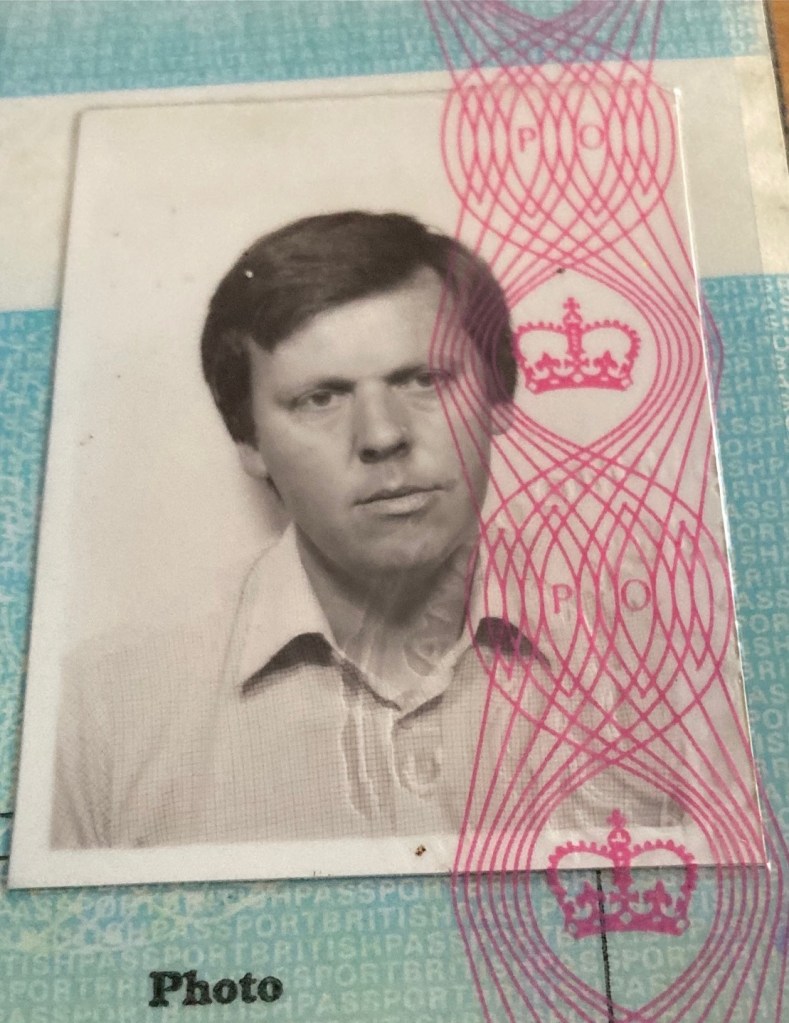
My third, final dark blue, passport dates from July 1981. It was issued at the Passport Office in Newport, Gwent, which necessitated a day trip to Wales and an early start from Woodstock. Details of money taken out of the country are no longer required. There are entry and exit stamps for France and Spain, for Denmark, Sweden, and Finland. And, more exotically, a visa for Indonesia, issued at the Embassy in London and needed for a marketing trip to Indonesia and Singapore in August-September 1982.
My first burgundy, European style passport dates from July 1991. This passport went through the washing machine in Lyon in about 2001 which means that there are no legible stamps inside it. The laundered passport caused some problems at the borders, and needed to be replaced. It was replaced by another, replacement passport, which may have been issued in Lyon. Which I no longer have.
Another burgundy passport was issued in August 2006. This time I took the form and photo to the Passport Office in Glasgow, as I was there for the first residential module of an MTh. course at ICC Glasgow. The only markings in this document are a single-entry visa for Kenya, needed for an MTh study trip to Nairobi in 2007. And an entry visa for South Africa, when we went to see Joanna and Craig in Pretoria in February 2010.
The final burgundy passport with I have just surrendered dates from March 2016. Required for a first [and only] trip to the States in May 2016. We had to apply slightly prematurely because there was a new [?] rule brought in by some countries that you needed to have at least six months before your passport expired.
Envoi
I hope to be able to use my new passport before too long. What I have in mind is a few days with Susie in Biarritz. Cue pictures of Edward VII in a bathchair. And then perhaps a Great Rail Journeys trip across the Baltic countries. And I saw the other day that there are now direct flights from Edinburgh to Ljubljana. Where I haven’t been since 1964. Provided that Trump’s War doesn’t push the cost of flights and jet fuel through the roof. But first, God willing, hip surgery.
April 2026
 Through a glass darkly