Susie and I didn’t get to Dunbar as planned; it was raining that day. But I went on the bus the following week, on a day that was bright and sunny and cold. I called in at the perfunctory Thursday prayer meeting at the Peace Pole outside St Anne’s; walked along by the sea to the Winterfield Golf Course, with its intimidating first hole Whelkie Haugh; and then came back for an excellent bowl of lentil soup and a chicken and avocado sandwich in Graze in the High Street. It was a good day out. Though a bit short for a summer holiday.
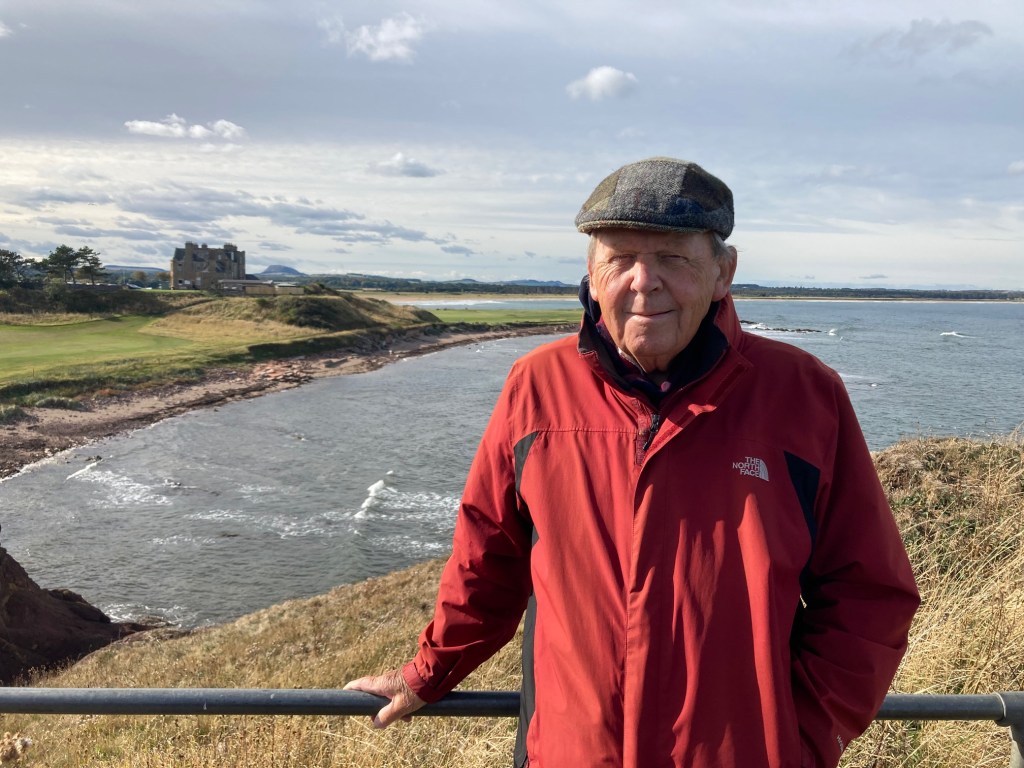
Since then Susie and I have been to Haddington. Another bright, cold day. While Susie visited Betty, I walked by the river Tyne. Sadly St Mary’s collegiate church, the biggest parish church in Scotland, sometimes known as the ‘Lamp of Lothian’, was very firmly closed. Afterwards we met for lunch at The Loft, a bright, airy, first-floor cafe, which does [among other things] an excellent Ploughman’s Lunch.
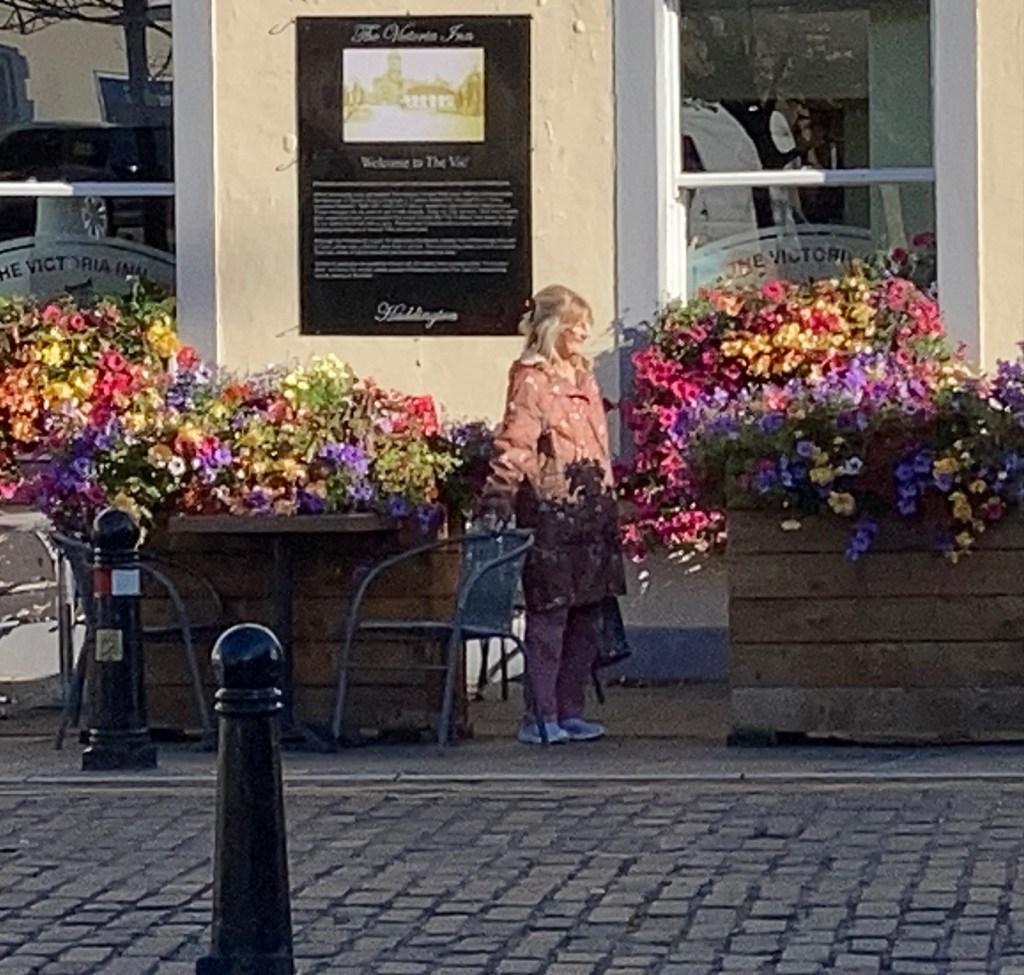
Henry ‘Chips’ Channon [1897-1956]
I have long been a sucker for political diaries. It may have begun a long time ago with the diaries of Henry ‘Chips’ Channon. The abridged, one volume version in Penguin. Channon was a very rich American social climber, born in Chicago in 1897 to a family who had made a fortune in shipping on the Great Lakes. He moved to England in 1920, and spent two years at Christ Church, Oxford, where his closest friend was Prince Paul of Yugoslavia. In 1923 he married the brewing heiress Lady Honor Guinness, and they lived in extravagant style in Belgrave Square and at Kelvedon Hall in Essex. On marrying into the Guinness family Channon inherited as Tory MP the Southend consituency, which he held until his death in 1956. The Channons were reputed society hosts. In November 1936 they entertained in their blue and silver dining room King Edward VIII and Wallis Simpson, of whom Channon was a great admirer, Prince Paul of Yugoslavia and his wife Princess Sophia of Greece and Denmark, and the Duke of Kent and his wife Princess Marina of Greece and Denmark. Chips who was a frightful snob would have purred with pride.
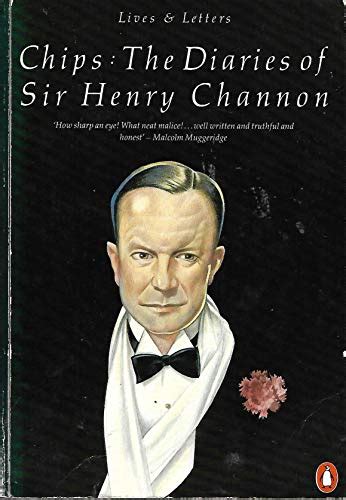
What the expurgated, single volume diaries, published in 1967 failed to tell me was that Channon was a lifelong, promiscuous homosexual. Robert Rhodes James, who edited the original edition said that well-connected people turned white when they heard that Channon had kept a journal. His close male friends, in addition to Prince Paul of Yugoslavia, included the landscape gardener Peter Coats, the playwright Terence Rattigan, and the Duke of Kent.
Robert Rhodes James quotes in his introduction to the diaries a self-portrait written by Channon on 19 July 1935:
“Sometimes I think I have an unusual character – able but trivial; I have flair, intuition, great good taste but only second rate ambition: I am far too susceptible to flattery; I hate and am uninterested in all the things most men like such as sports, business, statistics, debates, speeches, war, and the weather; but I am riveted by lust, furniture, glamour and society and jewels. I am an excellent organiser and have a will of iron; I can only be appealed to through my vanity. Occasionally I must have solitude: my soul craves for it. All thought is done in solitude; only then am I partly happy.”
Channon was an idle MP, who asked one parliamentary question between 1939 and 1945, but a conscientious diarist. Alan Clark makes frequent references to Channon in his own diaries, often approvingly. Harold Nicholson in his diaries finds Channon unbearably pompous and self-important. Reviewing the Diaries in 1967, Malcolm Muggeridge wrote:
“Grovellingly sycophantic and snobbish as only a well-heeled American nesting among the English upper classes can be, with a commonness that positively hurts at times. And yet – how sharp an eye! What neat malice! How, in their own fashion, well written and truthful and honest they are! …”.
Extraordinarily several previously unknown volumes of the diaries turned up at a car-boot sale in 1991. And an unexpurgated edition of the diaries, edited by the historian and journalist Simon Heffer, was published in three volumes between 2020 and 2022. There are copies available, at a price, on the internet with Abe Books, but I’m too mean to want to buy them.
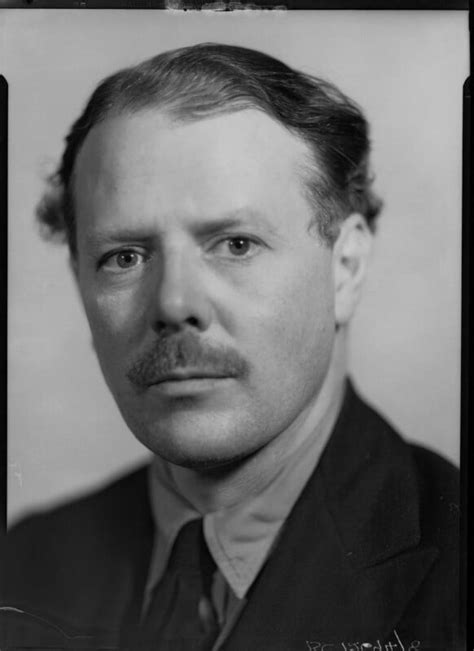
Harold Nicolson [1886-1968]
Harold Nicolson, born not quite a decade before Channon, was a British diplomat, journalist, politician, and writer. After graduating from Balliol with a third class degree in 1909, he was placed second in the competitive exams for the Diplomatic and Civil Service; and he served as a diplomat in Madrid and Constantinople, and then at the Paris Peace Conference at Versailles in 1919, and in London and in Berlin. In 1913 he married Vita Sackville-West, novelist and gardener. [It was an open marriage: both Nicolson and his wife engaged in a number of more-or-less discreet, homosexual affairs all their lives, in Vita’s case most notoriously with Violet Trefusis. Nicolson and his wife managed to have affairs, simultaneously I believe, with James Lees-Milne and his bisexual wife Alvilde, Viscountess Chaplin..]
The published diaries begin in 1930, the year after Nicolson resigned from the Diplomatic Service, a year when he was very unhappily writing a gossip column for the Evening Standard. The following year Nicolson joined Oswald Mosley’s New Party, and edited the party newspaper Action. It was a brief, misguided flirtation. Nicolson had very poor political judgement: he stood unsuccessfully for the New Party in the General Election of 1931; he entered parliament as a National Labour member for Leicester West in 1935; served briefly as a junior member of Churchill’s government in 1940; and after losing his seat in Leicester in 1945 he was prevailed upon to join the Labour Party, much to the disgust of his family, and stood unsuccessfully as Labour candidate in a by-election in Croydon in 1948. Mainly in the hope, also unsuccessful, of being given a seat in the Lords by Attlee. The only party that he never joined is the Liberal Party, which is where he might have felt most at home.
Nicolson is one of the leading diarists of his time. His friend and parliamentary colleague Rob Bernays called him “a national figure of the second degree”. He was a snob, both socially and intellectually. But his range of friends in the 1930s and 1940s included Ramsay Macdonald, Lloyd George, Winston Churchill, Antony Eden, C.E.M. Joad, Charles de Gaulle, and André Maurois. Many of his books have not aged well, but the three volumes of Diaries, published posthumously in 1966-68, edited by his son [I bought a set remaindered in a bookshop near the British Museum in 1972] are well worth [re-]reading.
Richard Crossman [1907-74]
Richard Crossman was Labour MP for Coventry from 1945 until his death in 1974. He was a Wykehamist, who taught philosophy at Oxford in the 1930s, an authority on Plato, a Zionist, and a Bevanite. He was also a prolific journalist, writing mainly for the Daily Mirror and the New Statesman. Bryan Magee, an outstanding public speaker, said that Crossman was the best debater he ever heard. His work for the Foreign Office in IRD, an obscure department dedicated to spreading anti-communist and pro-colonial propaganda during the Cold War led to him being known as Dick Double-Crossman.
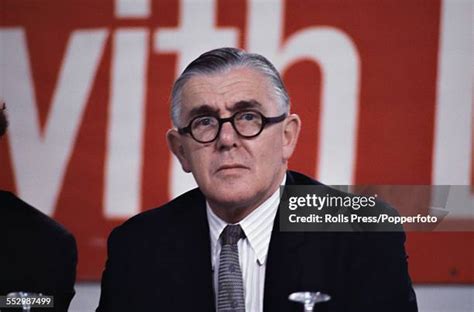
Crossman ís now perhaps best known for his three volume Diaries of a Cabinet Minister, published posthumously between 1975 and 1977. Following an attempt by the government to block their publication. In the Introduction Crossman wrote: “Though I earned my living and served Bevan’s cause by writing for the Sunday Pictorial and the New Statesman, my ambition was to write a book which fulfilled for our generation the functions of Bagehot’s English Constitution a hundred years ago by disclosing the operations of government, which are concealed by the thick masses of foliage which we call democracy.” The Diaries give a detailed picture of how a Minster in the Wilson Governments spent his time, exactly what he did in the Department, in Cabinet Committees, and in the Cabinet itself. They include an account of his struggles with “the Dame”, his Permanent Secretary Evelyn Sharp. The Diaries are an acknowledged source for the television series Yes, Minister.
Tony Benn [1925-2014]
Tony Benn, known briefly in his younger days as Viscount Stansgate, was a Labour politician and activist. After his father died in 1960 he successfully campaigned to renounce his peerage. He was an MP, first for Bristol South East and then for Chesterfield, for 47 of the 51 years between 1945 and 2014; and served as a Cabinet minister under Harold Wilson and James Callaghan in the 1960s and the 1970s. Benn’s mother was a theologian, a feminist, and a non-conformist, and Christian socialism and the teachings of Jesus were a major influence on his politics. Benn was regarded as a moderate and a moderniser in his earlier days in the Commons, but unlike most Labour politicians he moved steadily to the left after assuming ministerial office. Harold Wilson, his former boss, said that Benn was the only man who “immatures with age”.
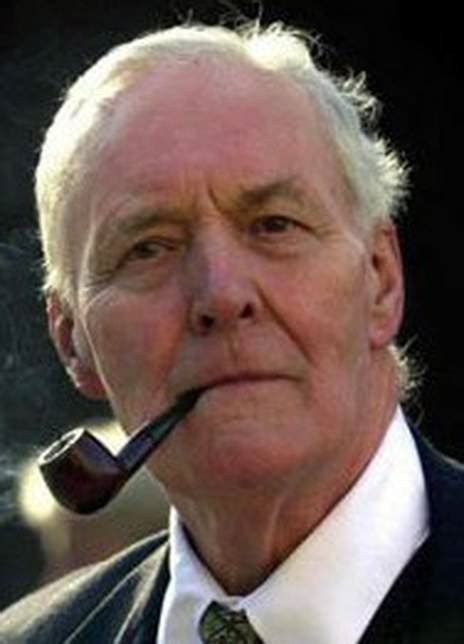
Benn was a prolific diarist for most of his life, from his early days training to be an RAF pilot at the end of the war, and nine volumes of his diaries have been published. He reveals himself as a man of touching enthusiasms. In the 1960s he acquires a new filing cabinet complete with hanging files and plastic tabs, which he describes as “the most beautiful thing I ever saw”. In the 2001 election Benn chose to stand down, famously claiming he was “leaving parliament in order to devote more time to politics”. In his later diaries Benn travels indefatigably, accompanied by his pint tea mug and his pipe, opposing the Afghanistan and Iraqi wars, touring with a one-man road show, and speaking more than once at Glastonbury. Perhaps unconsciously Benn moves from being the Bennite ‘loony left’ of the tabloid press of the 1980s to becoming a national treasure,
Alan Clark [1928-1999]
Like a lot of other people I was greatly entertained by Alan Clark’s Diaries, which appeared in three volumes in the late 1990s and the early 2000s. The later two volumes were published posthumously. Clark was a historian, a second-hand car dealer, Conservative MP, philanderer and serial adulterer, – and diarist. He was the son of art historian Kenneth Clark, known as Lord Clark of Civilisation. As an undergraduate at Christ Church Clark was a member of the Bullingdon Club, known for its wealthy members, extravagant banquets, and bad behaviour that included the trashing of restaurants. After studying history at Oxford [he got a third], Clark had plans to become a professional historian. His first book, The Donkeys [1961] was a controversial, revisionist history of the British Expeditionary Force [the BEF] in the early days of the First War. The book was highly controversial. Clark was outspokenly critical of Douglas Haig, and he came under attack from a clutch of senior historians including John Terraine, Robert Blake, and Hugh Trevor-Roper, Clark’s tutor at Oxford who was married to Haig’s daughter.
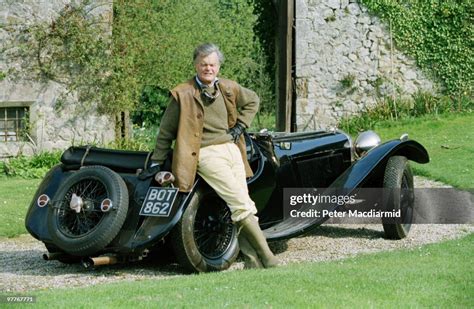
Clark came into politics through his opposition to the Common Market and his membership of the right-wing Tory group the Monday Club. He was MP for Plymouth Sutton from 1974-92, serving in junior government posts in Employment, Trade, and Defence; and was subsequently MP for Kensington and Chelsea from 1997-99. His Conservative contemporary Norman Lamont called him “the most politically incorrect, outspoken, iconoclastic and reckless politician of our times”. He was liked by Margaret Thatcher, for whom he had great admiration.
The first volume of the Diaries, expertly edited by Ion Trewin, starts with Clark’s adoption as candidate for a safe Conservative seat in Plymouth. [Other candidates included Norman Fowler and Michael Howard.] Early entries record his recurrent cash flow worries, losing at backgammon, regenerating at Zermatt, eyeing up the girls at a Plymouth school prize giving, and being disqualified from driving for six months. He is soon revealed as a cocky, lecherous, rackety, hypochondriac; who is at the same time arrogant, sensitive, loyal, unfaithful, patriotic and selfish. There are frequent jibes at government ministers and his fellow conservative MPs. He dismisses Michael Heseltine as the “sort of man who had to buy his own furniture”. Fears for his life being driven to the Savoy by the erratic Ian Gow. And accuses Willie Whitelaw of doing great damage to the Tory party with his obsessional regard for the Guardian vote. Clark is a great admirer of the fragrant Margaret Thatcher; “but goodness she is beautiful, made up to the nines of course … but still quite bewitching”. Even more worryingly he is an admirer of Adolf Hitler.
Chris Mullin [b.1947]
My favourite contemporary diarist by a country mile is Chris Mullin, onetime journalist with the Daily Mirror, and then MP for Sunderland South from 1987 to 2010. Mullin came to the fore as a journalist with his reporting from Vietnam and Cambodia in the 1970s and 1980s. He was highly critical of America’s strategy in Vietnam, and his opposition to the war led him into the Labour Party. He aligned himself with Tony Benn, edited two volumes of Benn’s speeches, and was editor of Tribune from 1982-84. In 1985, working for the television programme World in Action, Mullin was pivotal in securing the release of the Birmingham Six, Irishmen wrongly imprisoned for the Birmingham bombings. In the late 1980s the right-wing tabloid press pilloried him for his left-wing views, such as Loony MP backs Bomb Gang [The Sun, January 1988].
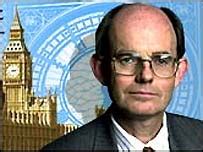
The Diaries are a delight, full of memorable vignettes. Unlike Alan Clark, Mullin is a kindly observer. He is an admirer, not uncritically, of Tony Blair, labelled The Man; and gives us a ‘warts and all’, inside, and periodically indiscreet, picture of New Labour, acknowledging both its triumphs and its errors. He is firmly opposed to the invasion of Iraq, feeling that Bush has led Blair astray. He greatly enjoys his time with DFiD, where he is pleased to believe that his work is ‘making a difference’. His wife, Ngoc, is Vietnamese and he is pleased too to be able to support some of her extended family. He is inordinately proud of his two bright and pretty daughters, Sarah and Emma.
The latest volume of Diaries: 2010-2022 Didn’t You Used to be Chris Mullin, which I bought new in hard-back, a rare event, is less political, or at any rate less Westminster-oriented. Mullin achieves one of his great ambitions; he buys a walled garden in north Northumberland, not far from Wooler. Mullin becomes a very regular speaker at literary festivals, speaking around 200 times. And attracting bigger audiences than he ever did as an MP. He is also a judge for the Man Booker prize, chairman of the regional Heritage Lottery fund, and a member of the Northumberland Park Authority. His friends and neighbours include local landowners and Tories; Sir Humphry Wakefield [father-in-law of Dominic Cummings], Nicholas Soames, Dominic Grieve, John Field, a former master at Westminster. He broadly supports the Labour Party but thinks Jeremy Corbyn unelectable. In 2021-22 he opines that there will never be another Labour PM in his lifetime. “Fundamentally decent and honest” [Alan Bennett].
Envoi
I had an appointment with a Urology consultant at the Western General yesterday. He was a nice man and moderately encouraging. I am now on the waiting list for surgery. Estimated waiting time is 6-12 months. So don’t sell your shares in rubber tubing yet ! Meanwhile we are going down to Watlington at the end of the week, our first trip south for nearly 2 years; and much looking forward to seeing the children and grand-children.
October 2026


I have Read Nicholson and Clarke, but not the others sexual promiscuity does not interest meSent from Madge’s iPhoneOn 20 Oct 2026,
LikeLike