Through a glass darkly – 17

Woodward’s History of England

Regular readers [if such exist] may recall that my long-ago study of history left me with a rather large lacuna; from the Magna Carta of 1215 to the outbreak of the First World War, that is about seven centuries. So, several decades later, I have been reading E.L. Woodward’s History of England. Sir [Ernest] Llewellyn Woodward was an Oxford historian, for many years a Fellow of All Souls and subsequently Professor of Modern History. His books range from an early publication on the Roman Empire to later books on the First and Second World Wars. He died in 1971.

His History of England is a single volume of 240 pages published in 1947. It is essentially  a chronological account, what might be called old-fashioned history, with the emphasis on political and diplomatic activity. It is a ‘top-down’ approach. Compared with a lot of contemporary historians, he is admirably disciplined.  Meaning brief. Which is immensely helpful if what you want is an overview of several centuries. The original book ended in 1939, but my paperback edition includes a couple of later chapters on the mid- twentieth century. What follows is a digest of the story as he tells it.

The Tudors and Stuarts

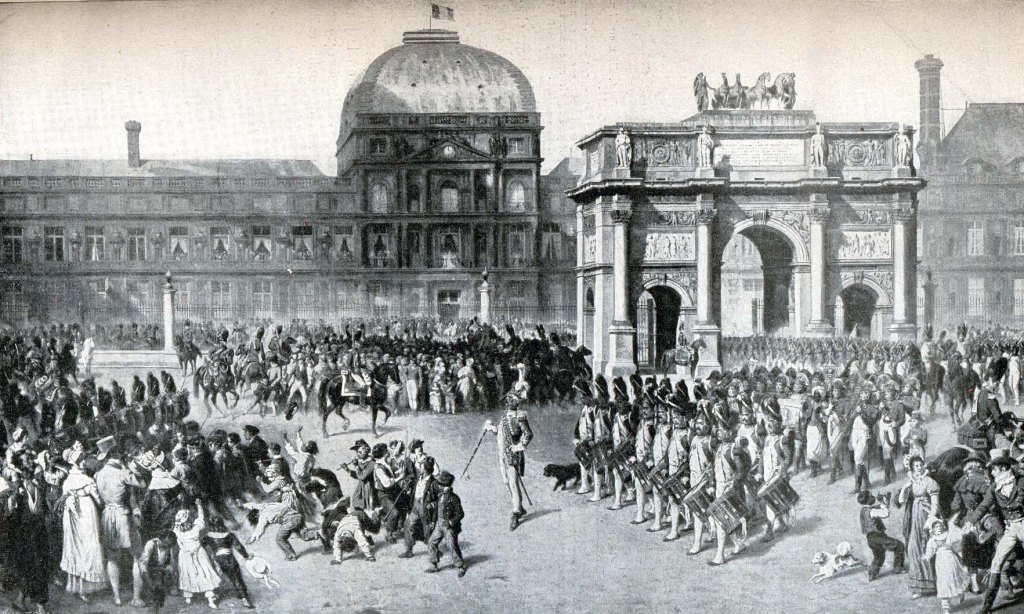
After the upheavals of the War of the Roses, the arrival of Henry Tudor in 1485 brought greater stability. The Tudor monarchy was the greatest effective concentration of power in England since the Norman Conquest. But they never had a large army. Henry VIII [1509-47] was the first king since Henry V who did not have to fight or win a battle to secure his throne. “He was a prince after the fashion of his age – …  politic, selfish and intensely national.” Divorce from Catherine of Aragon  was necessary because there was no male heir. And there was no precedent for a female ruler [except the unhappy one of  Matilda]. Once the breach was made with Rome doctrinal revisions followed. The king married Anne Boleyn in 1533 without papal approval. And was proclaimed Supreme Governor of the Church in England in 1534. The dissolution of the monasteries in 1536-39 was a logical consequence by a king in need of money.

Henry’s death in 1547 meant a regency. The young king’s uncle, the Duke of Somerset, held ‘advanced’ views on theology. The 1549 prayer book in English inclined towards Lutheranism. In 1552 the second prayer book, largely the work of Thomas Cranmer, was more Protestant. Edward VI was succeeded by his Catholic half-sister Mary [1553-58]. She repealed the statutes of Edward VI; enabled the persecution of heretics, including Cranmer and Ridley. This Catholic persecution produced Protestant martyrs. After Mary’s death, the Elizabethan Settlement was a very effective compromise. Elizabeth reissued the second prayer book of Edward VI. The settlement was both aided and hampered by violent attacks on England from catholic Spain supported by the Papacy. This was ultimately the reason for the execution of Mary Queen of Scots [1542-87].

Woodward describes Elizabeth as “a handsome, auburn-haired woman of 25; intelligent, practical, speaking Latin and French, as well as some German and Italian“. She had no brother or male relative, but chose good counsellors. War, diplomacy, and trade were closely connected. At first England did not try to rival Spanish trade in the Indies or South America. Humphrey Gilbert established a first colony in Newfoundland in 1583. Raleigh tried to establish a colony in Virginia, but was not successful. John Hawkins and Francis Drake and other plundered Spanish galleons. The Spanish Armada of 1588 was defeated, largely by the weather. But Spanish power was unbroken.

Queen Elizabeth I and Sir Walter Raleight

Towards the end of Elizabeth’s reign the monarchy could not meet expenses. Both James I and Charles I tried new ways to increase their revenues. Which meant summoning parliament more often. If the commons were asked for subsidies to pay for the king’s foreign policy, they would claim the right to criticise the policy. Scottish affairs were the cause of the calling of the ‘Long Parliament’, but the problem of Ireland indirectly led to the English civil war. An Irish rebellion in 1641 needed to be put down. But the Parliament would not give the money for an army under the king’s control. Charles responded by seeking to arrest the most hostile members. In return Parliament set out a programme for control over the council, the Church, and the militia.

Christopher Hill has taught us to label the seventeenth century as ‘The Age of Revolution’. But Woodward skates quite smoothly over the breakdown of royal government, the victory of the parliamentary army, the execution of Charles I in January 1649, and the establishment of the Commonwealth. He notes that Cromwell’s power rested on the army alone, and that in the latter years of the Protectorate he became king in all but name. The restoration of monarchy with Charles II in 1660 was no counter-revolution, but more a reversion to what had been before the misuse of power by Charles I. Charles II wanted toleration of Catholics, but Catholicism in Europe was the religion of absolute rulers. After Charles, James II was more openly Catholic. In May 1688 his Declaration of Indulgence would have suspended penal laws against catholics and dissenters. The clergy disobeyed, as did the bishops. The birth of a son to James II raised the danger of a catholic regency and a catholic monarch. So in June 1688 an invitation was sent to James’s daughter, Mary, and her [protestant] husband, Prince William of Orange. Civil war was avoided by allowing James to escape to France.

England in the Eighteenth Century

The ’Glorious Revolution’ of 1688-89 did not establish a new constitution. But it created the possibility of peaceful constitutional change. Throughout the 18th century the English failed to conciliate Irish feelings. But they were saved from serious problems in Scotland by the negotiated Act of Union of 1707. Bot sides  gained: Scotland did not lose its identity nor its national pride, and made great gains economically. On the death of Queen Anne  [1702-14], George, Elector of Hanover [and grandson of Elizabeth, daughter of James I], came to the throne in accordance with the Act of Settlement. The Act of Union of 1707 had weakened support for the Stuarts [as was made clear by the failed Jacobite rebellions in 1715 and 1745].

The full effects of the settlement of 1688 were now felt; as a balance of legislative, executive, and judicial power emerged. The king had to choose ministers who could obtain parliamentary support. The development of a Cabinet, and the emergence of a Prime Minister, reflected the new constitution. George I and George II did not attend Cabinet meetings. The leading servant of the Crown had no official title. But first Walpole, and then Chatham and Pitt the Younger, had an ascendancy in the commons and in the country which justified the term ‘Prime Minister’. “King, Prime Minister, and parties now began to take their modern alignment.” John Locke’s philosophy was a justification of the 1688 revolution; he saw government as a contract between ruler and subjects for the defence of property.

The Seven Years War [[1756-63] was to decide whether England or France should control North America and India. In North America English colonies stretched from Nova Scotia to Georgia; but the French had Louisiana, and the Spanish had Georgia. Within 20 years of this victorious war, England had lost the American colonies. The English complained that the colonies did not contribute to their own defence against the French, and attempted to impose taxes. Tea was thrown into the harbour at Boston in 1773. And in July 1776 a Congress at Philadelphia declared American independence.

The Boston Tea Party

From 1793 to 1814 England was at war with France; fighting for the most part against a military genius who had defeated the lumbering armies of Austria and Prussia. English sea-power was significant in countering the power of France and saved them from invasion. There were dangerous moments in 1797 and again in 1802, but Trafalgar in 1805 was a decisive victory. Wellington countered French aggression in the Spanish peninsula. Waterloo in 1815 was the final victory.

England in the Nineteenth Century

After victory at Waterloo contemporary opinion was not optimistic about the prospects for England; few people foresaw the increase in general prosperity over the next 50 years. But the growth of railways transformed life: they benefitted agriculture, and allowed poorer classes to maintain contact with the family home. Railways were private enterprises, not under government direction. There was little appetite for government controls. At home there was generally little interest in social conditions. Water supplies and sewage disposal were primitive. Liverpool in 1847 was the first city to appoint a medical officer. The population of England and Wales rose from c.9 million in 1801 to 21 million in 1851 to 32 million in 1901.

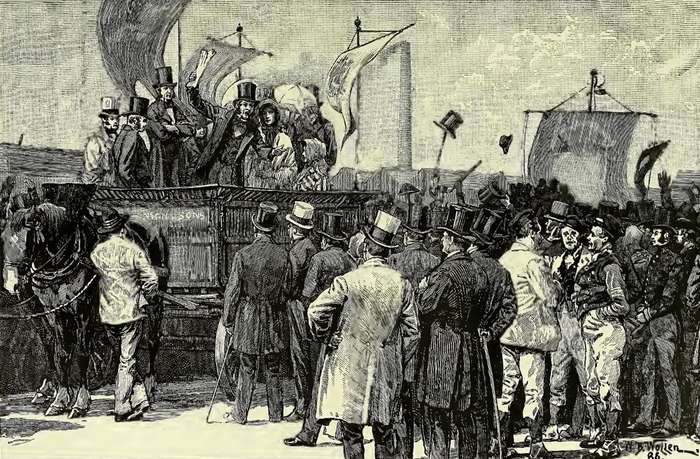
There was some improvement in labour conditions; by 1850 the trade unions had secured a ten hour day and a sixty-hour week. After 1870 there was an improvement in social services; in elementary schools and in hospitals. Improvements were secured through trade unions. Chartism arose out of frustrations with the reform act of 1832. The ‘People’s Charter’ asked for universal male suffrage, equal electoral districts, abolition of property qualification, payments of members. The first TUC met in 1868. Socialism was introduced to England in the 1880s. The Independent Labour Party was founded in 1893. The ‘Labour Representative Committee’ with Ramsay MacDonald as its first secretary came into being in the 1890s. In 1906 it won 26 seats in the Commons.

Cartist demonstration, 1848

Abroad the foreign policy of Lord Palmerston, who sat in 16 parliaments, and was in office almost continuously from 1807, was directed at maintaining Britain’s status in the world. Diplomacy was about securing peace, mainly through ensuring a balance of power in Europe. The importance of India made British foreign policy very nervous about growing Russian power. Especially in Turkey. Russian control over Turkey was the cause of the Crimean War. Which justified the high reputation of the fighting capability of the British army, but not of its commanders.

Closer to home, Ireland was a continuing source of instability. The population of Ireland rose from 6 million in 1815 to 8+ million in 1840. The standard of living was very low; most peasant families lived on potatoes. The failure of the potato crop in 1845 and 1846 brought terrible famine. Two million Irish emigrated, mainly to America, between 1847 and 1861. Gladstone became convinced that home rule was the only solution to the Irish question.But he couldn’t carry his party with him. The defeat of a second home rule bill in 1893 led to Gladstone’s retirement in 1894.

England in the early Twentieth Century

TheGreat War, Woodwardmaintains was largely a consequence of the way Germany used her growing power; both to challenge British sea power, and to expand her influence south-eastwards thereby endangering British links to India. He rehearses the diplomatic consequences of the assassination of Archduke Ferdinand, heir to the Emperor Franz-Joseph, at Sarajevo in June 1914; and he argues that the Germans effectively lost the war when they failed to capture the Channel ports in 1914. During four years of trench warfare that followed, the defence always had the upper hand. Interestingly he claims that the Boer War had brought cavalry officers to prominence in the British army; and they were neither bright nor imaginative. It was their rigidity and their lack of imagination led to loss of life on an unprecedented scale.

King George V and General Sir Douglas Haig

PS on England’s relationship with Europe

At the end of this short book, after a very brief look at what he calls the Second German War and at post-war Britain, Woodward looks prophetically into the future “The next stage”, he writes, “ – a closer integration of Great Britain with the states of continental Europe – may be less easy for a nation which still thinks of itself as an Island Power, with its own particular ways, and is still fearful of the consequences of any surrender of national sovereignty.” But Woodward insists that this transition will have to be made.

Woodward was writing at much the same time as Churchill’s speech at the University of Zurich, in 1946, in which he advocated a ‘United States of Europe’, urging Europeans to turn their backs on the horrors of the past and look to the future. He declared that Europe could not afford to drag forward the hatred and revenge which sprung from the injuries of the past, and that the first step to recreate the ‘European family’ of justice, mercy and freedom was “to build a kind of United States of Europe. In this way only will hundreds of millions of toilers be able to regain the simple joys and hopes which make life worth living”.

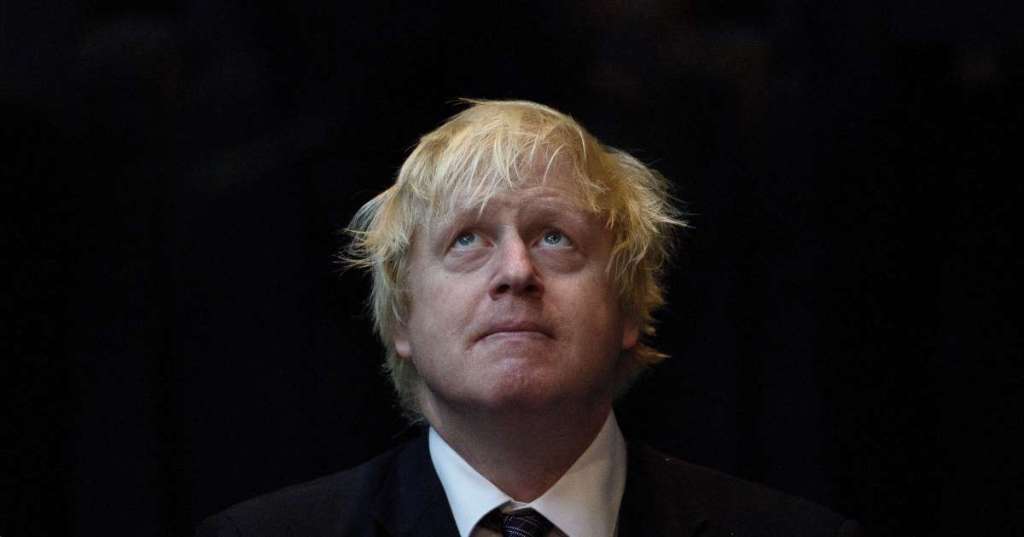
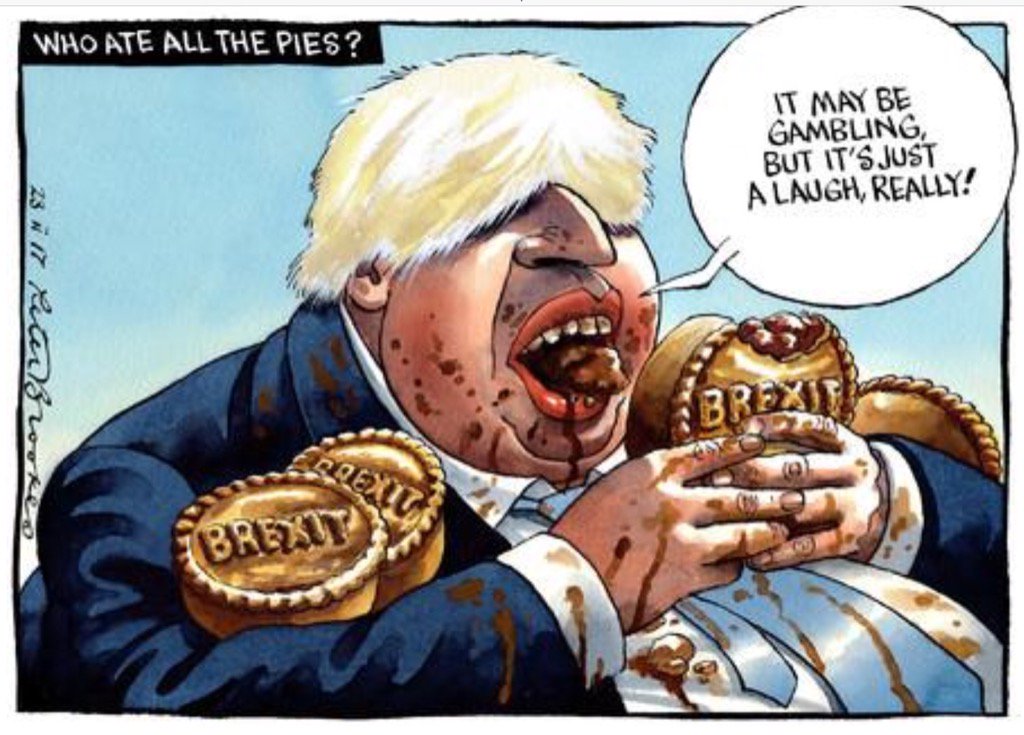
Sixty years on, in order to curry favour with the ignorant and xenophobic faction of the Tory party, we have an untrustworthy and self-seeking prime minister who is taking us in precisely the opposite direction. Future historians will be incredulous. And will doubtless find BREXIT almost impossible to explain or to justify.

Through a glass darkly – 16

Albert Camus

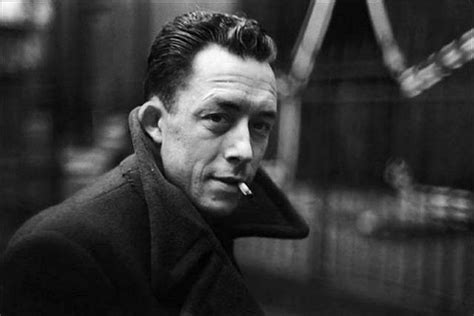
During this eighteenth week of lock-down it seemed a good idea to look again at Albert Camus’s The Plague [La Peste]. Camus was a name to conjure with when I was growing up in the 1960s; a French writer, philosopher, and journalist. He was often labelled an existentialist, a label that he always rejected.  He was born of pied noir parents in Algeria, then a French territory, in 1913, and was brought up in North Africa. As a young man he had a variety of jobs, including playing in goal for the Algiers football team. When he moved to Metropolitan France he took up journalism, and was active in the Resistance during the German occupation, becoming editor of the clandestine paper Combat.  After the war he abandoned journalism and politics to become a full-time writer. 

Albert Camus

In 1957 he was awarded the Nobel Prize for Literature. He was killed in a car crash early in 1960. He was in a fast car being driven by his publisher, Michel Gallimard, on the old Route Nationale 5 when the  car hit a tree on a fast, straight stretch of road. Two of his better-known published books are L’Etranger [The Outsider] in 1942 and  La Peste [The Plague] in 1947. Unusually I have these books in both English and French; and I thought to read them in French, but made only slow progress so I changed my mind.  

The Plague [La Peste]

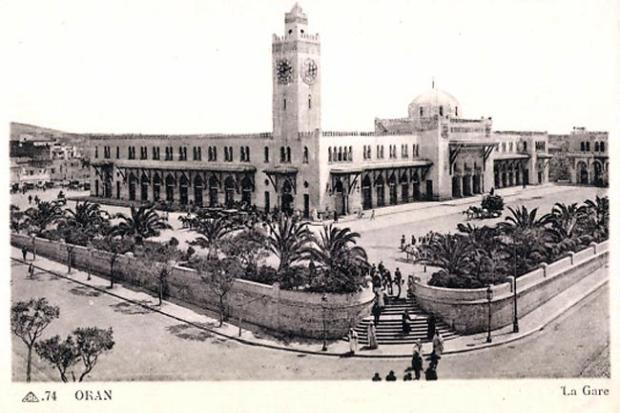
The novel is set in Oran, a large French port on the Algerian coast. It is made clear at the outset that this is not a pretty town.

The seasons are discriminated only in the sky. All that tells you of spring’s coming is the feel of the air, or the baskets of flowers brought in from the suburbs by hawkers; it’s a spring cried in the market-places. During the summer the sun bakes the houses bone-dry, sprinkles our walls with greyish dust, and you have no option but to survive those days of fire indoors, behind closed shutters.In autumn, on the other hand, we have deluges of mud …”

Oran. the station

As he leaves his surgery on an April morning, the narrator, Dr Bernard Rieux, feels something soft under his foot. It is a dead rat lying in the middle of the landing. Over the next few days the porter, old M.Michel, complains that young scallywags have been dumping dead rats in the building. One of Rieux’s patients comments “they’re [the rats] coming out good and proper, have you noticed ?” Rieux’s wife has to leave him for a sanatorium, and his mother comes to keep house for him. Within a few days the door-porter is dragging himself around with his head bent and his arms and legs splayed out. And he feels pain in his neck, armpits, and groin. A few days later he is dead; an early victim of what Dr Castel, one of Rieux’s older colleagues, recognises as the plague. Recalling what he knows of the disease, Rieux recalls that seventy years earlier, at Canton, forty thousand rats died of the plague before the disease spread to humans.

The response of the authorities is to close down the city. Totally. 

One of the most striking consequences of the closing of the gates was in fact this sudden deprivation befalling people who were completely unprepared for it. Mothers and children, lovers, husbands and wives, who had a few days previously taken it for granted that their parting would be a short one … all these people found themselves, without the least warning, hopelessly cut off, prevented from seeing each other again, or even communicating with each other.”

As the deaths mount in the locked-down city, sentries are posted at the gates, and the townsfolk seek to come to terms with their sudden isolation. Rieux as a practising doctor is busy injecting serum, lancing buboes, checking the statistics, and making afternoon rounds of his patients. The church authorities call for a Week of Prayer, culminating in a High Mass under the auspices of St Roch, the plague-stricken saint. The cathedral is full for the service, at which Father Paneloux tells the congregation very clearly that God has ordained good and evil in everything, and that this pestilence is punishing them for their sins and pointing them their future path. It is hard to know what effect this has on the townsfolk.

Oran

The book conveys powerfully the sense of hopelessness within the stricken city. Strong winds and summer heat drive up the number of victims. The plague has obliterated colour and vetoed pleasure. A small group of acquaintances cluster round Rieux and work with him to combat the plague; cordoning off the worst affected areas and keeping accurate records of deaths. Funerals are reduced to the bare minimum, and take place not in churches but as perfunctory rites by the grave-side. The illness, incurable and implacable, continues to strike down innocent people. Acceptance of the rising deaths  does not overcome a dogged determination to fight the plague. 

Is it about the German occupation  ?

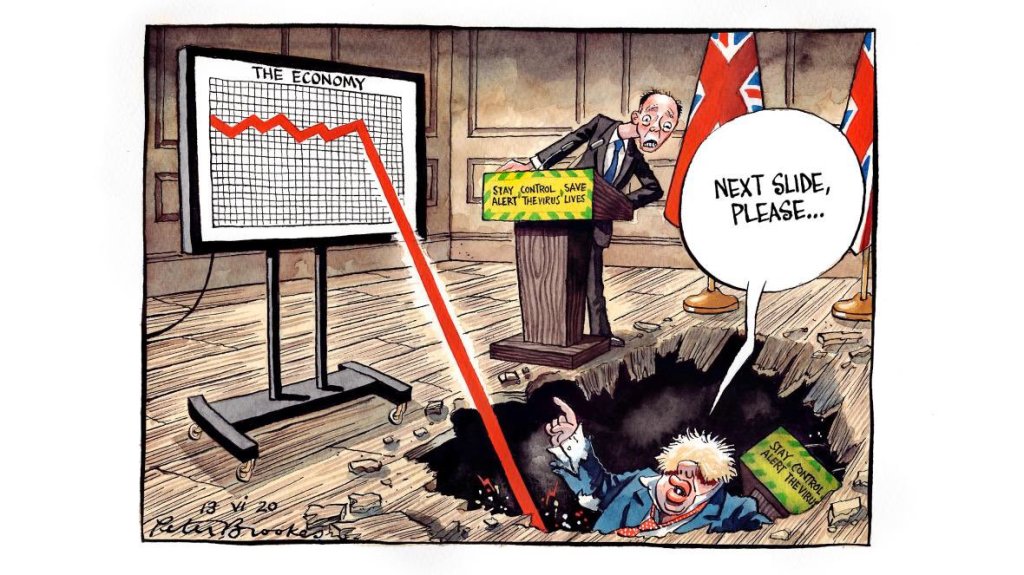
Camus’s novel is said to be loosely based on a cholera epidemic that erupted in Oran in 1849, not long after French colonisation. But it is not a book about a medical condition; it is rather about how individual men [and they are all men] react to a lethal enemy that they cannot see. Unlike our own COVID pandemic, there is no television news and no daily press conferences by blustering Boris and hapless Hancock. Explanations of what’s happening have to be worked out on the spot.

It is often said that Camus’s plague is an allegory for the Nazi occupation of France. We know that Camus tried to flee France after the German occupation. [Just as the journalist Rambert tries to flee the plague-ridden city.] He fled from Paris to Lyon, and then to Oran, before returning to  France and to Paris, where he joined the Resistance and edited the magazine Combat. The book  asks the question, ‘How would you react in this situation ?’. When we find ourselves in an appalling situation which we cannot control, what qualities emerge in people ? It is now customary to pay tribute to the courage and the suffering of the French Resistance. But Le Chagrin et La Pitie, Marcel Ophuls’ documentary of 1969, showed that there were many different reactions in France to   the Vichy government and the Nazi occupation. It makes for uncomfortable viewing.

The Plague doesn’t offer easy moral answers. And it doesn’t deal with heroism, at least not of the conventional kind. The authorities initially seek to dismiss the plague as a false alarm. [Shades of President Trump and President Bolsonaro.] Rieux is a practical man; he offers no ideology, but stubbornly applies his medical skills. Others gather round him. Joseph Grand, the government clerk. is struggling with the first sentence of his intended novel [a wonderful running joke] , but works tirelessly to record the statistics of the plague with careful precision. I don’t always agree with Ben MacIntyre, but I think he is right to conclude “Albert Camus’s 1947 novel suggests quiet courage and decency are the greatest virtues at times like this”. And there is an ominous coda, as the jubilant crowds finally celebrate an end to the plague: 

Rieux knew what the jubilant crowds did not know … … that the plague bacillus never dies or disappears for good; that it can lie dormant for years and years in furniture and linen chests; that it bides its time in bedrooms, cellars, trunks, and bookshelves … … and  that perhaps the day would come when it roused up the rats again …”

On the Emmaus Road

As a student I never associated Camus with Christianity. But David Smith in his 2007 book Moving towards Emmaus: hope in a time of uncertainty sees Camus as one of a number of contemporary humanists who are companions in dialogue on the Emmaus Road. Writers and thinkers who seek to balance faith and unfaith, oscillating between expressions of despair and the recovery of hope.

Thus Camus writes, in Resistance, Rebellion, and Death:

How to live without grace … that is the question that dominates the nineteenth century. ‘By justice’ answered all those who did not want to accept absolute nihilism. To the people who despaired of the Kingdom of Heaven, they promised the kingdom of men. The preaching of the city of humanity increased in fervour up to the end of the nineteenth century when it became really visionary in tone and placed scientific certainties in the service of Utopia. But the kingdom has retreated into the distance, gigantic wars have ravaged the oldest continent in Europe, the blood of rebels has spattered walls, and total justice has approached not a step nearer. The question of the twentieth century … has gradually been specified: how to live without grace and without justice ?”

In the epilogue to Moving towards Emmaus, David Smith retells the story of Camus’s friendship with the Methodist minister Howard Mumma. Camus had come into the American Church on the Quai d’Orsay in the late 1950s to hear the organist Marcel Dupré, but then came back to church to listen to the preacher. From this initial contact a close friendship developed between Albert Camus and Howard Mumma, and [according to the latter’s book] their wide-ranging conversations about the meaning of human existence culminated in Camus’s request for Christian baptism. It doesn’t happen; Mumma returns to the States, and shortly afterwards Camus is killed in a road accident.

This then is perhaps the question that the COVID pandemic raises for church leaders: Are we willing and able in times of great uncertainty and suffering to respond to the spiritual and intellectual questions of honest seekers ?  People who are far from being church members. Are we willing to walk with them and to listen to them ? Before we think to enrol them on Alpha courses or the equivalent.

July 2020

Through a glass darkly – 15

Being seventy five

I was seventy five two days ago. What does that event signify ? When I googled the number [except that I don’t use Google, I use Duck Duck Go Go], it told me that seventy five was the number one above seventy four. Which is certainly true, if not very helpful. And it also told me that seventy five was the departmental number for Paris, where we lived when we were first married back in the 1970s and I was working for OUP. Our daughter was born in Paris, and may occasionally think of herself as  ‘une vraie titie Parisienne’, but in truth we left before her first birthday. The A75 is a trunk road in south west Scotland which leaves the A74 (M) near Gretna, and runs south-west past Dumfries, Castle Douglas, and Gatehouse of Fleet before ending at Stranraer. One stretch of it is said to be haunted. If blustering Boris’s lunatic scheme to build a bridge from Scotland to Northern Ireland were ever to happen, then the road would presumably be upgraded to motorway standard. In France the A75 is the dramatic motorway that runs south from near Clermont-Ferrand across the Massif Central to near Beziers. It includes the extraordinary, terrifying to me, Millau Viaduct. Incidentally construction of that motorway began in 1975, but I think the number is just a coincidence.

In the Bible Psalm 90 tells us [in the Authorised Version], 

The days of our years [are] threescore years and ten; 

and if by reason of strength [they be] fourscore years, 

yet [is] their strength labour and sorrow; 

for it is soon cut off, and we fly away”. 

Generally I’m not a huge admirer of The Message, but I do like Eugene Peterson’s version:

We live for seventy years or so

[with luck we might make it to eighty]

And what do we have to show for it ? Trouble.

Toil and trouble and a marker in the graveyard …

Oh! Teach us to live well !

Teach us to live wisely and well

So, seventy is taken to be our allotted span in this life, an idea picked up [retweeted one might say] by Shakespeare in Macbeth.

Susie thinks that blogging is just a way of trying to put your life into order. As dreams do when you are asleep. Bruce Chatwin wrote a book called ‘What am I doing here ?’  Perhaps the more appropriate, birthday related question is How did I come to be where I am ? So what follows is an unashamedly self-centred retrospect on how the decades have gone over the past seventy years. Maybe the only justification for writing it down is that I know the story better than anyone else.

July 1950

To be honest I don’t remember a lot about 1950. I was living with my parents and my older brother in a big, unheated house in  Southfields, an anonymous suburb of south-west London. My mother thought [rightly] that the house, which spread over three floors, was ‘very inconvenient’. I was about to start school at St Michael’s, a local Church of England primary school. Happily I could already read quite well, and one of my pre-school activities was to sit under the dining table declaiming stuff from Poems for Patriots, and to pretend that I was on the BBC. My first primary school teacher was Miss Kavanagh, who wore a fluffy pink bolero. She is the only person I have ever met who came from Hobart, Tasmania. For writing we used a small wooden-surround blackboard and a squeaky slate pencil. A bit like Bill the Lizard in Alice in Wonderland.

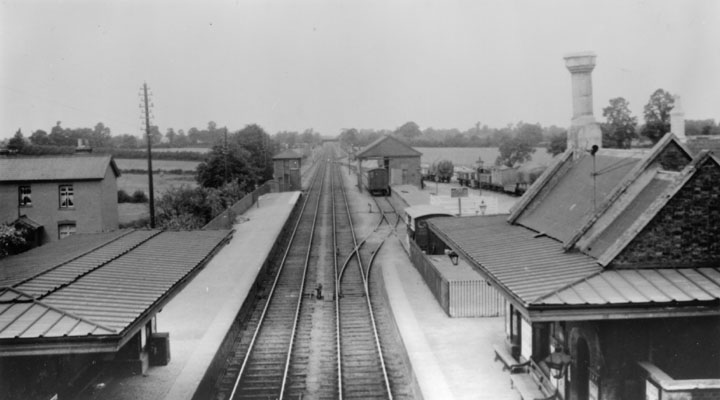
Minety station

My father was a teacher and we spent all our school holidays with my grandparents, my mother’s parents. My grandfather, known to us as Fa, was station master on the GWR [God’s Wonderful Railway], at Minety, a small station between Swindon and Cheltenham. So during the school holidays we lived in a world that was very similar to that of Thomas the Tank Engine.

July 1960

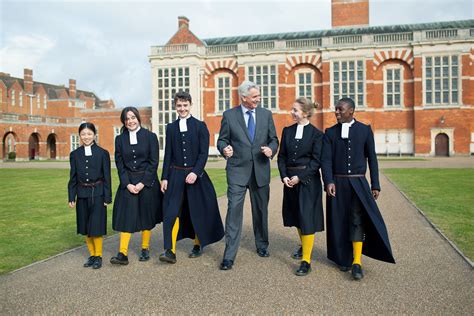
In the wider world the newly independent former Belgian Congo was about to explode into violence and anarchy. And a young boy was the first person to survive being swept over the Niagara Falls. It seems that I wasn’t aware of that. I was four years into a single sex, boy’s boarding school in Sussex, Christ’s Hospital, and I was doing GCE O levels. [As I recall, I passed in seven subjects, doing best in classical Greek and worst in Elementary Maths.] My 1960 diary, which I found in a shoe box the other day, meticulously records my marks in Latin grammar tests and French unseens. And also my scores in various house games [cricket].  The entry for my birthday records, laconically: “My birthday. Seven cards. Physics and Chemistry, Chemistry Theory. Catalytic oxidation of ammonia.”  Clearly a man of few words. And none of them very interesting.

The Quad, Christ’s Hospital

What I think the diary demonstrates is that, as Philip Larkin and others have already observed, ‘the Sixties’ didn’t really begin for another few years, round about 1963. Certainly for me, medieval history and modern jazz, and hitchhiking, and France, and involvement with the Putney Young Socialists, and talking to girls, were all in the future. Like the Beatles first LP.

July 1970

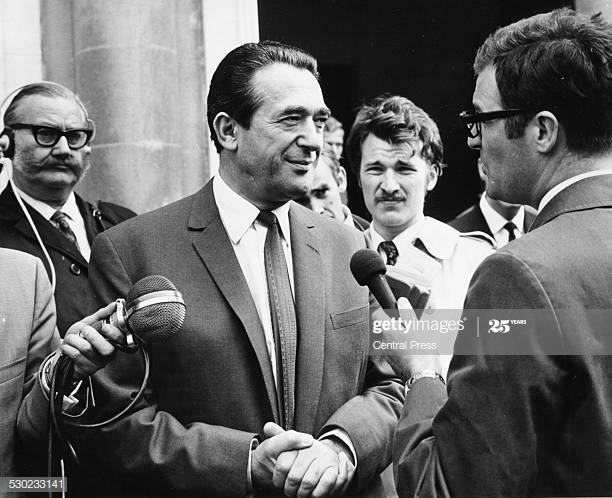
School was half a decade past. My aspirations [pretensions] as a historian had disappeared after three unprofitable years at Oxford. Now I was working for Robert Maxwell’s Pergamon Press. [Photos of Ghislaine Maxwell following her recent arrest show how very much like her father she is.] Maxwell is now largely derided as the bouncing Czech and an overweight crook. But in the day he was the great [white] hope of British scientific and technical publishing; decorated during the war, married to a wealthy French woman, and Labour MP for part of Buckinghamshire, After eighteen dull months as a college rep, I was now Editor of the Commonwealth and International Library, a one-thousand volume series of  books on science, technology, engineering, and liberal studies. A very Maxwellian concept ! In practice I was the in-house editor for several series of textbooks, all of which were assessed by outside academics. I worked in an enormous open plan office with very few windows, which had formerly been the Pergamon warehouse, and the indoor plants and the carpet were watered every night by the cleaners.

Robert Maxwell, Chairman of Pergamon Press, talking to reporters

The content of most of the books I handled was beyond me. But I got to learn something about print runs and production costs and profitability. I also took a lot of authors out to lunch. On one memorable occasion I took three Professors of Spanish out to lunch at Schmidt’s, a German restaurant in Charlotte Street. It was said to have the rudest waiters in London, and was like something left over from The Music of Time. One of the academics, an irascible Northern Irishman, ordered Steak Tartare and insisted to the incredulous waiter that he wanted it “well done”. It was my job to smooth things over..

July 1980

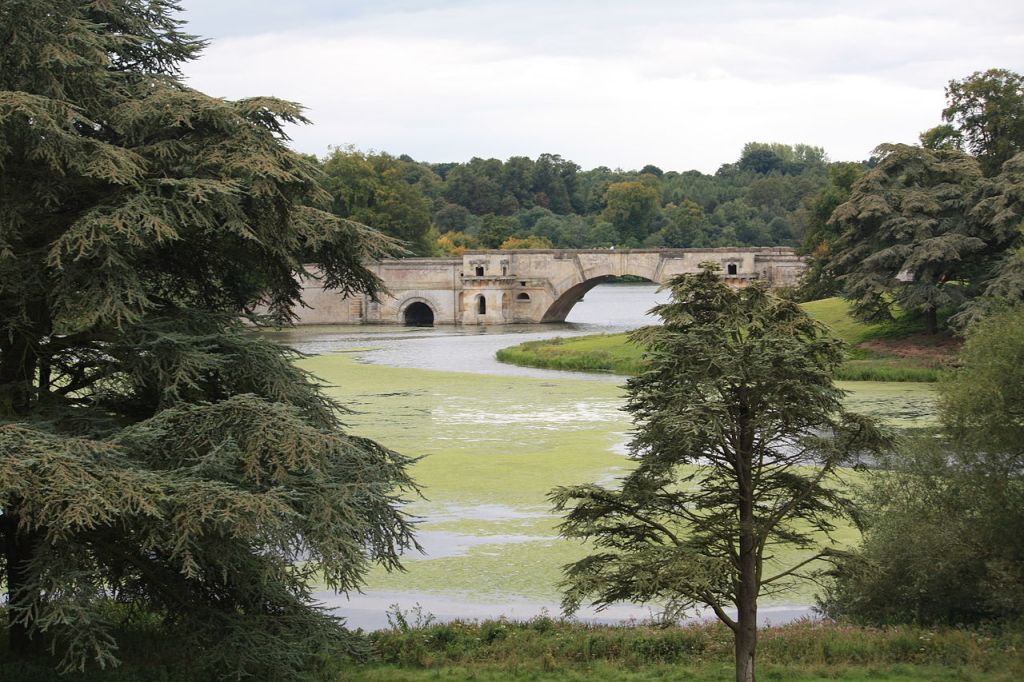
Susie and I had been married for five years. After a couple of years in Paris, I had come home to work for OUP in the ELT [English Language Teaching] department. And then I moved on to the smaller English Language Teaching Development Unit [ELTDU]. We couldn’t afford a house that we liked in Oxford, so we bought a house up the road in Woodstock. Thankfully it wasn’t as expensive then as it has now become. We had a great view over the Glyme valley from our bedroom windows. And our two small children both learned to walk in Blenheim Great Park. There was an excellent bridge for playing Pooh-Sticks. But you had to stay away from the swans.

Blenheim Great Park

ELTDU was a very small business, with great potential but a running cash-flow problem. Much like our domestic finances. The election of Margaret Thatcher the previous year had driven me to get involved with the nascent SDP, for whom I campaigned in the West Oxfordshire constituency. Douglas Hurd was the sitting MP. Later replaced by David Cameron. More significantly in the longer term, we had found our way to St Andrew’s church, Linton Road, North Oxford. And the course of my life was being substantially changed by Colin Bennetts, the newly-arrived vicar, who became both a mentor and a good friend. And, subsequently, Bishop of Coventry

July 1990

After my training for ordination at Wycliffe Hall in Oxford, Susie and I had moved to Edinburgh two years earlier; and from summer 1988 I had been Curate at St Thomas’s church, Corstorphine, on the west side of Edinburgh. It was a good church in which to begin ministry. We lived next to the church on the busy Glasgow Road. My training rector, Dennis Lennon, a former OMF missionary in Malaya and Thailand, was the best preacher week-in, week-out that I ever heard. [Though some of the congregation were bit confused when Dennis preached three Sundays running on the Parable of the Unjust Steward.] Dennis taught me a lot about preaching, but failed to encourage me to share his enthusiasm for  the Swiss theologian, Hans Urs von Balthasar.

It was Dennis’s view that in church ministry you should move on every seven years, and he was leaving St Thomas’s that summer to become Diocesan Missioner in the Diocese of Sheffield.. We were on the move too. Bishop Richard Holloway asked us to ‘look at’ Christ Church, Duns, down in the Borders, a church with an evangelical tradition which was struggling with some internal schisms. I was very respectful of bishops then, and we went down to Duns to meet the Vestry, and they invited us to go there. The 19th century rectory, with too many rooms and too little heating, was put on the market. So we moved that month into a farm cottage at Duns Mill surrounded by fields. Both the children started at Berwickshire High School. For our daughter Joanna it was her fourth school in four consecutive school years.

July 2000

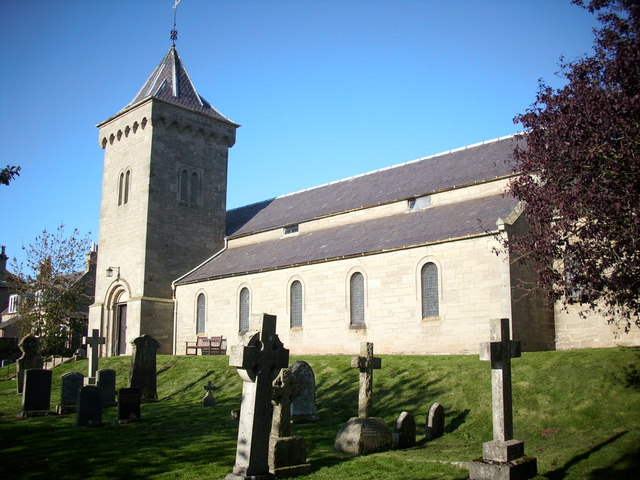
A decade later we were about to move again. Christ Church, Duns, had been a very positive experience. We had some hereditary Episcopalians;  the families who had planted the church 150 years earlier were buried in the churchyard, and some of those families were still in the congregation. .  But there was also a swathe of the congregation who had worked on Christian mission in Africa. And we benefited from links with two local Bible colleges, the Northumberland Bible College in Berwick-upon-Tweed, and the more recent King’s Bible College, up the road at Whitchester.

Christ Church, Duns

A decade can seem a long time in a small town of 2,000 people. Our children had completed schooling in Duns, and then first degree courses in Edinburgh. Joanna was about to go and teach in a mission school in Nepal. Where her then boy-friend [and now husband] was doing a medical elective, in a hospital in Katmandu. And Jeremy was about to fly out to Australia and explore that vast country with two mates from uni. No less adventurously, or so it seemed to us, Susie and I were returning to France. I had been offered the job as Chaplain of the Lyon Anglican Church, part of the Diocese in Europe, and linked to the Intercontinental Church Society. In July we were busy making lists and getting quotes from removal firms. And doing a holiday chaplaincy in Brittany.

July 2010

Under the misapprehension that I would be asked to leave Lyon, and church ministry,  punctually on my 65th birthday, I applied for a post-retirement job back in Scotland. Which would have brought us much nearer to my [then] nonagenarian mother-in-law. Applying for the job for all the wrong reasons was clearly a big mistake. A bit chastened we went back to Lyon and stayed another three years.

One of the highlights of the year was going to visit Joanna and Craig, our daughter and her husband, in South Africa. A country that I never thought I would visit when I was younger. We were based with them in Pretoria in a gated community. We had two nights in a luxurious hut at Sabi Sands game reserve, on the edge of the Kruger National Park. Open vehicle game drives brought us close to an amazing variety of animals, including the Big Five. Back in Pretoria an afternoon at Loftus Versveld watching the Blue Bulls showed us an equally wild bunch. Then the train down to Cape Town: the cable-car up Table Mountain [not for me], a drive out to Boulders Bay to see the penguins, a night in a Hout Bay hideaway, and on our last night a Cliff Richard and the Shadows Golden Anniversary tour concert in Kirstenbosch Botanic Gardens.  It was all wonderful.

Sabi Sands game reserve

July 2020
So here we are in [I think] the 17th week of lock-down. For the time being summer has gone away from Edinburgh, replaced by grey days and wind and rain. The garden looks glorious, thanks to a gardening wife. My role is to dig holes as directed. And to cut the grass occasionally, but not too often. It is better ecologically to let it grow, and the bees love the clover. Birthday celebrations were Zoom calls over breakfast with the children and grand-children. And lunch, not in the garden, with two good friends; Mary Berry’s cold salmon and raspberry pavlova. . We hope to get away, up north, in September, provided that there is no second wave of COVID cases..

Meanwhile the same old questions remain. Why am I unable to sing in tune ? What is the real relationship between the synoptic gospels ? Why do we have as prime minister a Balliol man who is patently inadequate, seemingly xenophobe, and a serial liar ? Why do/did so many American Christians vote for Donald Trump as president ? Will I live long enough to read Thomas Piketti’s Capital ?  And, less challengingly, The Maisky Diaries ?  If you think you know the answers to these questions, feel free to tell me. Otherwise I’ll get round to them one of these days.

July 2020

Through a glass darkly – 14

Out to lunch.

So, bars and restaurants are opening again down south. It seems an extraordinarily stupid act by blustering Boris to fix a Saturday in July as so-called Liberation Day. The distasteful scenes on the beaches at Bournemouth in recent days show that managing the easing of lock-down promises to be a difficult job. A metre and a bit may prove to be an unworkable concept. And the earlier Dominic Cummings fiasco  has merely encouraged a lot of people to think that they too can make their own decisions regardless of what the government guidelines seek to enforce.

Up here in Scotland the cautious Nicola looks statesman-like by comparison. Is that sexist usage, I wonder ? And while we are finally allowed to travel more than five miles from home, bars and restaurants still remain out of reach for most of us. So, as I walk round the hill every day, I have been compiling a list of places to go out to lunch. In my head. This is emphatically not intended as a Michelin guide substitute. More as a reminder of happier times. The list inevitably reflects where we have lived and been in the past couple of decades. But some of these places we haven’t been to for a few years; so please don’t complain to me if you arrive and find it no longer there. The order is pretty random, and does not indicate any relative merit.

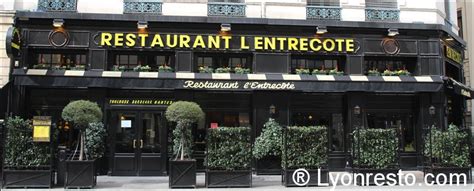
L’Entrecôte, Lyon

There are [at least] two restaurants of this name in Lyon, both good. The one I am thinking of is in the centre of town just down from Place Terreaux. OK the tartan decor is a bit naff, and there is virtually no choice on the menu; it is entrecôte with ‘its famous sauce’ with a pile of pommes allumettes. And they bring you as second pile of chips halfway through your steak. I’ve been there lots of times. And the steak is always brilliant. Desserts are nothing special, but who cares.

L’Entrecôte, Lyon

Cafe Marlayne, Edinburgh

A distinctly French bistro style restaurant in Thistle Street, in central Edinburgh. They serve an attractively priced prix fixe lunch with a choice of three or four starters and mains. Dinner is a more extensive menu. The wine list is all French. When I was last there in January, the restaurant was full at lunchtime. Good food and efficient service. My recollection is that the owner is lyonnaise. Not to be confused with the Cafe Saint-Honoré, another Edinburgh bistro, a few minutes walk away, where we celebrated our 45th wedding anniversary earlier this year.

Café Marlayne, Edinburgh

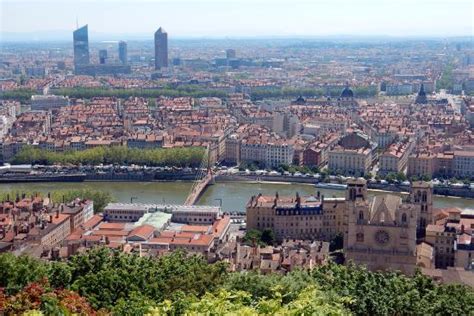
Restaurant de Fourvière, Lyon

On top of Fourvière, on the south side of the Basilica, opposite the entrance to the Chapel of St Thomas Becket. The situation is incomparable as you look out east, through a plate glass window, across the cathedral and the city and the two rivers, all far below.  It was our preferred place for taking visitors for lunch during our decade in Lyon. The food was serious and the prices honest. Especially the daily menu des pelerins. Very sadly, word is that the restaurant may now be closed. If that is true then I think we would instead try Les Retrouvailles in the rue de Boeuf. 

The view from Fourvière, Lyon

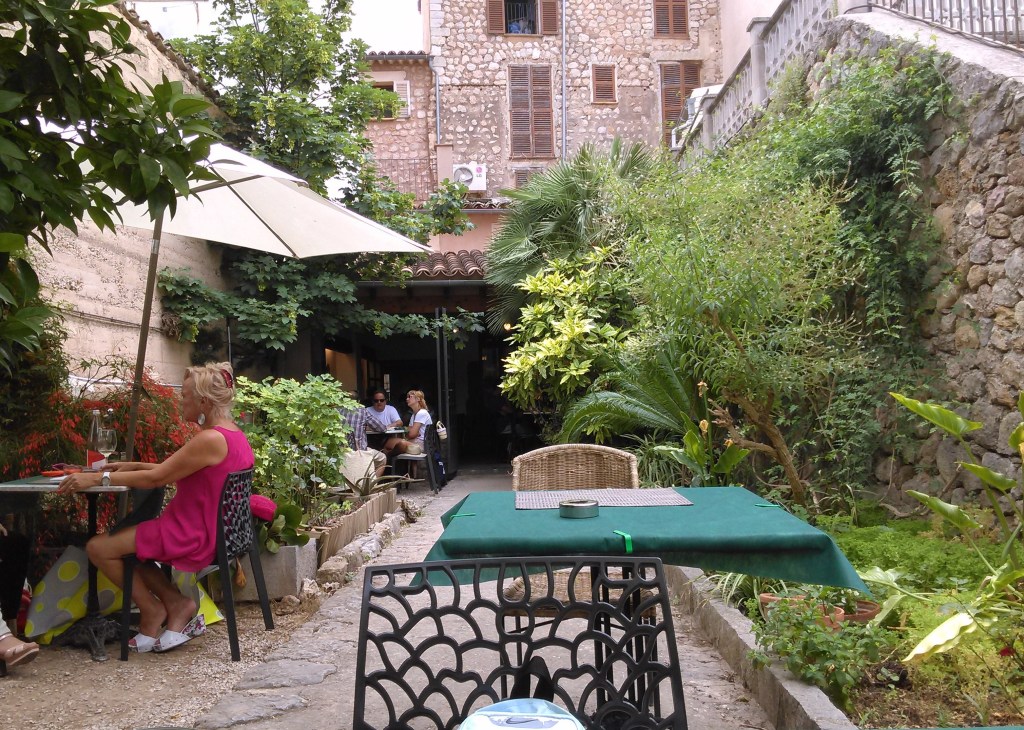
Can Gata, Soller, Majorca

Susie and I were on a week’s package holiday in Puerto de Soller, on the north coast of Majorca. We didn’t stray very far because I was nervous about the buses on Majorca’s mountain roads. One day we took the tram into Soller, and walked up to Fornalutx, bought a couple of tee-shirts and walked back down to Soller to find the Can Gata. You go through a dark, unprepossessing cafe/bar into a nicely planted garden with half a dozen well-spaced tables and umbrellas. And a few sleeping cats. Simple food: gazpacho, croquettes, tapas, salads. An oasis on a hot day. Decent service and prices.

Can Gata, Soller

The Fat Fox, Watlington

Watlington is an attractive village in east Oxfordshire, not far off the M40. A few minutes drive from where The Vicar of Dibley was filmed. It’s probably now best known for the high class bakers. The Fox is in Shirburn Street, very close to the centre and the market square. Pretty standard pub food: battered cod, steak, lasagne, steak and kidney, good sausages. Good food. Good desserts. And good beer. Slightly different lunchtime menu. Apparently there are rooms too. But our son and daughter-in-law and their children live a few miles up the road. Which is what takes us to Watlington.

The Fat Fox, Watlington

Chez Janou, 75003 Paris 

Most of the restaurants that I once knew in Paris are no longer there. But Chez Janou has been our favourite for about a decade. It’s small place near the Place des Vosges, a bar at the front, always crowded, and quite tightly packed tables behind. Lots of artwork on the walls, tiled floor, bent-wood chairs, and provençal colours. I’ve read some very mixed reviews on line, mainly complaining about long waits and poor service. But we’ve been here a few times spread over a decade, most recently with three generations for Susie’s birthday lunch a couple of years ago, and I’ve always  found the staff helpful. Excellent food. Beware of the industrial size portions of chocolate mousse. When we get back to Paris we’ll certainly make a bee-line for this place.

Chez Janou, Paris

The Loft, Haddington

Haddington is a small town about half an hour’s drive east of Edinburgh, formerly the county town of East Lothian. Although there is a lot of new building on the outskirts, the town has retained its central historic street plan around the former market place. The Loft is a straightforward cafe that concentrates on serving simple food well. Entrance up the steps. I’ve never been there early enough for breakfast. At lunchtime they do home-made soups, quiches, filled rolls, mackerel pate, toasties, and summer salads. And coffee and cake. Not fast food. All home made. Afterwards walk it off by the river Tyne, and visit St Mary’s Collegiate Church, the longest parish church in Scotland.

Cafe de la Place, Rontalon

Rontalon is a village in the Monts du Lyonnais, about twenty minutes west of Lyon going towards St Martin en Haut. It is surrounded by fields of fruit trees. For a decade or so the Lyon congregation walked at Rontalon on Good Friday, up a very steep hill to a hill-top cross for a short service. And back via another cross.The circuit was about 8kms.The weather was variable; from snow one year to clear skies and spring sunshine. Afterwards we had lunch in the cafe. I think the food usually is pretty basic. But we invariably had roast pork, wonderful gratin dauphinois, and big steel bowls of green salad. And fromage blanc à la crème. And plenty of wine. Good Friday has never been the same since. But there are rumours that the cafe may have transmuted into an Italian bistro.

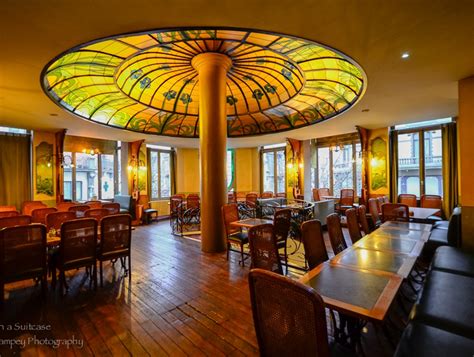
La Porteuse d’Eau,  Saint-Gilles, Brussels

A corner cafe on two floors rather than a restaurant. A bit away from the historic centre in the Saint-Gilles district. It’s named after a nearby statue of a water carrier. Major attractions are the stained glass windows and the spiral staircase. Fairly standard collection of Belgian dishes. Service and food OK when I’ve been there. If all you really want is frites then I think Maison Antoine in the Place Jourdan is your best bet. It has been there since 1946, and is [was ?] housed in a shack left behind by the German army after the war. You can enjoy your frites sitting at any of the local cafes for the price of a beer. 

La Porteuse d’Eau, Saint-Giles, Brussels

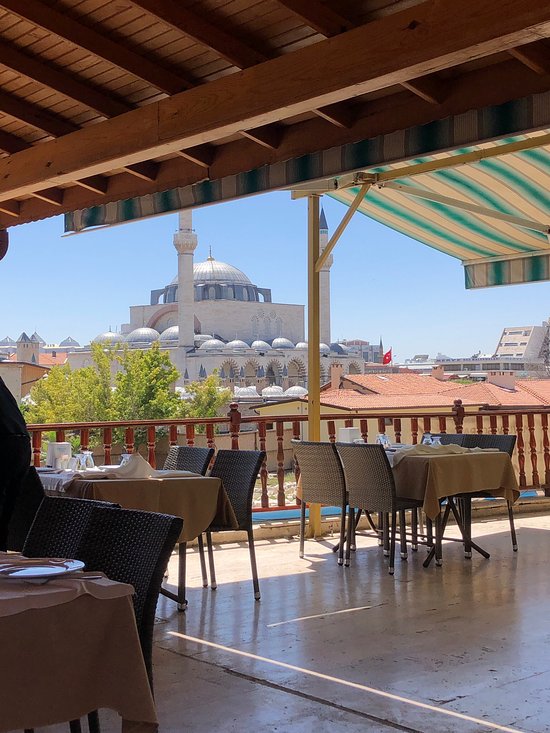
Merlevi Sofrasi, Konya

Konya is is best known as a place of pilgrimage for the Muslim world, a city that is dear to the heart of pious Turks. It was the adopted home of Celaleddin Rumi, the 13th century Sufi mystic known as the Mevlana [the Master], and founder of the Mevlevi sect, better known as the Whirling Dervishes. This sprawling restaurant overlooks the Mevlana Museum, a very dignified complex of buildings that cluster round the tomb of Celaleddin Rumi.

Merlevi Sofrasi, Konya

We were there on a very cold day in December. Lots of local specialities. Service was slow as most of the staff were at prayers. But the waiters were friendly, and the food was excellent. There is a lot of meat [like everywhere in Turkey]. I had the slow-cooked beef, served in an earthenware dish. Excellent. No alcohol. Drink yoghurt.

Dream on !

July 2020
Through a glass darkly – 13

As we move towards our 15th week of lock-down, I wouldn’t want anyone to think that my reading consisted solely of academic history and German theology. After lunch and before going to sleep I have turned the pages of a number of thrillers. I started with Colin Dexter’s Morse books. There is no doubt that [Endeavour] Morse is an engaging character, with a taste for Wagnerian opera and decent beer. He has an attractive vulnerability which shows in his wistful fondness for [usually unsuitable] women, particularly Sister Janet. And Dexter is thoroughly familiar with Oxford streets and Oxford pubs. When his first book Last Bus to Woodstock came out in the 1970s we were living in Woodstock, which was an added attraction. But on looking at the books again I feel that from, say, Mystery of the Third Mile [published in 1983], Dexter’s plotting becomes over-complicated [Dexter was of course a very high class crossword puzzler], and it can feel as if the characters are taking second place to the demands of the increasingly ingenious plot.

Donna Leon’s Venice

On the other hand, since we shan’t be going to Venice, nor anywhere else, in the foreseeable future I’ve been enjoying turning the pages of Donna Leon’s early Brunetti books. Donna Leon is an American who used to teach English to university students in Venice, and there are now [I think] some twenty-nine books that feature the Venetian detective Guido Brunetti, He is a Commisario working out of the Questura on the Fondamenta di San Lorenzo, at the western end of the sestiere Castello,  just across from San Giorgio dei Greci. [The police have now moved to the Piazzale Roma.]

The Questura, Venice

Brunetti’s boss is the Vice-Questore Patta, a pretentious bureaucrat from the south, given to arriving late and early lunches. Patta’s glamorous secretary, Signorina Elettra, who formerly worked for the Bank of Italy, is a genius at digging stuff out of her computer, often with the help of a network of unidentified contacts. Brunetti’s other partner is the dependable and honourable Vianello, for long a Sergeant but finally promoted to Ispettore. The burly Vianello develops into an accomplished computer hacker and a concerned critic of environmental pollution.

A Noble Radiance, the 7th Brunetti book, published in 1999, starts with the discovery of a badly decomposed corpse in a small village at the foot of the Dolomites. A valuable signet ring leads Brunetti to the heart of aristocratic Venice, to a family still grieving the loss of their abducted son. Fatal Remedies, published in 2000, starts with an early morning phone call and a pre-dawn act of vandalism. Then Brunetti discovers that the perpetrator is not a common criminal, but none other than Paola Brunetti, his wife. Apart from the domestic crisis the book embraces sex tourism, a daring robbery with possible Mafia connections, and a suspicious death. The unheralded visit of a young bureaucrat to the Brunetti apartment is the starting point of Friends in High Places, also first published in 2000. The young man is investigating the lack of formal approval for building work done many years earlier. But when the man rings Brunetti at work, obviously scared, and then is found dead after a fall from scaffolding, it is clear that something more serious is going on. The murder of two clam fishermen on Pellestrina, an island in the lagoon, is the starting point of A Sea of Troubles, first published in 2001. The highly knit community are suspicious of all outsiders especially the police. But when the boss’s PA, Signorina Elettra, volunteers to visit the island where she has relatives, and then when a woman’s body is washed up, Brunetti is in a very difficult position. Torn between his duty to investigate the murders and his not entirely straightforward feelings for his attractive colleague. Most of these books won CWA Macallan awards. And there are other twenty or so books to follow !

The police cases, usually a murder or two, are cross-cut with Brunetti’s home life in San Polo. He has been married to the lovely Paola for twenty plus years. She teaches English Literature at the university, and is a devotee of Henry James; the other man in their marriage. There are two teenage children; Raffi, now taken up with playing his stereo very loudly and with his girl-friend, and his younger sister Chiara, given to a sequence of touching enthusiasms. Paola cooks mouth-watering meals for the family, lunchtime and evening; invariably a pasta dish and a main course, and a sliver of cheese and a pudding.  If the children can be persuaded to do the dishes, Guido and Paola then recline with a small grappa or a Calvados. Guido sometimes resents the presence of Henry James in their marriage. Paola is sometimes suspicions of Guido’s closeness to Signorina Elettra.

Grand Canal and Santa Maria della Salute, Venice

Why do I appreciate Donna Leon so much ? It is partly her delight in the city surroundings in all weathers, ranging from clear spring mornings to the oppressive heat of summer and on to the damp and cold winter days. And it is partly the idealism of both Guido and his wife, as they search in different ways for a better world. In marked contrast to the world around them. Brunetti’s boss is lazy and self-seeking.  Paola’s colleagues are vain and career minded. Donna Leon takes for granted that the great bulk of Italian society is riddled with corruption; greedy politicians, dysfunctional families, corrupt bureaucrats and lawyers, dishonest businessmen, all happy to cut deals in dangerous chemicals and out-of-date drugs if there is a profit to be made.

Venice

For me, it was love at first sight. I first arrived in Venice in the summer of 1963, hitchhiking from Lljubliana on the way back from Istanbul, and stayed for a few nights at the splendidly situated youth hostel on Giudecca.

Youth hostel, Giudecca, Venice

I knew there were canals. But I hadn’t realised that there were only canals. No streets and no cars. What did I do on that first visit ? I bought a guide-book. And I made a dutiful visit to St Mark’s. And I walked a lot. And I peered at the vast Tintorettos in Scuola San Rocco. And I played chess on Giudecca with a man I met in the hostel. And then I re-met some friends from the hostel in Istanbul, three students from the Edinburgh School of Art, and I accepted their offer of a lift to Ravenna to look at the mosaics at San Vitale. I’ve never been back to Ravenna since. But I’ve been to Venice many times.

In the late 1960s I was there in August, very hot and very crowded. We were camping at the Lido di Jesolo, all tourists and campsites and carry-out pizzas. But there are boats to Venice, and you approach San Marco from the sea. The extraordinary skyline emerges from the water in the way described on the opening pages of James Morris’s Venice.  Then Susie and I were there in the summer of 1975, again on the way back from Yugoslavia. This time we stayed in a dark pink washed hotel on the Grand Canal, a hundred yards or so from Rialto Bridge. It was a lot cheaper then than it is now. One afternoon we made a first boat trip across the lagoon to Torcello, to the mysterious cathedral of  Santa Maria Assunta, part Byzantine, part Gothic, with its striking mosaic of the Teotoca Madonna, the God-Bearer. And afterwards to Burano, strangely deserted, where we met some small children and took their photos.

Burano

After that there was a long gap. Susie and I were there again thirty years later. This time we stayed in a hotel in Piazza San Margherita, the biggest open space on Dorsoduro. The hotel was small, and the walls so thin that you could hear both parties to the telephone conversation in the adjoining room.  Breakfast, not a very good breakfast, was in a cafe across the piazza. But there was a good, busy, student-filled restaurant close by.

Then for a few years I went there by myself for a few days in November. Once I took a square-wheeled night train from Dijon. Otherwise I flew there, from Lyon or from Edinburgh, and caught the airport boat direct to Rialto. Each time I stayed in the Hotel Da Bruno, a few minutes walk from Rialto. It was generally quiet in November. The staff lent me an umbrella when it was raining, which it often was. And offered me gum-boots if there was flooding because of the Acqua Alta. On each visit I returned to Torcello, very old and very lonely, the tower swathed in scaffolding, the island largely inhabited by a myriad of cats. “Mother and daughter”, commented Ruskin from the top of the campanile, “you behold them both in their widowhood – Torcello and Venice”.

Torcello

Afterwards I hopped back to Burano on the boat, walked over the bridge and ate several times at a very quiet trattoria near the boat stop on Mazzorbo, an island that deals in vegetables rather than tourists. In Venice itself I just visited a lot of churches. I would make a trip to San Pietro i Castello at the eastern end of the city, with its mysterious Bishop’s Throne. Legend associates it with St Peter and Antioch, but the inscription on it is from the Koran. The long ignored church is supported by the citizens of Los Angeles.  I discovered the tiny, jewel-like S Maria dei Miracoli, a few minutes walk behind the hotel. I visited San Giovanni in Bragora, where  Antonio Vivaldi was baptised.  I discovered the gloomy, candle-lit  church of San Nicolo dei Mendicoli with its  poorly-lit, complex tableau. And I once only got into San Giovanni Elemosinario, close to the Rialto bridge, with the mysterious, undated carving of the Nativity scene and a devout ox licking the face of the baby Jesus. Ever since the church has been shrouded in scaffolding.

Eating can be a problem. It is often said that the unending procession of tourists has made it difficult to eat well in Venice. Osteria La Zucca is an excellent mainly vegetarian restaurant near San Giacomo, but you need to be prepared to book in advance. On a very cold and wet November day I was greatly cheered by a restaurant on Giudecca, who produced half a litre of sharp white wine and a big bowl of fried courgette as a starter followed by a baked whole fish with boiled potatoes. Possibly a gilt-head bream. It was excellent. Also on the Giudecca is the cafe in the former Boat Builders’ Canteen, which seems to have been there for ever, and which serves student-like meals to crowds of students at student-like prices.

Envoi

I suspect that both my readers will know Venice. If not, then I would urge you to go, preferably out of season when there might be fewer tourists. And before those behemoth cruise liners return. Before you go read James Morris’s Venice [I know she is now Jan Morris, but he was James Morris on my original copy of the book], incomparably the best book on Venice ever written. And maybe have a look too at Toni Sepeda’s Brunetti’s Venice: walks through the novels. The book offers a dozen walks through the city, most lasting an hour or two, all referenced to the first sixteen Brunetti books. I’ve only done one of them, from the Questura to the quiet and lonely Celestia boat-stop. It must be time for me to go again.

June 2020
Through a glass darkly – 12

Wishing and Hoping

It is easy to think that wishing and hoping are synonyms. The two words often go together.  Wishin’ and Hopin’ is a Hal David and Burt Bacharach song from the 1960s.  It was released by Dionne Warwick in 1963, and was subsequently a hit for Dusty Springfield in the summer of 1964. Is it OK to say that I always liked Dusty Springfield ? Though I am aware that she was a gay icon.

Dusty Springfield

But wishing and hoping are fundamentally different things. Wishing is an uncontextualised [often wishy-washy] desire for things to be other than they are. Thus, I wish that I could sing in tune. I wish that we had gone to Normandy last month. I wish that BREXIT had never happened. I wish that blustering Boris  was not Prime Minister. Christian hope by contrast is firmly rooted in God’s promises to his people that things will one day be other than they are in a fallen world. Hope is a Christian virtue. “As it is”, writes Paul to the church in Corinth, “these {gifts] remain, faith, hope, and love, and the greatest of them is love”. And faith, as the writer to the Hebrews tells us, is “the assurance of things hoped for, the conviction of things unseen”. So I thought it would be a good idea in this time of lock-down to have a go at reading Jurgen Moltmann’s Theology of Hope.

Jürgen Moltmann

Moltmann was born in Hamburg in 1926 [the same year as the Queen]. As a young boy he planned to study mathematics. But other things intervened. He was called up in the army in 1943, survived the horrific Hamburg fire-storm, and afterwards wondered why he had been spared. Late on in the war he was taken prisoner, and ended up in a POW camp in Scotland, from where he and his comrades were sent to work building roads near Kilmarnock. While in the UK he grew to love baked beans, and he began his theological studies. After 1948 he resumed his theological studies at Göttingen, where he completed his ministerial training and a doctorate. For most of his academic life Moltmann was professor of Systematic Theology at the University of Tübingen.  His colleagues included his wife, Elisabeth Wendel, a pioneer feminist theologian, and also Hans Kung.

Jörgen Moltmann

Theology of Hope

Theology of Hope is Moltmann’s first book, published in the UK by SCM in 1967. I found it a difficult book to read. Partly because I have never aspired to be a theologian. To me it reads a bit like a doctoral thesis [which it isn’t]. Obviously the book has been translated from German. And the author writes in dialogue with the German intellectual and cultural tradition. Which means that it is liberally referenced with books and writers with whom I am unfamiliar.

The book begins with a meditation on hope. Moltmann insists that theology must be constructed in the light of its final goal. We must start with eschatology, and Christian  eschatology is about Jesus and his future. As Christians it is our privilege to proclaim the future of the risen Lord. But at the same time in this world we live with the conflict between hope and experience. Calvin tells us that hope is the expectation of those things which faith believes to have been promised by God; “faith is the foundation on which hope rests, hope nourishes and sustains faith”. Those who hope in Christ suffer under reality as it is. “Peace with God”, Moltmann tells us, “means conflict with the world”. It is the function of the church to continually press for the advancement of righteousness, freedom, and humanity in the light of our promised future. We must not let our faith be eroded by the sin of despair. [Those who despair of blustering Boris and President Trump, please note !]

Eschatology

The two recurrent threads in the book are eschatology and history, and the relationship between the two. Protestant theology rediscovered eschatology through Johannes Weiss and Albert Schweitzer at the end of the 19th century. But did this mean history moving silently and interminably onwards ? Or did it mean the eschaton breaking transcendentally into history ? 

Moltmann is sceptical about the [old] idea of ‘progressive revelation’, which  construes revelation in terms of unfolding history. The Bible becomes a history book, the divine commentary on divine acts in history. But he insists that the events which reveal God must be understood in their historic context. [I wonder how this argument might apply to the current obsession with public statues ?]

The Easter ‘revelation’ encourages Christians to identify the risen one with the crucified one. The Easter appearance of the risen Lord is understood as a manifestation and promise of his still future glory and lordship. With the resurrection, the Lord’s work is not yet completed. “Christian hope is meaningful only when the world can be changed by the one in whom the hope rests.” 

Promise and History

Moltmann sees the Old Testament religion as a religion of promise, looking forward to a reality that does not yet exist. These promises are not liquidated; neither by disappointment nor by fulfilment. “The stories of Israelite history are treated as themes pregnant with future.” Their view of the past is a promise for the future.

Moses and the burning bush

Knowledge of God draws us onwards into situations that are still outstanding.”Knowledge of God will then anticipate the promised future of God in constant remembrance of the past …  of God’s election, his covenant, his promises, his faithfulness.” For Israel promise and command belong together. Promise is one side of the covenant in which Israel’s relationship with God is grounded. To keep the covenant with God means both to trust his promises and to keep his commandments.

The Old Testament prophets saw Israel’s exile in Babylon [and the disappearance of the country] as Yahweh’s judgement on his apostate people. But the prophets pointed forwards to the coming glory of Yahweh and his sovereignty over the whole earth, Salvation has become universal, but will be received through Israel. The only remaining boundary is death.

The Resurrection and the future of Jesus Christ

Turning to Jesus, Moltmann insists that the God who reveals himself in Jesus must be the God of the Old Testament. “In Jesus Christ, however, the God of Israel has revealed himself as the God of all mankind.” It is significant that in the New Testament God is described as the ‘God of promise’. Paul links new life in Christ to the Abrahamic promises. “the true heirs of the promise and children of Abraham are those who are partakers of the promise of faith in Christ “ [Galatians 3:18]. “For by the gospel the Gentiles become partakers of the promise in Christ” [Ephesians 3:6].

Christian faith must start with the resurrection of Jesus. “A Christian faith that is not resurrection faith can be called neither Christian nor faith.” The reality of the resurrection is such that it compels proclamation to all peoples. In terms of promise. “The Christian hope for the future comes from a specific, unique event – that of the resurrection and the Easter appearances of Jesus Christ.” The appearances of the risen Lord were experienced “not as blissful experiences of union with the divine” [!], but as “a commission to service and mission in the world.

The Road to Emmaus

Eschatology and History

Moltmann reflects at length on the nature of history. Which he suggests was fundamentally foreign to the Greek way of thinking. The Greeks could not cope with the instability and the transience of history. For the Greeks history was exclusively about the past. But the prophet is a seer. For both Jews and Christians, history must look forward to the promised future of God. History is shaped by future expectations. History is understood in terms of human hope.

Israel’s religious traditions comprised recounting God’s faithfulness in the past and pointing to a future that has not yet come about. Christian proclamation starts with the resurrection of Jesus Christ, and his exaltation as Lord. Both Old Testament tradition and Christian proclamation point forward to the future. But for Christians that Lordship is universal.

Exodus Church

In his quite short, final section Moltmann asks, ‘How is the church of today to realise our calling to be the pilgrim people of God ?. He acknowledges that in an increasingly secular world the Christian Church has largely lost its public role. And is in danger of becoming a private cult; a basis for personal ethical decisions. So Christian groups and communities can easily become “a kind of Noah’s ark for men in their social estrangement.

But the New Testament calling is for the church to be the ‘community of eschatological salvation’. Its task is to gather people in and then send them out with a horizon of eschatological expectation. 

Mission in rural Africa

This shapes our experience of Communion, the Lord’s Supper. Around the Communion table we are not in possession of the presence of the Absolute. But we are “a waiting, expectant congregation seeking Communion with the coming Lord.”

The mission of the church is to enable the world to be transformed into what it is promised to be. Moltmann quotes JC Hoekendijk: “missions perform their service today only when they infect men with hope”.  This hope is akin to the Old Testament prophecies of Deutero-Isaiah. The goal is not just reconciliation with God, and the forgiveness of sins and the abolition of godlessness, and individual rescue from an evil world. But salvation is also about shalom; “about the hope of justice, the humanising of man, the socialising of all humanity, and peace for all creation”.

The Christian life must not about fleeing the world and resignation from it, but about engagement with an unsatisfactory world. Our discipleship has its goal in the eschatological hope to which God calls us.  “The hope of Resurrection must bring about a new understanding of the world.” 

Envoi

I’m glad I’ve read the book. I got lost in some of the detail, but Moltmann offers us an inspiring bigger picture. And the book also acts as a corrective to our frequently too small concepts of church life and Christian teaching. My friend Jared who has read everything [I think] tells me that Moltmann’s Jesus Christ in today’s world is a more accessible book. And possibly more rewarding. So I think I’ll have a look at that when I can find a copy. But don’t hold your breath.

June 2020

Through a glass darkly – 11

The Scottish Episcopal Church

It is a curious fact that when I was ordained into the Scottish Episcopal Church, by Bishop Richard Holloway in St Mary’s Cathedral, Edinburgh, in June 1988, I had scarcely ever been in an Episcopalian church service. I was born in London, had lived all my life in England or in France, and I had been sponsored for ordination training in the Church of England by the Diocese of Oxford in which we lived. My wife Susie was from Edinburgh, and we were often in Edinburgh for holidays, but on those occasions when we went to church we usually went to Mayfield Church, the local Church of Scotland [Presbyterian], where we had been married. 

After getting ordained I was a curate for two years at St Thomas’s, Corstorphine, on the west side of Edinburgh. As a newly ordained curate I was expected to attend Post-Ordination Training, usually a couple of nights residential, which included some [but not a lot of] general background stuff on Scottish church history and culture. One thing I soon learnt was that St Thomas’s was definitely not a typical Piskie church. St Thomas’s was a big, family oriented, evangelical congregation. My training Rector was Denis Lennon, the best week-in, week-out preacher I have ever heard. Under the inspiration of Denis Lennon, St Thomas’s had planted two new congregations in the previous seven years. [One was a transplant at St Paul’s and St George’s, York Place, which has subsequently grown to be one of the biggest and most ‘successful’ churches in Edinburgh. The other plant, on a smaller scale, at Emmanuel Clermiston has now merged with the local Nazarene church.] Biblical preaching and church planting were certainly not standard features of Piskie churches. Anyway I started to acquire a few books on the Scottish Episcopal Church, some of which until now have remained unread.

So, during this lock-down I have been turning the pages of Marion Lochhead’s The Episcopal Church in Scotland in the Nineteenth Century. And I noticed that my second-hand copy was presented by the author to Alistair Haggart, onetime Bishop of Edinburgh and Primus of the Scottish Episcopal Church.

Marion Lochhead: The Episcopal Church in Scotland in the Nineteenth Century

Lochhead’s book begins with a summary history of Episcopacy in Scotland. [She does rather like capital letters.] In 1560 the Scottish Parliament formally severed links with the Church of Rome, and developed a predominantly Calvinist national Kirk [church] which was essentially presbyterian. The same parliament approved a Protestant confession of faith, rejected papal authority, and the Mass, and many of the practices of the medieval church. A valid episcopate was restored in 1610. The Diocese of Edinburgh was founded by Charles I in 1633, and the High Kirk of St Giles became a cathedral. After the Cromwellian interlude and the Protectorate, Charles II restored Episcopacy in both Scotland and England. But after the flight of James II in 1688, following his becoming a Roman Catholic, and the arrival of Mary and William of Orange, the situation of the Episcopal Church worsened. An Act of Parliament in 1689 established the Church of Scotland as Presbyterian. The allegiance of Scottish Episcopalians to the Jacobite cause led them into the wilderness. Their Jacobite sympathies in 1715 and in 1745 provoked Penal Acts and persecution. Episcopalian clergy were forbidden to officiate unless they took the oath of allegiance to the Hanoverian dynasty and abjured the Stuarts, There were few churches or chapels.Tiny congregations met in houses or stores or in the open air. According to Anthony Mitchell’s The Story of the Church in Scotland, by the end of the eighteenth century the Episcopal Church now had some four bishops, forty priests, and roughly one twentieth of the population of Scotland. Episcopacy survived. But only just.

At the start of the nineteenth century, Aberdeenshire was the centre of Episcopacy. In the early decades of the century all her bishops came from that region. Alexander Jolly was born in Stonehaven in 1736, studied at Marischal College, was ordained in 1777, and ministered at Fraserburgh for fifty years. He was consecrated as Bishop of Moray in 1799. Bishops at that time retained their parish charges. Jolly bought a new wig for the visit of George IV to Edinburgh in 1822. Robert Chambers visited Jolly three years later, and wrote of “the beautiful old man … in his neat old-fashioned black suit, buckled shoes, and wig as white as snow, surrounded entirely by shelves full of books, most of them of an antique and theological cast”.

There is an interesting link with the wider church in 1825. Matthew Luscombe, an English clergyman living in Paris, sought consecration as a bishop to exercise pastoral oversight over all Anglicans on the continent, especially in France and Belgium. There were difficulties about his being consecrated by English bishops, as this might have caused offence to French Catholics. So, like Seabury forty years earlier, Matthew Luscombe came to Stirling where, on Palm Sunday, 1825, he was consecrated by three Scottish bishops. And the chaplains of Paris, Caen, and Ostend subsequently took an oath of canonical obedience to him.

Glenalmond College

In 1847 the College of the Holy Trinity was founded at Glenalmond in Perthshire; intended to be both a theological seminary and a school on the model of the English public schools. The first Warden was the Revd Charles Wordsworth, nephew of the poet and son of Christopher Wordsworth, the Master of Trinity  College, Cambridge. Wordsworth had a strong talent for Latin verse and for cricket; he was sent, not to Winchester like his brothers, but to Harrow, and played for Harrow against Eton in 1825, and for Oxford in the Varsity match of 1827. We see that the Church is moving on from the days of persecution and penal acts. Wordsworth’s brief Wardenship at Glenalmond was marked with storms and stresses, and he soon moved on to be a disputatious Bishop of St Andrews. After his departure the school grew in numbers, but the theological college struggled, and eventually moved to Edinburgh.

The Episcopal Church had no strong tradition in Edinburgh. But Daniel Sandford, Bishop of Edinburgh from 1806-1830, was a friend of Sir Walter Scott; and instrumental in Scott’s change from Presbyterianism to Episcopacy. New Edinburgh congregations were developed under Bishop James Walker [1830-41] and Bishop Charles Terrot [1841-72].  Their policy, according to Dean Ramsay was “to preach a somewhat harmless gospel, and to win cultured people through the quiet beauty of the Prayer Book services”.  I am not sure if Lochhead intends this as a compliment.

Bishop Alexander Forbes

The name to conjure with among Victorian bishops is Alexander Penrose Forbes; clearly Lochhead’s favourite son. Forbes was born in Edinburgh in 1817, a brilliant student at Haileybury and Glasgow, whose Sanskrit and Arabic marked him out for a glittering career in India. But when he was invalided home in 1840, he went up to Oxford, where he came under the influence of Keble and Pusey and Newman. He was ordained in 1844 and served in Aston Rowant and the slum parish of St Thomas the Martyr, both in the Oxford Diocese, and in Stonehaven and in the  new Tractarian church of St Saviour’s, Leeds, before his consecration as Bishop of Brechin in 1847. He also held the charge of St Paul’s, Dundee, meeting at that time in a private house. Forbes was the first of the social missionaries in the Scottish Episcopal Church; a tireless visitor in the slums of Dundee, who like Disraeli was aware that there were two nations with a great gulf between them. His biographer records that his day began at seven with private prayer and rarely ended before midnight.

Bishop Alexander Forbes

Forbes, like Keble and Pusey, taught his people the Catholic doctrine of the adoration of Christ in the Eucharist. Teaching of which Lochhead clearly approves. In consequence of this ‘Romish’ teaching Forbes was formally  summoned to trial before his fellow bishops in Edinburgh in 1860. Bishop Wordsworth spoke at the trial for three hours, which some thought was punishment enough ! And Forbes was let off with a mild censure. During his episcopate the church grew, largely with an influx of professional men and the wealthy middle class.But his health was never strong, and he died in October 1874, loved and mourned far beyond his diocese. Many people including Marion Lochhead would gladly see him canonised.

Bishop Alexander Ewing

My own preference would be for Forbes’ near contemporary, Alexander Ewing, Bishop of Argyll and the Isles. Ewing was born in Aberdeen in 1814, studied in Edinburgh, and was ordained deacon into the congregation in Elgin in 1838. He subsequently transferred to Forres and, in spite of periods of ill-health which caused him to winter in the warmth of Italy, he was elected as Bishop of Argyll and the Isles in 1847.Ewing’s ministry was also full of pastoral and practical concern for his scattered flock. But, unlike Forbes, he was an old-fashioned evangelical, who worked tirelessly for closer relations with the Church of Scotland. “Let us arise from systems”, Ewing wrote in his charge of 1868, “whether of Episcopacy or Presbytery, above all material apparatus …”. Ewing too struggled with his health, particularly in winter, and died on Ascension Day 1873. Lochhead concludes: “not the most loved, venerated, or influential Bishop … but the most enigmatic”.

Envoi

There are some good stories in this book, which is essentially a collection of biographical sketches. And Lochhead’s own prejudices influence her choice of material. There is virtually no mention here of the Drummond schism. DTK Drummond was Priest in Charge at Holy Trinity, Dean Bridge, who resigned from the Scottish Episcopal Church in 1842. This led to the planting of St Thomas’s English Episcopal Chapel on Rutland Place; and subsequently to the planting of a sizeable group of evangelical, Anglican congregations outwith the structures of the Scottish Episcopal Church. [St Thomas’s, Edinburgh, and St Silas’s, Glasgow are the two surviving congregations from this schism. Both eventually rejoined the Scottish Episcopal Church, but have in recent times now left again.]

St John the Evangelist, Jedburgh

Staying in the Edinburgh Diocese,  Lochhead gives thanks for the building of the Tractarian church at Jedburgh and notes that Keble, Hook, and Wilberforce all came to its consecration in 1844. But there is no mention of the building of Christ Church, Duns, in 1853, nor of the subsequent planting of two congregations, in Coldstream and Eyemouth, by the distinctly evangelical rector, the Revd James Beale.

Some of these bishops might have been saints, and some clearly were not. The Scottish Episcopal Church exists as a small, minority church in a predominantly Presbyterian country with a strong Roman Catholic minority. It exhibits both the merits and the defects of a minority church; on the one hand emphasis on congregational fellowship and personal devotion, on the other hand a certain narrowness of outlook and a defensive mentality. It would be difficult for Lochhead to write a book about the life of the church in more recent decades. [She died in 1985.] With the striking exception of Richard Holloway, a gifted communicator and a prolific author, there would be little to say.

Bishop Richard Holloway

And what Lochhead would find difficult is that the thriving churches tend to be gathered, evangelical congregations, often led by English clergy, rather than churches in the Tractarian/Jacobite/Scottish Communion Office tradition to which she was evidently so attached.

June 2020

Though a glass darkly – 10

Life in lock-down

We are back from Normandy. Except that we didn’t go there. This is the twelfth week of lock-down for us here in Edinburgh. It is the longest that I have been in the same city for as long as I can remember. Perhaps for ever. Since March 15th I haven’t been anywhere other than a walk round Arthur’s Seat, about an hour and a half every day; two cautious visits to a local shopping centre, to go to the chemists and the bank; and a return trip by taxi to take a funeral at the crematorium.

Arthur’s Seat, Edinburgh

There are of course some good things about lock-down. There is scarcely any traffic on the Dalkeith Road. Reports from cities around the world speak of reduced carbon emissions and better air quality. Venice canals are crystal clear. You can now see the Himalayas from downtown Delhi. Though you have to be in Delhi of course to appreciate that. I saw vapour trails over Arthur’s Seat yesterday. You normally see planes circling out over the Forth on their approach to the airport, but now there are virtually no passenger flights arriving in Edinburgh. We travel relatively little compared with some people, but I am struck that we have already cancelled six flights since lock-down began; Edinburgh-London-Grenoble return, and Edinburgh-Jersey return.

Venice canal

There is no doubt that the painful consequences of the pandemic and of the consequent lock-down are not equally distributed. We have been told ad nauseam that the elderly and those with ‘underlying medical conditions’ are at increased risk. So, as a seventy-plus Type 2 diabetic, that means me. But when in future years the statistics are collected and analysed I suspect that what will emerge is rather different: that there will be major discrepancies relating both to ethnic background and to socio-economic status. We already know that BAME people have been disproportionately affected. And we know that NHS employees at all levels, doctors and nurses, cleaners and hospital porters, include a disproportionately high number of BAME people. Said to be 44%. Tragically, a lot of these people have died; 90% of doctors who have died are from BAME backgrounds.

What remains to be seen is how the deaths stack up in terms of socio-economic status. Amid some confusing messages from the government, there has been much talk of people being encouraged to work from home. I know a lot of people, including my own children, who are happy enough to work from home, doing a lot of stuff on line, and setting up Zoom meetings with colleagues as required. All of which requires a spare room to work in, a computer or tablet or smart phone, and a job that can be done at a distance. Which is easier for an accountant than a bus driver. So, we shall almost certainly discover that COVID deaths are higher among traditional working class occupations, bus and train drivers, shop-workers, delivery men, taxi drivers, doormen and security staff; none of whom can easily shelter behind a home computer. 

We live on the south side of Edinburgh, and I realise that I don’t know personally anyone who has contracted COVID nor anyone who has died from the virus. A neighbour’s father died down in London, and another neighbour’s best friend died here in Edinburgh, but these are not people that I know. So we just get on with our lives, trying to put some structure into days that are not easily distinguished one from another. Susie has joined a clarinet class, working on Zoom sessions with a teacher in Canada. And she does a lot of gardening, telling me where to dig holes and what to water. Apart from walking over the hill every day, I am trying to do some more serious reading. Though in practice I end up turning the pages of a lot of books that are going to the charity shop. And I have just, with help from a friend and neighbour, replaced the thirty-year-old lining in our pond, which involved finding temporary housing for a myriad of newts and a trio of frogs.

Worrying things: in the UK

The Cummings episode [it emerged that Dominic Cummings, principal advisor to No. 10 and an architect of the lock-down policy, had bent the rules to drive to Durham with his wife and child] was a nine-day wonder. The problem was not so much that Cummings, memorably described by David Cameron as a “career psychopath”, who dresses like a ten-year-old skate-boarder, had broken the rules. About which there is little doubt. And the problem  was not so much that Cummings was distinctly economical with the truth. His bizarre press conference in the garden at no. 10 concealed as much as it revealed. And his wife’s article in The Spectator, an account of their experiences in lock-down, omitted any mention of their drive north.

What is more shocking is that blustering Boris responded in a knee-jerk defence of his advisor. Without bothering to establish the facts. And sundry ministers including the slithy Gove were sent out onto the media to lie on behalf of their master. Claiming that Cummings was a man of integrity, who must be ‘allowed to exercise his own judgement’. Even Church of England bishops, not known for raising their heads above the parapet, were quick to protest at this flagrant obfuscation.  Most of the public assumed that it would now be OK for them to use their own judgement too, and the efforts of the police to enforce social distancing rules became more difficult. Barnard Castle, the attractive town to which Cummings drove his wife and child on Easter Sunday, “to test his eyesight” has experienced a sharp spike in tourist enquiries. BrewDog, a craft brewery in north-east Scotland, has launched its Barnard Castle Eye Test [‘dry-hopped for a juicy hit with pineapple, mango and hint of zesty lime’] with all profits going to support the NHS.  The first two batches are already sold out. It was all a gift for Have I got news for you, but Cummings remains in office.

Barnard Castle

We continue topray for the NHS, and we continue to clap for them on Thursday evenings. But there is an increased willingness to hold the government’s [mis]management of the pandemic crisis up to scrutiny. Testing and tracing is sad and complex story. Yes, we will. No, we can’t. Yes, we will. After a false start blustering Boris promised a ‘world-beating system’ [overseen by his friend Dido] by June 1st. It hasn’t come yet. Hastily-recruited tracers are said to spend their days watching Netflix. And there is no data available to show how much work has actually been done [‘waiting to verify the figures’]. A few thousand tests were sent to the States for analysis [Why ?], but it now transpires that half of them will need to be re-done. Meanwhile, Pretty Awful has announced that all people flying into the UK are to be required to self-isolate for two weeks. Soon. But there is no explanation as to why incoming flights weren’t checked three months ago, when other countries had more COVID cases than the UK. The new policy will be labelled Operation Stable Door.

The opposition have accused the PM of winging it. Boris swings between boasting, when the government has met some self-imposed target, and, more frequently, blustering when he doesn’t know the answer. The buffoon Rees Mogg wants to insist on all MPs returning to Westminster. Presumably to shore up Boris who is wilting severely at PMQs under forensic questioning from Keir Starmer. Stop press news is that Alok Sharma, a junior minister [no, I  didn’t know either], who was sweating into his handkerchief in the Commons earlier this week, may have tested positive for the virus. Which might mean the entire cabinet going into self-isolation.

Worrying things: around the world

So, the government is a bit of a joke. And there are still too many deaths and new COVID infections. But otherwise life at local level goes on quite smoothly. Which is clearly not the case in many other parts of the world. For the first time in twelve weeks the television news is starting to carry stories and pictures from elsewhere in the world. And some of it makes for grim viewing. 

The killing  of George Floyd has once again exposed the systemic racism that runs through too much of the United States. Friends both black and white have written about this more movingly than I can. It is a distressing truth that we have been here before all too often. Some twenty years ago Rodney King, a black construction worker, was gratuitously assaulted by fourteen Los Angeles police officers, who struck him with batons more than fifty times. The assault was caught on a camera by a local civilian and appeared on media around the world. When the officers involved were acquitted six days of rioting followed, during which 63 people were killed and more than 2,800 were injured. Something very similar had happened in the Watts neighbourhood of Los Angeles in summer 1965, following the arrest of the black motorist, Marquette Frye, for drunk driving. The disturbances which led to 34 deaths and an estimated $40 million worth of property damage were eventually put down by more than 4,000 national guardsmen. George Floyd’s killing suggests that little has changed in nearly fifty years.

Taking a knee

Even more distressing is the response of Trump. Who is patently unable to unite the country at this time. And who sees everything in terms of his personal popularity ratings. And whose aggressive twitter feeds are designed to play to his core supporters. Commentators have reached for the phrase, attributed to Sinclair Lewis: “When fascism comes to America it will be wrapped in the flag and carrying a cross.” There is some doubt as to whether Lewis did in fact say this. But there is a character in Gideon Planish who says: “I just wish people wouldn’t quote Lincoln or the Bible, or hang out the flag or the cross, to cover up something that belongs more to the bank-book and the three golden balls.” The use of tear gas to disperse peaceful demonstrators in order to create a photo opportunity for Trump to brandish a bible in front of a church was a shameful act of desecration.

It is genuinely distressing to see one of the world’s most powerful countries tear itself apart. It is equally distressing to see what is happening in Brazil. And, worse, in the Yemen. Too many countries are run by populists who despise the people they govern. And while other countries are distracted, by the pandemic and by wars and race riots, China seeks to crush human rights protesters in Hong Kong with an iron fist. 

Between Ascension and Pentecost churches around the world have been praying together Thy kingdom come. And I’ve been reading [trying to read] Jürgen Moltmann, who reminds us that –

Sisyphus

those who hope in Christ suffer under reality as it is. “Peace with God means conflict with the world” . So, the Church must continue to work and pray for the realisation of righteousness, freedom, and humanity here in the light of the promised future that is to come. Too easily our faith can be eroded by the sin of despair. Sisyphus, Moltmann wrote, has become the patron saint of the mid-twentieth century; fully familiar with struggle and toil without any prospect of fulfilment. But more of that another time.

June 2020

Through a glass darkly – 8

Postcards from Normandy

We are in Normandy. Except that we’re not. We had rented a house at St Floxel, a small village in the Manche. It would have been half term week, and we were to have been sharing it with the children and grand-children. Getting there from Edinburgh was an interesting challenge. We had booked to fly from here to Jersey, and then to take the Manche Iles ferry to Barneville Carteret. But thanks to the COVID-19 epidemic, all travel is off. Which just leaves a few stray memories.

For me, and I guess for a lot of other people, Normandy has been a place for passing through rather than a place for going to. My earliest memory is of an Easter weekend trip at the end of the 1960s. David and I went to Paris with two girls, sisters, one of whom had a Mini. We took the Newhaven-Dieppe ferry, and the fan-belt broke on the outward journey We stayed the night in a cheap hotel in Gournay-en-Bray. I see that James Bentley in his book Normandy: A guide for the civilised traveller describes Gournay as ‘a lovely little town’ with old-fashioned Normandy houses and a stern, Romanesque, twelfth century church dedicated to St Hildevert, whose bones rest there. But I can remember nothing of the place. [For the rest of the weekend David and I stayed with my friend, Clive, at the Porte de Vincennes, and ate memorably, for the first time, at La Coupole, the period brasserie in Montparnasse.]  On our way back to Dieppe we had lunch on a Normandy farm, with a family for whom one of the girls had previously au-paired. And I was greatly impressed when it transpired that every delicious thing we ate and drank – crudités, chicken, assorted vegetables, tarte-aux-pommes, thick cream, cider, and calvados – was all produced at their farm.  

A year or two later I was back at Dieppe, returning from a holiday at Sarlat in the Dordogne. A. and I decided to eat before catching the night ferry, and ordered a big bowl of moules marinières. It wasn’t necessarily a bad idea, but it then transpired that we were sharing the boat with the annual outing of the Brighton and District Licenses Victuallers’ Association. It was a very long and bumpy crossing, and I’ve never eaten mussels since then.

Dieppe

Dieppe was a favoured Channel crossing for a time. It was the nearest port by road from Paris. When we lived in Paris in the 1970s for a few years we often used that route. More than once we missed the ferry by stopping for lunch at a roadhouse restaurant on the road up from Rouen. That was where we first encountered the trou normand; a small glass of Calvados taken after the main course which supposedly helps make space for the cheese and pudding to follow. The food was certainly good enough for us not mind at all missing the ferry.

A decade or so later I transferred my car-ferry allegiance to Southampton. Le Havre is unlovely, the centre almost entirely rebuilt in concrete after taking a pounding in the Second World War. I once arrived at a small hotel in Ste-Adresse to be met by the elderly, Polish proprietor, stalking the streets with a loaded shot-gun in search of a sneak-thief. One of the problems with that crossing was that driving to Paris involved crossing the dramatic 1959 Pont de Tancarville; 51 metres above the river and 1400 metres long. As someone who suffers from severe acrophobia, a form of vertigo, I became adept at negotiating the bridge very slowly with both eyes largely closed !

Pont de Tancarville

Staying with Francis and Madeleine

One summer in the 1990s we stayed on the way to Brittany with our friends Francis and Madeleine. Francis was a Paris dentist, who came back to faith after horrific crash on the Normandy autoroute which led to his being carried unconscious off the road by a passing lorry driver. They had a holiday house in Normandy, not far from Lisieux, all exposed beams and doubtful wiring.

Would we like to go to church with them on Sunday ?’ Yes, we would. So we drove south for the best part of an hour, and parked with difficult in a small village. There were lots of cars. And the church was very crowded. The priest was short-ish, with a monocle, and flanked by le Suisse with a large sword. The service was in a mixture of Latin and French, and the priest was incomprehensible in both languages. The congregation was part of the [then] Lefebvbre tendency [now known as the Society of Saint Pius X]. Many of the congregation made their way to the presbytery after the service with bottles of whisky as gifts. The priest’s name was Quentin Montgomery-Wright; and yes he was a nephew of General Montgomery. He came to dinner later in the week [the priest, not the general], accompanied by a young seminarian from Birmingham; and we ate and drank copiously before he roared off Mr Toad-like into the night in a large motor car. We never saw him again. I believe he was killed in a car crash a year or two later.

Claude Monet, The cliffs at Etretat

Other memories are just isolated fragments. A weekend in Rouen in the 1970s for the Congrês des Anglicistes, at which William Golding was the main speaker. A weekend in Bayeux in the 1980s for a book exhibition when the children were quite young, and visiting the Bayeux tapestry with them. An autumn day at Etretat looking at the chalk cliffs painted by Gustave Courbet and Claude Monet, and wondering where we might have a modest  lunch. Climbing a lot of steps up from the beach at St Valéry-en-Caux, where the 51st Highland Division surrendered in 1940.  A night in a hotel set back in the woods twenty minutes drive south of Caen. Was that at Goupillères ? Stopping at Falaise on the way south to look at the castle where William the Conqueror was born; the bastard son of Arlette, the local washer-woman. And climbing over another ruined castle at Domfront, set on a promontory above the river Varenne. Escaping from an extended summer heatwave further south into the cool sea mists of Cherbourg on the way back to the UK

The castle at Falaise

On the wish list

Compiling a wish list is always a bit optimistic when there are six adults and four small children. I’d like to visit the D-Day Landings museum at Arromanches, which [disgracefully] I’ve never seen. And relatedly I’d like to visit the grave of Henry Desmond Penkivel Minchin in Bayeux Cemetery. Desmond was a Lieutenant in the 6th Battalion of the KOSB, and was killed at the age of 21 fighting in Normandy. I spent a decade sitting next to the window which was his memorial in Christ Church, Duns. And periodically taking Home Communion to his elderly mother, Mrs Kathleen Winifred Minchin [née Molesworth] who lived at Cruxfield in Berwickshire.

And I’d also like to walk round the ramparts at Granville. And to explore a bit the west coast of the Cotentin peninsula, including Portbail where my friend Clive spent many summer holidays. And to go in search of lunch at the Auberge de l’Ouve, ‘miles from anywhere’ on the banks of the Ouve according to my Routard Guide, which specialises in eels and smoked ham in cider. I wonder if it’s still there.

I miss all this stuff in a time of lock-down. But I’m grateful for the memories. I think I’ll go and look out a bottle of Calvados and my recipe for coquelet pays d’Auge.

May 2020

Through a glass darkly – 8

The missing centuries

I only have two recurrent nightmares. One is about revisiting History Finals at Oxford. [I might share the other another time.] I am sitting in  a cafe or a pub with growing awareness that final exams are only a week or two away. And to my mounting horror, and initial disbelief, it is made known to me that there are several centuries of which I had not previously heard. Roughly the fourteenth to the eighteenth ! Quite a sizeable gap. About five hundred years in all.

There is some rational explanation for this. When I went up to Oxford in 1964 I thought I knew quite a lot of history. Or, to be more precise, I knew quite a lot about the coronation of Charlemagne on Christmas Day AD 800; and a bit about European history of the following four centuries. And I also knew quite a lot about the 1930s.And I had written what I thought was the definitive piece of work on ‘Anti-Fascism in the English Public Schools, 1933-39’. Sadly, when I left Oxford three years later, I didn’t know much more than that.

Which might explain why I am now reading EL Woodward’s History of England. A book that hadn’t passed my eyes since the 1960s. The book is now almost as old as I am [it was first published in 1947], but it does give me an overview of the missing centuries. And it is encouraging me to open a few other history books that are languishing on the shelves.

The thirteenth century

What I may once have known about the thirteenth century has long since disappeared. So I struggled through Powicke’s book in the Oxford History of England series, The Thirteenth Century, 1216–1307 [ published in 1953].  The century began with Richard I [1189-99] better known as Coeur de Lion or the Lionheart, because of his reputation as a warrior. Richard was also Duke of Normandy, Aquitaine, and Gascony, and spent more time overseas, on crusade or defending his French territories, than he did in England. He died after being shot by a cross-bow at the siege of Chalus, in the Haute-Vienne, and his entrails are buried there. He was succeeded by his brother, John [1199-1216], whom Woodward describes, following AA Milne,  as “an able, bad man, violent and lazy by turns and always treacherous.” Under King John England lost Normandy and other French lands, which led to the collapse of the Angevin Empire and contributed to the rising power of the French Capetian dynasty.  The barons were anxious to assert their rights against the increasing power of the king. This struggle led to the signing of the Magna Carta at Runnymede in 1215. This technical document promised the protection of church rights, protection from illegal imprisonment, access to swift justice, new taxation only with baronial consent, and limitations on scutage and other feudal payments. It is seen, rightly or wrongly, as a significant step in the evolution of the English constitution.

The difficulty of restraining royal power without resorting to rebellion is one of the main themes of the long reign of Henry III [1216-72]. But the rebellious barons were rarely united. The best known of the barons is Simon de Montfort, a fine soldier and a friend of the leading churchmen and scholars of his age. But Simon’s army was defeated at Evesham in 1265 by the king’s son, Edward, Simon himself was killed , and his supporters scattered.

Edward I [1272-1307] was on the way home from the Ninth Crusade when his father died. He was tall and handsome [except for a drooping eyelid], and a much abler man than his father. He dealt successfully with a rebellion in Wales led by Llywelyn ap Gruffyd, which effectively put an end to the chance of Welsh independence. The impressive, concentric castles at Beaumaris, Caernavon, Conway, and Harlech are a reminder of Edward’s Welsh campaigns, and a clear statement of his intent to rule permanently in North Wales. Scotland was a more difficult problem; the country was bigger and further away from the centre of English power. Since conquest and assimilation was not feasible, Edward tried rather to subordinate the king of Scotland to his overlordship. In 1292 the Scottish crown was awarded to his nominee, John Balliol, but the Scottish people forced him into rebellion. Although Edward defeated the Scots under William Wallace at the battle of Falkirk in 1298, he died in 1307 on his way northwards to put down another rebellion. [Within a decade an English army was defeated at Bannockburn in 1314.]

Caernavon Castle

The fourteenth and fifteenth centuries

The two centuries that followed the death of Edward I are an almost complete blank in my dwindling historical memory. My copy of the Oxford History of England, volume V, The Fourteenth Century, 1307–1399, by May McKisack [published in 1959] has gone missing. So I have been turning the pages of [my water-damaged copy of] George Holmes: The Later Middle Ages, published  in 1962. Instead of attempting to summarise these years, which would bore any surviving readers to death, I would like pick out three issues.

The Hundred Years’ War, 1361-1453

The Hundred Years’ War was an ongoing struggle between the kings of England and France. It lasted with long intervals for nearly a hundred years. The nub of the problem was that when William I became King of England in 1066, he was also as Duke of Normandy a vassal of the King of France. And, when in 1259 at the Treaty of Paris Henry III renounced his claims to the Duchy of Normandy, he was confirmed as the Duke of Aquitaine in south-west France, and continued to be a vassal of the king of France. The kings of England also claimed intermittently, at times of a disputed succession, that they were rightful heirs to the French throne.

English soldiers enjoyed two periods of overwhelming success in France under the warrior kings Edward III and Henry V in the years 1343-61 and again in 1414-22. But these victories were followed by periods of time in which the French kings regained control of their country and forced England into a defensive attitude.  In 1346 Edward III crossed over to Normandy with an army of about 7,000 archers, 1,000 lances, and 1,700 horses, sacked the city of Caen, marched north to the Somme, and defeated the French army at Crécy. It was a classic victory of archers over cavalry, and the greatest of Edward’s battles. Seventy years later an English army under Henry V, a tough, ambitious warrior king, landed at Harfleur in Normandy in August 1415, marched north and in spite of their depleted numbers, defeated the French army at Agincourt, less than thirty miles from Crécy. Henry returned home a military hero. But within two decades the situation turned again. Morale of the French armies revived, inspired by the visions and charisma of Joan of Arc, the sixteen-year-old peasant girl. In 1430 Joan was captured by the Burgundians, sold to the English, put on trial for heresy and burned at the stake. An outrage. The English armies crumbled. The French under Charles VII regained Normandy in 1450, and then successfully invaded Gascony in 1453.  The centuries of government by the Kings of England in France – the Duchy of Normandy, the Angevin Empire, the Duchy of Aquitaine, the claim to the French throne – were finally at an end. Apart from Calais, which they held for another century, the kings of England now ruled only in England

Laurence Olivier as Henry V, St Crispin’s Day

The Black Death

Those anxious about COVID-19 should skip this bit. The Black Death of 1349 was unmatched in its ferocity. But it began a long period ending only with the Great Plague of London in 1665 during which pestilence frequently recurred. The plague, which was carried by rats and had already ravaged much of Europe, probably arrived at Melcombe Regis in the summer of 1348. It spread like wild fire. Monasteries [closed communities] were sometimes nearly wiped out. In the enormous Diocese of Lincoln, just over 40% of the beneficed clergy died. In 1361 the plague returned as the ‘Second Pestilence’ or the ‘Pestilence of the Children’; it particularly attacked children and young people who had not acquired immunity in the early outbreak. And it recurred in 1368 and 1375.

It is estimated that in 1349 as many a third of the population may have died. And the plagues caused a long decline in population. England in the reign of Edward II [1307-27] had been a heavily populated country in which cultivable land was scarce. George Holmes comments: “it was probably not before the reign of Elizabeth I that as many people lived in England as had done in the reign of Edward II”. One of the consequences of the shrinking population was an increase in the importance of labour. Hired labour became twice as expensive. The king’s Council tried to fix scales of wages and prices, but medieval administration was never able to achieve uniformity.

The Wars of the Roses

The Wars of the Roses were”, Woodward insists, “less important than the contemporaries of Shakespeare believed”. Although they lasted a generation, fighting was intermittent and the armies were quite small, only about 4,000 to 5,00 men on each side in the battles. The wars occurred because there was more uncertainty about the rightful succession to the throne than there had been since the twelfth century. The starting point was Bolingbroke’s usurpation of the throne in 1399. Bolingbroke, who took the throne as Henry IV, was the son of John of Gaunt, Duke of Lancaster, and grand-son of Richard II [1377-99]. When the Lancastrians showed themselves unfit to rule in the fourteen-fifties, there was an alternative claimant to the throne with a plausible claim.

This uncertainty would not have mattered to a strong king. Until 1454 the Lancastrians retained control of the government and avoided open war with York, but not without bitter opposition. In August 1453 Henry VI had his first spell of madness. In 1455 at the first battle of St Albans, often regarded as the beginning of the War of the Roses, the Yorkists were victorious, and Richard of York was again given the protectorate. In 1459 fighting broke out again; Yorkist armies captured the king, and the Duke of York for the first time claimed the throne for himself. But he agreed to accept the protectorship during Henry’s lifetime and the succession thereafter. In the following year, after further Yorkist victories, and Richard’s death, his son Edward, the new Duke of York assumed the Crown. as Edward IV.

The Wars of the Roses

The opening years of Edward IV’s reign [1461-83] are confused, as the king faced opposition from the Lancastrians and from his own brothers. When he died in  1483, his successor Edward V was only twelve. A minority always caused problems. The most powerful man in the kingdom was his brother, Richard, Duke of Gloucester, who assumed the protectorate. Within three months of Edward IV’s death, Richard claimed that that the old king’s marriage had been invalid, that Edward V was therefore a bastard, and that he, Richard, was the rightful successor. Edward V and his younger brother were imprisoned in the Tower of London, and murdered soon after. He immediately took the throne as Richard III.

Richard’s seizure of the throne”, writes George Holmes, “was the most sudden and ruthless of all the revolutions of the Wars of the Roses”. But his reign only lasted two years. In 1485, Henry Tudor, a grand-son of Henry V’s widow, landed with an army in Pembrokeshire. He advanced through Wales and the Marches, and at the battle of Bosworth Field in August 1485, Richard III was killed and the new Tudor dynasty began.

Envoi

There may be no-one in the world who has the time and patience to have read this far. But I am writing primarily for my own amusement in a time of lock-down, and partly as an act of atonement for reading not done some five decades ago. Whether it will significantly improve my dream life remains to be seen.

May 2020