Through a glass darkly – 112

News from the Middle East

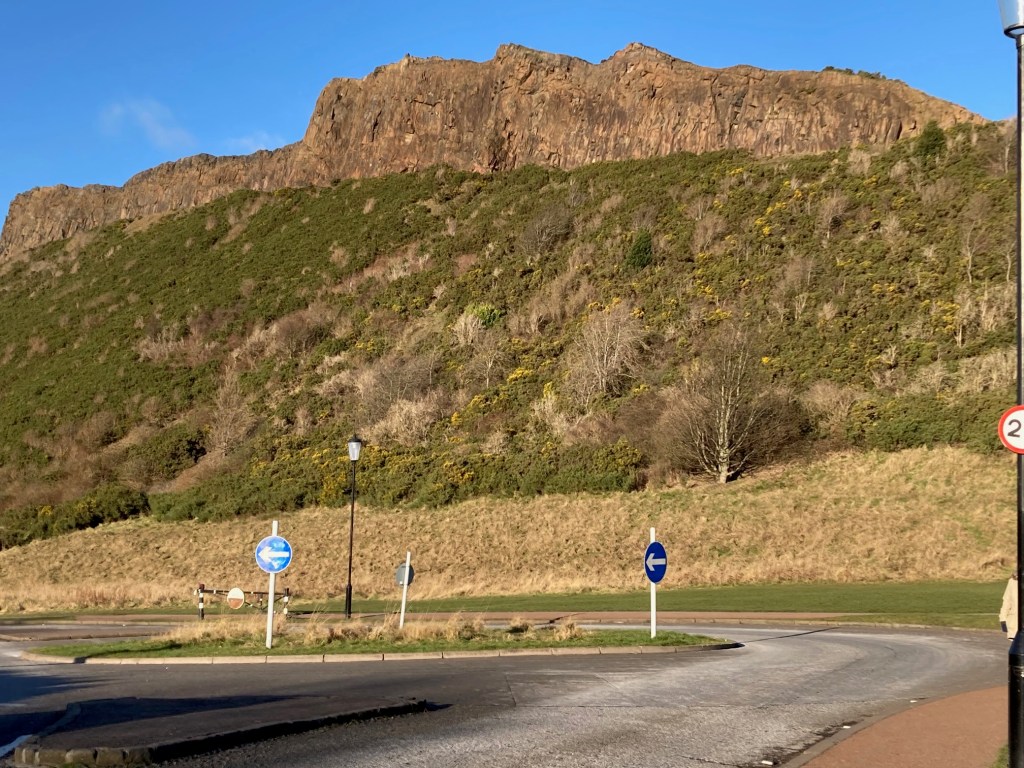
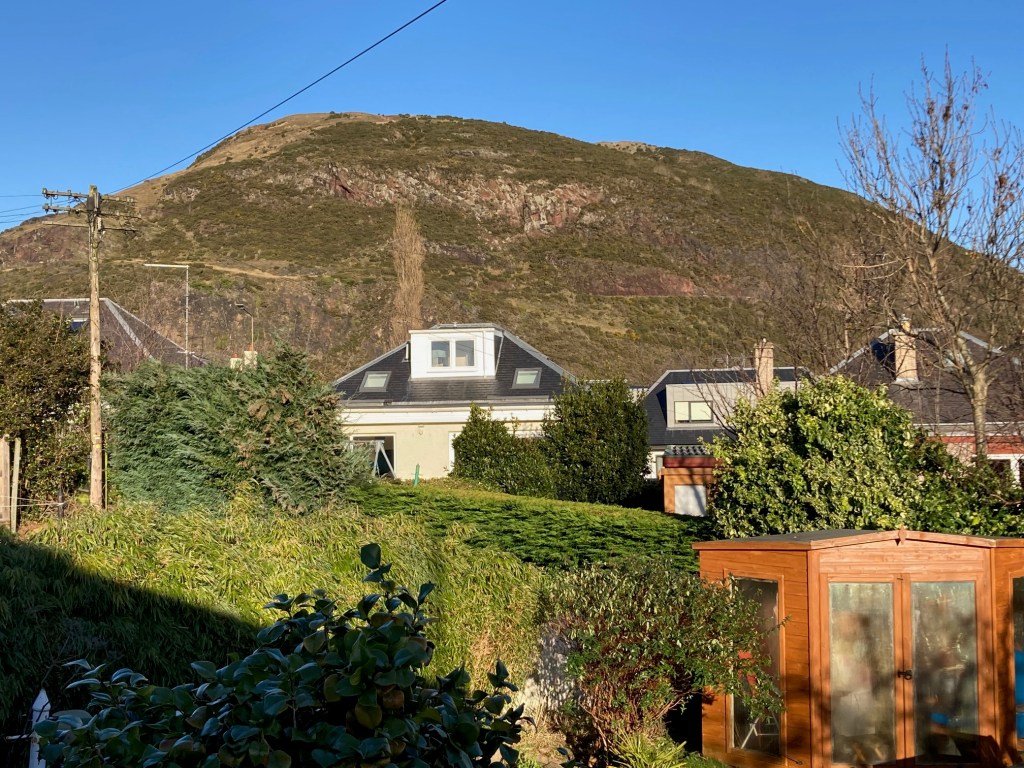
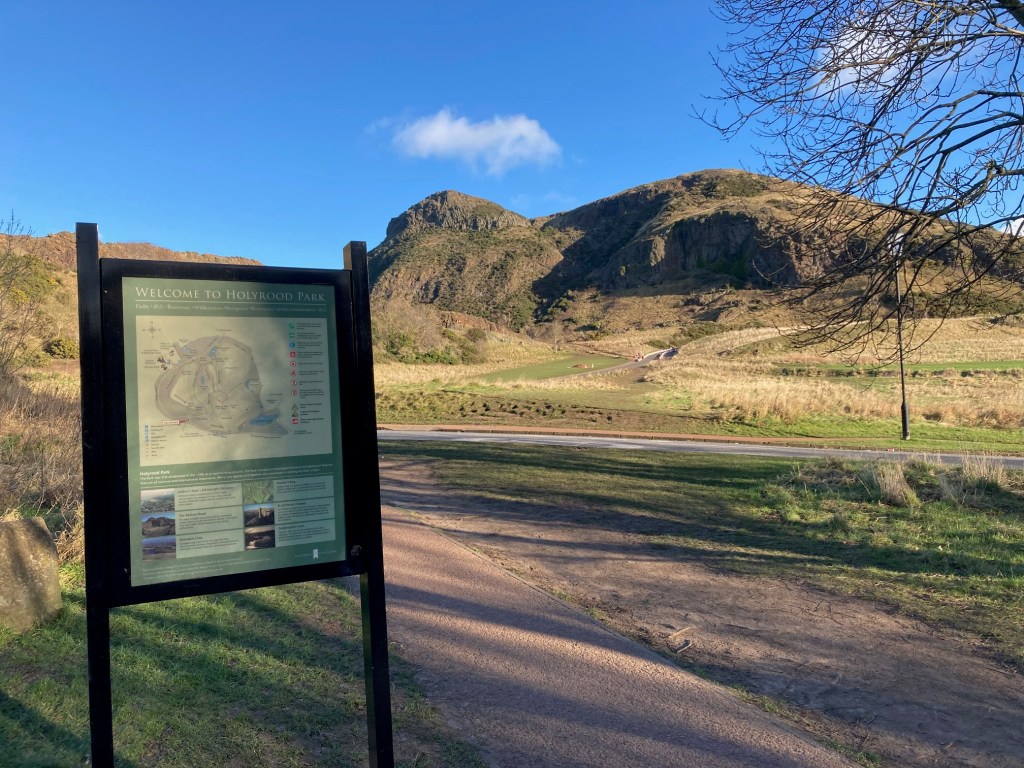
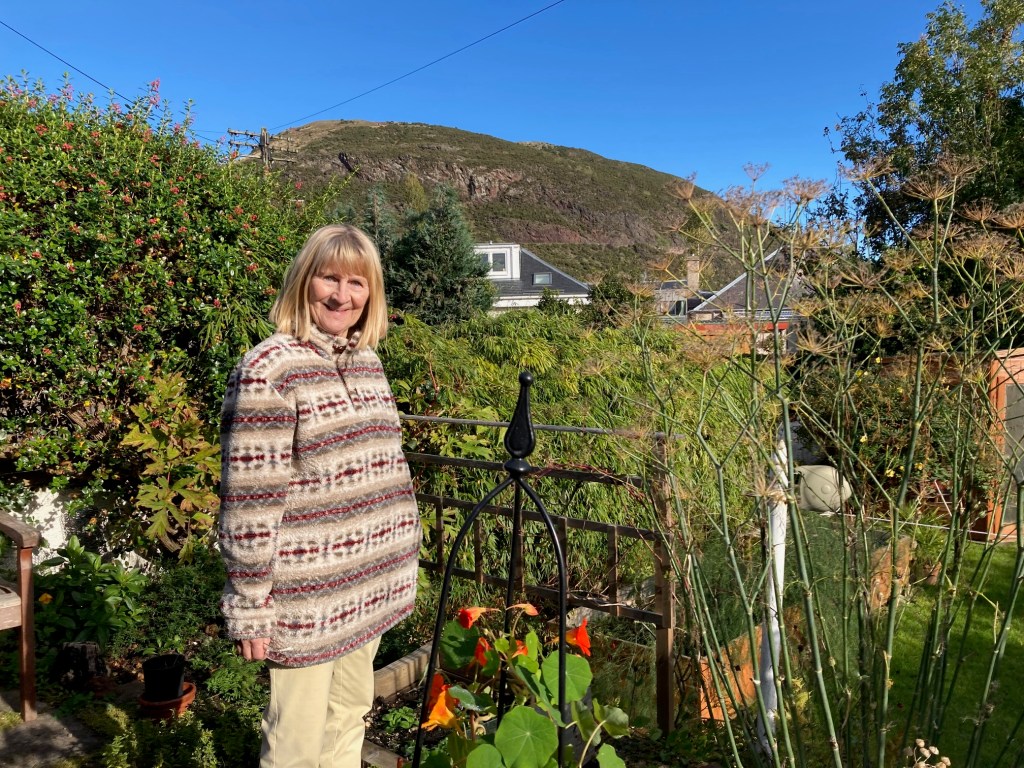
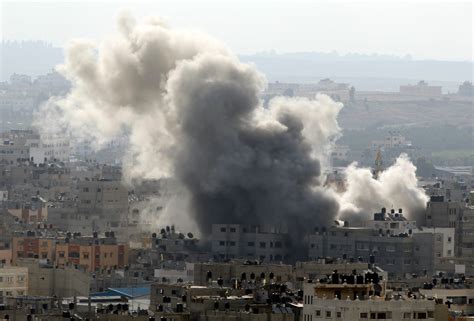
We are very fortunate to live comfortably here in Edinburgh with a lovely view of Arthur’s Seat. But I find the nightly news broadcasts from the Middle East harrowing. Especially the contributions of Jeremy Bowen and Fergal Keane to theNews at Ten.  There was a heartbreaking piece the other night about a very small boy who had been pulled from the rubble in Gaza. Then the camera panned down to show that he had no feet. No lower legs. And a slightly older girl with a serene face, who might have been his sister. Her back injuries mean that she may never walk again.

God’s Promise to Abraham

God chose Abram. He called him from his home town of Ur in the Chaldees, and promised that he would go with him and bless him and turn his descendants into a great nation [Genesis 12]. More specifically God promised that God would give to Abram’s descendants”this land, from the river of Egypt to the great river the Euphrates” [Genesis 15:18]  The promises is reiterated two chapters later: “… the whole land of Canaan, where you are now an alien, I will give as an everlasting possession to you and your descendants after you; I will be their God”. [Genesis 17] It is on the basis of this promise, and these verses in Genesis, that Israel, and their right-wing, American-Christian supporters, claim the Israelis’ inalienable right to possess the land of Palestine.

But it is not quite that simple.  First, it is not clear  to me that Abram was a Jew. He was born in Ur of the Chaldees, in northern Mesopotamia, and his ancestors were most probably moon-worshippers. Although Abram is acknowledged as a patriarchal figure in the three great monotheistic religions of the Middle East, he lived long before the exodus from Egypt and the giving of the Torah, which are generally regarded as the defining events in Jewish history. 

More relevantly Abram and his family lived a semi-nomadic life in the hill country of Palestine, moving with his flocks between Shechem, and Bethel, and Hebron. He didn’t actually own any land until his wife Sarah died. At which point he chose to purchase the cave in Hebron where Sarah was buried [Genesis 23]. The Biblical account underlines that he did not want to receive the burial cave as a gift; a formal contract was drawn up in the presence of witnesses for the purchase of Ephron’s field in Machpelah near Mamre [Genesis 23: 17-18].

Jacob’s sons left the land to settle in Egypt, escaping from a famine and under the protection of Joseph who has become an important official there. Generations later the Israelites return to the land, initially under the leadership of Moses, and complete the conquest of the land under his successor Joshua. The Biblical book of Joshua is unattractive reading. But Israeli politicians quote from it to support their claim to the West Bank. And the Israeli government made the book of Joshua, the story of the military occupation, compulsory reading in all schools.

In other words Palestine has not belonged to the Jews and their ancestors since time immemorial. The land had been a gift from God. Of which they took possession in a military campaign.

A conditional promise

When he gave the land to the Israelites under Joshua, God was fulfilling the promise made to Abraham several centuries earlier. In part because the inhabitants of the land were ‘abominable’, and because Canaan was a corrupt society with a degraded religion. [Leviticus 18: 24-27]

But God’s gift was conditional. If they were disobedient and turned their backs on him, he would punish them as severely as those who had gone before them. “”And if you defile the land, it will vomit you out as it vomited out the nations that were before you”. [Leviticus 18:28] God specifically warned them not to absorb the Canaanite culture: “when you enter the land the Lord your God is giving you, do not learn to imitate the detestable ways of the nations there”. [Deuteronomy 18:9]. [What Dennis Lennon used to call ‘the urge to merge’.] The children of Israel were not to assume that they had the right to live in the land for ever regardless of the way they lived; it would be possible for them to forfeit the land if they turned away from God. And this warning was emphasised at the dedication of Solomon’s Temple: “If you or your sons turn away from me and do not observe the commands and decrees that I have given you and go off to serve other gods … then I will cut off Israel from the land I have given them”. [[1 Kings 9: 6-7]

These were no idle threats. When the Assyrians invaded the northern kingdom of Israel in 721 BC and captured the capital Samaria, the people of Israel were sent into exile and scattered. An exile from which they never returned. A century later, when the Babylonian army captured Jerusalem in 597 BC, the people of Judah went into exile; the king was deported, the temple left in ruins. “By the rivers of Babylon we sat and wept when we remembered Zion …”. [Psalm 137] God was applying the sanctions which he had written into the covenant long ago. And although the exiles were later permitted to return by Cyrus, the Jews had no king and only a limited amount of land around Jerusalem. It was effectively the end of the independent state of [Judah and] Israel.

The Messiah and the Land

In Mary’s Song, the Magnificat, Mary declares that God is now fulfilling the promises made to Abraham and his descendants. [Luke 1: 54-55] Similarly, after the birth of John the Baptist, his father Zechariah praises God who has “raised up a horn of salvation for us … to remember his holy covenant, the oath he swore to our father Abraham” [Luke 1: 68-75] But Jesus himself had remarkably little to say about the land. In the Sermon on the Mount, Jesus, borrowing an expression from Psalm 37, declares: “blessed are the meek, for they will inherit the earth”. Apart from predicting the fall of Jerusalem and the destruction of the Temple [Mark 13], Jesus has nothing to say about the land. When in Matthew 8 Jesus enlarges on words from Psalm 107 and from Isaiah 43, he seems to be clearly referring to the end times, when men of all races from the north, south, east, and west, will all be gathered into the kingdom of God.

Where the book of Joshua describes the gradual conquest of the land starting from Jericho, the Acts of the Apostles describes the gradual spread of the Christian church outwards from Jerusalem to the rest of the Mediterranean world. The risen Jesus commands the disciples: “… you will be my witnesses in Jerusalem, and in all Judea and Samaria, and to the ends of the earth”. [Acts 1:8] They are to be a light to the Gentiles. Paul the great apostle to the Gentiles shows no interest in the land, which is totally absent from his letters. For Paul, political freedom for the Jewish people has nothing to do with the kingdom of God. The author of the Letter to the Hebrews makes clear that Abraham and his successors “were longing for a better country – a heavenly one”. [Hebrews 11:16] Once the New Testament writers had understood that God’s promises were fulfilled in Jesus, they ceased to look forward to a return to the land and a restored Jewish state.

Where now ?

Looking at the Bible can help us to see that ‘God’s land for God’s chosen people’ is a seductive slogan, but at best a misleading half-truth. But the Bible offers no clear way forwards.

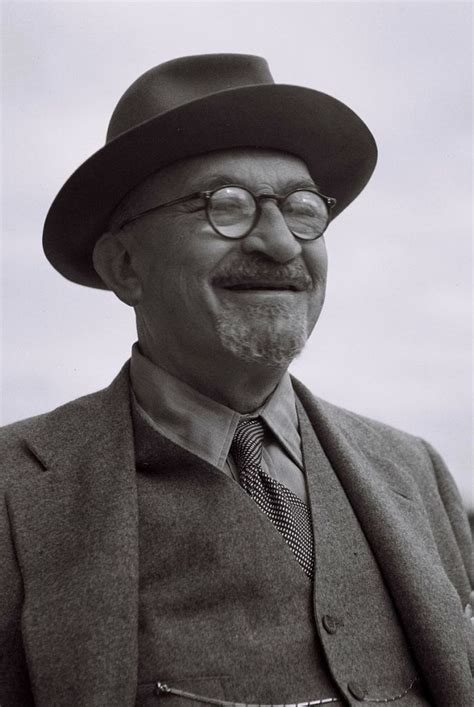
Chaim Weizmann, a Russian Jewish leader of the Zionist movement, who settled in Britain in 1904 and was one of the architects of the Balfour Declaration, was at pains to underline what he felt should be the inclusive nature of the future Jewish homeland:

The Zionists are not demanding in Palestine monopolies or exclusive privileges … It always was and remains a cardinal principle of Zionism as a democratic movement that all races and sects in Palestine should enjoy full justice and liberty …

“ Palestine must be built up without violating the legitimate rights of the Arabs … not a hair of their heads shall be touched”.

As an ordained minister in the Church of England I can believe in many strange things. But I do not think that a democratic, federal state in which Israelis and Palestinians are equal under the law, are guaranteed religious freedom, and have equal voting rights is ever going to be realistic.

So  we are back with a two-state solution, with the two states of Israel and Palestine existing side by side,  as the least bad option. The problem is that no progress has been made since the talks brokered by John Kerry, the then Secretary of State, collapsed in 2014. And the [illegal] proliferation of Jewish settlers in the West Bank has made that solution even more difficult.

A two-state solution is anathema to Netanyahu and his right-wing allies. But he may not be in power for much longer. Mahmoud Abbas, the leader of the Palestinian Authority, is ineffectual and lacks credibility. He is 87, and, after being elected for a four-year term, has been in power for 19 years. His notional successor is in prison in Israel serving five life sentences for murder.

As Christians we need to go on praying for a ceasefire and an end to the fighting. But we need to pray too for the emergence of a new generation of leaders on both sides. Who will find the moral energy and the political will to work towards a two-state solution that will not involve acts of terrorism and the repeated killing of innocent women and children.

November 2023

Through a glass darkly – 111

Brussels

RyanAir don’t make it easy for their customers. The only flight to Brussels from Edinburgh is at 7.00am, with check-in from 5.00am onwards. The taxi came at 5.10am. The driver had never been to Belgium. I found myself pompously delivering a mini-lecture; the country dates from 1830, and for the first hundred years the political power and the wealth were concentrated in the south, in French-speaking Wallonia, with all the coal-mines and the steel mills. Now the situation is largely reversed, with Wallonia missing out against the hard-working and more dynamic Flemings in the northern part.

Boarding was very punctual, and we waited on the tarmac in plastic poly-tunnels. The flight was uneventful. The queue for the airport shuttle bus at Charleroi moved quickly, and the bus dropped us off at the back of the Gare du Midi. There was time to buy a pair [another pair ! red this time] of reading glasses from Hema before meeting David in the Bistro facing Porte de Hal. We ate a very Belgian meal, carbonnades de boeuf with chips followed by dame blanche as David brought me up to date with their story. And then it was time to visit Jane in her stroke patient unit in a specialist clinic out behind Erasmus metro. Thankfully she was looking a great deal better than when I last saw her in Glasgow.

I was staying with John and Susie, in their apartment out beyond La Chasse. John told me about his recent surgery, about which I knew nothing; and we caught up with news about Holy Trinity and about shared friends. By 10.30pm I was more than ready for bed. And I slept like a log.

Maredsous 

Maredsous Abbey occupies an enormous set of neo-Gothic buildings set on top of a wooded plateau, above the Molignée valley in the Ardennes, in the province of Namur. The Benedictines came here in the 1870s, I believe from Germany, building a huge chapel, and a set of cloisters flanked by accommodation blocks, a refectory etc. In addition to their daily Office, the monks are involved in teaching, computer technology, and theological research. And there is a Visitors’ Centre, comprising a cafeteria and shop selling Maredsous beer and cheese. The Centre is always very busy as Christmas approaches.

There were slightly fewer men this year, in part as a result of clashing with Bishop Sarah’s visit to Holy Trinity. [She is the Patron, and the church is starting to look for a new Chancellor.] But the dynamic worked well with the slightly smaller group. Armin and Frank and Philipp had once again done all the hard work planning.

The theme this year was Living with the Psalmist. My once-upon-a-time training Rector Dennis Lennon used to say that the Christian life is lived at the point where our learnt Christian faith comes into contact [and into conflict] with the reality of everyday life. ‘Where the Rubber hits the Road’. Certainly the palmist is honest and up-front with God about his sufferings and his frustrations. We looked in some detail at Psalms 23 and 73 and 150; living with fearfulness, living with doubt, and living with gratitude. And in small groups we wrote psalms of lament and of praise, which were incorporated into the Sunday morning eucharist. An innovation that worked well. The weather forecast had promised rain, but we enjoyed a splendid Saturday afternoon walk in autumn sunshine.  

Bloodshed and butchery in the Middle East

Bloody Israel ! Joe Biden and Rishi Sunak and Emanuel Macron are all queuing up to shake hands with Israeli leaders and assure them that we all stand with them following the savage attack by Hamas at the start of the month. Well they don’t speak for me. President Benjamin Netanyahu is a devious crook, who has held power in Israel for much of the past three decades, but who is widely disliked and distrusted by the majority of his own people. Of course the Hamas attacks were savage, as they killed civilian men, women, and children indiscriminately.. But, as António Guterres has made plain, the attacks did not take place in a vacuum. They are a consequence, perhaps inevitable, of Israeli policies towards the Palestinians in recent years.  The Gaza Strip is a tiny enclave on the shore of the Mediterranean, some twenty five miles long and six miles wide, inhabited by some two million Palestinians, mainly Sunni Muslims. Many of the inhabitants are descendants of the Palestinians who  were evicted from what is now Israel following the Arab-Israeli War in 1947-48. The strip is entirely dependent on Israel for supplies of water, electricity, and medication – all of which have now been cut off; and is separated by Israel from the West Bank, the other [larger] half of the  territory under the Palestinian Authority. The plight of the Palestinians has been largely ignored for the past decade by successive right-wing Israeli administrations – and by most world leaders.

Whose Promised Land ?

Modern Zionism was in part a reaction to Jewish persecution in Russia in the late nineteenth century. Jews could not be assimilated in the countries in which they were scattered. The solution was to be the establishment of a Jewish state. Argentina, fertile and thinly populated, was one possible country. But Palestine was felt to be their historic homeland. The Zionist Congress in Basle in 1897 adopted the creation of such a state in Palestine as part of its programme. “A land without a people for a people without a land” was a potent slogan. And a seductive lie.

Britain’s role was complex. In November 1917 Arthur Balfour, the British Foreign Secretary, wrote to Lord Rothschild, to give British support to the creation of a Jewish  national home in Palestine, which was then still part of the Ottoman Empire. He did this partly to secure support from Jews in Britain and American in the Allied war against Germany. Partly to try and avoid a large influx of Jewish refugees into Britain. Arthur Koestler described the Balfour Declaration as “a document in which one nation solemnly promises to a second nation the country of a third nation”.

Unfortunately, in 1915, Sir Henry MacMahon, the British High Commissioner in Egypt, had already written to Sherif Hussein of Mecca, to support after the war [and the dismemberment of the Ottoman Empire] the establishment of an Arab State in all territories of the  Arabian Peninsula, Iraq,  Syria, Jordan, Lebanon, and Palestine. And that Britain would guarantee such a state against all external aggression.  In racing parlance, Britain had sold the same horse twice.

Jewish immigration to Palestine grew in the 1930s, in response to persecution by the Nazis. By 1947 the Jews numbered 31% of the population and owned 6% of the land. Most of it purchased from absentee landlords. In 1947 Britain announced it was giving up its mandate over Palestine. A United Nations commission drew up plans for a two-state solution. Under heavy diplomatic pressure from the USA, the United Nations plan proposed the establishment of a Jewish state with 52% of the land alongside an Arab state with the remaining 48%. Jerusalem and the surrounding area would be an international zone. In effect the Palestinian Arabs were paying the price for western [European and American] guilt about the Holocaust.

The UN Partition Plan was accepted by the Jews in Palestine, and flatly rejected by the Palestinian Arabs. In 1948 Dr Chaim Weizmann raised the flag of David and proclaimed the new state of Israel. Which has been in a state of uneasy peace and intermittent war with its Arab neighbours for the past seventy years.

I’ve been going back to this story by re-reading  Colin Chapman’s 1983 book Whose Promised Land ?. Chapman taught university students in Egypt and in the Lebanon back in the 1970s and the 1980s, and was later on the staff of Trinity College, Bristol. [Susie and I talked to him when I was thinking to apply to Trinity, Bristol. And he advised us to stay put in Woodstock and for me to apply to Wycliffe Hall.] The book is a generation out of date. But is worth reading for Chapman’s careful assessment of Biblical prophecies and promises.

Family matters

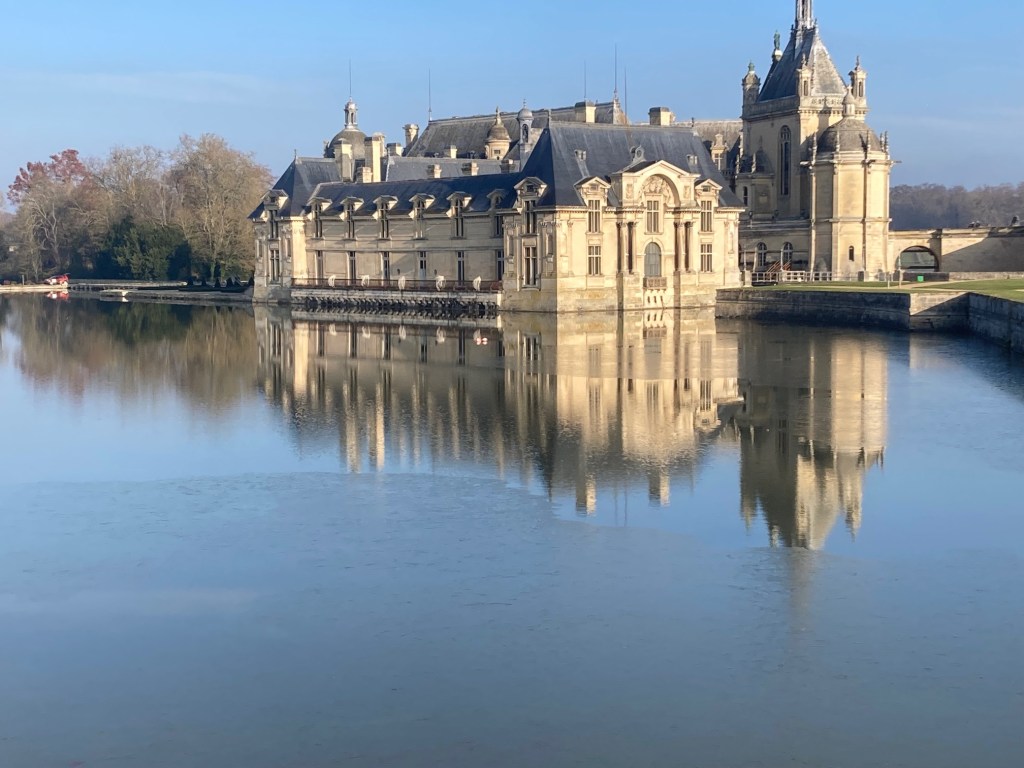
Susie and I have been in Watlington and Wycombe for a week with family, being not very useful during half-term. It is good to see the children and grand-children; and I even managed lunch in Leamington Spa with my brother and both sisters-in-law.  But it is easy to be more aware of Joanna’s absence when we are down south. This is the first time I have stayed in Wycombe since before she was ill. Next weekend we go home to Edinburgh. And start to think about Chantilly …

October 2023

Through a glass darkly – 110

A time capsule from the garage

Mayfield Church [shortly to be reborn as Newington Trinity] are having a paperback sale in November. Which encouraged me to ferret around in the garage, where I found a couple of shelves of elderly paperbacks which had never made it onto the bookcases in the house. It is instructive to see what I was reading three and four decades ago. But it is difficult to resist the temptation to re-read all the books before putting them out.

Christopher Isherwood

Christopher Isherwood was a bit of a hero from my late school days. I was fascinated by the intellectual and political life of the Nineteen Thirties. And by the thirties’ intellectuals and writers. It was admittedly all a bit cliquey. Spender admired Auden. And Auden admired Isherwood, his prep school friend. And Isherwood admired his school-friend Edward Upward, the ’Chalmers’ ofLions and Shadows. [It is unnerving to realise that in the sixties, that era was only thirty years ago. The same distance as we are now from the early nineties; John Major as Prime Minister; John Smith as leader of the Labour Party; a massive Lib-Dem by-election win in Newbury; the first high speed train through the Channel Tunnel. It all feels like yesterday !]

After an unfinished degree at Cambridge, and brief, unhappy spells as a medical student and a private tutor, Isherwood joined his friend Auden in Berlin in 1929. It was the closing years of the Weimar Republic, marked by high unemployment, social unrest, and a simmering tension between the Communist Party and the burgeoning Nazi Party. From 1923 onwards Berlin was characterised as much by its partying and decadent night-life as by economic depression. Wild parties, the cabaret scene, drugs, especially cocaine, deregulated prostitution, male homosexuality, and androgyny all helped to make Berlin a party-lovers’ paradise. This is the background to two of Isherwood best books, Mr Norris changes trains and Goodbye to Berlin. Mr Norris [published in 1933] stems from a chance encounter on a train with the sinister Arthur Norris. His new friend is a man of contradictions: lavish with hospitality, but heavily in debt; excessively polite, but sexually deviant. Norris is a flabby rogue, but personally engaging. Against the background of pre-Hitler Germany he symbolises a society moving towards dissolution. Goodbye to Berlin [published in 1939] continues Isherwood’s picture of that vanished city; scenes range from the tenements and night-bars of the slums to the opulent villas of the very rich, mainly Jewish, families. Isherwood himself is the first-person narrator, working as an impecunious English teacher. Both books, beautifully written, were originally intended as part of a bigger, panoramic novel The Damned. Which remained unwritten. Goodbye to Berlin introduces us to Sally Bowles. Her story was the basis for the New York stage play I am a camera, which  later morphed into the musical Cabaret.

Lions and Shadows [published in 1938] is a thinly fictionalised autobiography. It is the story of a writer finding his literary feet; tells of holidays on the Isle of Wight; and records his relationships with the thinly fictionalised W.H. Auden and Edward Upward. I like the book less now than I did when I first came across it. It was followed by Prater Violet [published 1945], an extended portrait of Isherwood’s working with the imperious, charismatic Austrian film director Friedrich Bergman. As they work on a frothy story set in nineteenth-century Vienna, Hitler annexes the real world Vienna, where Bergmann’s family are at risk.

I was less interested when Isherwood and Auden emigrated to the States in January 1939, After which Isherwood became increasingly involved with Vedanta, a Hindu form of philosophy and meditation, to which he had been introduced by Gerard Heard. But if time allows before the November book sale, I shall look again at Down there on a visit [published in 1962], an extended account of his travels around Europe with his young German boy-friend, Heinz, with whom he had left Berlin in 1933. And then, time permitting, at A Single Man [published in  1964], hailed by some critics as Isherwood’s best novel. I guess the truth is that most of his work is autobiographical, and that after he left Berlin I lost interest. 

The Flashman books

On a very different plane, a shelf of Flashman books are also heading for the sale. George Macdonald Fraser [b.1925] was a Scottish novelist and screen-writer. After leaving school in 1943, he served as a junior officer in the Burma campaign. His account of his time in Burma, Quartered Safe Out Here, published in 1993, is one of the minor classics of the literature of the Second World War. In the 1960s he embarked on his series of Flashman books. These purport to be the memories of the nonagenarian Sir Harry Flashman, V.C., the fictional bully and coward of Thomas Hughes’ Tom Brown’s Schooldays. He is an endearing rotter.After leaving Rugby in disgrace, Flashman fought his way around the world in the British Army, serving in virtually all of [what one writer calls] ‘Queen Victoria’s little wars’, displaying a high degree of funk in the face of danger and a willingness to bed every woman he encountered. The books drew admiring reviews, and were notable for their historical accuracy and the detail supplied in the historical footnotes.

I’ve been enjoyably re-reading Flashman and the Redskins [first published in 1982]. It is the seventh of the series, set partly in 1849-50 and then again in 1875-76.  Flashman is trapped in New Orleans after crossing the Atlantic on a slave-ship, the Balliol College, owned by his father-in-law, John Morrison of Paisley.  He is given shelter by a susceptible English matron, Susie Willinck, who runs a New Orleans bawdy house. Susie decides to relocate, and Flashman, travelling as Captain Beauchamp Comber, R.N., is the military escort to her harem as they join the crowds of Forty-Niners travelling westwards from Kansas City into what was then the great unknown of the Far West. In the course of his adventures, Flashman marries both his employer, Susie Willinck, and then the Apache princess Sonsee-array,  fourth and favourite daughter of Chief Mangas Colorado. The Yawner, later known as Geronimo, is their best man.

On a return visit to the States some twenty years later, the Sioux chief Spotted Tail takes a shine to the flirtatious Elspeth [née Morrison]. And Flashman is inveigled by the seductive Mrs Arthur B. Candy into making an inspection for the Upper Missouri Development Corporation. A trip that takes him up into the badlands of North Dakota, where he is one of the few survivors of Custer’s disastrous sally at the Battle of Little Bighorn. Partially scalped on the battlefield Flashman is rescued by the mysterious half-Indian scout Frank Grouard. It’s all clean-ish good fun.

I wonder when boys stopped playing Cowboys and Indians. Presumably at least a generation ago, maybe two.  When I was just six, I spent a couple of months living with my grandparents in Minety, in Wiltshire, where my grandfather was the station-master. I don’t remember much about it. But someone whom I only knew as ‘Old Man Meakin’ lent me a book about the Wild West and about Red Indians [presumably no longer permissible usage]. And it was said hat he had been out there in his youth, and had met people who are now just names like Sitting Bull and Buffalo Bill. That was about seventy years ago. And there’s no-one alive with whom I could check the story.

Here we go again

The rugby world cup has been a bit of a disappointment. It’s been going a month; we still haven’t reached the quarter-finals, there have been two good games so far [France v. New Zealand, and Ireland v. South Africa], and the best four teams in the world are all in the same half of the draw. England have reverted to [unattractive] type under Steve Borthwick [Baldrick]. Might the best Scotland team for a generation be in with a chance against Ireland tomorrow ?

I walked along the river Tyne from East Linton to Haddington the other day, a bit over six miles. At the end I nearly got stuck in the cemetery at Haddington. But I suppose that happens to people of my age ! And Susie and I met up for lunch in The Loft, one of my favourite cafes. They do an excellent Ploughman’s Lunch, and there was enough to bring the rest home for tea. 

I can’t bear to write about the political scene. The Tory Party conference shows us that the Conservative Party is morphing into an unattractive bunch of UKIP-style, xenophobic, self-serving, English nationalists. All demanding that we lock up immigrants. And tax cuts. It was dreadful seeing the gormless Liz Truss reappear the other day, still peddling the Trussonomics which precipitated a financial collapse a year ago. But possibly even worse the video clip of Pritti Patel and Nigel Farage dancing together to Sinatra’s I can’t keep my eyes off you. Crumbs ! I see that Rishi Sunak’s new slogan is Action not words. Which he has followed up by writing a letter to The Times [co-written with Signora Water Melon] asking why people aren’t doing anything about the migrant problem. You couldn’t make it up.

I’m leaving the country soon …

October 2023

Through a glass darkly – 109

Up North

South Uist which is a three hour boat trip from Mallaig is not over-burdened with tourist attractions. And this year was a good year [a bad year ?] for midges which would discourage many people. There are magnificent, deserted beaches on the western side of the island, flanked by the machair, a distinctive form of grass dunes generously sprinkled with wild flowers.

It grows very thickly, as I discovered when I played golf at Askernish. Which is a links course originally laid out by ‘Old’ Tom Morris in 1891 and since painstakingly restored. The American golf writer John Garrity ranks Askernish top of his list of the world’s top fifty golf courses, describing it as “closer to a perfect 10 than any other course”.  I lost three balls before I even reached the first fairway ! And was quite relieved to be only playing the first six holes.

Eriskay which has been joined to South Uist by a causeway since 2001 is a small island with a population of about a hundred and fifty. It was on Eriskay, at Coilleag A’ Phrionnsa [Prince’s Cockle Strand] that Bonnie Prince Charlie first set foot in Scotland in July 1745. [The story is that Alasdair MacDonald of Boisdale promptly advised him to go home again.] It was also on the rocks off Eriskay that the SS Politician ran aground in 1941 with a cargo of 28, 000 bottles of whisky destined for Jamaica and New Orleans. The thirsty islanders saw this as an unexpected godsend, and managed to salvage several hundred cases, in spite of attempts by the Home Guard to prevent them. The episode provided the basis for a novel by Compton Mackenzie, published in 1947. Which in turn became a film, Whisky Galore, made by Ealing Studios in 1949, starring Basil Radford and Joan Greenwood. And a more recent re-make in 2016 with Eddie Izzard. On a gloriously sunny day we walked across the beach to have lunch in the island pub, Am Politician, and then back to the car collecting a bag full of razor clams to use as slug deterrent.

Back on South Uist we visited the RSPB reserve at Loch Druidibeg. An information hoard told me how to distinguish male and female hen harriers, but we found only a gaggle of inquisitive wild ponies. Hoping for food. We passed close to the birthplace of Flora MacDonald at Milton;”… a name that will be mentioned in history, and if courage and fidelity be virtues, mentioned with honour” [Samuel Johnson]. And we spent a couple of hours in the small museum at Kildonan, which has a mass of information about crofting and other aspects of life in Benbecula and the Uists.

Our first day on Skye was very wet, with mist down to knee-level. Our B&B was fifteen minutes drive out of Portree, at Camusnavaig overlooking the sea. We had a delightfully decorated room, excellent service from Ian and Jackie, and, when the mist lifted, a lovely view across the sea from the terrace.

We drove into Portree on Sunday morning and were warmly welcomed at the Church of Scotland. The minister who is Hungarian was away, in Hungary with his wife. In his absence one of the elders preached, very well, from Ephesians 3 on the height and the depth and the width of the love of God. My eyes filled with tears as we sang the closing hymn, Stuart Townend’s How deep the Father’s love for us.

Compared with the rest of the Hebrides Skye has an enormous number of visitors. They say that on Skye, quite a large island, you are never more than five miles from the sea. And never more than five yards from a Chinese or Japanese tourist. Many of whom congregate on the Trotternish peninsula, which includes two of Skye’s best-known landmarks, the Old Man of Storr, an isolated rock pinnacle, and the Quiraing, a dramatic collection of crags. We drove round the peninsula, stopping to see Flora MacDonald’s grave in Kilmuir Cemetery.

[The fashion designer Alexander McQueen is buried in the same cemetery.] W.H. Murray whose guide-book invariably comes with us on trips up north describes her memorial as a monstrosity. It is a great spot, but was ferociously windy. Afterwards, and after a restorative coffee, we looked unsuccessfully for the dinosaur footprints on the rocks at An Corran beach.

On our final morning we drove down to Sleat and made a sentimental return visit to Kinloch Lodge hotel at Isleornsay. Which is where we got engaged in 1974. We hadn’t then initially intended to stay there. After a night in a primitive caravan at Broadford we had thought to stay in a temperance hotel at Ord, with a palm tree outside, run by two old ladies from Lewis. But they were full, and recommended us to Kinloch Lodge, which had opened two years previously. Godfrey Macdonald, the 8th Lord Macdonald and 35th High Chief of his clan, and his wife Claire, a renowned cook and cookery writer, had set out to provide a hotel “with comfy beds, endless hot water, attentive service and delicious food”. The prices, I noticed,  when it opened were £5.00 per person per night and 27/6d for a three course dinner ! What I remember best about our first visit was delicious food and getting stuck in the bar afterwards tasting a range of single malts, egged on by Ian the barman and an alcoholic dentist from Portree. Neither Susie nor I have drunk whisky since. 

The hotel is in a white-washed building, a former shooting lodge, that dates from the mid-16th century, set on the shores of Loch na Dal  We were warmly received by Isabella Macdonald, the daughter of Godfrey and Claire now retired, and were offered coffee and champagne on the house. Sadly I was driving. But we are tempted to explore the idea of a short-stay return visit for our Golden Wedding anniversary in January 2025. Isabella said that she would arrange a special price for us. But I guess it will be more than £5.00 each a night.

From Iselornsay we had time to take the [very] minor road over the hills to Toksavaig and Tarskavaig, which offers great views of the Black Cuillins.

And so to the ferry from Armadale back to Mallaig. I drove past Ben Nevis up the road through Glencoe in brilliant sunshine. But Susie was fast asleep. Probably too much champagne. 

September 2023

Through a glass darkly – 108

Going North

We started at Arisaig, on the Road to the Isles. It is full of memories. Susie and her family camped there each summer for about a decade, on Alasdhair MacDonald’s croft at Port Na Dorn. From what I gather the facilities were a bit primitive in those days, with a separate latrine tent. And George had to get up on wet nights [of which there were plenty] to dig a ditch to drain away the water from the fly-sheet. A decade or so later I rang Oxford University Press from the call-box in the village, on a reverse charge, person-to-person call, to be offered a job with them in Paris. And we celebrated with  a pair of kippers from the smoke-house at Mallaig. A year or three later we rented Johnny MacDonald’s house at Cuillin View on the road towards Traigh Golf Course for a month [it cost £120 for the month]. And Joanna, five months old, was small enough to be bathed in  the washbasin.

We drove up in a car hired from Short’s, a very friendly garage in Dalkeith. It was a gold Suzuki Vitara. Gold in colour, that is. On a sunny morning we stopped for coffee in Callander, at Mhor Bakery, coming away with a large crusty sour-dough loaf. And we stopped again for lunch at The Real Food Cafe in Tyndrum, a jumped up chippy which does excellent fish and chips. The girls taking the order were both Ukrainians, who were amazed to hear that we had been in Kyiv over Christmas 2021-22. After the meal I suggested to Susie that she say ‘Thank you very much’ to them in Ukrainian. So we scratched our heads to come up with the phrase. She said ‘çok tesherkurla’ to them twice  Leaving them looking totally bewildered. I didn’t think Susie’s pronunciation would be that bad. Twenty miles up the road  realised that she had spoken Turkish to them !

It rained a bit after Callander, but that is quite normal. And the road down through Glencoe is usually a bit dark and hostile. At Glenfinnan, where Bonnie Prince Charlie raised his standard on August 19th, 1745, there used to be a small car-park. And a chance to climb a narrow, spiral staircase to the top of a commemorative tower. Now there is an enormous car-park to cater for Harry Potter fans who assemble on the hillside to take photos of the Hogwarts Express on the Glenfinnan Viaduct. I bought a day-return on the train from Glasgow up to Mallaig about fifteen years ago. It is a spectacular journey. But the train windows were too dirty to get good photos. We caught up with the Hogwarts Express in Mallaig the following day; as a couple of hundred tourists disgorged from the train for a three hour stop-over in Mallaig. Time enough to buy fish and chips and to take a couple of photos.

In Arisaig we stayed in The Old Library, in the centre of the village, in a superior room with a glorious view of the sea. [I reflected ruefully that one night there cost exactly twice as much as a two week full-board package holiday, flights included, in Cefalu in the mid-1970s.] In the evening we walked down towards Rhu. In the morning, fortified by the first of several copious Scottish breakfasts, we walked a bit on the beach at Camusdarrach, made famous by the film Local Hero. In the Fishermen’s Mission bookshop in Mallaig, which is by some distance the most chaotic second-hand bookshop that I know, I bought a clean copy of Ben MacIntyre’s book A Foreign Field for £1.00. [This is one of MacIntyre’s early books, written I think when he was Paris correspondent for The Times. If that is true, it supports my contention that for many authors their first or early books are their best. Before they start churning out new books every year.]

And from Mallaig we sailed past Eigg and mountainous Rhum towards South Uist …

September 2023

Through a glass darkly – 107

It is Festival time here once again.Edinburgh has been swarming with tourists for the past month. And it takes ages coming back across town, across Princes Street and The Bridges on the bus. Just writing that makes me sound like a sour-tempered native.

I escaped the crowds one morning to walk down the Water of Leith. There were very few people on the more rural, Balerno stretch of the river.  But the Colinton [former railway] tunnel was closed for repairs, which necessitated a lengthy detour. And then more people closer to town.

We have had visitors here. Louis and Anne passed through on their first visit to Scotland. We braved the crowds to look at the Royal Mile and the statue of John Knox in New College. And we went up Arthur’s Seat to admire the view. They left us for Glasgow, and thence to Mull and Iona before heading north towards the Highlands. The Lyon connection was carried forward by Diana on her annual visit. We went to a fringe event in St Cuthbert’s, a concert by The Really Terrible Orchestra. Largely the creation of Alexander McCall Smith. They are not as terrible as they claim. And they do, Susie tells me, audition prospective musicians these days.

Diana’s visit coincided with a visit from Pete, my oldest school-friend. One day he was asked to write an essay on All art is illusion. Discuss; and in frustration he rode away from school, permanently, on his 1960s scooter, to work on Oz magazine and Melody Maker. After which as a ‘60s entrepreneur he set up The Big O poster company. These days he runs a [very small] business producing art postcards, like the Scottish water colourists, and comes to Scotland a handful of times a year to drum up business with a few discerning bookshops.

We have been to a few Fringe shows. I am extraordinarily conservative about what we see. Many years ago my mother-in-law gave us tickets for a new play, set on a Scottish island, in which the female lead stripped off quite gratuitously after a few minutes and lay on the dining table. I’m not sure if Eileen was aware of this in advance. Other horrors include an unfunny comic from Brighton who did things with beer bottles in a very late night show at the bottom of the High Street. And some enthusiastic, but not very artistic, break dancing. 

This year we took in a Beach Boys tribute band in George Street. They came all the way from Essex. I had forgotten just how repetitive all that surfing stuff is. And Surfin’ USA is a straight steal from Chuck Berry’s Sweet Little Sixteen. And we went with Mike and Wendy to hear Jacqui Dankworth singing in Stockbridge Church, accompanied by a classy pianist [her husband] and a very cool Brazilian bass player. Pete opined that she’s nothing like as good as her mum, Cleo Laine. Who is still singing, Jacqui told us, ate the age of 96.

Also in Stockbridge, but in the church hall, we saw the Soft Shoe Skiffle band; guitar, banjo, bass, and washboard. The band are, I think, even older than me. Much of what they play is from 1959, or thereabouts. I asked them to play at my 75th birthday party a few years back. But the COVID lockdown put an end to that idea, and to any party. Their guitarist and singer had a ‘minor incident’ earlier this year. But it doesn’t really matter as most of the audience know all the words.

Last night Susie’s band No Strings Attached played their inaugural Fringe concert in Broughton St Mary’s. Quite stressful for a novice clarinettist. But the music went down very well with quite a substantial audience. I am going to Murrayfield to watch Scotland v. Georgia tomorrow. We are going to a Salvation Army band concert on Sunday night. And then on Tuesday we head for Arisaig,  just for one night, and then from Mallaig to the Outer Hebrides. Unlike the Ardèche, where Craig and the girls have been holidaying this past fortnight, there is little chance of heat-stroke. Nor of forest fires. Thankfully.

August 2023

Through a glass darkly – 106 Vietnam

Prelude

For reasons that I can’t explain the Vietnam War largely passed me by in real time. Which is very odd. Since it was [by some parameters] the biggest war of my lifetime; and lasted under various names for about three decades. As a crude generalisation it began as a colonial war as France, the colonial power, tried to reassert control of its Indochina empire, from which it had been largely evicted by the Japanese doing the Second World War. And after the defeat of France in 1954 and the division of the country, it became a long struggle between [Communist] North Vietnam under the iconic leader Ho Chi Minh, supported by Russia and by China, and [the Democratic Republic of] South Vietnam, hugely propped up by the United States with some marginal support from other allies, Australia, New Zealand, and South Korea. It is therefore largely regarded as a Cold-War era proxy war. The war spilled over into neighbouring Cambodia and Laos. And ended with the fall of Saigon in April 1975. After which all these countries became communist states.

I am making up for my earlier lack of attention by reading some books about Vietnam. Some of which are extremely good.

Dien Bien Phu

After the fall of Japan in 1945 Ho Chi Minh declared the establishment of the Democratic Republic of Vietnam.. A month later French forces overthrew the DRV and restored French authority in Cochinchina. What began as a low level insurgency against the colonial power turned into a conventional war fought between the Viet Minh, supplied by the Soviet Union, and French forces, largely comprising French colonial troops drawn from North Africa, sub-Saharan Africa, and from Indo-China, supplemented by units of the Foreign Legion. The Viet Minh relied mainly on guerrilla tactics and ambushes, while the French tried unsuccessfully at first to draw the enemy into a major confrontation. Culminating in a decisive [and disastrous] defeat for the French at Dien Bien Phu.

When we were last in Grenoble I found a copy of Martin Windrow’s book The Last Valley in a charity shop. Price 2,00€. It was a good buy. Martin Windrow is a journalist and publisher rather than an academic historian. He has written a magisterial account of Dien Bien Phu, the battle that doomed the French empire and which lured America into Vietnam. In the winter of 1953-54 the French army under the command of General Henri Navarre challenged General Giap’s Viet Mnh to a pitched battle. [Navarre was intellectually brilliant, with background in intelligence work and an air of calm authority. But he had no experience ofAsian warfare, and was referred to by a colleague  as “an air-conditioned general”.] Thousands of French and Vietnamese  paras and légionnaires, with supporting artillery and tanks, were flown to the remote valley of Dien Bien Phu in north-west Vietnam to build a fortress upon which Giap could smash his inexperienced regiments. But fortress is a misleading term; it was no more than a chain of low hills set in a shallow valley surrounded by densely wooded mountains.

The siege began in December. And lasted for three months. As Martin Windrow tells the story it assumes the character of a Greek tragedy. The French were amazed to learn that the Viet Minh besiegers had dragged heavy artillery over five hundred miles of roadless, jungle terrain. And working from bomb-proof caves and excavated tunnels, they could shell the French troops with impunity. General Giap described the siege as grignotage, a constant nibbling away. The French commander at Dien Bien Phu was Colonel Christian de Carries, a dashing cavalryman, aged 51, tall with silver-grey hair, obliged to walk with a shooting stick as a reminder of old wounds. de Carries lacked any gift for inspirational leadership. Which came mainly from his subordinate, Lieut.-Col. Pierre Langlais, a tough 44-year-old paratrooper with a taste for whisky and a sulphurous temper, who had previously served with the Saharan camel companies of the African Army, in Italy, and Alsace and Germany, and was now on his third tour in Indochina. 

The outer forts of Béatrice and Gabrielle were overrun by the Viet Minh in mid-March. Colonel Charles Piroth, de Castries’ popular artillery commander, was severely criticised by Langlais; retreated to his tent and killed himself with a grenade. Garrison morale was now crumbling. Astonishingly [to me] several hundred untrained parachutists dropped into Dien Bien Phu in April. As de Castries observed in a subsequent report, “It’s a bit like Verdun, but Verdun without the depth of defence … … and, above all, without la Voie Sacrée … ”. A relief column of three thousand men set out from Laos, but it was a hopeless venture. On May 7th de Castries formally surrendered to the Viet Minh. Who suddenly found themselves with five thousand prisoners, most of them wounded. More of de Castries’ men died in captivity than died in action. France had lost the will to pursue the struggle. The new French prime minister, Pierre Mendès-France, promised a cease-fire within thirty days. In July at the Geneva Conference it was agreed to partition the country close to the 17th Parallel. The Cease-Fire was signed by France and by North Vietnam. The agreement was endorsed by the French, the British, the Chinese, and the Russians. Ho Chi Minh accepted that hegemony over a united Vietnam would have to wait for another day. No Westerner saw the Geneva agreement as a success. It was rather an exercise in damage limitation. 

The Best and the Brightest

How then did America then get involved ? That question is best answered by David Halberstam’s book The Best and the Brightest. Halberstam was a journalist for the New York Times, who wrote extensively on politics, history, the Civil Rights movement, American culture, the Korean War, and Vietnam. He arrived in Vietnam in 1962 and left again in 1964 aged thirty. He arrived as a confident man, a believer, welcomed by the American Embassy in Saigon. But his two years in Vietnam, during which time he witnessed the self-immolation of the Buddhist monk, Thich Quang Durc, made him increasingly critical of [the South Vietnam] President Diem’s government, and also of the upbeat and misleading utterances of General Paul Harkins and the American military.

I found a copy of The Best and the Brightest, first published in 1969, in Shakespeare’s quirky bookshop in Paris in the mid-1970s. but the copy on my shelves is the twentieth anniversary edition. The genesis of the book, Halberstam says, was a return trip he made to Vietnam in 1967, when he was struck by the stalemate – American military superiority against North Vietnam’s political superiority. And by the self-deception of senior Americans in Saigon that we were on the edge of a final victory. Eventually the Americans would have to go home and so Hanoi controlled the pace of the war. The American generals, like the French generals before them, were not so much in the wrong war as on the wrong planet. His views went down badly with American ambassador, Ellsworth Bunker. Who believed that overwhelming American fire-power made victory inevitable. 

Back in the States Halberstam started work on a book about “how and why we had gone to war in Vietnam, and about the men who were the architects of the war”. His writing began with an article for Harper’s on the iconic figure of McGeorge Bundy; the most luminescent of the Kennedy people,  Dean of Harvard at a ridiculously young age, the most cerebral member of the Kennedy Administration, and the likely leader of the next generation of the American Establishment. The article, The Very Expensive Education of McGeorge Bundy, provoked a stormy response. It was the first time that a [liberal] journalist had suggested  that the decision making of the Kennedy Administration on Vietnam was significantly flawed. How could so many brilliant people have made such bad decisions ? Perhaps because the members of the Administration were given credit for cerebral prowess and academic success rather than accomplishment in government. Halberstam tells a wonderful story about Vice President Lyndon Johnson:

After attending us first Cabinet meeting he went back to his mentor Sam Rayburn and told him with great enthusiasm how extraordinary they were, each brighter than the last, and the smartest of them all was that fellow with the Staycomb on his hair from the Ford Motor Company, McNamara. “Well, Lyndon, Mister Sam replied, “you may be right and they may be every bit as intelligent as you say, but I’d feel a whole lot better about them if just one of them had run for sheriff once”. “

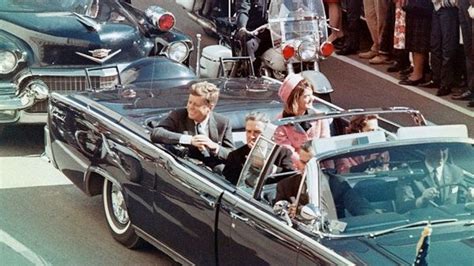
Back in 1954 the young Democratic senator had opposed intervention in Indochina; “to pour money, men, and materials into the jungles of Indochina would be most unlikely to deliver victory against a guerrilla enemy … which has the sympathy and covert support of the people”. But now, as advised by his favourite general Maxwell Taylor, Kennedy tried to solve the Vietnam problems by sending a steady flow of Americans, Green Berets, military advisors, helicopters and helicopter pilots. By November 1963 there were sixteen thousand Americans on the ground. In the years that followed Defense Secretary Robert McNamara, an enthusiast for slide-rules and systems analysis, egged on by the RAND Corporation, presided over a steady, inexorable increase in numbers. But the Kennedy-Johnson administrations never defined the war, what America’s role or mission was, how many troops would be sent, and, most important of all, what America would do if the North Vietnamese matched American escalation. 

Halberstam offers a fascinating set of pen pictures of the major players, both military and civil. He emphasises the enduring legacy of the McCarthy era, though Joe McCarthy himself had died seven years before Kennedy took office. The Republican party, long out of power, [until Eisenhower “a kind of hired Republican” was elected] accused the Democrats of treason; there were sustained attacks on Truman and Dewey for their policies in Asia which had “lost China”. The fear of being soft on Communism lingered among Democratic leaders. The memory of the fall of China was even more bitter for Lyndon Johnson than for John Kennedy. Johnson vowed that he would not be the president who lost the Great Society because he lost Saigon. 

The book doesn’t go beyond the 1968 election. The tormented McNamara has gone, no longer a believer. Johnson stands down as President, destroyed by a war he didn’t want. [Hey, hey, LBJ/How many kids you killed today ?”] Hubert Humphrey becomes the Democratic nominee, but in so doing loses what is left of his reputation. Ironically it is the newly elected President, Richard Nixon, who goes to China and through Henry Kissinger embarks on the lengthy [and thoroughly cynical] process of American withdrawal. “The only political figure who could go to China,” Halberstam notes,  “without being Red-baited by Richard Nixon”. 

Max Hastings: Vietnam

All this and a great deal more is in Max Hastings book, published in 2018, which I began to read in Normandy and have now finished. It is a long [700-plus pages], a balanced, magisterial account of the war[s] in Vietnam. Anthony Beevor calls it “his masterpiece”. Unlike Halberstam, Hastings is primarily concerned with Vietnam rather than with the United States.

The book starts with the post WWII colonial war against the French culminating in Dien Bien Phu and the partition of the country. And continues with a political and military narrative; from Kennedy sending 400 Green Berets in 1961 through the massive expansion of US military and materiel under Johnson and McNamara. Through to the collapse of Saigon in May1975. After which, in Michael Howard’s words, “a grey, totalitarian pall descended on the country”. 

After the Tet offensive of 1968, which provoked Johnson to withdraw from the election race, his spirit broken by Vietnam, Hastings reckons that North Vietnam’s defeat was no longer plausible. But the war had a further seven years to run. With the South ‘losing by instalments’. 

Hastings is good on the ‘on the ground’ experience, ‘Waste deep in the Big Muddy’.  He criticises equally incompetence and corruption in both the North and the South. He believes that America’s military power could never match the North’s political power. As the journalist Neil Sheehan observes, “In the south there was never anything to join up to …”.

The war cost the States $150 billion [less than Iraq two decades later]; and 58,000 lives [proportionally fewer than the Korean War]. But the true price was the trauma that it inflicted on the country. The war was a catastrophe for Vietnam. And, as General Walt Boomer comments, if the States had learned anything from the Vietnam War, they wouldn’t have invaded Iraq.

PS

We should give Harold Wilson belated credit for resolutely keeping British troops out of Vietnam, in spite of American blandishments. Sadly Tony Blair, seduced by the glamour of George W. Bush [difficult to believe, I know] failed to follow his example a generation later on Iraq.

August 2023

Through a glass darkly – 105

Marking time

Time goes faster as you get older. So psychologists tell us. It may be true. Last week was seven months since Joanna left us. [I met some people on the bus yesterday, whose name I couldn’t immediately remember, who were asking me about her. I told them that she is the first thing on our minds when we wake up in the morning. And then at intervals throughout the day.] 

Certainly I’m not sure where the last few weeks have gone. Apart from my wheezing my way through a long-lasting summer cold. After my 24-hour trip to London I met up with Richard Holloway for coffee at the Cafe Grande. During our decade in Duns he was my diocesan bishop, and I wasn’t really very happy about that. [See TaGD – 71] His liberal theology and his enthusiasm for the LGBT+ community and his encouragement to ‘sin boldly’ all played out badly in our rather conservative corner of the Scottish Borders. But he was always very supportive personally, and meeting up with him occasionally is a great pleasure. We talked a lot, and laughed a lot, and cried a bit about Joanna. And he pointed me to a few books that I might look at one of these days.

And then I spoke at the funeral for David Douglas, a friend from Priestfield church. I only got the job because the minister was away on holiday. David was a gently-spoken, courteous man; a retired accountant. He was immensely helpful to me a few years ago when I was being chased for unpaid back taxes on foreign earnings by the Inland Revenue. A firm of accountants in Berwick on Tweed with whom we had historic connections from our time in Duns acted for me. Sadly they turned out to be a bunch of venal clowns. They charged me a substantial fee for submitting a return which HMRC refused to accept. It took two years of patient encouragement by David before the matter was sorted out. And they eventually sent me a large cheque – for which we were grateful.

We then had a few days down south staying with Jem and Anna and their children in Watlington. Which is often said be the smallest town in England. It sits at the foot of the Chilterns, in Vicar of Dibley country; with lots of good walking nearby and easy access to the Ridgeway. And is blessed with the reputed Orange Bakery. And populated by a sizeable colony of red kites which circle constantly above your head.

As ever it was very good to spend time with children and the grand-children. From Watlington Jem drove us up to Birmingham for my brother and sister-in-law’s joint birthday celebrations. Lots of excellent food and drink, and more Anglican clergy than you could shake a thurible at.

Since our return we have had visits from Roy and Shona, a chance to catch up with news from Lyon;  and David and Mary from Perthshire. Interspersed with a couple of visits to the Edinburgh Jazz Festival. First to hear the excellent Pasadena Roof Orchestra playing big band classics from the 1920s and ‘30s at the Queen’s Hall. And then to the Spiegeltent in George Square to hear Hamish Gregor and Colin Steele with their Tribute to Ball, Barber, and Bilk. Acker Bilk used to play at Wandsworth Town Hall back in the dark ages. And a few years later I was happy to hear Kenny Ball and his Jazzmen playing live as the resident band on Brian Matthew’s Easy Beat. Apart from which excitement I have been reading Bevis Hillier’s interminable, three volume biography of John Betjeman, stuffed with anecdotes and gossip; and Rowan Williams on the Benedictines; and a whole platoon of books on the Vietnam War. Of which more another time.

Envoi

We are looking forward to more August visitors; from Berwickshire, and from Lyon, and from the Cotswolds. I have just bought some tickets for Scotland’s rugby World Cup warm-up games at Murrayfield,  against France and against Georgia. Which may be a triumph of hope over experience. And we plan to go to South Uist at the end of next month. Provided that CalMac can find a boat to take us there. Which is unsure. If not, it will be a long swim !

July 2023

Through a glass darkly – 104

A trip to London

Harrison Ford is in London this week. And so is Dolly Parton. Very unusually I was in London too, for 24 hours, but I didn’t see either of them. I went down to London for the 200th anniversary celebration of ICS [the Inter-Continental Church Society] The celebration, followed by lunch and the AGM, were held in St Paul’s, Onslow Square, part of the HTB family of churches.

Finding affordable accommodation in central London is tricky. I stayed in the Hotel Meridiana, in Argyle Square, two minutes from King’s Cross station. It’s probably typical of the large number of small hotels in this area: I stayed in a small room on the second floor with a small en-suite and shower and a [very] small flat-screen tv. Up two flights of carpeted stairs. Which could be tricky if you had much luggage. The hotel doesn’t do breakfast. But the Cappadocia cafe a few minutes walk away in Grays Inn Road is said to be very good. But after a hot, interrupted night I gave the Cappadocia a miss, and had breakfast in South Kensington instead. In a Portuguese cafe.

ICS

ICS, the Intercontinental Church Society, began life in a London coffee house on Ludgate Hill in June 1823. Samuel Codner convened a meeting of like-minded evangelicals to promote Christian work in schools in the colony of Newfoundland. A decade later from the same coffee house a similar group of evangelicals launched the Western Australia Missionary Society, later renamed the Colonial Church Society. Within a few years requests were reaching the Society to support mission work in Italy, France, the Netherlands, Spain, Greece and Switzerland; and then, from further afield, from Canada, China, India, the Azores, the Falklands, and Argentina. A century and a half later, in 1979, what had become the Commonwealth and Continental Church Society [CCCS] was once again renamed and settled into its current name as ICS.

Susie’s and my connection with ICS goes back to the mid-1980s. In my pre-ordination days I was pleased to drop into St Michael’s, Paris, occasionally, on Sunday mornings; and once had an encouraging conversation there with Peter Sertin.  A few years later we were in St George’s, Barcelona, on a hot Sunday in August, and received a gracious welcome from Ben and Anne Eaton. During our decade in the Edinburgh Diocese we and the children were pleased to do a series of ICS summer chaplaincies; first at Messanges, then at Raguènes Plage and at La Baule, both in southern Brittany, and once down at Sarlat-la-Canéda, but most often at Benodet. During the 1990s we were very happy to have a hundred or so people coming to worship in the old Catholic church down by the harbour. One Sunday a Frenchman gestured to me to put the bread directly into his mouth. And when I did he bit my finger ! And it was at Benodet that two men approached the chaplaincy van from different directions, both wanting to talk and pray about the notion that they might be called to ordination.

One thing leads to another. After a decade in Christ Church, Duns we were delighted to be invited in 2000 to become the chaplain[s] at the ICS-supported church in Lyon. After the rather conservative monoculture of the Scottish Borders, where change comes slowly if at all, it was a real pleasure to be ministering in the culturally and confessionally diverse, high turnover, high-octane Diocese of Europe. Where we were faithfully supported by ICS, under the leadership successively of John Moore, and Ian Watson, and David Healey. And we were very grateful for the fellowship and the teaching of the annual Family Conferences, which alternated between the UK and mainland Europe. 

Happy Birthday, ICS

The anniversary celebration was held in St Peter’s, Onslow Square, a few minutes from South Ken underground station. [Why were the attractive, tree-filled gardens closed with chains ? And a notice saying PRIVATE: FOR THE USE OF RESIDENTS – RUSSIAN OLIGARCHS, ARAB BUSINESSMEN, ARMS DEALERS, AND TORY PARTY MEMBERS ONLY. Actually that’s not quite what it  said. But I am reading between the lines.]

We were warmly welcomed by Richard Bromley. the Mission Director. Worship was led by Andrew Flanagan, accompanied by a wonderfully gifted flautist from Vevey. There was moving testimony from Sarah Jane King, about mission in Switzerland; and from Mimy Gardner, about the work in Leipzig. Bishop Robert Innes, of the Diocese in Europe, spoke about the wide geographical reach of the society; about the fact of its lay leadership; and [I think] about the support it gave to local churches around the diocese. Bishop Richard Jackson, Chair of the ICS Council, recalled the numerous name changes of the past, and emphasised the need for us to be alert to what God is doing and to be prepared to embark on new things. Richard Bromley made reference to the New Work Initiatives being undertaken to mark the anniversary. We prayed the ICS Prayer. And Bishop Robert cut the impressive cake which had survived a fraught journey on the motorway.

There were many old friends. Some of whom I managed to recognise. [I’m bad with faces.] Gary Wilton was there, taking me back to church in Woodstock. Where he as a young Wycliffe ordinand affronted the young fogeys in the congregation by processing in [with Gregory Page-Turner] wearing an outsized L plate. Mike and Helen Parker were two rows behind me. Mike and I were fellow curates under Denis Lennon at St Thomas’s, Glasgow Road. Roy and Joke Ball were at St Marc’s, Grenoble when Joanna was there as a student. The first person that I met outside the church was [Bishop] Henry Scriven, who installed me in Lyon in 2000.  Folli Olokose, a pillar of the congregation in Lyon, is now serving in the Guildford Diocese, a pillar of the ICS council and of General Synod.  David & Angela Marshall and Michael & Lesley Sanders and Martin Reakes-Williams, now in Addis Ababa, were all familiar faces from past ICS conferences. As was John [and Jane] Dinnen, who kindly came to Lyon to lead a church weekend for us. John Wilkinson, a colleague and friend from a post-retirement spell at Holy Trinity, Brussels, was there; as were David & Anne Fieldsend, and Pam Clements, and David White. And a host of others.

I was sorry not to see Madge Olby, an occasionally reader of this blog. Who got a mention from Bishop Robert. And I was sorry not to see John Moore, another occasional reader, who invited us to go to Lyon. Nor Alyson Lamb, a friend and almost a neighbour these days down the road in Berwick. Nor David Healey, whom I see most Sundays anyway at St Peter’s, Lutton Place. He was planning to come, from Moreton in the Marsh, but was a casualty of train delays.

Envoi

When it ended I took the tube up to Holborn. And had a sentimental stroll through Bloomsbury, taking in Museum Street where I worked for eighteen months in the early 1970s. George Allen and Unwin are long gone, and the street is now dominated by pavement cafes. I sat drinking iced coffee, looking at The Museum Tavern, which is now called something else. And then made my way via Red Lion Square to Kings Cross for the train home. Where I had a long conversation with a Chinese student doing a PhD in Cryptography. He thought there might be a democracy deficit these days in China. Wasn’t sure if there was an Opposition. But poured scorn on the idea that the Confucius Institute may be spying on the activities of Chinese students in the UK. And so to Edinburgh where it was raining heavily.

I was sorry to have missed Dolly Parton.

June 2023

Through a glass darkly – 103

Anniversary

Last month, May 17th, was the 70th anniversary of the Dambusters, the celebrated raid on the German dams in May 1943. To mark the occasions hundreds of people gathered to watch a Lancaster bomber fly over Derwent reservoir, in Derbyshire’s Hope valley, one of the sites used by 617 squadron to practise for this top secret mission. Later in the day there was a second fly-past and a sunset ceremony at RAF Scampton in Lincolnshire, the station from which the nineteen Lancasters took off on their daring mission. Only three of the original squadron personnel are still alive. Les Munro, aged 94, and George ‘Johnny’ Johnson, aged 91, both attended the ceremony. Squadron Leader Munro had travelled from his home in New Zealand to be there.

The Dambusters

The Dams Raid of May 1943 was a celebrated operation. It was a positive demonstration of progress that Bomber Command had made since the beginning of the war. It was carried out by 617 squadron, which had been formed specially for this raid in March under the leadership of Wing Commander Guy Gibson, one of the leading figures in Bomber Command. The main targets were the Möhne, Eder and Sorpe dams, which were the main sources of water for the Ruhr valley, twenty miles away. And thought to be of crucial importance to German industry. The dams were attacked with bouncing bombs, which had been designed by Barnes Wallis, the scientist who had invented the geodetic technique used in the Wellington bomber. In order to be effective the bombs had to be released at the precise height of sixty feet above the ground. This was dangerously low level flying, at night, over water, for a heavy bomber. 

Two of the dams were breached. The destruction of the Mohne dam caused widespread flooding and disruption of railways, roads, and canals; and significantly reduced the electricity supply to the Ruhr. The destruction of the Eder dam caused considerable damage to houses, bridges, and waterways in the Kassel area. But eight of the nineteen aircraft that had been dispatched were lost and fifty-three crew members were killed.

Like many schoolboys in the 1950s I knew all this stuff. The first ‘grown-up’ book I ever read was Guy Gibson’s Enemy Coast Ahead. The book, which was published posthumously in 1946, is a remarkable account of Gibson’s life in Bomber Command; of aircrew living dangerously, and dying, as they sought our their targets in the dark skies over Nazi Germany. Gibson was a great survivor; decorated with a DFC and Bar and a DSO and Bar, he won the Victoria Cross for his leadership of the Dams Raid. Arthur ‘Bomber’ Harris wrote in the introduction “If there ever is a Valhalla, Guy Gibson and his band of pilots will be found there at all the parties, seated far above the salt.”

The myth was given further traction by the making of the 1955 epic war film The Dam Busters, based on the books by Gibson and by Paul Brickhill. The film was warmly received and became the most popular motion picture at British cinemas in 1955. In 1999 the film was voted the 68th greatest British film of the 20th century. [The film supposedly provided the inspiration for the Death Star trench run in Star Wars.]  It starred Richard Todd as Guy Gibson and Michael Redgrave as Barnes Wallis. [Richard Todd incidentally entered Sandhurst in 1939, was commissioned in the King’s Own Yorkshire Light Infantry, and later joined the 7th Parachute Battalion with whom he dropped into Normandy on D-Day. He was involved in capturing the Pegasus Bridge.] Barnes Wallis, a gentle scientist, was very upset by the loss of life on the Dams Raid, and used the money he was awarded after the war to create an RAF Foundation at Christ’s Hospital. I saw a lot of him at CH in the 1950s, when he was a school governor; and when he was present at lunch parade, the band often played Eric Coates’ Dambusters March.

Operation Chastise

Now that the public library in Fountainhall Road has reopened [it was a COVID testing centre for two years], I took the opportunity to read Max Hasting’s 2019 book Chastise: The Dambusters Story 1943. Hastings is a prolific British journalist and military historian, who has edited both the Daily Telegraph and the Evening Standard. [His father MacDonald Hastings was a regular writer for the Eagle comic, also part of my reading in the 1950s.] He is the author of some thirty books, mainly on military history which get longer as he gets older. I found Chastise mercifully short, and for me it is his best book since Bomber Command written some thirty years ago.

Chastise is a more complicated story than the Paul Brickhill  myth. Hastings looks at the chosen targets, suggesting that the Sorpe Dam should have been a priority rather than the Eder. But acknowledging that it was a differently constructed dam which required a different approach. He contrasts Harris’s scepticism about Wallis’s bouncing bomb and about the whole project with his willingness to soak up the credit for it when the raid became a well-publicised [partial] success. He notes that just over half of those killed in the floods were prisoners of war and forced labourers, French, Belgian, Dutch, and Ukrainian. And he poses the question: Why was there no attempt to follow up the raid. No  similar high-precision, low-level raids were attempted. [Harris was fiercely crucial of ‘panacea merchants’; preferring to rely on the crude, sledge-hammer approach of ‘area bombing’. About which serious ethical questions remain.] And no attempt was ever made to bomb the reconstruction work on the dams which began immediately. The Germans certainly rose to the challenge: the dams, which had taken five years to build, were repaired by armies of forced labourers working around the clock in just five months.

Guy Gibson

Hastings also explores the story of Gibson himself. Here he leans [I think] on the 1995 biography by Richard Morris: Guy Gibson: the story of one of Britain’s most celebrated wartime pilots. A book of which I recently tracked down a copy.

Morris offers us a more nuanced picture of the man behind the legend. He notes that Gibson showed little sign of early promise. Although Sir Ralph Cochrane later wrote that Gibson was ‘the kind of boy who would have been head prefect in any school’ , Morris explains that he had a pretty undistinguished time at St Edward’s in Oxford. “He was second XV material and a lance-corporal in the OTC, moderately able, tenacious, but never getting to the top of anything.” After school he applied for a short-term commission in the RAF, and was at first turned down. Possibly because his legs were too short !  Subsequently he learned to fly at Netheravon Flying School, was neither a natural nor an outstanding pilot, but in 1937, aged 19, was commissioned as a Pilot Officer and posted to 83 [Bomber Squadron] at Turnhouse, outside Edinburgh. 

When war broke out Gibson took part in the abortive attack on German warships at Wilhelmshaven. Nine Hampdens from 83 squadron took off in bad weather,  failed to find the target, and returned in the dark. Their experience of night flying was negligible, but miraculously all survived. During the following years Gibson survived an enormous number of operations, initially flying Hampdens, and then Beaufighters during an unhappy eighteen months in Fighter Command.  When Sir Arthur Harris took over as C-inC of Bomber Command in February 1942, he immediately recalled Gibson to command 106 squadron. Flying Avro Manchesters, and then Lancasters.

It was Harris who summoned Gibson a year later to head up the newly created 617 squadron and to lead the Dams Raid. Gibson was a veteran, a survivor, and a known name in Bomber Command.  In January 1943, on a sortie to Berlin, Gibson had taken a young radio-journalist,  Richard Dimbleby, with him as a passenger. The subsequent broadcast was a triumph. But Gibson seems to have had few close friends. His parents had split up. His mother turned to alcohol and died tragically in an accident shortly before the raid. He had contracted a loveless marriage to Eve, a dancer a few years older than himself. Morris interviews his ‘lost love’ in the WAAF, with whom Gibson had an unconsummated, unscheduled, Brief Encounter type relationship. His main companion and source of emotional support seems to have been his dog, a black labrador called Nigger. [I can’t remember if they changed the name in the film. They would now.]

After the raid, Gibson became a celebrity and ‘a professional hero’. He was feted by Harris and adopted by Churchill, who took him on a propaganda tour of North America, ‘all alcohol and endless adulation’. As one of Churchill’s ‘young men’, and with the enthusiastic support of William Garfield Weston, Gibson was adopted as Conservative party candidate for Macclesfield. But Gibson pined for operational flying, and once the book that became Enemy Coast Ahead was completed the RAF didn’t know what to do with him.

In June 1944 Gibson became Base Air Officer at Coningsby in Lincolnshire. Both the squadrons he had commanded, 106 and 617, where part of this group. His arrival there was a bit ostentatious and he was not universally welcomed. On his first visit to the 627 squadron mess, he was ritually debagged before being invited back for a beer. Gibson fretted that the war would be over before he could resume flying. On September 19/20th, 1944, Gibson flew as Controller and Master Bomber on a raid to Mönchengladbach and Rheydt. It is not clear who authorised this. He was flying an unfamiliar Mosquito with Squadron-Leader James Warwick as his navigator. They were both killed when the aircraft flew into a hill in southern Holland on the return leg. [As a child I found this  bald statement unconvincing.] Morris investigates the reports in great detail. But it is still not clear exactly what happened. Gibson was twenty six years old.

Different people saw Gibson differently. He made little attempt to build relationships with non-commissioned men who served under him. He was unpopular with other ranks who saw him as a martinet. [The same accusation is made against Douglas Bader.] And he wasn’t that popular with his fellow pilots. One called him “a bumptious bastard”.  But to one of his patrons he was “the charming boy, just like [I wish] my own son”. As Noble Frankland writes, he was an inspiration to thousands of men who served in Bomber Command. His unparalleled record of ops made him a legend in his own lifetime. Many airmen didn’t want to believe that he was dead. Richard Morris’s book is a careful nuanced portrait of the man. He doesn’t seem any less brave or admirable. But he emerges from the book as more complicated, more human – and a more interesting man.

June 2023