Through a glass darkly – 104

A trip to London

Harrison Ford is in London this week. And so is Dolly Parton. Very unusually I was in London too, for 24 hours, but I didn’t see either of them. I went down to London for the 200th anniversary celebration of ICS [the Inter-Continental Church Society] The celebration, followed by lunch and the AGM, were held in St Paul’s, Onslow Square, part of the HTB family of churches.

Finding affordable accommodation in central London is tricky. I stayed in the Hotel Meridiana, in Argyle Square, two minutes from King’s Cross station. It’s probably typical of the large number of small hotels in this area: I stayed in a small room on the second floor with a small en-suite and shower and a [very] small flat-screen tv. Up two flights of carpeted stairs. Which could be tricky if you had much luggage. The hotel doesn’t do breakfast. But the Cappadocia cafe a few minutes walk away in Grays Inn Road is said to be very good. But after a hot, interrupted night I gave the Cappadocia a miss, and had breakfast in South Kensington instead. In a Portuguese cafe.

ICS

ICS, the Intercontinental Church Society, began life in a London coffee house on Ludgate Hill in June 1823. Samuel Codner convened a meeting of like-minded evangelicals to promote Christian work in schools in the colony of Newfoundland. A decade later from the same coffee house a similar group of evangelicals launched the Western Australia Missionary Society, later renamed the Colonial Church Society. Within a few years requests were reaching the Society to support mission work in Italy, France, the Netherlands, Spain, Greece and Switzerland; and then, from further afield, from Canada, China, India, the Azores, the Falklands, and Argentina. A century and a half later, in 1979, what had become the Commonwealth and Continental Church Society [CCCS] was once again renamed and settled into its current name as ICS.

Susie’s and my connection with ICS goes back to the mid-1980s. In my pre-ordination days I was pleased to drop into St Michael’s, Paris, occasionally, on Sunday mornings; and once had an encouraging conversation there with Peter Sertin.  A few years later we were in St George’s, Barcelona, on a hot Sunday in August, and received a gracious welcome from Ben and Anne Eaton. During our decade in the Edinburgh Diocese we and the children were pleased to do a series of ICS summer chaplaincies; first at Messanges, then at Raguènes Plage and at La Baule, both in southern Brittany, and once down at Sarlat-la-Canéda, but most often at Benodet. During the 1990s we were very happy to have a hundred or so people coming to worship in the old Catholic church down by the harbour. One Sunday a Frenchman gestured to me to put the bread directly into his mouth. And when I did he bit my finger ! And it was at Benodet that two men approached the chaplaincy van from different directions, both wanting to talk and pray about the notion that they might be called to ordination.

One thing leads to another. After a decade in Christ Church, Duns we were delighted to be invited in 2000 to become the chaplain[s] at the ICS-supported church in Lyon. After the rather conservative monoculture of the Scottish Borders, where change comes slowly if at all, it was a real pleasure to be ministering in the culturally and confessionally diverse, high turnover, high-octane Diocese of Europe. Where we were faithfully supported by ICS, under the leadership successively of John Moore, and Ian Watson, and David Healey. And we were very grateful for the fellowship and the teaching of the annual Family Conferences, which alternated between the UK and mainland Europe. 

Happy Birthday, ICS

The anniversary celebration was held in St Peter’s, Onslow Square, a few minutes from South Ken underground station. [Why were the attractive, tree-filled gardens closed with chains ? And a notice saying PRIVATE: FOR THE USE OF RESIDENTS – RUSSIAN OLIGARCHS, ARAB BUSINESSMEN, ARMS DEALERS, AND TORY PARTY MEMBERS ONLY. Actually that’s not quite what it  said. But I am reading between the lines.]

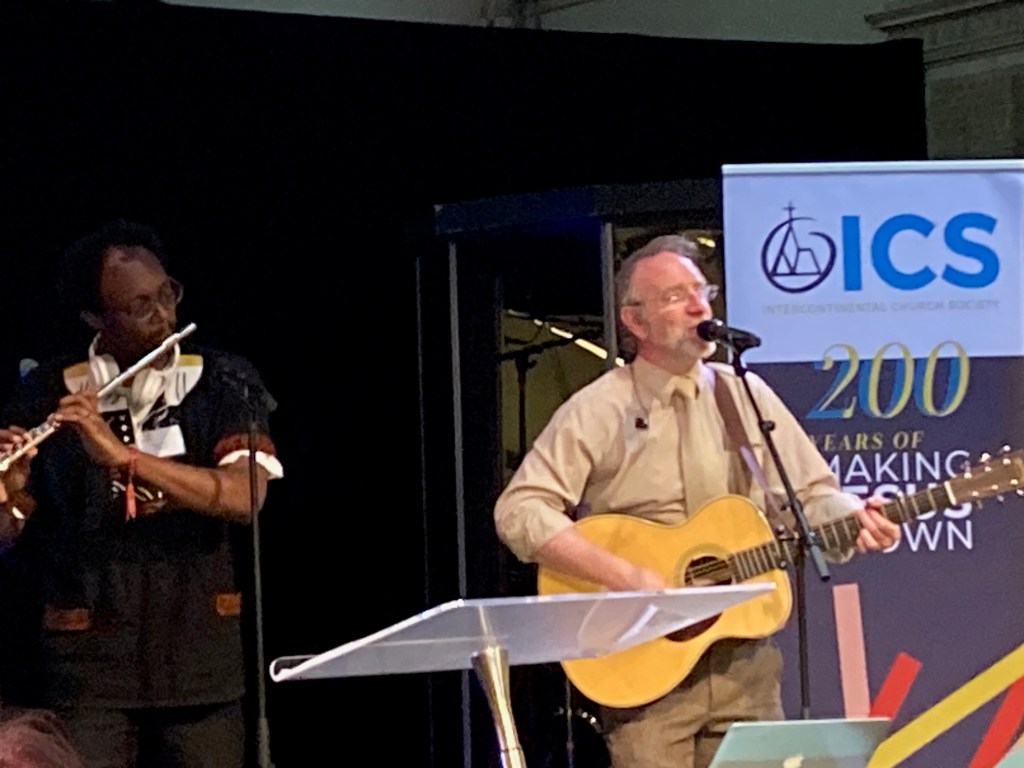
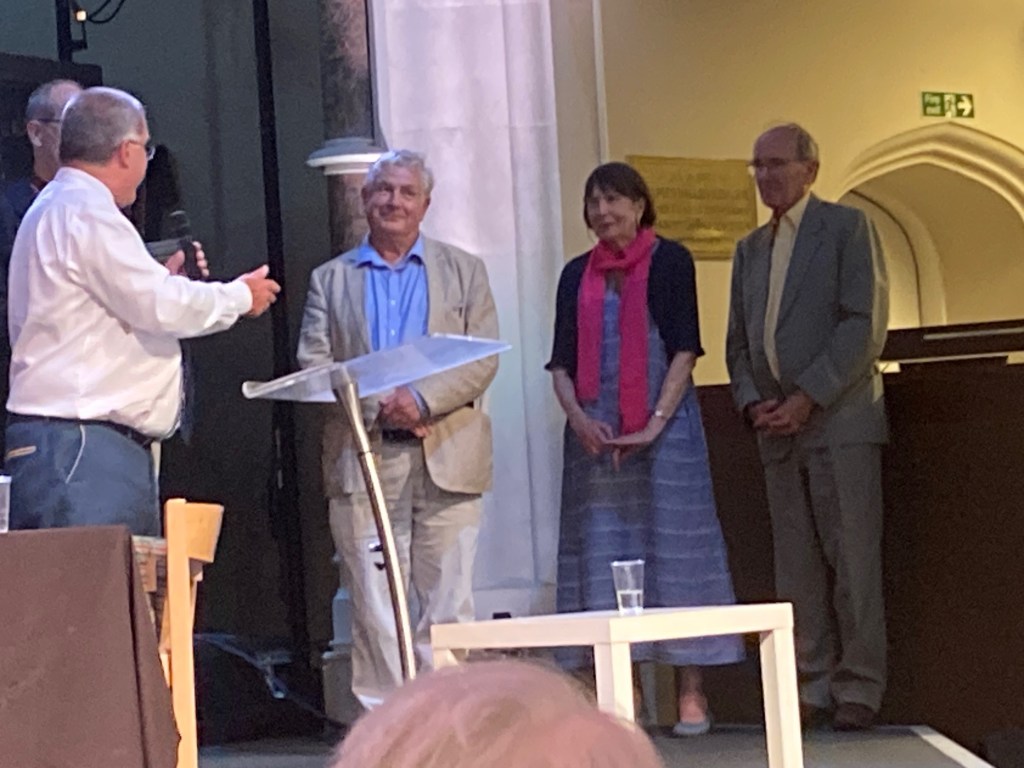
We were warmly welcomed by Richard Bromley. the Mission Director. Worship was led by Andrew Flanagan, accompanied by a wonderfully gifted flautist from Vevey. There was moving testimony from Sarah Jane King, about mission in Switzerland; and from Mimy Gardner, about the work in Leipzig. Bishop Robert Innes, of the Diocese in Europe, spoke about the wide geographical reach of the society; about the fact of its lay leadership; and [I think] about the support it gave to local churches around the diocese. Bishop Richard Jackson, Chair of the ICS Council, recalled the numerous name changes of the past, and emphasised the need for us to be alert to what God is doing and to be prepared to embark on new things. Richard Bromley made reference to the New Work Initiatives being undertaken to mark the anniversary. We prayed the ICS Prayer. And Bishop Robert cut the impressive cake which had survived a fraught journey on the motorway.

There were many old friends. Some of whom I managed to recognise. [I’m bad with faces.] Gary Wilton was there, taking me back to church in Woodstock. Where he as a young Wycliffe ordinand affronted the young fogeys in the congregation by processing in [with Gregory Page-Turner] wearing an outsized L plate. Mike and Helen Parker were two rows behind me. Mike and I were fellow curates under Denis Lennon at St Thomas’s, Glasgow Road. Roy and Joke Ball were at St Marc’s, Grenoble when Joanna was there as a student. The first person that I met outside the church was [Bishop] Henry Scriven, who installed me in Lyon in 2000.  Folli Olokose, a pillar of the congregation in Lyon, is now serving in the Guildford Diocese, a pillar of the ICS council and of General Synod.  David & Angela Marshall and Michael & Lesley Sanders and Martin Reakes-Williams, now in Addis Ababa, were all familiar faces from past ICS conferences. As was John [and Jane] Dinnen, who kindly came to Lyon to lead a church weekend for us. John Wilkinson, a colleague and friend from a post-retirement spell at Holy Trinity, Brussels, was there; as were David & Anne Fieldsend, and Pam Clements, and David White. And a host of others.

I was sorry not to see Madge Olby, an occasionally reader of this blog. Who got a mention from Bishop Robert. And I was sorry not to see John Moore, another occasional reader, who invited us to go to Lyon. Nor Alyson Lamb, a friend and almost a neighbour these days down the road in Berwick. Nor David Healey, whom I see most Sundays anyway at St Peter’s, Lutton Place. He was planning to come, from Moreton in the Marsh, but was a casualty of train delays.

Envoi

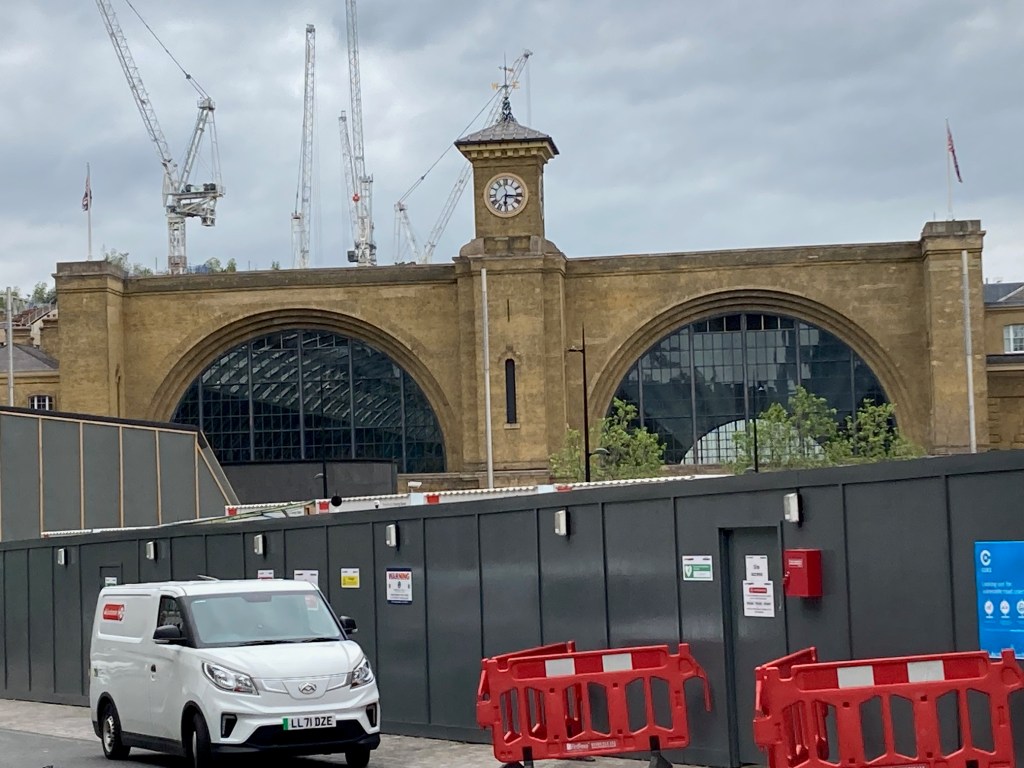
When it ended I took the tube up to Holborn. And had a sentimental stroll through Bloomsbury, taking in Museum Street where I worked for eighteen months in the early 1970s. George Allen and Unwin are long gone, and the street is now dominated by pavement cafes. I sat drinking iced coffee, looking at The Museum Tavern, which is now called something else. And then made my way via Red Lion Square to Kings Cross for the train home. Where I had a long conversation with a Chinese student doing a PhD in Cryptography. He thought there might be a democracy deficit these days in China. Wasn’t sure if there was an Opposition. But poured scorn on the idea that the Confucius Institute may be spying on the activities of Chinese students in the UK. And so to Edinburgh where it was raining heavily.

I was sorry to have missed Dolly Parton.

June 2023
Through a glass darkly – 103

Anniversary

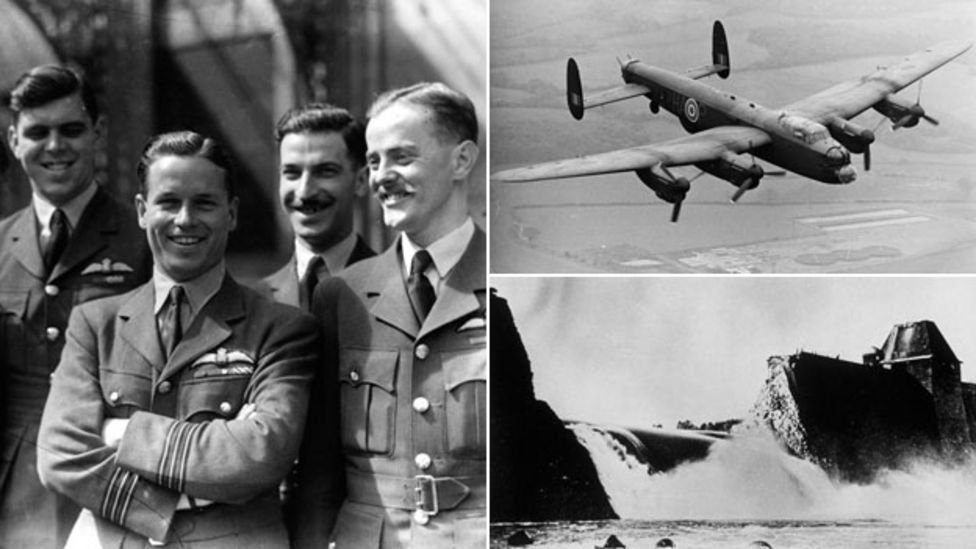
Last month, May 17th, was the 70th anniversary of the Dambusters, the celebrated raid on the German dams in May 1943. To mark the occasions hundreds of people gathered to watch a Lancaster bomber fly over Derwent reservoir, in Derbyshire’s Hope valley, one of the sites used by 617 squadron to practise for this top secret mission. Later in the day there was a second fly-past and a sunset ceremony at RAF Scampton in Lincolnshire, the station from which the nineteen Lancasters took off on their daring mission. Only three of the original squadron personnel are still alive. Les Munro, aged 94, and George ‘Johnny’ Johnson, aged 91, both attended the ceremony. Squadron Leader Munro had travelled from his home in New Zealand to be there.

The Dambusters

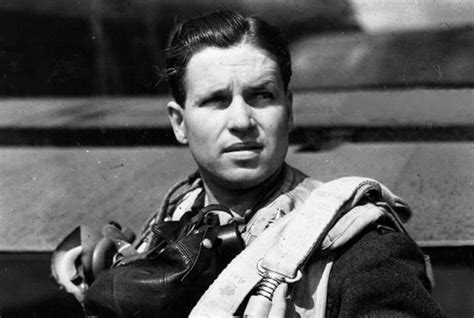
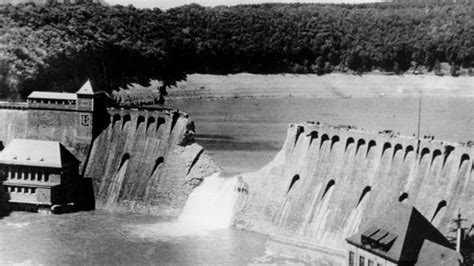
The Dams Raid of May 1943 was a celebrated operation. It was a positive demonstration of progress that Bomber Command had made since the beginning of the war. It was carried out by 617 squadron, which had been formed specially for this raid in March under the leadership of Wing Commander Guy Gibson, one of the leading figures in Bomber Command. The main targets were the Möhne, Eder and Sorpe dams, which were the main sources of water for the Ruhr valley, twenty miles away. And thought to be of crucial importance to German industry. The dams were attacked with bouncing bombs, which had been designed by Barnes Wallis, the scientist who had invented the geodetic technique used in the Wellington bomber. In order to be effective the bombs had to be released at the precise height of sixty feet above the ground. This was dangerously low level flying, at night, over water, for a heavy bomber. 

Two of the dams were breached. The destruction of the Mohne dam caused widespread flooding and disruption of railways, roads, and canals; and significantly reduced the electricity supply to the Ruhr. The destruction of the Eder dam caused considerable damage to houses, bridges, and waterways in the Kassel area. But eight of the nineteen aircraft that had been dispatched were lost and fifty-three crew members were killed.

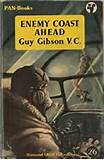
Like many schoolboys in the 1950s I knew all this stuff. The first ‘grown-up’ book I ever read was Guy Gibson’s Enemy Coast Ahead. The book, which was published posthumously in 1946, is a remarkable account of Gibson’s life in Bomber Command; of aircrew living dangerously, and dying, as they sought our their targets in the dark skies over Nazi Germany. Gibson was a great survivor; decorated with a DFC and Bar and a DSO and Bar, he won the Victoria Cross for his leadership of the Dams Raid. Arthur ‘Bomber’ Harris wrote in the introduction “If there ever is a Valhalla, Guy Gibson and his band of pilots will be found there at all the parties, seated far above the salt.”

The myth was given further traction by the making of the 1955 epic war film The Dam Busters, based on the books by Gibson and by Paul Brickhill. The film was warmly received and became the most popular motion picture at British cinemas in 1955. In 1999 the film was voted the 68th greatest British film of the 20th century. [The film supposedly provided the inspiration for the Death Star trench run in Star Wars.]  It starred Richard Todd as Guy Gibson and Michael Redgrave as Barnes Wallis. [Richard Todd incidentally entered Sandhurst in 1939, was commissioned in the King’s Own Yorkshire Light Infantry, and later joined the 7th Parachute Battalion with whom he dropped into Normandy on D-Day. He was involved in capturing the Pegasus Bridge.] Barnes Wallis, a gentle scientist, was very upset by the loss of life on the Dams Raid, and used the money he was awarded after the war to create an RAF Foundation at Christ’s Hospital. I saw a lot of him at CH in the 1950s, when he was a school governor; and when he was present at lunch parade, the band often played Eric Coates’ Dambusters March.

Operation Chastise

Now that the public library in Fountainhall Road has reopened [it was a COVID testing centre for two years], I took the opportunity to read Max Hasting’s 2019 book Chastise: The Dambusters Story 1943. Hastings is a prolific British journalist and military historian, who has edited both the Daily Telegraph and the Evening Standard. [His father MacDonald Hastings was a regular writer for the Eagle comic, also part of my reading in the 1950s.] He is the author of some thirty books, mainly on military history which get longer as he gets older. I found Chastise mercifully short, and for me it is his best book since Bomber Command written some thirty years ago.

Chastise is a more complicated story than the Paul Brickhill  myth. Hastings looks at the chosen targets, suggesting that the Sorpe Dam should have been a priority rather than the Eder. But acknowledging that it was a differently constructed dam which required a different approach. He contrasts Harris’s scepticism about Wallis’s bouncing bomb and about the whole project with his willingness to soak up the credit for it when the raid became a well-publicised [partial] success. He notes that just over half of those killed in the floods were prisoners of war and forced labourers, French, Belgian, Dutch, and Ukrainian. And he poses the question: Why was there no attempt to follow up the raid. No  similar high-precision, low-level raids were attempted. [Harris was fiercely crucial of ‘panacea merchants’; preferring to rely on the crude, sledge-hammer approach of ‘area bombing’. About which serious ethical questions remain.] And no attempt was ever made to bomb the reconstruction work on the dams which began immediately. The Germans certainly rose to the challenge: the dams, which had taken five years to build, were repaired by armies of forced labourers working around the clock in just five months.

Guy Gibson

Hastings also explores the story of Gibson himself. Here he leans [I think] on the 1995 biography by Richard Morris: Guy Gibson: the story of one of Britain’s most celebrated wartime pilots. A book of which I recently tracked down a copy.

Morris offers us a more nuanced picture of the man behind the legend. He notes that Gibson showed little sign of early promise. Although Sir Ralph Cochrane later wrote that Gibson was ‘the kind of boy who would have been head prefect in any school’ , Morris explains that he had a pretty undistinguished time at St Edward’s in Oxford. “He was second XV material and a lance-corporal in the OTC, moderately able, tenacious, but never getting to the top of anything.” After school he applied for a short-term commission in the RAF, and was at first turned down. Possibly because his legs were too short !  Subsequently he learned to fly at Netheravon Flying School, was neither a natural nor an outstanding pilot, but in 1937, aged 19, was commissioned as a Pilot Officer and posted to 83 [Bomber Squadron] at Turnhouse, outside Edinburgh. 

When war broke out Gibson took part in the abortive attack on German warships at Wilhelmshaven. Nine Hampdens from 83 squadron took off in bad weather,  failed to find the target, and returned in the dark. Their experience of night flying was negligible, but miraculously all survived. During the following years Gibson survived an enormous number of operations, initially flying Hampdens, and then Beaufighters during an unhappy eighteen months in Fighter Command.  When Sir Arthur Harris took over as C-inC of Bomber Command in February 1942, he immediately recalled Gibson to command 106 squadron. Flying Avro Manchesters, and then Lancasters.

It was Harris who summoned Gibson a year later to head up the newly created 617 squadron and to lead the Dams Raid. Gibson was a veteran, a survivor, and a known name in Bomber Command.  In January 1943, on a sortie to Berlin, Gibson had taken a young radio-journalist,  Richard Dimbleby, with him as a passenger. The subsequent broadcast was a triumph. But Gibson seems to have had few close friends. His parents had split up. His mother turned to alcohol and died tragically in an accident shortly before the raid. He had contracted a loveless marriage to Eve, a dancer a few years older than himself. Morris interviews his ‘lost love’ in the WAAF, with whom Gibson had an unconsummated, unscheduled, Brief Encounter type relationship. His main companion and source of emotional support seems to have been his dog, a black labrador called Nigger. [I can’t remember if they changed the name in the film. They would now.]

After the raid, Gibson became a celebrity and ‘a professional hero’. He was feted by Harris and adopted by Churchill, who took him on a propaganda tour of North America, ‘all alcohol and endless adulation’. As one of Churchill’s ‘young men’, and with the enthusiastic support of William Garfield Weston, Gibson was adopted as Conservative party candidate for Macclesfield. But Gibson pined for operational flying, and once the book that became Enemy Coast Ahead was completed the RAF didn’t know what to do with him.

In June 1944 Gibson became Base Air Officer at Coningsby in Lincolnshire. Both the squadrons he had commanded, 106 and 617, where part of this group. His arrival there was a bit ostentatious and he was not universally welcomed. On his first visit to the 627 squadron mess, he was ritually debagged before being invited back for a beer. Gibson fretted that the war would be over before he could resume flying. On September 19/20th, 1944, Gibson flew as Controller and Master Bomber on a raid to Mönchengladbach and Rheydt. It is not clear who authorised this. He was flying an unfamiliar Mosquito with Squadron-Leader James Warwick as his navigator. They were both killed when the aircraft flew into a hill in southern Holland on the return leg. [As a child I found this  bald statement unconvincing.] Morris investigates the reports in great detail. But it is still not clear exactly what happened. Gibson was twenty six years old.

Different people saw Gibson differently. He made little attempt to build relationships with non-commissioned men who served under him. He was unpopular with other ranks who saw him as a martinet. [The same accusation is made against Douglas Bader.] And he wasn’t that popular with his fellow pilots. One called him “a bumptious bastard”.  But to one of his patrons he was “the charming boy, just like [I wish] my own son”. As Noble Frankland writes, he was an inspiration to thousands of men who served in Bomber Command. His unparalleled record of ops made him a legend in his own lifetime. Many airmen didn’t want to believe that he was dead. Richard Morris’s book is a careful nuanced portrait of the man. He doesn’t seem any less brave or admirable. But he emerges from the book as more complicated, more human – and a more interesting man.

June 2023

Through a glass darkly – 102

Back to Normandy

We went back to Normandy with the children and grand-children for the half-term holiday. Last year we had a house in Montebourg, on the eastern side of the Cotentin peninsula, a town much knocked about by fighting in 1944. This year we were at Carteret on the west coast of the peninsula. 

Brittany Ferries were heavily booked at half-term weekend, so Susie and I were forced to go a day early We spent Thursday night at the Queen Mary Inn in Poole, a pretty basic room in a pretty basic pub. Its saving grace, for one of us at least, was that it was showing Manchester United v. Chelsea on a very big screen in the bar. We had to leave the pub before breakfast began, so we were able to treat ourselves to breakfast on the boat  as it eased out past Brownsea Island. This is the birthplace of the Boy Scout movement. [I was a boy scout in the far-off 1950s.] Many years ago I remember Willy Rushton doing a wickedly funny sketch on TW3 as Baden-Powell outlining his plans for the scouting movement to a bunch of open-mouthed fellow army officers. 

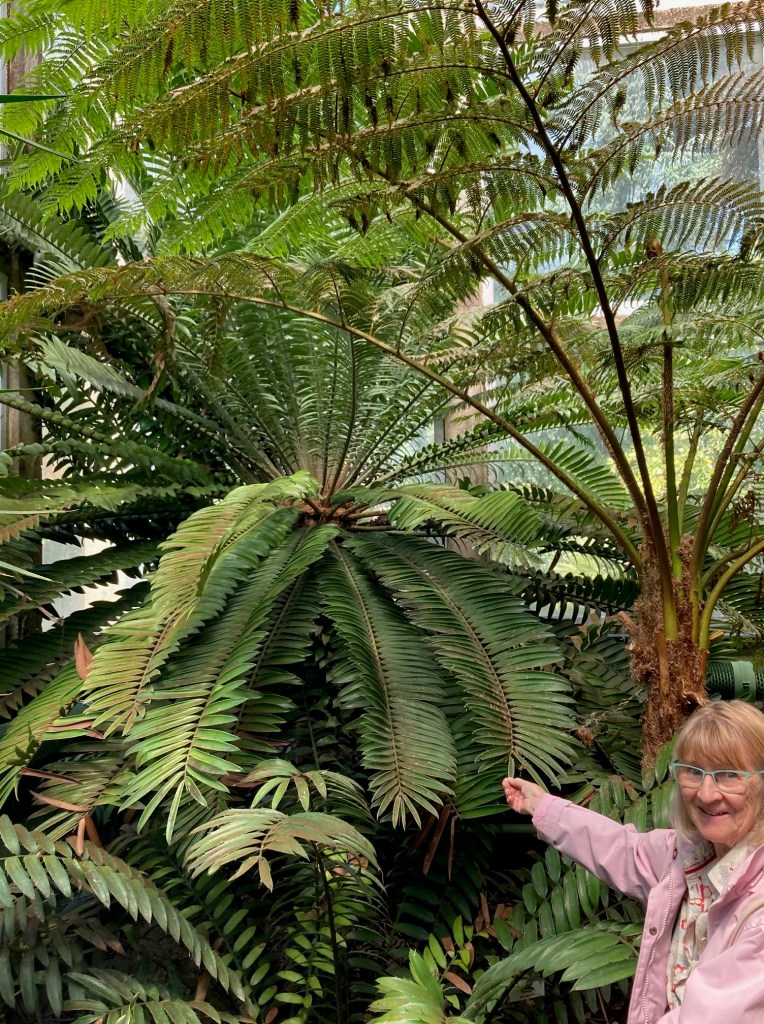
On Saturday morning Susie and I discovered the small but delightful Jardin de la Roche-Fauconnière, also known as the Jardin Favier, in Cherbourg.  This is a park of some 7 hectares, not far from the city centre, created in the 1870s by the Favier family. It contains some 4,000 trees and plants, many from Latin America, in the garden of what was in origin the family home. In one of the hothouses we found an encephalartos [tree], a South African bread palm. According to the plaque these rare trees have existed since the time of the dinosaurs, a nugget to pass on to the grandchildren.

Carteret

Carteret, strictly Barneville-Carteret as the two towns lying astride the Gerfleur estuary are a single commune, is a small holiday resort with vast beaches, one of which is backed by an iconic row of beach huts.  The tide goes out a long way. Our rented house had 5 bedrooms and 3 bathrooms, and was a few minutes walk from the shops. The large, mature garden contained sufficient sun-beds for the adults and a big trampoline which was a major attraction for the children. Oskar perfected his backward flip through constant practice.

Carteret is mainly detached holiday homes with a small row of shops, two or three restaurants, and a disused railway station now converted into a food market. The bakery will close at the end of this month if they don’t find two bakers.  The Chapelle St-Louis is a 14th century foundation which served as the parish church until the early 20th century. More recently the Eglise Protestante Unie have held services there. It would be a good venue for ICS summer chaplaincies.

The day after we arrived, Pentecost Sunday, was Amelia’s 12th birthday. In the absence of chocolate cake we made do with an enormous strawberry tart.

The sun shone and the wind blew all the week. We didn’t stray far. One day the family went to the market at Portbail, the resort where my school-friend Clive holidayed for many years. Supposedly he and Ev spent a month each year running on the dunes and eating plateaux de fruits-de-mer. But I can’t imagine that Ev ever did much running. I walked over the footbridge and through the fields to Lindbergh-Plage, named for the pioneer aviator who either landed on or took off from the beach. It looks as if some would-be entrepreneur tried to develop the place between the wars. And  failed. There is no cafe, no shop, no bar.

We ate out one day at one of my favourite places,  l’Auberge de l’Ouve. It is a stone inn screened by mature trees overlooking the slow flowing river Ouve. A hen-harrier [according to Jem] glides across the marsh. The place was closed for several years, but has now re-opened under a local French owner with a Thai wife. There is a limited choice: Susie and I both had effiloché de porc, pulled pork wrapped in breadcrumbs with creamed lentils and a rich jus; Anna had fish; Jem and Craig both had steaks. We drank local cider. The tarte tatin was finished. Dommage ! But the thing with red berries and the deconstructed lemon meringue pie were both good.

Did we miss Joanna ? Yes, of course we did. Every day. And especially in the mornings. And again at Barfleur where was had lunch in a crèperie on the last Saturday before catching the boat. That afternoon the wind died down at last; and the week ended with a smooth crossing with an impressive fiery sunset.

The wider world

Silvio Berlusconi has died. Which leaves the world a better place. [That would be true of many other politicians too. Whom I won’t name.] And Boris is quitting the House of Commons; hopefully for good. Having [we assume] been found guilty of deliberately, or  at least recklessly, misleading the House over parties in Downing Street during lockdown. Like Trump, Boris is a serial adulterer and a serial liar. He seems to believe that the rules that are made for other people don’t apply to him. And that something is true simply because he has said it. The so-called resignation honours list is a further stain on the reputation of public life in this country, with the despicable Rees-Mogg snd all Boris’s Partygate henchmen being rewarded. An honour for Boris’s hairdresser is beyond parody ! It’s not clear who blocked a knighthood for Boris’s Dad and a peerage for the infatuated Mad Nad, but we should be grateful to them. 

Of more consequence in the long run may be the breaching of the dam in Ukraine. Which promises to harm agriculture and food production in that country for many years to come. As the months roll by, it becomes increasingly difficult to pray with real expectation for peace and justice in Ukraine in the forseeable future.

PS 

I got my hair cut yesterday along the road, and had a long conversation with Cyrus, the Iranian, who owns the barber’s. The conversation turned to sex education in schools and the SNP’s ‘flagship’ policy of encouraging gender self-identification. [Gender issues is probably the area where I find myself most open-mouthedly at sea in terms of the current debates.] Cyrus, a Muslim, probably non-practising,  told me that he sends his two children aged 12 and 8 to a Roman Catholic school in order to escape the teaching about sex and relationships in state schools, Often enough franchised out to groups like Stonewall.

Just reporting !

June 2023
Through a glass darkly – from the beginning

This is a list of blogs posted since starting out in March 2020, at the start of lockdown.

It is more for my benefit than anyone else’s; in case I start to write the same thing again. {Elderly vicars have been known to repeat themselves !]

NB  The first five blogs were not numbered.

[00] Getting Started;  Retired vicar [b]logs on March 2020

[00] Gratitude and Desert Places March 2020

[1] Peter Frankopan: The Silk Roads March 2020

[2] Walking round Arthur’s Seat, Edinburgh March 2020

[3] Turkey; and some books on Turkey April 2020

4 Easter reflexions; Denise Inge: A Tour of Bones Easter Saturday 2020

5 Bouquets and Brickbats in Lock-Down April 2020

6 Tim Keller: Walking with God through Pain & Suffering May 2020

7 Spotlight on dark happenings; Clerical abuse May 2020

8 The missing centuries; the later Middle Ages May 2020

9 Postcards from Normandy May 2020

10 Life in lock-down; Worrying things June 2020

11 Marion Lochhead: The Episcopal Church in Scotland June 2020

12 Jûrgen Moltmann: Theology of Hope July 2020

13 Venice; and Donna Leon’s Venice July 2020

14 Out to lunch: a wish list in lock-down July 2020

15 Being Seventy Five July 2020

16 Albert Camus: The Plague [La Peste] July 2020

17 E.L.Woodward: History of England July 2020

18 John le Carré August 2020

19 Blustering Boris August 2020

20 Theodore Zeldin: France, 1848-1945 August 2020

21 Going North: looking back at 1974 September 2020

22 Alistair Horne: The Fall of Paris: Siege & Commune September 2020

23 Going North: to Inverness and Sutherland September 2020

24 Why do so many evangelicals vote for Trump ? October 2020

25 Gordon Ogilvie, RIP October 2020

26 David Smith: Stumbling towards Zion October 2020

27 The smell of corruption October 2020

28 General Edward Spears: The Fall of France November 2020

29 Preachers: Colin Bennetts; Denis Lennon November 2020

30 Bruce Clark: Twice a Stranger November 2020

31 Marina Warner: The cult of the Virgin Mary December 2020

32 Mountains; Eric Shipton and Bill Tilman December 2020

33 Philip Jenkins: The lost history of Christianity December 2020

34 Looking Forward, Looking Back January 2021

35 Lamin Sanneh: Whose religion is Christianity ? January 2021

36 James Joll: The Second International January 2021

37 Fifty Years Ago: Pergamon Press and Robert Maxwell January 2021

38 James Joll: The Anarchists February 2021

39 Mike Davis: Planet of Slums February 2021

40 David Abulafia: The Mediterranean February 2021

41 Working for George Allen and Unwin February 2021

42 Home front; Brexit; Levelling up March 2021

43 The Silver Jubilee of King George V March 2021

44 Jürgen Moltmann: The Crucified God March 2021

45 The Christmas Truce 1914 March 2021

46 The Water of Leith April 2021

47 Hans Küng: On being a Christian April 2021

48 Opening Up; out and about from Edinburgh April 2021

49 The great all-rounder – C.B. Fry May 2021

50 The business of safeguarding May 2021

51 Letter from Leurbost; Hans Kung: Why Priests ? June 2021

52 Hebridean Diary June 2021

53 Boris is off; Per Lagerkvist: Barabbas July 2021

54 Abroad; to France in 1961 August 2021

55 Home in Edinburgh; a walk round Loch Leven August 2021

56 Herbert McCabe: Love, Law, and language September 2021

57 Monasteries and Retreat Houses September 2021

58 Sticky wicket in Yorkshire; Owen Paterson, MP December 2021

59 Opening Up; visiting family; Maredsous 2021 December 2021

60 Kiev December 2021

61 Kiev Calling – 2 December 2021

62 Snow comes to Kyiv Christmas Day 2021

63 Christmas in Kyiv January 2022

64 Three days in Lviv January 2022

65 Old St Paul’s; John Cornwell: Seminary Boy January 2022

66 The Searchers February 2022

67 Paul Fussell: The Boys’ Crusade February 2022

68 Anne Applebaum: Red Famine March 2022

69 Walking with Alpacas March 2022

70 Robert MacFarlane: The Old Ways April 2022

71 Richard Holloway April 2022

72 Passion Week; Palm Sunday April 2022

73 Timothy Snyder: Bloodlands April 2022

74 A gloomy few months; Keeping Mum May 2022

75 Family matters; Peter’s funeral May 2022

76 Montebourg; a Normandy holiday June 2022

77 Up the West Coast July 2022

78 Swimming; writers and swimming pools July 2022

79 The Vercors July 2022

80 State of the Nation; Sunak v. Truss August 2022

81 Salut de Chantilly; More bad news September 2022

82 A mini-break in Laon; the Chemin des Dames September 2022

83 East Street, West Street; Silverview October 2022

84 The Briefing; Sid Fox, Bomber Pilot October 2022

85 Joanna McDonald November 2022

86 Maredsous; Remembering the future December 2022

87 A day out in Paris December 2022

88 In-between times;  marking time in Bucks and Oxon January 2023

89 Don McCullin January 2023

90 Joanna McDonald:  funeral address February 2023

91 A day out in Amiens February 2023

92 Coming home; A day out in Berwick February 2023

93 A walk along the Western Way March 2023

94 In black and white  Jesse Owen and Joe Louis April 2023

95 Passion Week;  Ich habe angst Maundy Thursday 2023

96 Ankara April 2023

97 Anitkabir; Election time in Turkey April 2023

98 A day out in Konya April 2023

99 Hitching to Istanbul; the summer of ’64 April 2023

100 Back to Istanbul; Orhan Pamuk’s Istanbul May 2023

Through a glass darkly – 101

Confession

Confession is said to be good for the soul. So I must start by confessing that, although Susie and I lived in the 14ème arrondissement in Paris back in the 1970s, I never visited the Musée de la Libération at Denfert-Rochereau. And, more reprehensibly, although Susie and I later lived in Lyon for thirteen years, I never, ever visited Place Castellane up in Caluire. It was here, on the corner of the square, in a house belonging to Dr Frédèric Dugoujon, that ‘Max’ was arrested in June 1943. ‘Max’ was of the cover names of Jean Moulin, a Prefet suspended on half-pay by the Vichy government, who had been named by General de Gaulle as the political head of the Resistance. The circumstances of his arrest are enigmatic. Who was it that betrayed him to the Gestapo ? At the time of his arrest Jean Moulin was a little known figure. But for complex reasons he has been retrospectively anointed as France’s greatest hero of the Second World War.

I have been reading Army of the Night by Patrick Marnham, a gripping and detailed account of the life of Jean Moulin. Marnham himself has a CV of which I am mildly envious: after Oxford he became a reporter on Private Eye, wrote for a variety of newspapers including The Times, and The Guardian, became literary editor of The Spectator, and was the first Paris correspondent of The Independent. He now lives [in retirement] in Woodstock, in Oxfordshire. Where we lived in the 1980s.

The making of Jean Moulin

Moulin was born in 1898, in the very dull town of Beziers, in the south of France. His father, Antonin, was a republican, anti-clerical schoolmaster, who taught French history and literature in the same classroom for fifty years. The young Jean was a rebellious student, but in 1921 took a law degree at Montpellier. He promptly joined the corps préfectoral, and rose swiftly through the ranks becoming in 1925, at the age of twenty-six, the youngest sub-prefect in France, at Albertville in Savoy. The following year he married Marguerite Cerruti, a professional singer from Paris, described by his sister Laure as “pretty but a bit fat”. The marriage lasted a little over a year. In January 1930 Moulin was transferred to Chateaulin in Brittany. It was a dull posting from which he was rescued in 1933 by Pierre Cot, the dynamic and ambitious young government minister. Cot was an excellent public speaker who valued Moulin’s administrative skill and application. Aged thirty-four, Moulin was a successful young administrator, a divorcé with a crowded social life; notionally neutral in party political terms, but anti-monarchist, anti-clerical, and probably a freemason. For the remainder of the 1930s, the careers of Pierre Cot and Jean Moulin ebbed and flowed as successive French governments came and went. In March 1937, at the height of the Spanish Civil War, Moulin was nominated Prefect of the Aveyron, becoming at thirty-seven the youngest prefect in France.

In September 1939, with the signing of the Nazi Soviet Pact, all the hopes of Moulin and Pierre Cot, and of the anti-fascist Front Populaire collapsed. When the Germans invaded France in the summer of 1940, Jean Moulin was behind his desk in Chartres, to where he had transferred the previous year. It was not a promotion, but it was an advantage to be much closer to Paris

The War

In June 1940 Moulin ignored an order to abandon Chartres. When the city was surrendered to the Germans, he was arrested and beaten up for refusing to sign a document that incriminated French troops. He decided he could take no more beatings and cut his throat with a piece of broken glass. But he was rescued by a guard and the wound slowly healed. Was it a suicide bid ? Or an attempt to engineer an escape ? Marnham is happy to sit on the fence on this question.

In November 1940 Moulin was relieved of his post and began to build a new life. He returned to St. Andiol, the family home, in unoccupied France, and busied himself with his two mistresses and with opening an art gallery. It is perhaps surprising that over the coming months Moulin made very little attempt to associate himself with the growing movements of Resistance in the Vichy zone. He lived quietly as Joseph Mercier, holder of a false passport and a false exit permit, for almost a year. And then in September 1941 he left to travel via Spain and Portugal to London. It was only the third time in his life that Jean Moulin had left France. Ski trips to the Tyrol and a weekend in London were his only previous trips abroad. In London he threw in his lot with the head of the Free French, Brigadier-General Charles de Gaulle; a man nine years older than Moulin, but whose rank in the republican hierarchy was inferior [a Prefet counts in rank as a Major-General]. De Gaulle was impressed by Moulin’s rank and by his experience; in 1941 de Gaulle was dangerously isolated and many well qualified French exiles [such as Jean Monet and Raymond Aron] had turned their backs on him

The arrest of Jean Moulin

In January 1942 Moulin was parachuted back into France. Armed with a document from de Gaulle giving him plenipotentiary powers, his task was to unite the disparate strands of the French resistance. His only assets were money [which the resisters needed urgently] and regular liaison with London. There now began a year-long struggle between Moulin and the three principal leaders of the southern resistance groups, Henri Frenay of Combat, Emmanuel d’Astier de la Vigerie of  Libération, and Jean-Pierre Levy of Francs-Tireur. For the last year of his life, Moulin sought to unite and direct their competing interests and explosive personalities, while being pursued by both Vichy and the Gestapo. His mission was both to dissolve the Resistance as it existed in January 1942, and to remould it as an instrument to serve de Gaulle’s project for the liberation of France.

By June 1943 it seems that Jean Moulin had reached the end of his strength. He habitually wore dark glasses, hardly a disguise, a brown trilby, and a scarf to hide the distinctive scar on his throat. By now he was heartily disliked by many resisters in France; seen by some as the agent of a potential Gaullist military dictatorship, by others as a crypto-communist .On June 9th General Delestraint, named as military commander of the Secret Army, was arrested in Paris. On June 21st, Moulin now code-named ‘Max’ was arrested with six other Resistance leaders at the house of Dr Dugoujon in Caluire. One of the seven René Hardy of Combat escaped from custody. [After the war Hardy was twice tried on suspicion of betraying Jean Moulin, and was twice acquitted.] All those who were arrested were interrogated and beaten up in custody. Nobody knows when and where, and how, Jean Moulin died. He was last seen alive in France in June. But his dead body was formally identified in Germany, in Frankfurt, two weeks later. It is widely believed that, having refused to talk to his captors, he was beaten into a coma on the orders of the senior Gestapo officer in Lyon, Klaus Barbie. [Subsequently protected by none other than François Mitterand.] And that he died a hero. 

The resurrection of Jean Moulin

In December 1964 the ashes of Jean Moulin were transferred to the Panthéon, the resting place of heroes of the Republic. [And a symbol of republican anti-clericalism.] The move was proposed by the socialist parliamentary opposition, who wanted to underline on the twentieth anniversary of Moulin’s death, under the presidency of Charles de Gaulle, that the left had played an important part in the Resistance. But de Gaulle himself adroitly postponed the ceremony until the twentieth anniversary of the liberation; and, taking his place centre-stage in military uniform. demonstrated his own role as the living embodiment of wartime victory. While enjoying left-wing  support.

Tribute to Moulin was paid by the writer and politician André Malraux. “Crouched over the microphone with wild eyes and a beaky nose”, writes Marnham, “he resembled an elderly vulture”. In a powerful address, Malraux evoked the spirit of what the Resistance [wanted to believe it] had been. “Think of his poor battered face, of those lips which never spoke. That day, his last day, it was the face of France.” It didn’t seem to matter that the coffin was virtually empty. And that Moulin’s body had never been found. Jean Moulin was resurrected from wartime obscurity and became, through Malraux’s oratory, the personification of the Resistance, and the Resistance became the emblem of the whole of France.

It’s a good story. And a good book.

Envoi

We are two weeks back from Ankara. We enjoyed being there, and were warmly greeted by the small but welcoming congregation. On our final Sunday in Lyon, Susie and I were pleased to attend the Coronation Garden Party at the British Embassy. And I had the privilege of being one of the judges of the Scone Baking competition. Something for which theological college never prepared  me. 

Since we have been home we have attended three church fund-raising events: first, St Peter’s [Lutton Place] summer fete last weekend; followed by a garden opening in Murrayfield in support of St Salvador’s, Stenhouse, with music from No Strings Attached, Susie’s band; and then a coffee morning for Christian Aid at Priestfield yesterday. On Tuesday we go south to High Wycombe and Watlington. From next weekend we shall be in Normandy for a week, at Barneville-Carteret, with the children and grand-children. It will be strange being there without Joanna. But she will be much in our thoughts and in our conversations.

May 2023

Through a glass darkly – 100

Orhan Pamuk’s Istanbul

My accompaniment in Istanbul was reading Orhan Pamuk’s melancholic, but seductive, memoirs of growing up in the city, Istanbul: memories and the city. He was born in 1952, so the dilapidated Ottoman city which he describes is more-or-less the city that I dimly remember. It was a city of maybe half a million inhabitants, living surrounded by reminders of past imperial glory; everything now broken, worn out, and past its prime. Pamuk writes evocatively of men returning home under street lights carrying plastic bags; of the old Bosphorus ferries moored by deserted stations in the middle of winter; of house facades discoloured by dirt, rust, and soot; of broken seesaws in empty parks; of ships’ horns booming through the fog; of city walls in ruins since the fall of the Byzantine Empire. He writes of seagulls perched on rusty barges caked with moss and mussels; walls covered with frayed and blackened posters; tired old dolmusses, 1950s Chevrolets that would be museum pieces in any Western city, but which here huff and puff up dirty thoroughfares; buses crammed with passengers for the mosques; little children in the street trying to sell a single packet of tissues to passers-by; underpasses and overpasses at crowded intersections where every step is broken in a different way; the man who has been selling postcards in he same spot in the city for forty years. And the packs of dogs, commented on by every Western visitor in the 19th century. [Word is that some of these dogs are now in the habit of taking the metro.]

Hüzün, which apparently has an Arabic root,is the Turkish word for melancholy. Orhan Pamuk insists that hüzün is the key to understanding the city of Istanbul and its inhabitants. He writes of his family, who all lived in the same apartment block: his father, who frequently disappeared on unexplained trips to faraway places; his mother, who embraced her children warmly but was much given to issuing detailed instructions, about what to say and how to behave; his grandmother, who spent half the day in bed and never made herself up, but who had positioned the dressing-table mirror to give her sight of the long corridor, the servants’ quarter, the sitting room, and the windows that gave onto the street; and assorted aunts and uncles who took it in turns to fall out with each other. As he recreates the city of his childhood he evokes four lonely melancholic writers whom he never met. Their common theme was the decline and fall of the great empire into which they had been born; and their great strength, he asserts, was their exploration of the tensions between the past and the present, or between what Westerners like to call the East and the West.

Pamuk, writing in 2008, never left the city of his childhood. And when the book was written he was living fifty years on back in the Pamuk Apartments in which he grew up.

I tell myself that this the city that I first encountered in 1964. It was certainly run down. In those days there was only one bridge, the old Galata bridge across the Golden Horn, which burned down decades ago. [There are now at least four bridges across the Golden Horn and three huge bridges across the Bosphorus.] Noisy trams rattled around the city then, but I chose to walk everywhere. For reasons of economy. I went barefoot part of the time. A sure sign of juvenile madness.

 I visited Hagia [Sancta] Sophia, and the Blue Mosque, and the Topkapi Palace. And I don’t recall any queues or admission prices at any of these tourist attractions. In between I sat and drank glasses of tea in a cafe near the youth hostel. And swopped stories with other travellers and hitch-hikers. Including a trio of students from Edinburgh Art College, whom I later met again in Venice. And with whom I went to camp at Ravenna. To look at the mosaics.

Forty eight hours in Istanbul

It wasn’t like that last week. We went down from Ankara on the very comfortable high-speed train. And stayed in a very comfortable [and budget=breaking] four star hotel in Sultanahmet, the old part of town. The great attraction of the hotel is an amazing buffet breakfast on the sixth floor with magnificent views across the Golden Horn towards the Galata Tower. I think the youth hostel was once there, but there is no sign of it now. The whole area is full of hotels and restaurants. Many with ‘greeters’ on the pavement outside to drum up business. The ‘art shop’ adjacent to the hotel had a novel pitch: ‘Come into my shop and spend some money on something you don’t want !

The population of the city now is said to be around 17 million. But I’m not sure if anyone really knows. The streets in the centre are jammed with traffic. There are tourist buses, and a lot of yellow taxis,  and a lot of hooting. The day we arrived, May 1st, was a public holiday with crowds of people on the streets and strolling along along by the water of the Golden Horn. And stalls selling simit, [bread rings with sesame seeds], and corn on the cob, and roast chestnuts.

We did what tourists do. We had dinner, lamb and salad, in Güvenç Konyah, a Konya restaurant. We went on an excellent cruise up the Bosphorus, as far as the castle and the second bridge. And paused for coffee at Uskùdar on the Asian shore.. We had dinner in the Tarihi Sultanahmet Köftecisi Seilm Usta, which has been serving meatballs and salad to customers since 1926. But which still doesn’t accept credit cards. We made an early-ish morning visit to the Roman Cistern. Which I had previously only known from a scene in From Russia with Love.

We stopped for tea at Caferaga  Medresesi, a courtyard cafe, a former madrassa turned arts centre, in the shadow of Hagia Sophia. We joined hordes of people to revisit Topkapi Palace. And were disappointed that the wonderfully-sited up-market cafe overlooking the confluence of the Golden Horn and the Bosphorus  has disappeared. [All that remains is a railing with lots of Russians taking photos of themselves.] But in the Court of the Janissaries we had a chance encounter with John and Barbara Drake, who worship at Holy Trinity, Norwich, and who run Boundary Breakers,  an organisation that promotes better Christian-Muslim relations in Jerusalem. 

It was only two days. And it was lively and noisy and hectic and wonderful. But it was tinged with sadness too. Back in 2002, a few months before her wedding, Joanna came here on a Euro-Railing adventure. She and a friend came to visit us in Lyon, and they then trained on to Florence and to Rome. The friend went home, and Joanna continued by boat across to Athens and then up via Thessalonica to Istanbul. I don’t know where she stayed and how she spent her time here. Only that afterwards she flew home with Lauda Airlines to go to [I think] a James Taylor concert in Musselburgh. In a different world we would have rung her up, and enjoyed exchanging e-mails and photos. It’s not exactly Pamuk’s hüzün. But it was a running sadness not to be able to have that contact with her.

May 2023

Through a glass darkly – 99

Back to Istanbul

The summer of ’64 is a long time ago. As long as from the outbreak of the First World War to the Beatles’ first LP ! But now that we are about to go to Istanbul, on a short, three-day visit from Ankara, it seems a good time to recall what I can of my first visit to that captivating city.

For the first half of 1964, after leaving school in December ‘63, I was working at County Hall, the headquarters of the then London County Council. It was a daily commute on the District Line from Southfields, where my parents lived, to Westminster, just across the river Thames. It wasn’t a glamorous job. I worked in EO/GP1, which was mainly concerned with administering the Common Entrance [11 Plus] exam. Outside my County Hall job I was a more-or-less regular member of the Putney Young Socialists, who were campaigning to overthrow the sitting Conservative MP and to elect Hugh Jenkins [not Roy Jenkins] in his place; I listened to my small collection of LPs on my father’s record player; and I went to the cinema a lot with Tina, whom I had met just before Christmas. She was a film enthusiast. And I occasionally looked at my reading list for Oxford, which beckoned the following autumn. But not very seriously, and not for very long !

Some of my CH friends had already set off overseas. John Gregory was working in a bookshop somewhere in the west of France, possibly in Angers. Clive and Howard were first somewhere in Sweden, reportedly lumber-jacking, but then later in Malta. [They were friends; not a gay couple. Both sadly now dead.] Walter was tutoring a distinctly upper-class Italian child in Italy, possibly in Genoa. Ian who had called on Walter in Genoa, most probably in search of a good meal, was now apparently in Rome, finding his way around by asking Catholic priests for directions in Latin. It seemed that the only people left in London were Chang Young and John Mitchell, whom I bumped into at Battersea Fun Fair, where they were working on the ghost train. And me.

Constantinople was the target. It looked a long way, but it was as far as you could travel without needing to take a boat. I had a map in the back of my pocket diary which showed where it was.  If there were any student trains or flights, I wasn’t aware of them. So the answer was hitch-hiking. I had hitched a few times before: down the A4 from my grandparents’ house to London; around Sussex on school half-holidays; and, memorably, to the Mediterranean and back with my brother, Paul, a couple of years before. But this was a more challenging, more ambitious trip. I said good-bye to Mary, whom I’d met at the Putney YS, and bought a Michelin map of Europe, a canvas grip bag, and a single ticket from London Victoria to Calais.

Maybe the journey is always more memorable than the destination ? My first night was in the youth hostel at Dunkerque, where I splashed out on a tomato omelette in a cafe. The next afternoon I met a man by the roadside in Belgium who told me he had seen the German army come across “that field there” twice in his life-time. I spent that night, uncomfortably, in Köln railway station. The next day I was offered a lift to Marienbad in a Ford V-8 Pilot by a Czech who was returning home from London. Briefly I had visions of conversations at Oxford, “Last year in Marienbad …” . But when the Pole ran out of petrol and started to refill the tank from a jerry-can with a lighted cigarette in his mouth, I thought better of it. Fortuitously, there on the hard shoulder, I trod on the toes of a rather nervous Indian, who asked the way to Bombay. I showed him carefully on my map. But he couldn’t read. And so I spent a day travelling with him and his wife and son, and a large cooking pot, down German autobahns. It did cross my mind to stay with them for the whole journey. But I got nervous about the eating arrangements and got out in Munich.

After that it is all fragments. I spent an evening in Munich with a Jewish girl from Canada, all of whose family had died in concentration camps. In Vienna I got drunk in a subterranean wine bar along with an American girl. We extricated ourselves with some difficulty. And rode home to the hostel on her scooter. In Klagenfurt I ventured into a restaurant by myself, and ordered the cheapest thing on the menu, which turned out to be egg mayonnaise. I may have been the only customer. And the staff watched as I ate it very slowly.

From there the road turned south over the Loibl Pass. Had I not then acquired my rampant acrophobia ? Which makes all mountain roads a trial. A Yugoslav family took me from the top of the Pass all the way to Belgrade. We arrived very late at night. They let me sleep in the car and brought me sugar on brown bread and plum brandy for breakfast. A German car picked me up going south from Belgrade. I exhausted my very limited German speaking to the driver until we realised that we were both English. It was my first ever two-day lift. We spent the night in a hotel in Sofia. Back in London the wife of the Bulgarian press attaché had told me, as we walked in Kensington Gardens, that Sofia was a magical town, a sort of cross between Heidelburg and Schwerin. My recollection is that it looked more like a cross between Slough and Livingstone, West Lothian.

As we approached Constantinople things became more foreign. Fewer cars on the road. The Dragoman pass between Yugoslavia and Bulgaria was not tarmac but loose stones. The village markets contained nothing but water melons. Between the villages we passed people in ox carts. The frontier guard at the Bulgarian border carefully inspected my visa upside-down. And he wanted to hold onto my passport. From Edirne [Adrianople] mosques and minarets replaced churches.

My driver took me out to dinner when we arrived, in a restaurant that gave onto the Bosphorus. I have a dim memory of eating stuffed vine-leaves and drinking ouzo. It was too late to find the youth hostel. He rang the bell of a cheap hotel, and the owner ushered me in darkness into a room. When I woke upon the morning I was sharing it with half a dozen Turks and a hundred flies, all competing for space on a naked light bulb.

I think I probably did the usual things in Constantinople, as I continued to call it in my head. I certainly made my way to the Hagia [Sancta] Sophia and to the Blue Mosque and to the Topkapi Palace. And I wandered, a bit lost, in the Grand Bazaar. Without buying anything. Did I spent time with other people ? Perhaps I did, as I re-met people later in the trip when I got to Venice. My long distance driver took me out to dinner again, in the same restaurant. But rich food gave me the runs, always difficult when you are travelling. An educated Turk who claimed to know Arnold Toynbee [I still had some pretensions then as a future historian] took me on a boat trip up the Golden Horn. Did he squeeze my arm over-much ? I think perhaps he did. But most of the time I was on my own. Living in a youth hostel somewhere in the old town, and drinking lots of tea in a local cafe. One day I took a metro train to what had been recommended to me as a local beach. Going barefoot during my time there was, with hindsight, not a very good idea. 

My recollection is that for everyone else in the hostel Constantinople was just a resting place on the way to somewhere else. A young German with whom I spent some time told me about his adventures hitching to and back from Pakistan. Some Australians suggested that I press on through Turkey and Syria to Jerusalem, and then come back round the Mediterranean via North Africa. But I think that I knew I had gone far enough. Had reached my limit. After maybe a week, and after sending the necessary postcards, I packed my bag and headed back towards Italy. I think I thought that I might catch up with Tina in Perugia, where she had been learning Italian.

It’s not much when I write it down. But it was an epic journey for me at the time. Next week, when we return to Istanbul, as I have now learned to call it, it is only four hours down the high-speed line from Ankara, where I am writing this. It will have changed quite a bit. But then so have I …

April 2023

Through a glass darkly – 98

We are halfway through our time here in Ankara. I continue to be amazed by the steepness of the streets and the amazing proliferation of high-rise buildings. To be horrified by the aggression of  many Ankara drivers, who regard traffic lights as merely advisory. And to be delighted by the helpfulness and friendliness of the Turkish people we speak to – in spite of our language difficulties. 

A day out in Konya

According to Acts 14, Paul and Barnabas visited Iconium on the first missionary journey. They spoke in the synagogue there quite powerfully, but were run out of town by Jewish agitators and fled to Lystra and to Derbe. I went to Iconium, now known as Konya, for the day on Monday. There is little trace of Paul and Barnabas, nor is there any visible Christian presence now.

Konya is the sixth biggest city in Turkey. The high-speed line from Ankara makes the journey of 300 kilometres in just under two hours. It is a comfortable, modern train and the single fare [for someone as old as me] is 56 Tl. Which converts to about £2.50. For the return journey the train was almost full, and I paid four times as much for a ‘superior, executive’ seat, the equivalent of a boxed pew in church. Four of us sat behind a frosted glass sliding door, and were served a glass of tea and an acceptable boxed meal by a uniformed attendant. 

 Once you get clear of Ankara, the train speeds across the brown, treeless Anatolian plateau. There is very little grass. No cows. A single flock  of sheep. There are mountains in the distance, but little water and no rivers.. And an anonymous town with a sprinkling of high-rise, concrete blocks. I stared out of the window, dozed a little, and read Eugene Rogan’s The Fall of the Ottomans: The Great War in the Middle East, 1914-1920. Rogan is an American historian, whose great-uncle John McDonald, from near Perth, was killed at Gallipoli in 1915.

Konya has the reputation of being a conservative, Islamic city. It is a place of pilgrimage for the Muslim world, a city that is dear to the hearts of pious Turks. [And not just Muslims and Turks. I am told that Prince Charles on a visit to Ankara was particularly anxious to visit Konya.] For this city was the adopted home of Celaleddin Rumi, the 13th century Islamic prophet,  poet, and mystic. Rumi is also known as the Mevlana [the Master], and as the founder of the Mevlevi sect, better known as the Whirling Dervishes.

Susie and I were here just after Christmas three years ago, and were predisposed to be a bit unsympathetic  because of the closeness of the word dervish to the word devilish. But Rumi’s writings major on the need for humanity to seek God’s love; and encourage us all to use music, poetry, and dance as ways of reaching out to God. “Love is the astrolabe of God’s mysteries”. And the whirling of the dervishes became a ritual form of communal prayer.

I walked from the station past election posters and a large Atatürk banner to what is now called the Mevlana Museum. It is a complex of dignified stone buildings set in a small park close to the centre of town. The original building dates from the 13th century but has been much added to. The main gate leads into a marble-paved courtyard. This courtyard contains seventeen cells for dervishes and an elaborate ablutions fountain. The mausoleum itself contains Rumi’s sarcophagus, covered with a very fine gold-embroidered brocade all set under a fluted turquoise spire. There is an adjacent Ritual Hall, where the community performed their whirling dance, and a small mosque.

Extracts from Rumi’s writings speak of an ascetic, prayerful rule of life. Not unlike, say, an early Cistercian community. The whole complex was filled with visitors, many of the women in Islamic dress, all behaving in a restrained manner. We all donned plastic overshoes to enter the mausoleum. I was glad to be back in Konya. Rumi’s writings and the teaching of the Mevlevi Order offer an attractive alternative to, say, the Wahhabism of Saudi Arabia or the horrors perpetrated by the Taliban in Afghanistan. Things to ponder over a glass of tea and a baklava on my way back to the station. 

Next week – a brief trip to Istanbul …

April 2023

Through a glass darkly – 97

Anitkabir

On Tuesday we went with Elizabeth and with Juanita to Anitkabir, undoubtedly the major tourist attraction in Ankara. Elizabeth is the doyenne of the congregation at St Nicolas, married to a Turkish geologist, and has lived in Ankara since the 1970s. Juanita is a Ghanaian, who trained as a doctor in Kiev, in the Ukraine. but teaches here in a primary school. Anitkabir is the mausoleum of Mustafa Kemal Atatürk, the founder of modern Turkey. Everything is on a gigantic scale.

When Atatürk died in 1938, in Istanbul, his body was brought here and placed in the main hall of the Ethnography Museum. In 1941 a competition was organised to design a fitting memorial, or mausoleum. The Mausoleum sits in a Peace Park of some 750,000 square metres, containing almost 50,000 trees donated by some 25 different countries. Approach to the Mausoleum is via the Road of Lions, a 250 metre pedestrian path flanked by 12 sculpted lions in Hittite style. This path leads into the Ceremonial Square, built to hold some 15,000 people. The Museum comprises some of Atatürk’s belongings – ceremonial daggers and swords, expensive pens, military uniforms, pyjamas and dressing gown [everything except his truss and his tooth-brush]; lively paintings and representations of the major battles of the War of Independence; and an exhibition of some of the major achievements of his presidency. We paused at this point for coffee in what may be the world’s most chaotically organised museum cafe. Presided over by two charmless young women.

The culmination of the tour is the Hall of Honour. You mount 42 steps from the Ceremonial Square to enter a rectangular building. with an elaborate 17 metres high ceiling. The hall is empty except for a massive 40 tonne red marble sarcophagus. And crowds of Turkish families taking photographs on their phones. The intention is that every Turk should visit the Mausoleum, at least once. Atatürk was undoubtedly as great man, who made possible the emergence of modern Turkey.  But it all smacks of emperor [ancestor] worship. The whole complex looks like an Osbert Lancaster cartoon [from his Pillar to Post] to illustrate ‘Monumental Totalitarian Architecture’. 

Election time

There are big posters on the streets for next month’s elections. Both municipal and presidential. For President Recep Tayyip Erdogan the coming election is of major importance. This year, 2023, is the centenary of the creation of the secular Republic of Turkey under the direction of Mustafa Kemal Atatürk. If Erdogan wins, he will be empowered to put even more of his stamp on the government; to break with Atatürk’s heritage and to press for an increasingly conservative religious model. It is not clear to me whether Erdogan is a genuinely religious man. Or just a politician who wants to play the Muslim card to his advantage.The results of the election will have a significant impact on Turkey’s role within NATO; on Turkey’s future relationship with the States, the EU, and Russia; and on Ankara’s policy towards the war in Ukraine. 

There are four presidential candidates. The main challenger to Erdogan is Kemal Kılıçdaroğlu, nicknamed the’Turkish Gandhi’, who is promising big changes. The opposition is confident it can unfreeze European Union accession talks — at a standstill since 2018 over the country’s democratic backsliding — by introducing liberal reforms;  in terms of the rule of law, greater freedom for the media, and depoliticisation of the judiciary. In the event of a close result, it is not clear whether Erdogan would willingly stand aside. We shall see soon enough.

On the streets

It seems to me that there are fewer police on the streets than three years ago. And that they have swopped blue blouson jackets for all-black outfits. By contrast the vast number of taxis are an almost luminous orange. The taxis have vigorous competition from what seems to be an efficient bus service and a network of dolmuss, communal mini-buses. Few people talk on the bus, though some whisper into their phones. Young people are quick to offer a seat to Susie and to me. For which we are grateful. The driving is mainly aggressive with much use of the horn. It is quite common to see a car with its bonnet up at the side of the road with four or five men peering at the engine. And perhaps an older man as back-up on his mobile phone.

The pattern of commerce, of shops, is puzzling. On Rabindranath Tagore Caddesi., the nearest shopping street, there are innumerable cafes and restaurants, most of which are generally empty. And there are numerous ‘[super]markets’, with a limited stock of cold drinks and some basic groceries. There are several pharmacies and two flower shops. And a sprinkling of shops that sell electrical appliances and mobile phone covers and mobile phone chargers and similar accessories. But there is nothing that looks like a traditional baker’s or butcher’s shop.  

Yesterday was the end of Ramadan, a holy day for Muslims. There were crowds of people in town; families with children, gangs of young boys, gaggles of young girls. In the sunshine it felt like August Bank Holiday. And there was free travel on the buses. Tomorrow we shall be back in church for the third Sunday of Easter. The gospel reading is the encounter on the Emmaus Road. Which for me is one of the most evocative of all Bible stories.

April 2023

Through a glass darkly – 96

Dave very kindly gave us lift to the airport in Edinburgh, and it was mid-afternoon when we took off. But it was 22.30h local time when we landed in Istanbul. The flight with Turkish Airlines was excellent: comfortable seats, good food, and we arrived ten minutes early. The new Istanbul airport is about the size of East Lothian. The onward flight is little more than an hour. We are back in Ankara, doing locum work with the congregation of St Nicolas in Myra.

We arrived at Ankara airport at 3.25am, a pretty uncivilised time. The driver who was to meet us at the airport [or so I understood] did not materialise. Thankfully we were bailed out by a very helpful taxi driver, who took us to the front gate of the British Embassy to collect the keys, and then brought us on here to the apartment. And was very happy to be paid in £ sterling. For which I was very grateful. [The alternative would have been euros.]. We are in a very comfortable apartment in Çankaya, with a technical college and a mosque across the road.

Ankara

Ankara is an enormous city of some 5 to 6 million people, all built since 1926. When Atatürk chose to make this remote, primitive railway junction, high up on the Anatolian plateau, the capital of the new secular Republic of Turkey. In place of historic Constantinople which was too closely associated with the [bad old days of] the Ottoman Empire. Our apartment is high up on the south side of the city, and looks out across rolling hills of modern, pale-coloured apartment blocks. There is a huge amount of building going on.

Where the ground is too steep to build on, vacant plots of grass and stones are inhabited by packs of big, but friendly,  wild dogs. They are handsome Anatolian sheepdogs. And they are not available for export.

Saint Nicolas of Myra

Saint Nicolas of Myra is an attractive, stone-built, modern, single storey chapel. It is in the grounds of the British Embassy, which means that access is through a double security gate where a guard checks your passport against the list. Those who wish to attend church have to  register, with their passports, by the previous Thursday. Which rather militates against casual church going ! The church is about half an hour’s walk from the apartment, mainly downhill, down the busy Rabindranath Tagore Caddesi. Which is full of eateries and small supermarkets.

There has been an Anglican presence in Turkey for centuries. But the Ankara chapel dates from about sixty years ago. It was built within the Embassy compound with most of the money donated by Americans. We had lunch with Ron, one of the founding fathers, yesterday. The congregation has gone up and down over the years. Susie and I were last here for Advent and Christmas 2019. When the church was recovering from a schism caused, in part,  by the influx of a large number of Iranian refugees. But there were tensions among the Iranian diaspora, and eventually all Iranians were banned from the compound. Which dramatically reduced the size of the congregation.

Yesterday morning there were 18 of us, variously from the UK, from South Africa, the United States, the Netherlands, Ghana, Zambia, and Zimbabwe. The service was Common Worship Holy Communion. Singing is from Anglican Hymns Old and New. The organist is Zeynip Balkanli, Turkish, a Muslim, and delightful. She has been playing at church for about 15 years. The diversity of the Diocese in Europe is always a delight.

Everyday life

Some nights we are wakened in the dark by the call of the muezzin. But not this morning. Instead the day began with a power cut, happily not too long. And some communication issues centred on the church mobile phone, an Android. I know my limitations and don’t go near it. But Susie is wrestling with it to communicate with the local congregation What’s App group. 

This afternoon we took the bus down into town, about 25 minutes, all downhill, in order to buy an Ankara travel pass. The flat rate for all bus journeys is 9.5Tl, a bit less than 50p. The alternative is to take a dolmuss, a communal mini-bus. For which the standard rate is 10 Tl. On the way home we were caught in a sudden and violent thunderstorm, with hail and heavy rain. Not foreseen by the BBC weather forecast. But generally the last few days have been warm and sunny.

While we are here we plan to visit Atatùrk’s enormous mausoleum, And the Roman Baths. And to return to the old quarter around Ulus and the Citadel. And possibly to go down to Istanbul on the train. I was first there as a hitch-hiker some 60 years ago.

April 2023