Through a glass darkly – 136

Back to Maredsous

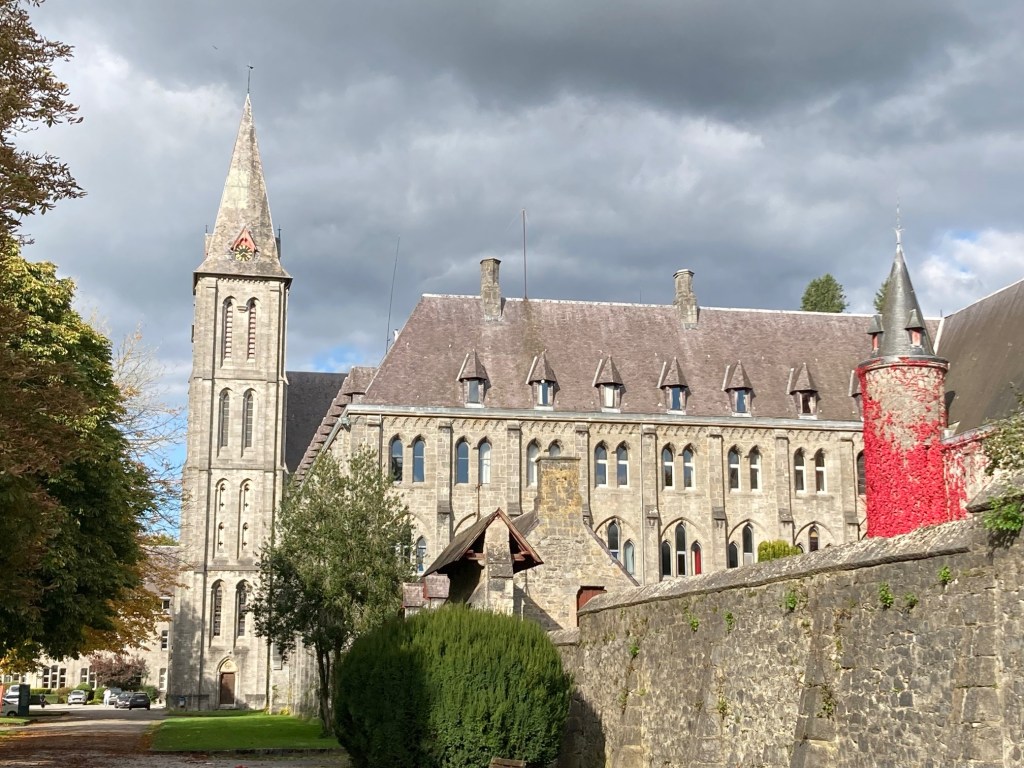
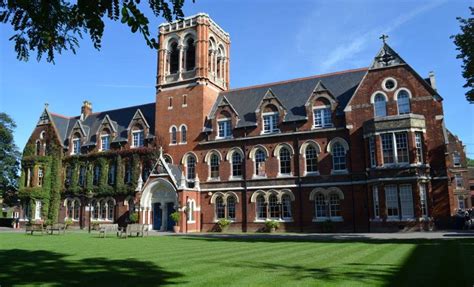
Maredsous is a Benedictine abbey in Wallonia, in southern Belgium. It was founded as a priory in 1872 on the initiative of Beuron Abbey, a major Benedictine house in Germany, and was raised to the status of an abbey by Pope Leo XIII in 1878. Since 1926 the abbey has been awarded the title of a minor basilica. The abbey occupies a spectacular position on land donated by the Desclée family, wealthy Belgian printers and publishers. It is built on an enormous scale in a neo-Gothic style, designed by the architect Jean-Baptiste de Béthune.

Like many Belgian abbeys, the number of resident monks has diminished in recent years. The abbey provides teachers for an adjacent school, it functions as  a conference centre and retreat centre; and it sells Maredsous cheese and Maredsous beer. The cheese is made in their own dairies, but the beer is now brewed under licence by a brewery in Flanders. The cafe and shop in the adjacent Visitors’ Centre attracts some 500,000 visitors a year.

Men’s Retreat 2024

For a decade or more there has been an autumn Men’s Retreat for men from Holy Trinity, Brussels, and from the Brussels German-speaking Protestant church. Numbers have varied from about a dozen to thirty. The prime mover in organising this annual retreat is my friend Armin Kummer. I have been involved with this retreat since 2014, when it was held at St Andrew’s, Zevenkirken, a Benedictine abbey near Bruges in Flanders,  and when the theme was Journeying with God. Subsequent themes have included Rock and Roles: Men’s Spirituality; Sanctuary; and Living with the Psalmist. There are workshops, spaces for reflection, meals with the monks, a long Saturday afternoon walk in the countryside, a film, and Communion on Sunday morning. The Saturday night films have included Grand Torino, On a clear day, Pride, and Brassed Off.

This year we were back at Maredsous. I flew with RyanAir from Edinburgh to Charleroi [aka Brussels Sud], was grateful for cheerful assistance at both airports, and took the Flibco bus up to Brussels. Where I was warmly entertained by John and Susie Wilkinson. Who filled me in on life at Holy Trinity, where I spent 18 months with them after [initial] retirement in 2013-15. Both my previous parishes, Christ Church, Duns, in the Edinburgh Diocese, and Lyon Anglican Church, had been single charges; so Holy Trinity, Brussels, working with [now Bishop] Robert and John, and a mix of readers and students on placement, was my first experience of team ministry

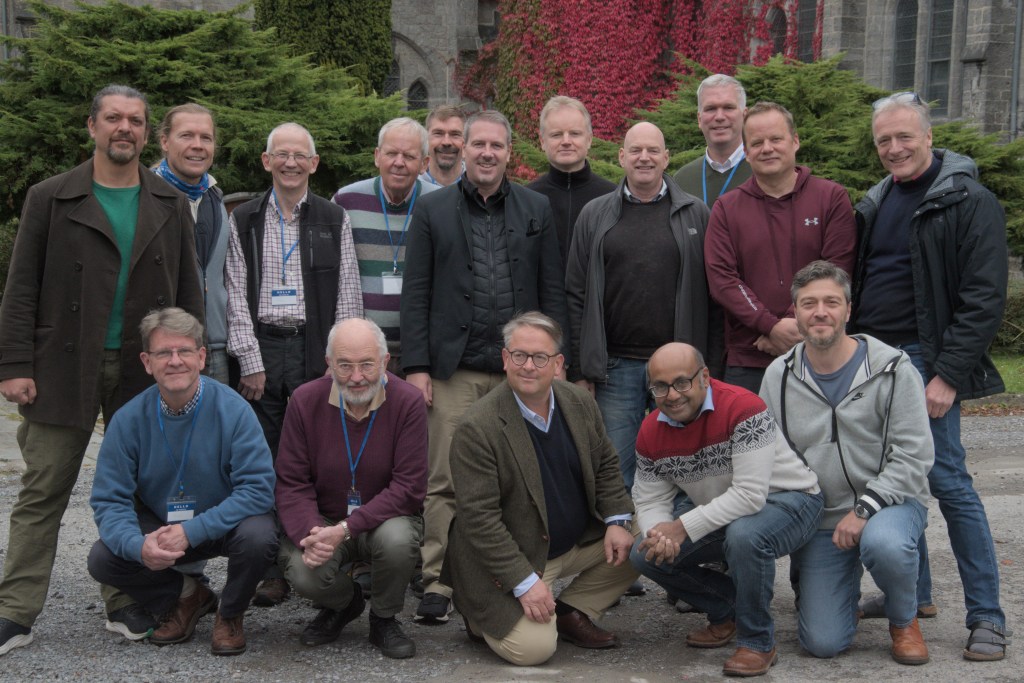
The retreat was a little earlier than usual, the second weekend in October. There were sixteen of us, predominantly from Holy Trinity. The theme was once again Living with the Psalms. Much of the administration and heavy lifting was done by Richard, who had driven across from Cheltenham. We looked at groups of psalms in terms of cries for help; at psalms seeking guidance and of reorientation; and at songs of praise. The participants then wrote their own psalms, some of which were used in our Saturday evening service of Compline, and some in our Sunday morning Communion service. The film this year was Marvellous. I have been co-leading this retreat with my German friend Armin Kummer, for a decade now. And I think this will have been my last year. [Though I recall saying that last year !] If it is, then I will miss being back at Maredsous in a year’s time. But there is talk of bringing the retreat to Scotland. We shall see …

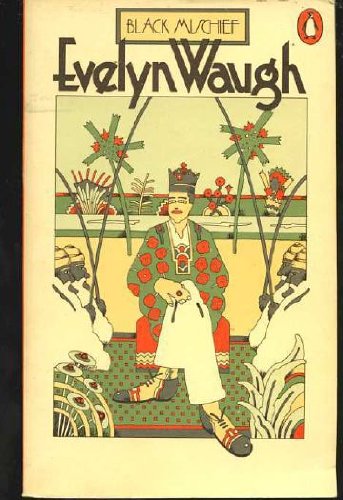
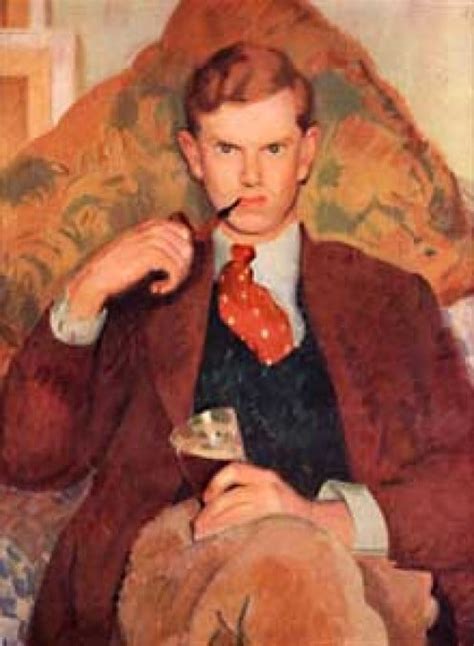
After the Communion service and lunch on Sunday most folk rushed off to Brussels to vote in local elections. And Richard kindly gave me a lift up to Charleroi, where I was staying overnight. It is a rather depressed, post-industrial town with a hollowed-out centre. Surrou/nded by a confusing network of motorways and elevated dual carriageways. The traditional industries of coal-mining and steel-making have long been in decline. I walked a  bit around the centre, trying hard to find a restaurant that was open. The hotel felt a bit sybaritic after the Spartan decency of the Maredsous bedrooms. After a copious Novotel breakfast on Monday morning, I was driven up to the airport by a Roman Catholic taxi-driver from the Congo. Waiting at the airport I made a start on Martin Stannard’s two-volume biography of Evelyn Waugh. Which seems very promising.

The Diocese of Aberdeen

In contrast to the Men’s Retreat, the Church Times does little to encourage my faith, specialising as it does in photographs of bishops and accounts of historic abuse cases. [Though I should make it clear that these are two distinct features.] But even so I was a bit shocked by their story about the latest proceedings in the Dyer case [Church Times, 11 October 2024].

The Bishop of Aberdeen and Orkney, the Rt Revd Anne Dyer, has been suspended from office for the past few years pending disciplinary proceedings against her for discrimination and abusive behaviour. The disciplinary tribunal was to have been held in September, but had been postponed at the request of her legal team. Now the Scottish Episcopal Church Procurator, one Paul Reid KC, has decided not to proceed with the prosecution. From personal experience I would never count on a senior lawyer and the House of Bishops to make good decisions. But dropping the charges against Bishop Anne on the grounds that the tribunal would be too stressful for the complainants, without taking the trouble to consult them, beggars belief.

It is more than three years since Professor Torrance wrote a considered review of events in Aberdeen and Orkney; and concluded that the Bishop had lost the confidence of a number of priests in the diocese, and that she should be granted a period of sabbatical leave and then step back permanently from the post. This story has dragged on far too long, and we recall that Bishop Anne was initially imposed on a reluctant diocese by the House of Bishops. Now that she is returning to her old job, albeit as damaged goods, I am very glad not to be serving in Aberdeen.

I haver written along these lines to the Church Times. Who may or may not publish the letter. And I guess I am not the only person dismayed by this story. But I appreciate that many worse things are happening elsewhere in the world. 

October 2024

Through a glass darkly – 135

Down in Wycombe

You’re a lovely old man”, the girl at the check-in desk said to me. I’m not sure if it was a compliment. This was at Heathrow on the return journey. Of which more below. 

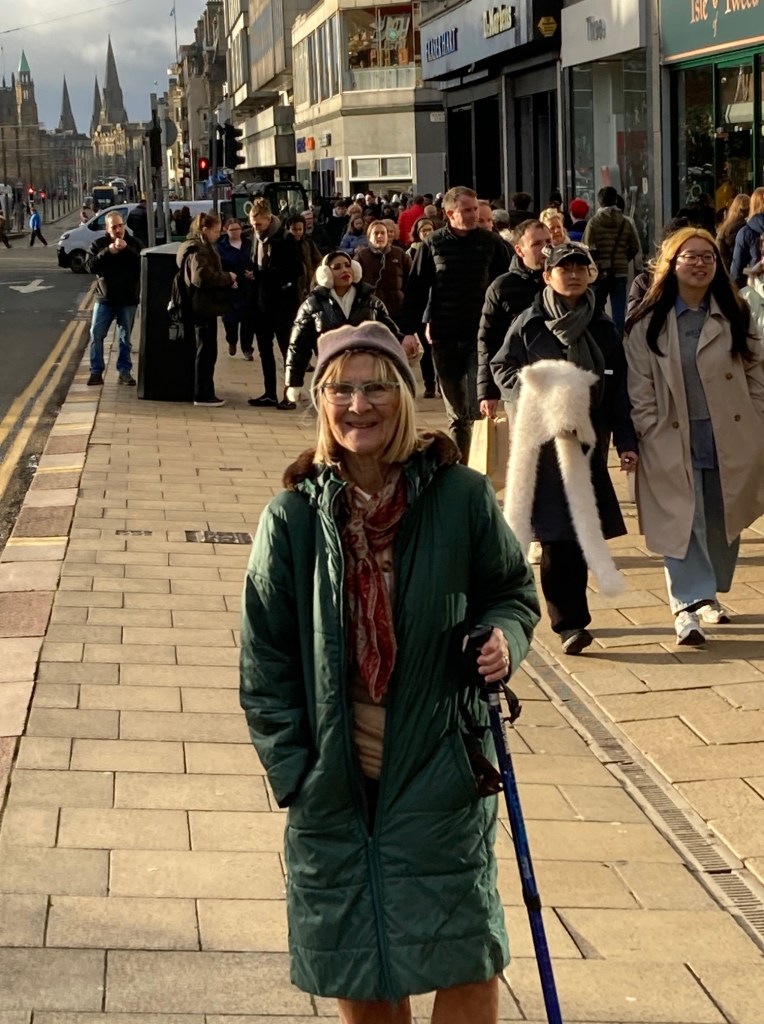
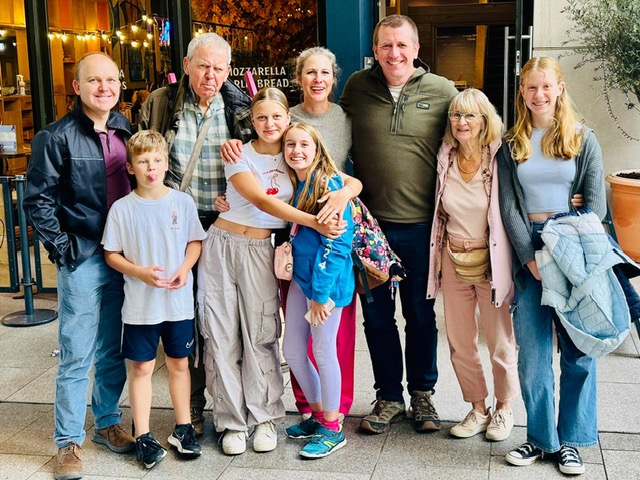
We are just back from ten days down in Wycombe. Craig was away for a week walking the Ridgeway, an ambitious six days of  moderately heavy walking. In his absence Susie and I were looking after the girls. We are both struggling a bit with mobility issues; Susie walks with two poles because of arthritic hips, and I have caught it from her and walk with one pole. So – it wasn’t totally clear who was looking after whom. But it was very good to spend some time with the children and grand-children, whom we don’t according to Susie see often enough.

I am not sure how often you are meant to see grand-parents. When I was a child my paternal grand-parents lived about two minutes walk away, on the other side of the Plaza, the Southfields cinema. But they both died before I was ten, so my memories of them are a bit limited. Grandma was often in bed in a back room as I recall. The bed was protected by a screen covered with cigarette cards. And in the adjacent room she had a treadle sewing-machine and a bottle of smelling salts.

My maternal grand-parents lived in Minety, in Wiltshire, until 1953. My grand-father, Fa, was the station master of a GWR station that was like something out of Thomas the Tank Engine. As small children Paul and I had the run of the station [Health and Safety would have been horrified], and we were indulged by the two porters and, rather less, by the three signalmen and by some of the train drivers. In days when we all wanted to drive steam trains, it was a huge privilege. But in 1953 my grand-parents retired to Bradford-on-Avon, complete with a Saxon church, a chapel on the bridge, a medieval tithe barn, and a river [the Avon] congested with reject Spencer-Moulton tennis balls. We missed the steam trains. But it was a magical place in the 1950s. And, because my father was a primary school teacher, with school holidays, we stayed with Nanny and Fa several times a year.

Wycombe is an attractive place when the sun comes out. Though ruined by the advent of the motor car. My father recalled driving up the A40 in the 1920s to visit my mother’s family in central Wales, and the road went straight through places like Beaconsfield and High Wycombe. And straight through Oxford, over Magdalen Bridge and up the High Street, and then down past Oxford station out towards the toll bridge at Eynsham. The centre of Wycombe now is part-pedestrian with a big 1970s [?] shopping centre. The Wycombe by-pass must have been built in the very early 1960s, the very first stretch of what is now the M40.

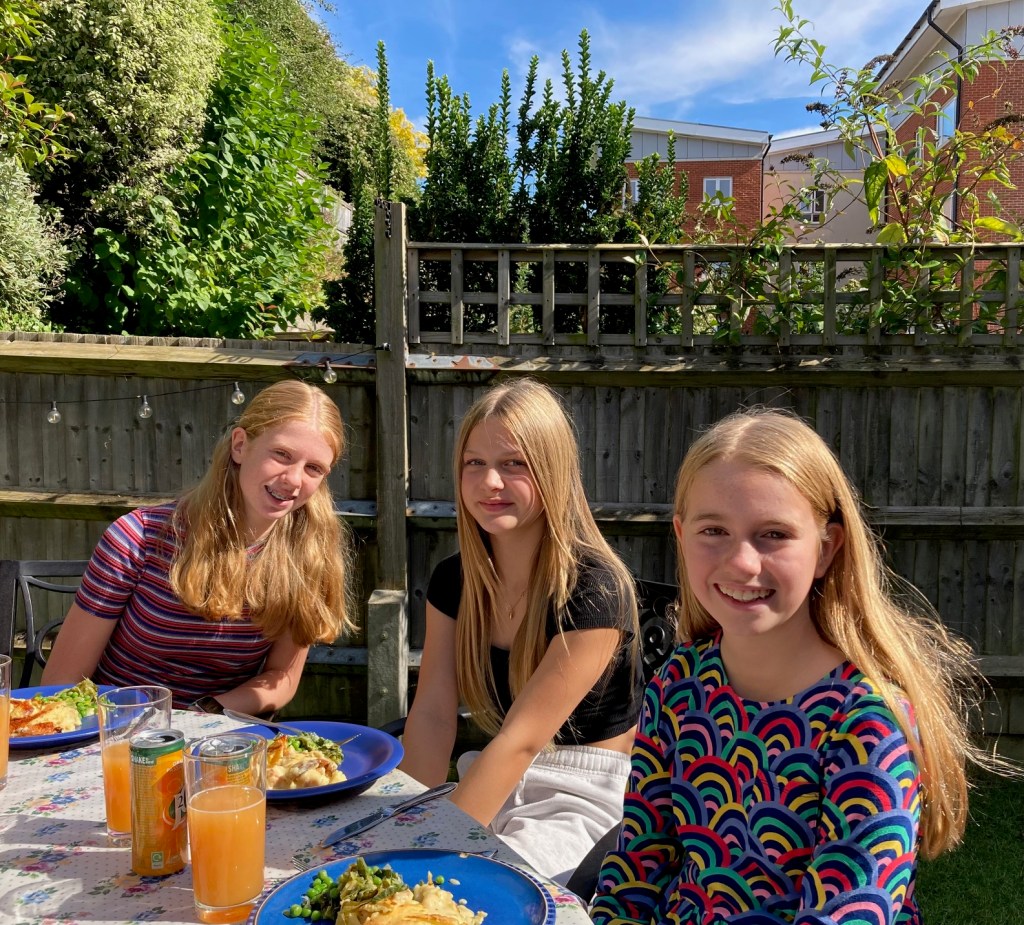
We sat in the garden in the sun to eat with the children and grand-children. Which was very good. And my brother and both sisters-in-law, Paul and Jean, and Alice, came down from Birmingham and from Leamington Spa on the train, and we had lunch in a very reasonable Kerala/South Indian restaurant in the centre of town

The Iolaire tragedy

I spent a bit of time reading a book that I had bought in the very good bookshop in Portree back in June. When I heard the bell is a beautifully written account of the Iolaire tragedy, by John MacLeod, a Gaelic speaking journalist and historian. The book was written to mark the ninetieth anniversary of the disaster, and was shortlisted for the Saltire Book of the Year award.

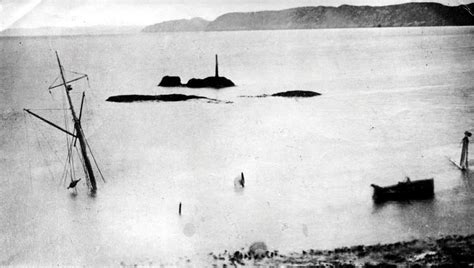
On 31 December 1918, His Majesty’s Yacht Iolaire sailed from Kyle of Lochalsh for Stornoway, bringing home to the Hebrides nearly 300 military and naval veterans of the Great War. She never made it. At two in the morning, the ship ran aground on a notorious reef, the Beasts of Holm, close by the mouth of Stornoway harbour, where the quay was already jammed with friends and relatives. Over 200 men drowned, from middle-aged veterans to boys in their teens, in what remains Britain’s biggest peacetime disaster at sea since the loss of the Titanic – devastating the Isle of Lewis and scarring a generation. Only eighty of the men on board survived.

MacLeod is good on the context of the disaster; he wants us to know that in 1914 Scotland was one of the richest parts of the British Empire, with its wealth built on the production of raw materials – coal, steel, and shale-oil – skilled heavy industry, the building of ships and trains, and textiles. The Isle of Lewis, he tells us, was the richest part of the West Highlands, with Stornaway supporting a strong retail economy, a thriving cultural scene, and a considerable herring fishery, all set about a magnificent and sheltered harbour. He points to the tightly-knit village communities and the very high number of those who volunteered to fight in the war. In 1915, in the community of North Tolsta, which had boasted a population of 853 in the 1911 census, 400 males and 453 females, 189 men were fighting for their country, that is 47% of the entire male population. By the time of the Armistice 41 men were dead – 41 from a village with a population of fewer than 900.

Did alcohol play any part in the tragedy. It was New Year’s Eve, and there was an insistent suspicion that the officers of the Iolaire were not sober. MacLeod notes that temperance was a huge issue in Scotland at the time, not least on Lewis. But the Royal Navy report, which was produced within a matter of weeks, declared that these rumours were untrue and without foundation. Four officers and twenty-three crew had sailed the Iolaire. All four officers were drowned, and only the bodies of two engineers were recovered. Of the twenty-three crew, only seven survived. Those who died included Private Herbert William Head, whose girlfriend was expecting their baby and whose wedding was scheduled for Stornaway on New Year’s Day.

The Royal Navy report was unable to explain how the accident occurred. Although Kyle of Lochalsh to Stornaway was an established shipping route, MacLeod stresses that the Minch is a challenging and capricious piece of water, and that the journey calls for responsible seamanship and an alert, experienced master. The only aids available were charts, compasses, and a handful of lighthouses. The officers of the Iolaire were not local men. The available deck-officers, Richard Mason and Leonard Cotter, had shipped into Stornaway before, but not often and never by night. Macleod’s hypothesis is that Commander Mason simply mixed up the lighthouses, and was centring the Iolaire not on Arnish Light at the mouth to the harbour but on Tiumpan Head, the lighthouse at the end of the Eye Peninsula, the most easterly point of Lewis.

The survivors of the disaster found themselves marked men. Like other Great War veterans they were distanced from the bereaved, distanced from their own families. Those who came ashore received not a penny from the Ioalaire Disaster Fund. Some emigrated. Some left for the mainland, never to return. The last survivor of the tragedy, Donald Morrison of Port of Ness, died in July 1990.

British Airways

We flew down south to Luton with EasyJet and back with British Airways from Heathrow. It wasn’t British Airways finest hour. Susie and I had requested passenger assistance, as we are both struggling with arthritic hips. The girl at the assistance desk [wheelchairs] was friendly. But the service was overrun by passengers on an adjacent flight to Islamabad. We waited for over an hour. After our flight was [should have been] called we were rushed through by two friendly pushers. In the rush I lost my best reading glasses [red frames with a black case, if you have seen them] in the security section. We then waited three hours at the boarding gate for our flight to be called, as British Airways had scheduled a plane but no cabin crew. There were announcements but no explanations. British Airways staff agreed it was no way to run an airline. When the flight was finally called, our friendly pushers had long gone so we limped onto the plane. Back in Edinburgh our taxi-driver said that ‘Its always like that with British Airways on Sunday evenings’.

Customer service may be a thing of the past. British Airways doesn’t want to speak to customers. Which I can fully understand. The chatbot sent me round in circles and drove me mad. I have written to British Airways to complain, but I’m not holding my breath.

September 2024
PS  

Sambre

The river Sambre is not the prettiest part of France, passing through a mining and industrial area before flowing into Belgium to join the Meuse at Namur.  And Sambre – anatomy of a crime, a French television series,sounded pretty grim. This is the fictionalised story of France’s most notorious serial rapist who attacked women in this area over a period of some thirty years. Six free-standing episodes focused on six different characters, the victim, the investigating judge, the mayor, the scientist, the policeman, and, eventually, the rapist; and spanned the years 1988 to 2018.

The series was directed by Jean-Xavier de Lestrade and popped up on successive Saturday nights on BBC Four. With sub-titles. I found it a fascinating look at a small-town community. And a devastating indictment of the casual sexism of the French police. Well worth a look. Its available on I-Player for anyone who is interested.

Through a glass darkly – 134

I have always thought of France as a sovereign nation; a centralised country that occupies an easily identifiable chunk of western Europe; a country that was our ally in the two world wars of the twentieth century; a country that has a proud record in rugby’s Six Nations, and which won the football World Cup in 1998 and 2018, and were runners up in 2006 and 2022. But this easy assumption has been challenged by a fascinating book by Graham Robb; another bargain from the OXFAM bookshop in South Clerk Street.

The Discovery of France

Graham Robb [born 1958] is British historian and writer, who specialises in French literature. He did a degree in Modern Languages at Oxford,  completed a doctorate at Vanderbilt University,  Tennessee, and held a junior research fellowship back at Oxford before leaving academia in 1990. Between 1994 and 2000 he published biographies of Victor Hugo, and Balzac, both of which won book awards. His book The Discovery of France, sub-titled A historical geography of France from the Revolution to the First World War, was published in 2007. His essential thesis is that France was for centuries a largely unknown and amorphous country; a land of ancient tribal divisions, prehistoric communication networks, and pre-Christian beliefs. Until the end of the nineteenth century, Julius Caesar’s De bello gallico was still being quoted as a useful source of information about the inhabitants of the vast interior.

The undiscovered continent

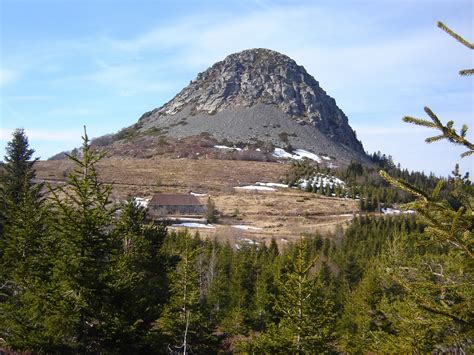
In the early 1740s a young man from Paris was exploring Le Gerbier de Jonc, a little-known mountain of phonolithic rock in the Mézenc range, near the source of the river Loire. The isolated villagers seeing him pointing strange instruments at barren rocks assumed he was up to no good; and hacked him to death. He was in fact a young geometer, part of a team assembled by the astronomer Jacques Cassini to draw up a reliable map of France. A century later this was still a remote and dangerous area of France. A nineteenth century geographer recommended viewing the Mézenc region from a balloon, but “only if the aeronaut can stay out of range of a rifle”. In 1854 Murray’s Handbook for Travellers recommended visitors who left the coach at Pradelles not to expect a warm welcome. “There is scarcely any accommodation on this route, which can hardly be performed in a day; and the people are rude and forbidding.”

Le Gerbier du Jonc

Pre-Revolutionary France was composed of a number of feudal provinces or généralités. Some provinces had regional parliaments and imposed their own taxes. Some of the internal borders derived from the division of Charlemagne’s empire in 843. The two hundred thousand square miles of Europe’s biggest country still operated on medieval times. On the eve of the Revolution, France was three weeks long [Dunkirk to Perpignan] and three weeks wide [Brest to Strasbourg]. Four-fifths of the population was rural. But there were enormous remote and empty areas. The wild boy known as Victor de l’Aveyron lived alone for several years before being captured by peasants in 1799 and put on display as a freak of nature. The ‘wild girl’ of the Issaux forest, south of Mauléon, was lost for eight years before being discovered by shepherds in 1730, alive but speechless.

Paris drew internal migrants. In 1801 more people lived in Paris [550,000] than in the next six biggest cities combined [Marseille, Lyon, Bordeaux, Rouen, Nantes, and Lille]. In 1886 Paris was the same size as the sixteen biggest cities. Yet until 1860 Paris covered an area of only thirteen square miles [roughly twice the size of the Eurodisney site].

The tribes of France

Before the mid-nineteenth century, few people had seen a map of France; few people had heard of Charlemagne or Joan of Arc. The state was perceived as a dangerous nuisance: soldiers had to be fed and housed; bailiffs seized property; lawyers settled disputes and took most of the proceeds. Caesar described Gaul as “divided into three parts”. But he also observed that it was sub-divided into a host of innumerable tiny regions. The basic unit was the pagus, the area controlled by a tribe. The term pays remains a popular designation, often borrowed to promote local development and tourism. In 1937, when compiling his nine-volume Manual of Contemporary French Folklore, Arnold von Gennep, warned the list of pays was incomplete because “some pays are still unknown”. The pays rather than the state was the fatherland of the nineteenth century peasant. The widowed ploughman in George Sand’s The Devil’s Pond [1846] is appalled at the idea of finding a new wife three leagues [eight miles] away in “a new pays”.

In 1794 the Abbé Grégoire was compiling a major investigation into the use of the French language and of patois [the derogatory term for all dialects other than the official state idiom].  It was already known that the fringes of France were dominated by quite different languages from French; Basque, Breton, Flemish, and Alsatian. But the two languages that covered the rest of the country – French in the north and Occitan in the south – turned out to be a muddle of incomprehensible dialects. In many parts of France, the dialect changed at the village boundary. His proposals to remedy the situation included building more roads and more canals; wider dissemination of news and agricultural advice; paying special attention to the Celtic and barbaric fringes; and simplifying the French language by abolishing all irregular verbs. A measure that generations of schoolchildren, both French and foreign, would have welcomed !

Barèges, Hautes-Pyrénées

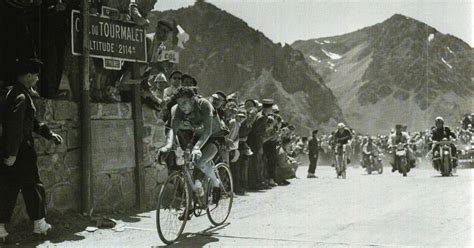
In pre-Revolutionary France, the year was divided into twelve months and two seasons. The season of labour, when even the longest days were too short. And the season of inactivity when life slowed to a crawl. In the Pyrenees when snow was falling or when rain had settled in the men were “as idle as marmots”. In a Pyrenean village like Barèges, close to the Col du Tourmalet. the village was simply abandoned to the snow and reclaimed from the avalanches in late spring. In rural France most farmers had supplementary trades. In 1886, in the little town of Saint-Etienne-d’Orthe, the active population was two hundred and eleven; in addition to working on the land, the population included  thirty-three seamstresses and weavers, six carpenters, five fishermen, four innkeepers, three cobblers, two shepherds, two blacksmiths, two millers, two masons, one baker, one rempailleur, and one witch. But no butcher and no storekeeper. Other supplementary occupations included rat catchers with trained ferrets, mole catchers, rebilhous who called out the hours of the night, and “men called tétaires, who performed the function of a breast-pump by sucking mothers’ breasts to start the flow of milk”.

Maps and travellers

In the 1860s Roman roads were still marked on maps, not out of antiquarian interest, but because they were still the best roads available. As the Marquis of Mirabeau remarked in 1756, the Roman roads were built for eternity while “a typical French road could be wrecked within a year by a moderate sized colony of moles”. The dreaded corvée, instituted in 1738, meant that almost the entire male population could be forced to work on road maintenance for up to forty days a year. The system changed with the introduction of cantonniers [road-menders]. Each cantonnier was responsible for about 5 kilometres of road, and was required to be present on the road for twelve hours a day from April to September. The security of the job, and the uniform, were much prized.

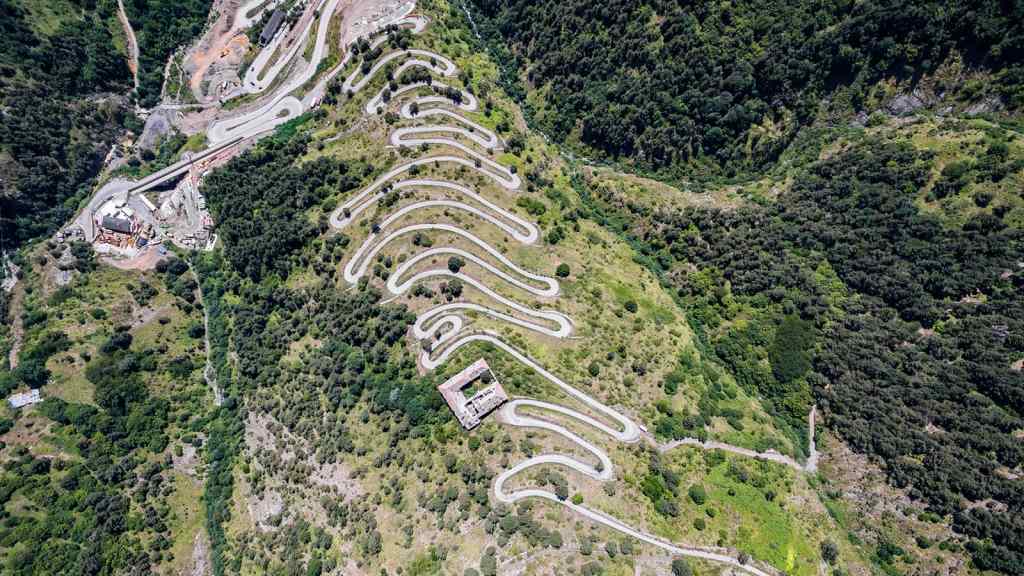
Until 1810 the only Alpine crossing for wheeled vehicles was in the far south, over the Col de Tende. Otherwise it was the route taken by Hannibal and his elephants 218 BC. It was with the opening of a new road over the Mont Cenis Pass in 1810 that the cavalcade of sedan chairs, stretchers, and mules was replaced by carts and carriages.

Col de la Tende

In the century after the Revolution, the national road network doubled in size; the canal network grew drastically. There were fourteen miles of railway in 1828, and twenty-two thousand in 1888. 

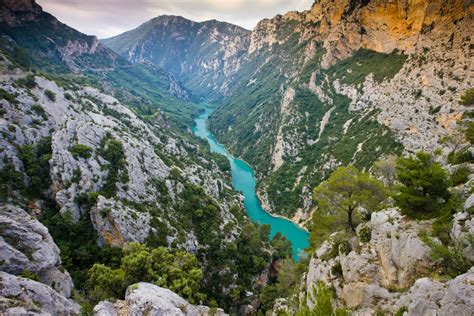
In Jules Verne’s Around the World in Eighty Days, Phileas Fogg crosses France in little over a day; he leaves London on Wednesday morning, arrives in Paris on Thursday morning, and arrives in Turin by the Mont Cenis route on Friday morning. And yet parts of France remained unknown. The grandest canyon in Europe, the Gorges de Verdon, were not ‘discovered’ until 1896. It was not until 1906 that the hydrologist Edouard Martel sailed the length of the gorges, and wrote an article in a popular magazine Le Tour du Monde describing their expedition and revealing this ‘American wonder of France’ to the world. This was thirty seven years after John Wesley Powell’s pioneering expedition through the Grand Canyon of Colorado.

Gorges de Verdon

The book is a mass of fascinating, if not always useful, information. When the Tour de France in a burst of publicity routed itself over the mighty Col du Tourmalet in 1910, some people thought the cyclists would be attacked by bears. It is now wrongly thought that the first person to cross the Tournalet on a bicycle was the race leader who arrived at the summit covered in sweat and dust and shouted at the race organisers ‘Assassins’. Graham Robb, himself a keen cyclist, argues that the social impact of the bicycle has been greatly underestimated. He points to a teacher from Chartres setting off by bicycle in 1895 on his thousand-mile holiday.

Col du Tourmalet

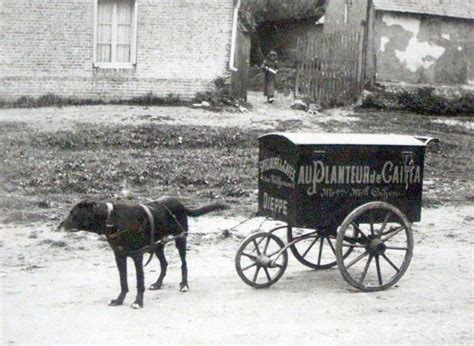
Even into the 20th century dog carts were widely used. During the First World War dog carts took machine guns to the front and brought back the wounded. Milk, fruit and vegetables, bread, fish, meat, and letters were all delivered by dog cart. As late as 1925, there were over a thousand dogs in harness in the Loiret department alone. Today city dogs are thought of mainly as an excremental menace; some eight million dogs in France produce eighty tons excrement a day. In the days when manure was highly valued, this was not a major complaint. But today it is !

Charrette-Peugeot

My own discovery of France

My own introduction to France was in the summer of 1961 when my brother and I hitchhiked from Paris to the Mediterranean and back. From Paris to Marseille took us five long days. In Paris we stayed in an UNESCO hostel in the 13ème, in the Boulevard Emile Levasseur, and paid 1,60F. a night for bed and a simple breakfast. Hitchhiking was a stop-start process. Most of the routes nationales were three-lane roads [a lane in the middle for drivers to kill themselves] with plenty of loose chippings and eccentric cambers. Road accidents were a regular occurrence. And the roundabout with an obelisk at Fontainebleau was the elephants’ graveyard for hitchhikers.

The N7 as was

Later, in the mid-1970s, Susie and I lived in the 14ème, on the south side of Paris. It then retained a village-like atmosphere. After we had been away on our summer holidays, to Yugoslavia, several local shopkeepers welcomed us back and asked where we had been. Our landlord was a retired medical doctor from the Yonne, who wore a hairnet and a smoking jacket. We rented an apartment on the first floor belonging to his eldest daughter, who was away in New Orleans. There was a modest garden at the back with a resident hedgehog.

Good Friday 2006

From 2000 to 2013 Susie and I were back in France, further south in the dignified and attractive city of Lyon. Most days we passed by the Confluent where the rivers Rhône and Saône come together. There was a public competition to design the new Musée du Confluent, but it remained a building site for years as the winning entry proved to be unbuildable. On my days off in Lyon I walked regularly in the Monts du Lyonnais, a delightful, peaceful area, all rolling hills and fruit trees. On Good Friday a group from the Lyon Anglican Church invariably walked from Rontalon, stopping for prayers at a trio of wayside crosses, and having lunch in the Café de la Place afterwards. Traditions are easily created !

Good Friday 2013

September 2024

Through a glass darkly – 133

Tony Judt

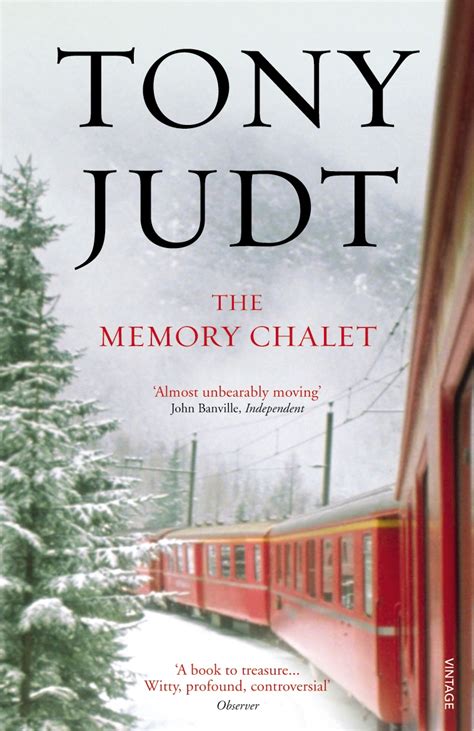
We were in Callander in June on the way north towards Arisaig and Skye. Normally it is just a coffee stop. But this year we bought some [very] expensive shoes in the Rogersons factory shop. And I was pleased to find a clean hardback copy of Tony Judt’s The Memory Chalet in the Cancer Research Shop for £2.00.

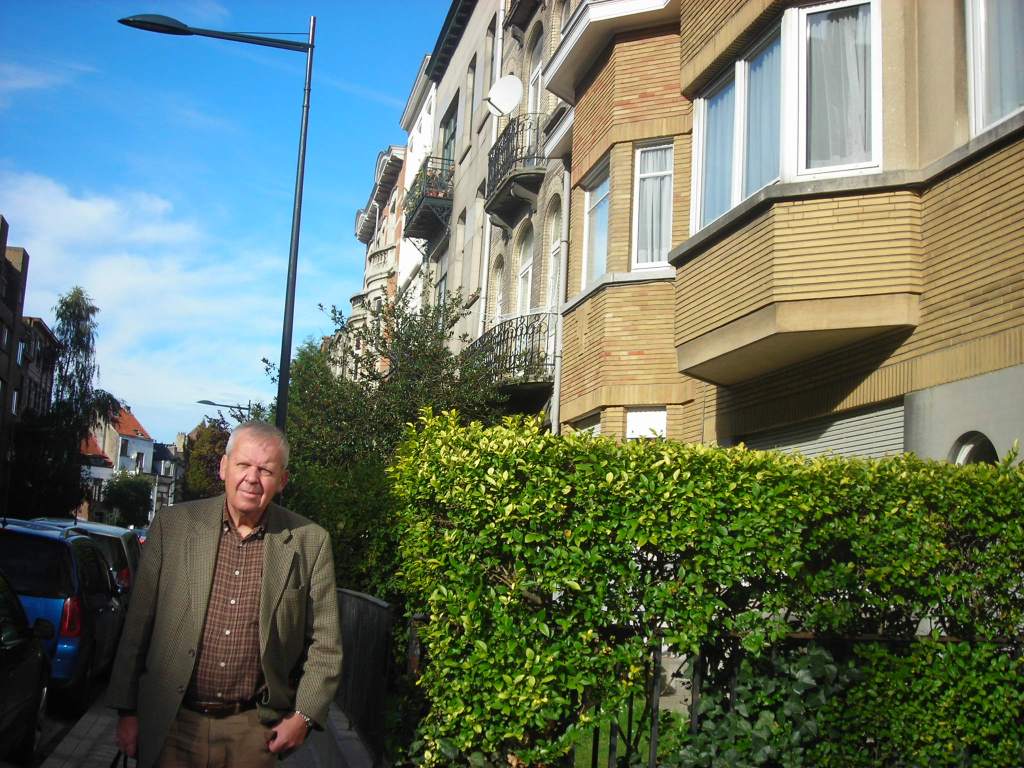
I first came across Tony Judt on the bookshelves of Liz’s house in Etterbeek, in Brussels in 2013.  I had no idea who he was. But Liz had a copy of Ill Fares the Land, his 2013 book, which I read with enthusiasm. It is a lament for the breakdown of the [British] postwar consensus on economic policy [Butskellism], and a slaughtering attack on the rise of neoliberal economics as it emerged under Thatcher and Reagan. Judt deplores the rise of unregulated capitalism that precipitated the 2008 global financial crisis. And he makes a powerful case for the restoration of social democracy and the notion of a social contract to further equality of opportunity and the common good.

Outside Liz’s house in Brussels, 2013

Judt it subsequently transpired was in essence an academic historian. He came from a secular Jewish family in south London, was educated at Emmanuel School, Wandsworth [as was my brother Paul], and subsequently at Cambridge and at the Ecole Normal Supérieure in Paris. After completing his Cambridge doctorate, his academic career was divided between Cambridge, the University of California at Berkeley, Oxford [St Anne’s College], and New York. 

Postwar

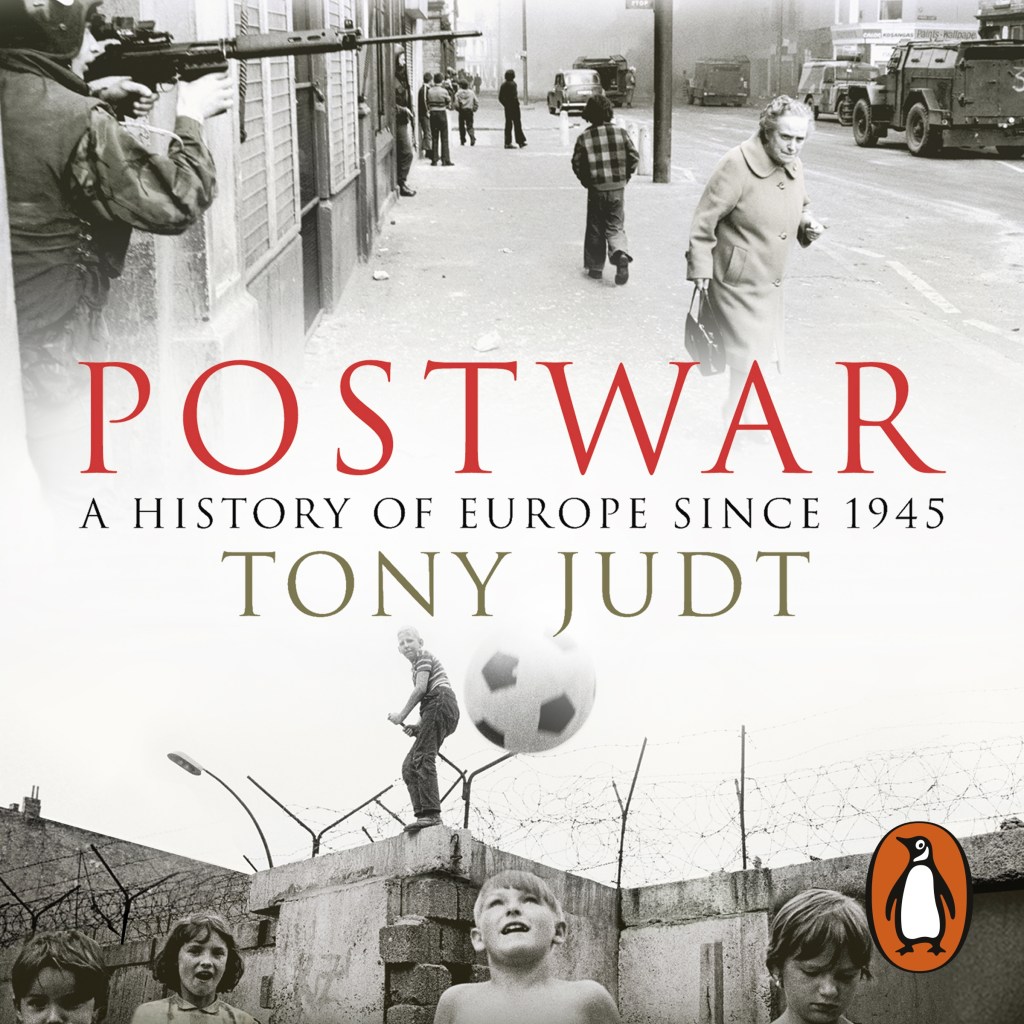
Judt’s best known book is his Postwar [published 2005], a magisterial history of Europe after the Second World War, which I first saw on the bookshelves of Guy Milton in Brussels. It is an exhaustive, and exhausting, book, which I read in Strasbourg during the summer months of 2016 while doing a locum spell there. Where he had previously been thought of as a specialist in French social and intellectual history, Judt now spreads himself across a wider canvas. The book starts by surveying the state of Europe in 1945: everyone and everything, with the notable exception of the well-fed Allied occupation forces, was worn out, without resources, and exhausted. It is estimated that some 36 million Europeans died between 1939 and 1945 from war related causes; more than half of them non-combatant civilians. Post-war Europe, especially in central and eastern Europe, suffered from an  acute shortage of men. In Germany itself two out of three men born in 1918 did not survive the war. Surviving the war was one thing, surviving the peace was another. “Better enjoy the war”, was the rueful wartime German joke, “the peace will be terrible.” 

Involuntary economic migration was the primary experience of World War Two for many European civilians. Few Jews remained; of those who were liberated from the camps, four out of ten died within a few weeks of the arrival of the Allied armies. Whereas at the end of the First World War borders were adjusted and invented, after 1945 the opposite happened; boundaries remained broadly intact and people were moved instead. Post-war Europe was essentially a Europe of homogenous nation states.

From this scene of a devastated Europe in 1945, Judt traces a broad pattern: 1945-53, the years of rehabilitation and the coming of the Cold War; 1953-71, the politics of stability and the age of growing affluence; 1971-89, a time of diminished expectations, the end of the post-war economic boom, the steep rise in oil prices, the accelerating rise of job losses in all traditional industries, the emergence of violent protest groups – ETA and Basque terrorism in Spain, the Baader-Meinhoff gang and  the Red Army Fraction [the RAF] in Germany, the Red Brigades in Italy, the Provisional IRA in Ireland. Followed by major upheavals in Eastern Europe culminating in the collapse of the Soviet Empire and the dismantling of the Berlin Wall. 

Writing in 2005, Judt was broadly enthusiastic about the European Community. But he pointed to some of the inequalities of EU policy and envisaged an important role for the nation states in the redistribution of wealth and the preservation of the decaying social fabric. Postwar was runner-up for the 2006 Pulitzer Prize for non-fiction, and in 2009 was acclaimed by the Toronto Star as the best historical book of the decade..

The Memory Chalet

As the early chapters explain, Judt was diagnosed in 2008 with ALS, a kind of motor neurone disease, a crippling neurodegenerative disorder. He is writing the book in May 2010 effectively a quadriplegic, unable to move his arms or his legs, lying in bed trussed up, myopic, and motionless. He is unable even to scratch himself. But his brain is clear to reflect upon the past, and the memory chalet of the title is a mnemonic device which enables him to sort and to store his personal memories, and to set these in a wider historical context.

Judt grew up in a secular Jewish family in south London in the age of post-war austerity. People dressed in modest colours – brown, and beige and grey, and led remarkably similar lives. As a child he was brought up on English food; not fish and chips, and toad in the hole, and spotted dick, but brown bread and brown rice and green beans, the healthy staples of an Edwardian left-wing diet. “My mother could no more cook brown rice than she could cook chop suey. And so she did what every other cook in England did in these days – she boiled everything to death”. By contrast the food at his paternal grand-parents in North London was Northeastern European Jewish; brown potatoes, brown swedes, and brown turnips; cucumbers, onions, and other harmless, small vegetables came crunchy and pickled; fish – gefilte, boiled, pickled,  fried, or smoked – was omnipresent, and seemed always to smell of spiced and preserved sea creatures.

Judt’s father, born in Belgium and raised in Ireland, was obsessed with motor cars. And in particular with idiosyncratic Citroëns. They were technologically advanced but not very reliable. “Just as my father resented Nescafé and preferred Camembert, so he disdained Morrises, Austins, Standard Vanguards, and other generic English products, looking instinctively to the Continent”. Judt dutifully accompanied his father to motor sport rallies in Norfolk or the East Midlands; grown men discussing carburettors for hours at a time. Better were long summer continental road trips in the days before autoroutes. Tolerated with difficulty by Judt’s mother. “Considering the amount of time we spent on the road in those years, it is remarkable that their marriage lasted as long as it did”. His father’s love affair with the company culminated in him becoming President of the Citroën Car Club of Great Britain.

The family lived from 1952 to 1958 in Putney, in south west London. They lived in an apartment in a Mews near the river, in which two of the six stables were still occupied by working horses. Other stables were occupied by electricians, mechanics, and general handymen; like the milkman, the butcher, and the rag-and-bone man all were locals, the children of locals. There were chain stores along Putney High Street, but even these were somehow local. Sainsbury’s, a small shop with just one double-window, still had sawdust on the floor. Putney was still a village. [I grew up at the same time in Southfields, a tube stop away on the District Line. Putney High Street was the first place where I experienced the aroma of roasting coffee, in a shop next door to Putney Station.]

Judt writes nostalgically about Green Line buses, green and single decker in contrast to other London buses, which took largely middle-class commuters across large tracts of Green Belt countryside. He enthuses too about the pre-privatisation rail network, while regretting their early switch to diesel instead of electric. ‘The Continent’ was still an alien place in the 1950s, but the Judt family crossed the channel relatively often, including using the SNCF pre-war steam the SS Dinard, onto which cars were still individually loaded by crane. Ironically he notes that continental travel is still associated with English breakfast; eggs, bacon, sausages, tomato, and beans, accompanied with white-bread toast, sticky jams, and British Railways’ cocoa. For Judt the indigestible English breakfast continues to evoke memories of France in the manner of a Proustian madeleine.  

He hated school, a Victorian establishment with cream and green corridors,  nestling between two railway lines coming out of Clapham Junction. In 1959 many of the masters had been there since the end of the First World War, and small boys were regularly beaten for insubordination. Judt is particularly unenthusiastic about the CCF [Combined Cadet Force], in which small boys were instructed in basic military drill and the use of the Lee Enfield rifle – already obsolete when it was issued to British soldiers in 1916. The only master he admires is Joe Craddock, apparently a gaunt misanthropic survivor of some past war, but an impassioned and enthusiastic teacher of German.

My Sixties were a little different from those of my contemporaries. Of course I joined in the enthusiasm for the Beatles, mild drugs, political dissent, and sex [the latter imagined rather than practised’ … The big difference was that Judt was committed for most of the 1960s to left-wing Zionism, and spent the summers of 1963, 1965, and 1967 working on Israeli kibbutzim. Which involved a great deal of hard work, as the Jews came back to the land after their rootless diasporic degeneracy. Muscular Judaism was healthy and purposeful and productive. But Judt came to resent the smug self-regard of the kibbutz dwellers. Who were appalled when he left them to go up to Cambridge, which they saw as an act of individualism and of betrayal.

Judt arrived in Cambridge in 1966, a time of rapidly shifting cultural mores. He reflects on the curious relationship between male students and the ‘bedders’, ladies of a certain age who acted as servants. Studying subsequently in Paris, at the ENS, is more intellectually exciting, though he notes the relative immaturity of his fellow students, all of whom had been force fed for the entrance exams. He notes that English students were preoccupied with sex, but did surprisingly little; while French students were more sexually active, but kept sex and politics quite separate.

Go West, Young Judt

In 1975 Judt makes his first visit to the States. He and his English wife drive across the country to Davis, California. He is struck by the size of American pizzas, and of everything else;  and by the American obsession with cleanliness. And by the resources of the universities; at Bloomington the University of Indiana has a 7.8 million volume collection in more than nine hundred languages.

In the 1980s Judt, now teaching in Oxford has a mid-life crisis; he divorces wife number 2, starts to learn Czech, and then to study and to teach East European history. He meets the new generation of leaders and re-connects with his own East European Jewish past. He develops the distinctive Czech qualities of doubt, cultural insecurity, and self-mockery. By 1992 Judt is chairman of the History department at New York University “where I was the only unmarried straight man under sixty”. It is in the rich cultural mix of New York that he evidently feels most at home. He even marries one of his students, a former professional ballerina with an interest in Eastern Europe. 

Judt died in August, 2010 at the age of 62, and the book was published posthumously. I loved the book. Judt’s precise memories trigger reflections on wider issues; urban planning, student riots, sexual politics, American history. There is an unspoken contrast between the restlessness of his mind and the static imprisonment of his body. His conclusion is that his generation was “a revolutionary generation which missed the revolution”. 

Envoi

In Edinburgh the Festival and the Fringe are over. Our little flurry of visitors has come to an end. My friend Pete didn’t make it up from Gloucestershire; short of energy or short of funds ? We have sunshine and showers and a lot of wind. It starts to feel distinctively autumnal. Susie and I are going down to Wycombe next month to be with the girls while Craig is away walking the Ridgeway. Can we take walking poles on the flight down ? Meanwhile Susie is busy gardening. And I am  rather ineffectually sorting through a pile of unwanted books.

August 2024
Through a glass darkly – 132

Thank God for Christian friends. That God calls us not in isolation, but into relationship with other members of his family. In recent days we have been pleased to see David Smith, onetime Principal of Northumbria Bible College, and the lead tutor on my MTh course at ICC. Glasgow, some 15 years ago; we had lunch with Mike and Wendy, our longtime friends from St Thomas’s, Glasgow Road, where I was once a [middle-aged] curate, and then took in a Fringe show; we had lunch with Andy and Kate and Joan, all up from [Christ Church] Duns; and I am about to meet up with James and Julia from St Peters, Chantilly.

On the Fringe

We are three weeks into the Edinburgh Festival and the Fringe. I’m not quite enough of a native in this city to complain about all the visitors. But bus journeys take significantly longer, and patient bus drivers cope with people crossing the road against the lights while glued to their phones.

The Fringe programme this year is almost 15mm thick and runs to some 384 pages. I am a very cautious, very conservative Fringe goer. Ever since we went to a late night comedian doing things with empty beer bottles a few years ago. Ever since the play, set somewhere in the Western Isles, when five minutes in the leading lady stripped off and lay on the table. But there have always been good things. I used to enjoy Miles Kington [of Parlez Vous Franglais] performing with Instant Sunshine. We once saw Rhoda Scott at the Queen’s Hall. [Years before seeing her, I think, at the Vienne Jazz Festival.] And I still have a CD of Dilly Keane doing one of her outrageous shows. 

This year we started in July with The Classic Jazz orchestra, an eight piece band playing a repertoire ranging from Jelly Roll  Morton to Louis Armstrong and Duke Ellington. The band included well-known Edinburgh musicians Colin Steele on trumpet and Dick Lee on clarinet and alto sax. One Sunday afternoon we took in Voices of Lions. This was a fifty-strong a cappella group, all boys, from Hampton Grammar School, with a wide range of songs; spirituals, pop classics, show tunes, and ballads. They were good. As was Hebridean Fire at Surgeons Hall. Elsa Jean McTaggart, a fiddler and multi-instrumentalist, and her husband took us on a musical journey through the highlands and islands, accompanied by some stunning photos of the Hebrides. The show also provided me with my joke of the year. But it works better in the Gaelic !

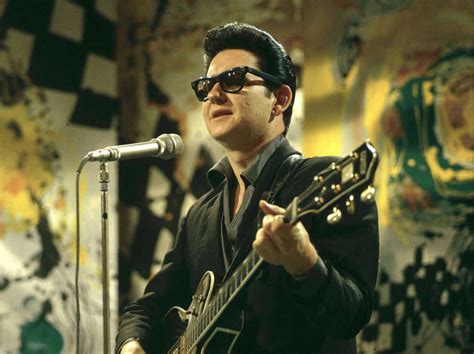
I couldn’t get tickets for The Look of Dusty, an award-winning tribute act by Ella McCready, which was already a sell-out. So we went instead to Oliver Harris doing his Roy Orbison tribute act in the Frankenstein Pub beer cellar. Harris has the voice and range to do justice to a string of classic hits – Only the Lonely, In Dreams, Oh Pretty Woman. Which went down a bomb with the fans. [But I couldn’t help remembering seeing the great man himself, standing motionless in his big dark glasses, belting all these songs out in a show at The Apollo in Oxford at the end of the 1960s. Inexplicable as it seems now, the Walker Brothers were topping the bill and Orbison closed the first half.]

We also saw In The Mood – A Tribute to Glenn Miller by Jon Ritchie and the Swing Sensation. They all played in GI uniforms for the first half and then changed into tuxedos. It was a big, brassy band, supported by a male vocalist and three female singers, the Swell Belles. The music was good, but the show was a bit spoiled by the inability of the presenter to use the microphone properly. 

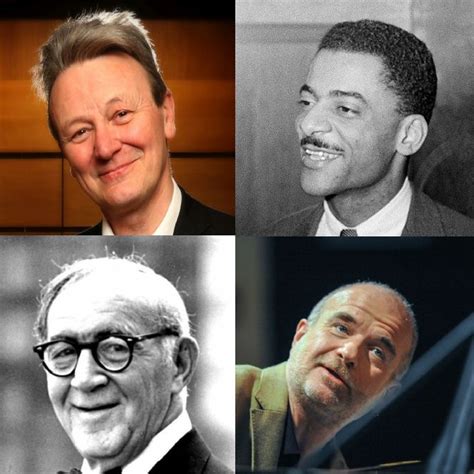
And we have been three times to shows at Valvona and Crolla. Which is a well-known, hugely stocked, rightly popular [and expensive] Italian delicatessen at the top of Leith Walk, celebrating its 90th anniversary this year.  The shop also doubles up as a restaurant and Fringe venue. And Philip Contini, grandson of the founder, is a singer and regular Fringe performer. We saw two shows there that both featured Dick Lee. The first was Swingtime, with Dick Lee on clarinet and Brian Kellock on piano playing the music of Benny Goodman and Teddy Wilson. And the second was Swingology, with  Dick Lee and vocalist Ali Affleck and the Swingaholics recreating a Parisian cafe of the 1940s, featuring the music of Django Reinhardt and Edith Piaf and Sidney Bechet. Sadly I can’t remember the tunes for more than five minutes. Both the shows were excellent. 

When Joanna loved me

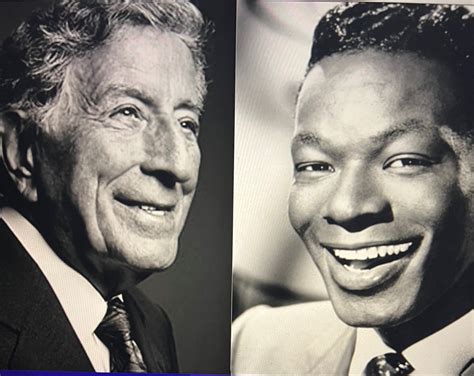
Almost finally, we saw The Stuff of Legends, with The Spatz Trio paying tribute to the music of Tony Bennett and Nat King Cole. Tony Bennett had largely passed me by. In the day, back in the 1960s, I didn’t get much beyond Roy Orbison and Ray Charles, and a bit later Frank Sinatra. The Spatz Trio were great; great songs and great performance. Until they sang the following 1964 Tony Bennett song, written by Jack Segal and Robert Wells. Which brought a lump to my throat and tears to my eyes.

“Today is just another day, tomorrow is a guess

But yesterday, oh what I’d give for yesterday

To relive one yesterday, and its happiness

When Joanna loved me

Every town was Paris

Every day was Sunday

Every month was May

When Joanna loved me

Every sound was music

Music made of laughter

Laughter that was bright and gay.

But when Joanna left me

May became December

But, even in December, I remember

Her touch, her smile, and for a little while

She loves me

And once again its Paris

Paris on a Sunday

And the month is May.”

I’ve just bookmarked one of the several versions on You Tube.

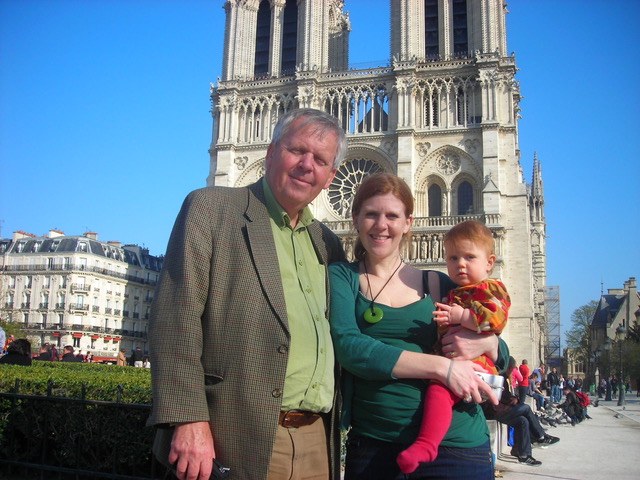
And these are the only photos that I can find of Joanna in Paris, the city where she was born.

August 2024
Through a glass darkly – 131

After last week’s very effective cataract operation, I have been looking through a glass more darkly than usual. A big Thank You to Dr Mary MacRae at the Princess Alexandra Eye Pavilion and to the NHS.

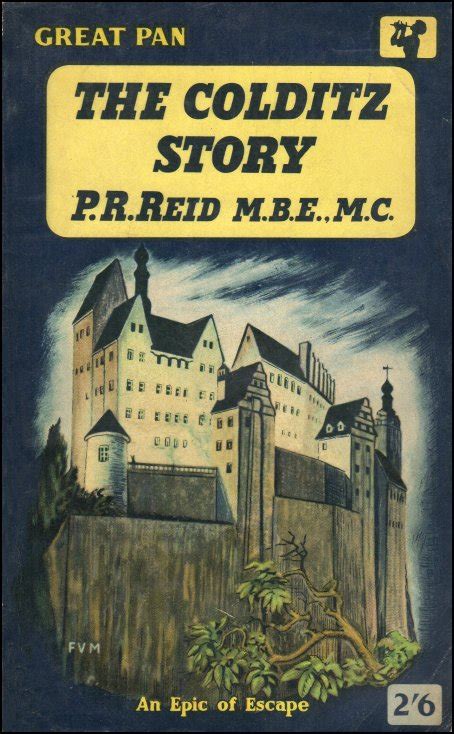
The Colditz Story

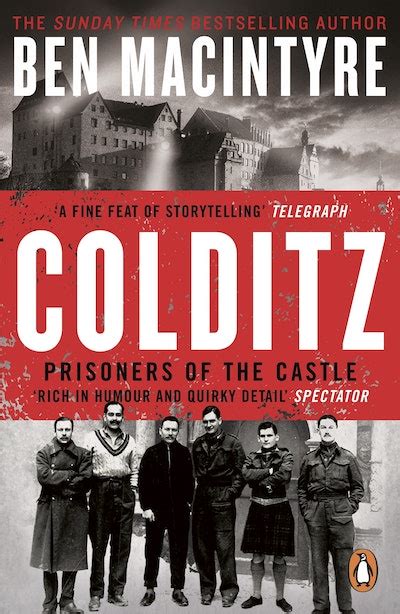
In the word’s most chaotic second-hand bookshop, in the Seamen’s Mission in Mallaig, in June, I found a clean copy of Ben Macintyre’s Colditz: Prisoners of the Castle. It is yet another good read from the prolific Ben Macintyre, who seems to write books as fast as I can read them. Since A Foreign Field [published in  2001], the story of Robert Digby, a young British soldier trapped on the wrong aide of the lines in 1914, and his doomed affair with the French girl Claire Dessenne, Macintyre has written another fourteen books, many of them best-sellers. 

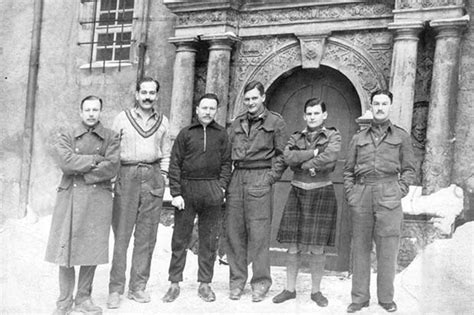
I grew up in the 1950s on war stories, many of them published by Pan Books. The first ‘grown-up’ book I owned was Guy Gibson’s Enemy Coast Ahead. And soon afterwards came the two books by Pat Reid: The Colditz Story [published in 1952] and Latter Days at Colditz [published in 1953]. Reid was born in India of Irish parents. He graduated from King’s College, London, in 1932 and trained as a civil engineer. In June 1940 he was taken prisoner near Cassel. He was imprisoned at Laufen castle in Bavaria, and instrumental in one of the earliest escapes of the war in September 1940. He and five others tunnelled out of the camp, and walked by night, without papers, making for Yugoslavia. They were recaptured at Radstadt in Austria, and Reid and the so-called ‘Laufen Six’ were promptly sent to Colditz, the fortress that was said to be escape-proof.

The Laufen Six

At Colditz Reid served as the Escape Officer, responsible for overseeing all the British escape plans. In October 1942 he himself escaped with three other officers. They had fake identities as Flemish workmen, travelled by train to Tuttlingen, and crossed from there into Switzerland. He remained in Switzerland until the end of the war working for the Secret Intelligence Service [MI6], and subsequently worked in the British Embassy in Ankara and for the OECD; and eventually returned to his original work as a civil engineer. He died in 1990.

Reid might be thought to be the founder of the subsequent ‘Colditz industry’. His first book, The Colditz Story. served as the basis for the 1955 film of the same name. John Mills played Reid, and Reid himself worked as technical advisor. I saw the film in, I think, the Plaza at Southfields, in 1955. Stirling Castle stood in for Colditz, which, in East Germany, would have been out of bounds in the 1950s. Reid’s two books were reissued in 1962 as Colditz, and were the basis for the BBC television series Colditz which ran from 1972-74. Reid again served as technical advisor. And again Stirling Castle stood in for Colditz. [The producer incidentally was Gerald Glaister, who subsequently produced Secret Army. In which the central character was played by Bernard Hepton, who had played the German Commandant in the Colditz series.] Pat Reid also collaborated on a boardgame, Escape from Colditz, which was an official licensed tie-in to the television series.

The books and the television series were a great success. But not everyone was impressed. Some fellow prisoners were unconvinced by Reid’s assumed expertise. The books are unreliable in some details, which is unsurprising since Reid himself was imprisoned at Colditz for less than half the duration of the war. There has also been some criticism of his Boys Own Paper style in which the prisoners, all good public school chaps, are always ‘sticking one up to the goons’.

Ben Macintyre: Colditz

Macintyre’s book was published in 2022 and the paperback in 2023. His book revisits the men and stories of earlier books, but also reveals a more complex and darker side to the Colditz story.

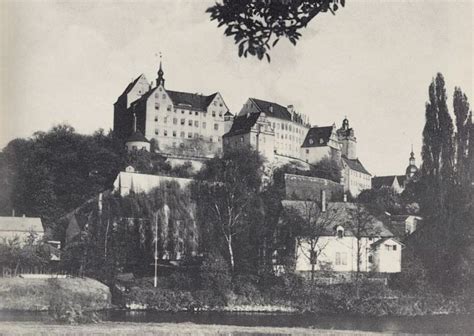
The book emphasises the forbidding nature of the castle; this vast 700 room fortress perched above the town on a cliff, which had been used down the centuries as a prison, a psychiatric hospital, as somewhere for incarcerating undesirables. The German plan was to collect all the trouble-makers and inveterate escapers in one place, in  a castle that it would be impossible to escape from. There were two problems about this: first, the building was old and full of holes and hidden passages and bricked up drains; secondly, grouping all the naughty boys together creates a culture of defiance.

Macintyre emphasises too that this was an officers’ camp [an oflag], which gave the prisoners a certain status under the Geneva convention.Officers were treated better than ordinary soldiers. The prisoners at Colditz were waited on by orderlies, ordinary soldiers, who made their food and organised their bath-water. There was a wide social gulf between the officers who were expected to escape and the orderlies who were under their command and not allowed to escape.

As well as different classes, there were initially at least multiple nationalities. The first prisoners in the castle were Polish, who were adept at lock-picking; followed by French, Belgian, and Dutch, and latterly Americans. They didn’t always get on well. An early Colditz Olympic games in August 1941 brought out national stereotypes; the Poles were keen to win, the French were very laidback, and the British treated it all as a joke and came last at everything.

Less attractively, there was a significant tension between the French officers and the French-Jewish officers who were segregated by the Germans into a different dormitory in the attic. Immediately called the ghetto. Some British officers were horrified by this. But the British were themselves very intolerant of the only non-white officer among them, an Indian doctor called Birendranath Mazumdar who was in the Royal Army Medical Corps. He was treated with  suspicion by fellow officers and was told that he was not allowed to escape because of the colour of his skin . He later went on hunger strike and insisted he be moved to an all-Indian prison in occupied France. From there he managed to escape and walk 700 miles across the border into Switzerland.

As had previously been told, there were a variety of music groups in Colditz, an orchestra, a Hawaiian string band, a Polish choir;  and regular drama productions of high quality. The British also created a variety of clubs; bridge, chess, and sports clubs. And there was a full programme of lectures on a wide range of topics. Including some [frowned upon by many] Marxist lectures by the ‘Colditz Commies’;  Micky Burn, an old Wykehamist, journalist and poet, captured during a commando raid on St Nazaire, and Giles Romilly, the first of the Prominente, a journalist and civilian captured in Norway. [Giles was the older brother of Esmond Romilly, the prime mover of Out of Bounds, who had now volunteered for the Royal Canadian Air Force and was ‘Missing – presumed killed’ flying over the North Sea in 1941.]

Contrasting Colditz characters

The senior RAF officer in Colditz was Wing Commander Douglas Bader, a celebrated flyer who had survived the amputation of both his legs following a pre-war flying accident in 1931. Bader was another schoolboys’ hero of the 1950s, portrayed by Kenneth More in the 1956 film Reach for the Sky. In spite of his tin legs, the pugnacious Bader had forced his way back into operational flying, and was leading 616 squadron when he was shot down in August 1941 over northern France.  Bader was famously brave and threw himself energetically into the life of Colditz; he conducted the orchestra, played goalie in games of stoolball, and became the self-styled ‘goon-baiter-in-chief’.

But Bader was also arrogant, domineering, and searingly rude, especially to those he deemed of lower status. As Macintyre acknowledges, Bader was generally loathed by his ground staff. In Colditz Bader was waited on by his diminutive, Scottish medical orderly, Alec Ross. Who served his breakfast in bed, and then carried the heavyweight officer down two flights of stairs for his bath and back up again.  When Ross was offered the possibility of repatriation to the UK, Bader blocked it. At the end of the war when the prisoners were liberated, Bader jumped rank and secured a flight home two days before everyone else. Afterwards, back in the UK, he rang Ross, thoroughly berated his servant for not bringing Bader’s spare legs back with him;  and never spoke to him again.

A very different character was Captain Julius Green, a Jewish dentist from Glasgow. He described himself as “a devout and practising coward, a short-sighted, flat-footed dentist with a tendency to overweight”. This may have been camouflage. Green was not only a fine dentist, but he was also a secret agent for British intelligence. Patients tend to confide in dentists, the German ones included, and ‘Toothy’ Green became one of the most prolific coded letter-writers of the war. Somewhat improbably, the unmarried dentist also became an unofficial counsellor, advising his patients on their romantic and marital anxieties. After the war Julius Green returned to a dental practice in Glasgow, his personal history largely unknown until he published From Colditz in Code in 1971.

Envoi

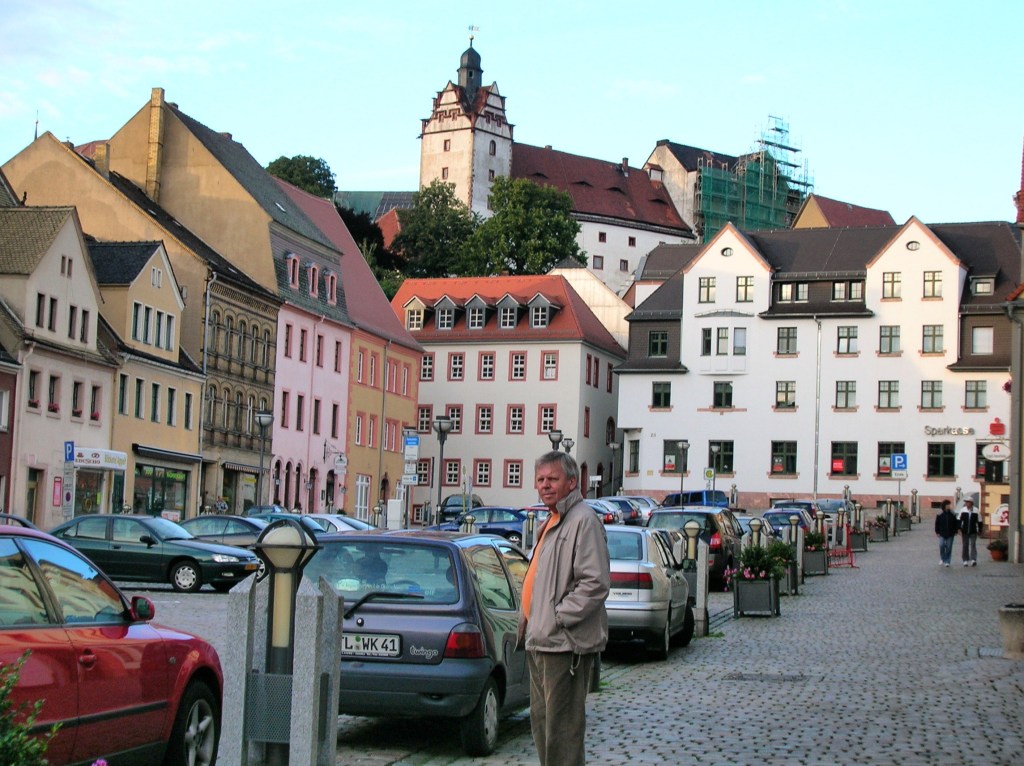
I was delighted to have an opportunity to visit Colditz in 2005. Susie and I had driven from Lyon to stay with cousins in Munich, and thence on to Prague. After a brief visit to the magnificently rebuilt Dresden, we arrived in Colditz in the late afternoon, discovered the only hotel in town was full, and ate a hearty Saxon meal in the restaurant which we shared with the local male voice choir. 

At Colditz August 2005

In the morning we did the Colditz Castle tour  with a package tour of British men, all vying to show off their knowledge of Colditz escaping and escapers. Just looking at the entrance to the famous French tunnel brought on claustrophobia. The dominant impression was the height of the castle buildings, and the smallness of the gloomy and sunless courtyard where the prisoners spent much of their time. And then we came away, well equipped with both civilian clothing and papers, to make our way to Magdeburg. There was talk in 2005 of turning the castle into a kind of  theme park, which British package holiday-makers would try to escape from. I don’t know if that ever happened.

 At Colditz August 2005

August 2024

Through a glass darkly – 130

Politics on the Edge

Our week in the Hebrides last month felt like living on the edge of the map, if not the edge of the world. I took three books with me to read, and came back with eight ! One of them Tony Judt’s The Memory Chalet, which I will write something about later, I found in a clean hardback copy in a charity shop in Callander. One of the books which I didn’t read while we were away, but which I have read with much pleasure since we got back to Edinburgh is Rory Stewart’s Politics on the Edge.

Rory Stewart

It is difficult to understand just how much Rory Stewart, who is 51 this year, managed to fit into his first four decades. He was born in Hong Kong in 1973, the son of Brian Stewart, a colonial official and diplomat,  who may have been a spy. His education was that of any privileged, upper class Tory: the Dragon School, Eton, and Balliol. Where he was a few years behind Boris Johnson. In between school and uni he held a short-term commission in the Black Watch, his father’s regiment. After graduating he joined the Foreign Office and served in Indonesia and in Montenegro in 1997-2000. He then took a two year sabbatical to walk across Iran and Pakistan, as recounted in his book The Places in Between. From 2003 to 2008 Stewart worked in southern Iraq, and then in Afghanistan where he was responsible for setting up the charity Sapphire Mountain. From 2008-10 Stewart held a university teaching post in the United States. In the course of his travels Stewart learnt  Arabic, Dari, and Pushtu. David Cameron called him ‘the Sandy Arbuthnot of our time’, based on the exotic character in John Buchan’s Greenmantle. [One of the great boy’s thrillers.]  I don’t think it was intended as a compliment.

Politics on the Edge

At Harvard his colleague Michael Ignatieff, the Canadian author and academic, encourages him to become a doer and not just a commentator. His book Politics on the Edge is a detailed account of his ten years in politics, as a Tory candidate, as a back-bench MP, as minister, and as leadership candidate. It is a rollicking good read. And, as Lord [Rowan] Williams commented, “an excoriating picture of a shamefully dysfunctional political culture”. To be honest there is a limit to how much I want to know about the current Tory party. And the book may be 50 pages too long. But Stewart is a rare politician who can write; these are the best written political memoirs since Roy Jenkins and Denis Healey. Which offer some sharp and sometimes savage portraits of his Tory party colleagues.

Cameron

Stewart is a self-confessed admirer of the military, the monarchy, and traditional Britain; a believer in limited government and individual rights; prudence at home and strength abroad.He is attracted by what David Cameron called ‘The Big Society’. When he is given 15 minutes in Cameron’s diary, they meet in Portcullis House, a glass and stone cube with a cluster of thick, dark chimneys, looking as “though a 1980s retail block was experimenting with the identity of a Victorian power station.” The four men in Cameron’s outer office, with floppy hair and open-necked white shirts are all Old Etonians. Stewart notes that Cameron’s inner team, and indeed all his close friends, are drawn from an unimaginably narrow social group. The exception, Kate Fall, his deputy chief of staff, and George Osborne, the shadow chancellor, “only appeared to have gone to Eton”.

Cameron clearly had little idea who Rory Stewart was and was uninterested in his views on Iraq and Afghanistan. When Stewart expresses a desire to serve as a minister and to be part of delivering policy. Cameron reprimands him sharply: “If you are lucky enough to find a seat and to be elected, you will find that being a back-bench Member of Parliament is the greatest honour you can have in life. I may be lucky enough to become prime minister, but when I cease to be prime minister I will return with great pride to the back benches as Member of Parliament for Witney for the rest of my life”. Stewart reflects that, seven years later when Cameron resigned as prime minister, he couldn’t resign his parliamentary seat quickly enough.

When he wins the 2015 election Cameron, freed from the Lib Dem coalition, has seats to fill in his government. Stewart and others are hopeful. But they are disappointed. “I divide the world”, Cameron liked to say, “between team players and wankers; don’t be a wanker”. The team players are those who parrot the party line with fervour and without embarrassment. His younger promotions – Priti Patel, Liz Truss, and Matt Hancock  – “took this to a vertigo-inducing extreme”.

Eventually Stewart is summoned to 10 Downing Street, and dressed in his best dark suit with cappuccino all over his crotch, is given the most junior job in the Department of Environment, Food, and Rural Affairs. He inherits a team of extraordinarily unforthcoming civil servants, and a cupboard with bottles of tequila and Aperol, and a desk that is empty apart from a black plastic comb. His boss, the marginally younger Liz Truss, commands him to prepare a ten-point plan for the national parks. He has 3 days to do it, so that it can be in the Telegraph on Friday.

Johnson

Stewart first met Boris Johnson, another old Etonian, in a sandbagged shipping container in Iraq in 2005, when he was working there and Johnson was a backbench MP. When they meet again after the 2017 election, it is in the vast imperial office of the Foreign Secretary, now decorated with a cycle helmet and a London Tube map. “His hair seemed to have become less tidy, and his cheeks redder since I had first met him in Iraq, as though he was turning into an eighteenth-century squire, fond of long nights at the piquet table at White’s. This air of roguish solidity, however, was undermined by the furtive cunning of his eyes”. Stewart is trying to persuade Theresa May to make him a minister in the Foreign Office as well as a DfID minister, so that he can think about a way to combine the different diplomatic and development projects. He explains to the Foreign Secretary that he has spent twenty years in the Middle East and Asia and speaks three Asian languages. Johnson amused response is to make him “a Balliol man in Africa”. 

A few weeks later, at a Conservative Party event, Stewart is approached by a close aide of the wealthy Russian Evgeny Lebedev. He is invited to stay for a weekend at a castle in Italy. A celebrity is coming who was a topless model in the Sun. Stewart explains politely that he can’t possibly go; Lebedev’s father was an officer in the KGB. “Oh, don’t worry about that”, the woman replies. “Boris Johnson is coming, and he is the Foreign Secretary”.

Stewart rightly identifies Johnson’s habit of making outrageous and often racist remarks under the pretence that it might be a joke. Thus he described foreigners as people who “cooked goat curries on campfires” and “wore veils that made them look like letter-boxes”. He said, “Islam will only be truly acculturated to our way of life when you can expect a Bradford audience to roll in the aisles at Monty Python’s Life of Muhammad”. He said the things in a way that allowed racists to believe that he agreed with them, while others convinced themselves that he was only joking. His supporters watched him as if they were “watching a 1950s cartoon, where Boris could sprint like the roadrunner off a cliff, and experience some surprise but little consequence.”

Truss

In his first government job Stewart’s boss was Liz Truss.  David Cameron, he realises, had put in charge of environment, food and rural affairs a Secretary of State who openly rejected the idea of rural affairs and who had little interest in landscape, farmers, or the environment. He wonders if there was any job for which she was less suited – apart perhaps from making her Foreign Secretary. She commissions Stewart to write a twenty five year plan for the environment, but rejects three separate drafts for no specific reason. Stewart travels up to Scotland to visit his ninety-three year-old father. Who dies that weekend. He returns to London and Truss asks how his weekend had been. He explains about his father. She nods. And asks when the twenty-five year plan will be ready.

When Theresa May asks Stewart to become Minister of State [for prisons] in the Ministry of Justice, Truss had already been and gone. During her short time as Secretary of State for Justice, Truss had cut prison budgets drastically, sold off office space in the department building, and got rid of sundry managers. Partly in consequence Stewart finds a Probation Service that was losing control of dangerous ex-offenders, lawyers on strike because of cuts to legal aid; and prisons which were filthy, drug-ridden, and violent. Privatisation meant that companies were charging £172 million for maintenance work that the government used to do for £42 million. Drugs were arriving regularly on drones. A previous minister had suggested using eagles to prevent them. Liz Truss had stood at the despatch box to tell the Commons: “I was at HMP Pentonville last week. They’ve now got patrol dogs who are barking which helps to deter the drones.”  One MP was provoked to shout at her: “You are barking.”

Leaving aside the personalities, Stewart makes the point very clearly that it is impossible for anyone to simultaneously, say, oversee DfID’s work in Africa, to function as part of cabinet government in the Commons, and additionally to represent his constituents in northern England. [Richard Crossman made a similar point a generation earlier: that Cabinet ministers are rarely able, because of lack of time. to do more than advance the briefs prepared by their civil servants.] Rory Stewart also deplores the fact that cabinet ministers change jobs and departments all too frequently, often because the prime minister wants to promote, or demote, someone else. So that ministers don’t have time to master their briefs or to see through policy change. And he deplores the reluctance of the British system to bring in outside experts, from the business or academic or military world.

Whither now ?

Stewart resigned from the Cabinet when Boris Johnson became Prime Minister in 2019. Later the same year he had the Conservative Whip removed because of his voting over BREXIT, and stood down as MP at the following election. Since then he has written Politics on the Edge,  worked in Jordan for two years for The Turquoise Foundation, and returned to the academic world with a post at Yale University. He also co-presents The Rest is Politics with Alistair Campbell, an entertaining and well informed look at the current political scene. There is an unsubstantiated rumour that he may be a candidate to become the next Chancellor of the University of Oxford, Following Chris Patten. Two uncommonly civilised Balliol Tories.

Envoi

I shouldn’t be sitting here writing this. I should be working in the garden, which has been at its best in recent weeks. Susie is struggling a bit with an arthritic hip and walking with two poles. I seem to have caught it from her. Sitting down is OK, but getting up again is very slow and uncomfortable. I walked along the river Tyne from East Linton to Haddington on Wednesday. But it was hard work and further than I had remembered. Next week I have a cataract operation. So at least I’ll be able to see where I’m going !

July 2024
Through a glass darkly – 129

Setting off up north

The garage in Dalkeith from whom we hire a car asked how old I was this year. When I told them I would be 79 shortly, there was a sharp intake of breath between the teeth. But they obligingly said that this year would be possible, but it might well be the last time. Because of insurance issues.

Glencoe

So we set off north on what has become an annual road trip in a white Kia C’eed. Stopping in Callander for a coffee made sense. And I was delighted to find a good condition, hardback copy of Tony Judt’s essays in the Cancer Research shop for £2.00. But going into the Rogersons shoes ‘factory shop’ and coming out with two pairs of shoes almost blew our first week’s budget ! Lunch was at the Real Food cafe in Tyndrum, a regular stop, where they do excellent fish and chips and have twinned all their toilets. Very unusually it was dry and sunny when we descended through Glencoe, stopping for a brief visit to the National Trust for Scotland visitors’ centre. The last bit of any journey is always the longest. 

The Old Library, Arisaig

As a child Susie and her family always camped at Arisaig, on Alasdhair’s croft, just north of the village on the road to Traigh. We have stayed there several times in the past, and when Joanna was just a few months old we rented Johnny MacDonald’s house at Cuillin View. And bathed Joanna in the washbasin. [We rented the house for a month; and sublet it for two weeks to Adam Sisman, then working for OUP,, who more recently wrote the rather disappointing ‘authorised’ biography of John le Carré.] So, we were happy to arrive in Arisaig, and stayed at The Old Library with a wonderful view of the sea and Rum and Eigg. It was a good evening for walking past the small museum and down the road to Rhu [we’ve been walking down that road for decades and have  never got to Rhu yet]; and mercifully there wasn’t a midge in sight.

Arisaig sunset

Over the sea to Skye

Mallaig, seven miles up the road, is the terminus of the West Highland line, now best known as the setting for the Hogwarts Express. The Seamen’s Mission building hosts the world’s most chaotic second-hand bookshop, where I was pleased to find a decent copy of Ben Macintyre’s book on Colditz. Mallaig was once one of the world’s busiest herring ports, and famous for its oak-smoked kippers. [With which we celebrated our engagement just about 50 years ago. In one of Alasdhair’s vans.] It is also the departure point for our short, thirty minute, CalMac ferry crossing across the Sound of Sleat to Armadale on Skye.

Mallaig-Armadale ferry

People say that on Skye you are never more than five miles from the sea. And generally you are never more than five metres from a tourist, most often Dutch or German, or Chinese or Japanese. We were staying for the second year running at the Skye Photo Centre B&B a few miles outside Portree. The house is at  Camusnavaig, overlooking the sea. Iain and Jackie are great hosts, and Iain makes what might be the world’s best breakfasts; scrambled eggs [their own hens] and smoked salmon; French toast and local bacon and maple syrup.  On a grey day we drove down the long single track road to Elgol, with an incomparable view of the Black Cuillins; we were last there sunbathing in a heatwave in 1976. And stopped for tea at Amy’s Place, run by a couple who lost their daughter to lupus in her early twenties. The next day we joined a gaggle of tourists to walk up the lower reaches of The Old Man of Storr, a very distinctive rock formation.

The Old Man of Storr

In the very good bookshop in Portree I bought a book by John Macleod.  on the Iolaire disaster. This was an incident on New Year’s Day 1919 when the Admiralty yacht Iolaire, bringing soldiers back from the First World War to the Isle of Lewis,  sank in Stornoway harbour with the loss of over two hundred lives. The story is little known outside the Hebrides, but was devastating for the islands who lost almost an entire generation of young men. It was one of the worst peacetime maritime disasters of the twentieth century. 

Before leaving Skye, on another grey damp morning, we drove up to Kilmuir cemetery. It must be the windiest place in the world. It is where Flora MacDonald is buried, under an unattractive 19th century cross. “Her name will be mentioned in history, and if courage and loyalty are still virtues, it will be mentioned with honour”, are the words inscribed on her monument, attributed to Dr Johnson. Also buried at Kilmuir,.much more recently, is the designer Alexander MacQueen.

Flora MacDonald, Kilmuir cemetery

On the edge of the world

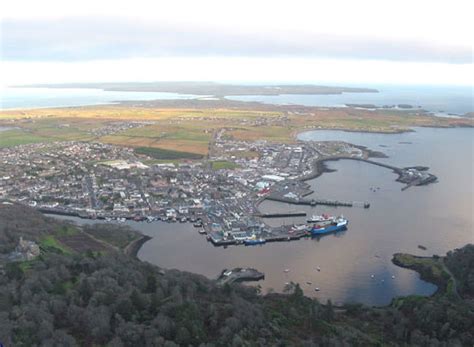
For many years I had wanted to visit the Outer Hebrides. The islands are on the edge of the map, and feel a bit like the edge of the world. We have been to the Uists and Benbecula twice in recent years, and this year we returned for a few days to Harris and Lewis, crossing on the CalMac ferry in the rain from Uig on Skye to Tarbert on Harris. 

In Stornoway we stayed in a very small house in the industrial quarter. It was not a pretty street, but it was a comfortable and well equipped little house. Stornoway is very much the metropolis of the Hebrides [population around 7,000]; with a clutch of shops and eating places, a ferry terminal and an airport, and a confusing profusion of churches. On Sunday morning we went to Martin’s Memorial [Presbyterian] church. The minister, Tommy MacNeil, has been there for nearly twenty years, and is committed to charismatic renewal in the spirt of the Lewis Revival. We happened on the Sunday which marked the end of their Sunday School year; lots and lots of children and young people, and some rather dated songs accompanied on guitar and flute.

Martin’s Memorial Church, Stornoway

One day we went to Uig, where the celebrated Uig chessmen were found. As well as the largest sapphire ever found in the UK. We walked across the extensive sands, without finding as much as a pawn; had lunch in the Uig Community Cafe, where we met Iain’s cousin; and admired the bust of Leif Erikson, an 11th century Norse explorer, who is thought to have been the first European to set foot on the shores of America some 500 years before Columbus.  The bust is modelled after a statue designed by Prof. August Werner for Seattle, Washington, USA. Replicas of the statue have been given to the places Leif lived or visited: Trondheim, Norway; Brattahlid, Greenland; and Vinland, at L’Anse aux Meadows, Newfoundland and Labrador, Canada. In 2018, Seattle’s Leif Erikson International Foundation gave this bust as a symbol of international friendship to mark the time Leif spent in the Outer Hebrides.

The following day we revisited the Callanish stones, an arrangement of standing stones placed in a cruciform pattern with a central stone circle. They stand on a low ridge overlooking Loch Roag. The stones date from around 2500BC, but were covered for many years by a thick layer of peat and turf which was only removed in 1857. There are suggestions that the stones were in origin related to astrology and the moon and the lunar calendar. Local tradition has it that the stones were in origin giants who refused to convert to Christianity.

Callanish Stones

Not far away up the west coast is Dun Carloway broch. It is the best preserved broch in the Hebrides, and parts of the old wall still reach 9 metres high on the east side. The broch stands on a steep, south-facing slope with splendid  views over Loch Carloway and the sea.

Red star over Hebrides

Our third ferry crossing brought us back to Ullapool. And fortified by CalMac fish and chips we drove down to Gairloch for a couple of nights. I played golf on the fascinating 9-hole course, nestling between the beach and the Church of Scotland. I lost three balls on the first hole, as my first tee shot sailed across the road and passing cars, but found two. In the end I lost eight balls on my only golf outing this year.

Gairloch golf course: on the 8th tee

On our last night at Gairloch we went to a talk in Poolewe Village Hall. Donald S Murray is a Lewis man, bilingual in English and the Gaelic, a writer of fiction and non-fiction, poetry and prose.  His recent novel, As the Women Lay Dreaming, is a fictional treatment of the Iolaire disaster. The talk was organised in conjunction with the Russian Arctic Convoy Museum in Laide. [Following our visit to the museum a couple of years ago, Susie is again exploring the idea of getting an Arctic Convoy decoration on behalf of her father who served as a junior ship’s doctor.] The talk was [notionally] about Russia and the Hebrides, and Donald Murray rambled discursively across the topic reading from his collection Red Star over the Hebrides, It went down well with a surprisingly healthy audience.

The road home

Envoi

Now we are home again in Edinburgh, home to the Euros and the Election. Neither has been promising so far. Today is Polling Day. Tomorrow may be the first day of a Brave New World. But I’m not holding my breath.

July 2024
Through a glass darkly – 128

Election Special

We are about halfway through this election campaign. ‘Two bald men squabbling about the ownership of a comb’ was Borges’ verdict on the UK war with the Argentine about the Falklands. That isn’t a fair description of this election. None of the major party leaders are bald, unless you count John Swinney.  But the campaign does take up an awful lot of media space, newspapers and television; and there have been at least two election specials with representatives of the seven so-called major parties. Which is rather unwieldy, and involves a lot of people talking over each other. Usually Angela Rayner and Penny Mordaunt, a tetchy couple.

Rishi Sunak is a polite man, a Wykehamist and a number cruncher, who made a lot of money in hedge funds in California. To where he may well return after the election. He has had a dreadful campaign. It began with him visiting a brewery in Wales and talking to men about the Euros. For which Wales failed to qualify. Then he went to Belfast for a press conference at the dock where they built the Titanic. Giving journalists the chance to ask if that was an appropriate metaphor for his campaign. And then came the D-Day fiasco. He has apologised copiously for his lack of judgement in cutting short his visit to Normandy in order to record an unimportant television interview with ITV. But it is quite extraordinary that no-one in his entourage and no-one in Number 10 appreciated that this was a blunder of the highest order. For which he has been pilloried by a lot of people, including fellow Tories of a military bent like Johnny Mercer and Penny Mordaunt. His basic campaign mantra is to say, at frequent intervals, that a Labour victory will cost every  family in the country £2,000 in  extra taxes. On closer questioning it seems that this figure was dreamed up by some Tory party SPADS, and relates to four years  rather than one year. And is anyway considerably less than tax increases already in the pipeline regardless of who wins the election.

Neither Rishi Sunak nor Keir Starmer are natural communicators. Starmer is dull, a solid enough lawyer, who has made the Labour party electable again after years in the wilderness under Ed Miliband and Jeremy Corbyn. If the polls are more or less right, he will become the next Prime Minister with a very substantial majority in the Commons. What worries me is that he seems to have no vision of the sort of country he wants the UK to be. And works hard at not saying anything radical that might offend people. He says that wealth creation will be at the heart of Labour’s programme. Which is deeply depressing. Unlimited economic growth is bad for the planet. I would be much happier with a Labour party that majored on redistribution; on dealing with the problem of steadily rising inequality. Both of wealth and of opportunity. And on building a new vision for the National Health Service. [We continue to spend less on our health system than either France of Germany]. Or for our flawed education system. Or dealing with the rising problems of mental health. Or our unsatisfactory transport system. Or global warming.

None of the other parties really count. The Lib-Dems are the only party committed to taking the UK back into Europe. And to cleaning up Britain’s rivers. But they are essentially lightweight. And Ed Davey’s stunts really belong in a Jeremy Kyle reality tv show. Nigel Farage is a very effective self-publicist. But he is an unpleasant character, labelled by a school friend as “a deeply unembarrassed racist”; disliked by many who have worked with him who see him as a power hungry narcissist. Reform, like UKIP, is basically a one-man show, with no policy other than ‘Net Zero Migration’. And no involvement or voice allowed to Farage’s supposedly 45,000 supporters. My guess is that Farage will again fail to be elected. For the ninth time. And will contest the leadership of the post-election English National party with Suella Braverman. The hard-line Tories.

Memory Lane

When was I last enthused by and involved in an election ? I certainly did some [modest  enough] campaigning for Harold Wilson in 1964. When he secured a narrow victory over Sir Alec Douglas-Home. Between school and university I was a member of the Putney Young Socialists, and campaigned with them for the election of Hugh Jenkins, later Lord Jenkins of Putney. [Not to be confused with Lord [Roy] Jenkins of Hillhead.] Wilson came to speak at Wandsworth Town Hall, arriving late as usual; and we were treated to a warm-up speech of the ‘Hang the bankers high from the nearest lamppost’ variety by Tony Booth. Who at the time was the Putney Constituency Youth Liaison Officer. Later better known as the father of Cherie Blair. And as the ‘scouse git’ in Till Death us do Part. But for the election itself I was in Oxford. Where the University Labour Club was less into knocking on doors, and more into sending lengthy telegrams to world leaders. 

British Labour leader Harold Wilson (1916 – 1995) holds a party press conference during the October 1964 general election campaign, UK, 6th October 1964. (Photo by Evening Standard/Hulton Archive/Getty Images)

With the benefit of several decades of hindsight, I think that Wilson, who became leader of the Labour party as a Left-Centre candidate, was a more effective politician than many people now believe. His major achievement was to keep British troops out of Vietnam in spite of the special relationship with the United States. [Are you listening Tony Blair and David Cameron ?] His major difficulty was that there were regular economic crises caused by a weak pound. And that Wilson, more a tactician than a visionary, was obsessed with leaks and factions within his cabinet.

Then two decades later in June 1983 I was actively involved in campaigning for the SDP Liberal Alliance in the West Oxfordshire constituency. The sitting Tory MP was Douglas Hurd, later succeeded by David Cameron. Nationally the Alliance polled 25% of the vote and came within 700,000 votes of outpolling Labour. It was the high point of the Alliance. But the First-past-the-Post system meant that the Alliance gained only 11 seats. Mrs Thatcher won the first of her two landslide victories,. The British victory in the Falklands War had helped her personal popularity. And economic growth had resumed. I was at the Election Day count at Witney Town Hall. Douglas Hurd didn’t turn up because his [second] wife was having a baby. [Like most of Mrs Thatcher’s cabinet, Hurd left his first wife to marry his secretary. The cabinet member who didn’t was Cecil Parkinson, who was pilloried for abandoning his secretary Sarah Keays, who gave birth to his baby.]

Two cheers for the archbishops

Possibly the best thing about this election is the prayer booklet, distributed by the Church Times, appearing under the imprimatur of the Archbishops of York and Canterbury. The booklet, called Pray your Part, contains brief Bible readings and prayer points for the twenty one days of the campaign. The themes include Integrity, Candidates, and Party Leaders, as well as Family Life, the NHS, Housing, Education, Overseas Aid, the Justice System etc.  The booklet has been condemned as ‘woke rubbish’ by some Tory party spokesperson – so it must be doing some good. And it a valuable corrective to negative onlookers like me.

A poisoned chalice

The sad truth is that, however much we might want to celebrate the departure of the Tories after fifteen years or so of incompetence and inequality and lying, there is no guarantee that things will substantially improve under a Labour government. The simple fact is that we can’t at the same time run a ‘low tax, high incentive’ economy while providing the level of social services, health, social care, education, that people have come to expect. There is no clear way of squaring the circle. Tory policies mean that the poor will continue to get poorer. While fulfilling Labour policy objectives for the health services, our transport infrastructure, our rivers etc. would need significantly higher taxes for businesses and the wealthy. Which Labour is understandably unwilling to acknowledge.

I was reading the exhaustive [and exhausting] Crossman Diaries a couple of weeks ago. Richard Crossman [1907-74] was an intellectual snob, an Oxford academic, a journalist, a left-wing Labour MP, and a not particularly successful cabinet minister. Writing in December 1967, when he was Lord President of the Council and Leader of the House of Commons in Wilson’s administration, Crossman reflects:

When I look back over these three years I realise how much better we could have done and how everything we have done has been too little and too late. The main disasters are our own fault … … Why was it that when the Labour Government came in after thirteen years the men who took charge of [the economy and] foreign policy and defence all believed that it was their role to prove that Labour could run Great Britain as well as the Conservatives ? Not one of them admitted that the job of a socialist was to scale Britain down to an off-shore island, to accept devaluation, to accept the winding up of the sterling area and to do these things voluntarily and not under compulsion.

… … That’s why it is vital that this new Statement should be a Statement of strategic intent – a new start in government ;policy and not merely the announcement of an economy package.”

I very much hope that we shall not be hearing a similar verdict on Keir Starmer’s administration in three years time.

Envoi

Scotland lost their first Euros game rather embarrassingly. But Germany are better than many commentators expected. And Scotland perhaps not quite as bad as their critics now think. England won their opening game; they totally annihilated Serbia 1-0 ! And they are not [yet] as good as their cheerleaders like to imagine.

Let me end on a happier note. Although too often cool and wet, it has been an excellent year in the garden, especially for roses. There was a very full church and positive atmosphere in Priestfield church this morning, welcoming for the first time the new combined congregation of Newington Trinity. And Susie and I are off up north later this week, heading for Skye and then on to Lewis. Admittedly we are packing pullovers and anoraks and rubber boots ! And perhaps a few books.

June 2024

Through a glass darkly – 127

En Marche

We are just back from a family holiday in Barneville-Carteret [see TaGD 126]. As a resort it reminds me strongly of French life of an earlier age. 

My first French textbook, starting the language at CH in 1956, was called En Marche. The following year we progressed to the second book En Route. My guess is that both books were published just before, or perhaps a little after, the First World War. They featured a young French boy – Toto Lépine. “Voici Toto. Bon jour, Toto. Voici son père. Bon jour, Monsieur Lépine. Et voici sa maman. Bon jour, Madame Lépine.” The life of the Lépine family offered a picture of France that was rather different from the country that I first visited a few years later, as a hitchhiker, in the early 1960s. And different from the Paris where Susie and I lived in the 1970s.

The Lépine family lived in a suburb of Paris, equipped with a good range of shops. In the mornings they bought their bread at la boulangerie. Cue a photo of a man in a beret with a baguette. Later in the day Madame Lépine would do her shopping by visiting in turn l’épicerie, la boucherie, and le marchand aux quatre saisons. If any of the family were unwell she visited la pharmacie. At the weekend Monsieur Lépine might visit la quincaillerie. Perhaps for a new hammer and some nails. And on the way home he might stop for a glass of wine at l’auberge and a chat with l’aubergiste. The supermarché, which served virtually all our needs in Paris in the 1970s, did not yet exist. There were restaurants, but seemingly neither cafés nor bars. And there was certainly no question of Le Drugstore, a passingly fashionable meeting place in Paris in 1975, one found at St Germain dès Près and another at the lower end of the Champs Elysées.

I don’t recall the Lépine’s running a car. Though Toto may well have had a bicycle.Which he would have used for weekend excursions to the Jardin de Luxembourg. Around Paris the family travelled by bus. There were two kinds of bus top; the arrêts fixes and the arrêts facultatifs, from which you had to sign to the bus driver. At either bus stop you tore off a ticket from the strip when you arrived, so that the queue could mount the bus in an orderly fashion ! [Show them a queue, and they haven’t a clue !] On the bus itself smokers could stand and smoke on an open-air platform at the back.

For their summer holidays the family would make their annual visit to Granville, taking the steam train from the Gare St Lazare.  [I’ve never been to Granville, which was quite close to us last week; but Joanna went there aged about 3 months from Paris with Susie.] I don’t recall what the Lépine family did there. But I think there were illustrations of ice cream cornets and candy floss, , and shrimping nets, and small pleasure boats. All this came back to me in Carteret last week. The Lépines might well have gone there in the 1930s or the 1950s, in the days when there was a station and a train service; and they would have stayed demi-pension for two weeks in one of the hotels on the front. And would certainly have rented a beach hut. Where they would doubtless have listened to the metéo on a poste de TSF. But perhaps I’m getting confused with Jacques Tati’s 1953 film M Hulot’s Holiday ? [I want to believe that I am too young to remember and appreciate Tati. Who in my memory looked very like Général de Gaulle. But I enjoyed seeing Jour de Fête when a full colour version was reissued in the mid-1990s.]

Charles Trenet

We know that remembering things wrongly is a sign of ageing. But equally as you grow older you start to remember events and conversations that never actually happened. I was never really into French pop music; beyond watching Françoise Hardy in the summer of 1962 singing Tous les garçons et les filles. 

Tous les garçons et les filles de mon âge

Se promènent dans la rue deux par deux

Tous les garçons et les filles de mon âge

Savent bien ce que c’est qu’être heureux

Et les yeux dans les yeux

Et la main dans la main

Ils s’en vont amoureux

Sans peur du lendemain

Oui mais moi, je vais seule

Par les rues, l’âme en peine

Susie unlike me did her degree in French, and was enthusiastic about people like Jacques Brel [Belgian] and Georges Brassens, Who always sings too fast for me to catch the words.

My favourite period French singer is Charles Trenet. To whom I have been listening in recent days. Louis Charles August Claude Trenet was born in Narbonne in May 1913. He started writing songs for Benno Vigny in 1933, and then performing with the Swiss pianist Johnny Hess. By the late 1930s Trenet was topping the bill at music halls in Marseille and Paris, as well as making some five feature films. After the armistice in 1940 Trenet took refuge in the Free Zone in the south. But later returned to the occupied capital, and was enrolled alongside Tino Rossi and Edith Piaf to tour the German Reich in order to boost the morale of French prisoners. In the course of a long career Trenet is said to have composed over a thousand songs. The best known is probably La mer [1946], translated into English as Beyond the sea. He ostensibly retired in 1975, the year that Susie and I began our time in Paris, but he made a series of regular come-backs ending in a farewell performance at the Salle Pleyel in Paris in 1999.

When I listen to some Trenet songs I can almost recall making Friday evening visits to the Paris music hall in the inter-war years. Such as Le grand café [1938]. With an overpowering smell of scent and caporal tobacco. 

Au Grand Café vous entrez par hasard 

Tout ébloui par les lumières du boul’vard 

Bien installé devant la grande table 

Vous avez bu, quelle soif indomptable 

De beaux visages fardés vous disaient bonsoir 

Et la caissière se levait pour mieux vous voir 

Vous étiez beau vous étiez bien coiffé 

Vous avez fait beaucoup d’effet 

Beaucoup d’effet au Grand Café. … …

And Moi, j’aime le music hall [1955]. With me standing open-mouthed near the back among the velvet drapes.

Mais depuis mille neuf cent 

Si les jongleurs n’ont pas changé, 

Si les p’tits toutous frémissants 

Sont restés bien sages sans bouger 

Debout dans une pose peu commode 

Les chansons ont connu d’autres modes. 

Et s’il y a toujours Maurice Chevalier, 

Édith Piaf, Tino Rossi et Charles Trenet 

Il y aussi et Dieu merci 

Patachou, Brassens, Léo Ferré. … … 

Envoi

Enough of this nostalgia and false memory. There is a general election going out out there. So far it has been pretty unedifying. And I hope to write something about it next week.

June 2024