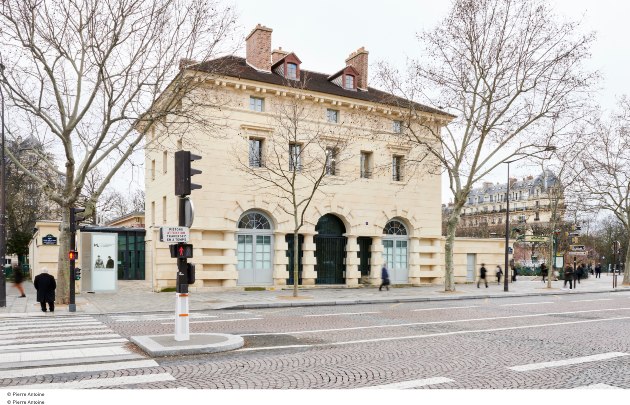
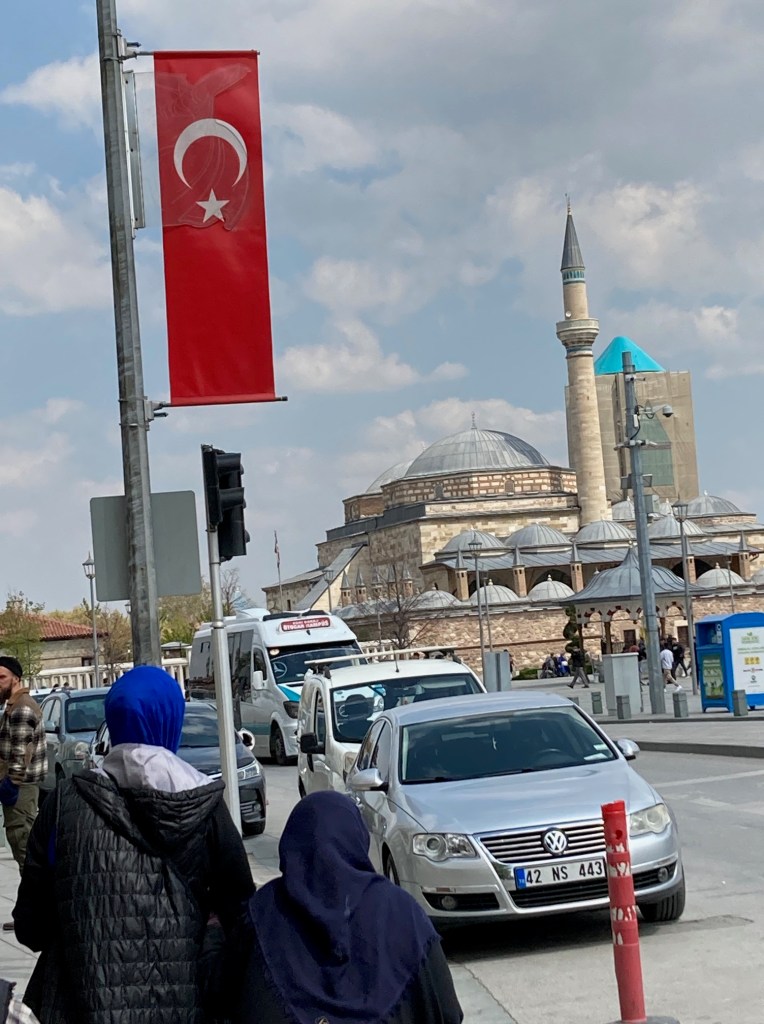
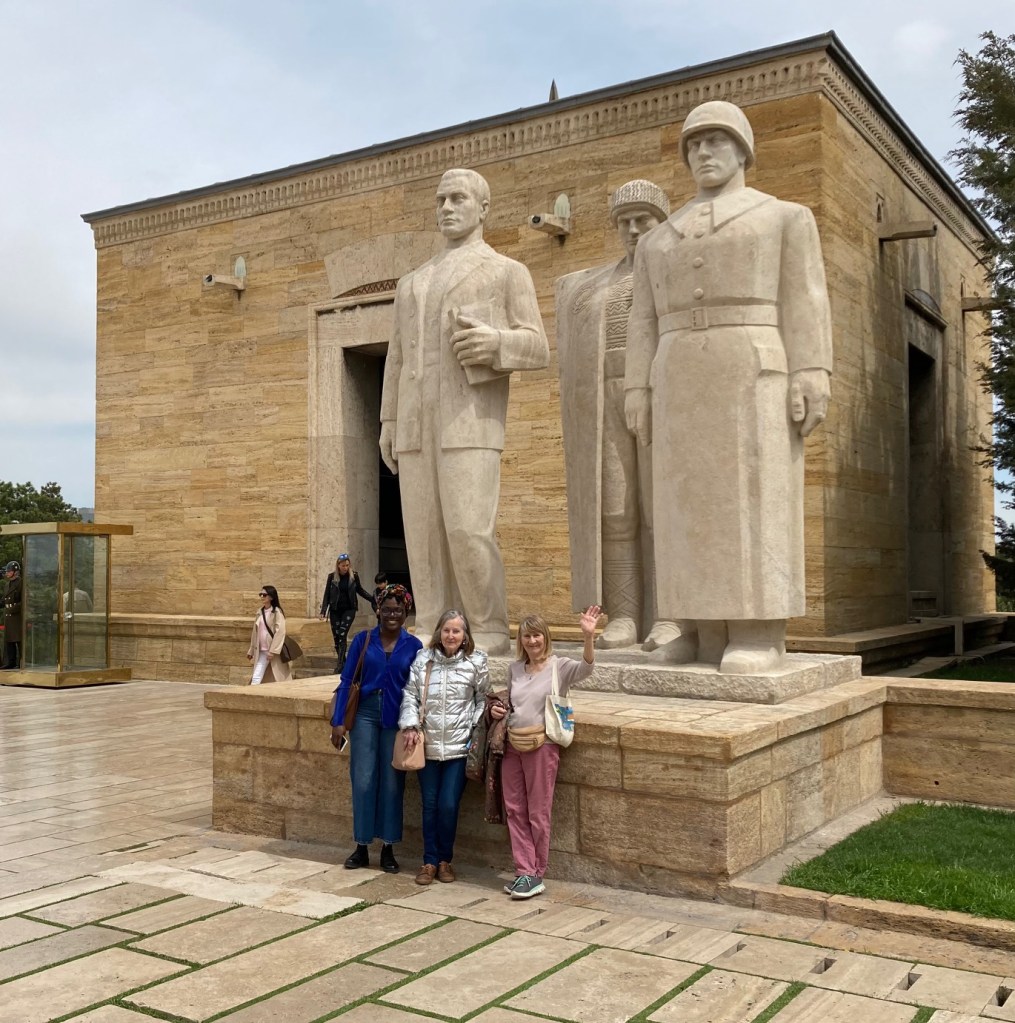
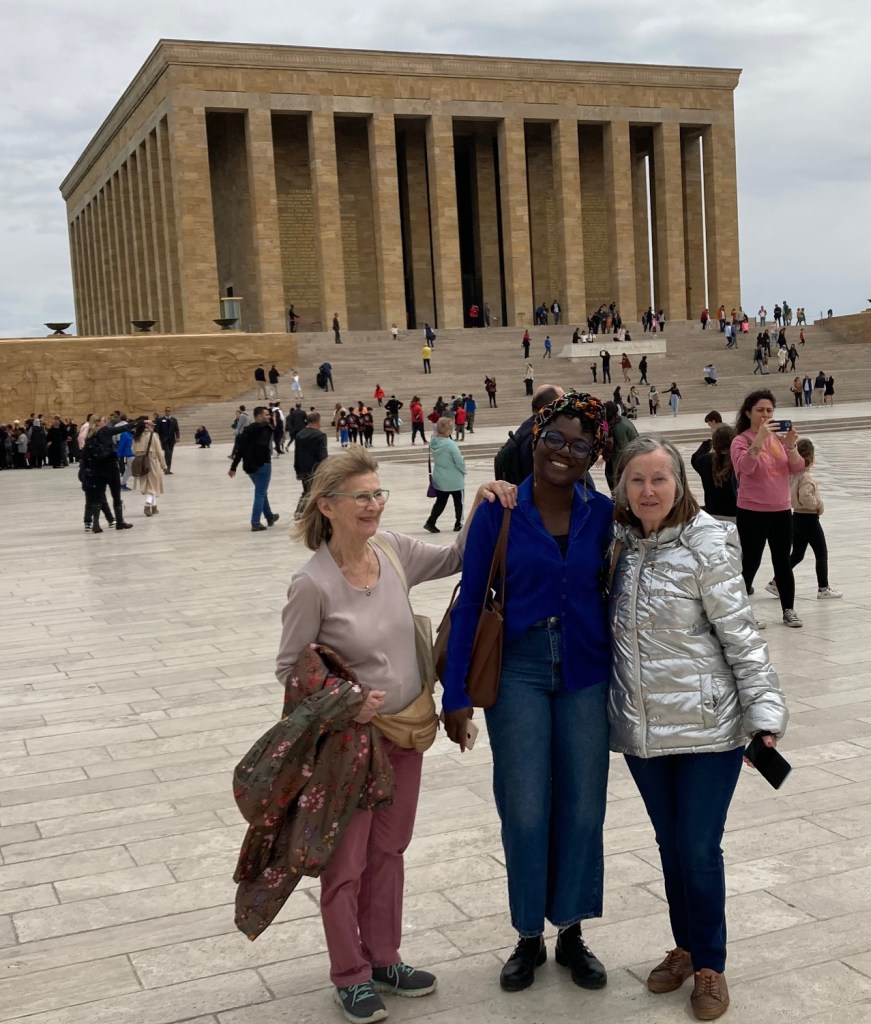
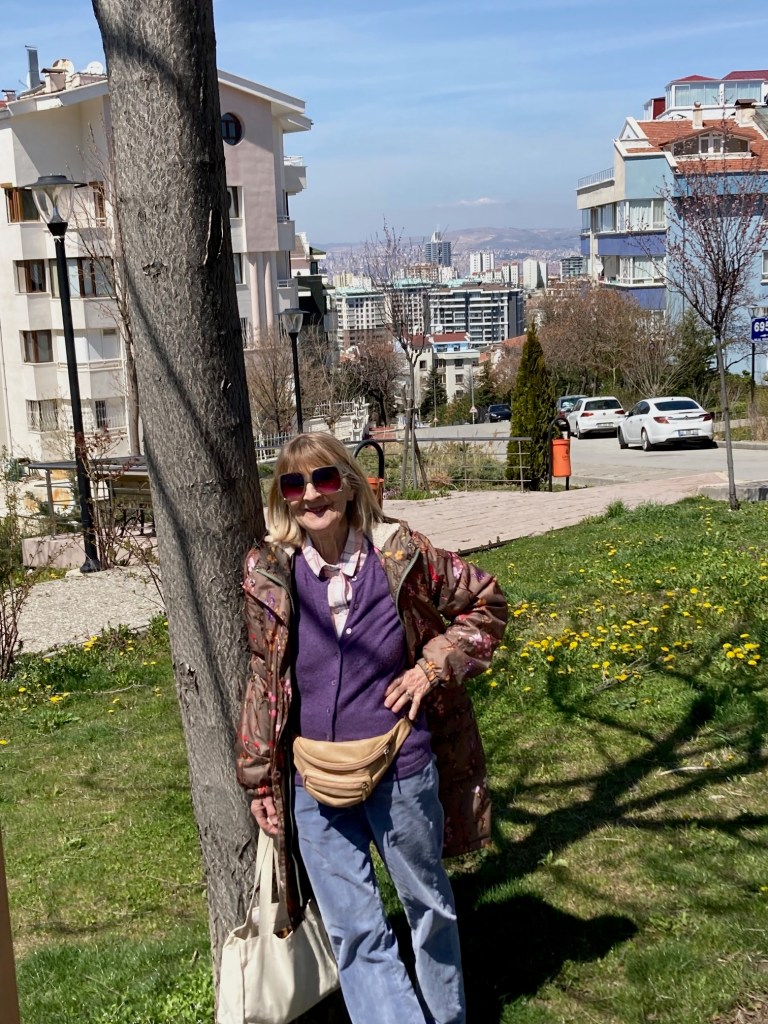
On Tuesday we went with Elizabeth and with Juanita to Anitkabir, undoubtedly the major tourist attraction in Ankara. Elizabeth is the doyenne of the congregation at St Nicolas, married to a Turkish geologist, and has lived in Ankara since the 1970s. Juanita is a Ghanaian, who trained as a doctor in Kiev, in the Ukraine. but teaches here in a primary school. Anitkabir is the mausoleum of Mustafa Kemal Atatürk, the founder of modern Turkey. Everything is on a gigantic scale.
When Atatürk died in 1938, in Istanbul, his body was brought here and placed in the main hall of the Ethnography Museum. In 1941 a competition was organised to design a fitting memorial, or mausoleum. The Mausoleum sits in a Peace Park of some 750,000 square metres, containing almost 50,000 trees donated by some 25 different countries. Approach to the Mausoleum is via the Road of Lions, a 250 metre pedestrian path flanked by 12 sculpted lions in Hittite style. This path leads into the Ceremonial Square, built to hold some 15,000 people. The Museum comprises some of Atatürk’s belongings – ceremonial daggers and swords, expensive pens, military uniforms, pyjamas and dressing gown [everything except his truss and his tooth-brush]; lively paintings and representations of the major battles of the War of Independence; and an exhibition of some of the major achievements of his presidency. We paused at this point for coffee in what may be the world’s most chaotically organised museum cafe. Presided over by two charmless young women.
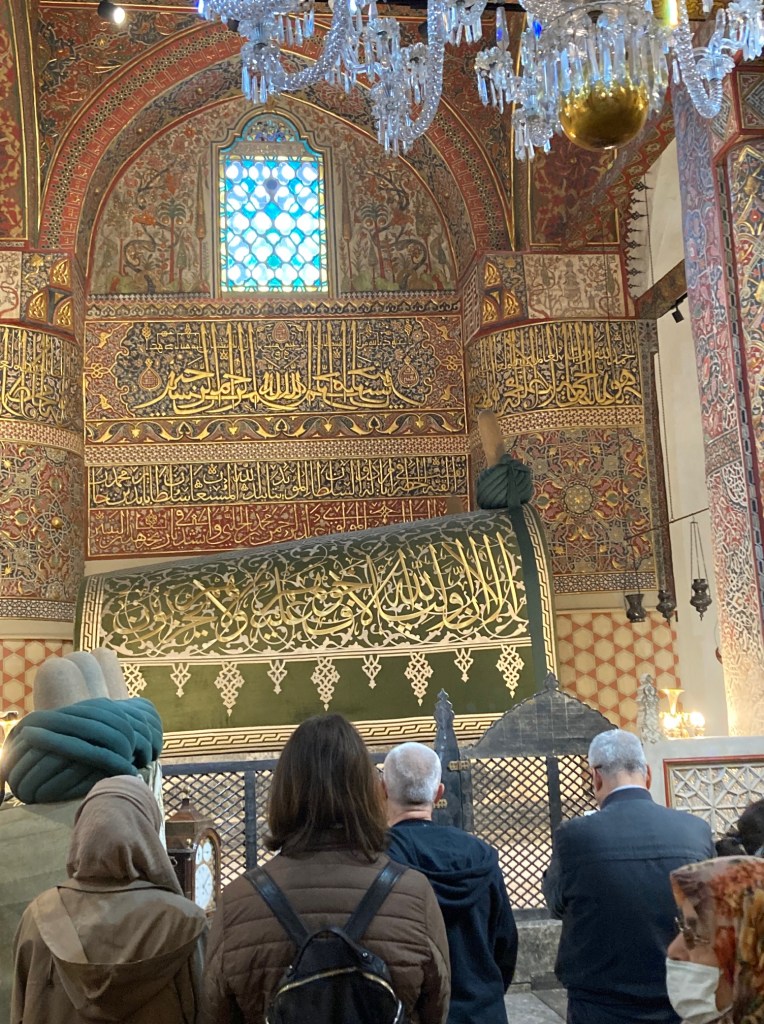
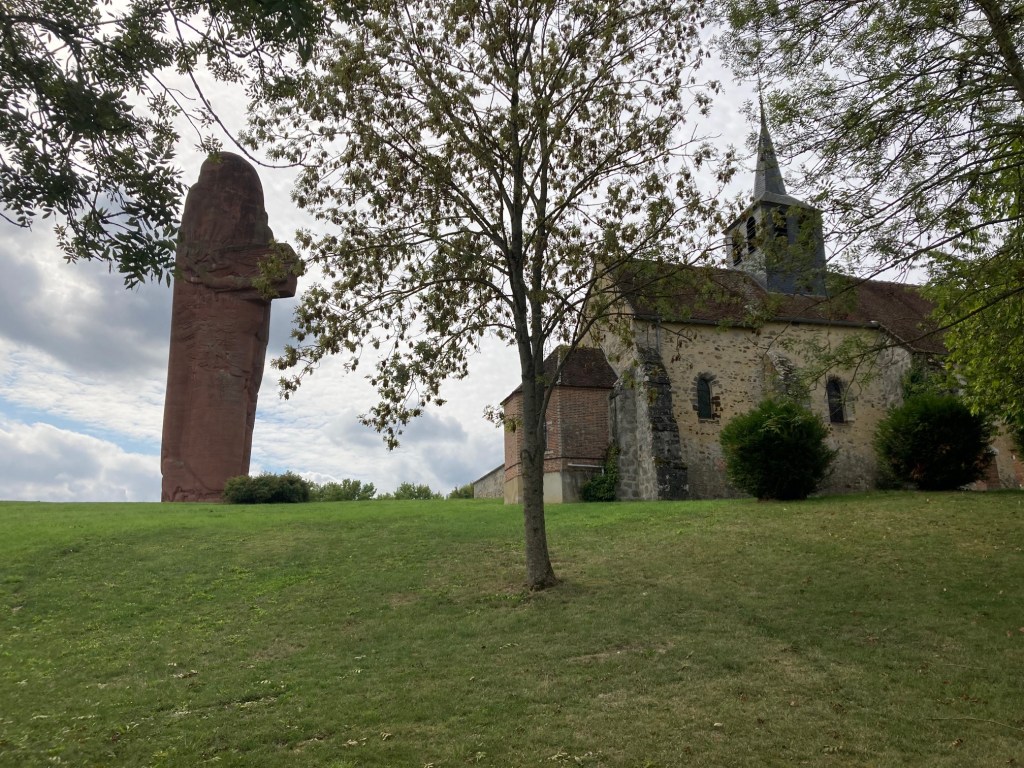
The culmination of the tour is the Hall of Honour. You mount 42 steps from the Ceremonial Square to enter a rectangular building. with an elaborate 17 metres high ceiling. The hall is empty except for a massive 40 tonne red marble sarcophagus. And crowds of Turkish families taking photographs on their phones. The intention is that every Turk should visit the Mausoleum, at least once. Atatürk was undoubtedly as great man, who made possible the emergence of modern Turkey. But it all smacks of emperor [ancestor] worship. The whole complex looks like an Osbert Lancaster cartoon [from his Pillar to Post] to illustrate ‘Monumental Totalitarian Architecture’.
Election time
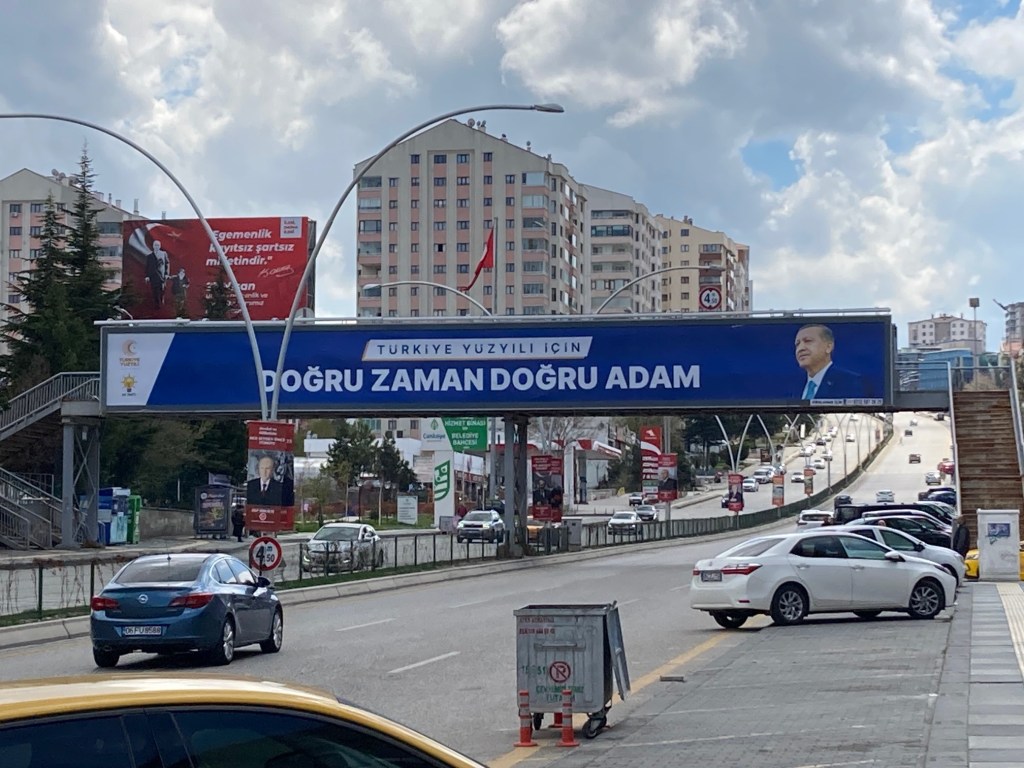
There are big posters on the streets for next month’s elections. Both municipal and presidential. For President Recep Tayyip Erdogan the coming election is of major importance. This year, 2023, is the centenary of the creation of the secular Republic of Turkey under the direction of Mustafa Kemal Atatürk. If Erdogan wins, he will be empowered to put even more of his stamp on the government; to break with Atatürk’s heritage and to press for an increasingly conservative religious model. It is not clear to me whether Erdogan is a genuinely religious man. Or just a politician who wants to play the Muslim card to his advantage.The results of the election will have a significant impact on Turkey’s role within NATO; on Turkey’s future relationship with the States, the EU, and Russia; and on Ankara’s policy towards the war in Ukraine.
There are four presidential candidates. The main challenger to Erdogan is Kemal Kılıçdaroğlu, nicknamed the’Turkish Gandhi’, who is promising big changes. The opposition is confident it can unfreeze European Union accession talks — at a standstill since 2018 over the country’s democratic backsliding — by introducing liberal reforms; in terms of the rule of law, greater freedom for the media, and depoliticisation of the judiciary. In the event of a close result, it is not clear whether Erdogan would willingly stand aside. We shall see soon enough.
On the streets
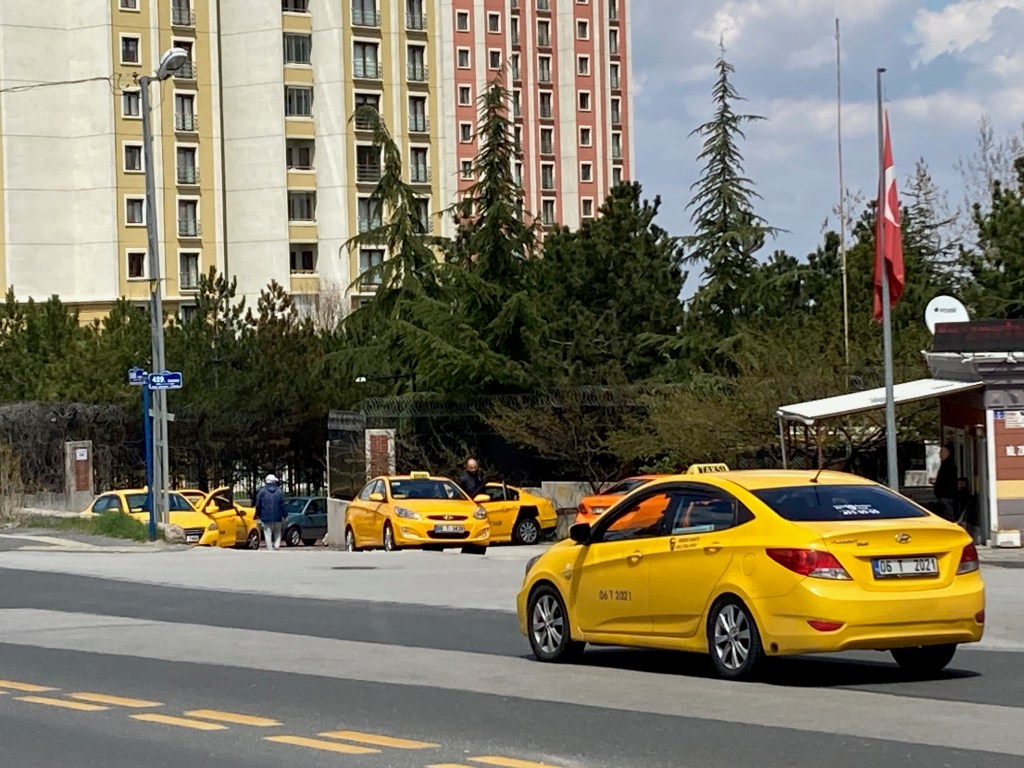
It seems to me that there are fewer police on the streets than three years ago. And that they have swopped blue blouson jackets for all-black outfits. By contrast the vast number of taxis are an almost luminous orange. The taxis have vigorous competition from what seems to be an efficient bus service and a network of dolmuss, communal mini-buses. Few people talk on the bus, though some whisper into their phones. Young people are quick to offer a seat to Susie and to me. For which we are grateful. The driving is mainly aggressive with much use of the horn. It is quite common to see a car with its bonnet up at the side of the road with four or five men peering at the engine. And perhaps an older man as back-up on his mobile phone.
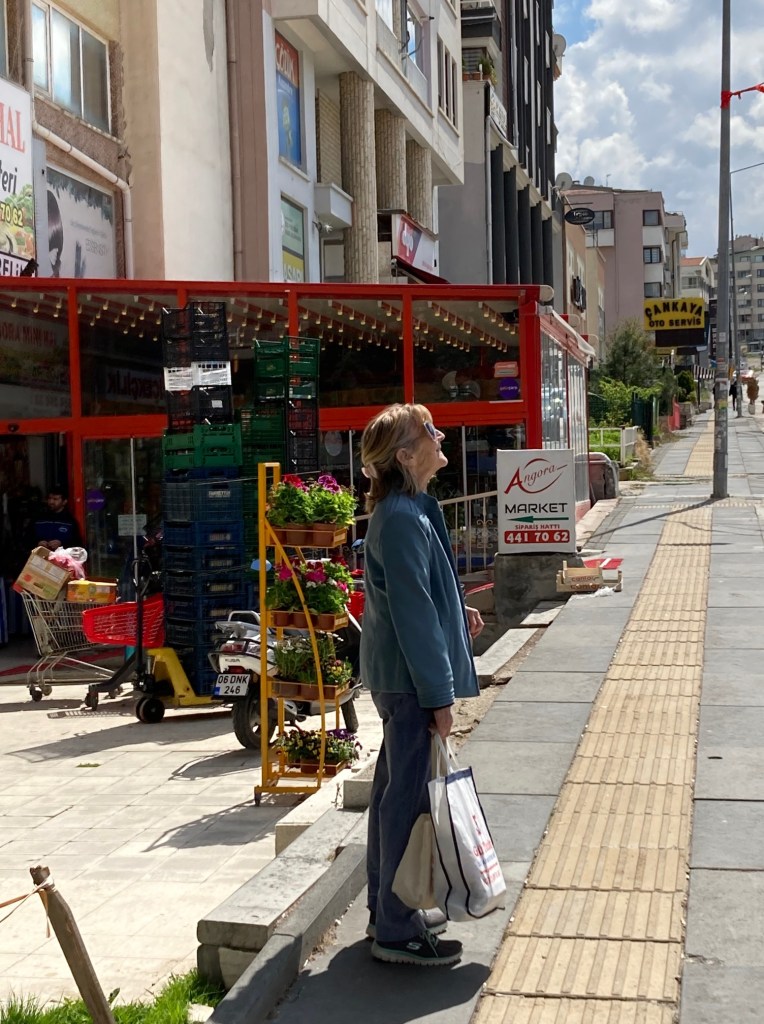
The pattern of commerce, of shops, is puzzling. On Rabindranath Tagore Caddesi., the nearest shopping street, there are innumerable cafes and restaurants, most of which are generally empty. And there are numerous ‘[super]markets’, with a limited stock of cold drinks and some basic groceries. There are several pharmacies and two flower shops. And a sprinkling of shops that sell electrical appliances and mobile phone covers and mobile phone chargers and similar accessories. But there is nothing that looks like a traditional baker’s or butcher’s shop.
Yesterday was the end of Ramadan, a holy day for Muslims. There were crowds of people in town; families with children, gangs of young boys, gaggles of young girls. In the sunshine it felt like August Bank Holiday. And there was free travel on the buses. Tomorrow we shall be back in church for the third Sunday of Easter. The gospel reading is the encounter on the Emmaus Road. Which for me is one of the most evocative of all Bible stories.
Dave very kindly gave us lift to the airport in Edinburgh, and it was mid-afternoon when we took off. But it was 22.30h local time when we landed in Istanbul. The flight with Turkish Airlines was excellent: comfortable seats, good food, and we arrived ten minutes early. The new Istanbul airport is about the size of East Lothian. The onward flight is little more than an hour. We are back in Ankara, doing locum work with the congregation of St Nicolas in Myra.
We arrived at Ankara airport at 3.25am, a pretty uncivilised time. The driver who was to meet us at the airport [or so I understood] did not materialise. Thankfully we were bailed out by a very helpful taxi driver, who took us to the front gate of the British Embassy to collect the keys, and then brought us on here to the apartment. And was very happy to be paid in £ sterling. For which I was very grateful. [The alternative would have been euros.]. We are in a very comfortable apartment in Çankaya, with a technical college and a mosque across the road.
Ankara
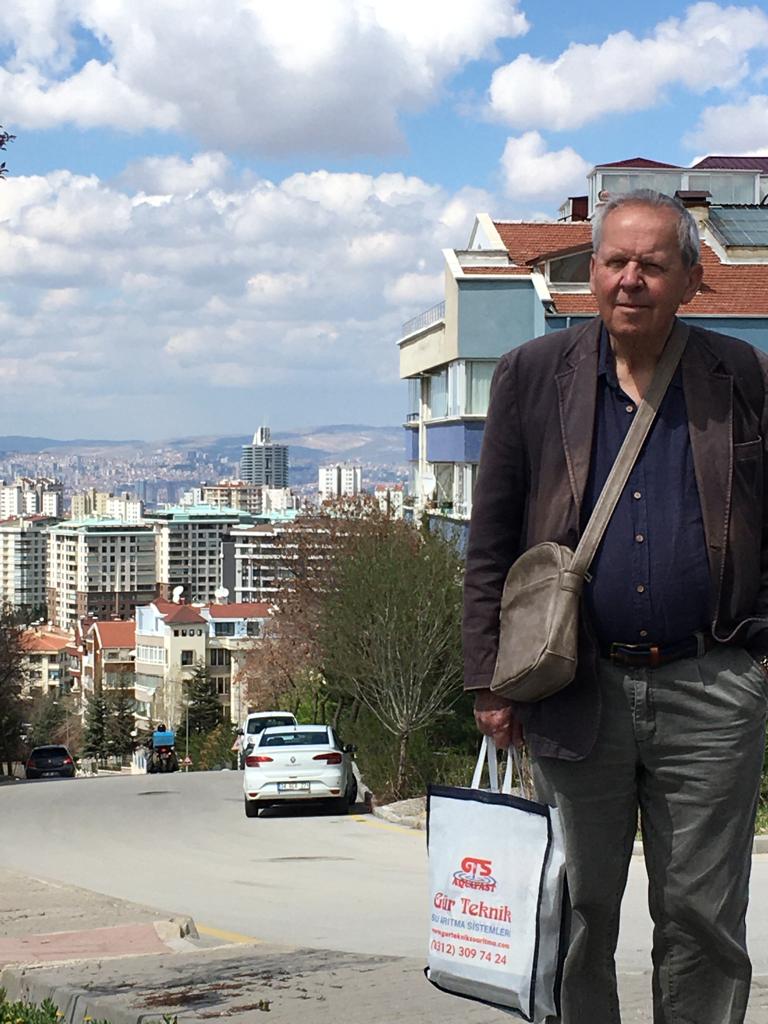
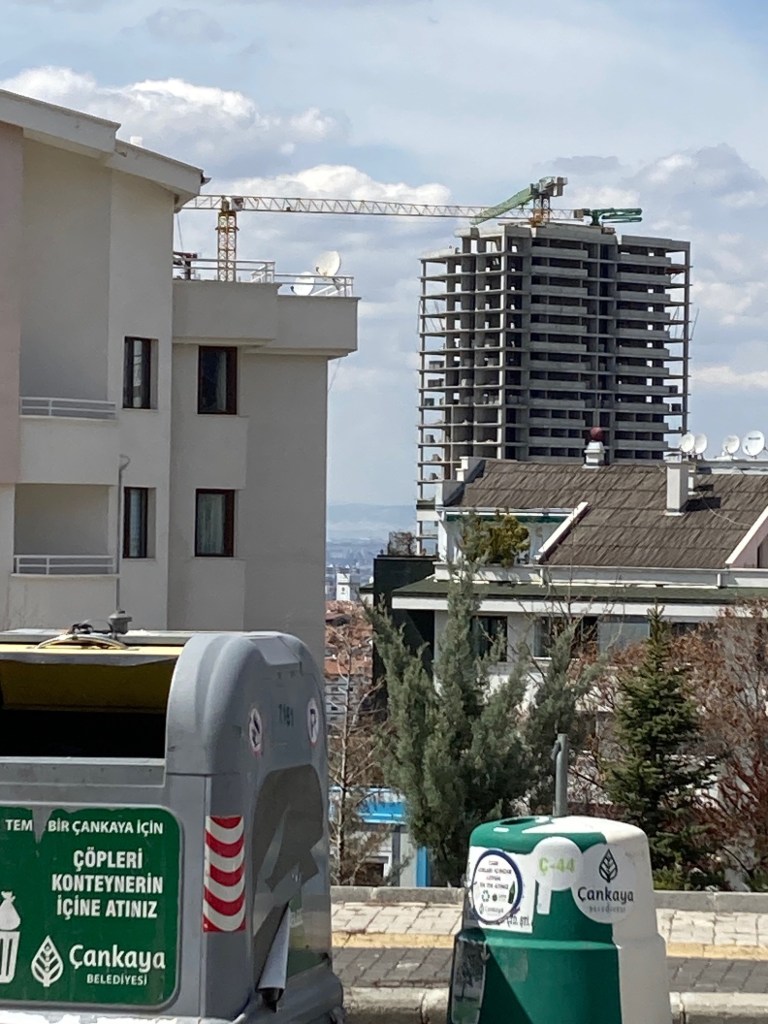
Ankara is an enormous city of some 5 to 6 million people, all built since 1926. When Atatürk chose to make this remote, primitive railway junction, high up on the Anatolian plateau, the capital of the new secular Republic of Turkey. In place of historic Constantinople which was too closely associated with the [bad old days of] the Ottoman Empire. Our apartment is high up on the south side of the city, and looks out across rolling hills of modern, pale-coloured apartment blocks. There is a huge amount of building going on.
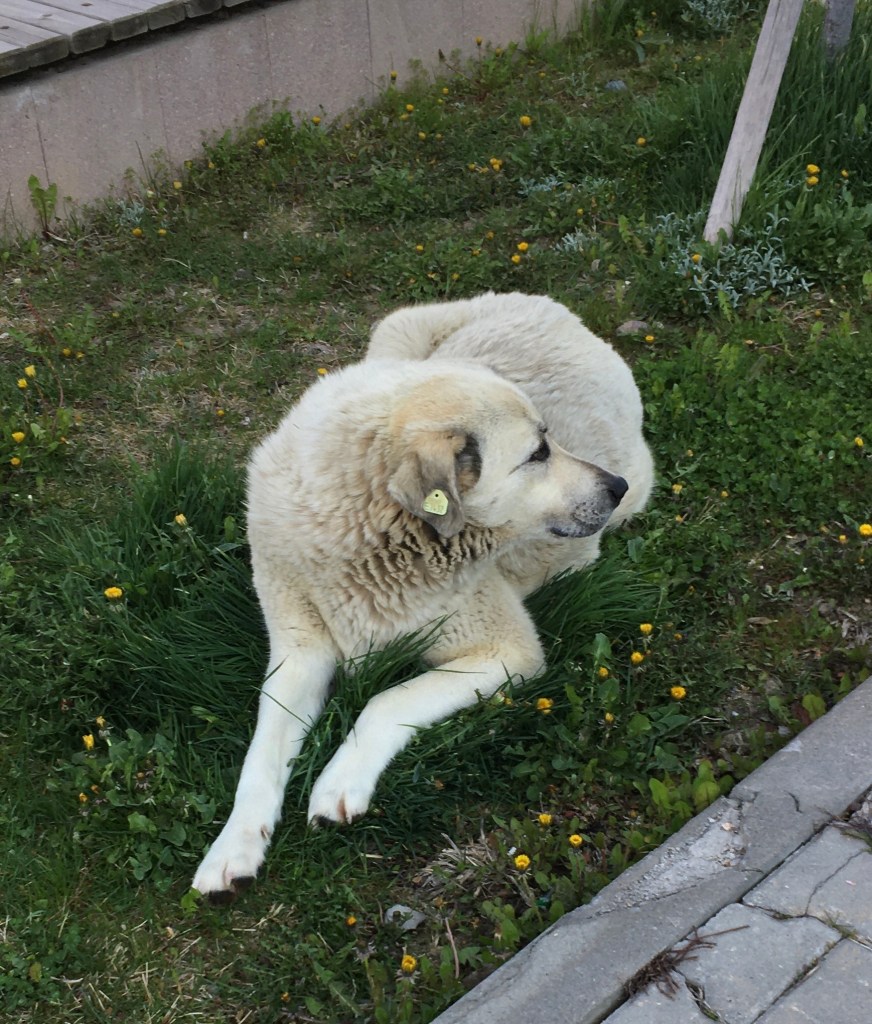
Where the ground is too steep to build on, vacant plots of grass and stones are inhabited by packs of big, but friendly, wild dogs. They are handsome Anatolian sheepdogs. And they are not available for export.
Saint Nicolas of Myra
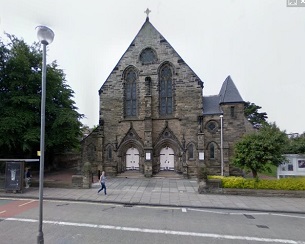
Saint Nicolas of Myra is an attractive, stone-built, modern, single storey chapel. It is in the grounds of the British Embassy, which means that access is through a double security gate where a guard checks your passport against the list. Those who wish to attend church have to register, with their passports, by the previous Thursday. Which rather militates against casual church going ! The church is about half an hour’s walk from the apartment, mainly downhill, down the busy Rabindranath Tagore Caddesi. Which is full of eateries and small supermarkets.
There has been an Anglican presence in Turkey for centuries. But the Ankara chapel dates from about sixty years ago. It was built within the Embassy compound with most of the money donated by Americans. We had lunch with Ron, one of the founding fathers, yesterday. The congregation has gone up and down over the years. Susie and I were last here for Advent and Christmas 2019. When the church was recovering from a schism caused, in part, by the influx of a large number of Iranian refugees. But there were tensions among the Iranian diaspora, and eventually all Iranians were banned from the compound. Which dramatically reduced the size of the congregation.
Yesterday morning there were 18 of us, variously from the UK, from South Africa, the United States, the Netherlands, Ghana, Zambia, and Zimbabwe. The service was Common Worship Holy Communion. Singing is from Anglican Hymns Old and New. The organist is Zeynip Balkanli, Turkish, a Muslim, and delightful. She has been playing at church for about 15 years. The diversity of the Diocese in Europe is always a delight.
Everyday life
Some nights we are wakened in the dark by the call of the muezzin. But not this morning. Instead the day began with a power cut, happily not too long. And some communication issues centred on the church mobile phone, an Android. I know my limitations and don’t go near it. But Susie is wrestling with it to communicate with the local congregation What’s App group.
This afternoon we took the bus down into town, about 25 minutes, all downhill, in order to buy an Ankara travel pass. The flat rate for all bus journeys is 9.5Tl, a bit less than 50p. The alternative is to take a dolmuss, a communal mini-bus. For which the standard rate is 10 Tl. On the way home we were caught in a sudden and violent thunderstorm, with hail and heavy rain. Not foreseen by the BBC weather forecast. But generally the last few days have been warm and sunny.
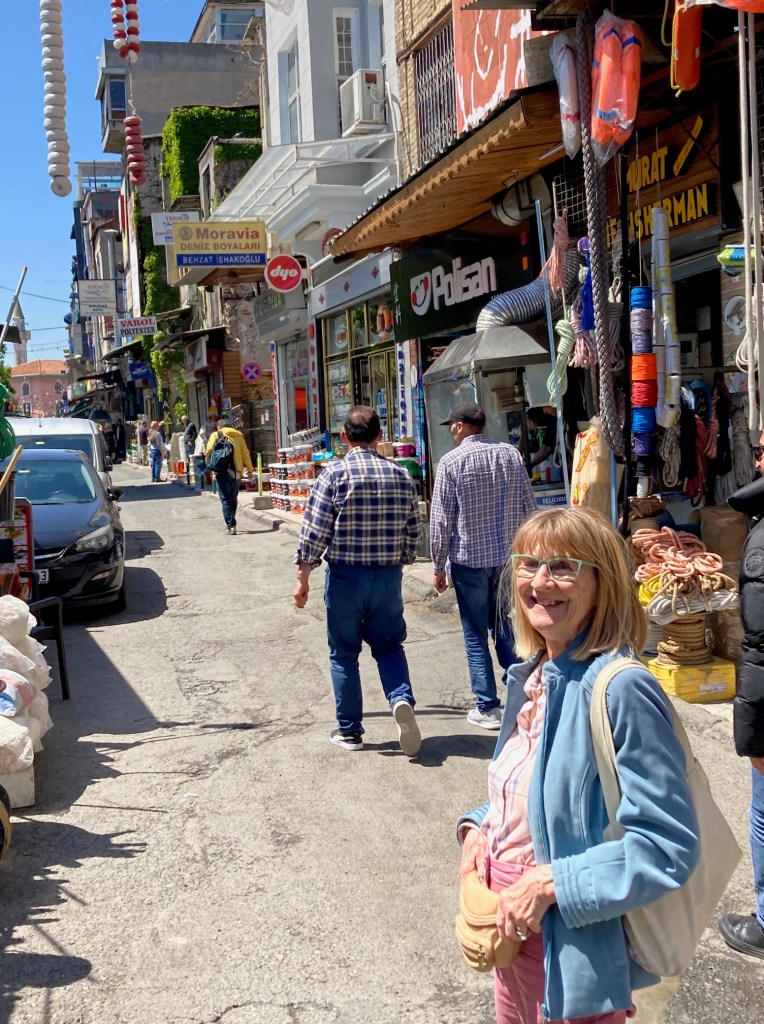
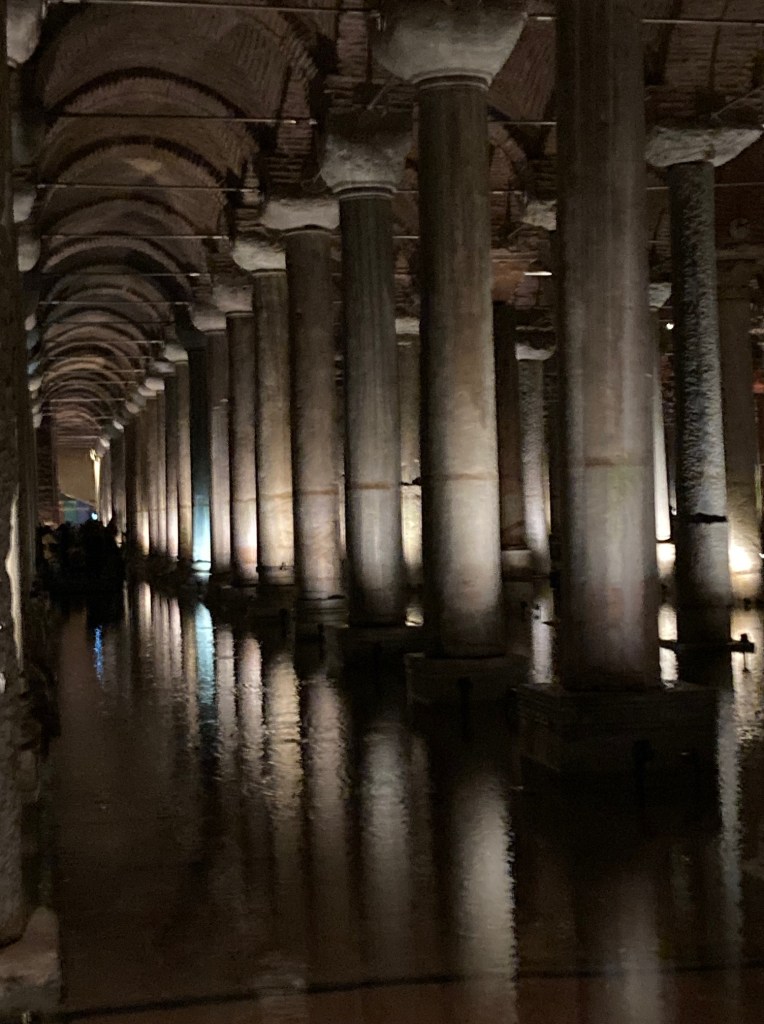
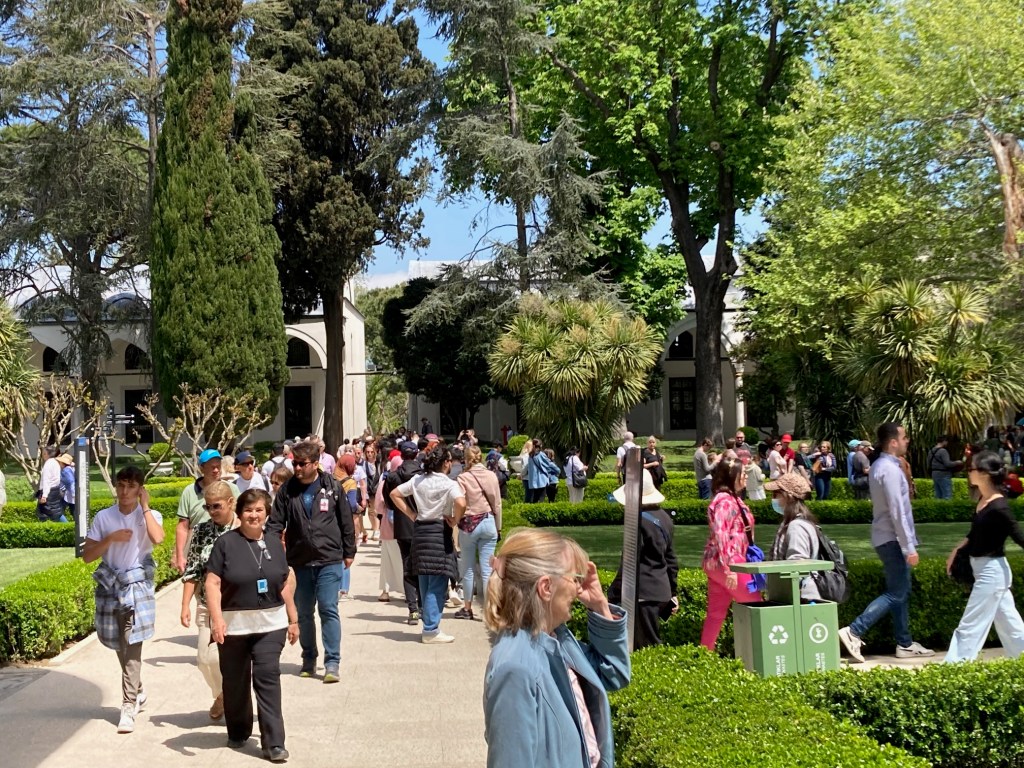
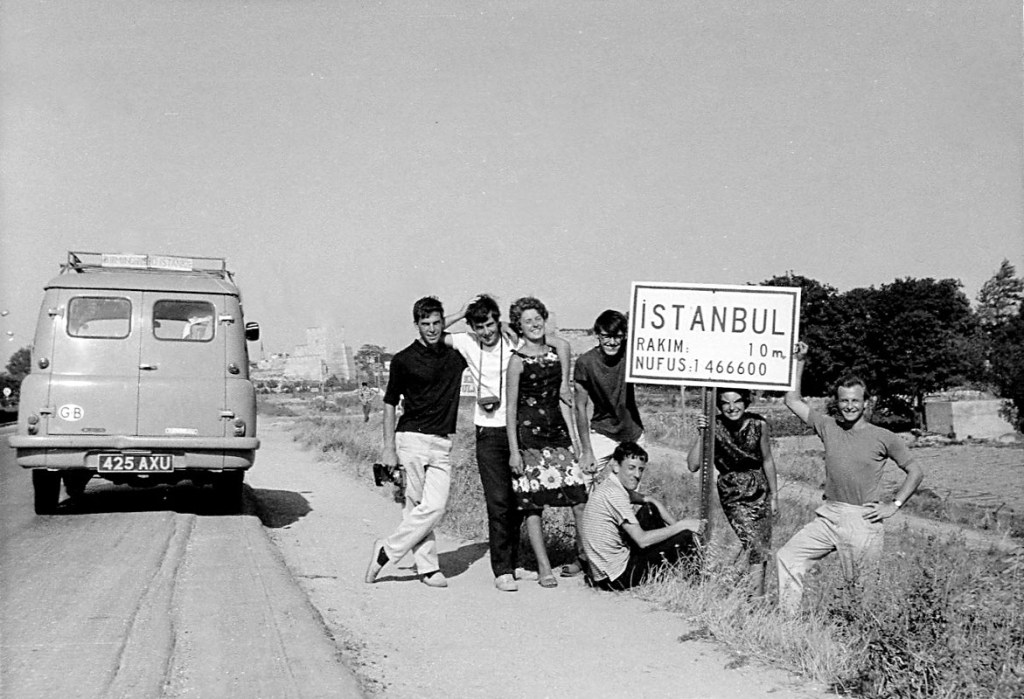
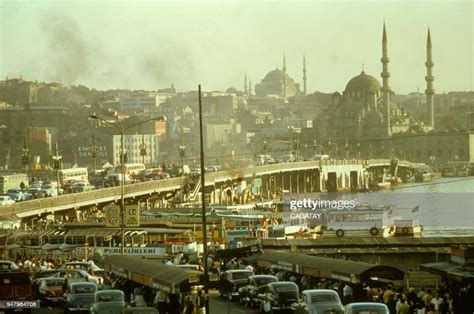
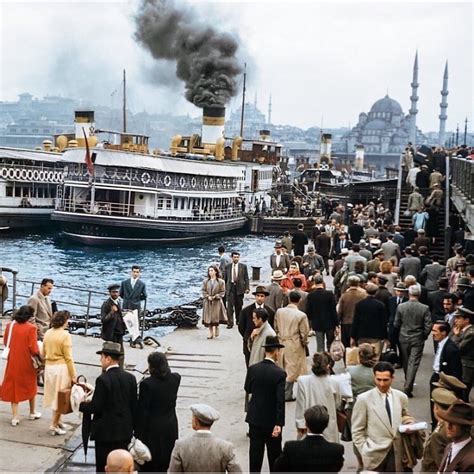
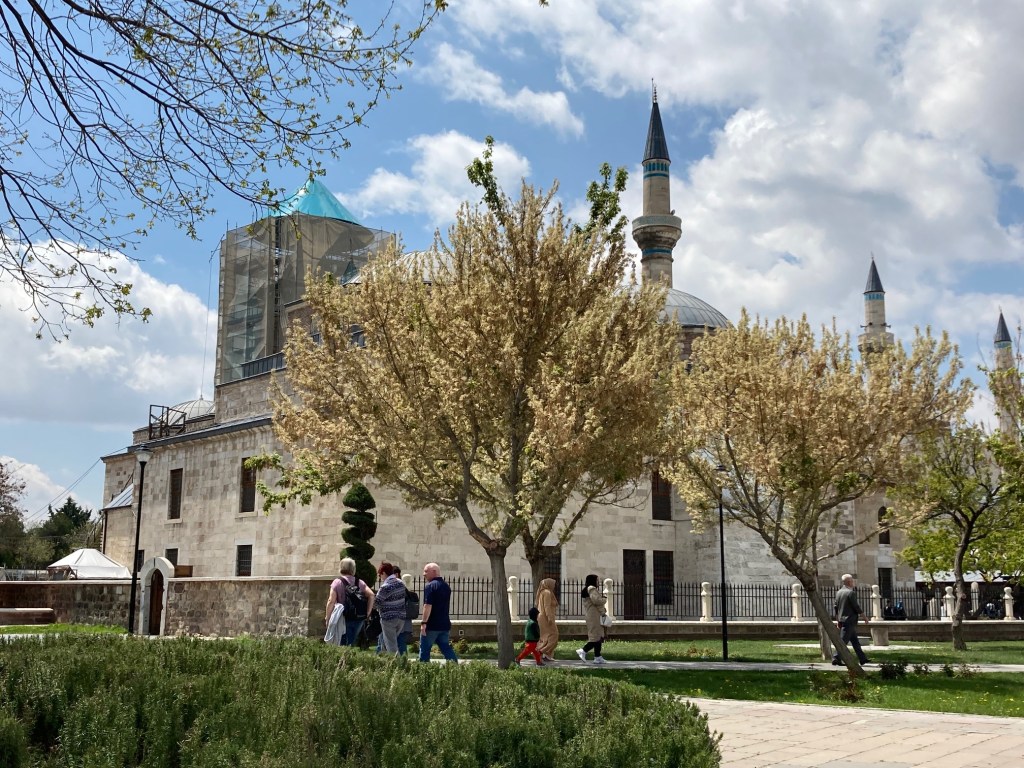
While we are here we plan to visit Atatùrk’s enormous mausoleum, And the Roman Baths. And to return to the old quarter around Ulus and the Citadel. And possibly to go down to Istanbul on the train. I was first there as a hitch-hiker some 60 years ago.
Ich habe angst was the phrase that caught my attention. Denis Lennon used to say that there may be just one thing in sermons through which God speaks to us. And we should concentrate on that phrase or that verse. [And ignore the rest ?] During Passion Week there is by tradition a Newington Churches Together service each day at Craigmillar Park church at 7.45am. Just a hymn or two and a reading and a reflection by one of the local ministers. Followed by a simple breakfast in the adjoining church hall. I like to try and get there when I wake up in time. And when it’s not raining. It is a tradition whose days are numbered; as the Church of Scotland is currently reorganising itself into a smaller number of linked charges. And Craigmillar Park is one of the churches that has not made the cut. [My suggestion is that it should be water-proofed, filled with water, and then turned into a Diving Centre. But not everyone agrees. It’s more likely to become a block of flats.]
On Wednesday morning the reading was from Mark 11, where Jesus takes Peter, James, and John along with him to the Garden of Gethsemane. Jesus is deeply distressed and troubled. He prays to the Father, “… everything is possible with you. Take this cup from me. Yet not what I will, but what you will.” After praying he returns to the disciples and finds them sleeping. He chides them for not being able to stay awake at this critical moment. And then the whole thing happens all over again.
[The Revd Dr] Sandy Forsyth, the minister at Mayfield Salisbury, asked us what we understood when we exchanged the Peace in a Sunday service. Clearly peace is something to which we as Christians aspire. And it is clearly linked to the presence of Jesus. But the Hebrew word shalom means so much more than the absence of fighting. And it is not simply a peace that is guaranteed by the deterrence of two powerful people or two blocs of countries. If Macron’s visit to China encourages the Chinese to broker a peace deal between Russia and Ukraine, which at the moment seems very unlikely, it is not at all clear that a meaningful peace would ensue.
Ich habe angst
On the Tuesday night I was dreaming about Joanna. I was trying to get to a church service in which she was involved. Possibly her wedding ? And I was running late. The church for no obvious reason was underground, beneath the surface life of a busy city. I had to find an entrance down to the underground, and then to find the right tunnel in a series of subways. When I eventually arrived, something was not right. Joanna was wearing a long dress, which might have been a wedding dress. But there was no sign of her husband. And no indication of any service about to start. When I woke out of the dream, the overall feeling was one of disconnection, And disappointment.
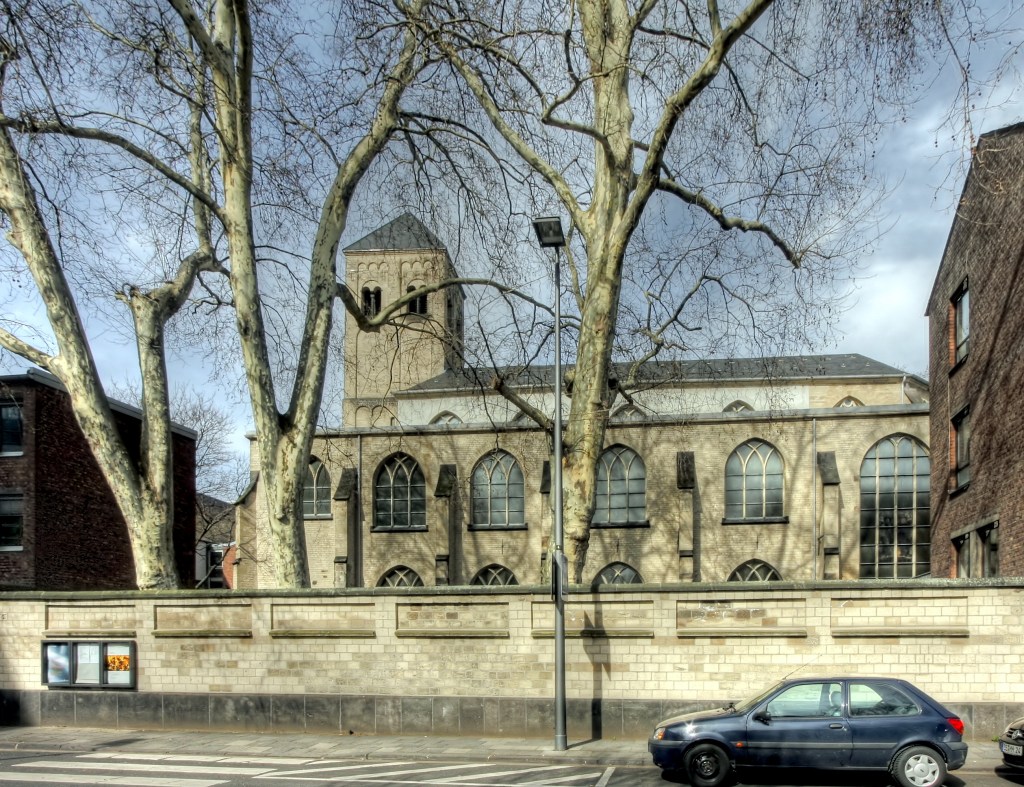
There are things in this life, Sandy said, of which we are afraid. Things which disturb us. And that is as true for Christians as for anyone else. He told us about a Jesuit church, St Peter’s in Köln, [the church, I think, where Rubens was baptised], where there is an altar with the inscription Ich habe angst. Meaning, I am fearful. Which some people think is not a very Christian message. But it is a reminder that anxiety, apprehension, insecurity are all common aspects of the human condition. Which are best countered by prayer, and by seeking “the peace of God which transcends all human understanding, and which will guard your hearts and minds in Christ Jesus”. [Philippians 4:7]
St. Peter Koeln
I guess that my Tuesday night dream was preparation for Sandy’s Wednesday morning message. Ich habe angst. Which is something that will not go away quickly. Closure is an unhelpful concept. Which suggests letting go of an event and forgetting it. When the more Christian response is, I think, to invite God into our apprehension and disappointments and fears, and to ask for his peace in our hearts.
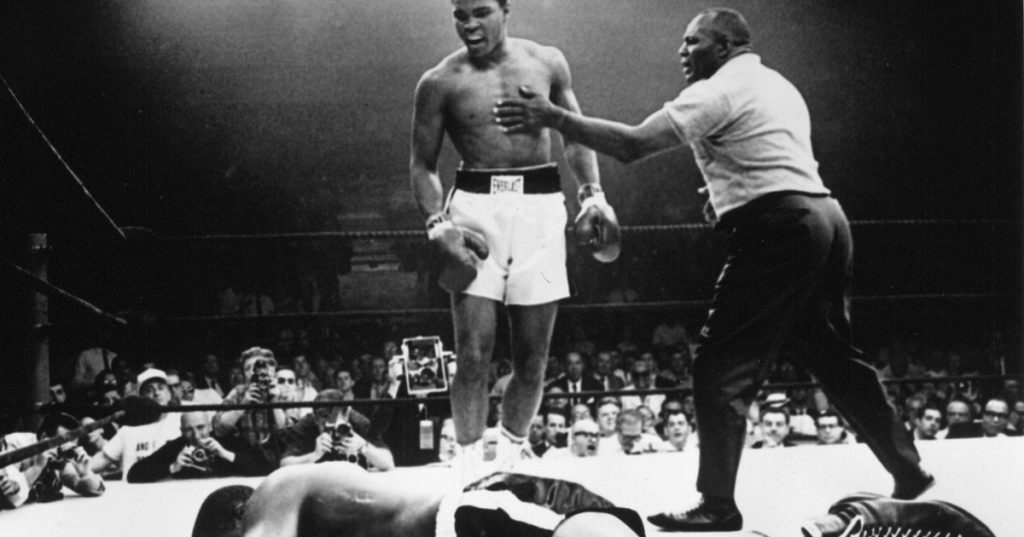
I’ve never had any real interest in boxing, not at any weight. I think the last fight in which I showed any interest was in February 1964, when Cassius Clay, as he was then known, a glib, fast-talking challenger from Louisville, Kentucky, got in the ring with the fearsome Sonny Liston. And won the world heavyweight title for the first time when Liston failed to come out of his corner at the beginning of the seventh round.
Several years before that, when I was still at primary school, there was what must have been a very modest bookshop in Replingham Road, in Southfields, the suburb in south-west London where I grew up. Other shops on the same street included Thorpe’s, a tobacconist and sweet-shop [Charlie Thorpe once gave my brother and me a cigar each for Christmas, which rather miffed my father.] And Christmas the chemist. [Who gave Paul and me some screw-top aluminium containers for tea and sugar when we went hitch-hiking in France in 1961. Did his daughter become a journalist on The Guardian ? Or did I dream that ?]
Anyway this little bookshop had some paperback books outside on a display rack. Which I assumed were there for me to read. So I read quite a lot of The Scourge of the Swastika, a best-selling history of Nazi war crimes by Lord Russell of Liverpool, a former Judge Advocate. And I also read most of a book on world champion heavyweight boxers. From which I learned that the two greatest champions [the term GOAT was still several decades in the future] were Jack Johnson, the ‘Galveston Giant’, the American world champion in the early years of the twentieth century, and Joe Louis, another Afro-American heavyweight, who was world champion from 1937 to 1949.
In black and white
Donald McRae is a South African journalist who used to live in Southfields. Much more recently than me. He wrote a book Winter Colours, about South African and New Zealand rugby, and about the professionalisation of rugby in the 1990s, which was described as “the best book about rugby ever written”. That may have been the book that encouraged us to call one of our Lyon cats Josh, after Josh Kronfeld, the New Zealand back-row forward. It won the William Hill Sports Book of the Year award in 1998. The book, not the cat ! And last autumn I enjoyed reading his book In Black and White, the story of the first two black American super-stars, Joe Louis and Jesse Owens. But I didn’t write anything about it at the time because I was preoccupied with other things; with Joanna, and the Men’s Retreat, and preparing for a locum spell at St Peters, Chantilly.
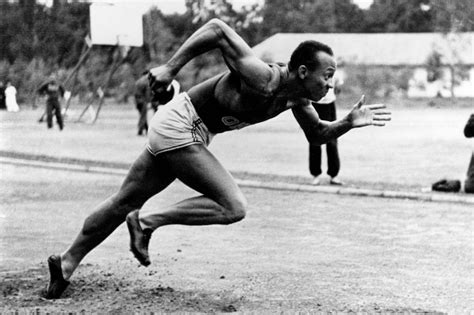
Jesse Owens was a slim, 5”10”, 165 pounds, born in 1913 into a sharecropping community in northern Alabama. James Cleveland [J.C.] Owens was his parents’ tenth and last child, sickly as a baby from repeated bouts of pneumonia. His grandfather was a slave. In 1923 the family fled from fraught, black life in Oakville, Alabama, and headed north to Cleveland, Ohio. At East Tech High School in Cleveland Jesse won seventy eight of the seventy nine races he ran in. Jesse was signed up by Ohio State university and became a stand-out member of their athletics team. In June 1935 at the national collegiate meeting, Jesse won the 100-yard and 220-yard sprint, the 220-yard low hurdles and the long jump. He scored forty of Ohio State’s forty-one points; and single-handedly earned more points than such college teams as UCLA, Notre Dame, Princeton, Yale and Harvard. A month later he married his childhood sweetheart, Minnie Ruth Solomon.
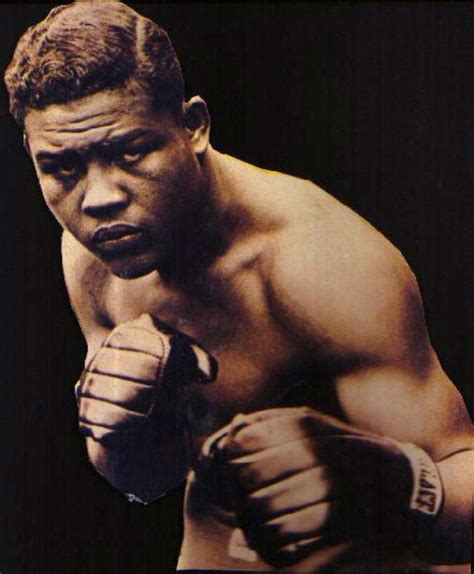
Joe Louis was another young black American, the same age as Jesse Owens. His family too had moved north from the dangerous rawness of Alabama. In 1934-35 Joe Louis won twenty two consecutive fights, eighteen by knock-out. His support team was a rare all black entourage; Roxy was a cultured hustler, who ran a numbers racket in Detroit; Mr Black was a qualified embalmer who ran a speak-easy in Chicago. The poker-faced Joe was quickly taken up by a posse of Hollywood stars; Bojangles Robinson, Clark Gable, Bing Crosby, and Mae West. In June 1935, at the Yankee Stadium in New York Joe demolished the giant Italian Primo Carnera [aka The Man Mountain, The Gorgonzola Tower]. He had won his first big fight in New York. People were on their feet screaming his name. For the International New Service, Davis Walsh wrote: “Something sly and sinister and perhaps not quite human came out of the African jungle tonight to strike down and utterly demolish Primo Carnera, the giant …”.
Jesse Owens and Joe Louis had suddenly become national stars and role models. “If athletic greatness was a gift to be bestowed at will”, Bill Henry wrote in the Los Angeles Times, “the coloured race couldn’t have chosen two more remarkable men than Jesse Owens and Joe Louis to be its outstanding representatives. Owens … as the greatest track-and-field athlete of all time … Same goes for ‘Dead Pan’ Joe Louis whose decisive defeat of Carnera has sent scribes scurrying to their dictionaries in search of superlatives … … it is a pretty tough test of character. Owens arrived at the threshold of notoriety achieved by few young men, Now Louis, another Negro, is thrust in front of the gawking, staring world, eager to hail him, spoil him, and, if possible, ruin him.””
August in Berlin
In July 1936 Jesse Owens set sail for Berlin on the SS Manhattan, one of nineteen Negroes on the US team. For nine days the athletes lived in Third Class on Deck D below the water line, while the team officials cruised far above in First Class. During the voyage Eleanor Jarrett, the beautiful twenty two year old swimmer from Brooklyn, the femme fatale of the team was expelled from the team by Avery [Slavery] Brundage for being very publicly drunk on champagne. Brundage was an autocratie ex-Olympian decathlete who had made a fortune in the construction industry,
Hitler opened the Olympic Games on August 1st, 1936. They were to be an international showpiece for the German Reich; recorded for posterity by the young film-maker Leni Riefenstahl, best known for her luminous depiction of the Nazi rally in Nuremberg. Hitler and his entourage attended the games each day in anticipation of celebrating the triumphs of German athletes. On August 2nd, Hitler and his contingent left their box hastily as Jesse Owens and Dave Allbritton, both Negroes, won gold and silver medals in the high jump. On Saturday, August 8th, the US 4 x 100 yards relay team, with Jesse running the first leg, won the gold medal and broke the world record. Jesse Owens had become the first man in history to win four gold medals.
Joe Louis and Max Schmeling
In June 1937, at Comiskey Park, Chicago, Joe Louis knocked out James Braddock to become the new heavyweight champion of the world. And the second black champion in history. Across Chicago and all of America black crowds clustered around radios and loudspeakers shouting ‘Joe Louis … champion … Joe Louis … champion’. A year later, in the Yankee Stadium, New York, Joe fought the experienced and dangerous German heavyweight Max Schmeling. Who had knocked out Joe in a brutal fight two years earlier. The rematch in June 1938 attracted enormous publicity, and gave rise to unpleasant taunts of nationalism and racialism. In a ghosted, syndicated newspaper column, Joe Louis declared: “Tonight I not only fight the battle of my life to revenge the lone blot on my record. But I fight for America against the challenge of a foreign invader, Max Schmeling. This isn’t just one man against another, or Joe Louis boxing Max Schmeling; its the good old USA versus Germany”.
It was a massacre. Joe Louis crushed Max Schmeling in just two minutes and four seconds. The Nazis abruptly shut down the live broadcast in Germany. Duke Ellington was one of many at the ringside who was bewildered by the speed of the victory: “I dropped my goddamn straw hat … it was rolling around by my feet. I was just trying to pick it up so I can sit down and watch Joe … And then all of a sudden they all start jumping and hollering. I can’t fucking believe it. The goddamn fight is over”. Joe Louis, the Brown Bomber, is the undisputed heavyweight champion of the world.
Black days
After the Berlin Olympics Jesse never raced again. He and the other amateur athletes made thousands of dollars for the AAU. Commercial sponsors made Jesse all kinds of offers. And the millionaire Avery Brundage had him suspended for breaking the rules on amateurism. So he spent the next few years racing against ice skaters and greyhounds and in Havana, Cuba, a thoroughbred racehorse called Julio McCaw. The Olympic champion had become a circus act. He was almost as fast as he had been as Olympic champion, but he was reduced to racing against motor-cycles and double-decker buses. In May 1939 with the collapse of his Jesse Owens Dry Cleaning Company [his partners took him to the cleaners] he was declared bankrupt.
Joe Louis was in a similar situation. After defeating Schmeling in 1938, he had a busy two years fighting a series of forgotten challengers, who came to known as the ‘Bum of the Month Club’. But his appetite for food and for showgirls was insatiable. His annual income was $250,000, but by July 1941 he was $100,000 in debt to his promoter and manager, and he owed the tax-man almost another $100,000. And Marva, his long-suffering wife, left him.
Both Joe and Jesse served in the US army in the Second World War. When Joe was discharged from the US army in 1945 and fought Billy Conn, he was $210,000 in debt, a mix of taxes and alimony payments. In September 1950, at the age of thirty six, Joe was humiliated by the younger and lighter Ezzard Charles. A year later, in an ill-advised come-back he was badly beaten by the young slugger Rocky Marciano. Sugar Ray Robinson and Josephine Baker wept openly in his dressing room. Joe never got in the boxing ring again.
Donald McRae tells the story well; the meteoric rise and slow fall of two black super-stars. By 1954 Jesse had been voted by an Associated Press Poll as the greatest athlete of the past fifty years and was now Secretary of the Illinois State Athletic Commission. But J. Edgar Hoover was ordering an urgent investigation into him as one of the “commies, reds, pinkos, and niggers” who were plotting America’s downfall. And in the 1960s the federal government accused him of failing to file income tax returns and of several years of systematic tax evasion.
Joe meanwhile had hit the skids; owed over $1,000,000 in taxes, and had a brief and unsuccessful spell as a professional wrestler. A low point from which he was eventually rescued by his third marriage to Martha Jefferson, a black attorney from California, who became his wife, lawyer, cook, mistress, press agent, valet de chambre, and tax consultant.
Envoi
Joe Louis and Jesse Owens both died at the age of sixty-six. Jesse died of cancer in Tucson in March 1980. Later that day Simon Wiesenthal proposed that the avenue leading to the Olympic Stadium in Berlin should be renamed Jesse Owens Avenue. Joe died in March 1981. His body ‘lay in state’ at Caesar’s Palace, Las Vegas; Frank Sinatra and Sammy Davis Jr sang at his funeral, and the eulogy was pronounced by the Revd Jesse Jackson.
After Jesse’s death, the Detroit Free Press reprinted an article by him:
“After the Olympic Games in Berlin, I came back to my country and I couldn’t ride in the front of the bus. I had to go to the back door … … and of course Joe Louis and I were the first modern sports figures who were black. So neither of us could do any national advertising because the South wouldn’t buy it … … when Joe and I came along, blacks in America had no image … … We agreed the only way to help our people was by deeds. We didn’t make waves. We were called Uncle Toms later. But the 1960s were something else. Back then, our way was the only way.”
Is everything different now ? As this book wants to suggest. Certainly Obama was the first [very impressive] black President of the United States. And here in the UK, the three most important offices of state are held by [the rather less impressive] Rishi Sunak, James Cleverly, and Suella Braverman. Respectively the son of African-born parents of Punjabi descent, the son of parents from Britain and Sierra Leon, and the daughter of parents of Indian descent who were immigrants from Mauritius and from Kenya. [Which makes me wonder how many of them would have been welcomed into the UK under present rules by this present government.]
But the Black Lives Matter movement, founded in 2013, came into being specifically to highlight and to combat racism, discrimination, and racial inequality suffered by black people. While here in the UK the Casey Report, published only last month found the Metropolitan Police guilty of institutional racism, misogyny, and homophobia.
Jesse Owens and Joe Louis gained victories that raised a banner for the disenfranchised black population of America. But I guess the struggle is by no means over.
When my younger brother Peter was diagnosed with a brain tumour, a couple of years ago, I thought I would go on a long walk as a kind of pilgrimage. The Camino to Santiago de Compostella was the obvious choice. I got as far as buying a couple of guide books, and I signed up for a group from the Edinburgh Diocese who were walking the [significantly shorter] Camino Ingles last May. But it didn’t happen because it clashed with a twice postponed three-family holiday in Normandy. Which with hindsight was our last ever holiday with Joanna.
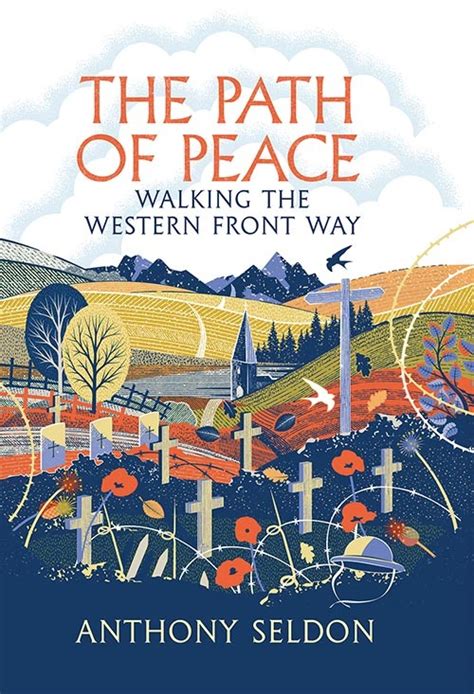
Our son Jem gave me Anthony Seldon’s 2022 book The Path of Peace: Walking the Western Front Way for Christmas. A perfect gift as it combines walking, France, and the First World War. And I have just finished reading it. Seldon is a shameless self-publicist and seemingly driven by ambition. He was successively headmaster at Brighton College and then at Wellington College, and then had a job at the [private] University of Buckingham. Along the way he has written, or co-authored, a good number of books, including biographies of most recent prime ministers, from Margaret Thatcher to Boris Johnson. As the book starts in 2021 Seldon has lost his wife Joanna to cancer, and stepped away from his job at Buckingham and the house that went with it. No wife, no job, no house. So the walk, of about a thousand kilometres, is a challenge and a personal odyssey.
From the Swiss border to Verdun
He chooses to walk northwards from the Swiss border and the Vosges mountains towards the sea. Which means starting in Alsace, where very few British and Allied forces were involved. And which was the only part of the Western Front where fighting took place on [what was after the annexation of 1871] German soil. The first French and German soldiers be killed in the war, Corporal Jules-André Peugeot and Lieutenant Albert Mayer, were both killed in a skirmish near Illfurth on August 2nd, 1914, even before war had been officially declared. The Vosges saw brutal and sustained fighting from late 1914 to late 1915, though these battles are little known in Britain. Here there fighting took place not in trenches but on exposed rocks and in extensive pine forests. Hartmannswillerkopf , a summit which changed hands regularly in 1915, is one of the four National Monuments that the French built after the war; the others being at Verdun, on the Marne, and at Notre Dame de Lorette, north of Arras in Artois.
Seldon generally is walking alone. But has back-up support from Sarah, a teaching colleague and French speaker, who will become his second wife. And he uses his phone to check regularly on the Test score at Lords, where Sam Curran a former pupil at Wellington is making his England debut. At night his sleeping is patchy; alcohol helps him to sleep, dehydration keeps him awake. He reflects that soldiers survived in the trenches for several days with very little sleep. He reflects that 449 British soldiers were sentence to death for sleeping on watch. But only two were carried out. But 346 soldiers were court-martialled and ‘shot at dawn’ for a variety of crimes, including cowardice and disobedience to lawful command, and most often for desertion.
In Lorraine Selsdon is troubled by blistered feet. At Saint-Mihiel there is mention for the first time of the American Expeditionary Force [AEF] under General John Pershing. Some 116,000 American soldiers died during the First World War, far more than the numbers killed in Vietnam. But the United States is more attached to the memory of the Second World War; and it was only in 2021 that a memorial to the First World War was unveiled on the National Mall in Washington DC. Not far away is where Alain Fournier, author of Le Grand Meaulnes, was killed in September 1914.
From Verdun to the sea
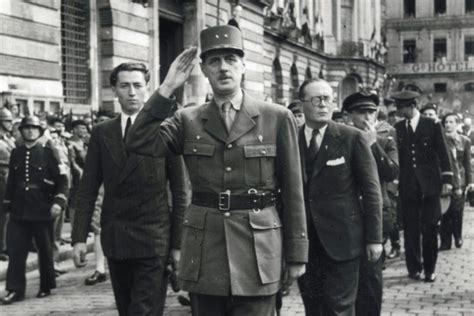
Verdun for the French symbolises the tragic cost of the First World War, as do the Battles of the Somme and Passchendaele for the British. Ringed with a cluster of forts to the north and east Verdun was the strongest defensive position on the whole of the Western Front. But in February 1916 Douaumont, the strongest of the forts, fell bloodlessly into German hands. Nearby in March 1916 Charles de Gaulle was bayonetted in the thigh, gassed, and take prisoner. On the day Douamont fell, General Philippe Petain was recalled to take command at Verdun. He had a reputation for not wasting French soldiers’ lives. For months the city and the whole Verdun salient was supplied with food and ammunition by heroic convoys along the Voie Sacrée from Bar-le-Duc. In 2006 the [narrow and winding] road was renamed RD1916. Above the cemetery at Verdun stands the ossuary, a bleak building containing the remains of 130,000 French and German soldiers recovered from the battle-field in the early post-war years. At Verdun Seldon is bitten by a farm dog, and recalls that his mother’s first husband died of a rabid dog-bite in India.
Douaumont ossuary, Verdun
In spite of badly blistered and raw feet, Seldon presses on through Champagne-Argonne. Near the ossuary at Navarin is Souain, where four French corporals were shot for cowardice in March 1915. It was this shameful episode that inspired the 1935 anti-war novel Paths of Glory, which was subsequently filmed by Stanley Kubrick starring Kirk Douglas. From Rheims Seldon takes two days off for his daughter’s wedding down in the Dordogne. On his return he limps on towards the Aisle and the Marne. Robert Nivelle succeeded Joffre as Commander in Chief in December 1916. His ambitious offensive, the Second Battle of the Aisne, the following year had allowed for some 10,000 French casualties. In the event the toll was 130,000. And Nivelle was sacked and replaced by the more cautious Pétain. Near Berry-au-Bac the National Tank Museum occupies a large roundabout in the middle of a trunk road. This is close to the beginning of the Chemin des Dames, which follows the D18 along a ridge above the Aisle. Craonne is a village détruit, which inspired the song Chanson de Craonne, which gained fame among the exhausted poilus:
Goodbye to life, goodbye to love, goodbye to all the women,
Its all over now, we’ve had it for good with his awful war,
We’ve had it for good with this awful war …
We’re the ones they’re sacrificing …
I was fortunate to have the opportunity to explore this terrain last September [see TaGD, 82]. On that occasion I visited the underground museum at the Caverne du Dragon, and even have a hoodie to go with it.
Victory on the Marne
The feet are worse as Seldon limps on into Picardy. He passes the Chateau de Blérancourt, the headquarters of the American Committee for Devastated France, founded by the feisty Ann Morgan, daughter of J. Pierpoint Morgan, the American banker. It is now a museum dedicated to Franco-American relations down the centuries. [It was very firmly closed the last time I was there.]
As Seldon moves north the place names and the battle-fields become more familiar to the British. The Battle of the Somme in July 1916 was conceived in part at Joffre’s request torelieve the pressure on Verdun. Douglas Haig seemingly believed that a preliminary seven-day shelling of the German trenches would massively weaken the enemy defences and destroy their guns. It didn’t. The opening day of the Somme saw 19,300 British soldiers dead and 60,000 casualties. The worst day in British military history. Seldon stays in a hotel in Albert, known for the golden statue of Mary with the infant Jesus on top of the basilica. When a shell struck the statue leaving it hanging precariously, the British believed that if it fell the war would immediately end. The poet Ivor Gurney marched past the statue in 1916. After the war he was institutionalised in a mental hospital, where he died in 1937. He is buried in the churchyard at Twigworth, outside Gloucester, next door to a B&B where Susie and I stayed a few years ago, Few people visit his grave.
In September 1916 the Prime Minister, Herbert Asquith, visited the Somme battlefield. At Fricourt he met up with his son Raymond, who was killed nearby at Ginchy one week later. There is a monument to him in the cathedral at Amiens. [See TaGD, 91.] Seldon notes that four British Prime Ministers fought in the First World War: Clement Attlee, who fought at Gallipoli; Churchill, who following his demotion after the Dardanelles served as lieutenant colonel in the Royal Scots Fusiliers; Antony Eden, who fought at Delville Wood, on the Somme; and Harold Macmillan, who was severely wounded at Ginchy on the day that Raymond Asquith was killed. He wonders whether Blair and Cameron might have been more reluctant to intervene in the Middle East, or whether Boris Johnson would have been so eager to tear up international treaties, if any of them had experienced the horrors of war themselves. [And it is worth noting that the only two Prime Ministers who fought in the Second Word War, Ted Heath and Jim Callaghan, were both strongly pro-European.]
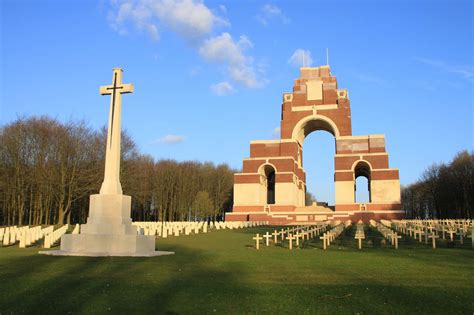
Thiepval memorial, The Somme
Seldon also reflects on he way in which the Somme influenced the imagination of many writers.
“‘There are dead things, dead faces in the water”, he said with horror. “”dead faces … they lie in all the pools, pale faces, deep under the dark water. I saw them; grim faces and evil, ad noble faces and sad … But all foul, all rotting. all dead.”’
These are the words of Sam Gamgee and Frodo in The Lord of the Rings. Presumably inspired by J.R.R. Tolkien’s four months fighting on the Somme between July and October 1916.
Envoi
I enjoyed the book. But I found Seldon difficult to like. The journey is punctuated by requests for interviews from Radio Four [about Prince Charles’s valet among other things !] and by the need to correct proofs for his articles for e.g. The Times Literary Supplement. The impression is of a man shamelessly ambitious and spreading himself a bit thin. But I admire the way he presses on with severely raw and blistered feet, and a couple of unhappy visits to French hospitals. On Day Thirty Eight, he arrives at Nieuwpoort, smothered in antiseptic and plasters, Lynx deodorant and insect repellent, now walking in company with the UK Ambassador to Belgium and his Defence Attaché. And then he rushes home on Eurostar to speak at a literary festival.
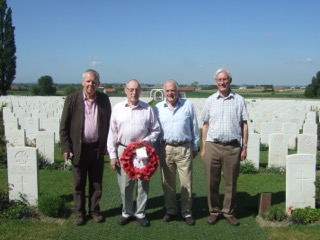
For several years I have wanted to take a careful look at the First War battlefields. In May 2015, just after leaving Holy Trinity, Brussels, I joined a small group of Old Blues to lay wreaths at the graves of Old Blues who were killed in the war. We started at Ypres, where we attended the evening ceremony at the Menin Gate, and from where we visited Tyne Cot and Passchendaele. And then we drove south to visit the monument at Thiepval, and the Ulster Tower, and thence to Arras and Cambrai. A year earlier I had guested on an outing to Flanders with the Belgian Branch of the National Trust under the leadership of Nick Fern. We had lunch in Poperinghe, followed by an excellent tour of Messines with a local New Zealander as our guide. Much more recently, last September, I had a day exploring sites on the Chemin des Dames.
Wreath laying at Tyne Cot, 2015
Would I be up for walking the Western Front Way ? Sadly, probably not. It’s too far for me to walk, and I do not have Seldon’s drivenness. But I’d be happy to do bits of it. If we go back to Chantilly at some point, which is not a given, perhaps I could find a group of people to walk for a day or two along the Aisne battlefields, maybe starting near Craonne. But, according to Seldon, the way is better sign-posted in Belgium. Perhaps the Holy Trinity walking group might organise a day or two walking north from Ploegsteert [Plug Street to the British troops] towards Ypres and the sea. If they ever do, I’d be up for that.
I got back home to Edinburgh a couple of weeks ago, after spending a bit over a couple of months in Chantilly, doing locum ministry at St Peter’s Church. Susie got home a week later. She had spent from September to January down in Wycombe, close to Joanna and Craig, and to Jem and Anna, and their families. And then she was back down in Wycombe again in February helping with the grand-children during their half-term.
With hindsight I am a bit ambivalent about my time in Chantilly. Susie and I had committed months earlier to being there from Advent Sunday through to the middle of February. But she stayed in Wycombe so I went by myself. I think I wanted to feel that I was doing something useful. And the congregation at St Peter’s were appreciative and hospitable. But outwith Sundays I spent quite a lot of time walking round the race-course and along the canal. And listening to Lectio 365. Should I have come back to Wycombe to be with Joanna sooner ? The answer is probably yes. Joanna Trollope’s phrase comes to mind: “A vicar is a man who is aways away being wonderful somewhere else.”
Direct fights from Paris to Edinburgh were all full, so I flew back via Amsterdam. On the second leg a KLM air-hostess to whom I’d spoken briefly on the first leg made a point of bringing me a cup of tea and a slice of cake. For which I was very grateful. By contrast Edinburgh’s very good public transport system was a bit lacking. My tram from the airport threw us off at Shandwick Place because of works on the track in the town centre. After which the driver of my 30 bus failed to stop when requested at Marchhall Crescent. And when I remonstrated he was abusive. Very unusual since most Edinburgh bus drivers are friendly and very patient.
The house felt a bit cold and unfriendly when I arrived. Which isn’t surprising since neither of us have lived here much since last September. I am grateful for a heating system that works. We were customers of the now defunct Bulb energy supplier, but have transitioned to Octopus without any visible change. Before Susie’s return I was living off Sainsbury’s packet asparagus soup with croutons. With the occasional treat of fish pie. The ultimate comfort food. And reading Donna Leon, who is the fictional equivalent. I think she is an excellent writer. Apart from the delights of the Venetian background, I love the dynamics of Brunetti’s relationships with his wife and children, and then with his colleagues at the Questura. Most prominently with Signorina Elettra.
A day out
Susie’s train from King’s Cross was over two hours late, problems caused by a signals failure at Morpeth. So she was re-routed via Carlisle. I walked round Princes Street and George Street noting the shops that are no longer there. Jenners of course has been empty for some time, and a fireman was killed in a blaze there while we were away. The Edinburgh Bookshop [more recently Waterstone’s] has gone from George Street. And I am sorry that Fopp’s has gone too..
For Susie’s birthday we took a Car Club car down to Berwick on Tweed, taking the scenic route through Gifford and over the Lammermuir Hills. I remember walking several times from Longformacus up past the reservoir to Twin Law Cairn. And we also remembered Joanna doing her Duke of Edinburgh award scheme hike, camping up there on a very cold November night. As we came though Duns I reflected that Joanna spent nearly a quarter of her life here.
In Berwick we ate in The Maltings, the cafe attached to the theatre and arts centre. Good food and a good view over the roofs of the lower town. The last time we were here, about eighteen months ago, we were with my younger brother, Peter, who died last year. And there was time after to call at Northern Edge, a high-class coffee roaster, and to walk round the town ramparts in a cold east wind.
The state of the nation
I haven’t wanted to write anything about UK politics since the demise of blustering Boris and the, thankfully short-lived, era of the gormless Liz Truss. Now the departure of the saintly Nicola has occasioned a lot of comment. I think Sturgeon was a hard-working and sympathetic politician, who handled COVID well, and was a huge improvement on her predecessor the shifty Alex Salmond. But I fear that standards in education and in health-care have gone backwards under the SNP. My best guess is that enthusiasm for independence has peaked, and that Sturgeon’s departure will ultimately benefit the Labour party. Part of me is delighted that Kate Forbes, a professing Christian who is happy to voice her Christian beliefs, may be the next [very young] leader.
The stop press news is that Rishi Sunak is selling the new Windsor Agreement on the grounds that Northern Ireland will benefit enormous from gaining access to the Single [European] Market. Which makes me wonder why the rest of the UK can’t enjoy that benefit too ! Wycombe’s MP, the ardent Brexiteer Steve Baker, has seen the light. I wonder if other ERG members, the unspeakable Rees-Mogg and Lance Corporal Mark Francois, will vote against the deal. And, if they do, whether Rishi will remove the government whip from them. Just asking. Hopefully.
Amiens is the biggest city in France that I have never visited. At least not until today. And the cathedral is [said to be] the biggest in France. So, although I had promised myself a trip to the coast, possibly to Dieppe or up to Ostend, I had a more modest day outing to Amiens. Which involved setting my alarm on a very frosty [-5º overnight] morning. And a walk down to the station in glorious sunshine across the race-course.
French railways are currently hit by strikes over Macron’s new pension plans. But trains seemed to running normally. It is just over an hour to Amiens on the train from Chantilly.I like the two storey carriages in France, even on a humble TER. The upper compartment was nearly full, with a significant number of black Africans, who may or may not have been refugees, who mostly got out at Creil. One African opposite me was sound asleep; when the ticket collector woke him up it transpired out that he had missed his stop. And also that he had no ticket.
The cathedral
Amiens has a long pedestrian street leading from the railway station towards the centre of town. It is architecturally undistinguished with a predictable collection of shops, Hema, Jeff de Bruges etc. Nothing prepares you for a first glimpse of the Notre Dame cathedral. It is enormous, 145 metres long, and said to be the biggest church in France. It is essentially a 13th century church, built between 1220 and 1269 in the [high] Gothic style. The interior of the church includes two 13th century recumbent statues of former bishops; a 13th century labyrinth, engraved with the names of the architects; and some very elaborate 16th century choir stalls and choir screens. But the main impression of the interior is the height of the roof and the height-width ratio of the central aisle;
The use of such features as external supporting systems, cross vaults and arches, and external buttresses allowed Gothic buildings to reach huge heights. During the great cathedral building era, builders competed to achieve the highest vaults: at Laon they are 24 metres above the ground, in Paris they are 33.5 metres, at Reims they reach 38 metres, and here in Amiens they reach 41.2 metres. The only higher cathedral vault is St Peter’s at Beauvais, just up the road from here, at 48 metres, which was never completed.
In the cathedral at Amiens I was surprised to come across a wall tablet commemorating Raymond Asquith, who was killed at nearby Guinchy in September 1916. He was the eldest son of the Prime Minister, H.H. Asquith, a distinguished scholar at Winchester and Balliol, a barrister, and the leader of an Edwardian group of socialites and intellectuals known as La Coterie. Raymond Asquith was an officer in the Grenadier Guards, who was shot in the chest at Guinchy and buried at Guillemont. Winston Churchill later wrote in an obituary of him:
“It seemed quite easy for Raymond Asquith, when the time came, to face death and to die. When I saw him at the Front he seemed to move through the cold, squalor and peril of the winter trenches as if he were above and immune from the common ills of the flesh, a being clad in polished armour, entirely undisturbed, presumably invulnerable. The War which found the measure of so many, never got to the bottom of him, and when the Grenadiers strode into the crash and thunder of the Somme, he went to his fate cool, poised, resolute, matter of fact, debonair. And well we know that his father, then bearing the supreme burden of the State, would proudly have marched at his side”
Raymond Asquith was a very superior person. But, I suspect, more admired than liked.
Before I left the cathedral I lit a candle for Joanna. It’s not something that I can remember doing before. But I know that other people have been lighting candles for her. And it seemed like the right thing to do.
Les Hortillonages
The tourist office is close to the west front of the cathedral. Three helpful young people behind a desk, but no other tourists. One of the three gave me a city plan, highlighting the areas I should try to see, while his colleague sold me a couple of postcards.
One of the distinctive features of Amiens is Les Hortillonages, an extensive area of water gardens and market gardens. There are said to be 300 hectares of these gardens and more than 60 kilometres of rieux, or water channels. [Amiens like other places, including Birmingham and Bruges, was once known as ‘the Venice of the north’.] Once upon a time this was where the townspeople grew vegetables, which formed the basis of the reputed Hortillonages soup. And apparently there is still a Saturday morning vegetable market in the Saint Leu district.
My tourist office plan was a bit lacking in detail. But I walked for a mile or so along the Chemin de Halage beside the river Somme. There are a random collection of houses and cottages set back from the river bank, each approached via its own gated bridge over a subsidiary bit of the river. No two bridges are the same. Car access is for riverains only. There are occasional house boats moored, and some impressive willow trees. Apart from occasionally joggers the road was very quiet. It was a bit like walking alongside the Thames from Binsey towards The Trout.
Returning by the same route there are good views of Amiens across the river, with the cathedral and the [hideously ugly] Tour Perret, France’s first skyscraper, dominating the skyline. This tower, built in early modernist style, was the first 100-plus metre tower in France. It was designed by Auguste Perret as part of a post-war reconstruction project. And sits close to the railway station.
Envoi
I had a decent lunch in a restaurant on the Quai Bélu with a view of both the river and the cathedral. In the strong winter sunshine. Up until now I have always imagined Amiens as a rather grey, dour, mist-shrouded city. An image that I may have gleaned from Sebastian Faulks’ Birdsong. In truth the sun may not shine there very often. But it was an excellent day out. If and when I go again, I hope to see something of the Jules Verne quarter and possibly venture into the Musée de Picardie.
Last Wednesday, one week ago today, on January 25th, we had the Committal service for our daughter, Joanna McDonald, and then in the afternoon a service of Thanksgiving at King’s Church, Wycombe. What follows is an edited version of what I said at that service.
Prelude
Funerals are always difficult. As we come together in an unfamiliar place with a mix of strong emotions. And a powerful sense of loss.At funerals you meet people you don’t see very often, and sometimes you have difficulty remembering their names.
Children should not die before their parents. Not ever.
Nothing at theological college prepares you for the funeral of your own child. So I’ll say two important things first – in case I can’t continue.
First, Joanna was the best and the bravest and the most beautiful daughter in the world. Beautiful on the outside, as the photos we will see this afternoon will attest. And beautiful on the inside too. If I can quote just one of the 150+ tributes on her Facebook page, JoannaClare, from someone I don’t know: “Those of us who were privileged to know Joanna and call her a friend will all agree that she undoubtedly was the kindest, gentlest, most giving human we’re ever likely to meet …”
Thanks
Secondly, I want to thank three people, or groups of people, for what they did for her:
Craig, was a rock [as his name indicates] these past months; coping tirelessly with the triple roles of husband, father, and medical doctor; and commuting daily from Wycombe to Florence House.
Florence Nightingale Hospice, Stoke Mandeville, to use their proper name, looked after Joanna wonderfully well during the last 4 weeks and 2 days of her life. Nothing was too much for them – nurses, doctors, craft assistants, and the lovely Thai chef. And Pete, the Stoke Mandeville lay chaplain was a great support.
And thirdly, thank you to the community of Kings Church. Wycombe. who not only prayed their socks off for Joanna and the family many weeks; but who also supplied much practical support, a constant stream of food, lifts for children, drinks, dropping the children off, love, and more food for Craig and Amelia and Eloise when Joanna was not there.
Memories: 1
I knew Joanna for all of her all too short life on this earth,
In December, with her agreement, I went down to Paris for the day to inspect the building where she was born, Notre Dame du Bon Secours. And to see if there was a blue plaque on the building saying Joanna Martin est née ici le 10 mars, 1977. As I reported to Joanna subsequently, not only was there no plaque, but there was no wall either ! The site no longer a Maternity Unit, but a psycho-geriatric hospital. Which will no doubt serve as a sermon illustration one day.
Although it sometimes pleased Joanna to think that she was ‘une vraie titie parisenne’, we moved back to England when she was nine months old. She spent the first ten years of her life not very far away from here, in Woodstock in Oxfordshire.
Before we left Paris, Joanna was baptised by Malcolm White in the Eglise Réformée in the rue de l’Ouest on a sunny day in 1977. It was Malcolm’s first baptism. And Joanna’s too ! [I think it is fair to say that in latter years we were not entirely sure that her baptism was kosher, as I had understood that Malcolm was not totally convinced about infant baptism. So when a dozen or more years later she wanted to be confirmed, she was conditionally re-baptised by full immersion in the Brethren chapel at Chirnside in the Scottish Borders. Which presumably satisfied even King’s Church Wycombe’s policy on initiation !]
She was a first child. And showed some of the attributes of first children. She was biddable, liking to please her parents; she worked hard at learning new skills – walking, and reading; and was quite precocious with her vocabulary. Somewhere there is a tape of her aged about 18 months saying DAADDIE – CARR – BARCELONAH – SHOOTCASE. I remembered that when she was ill … and walked up the road in Edinburgh with tears in my eyes. Which has been a regular occurrence these past few weeks and months.
Joanna was a bit late walking, preferring to be carried. But she was an early reader, taught by Susie from the backs of cereal packets. Word is that she couldn’t at first tell SAINSBURY’S from WAITROSE But those were long words for a very little girl. She started school at Woodstock Primary School. Where she got what was to be a succession of extraordinarily good reports. Commenting as much on her attitude and her helpfulness as on her scholastic work.
Memories: 2
We moved to Scotland, to Edinburgh, when she was just 11; and to Duns in the Scottish Borders 2 years later. In consequence, she spent 4 school years running in 4 different schools; upper primary in Woodstock; upper primary in Edinburgh, at Gylemuir; first year secondary in Edinburgh, at Craigmount; second year secondary in Duns, at Berwickshire High School. It didn’t seem to phase her. She continued to get excellent reports, and sailed through standard grades and then highers. She played the flute and the piano. She played flute in the church music group. And with the Borders Schools band. She was part of Duns Crusader group. With the High School she went ski-ing in Italy; and on a school exchange to Saint-Brieuc in Brittany. In 1995 she was happy to go to Edinburgh to do French and Italian and European Union studies.
We missed her when she went off to uni in 1995. But at first she wasn’t that far away in Edinburgh. At uni she made a lot of good friends. Including Craig, with whom she sang in a Christian choir. Early in her student days she committed to ECF [Edinburgh Christian Fellowship] in Edinburgh, which later morphed into CCE [Community Church Edinburgh]. In 1997-98 she did an Erasmus year at Grenoble. Where she worshipped at St Marc’s as part of their Round Twenty group.
For someone who had been quite cautious as a little girl [seeking the reassurance of her brother], she was very brave. At uni she flew off to Grenoble, to be met by a friend of her god-mothers’s daughter. In autumn 2000, a year after graduating, Joanna flew off by herself to Nepal, to work for 8 months as a science teacher in a Mission School in Katmandu. [Word is that she was at least one chapter ahead of her pupils.] Happily Craig was not far away, and they returned at the end of the year having got engaged at Annapurna Base Camp.
Memories: 3
Their wedding in August 2002 at CCE was a splendid occasion. Joanna was a radiant bride. My mother said Joanna was ‘the happiest bride” she’d ever seen. Music in the service was excellent. the bridal couple zoomed off in red, white, and blue Minis. Followed by the Reception at Carberry Tower: men in kilts, speeches, good food, plenty of wine, a high class ceilidh band.
What followed is for others to tell. Joanna and Craig were very happily married for 20 years last year. She worked first in Edinburgh for the Scottish Office. She said that she’d always wanted to be a civil servant. Which may sound odd. But which would have delighted her paternal grandmother. After she and Craig moved south, she worked for DFiD, the Department for International Development. This included a brief spell in Dhaka in Bangladesh. [I remember saying to her, as an anxious father, ‘I’m concerned about how you will get around in Dhaka, on public transport and so on’. She sought to reassure me, ’Don’t worry, I have a car and a driver’. And when I asked her about food shopping and cooking, she told me: ‘Don’t worry, I have a cook who will do that sort of thing !’Later on she and Craig spent a year in Pretoria in South Africa. We were fortunate enough to be able to visit them there; living in that beautiful country in a gated community behind razor wire and a security fence. Susie and I travelled with Joanna down to Cape Town, one of the world’s great cities. And caught a 50th anniversary tour of Cliff Richard and the Shadows in Kirstenbosch botanical gardens. When she finally left DFiD, she was involved in setting up AZALEA, the women’s charity associated with this church.
Although she hadn’t lived with us at home for twenty five years we were always pleased to meet up. In Scotland, in France, in South Africa; on holidays in Wales and in Somerset and most recently in Normandy. And I remember with pleasure her coming to Paris for the day with a very young Amelia; and again overnight to Brussels with a very young Eloise.
Where is God in all this ?
Why has Joanna died so young ? Dozens, if not hundreds, of people were praying for her ? Did God not hear our prayers ? It is a question that echoes down the years. The problem is classically formulated by David Hume: “Is God willing to prevent evil but not able ? … Is he able to prevent evil but not willing ? … Is he both able and willing ?”
I have been a Church of England vicar for the past thirty years, and I don’t have the answer to these questions. But we acknowledge that in scripture there is as much lament s there is thanksgiving. And we may want to reflect on the lament contained in Psalm 22:
“My God, my God why have you forsaken me ?
The words of my groaning do nothing to save me.
My God I call by day but you do not answer;
at night, but I find no respite.”
The Psalmist’s strength is ebbing away; he is surrounded by enemies. As many of you know, these are words quoted by Jesus on the Cross.
It is not my job to justify God’s actions or his inaction. But I think the Christian response to this cry comes in the next Psalm:
‘The Lord’s my shepherd; therefore I lack nothing …
By tranquil streams he leads me to restore my spirit …
Even were I to walk in a ravine as dark as death,
I should fear no danger; for you are by my side.”
We are going to sing Stuart Townend’s version of that psalm, Psalm 23, in a few minutes time
I want to believe that the Lord is very close to Joanna today.
And that, while we here are bereft, she is safely enfolded in his arms; comforted by his presence; and assured of his love. Someone sent Susie an image they had: of Joanna with a group of other women, sitting on a sofa with her legs folded under here, bathed in warm sun light, drinking tea and talking to Jesus.
Envoi
I’m not a great Kenneth Branagh fan, but there is a moving scene in the film Belfast. Young Buddy’s much loved grandfather [played by Ciaran Hinds] dies, and at his graveside the really not-very-attractive [Protestant] priest says: “Do not mourn for this man today. Mourn instead for yourselves, for your loss.. And give thanks rather for having known him.”
So today, here this morning and in a different setting this afternoon, we pray for Craig and for Amelia and for Eloise and for all who mourn.
And we give thanks for Joanna, the person we knew and loved; the best and the bravest and the most beautiful daughter in the world.
I will miss her every day for the rest of my life.
Don McCullin is a name to conjure with in the world of photo-journalism. In the days when I used to take the Sunday newspapers seriously his pictures seemed ubiquitous. He was quite simply the grittiest, biggest risk-taking, most sought-after news photographer in the world. Seemingly specialising in war zones and human disasters. It seemed that wherever there was fighting and famine McCullin and his cameras were there.
Unreasonable Behaviour
I’ve been reading McCullin’s 1990 autobiography, a paperback copy which I picked up in the [excellent] OXFAM bookshop in Thame. He grew up in a tough, working-class tenement in Finsbury Park. His father was an invalid and an occasional fishmonger. In the early stages of the war he was evacuated three times, finally to some fundamentalist chicken farmers in rural Lancashire. Unhappily. Back in London he failed the Eleven Plus and went to the local secondary modern school. Schooling largely passed him by. He frequently truanted with a bunch of other boys, many of them destined for borstal, setting up gang headquarters in bombed out houses. His father encouraged him to do drawing for which he showed some skill.
His father died aged forty when Don was just fourteen. There was now no question of art school. As the elder son, he had family responsibilities. He promptly left school and worked as a pantry boy on the LMS dining cars. Angry with God he flung plates out of the train windows as it passed over a viaduct. He spent his first wage packet on a teddy boy suit. He left the railways to work in a cartoon animation studio in Mayfair; but his colour-blindness counted against him. National Service at the age of eighteen widened his horizons. He served in the RAF, in a photographic unit, and was posted to Egypt and to Kenya and to Cyprus. He emerged from the RAF as a Leading Aircraftsman with an African Service Medal. And spent his savings on a Rolleicord, a twin reflex camera.
Going to the Wars
McCullin’s breakthrough came in 1959 when a policeman was murdered outside Gray’s Dancing Academy in the Seven Sisters Road, and he sold some photos of local gang members to the Observer. He was twenty three years old. Shortly afterwards he cut short his honeymoon to head for Berlin to take photos of the Vopos using breeze blocks to build the Berlin Wall, watched by American soldiers with machine guns. Within a few months he was in Cyprus witnessing the awful atrocities committed by both Greek and Turkish irregulars. “I think I grew up that day. I took a step away from my personal resentments, my feeling that life had been uniquely tough on me … … and taking away my father when I was young. That day in Cyprus when I saw someone else losing their father, someone else losing their son, I felt that I could somehow assimilate this experience so that my own pity could cease to be personal. And I could say ‘OK. I’m not the only one.’”
And so McCullin went to the wars. In November 1964 he flew into the Congo, and blagged his way unto Stanleyville with Major ‘Mad Mike’ Hoare’s mercenaries. On a subsequent trip to the Congo he entered illegally from Rwanda to join another group of mercenaries under Colonel Jean ‘Black Jack Schramme, who were besieged in Bukavu which was presented in the media as a kind of small scale Dien Bien Phu.
Inevitably McCullin went to Vietnam, initially for the Illustrated London News. In Saigon he checked into the Hotel Royale, run by Monsieur Octavie, a former legionnaire. It was like something out of Graham Greene. McCullin was here when the US Marines came charging up the beach at Da Nang, M-16 rifles at the ready, like a repeat showing of Iwo Jima, to be met by a gang of almond-eyed girls who welcomed their would-be combat heroes with pink and white orchids. Faith in their fire-power and technology made the Americans immune to lessons of the past.
Disillusioned with the Observer, McCullin moved on to join the Sunday Times colour magazine, edited at the time by Godfrey Smith. It was an exciting time offering McCullin a wide variety of projects. Improbably he photographed the Beatles, warming to Paul McCartney and being irritated by Yoko Ono. Even more improbably he went on a photographic trip to Cuba with Edna O’Brien, with whom he fell fleetingly in love. But his speciality was war, and he persisted in returning to dangerous places. He was in Jerusalem in 1967 for the vicious fighting between Arabs and Israelis. Later that year he was in West Africa when the Ibos declared independence from the Nigerian Federation. The French gave covert support to the Biafrans, while the British government, supposedly neutral, pumped large amounts of arms into Nigeria.
The war in Vietnam continued. Forty five newspaper-men lost their lives in Vietnam, including Sean Flynn, the son of Errol, and the photographer Larry Burrows. McCullin flew into Hue, the ancient walled city on the Perfumed River, following the Tet Offensive of January 1968. Combined South Vietnamese and American troops recaptured the city after a month of intense and bloody fighting. During which he greater part of the historic city was destroyed. McCullin was fortunate to survive eleven days in the front line. ”Sometimes I crawled ahead of the phase-line in order to be in a position to photograph the Marines advancing towards me … … [When I came out] I couldn’t speak and felt as if I had aged twenty five years.” He flies home via Saigon and Paris, where he is caught up with a plane-load of English rugby fans returning from an international match.
Reckoning
By his mid-thirties McCullin had travelled to some seventy countries, many but not all war zones. He travelled in India with Eric and Wanda Newby. For the Sunday Times he visited cannibal tribes in the rain forests of New Guinea. Off to cover the war in Chad, he meets up in Fort-Lamy with his brother Michael, fighting as a sergeant in the French Foreign Legion. In Cambodia he is wounded by mortar fragments in action against the Khmer Rouge. He becomes great friends with the writer Norman Lewis, and together they make expeditions to visit remote Indian tribes in Venezuela and in the Amazon Basin. He is imprisoned and fears for his life in Idi Amin’s Uganda. For light relief he is enlisted as the official photographer for the supposedly historic meeting between Lord Thomson, the proprietor of The Times and the Sunday Times, and Chou En-Lai. Shortly afterwards he is back in the Middle East with a full Sunday Times team when his colleague Nick Tomalin is blown to bits by a Syrian missile on the Golan Heights.
By the start of the 1980s things are changing. Harry Evans leaves the Sunday Times for The Times, ill-advisedly as it turns out. Rupert Murdoch, the new proprietor, picks a fight with the printers. And McCullin’s marriage starts to fall apart as he gets involved with a high-powered businesswoman who runs a model agency. “I was less drawn to the thick of the action … I no longer wanted, if I ever had, to commit a long drawn-out suicide in the pursuit of heroism … I wanted to live without testing my courage all the time.”
Two things strike me as I read this book. First the enormous change that has taken place in the make-up of newspaper colour supplements [weekend magazines]. When McCullin’s report from El Salvador in !982 is spiked [Reagan’s United States feared it could become another Cuba], he realised “policy had started going against too much hard photo-journalism and further into softer areas, like consumer goods and fashion.” Four decades on the Times magazine on Saturdays is a hymn to consumerism and greed; with a predilection for semi-literate celebrity journalists and soft porn. It has become a magazine where McCullin’s work would not be acceptable. Far too disturbing.
The second thing is that, although McCullin over a couple of decades had witnessed more death and despair than most people of his generation, nothing prepares him for the terminal illness of his own wife. Christine is diagnosed with a brain tumour. “Overnight this lovely young woman I had married twenty-two years ago had become a cripple.” McCullin is on an expedition to some remote islands off Sumatra when she is operated on in London. “My confidence started dying with Christine. I realised you could shoot photography until the cows come home but they have nothing to do with real humanity, real memories, real feelings.” When Christine is rushed back into hospital, McCullin is there when the consultant tells her: “I’m afraid I have to tell you you’ve only a short time to live”. His wife dies on the morning of their son’s wedding. McCullin is now [the book was published in 1990] living alone in Somerset with filing cabinets full of ghosts.
I guess it’s a preaching cliche: a thousand deaths are a statistic, but one death is a tragedy. A thought that bears in on me as we prepare for Joanna’s Thanksgiving service in Wycombe next week. I hope to write more about her after that.
I woke up this morning, out of a dream set in an unfamiliar village school with Roger Simpson as the head-teacher [God knows why ?], thinking that: I shall never be happy again. And then I thought, unrelatedly, that today is our 48th wedding anniversary. But celebrations will be limited; as I am back in Chantilly, and Susie is in Watlington staying with Jem and Anna. From where she has just rung me up. Recalling that we spent our anniversary last year flying back from Kiev. I don’t have a photo to mark that, but I’ll paste a photo that Susie sent me recently, taken [I think] at Snake Canyon in Utah in 2016.
The last time I wrote on this blog, I had been commissioned by Joanna to go down to Paris to photograph the Foyer Notre-Dame du Bon Secours, on the southern outskirts of Paris, where she was born in March 1977. Which led to a long walk across Paris, a city full of ghosts and might-have-beens. But Joanna slipped quietly and peacefully away from this world in the early hours of December 21st, in Florence House hospice at Stoke Mandeville. Susie and I are devastated, and trying to come to terms with a reconfigured world. Her death leaves an enormous hole in our lives. I will write more about Joanna another time. When it is less painful.
Back at Wycliffe Hall in the late 1980s, David Wenham, our New Testament tutor, taught us about Inaugurated Eschatology. That we are living in the In-Between Times, between Jesus’s first coming, the Incarnation, and Jesus’s second coming, the Eschaton, at some unknown future date. The last couple of weeks have certainly felt like that. Joanna left this world a few days before Christmas, but the Committal and Thanksgiving service are not until January 25th. Which is quite a long gap. Susie has wanted to stay close to where Joanna had been, and is therefore staying not far away in Watlington. I decided to return to St Peter’s, Chantilly, wanting to tell myself that I could be of use here. Which may be delusional.
Marking Time in Bucks and Oxon
Buckinghamshire and East Oxfordshire are unknown territory for me. We lived in Oxfordshire for ten years, in Woodstock, but from there we always went north and west into the Cotswolds. I can’t tell Aylesbury from Amersham from Wendover; and I don’t know the difference between Great Missenden and Chalfont St Giles. High Wycombe must once have been an attractive market town, with the A.40, the London to Gloucester road, going straight through the middle of town. About ninety years ago my father drove up and down the A.40 regularly, sometimes on a motor-bike, sometimes in a bull-nosed Morris, going to visit my mother’s parents who lived in remote Radnorshire. Fa was station-master at Dolyhir, a long-gone station turned cement works just down the hill from Old Radnor. But Wycombe was ruined by urban planners a generation or two ago; what’s left is an inner city fly-over, a multiplicity of roundabouts, the Eden [shopping] Centre, and a couple of high-rise car-parks.
Susie knew the road by heart from Wycombe to Stoke Mandeville. And the weather wasn’t conducive to exploring much else in December. It rained pretty much every day while I was in Wycombe. One day Susie and I walked from Boulter’s Lock, just outside Maidenhead, to Stanley Spencer’s Cookham; and then back along the Thames Path along Cliveden Reach. It was very attractive stretch of the river. And also very muddy. Our walking boots, which would have been useful, are of course in Edinburgh.
I’d never really experienced the Chilterns before. Buckinghamshire is full of steep little hills and beech woods. And old churches. And what I think are mainly gastro-pubs. Thame is an attractive town, with an urban park for walking and a choice of cafes and an excellent OXFAM bookshop. In Princes Risborough we found a high-class shoe-shop with a sale on ! And an excellent cafe. On the other side of the M.40 we had an enjoyable lunch in a village pub owned by a Hungarian. And we looked at the village where Vicar of Dibley was filmed.
And we went back to Ewelme, where we went into the church for the first time. The church and the adjoining almshouses and the primary school were all founded by King Henry VI, and it is said to be the oldest still functioning primary school in England. St Mary’s Church, Ewelme, has a remarkable chantry chapel, which houses the tomb of Thomas Chaucer, five times Speaker of the House of Commons and the son of Geoffrey Chaucer. And the extraordinarily elaborate tomb of his three-times married daughter, Alice de la Pole, Duchess of Suffolk.
After which Susie and I, and Jem and Oskar, had lunch at The Shepherd’s Hut, trying hard not to remember that we last had lunch there with Joanna and Anna and the grand-children on a very hot day last May.
Going Forwards
That is my least favourite current cliché. Susie is in Watlington, and I am back in Chantilly. I will go back to the UK for the Committal and Thanksgiving in two weeks time, and then return via Edinburgh to Chantilly. Susie’s plans are not yet clear, but she will be in residence in Wycombe to be with Craig and the little girls for February half-term. By the end of February we should both be back in Edinburgh and trying to rebuild our lives. [Though I did have an e-mail last week tentatively asking if we might be willing to go back to Ankara.] But life won’t be the same as it was before.