Through a glass darkly – 155

Confessions of a pagan nun

Against a future downsizing from this house [but Don’t hold your breath], I regularly clear small handfuls of books off the shelves and take them to one of the charity shops. Often I can remember when and where I bought books and read them. But I recently came across Kate Horsley’s Confessions of a pagan nun, which was published by Shambhala, an obscure publishing house in the United States in 2001. Shambhala seem to specialise in Buddhist books.  The book has a price sticker of 16,00€. But I have no recollection of when I bought the book and why.

Confessions of a pagan nun is beautifully written. The book purports to be the memoir of Gwynneve, a sixth century Irish nun who in her middle years works in a religious community, both men and women, transcribing the books of Augustine and Saint Patrick. In addition to this work she is recording memories of her pagan youth, and of her independent mother from whom she inherited a wild spirituality and a skill with healing plants. She looks back at her life and she mourns her lost druid lover. [Who may or may not have been abducted by tonsured monks.] Roman Christianity, she reflects, has brought improvements to the rural economy, with a greater variety of crops and of domestic animals, and has also led to a more literate population. But at the same time this new religion, imposed by incomers, has increased inequality, has substantially diminished the role and  freedom of women, and has paid little attention to the beauty of nature. Disturbing events at the cloister bring Gwynneve into conflict with the abbot. Things do not end well.

Kate Horsley, I gather from the internet, is an American writer, who was born in Richmond, Virginia in 1952. As a college student she was involved in the civil rights movement and in anti-Vietnam war activism. She subsequently relocated to New Mexico, and is Professor of English at New Mexico Community College in Albuquerque. It seems that her move to New Mexico was inspired by her interest in Native Americans and she has published half a dozen historical novels.

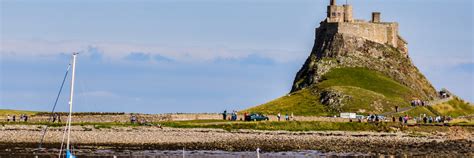
Why I wonder did I buy this book ? I have little interest in feminist theology. [Though I do recoil with horror from the misogynist remarks of some Roman Catholic bishops.] And I have very little interest in what is loosely labelled as Celtic Christianity. Some thirty years ago I was at a Diocesan retreat on Holy Island, where the main speaker was David Adam, the then Rector of Holy Island, and the author of a dozen or so collections of Celtic prayers and meditations. It was a silent retreat. One afternoon I met [Bishop] Richard Holloway out walking. And I was unsure if and how to greet your diocesan bishop on a silent retreat. He hailed me enthusiastically from a dozen yards away: “Hello, Chris. What do you make of the speaker ? It’s complete rubbish isn’t it.”  I love him.

Celebration

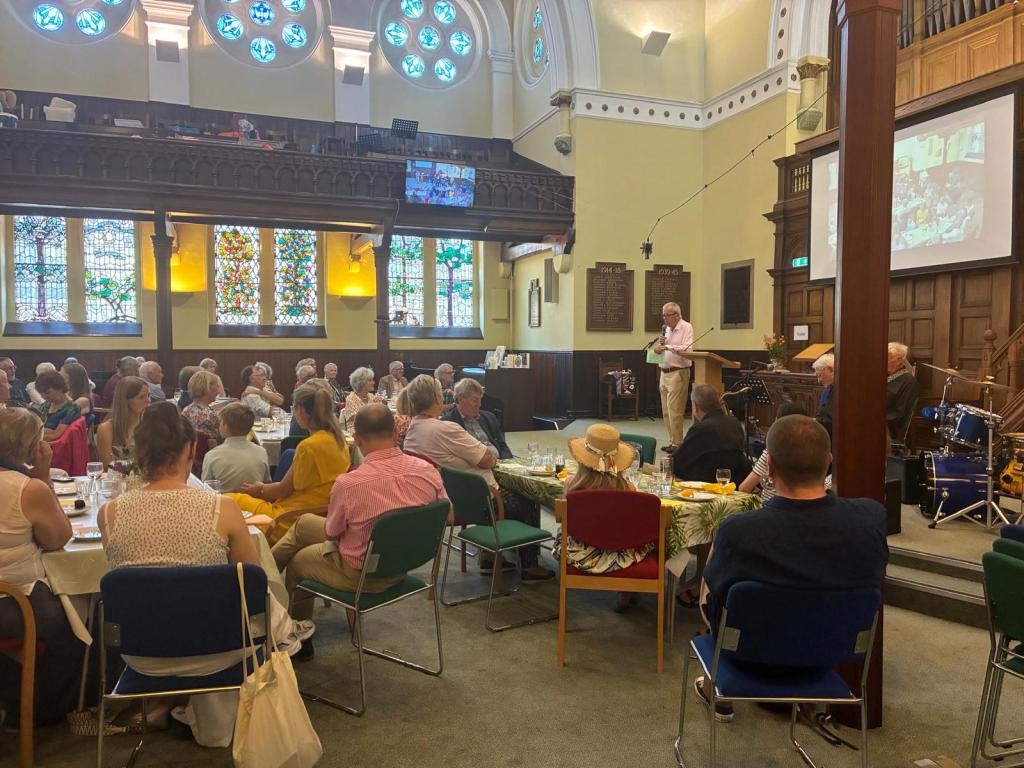
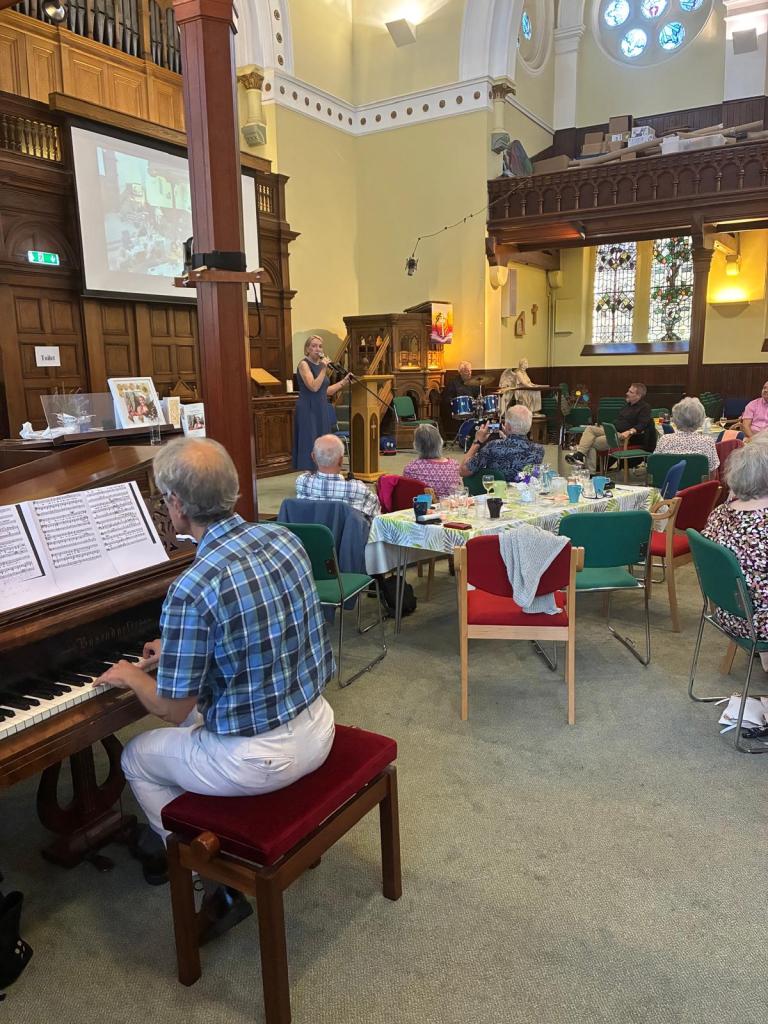
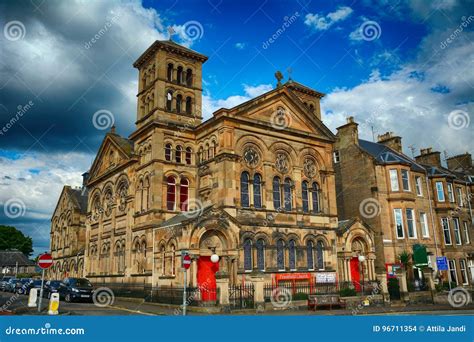
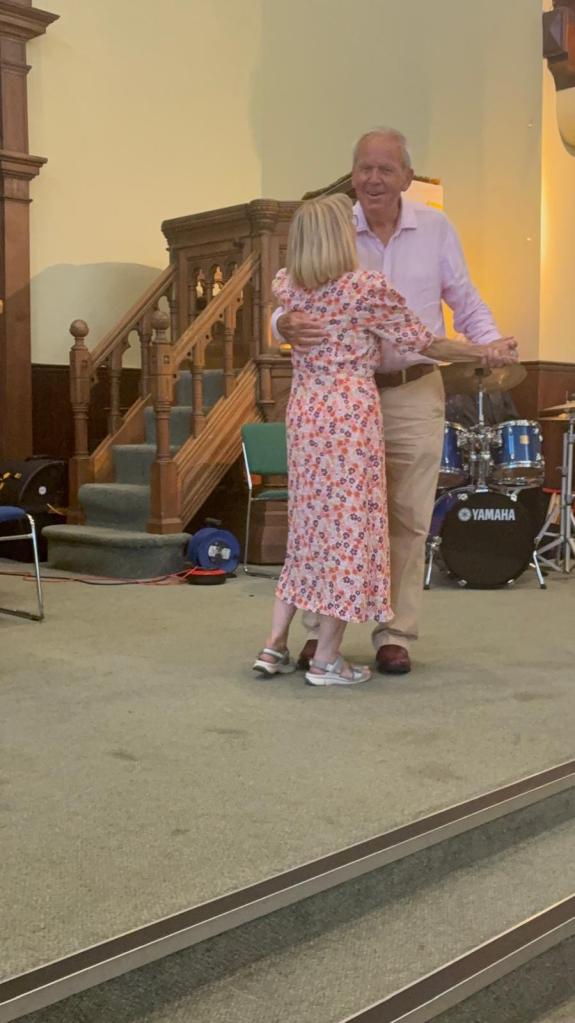
Susie and I are gearing up for a joint 80th birthday and Golden Wedding celebration in the former Priestfield Church. For a variety of friends from Edinburgh and further afield.

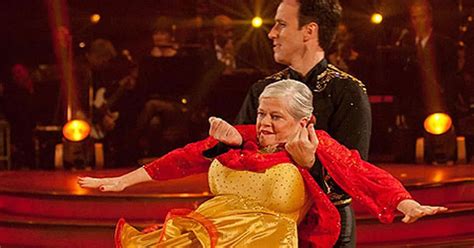
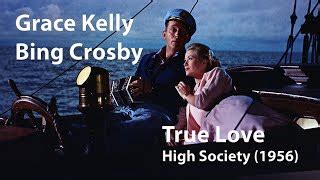
We look forward to seeing Andy and Kate, and Joan, from Christ Church, Duns; Diana from Lyon; Armin and Magdalena from Brussels; and Alain and Ann from Chantilly. And my brother and two sisters-in-law, and our children and grand-children , from down south. I had initially booked a skiffle group, but one of them had a severe stroke and they had to withdraw. Instead we have a jazz quartet, whom I’ve not heard play. Word is that their drummer played with Kenny Ball back in the day. And Rebecca Sergeant has come from south-west France to sing, a collection of songs by Gershwin and Cole Porter. She is encouraging us to essay a modest dance to go with True Love, reprising Bing Crosby and Grace Kelly from High Society. But I fear it may look more like a clip from They shoot horses don’t they ! We shall see.

July 2025

Through a glass darkly – 154

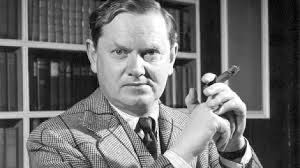
Last year I read most of Evelyn Waugh’s earlier books, the novels that is not the travel writing which has dated badly. The conventional wisdom is that the First World War produced great poetry, think Wilfred Owen and Siegfried Sassoon, Edmund Blunden, Ivor Gurney and Isaac Rosenberg; whereas the best known writers of the Second World War produced mainly fiction, think Olivia Manning and Evelyn Waugh, and abroad Norman Mailer,  Joseph Heller, Günter Grass, and Kurt Vonnegut. The Sword of Honour trilogy, based on Waugh’s own  wartime experiences, are certainly Waugh’s most ambitious books. I believe that it is on this mature writing that Waugh’s reputation as a major novelist rests.

Waugh at War

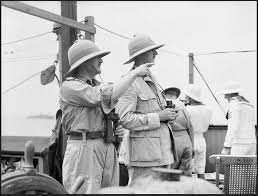
With hindsight it is easy to say that Waugh was not cut out to be a soldier. His free spirit was not suited to the military life. But after the outbreak of the war in 1939 Waugh was proud to be accepted as a successful candidate into the Royal Marines. Initially he enjoyed the ceremonial trappings, the gastronomic quality of the mess, the reflection of the silver candelabra on polished mahogany tables, the ritual clockwise circulation of the port. Life in the Marines initially suggested that he might be able to be both an aesthete and a man of action. But his infatuation with life in the army lasted only a few months. In April 1940 he was temporarily promoted to Captain and given charge of a company of marines. But he was an unpopular officer, vacillating between strictness and laissez-faire with his men. His inability to adapt to regimental life meant that he lost his command, and instead became the battalion’s Intelligence Officer. In August 1940 he took part in the Dakar Operation, which was hampered by fog and poor intelligence which caused the troops to withdraw.

Operation Menace – the Dakar fiasco

In November 1940 Waugh was posted to a commando unit, Layforce, serving under Colonel Robert Laycock. In February 1941 Layforce sailed to the Mediterranean and were involved in an unsuccessful attempt to recapture Bardia. Later in 1941 Layforce were involved in the evacuation of Crete. Waugh was shocked by the general air of chaos around the withdrawal, and by what he saw as loss of leadership and of cowardice among the departing troops.

The defence of Crete

Crete was effectively the end of Waugh’s active military service. In May 1942 he was transferred out of the commando into the Royal Horse Guards, but they struggled to find a role for an insubordinate and unmilitary officer. In January 1944, after being granted three months unpaid leave, he retreated to Chagford in Devon to write Brideshead Revisited, the first of his explicitly Roman Catholic books.

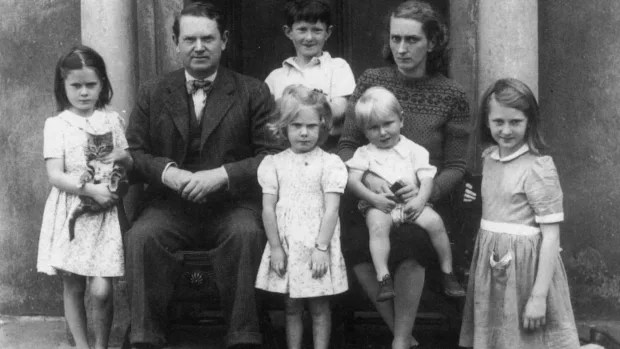
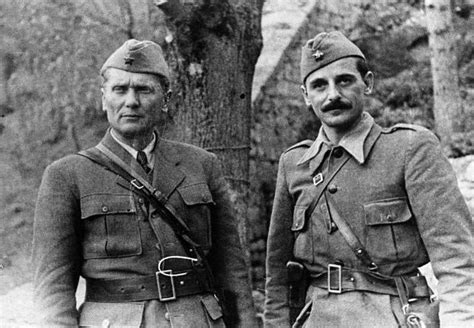
In July 1944 Waugh returned to service and was recruited by Randolph Churchill, a long-time acquaintance and occasional friend, to join the Maclean Mission to Yugoslavia. His relations with the Communist-led partisans were difficult, not helped by his insistence on referring to [Marshal] Tito as she. His chief interest became the welfare of the Roman Catholic church in Croatia, which he believed was suffering at the hands of the Communists and the Serbian Orthodox church. After his return to London in March 1945 his report was suppressed by the British Government in order to maintain good relations with Tito, now the head of communist Yugoslavia. In September 1945 he was released by the army, and returned to Somerset to Laura and his now five small children. The three volumes of his semi-autobiographical war trilogy, Sword of Honour, were published at intervals. between 1952 and 1961.

Men at Arms

In Men at Arms [pub. 1952], the first of the trilogy. Guy Crouchback, in his mid-thirties, [Waugh himself was 36 when the war broke out], from an old Catholic family, is determined to get into the war. It is essentially a question of honour, the need to prove himself. He takes a commission in the Royal Corps of Halberdiers, a thinly disguised portrait of the Royal Marines. Waugh’s move in January 1940 to Kingsdown Camp in Kent, a cavernous Victorian villa surrounded by the asbestos huts of a former holiday camp, caused his spirits to sink. But Kingsdown provided excellent material for a novel. Here Waugh encounters the formidable Brigadier Albert Clarence St. Clair-Morford: “He is like something escaped from Sing-Sing and talks like a boy in the Court Form at school – teeth like a stoat, ears like a faun, eyes alight like a child playing pirates, “We then have to biff them, Gentlemen”.” The Brigadier appears in an affectionate heroic guise as Brigadier Ritchie Hook in Men at Arms

Another prominent character is Crouchback’s eccentric fellow officer, Apthorpe, memorably played by Ronald Fraser in the 1967 television adaptation. Apthorpe’s upbringing and  pre-war life in Africa are surrounded by mystery. In an episode of high farce there is a battle of wits and military discipline between the Brigadier and Apthorpe over the latter’s mahogany thunder-box [portable toilet]. Before going overseas Crouchback attempts to seduce Virginia, from whom he is divorced, knowing that in the eyes of the Catholic Church she is still his wife. She turns him down.The book all ends tragically when the Halberdiers finally see action in the abortive Dakar affair. Apthorpe dies in hospital in Freetown, supposedly of a tropical disease. When it transpires that Crouchback had smuggled a bottle of whisky in for him, Guy is sent home having blotted his copybook. There are wonderful moments and comic characters. But I find that the overall sense is one of wistfulness. 

Officers and Gentlemen

This is the second volume of Sword of Honour trilogy [pub. 1955]. After the abortive Dakar escapade, Guy is transferred to a Commando unit training on the Isle of Mugg. The unit is commanded by Tommy Backhouse, for whom Virginia had left him. There is plenty of whisky and high-stakes cards with fellow members of Turtles [based on Whites]. His fellow trainees include Ivor Claire, whom Guy admires as the flower of English chivalry. And also the seedy Trimmer, a former hairdresser on trans-Atlantic liners who becomes an improbable war hero. In a Glasgow hotel Trimmer embarks on an affair with Virginia, a former customer on the pre-war liners.

The high comedy turns to tragedy as Guy is involved in the humiliating defeat and withdrawal from Crete. Guy performs well, but no-one else emerges with much credit. He escapes from Crete in a small boat alongside the disquieting Corporal-Major Ludovic. Once back in Egypt Guy comes under the protection of the beautiful and well-connected Mrs Stitch [clearly based on Diana Cooper] who reappears from earlier novels. She arranges for him to be returned slowly to England, partly in order to avoid difficult questions being asked about Claire, apparently a deserter. The book ends with Guy back in London, asking around in his club about a suitable job.

Unconditional Surrender

This third volume of the Sword of Honour trilogy was not published until 1961, some fifteen years after the end of the war. After the Crete debacle Guy Crouchbank has lost much of his idealism. He is injured while parachute training at a centre run by the increasingly paranoid Ludovic. Who is afraid that Guy will expose his behaviour in the withdrawal from Crete. During his two years at HOO HQ in London Guy is brought back into contact into contact with his former wife Virginia, now pregnant by Trimmer. The couple remarry before he is posted to Yugoslavia, where his Catholic faith is offended by the Communist take-over. Guy tries ineffectively to minister to a ragged group of Jewish refugees, who then suffer because of his contacts with them. In London Virginia gives birth to Trimmer’s child, before she and Uncle Peregrine are killed in an air-raid.

In a short epilogue, set against the Festival of Britain, Guy has remarried, to Dominica Plessington, the daughter of an old Catholic family.  I think we are to assume that Trimmer’s child will succeed as  Guy’s heir. [Though different editions of the book have slightly different postscripts.]

Reaction to the books

Reaction to the books was mixed. Men at Arms won the James Tait Black Memorial Prize in 1952. Reviewers were generally favourable. But Cyril Connolly, one of Waugh’s few male friends [caricatured in the trilogy as Everard Spruce], writing in the Sunday Times, complained that the middle part of the book was dull and that Apthorpe was an unfunny private joke. Waugh himself while writing the book had referred to it as ‘Mrs Dale’s Diary’, a BBC radio soap of the time [to which my maternal grand-mother was addicted].

Progress was slow on the two subsequent volumes. Waugh was financially secure but maintained an extravagant rate of expenditure, and was looking to his war saga to finance his old age. Waugh was a commercially successful writer, and when Officers and Gentlemen appeared, it sold 26, 000 in the first month. Reviews were mixed. Cyril Connolly spoke of “a benign lethargy, which makes for slow reading”, while praising the latter sections on Crete. Waugh wrote to Maurice Bowra, “I am awfully encouraged that you like Officers and Gentlemen. The reviewers don’t, fuck them.”

By the time Unconditional Surrender appeared, in 1961, reviewers were uncertain what to expect. Waugh himself was “as successful, complacent, and vindictively dotty as ever” [Martin Stannard’s verdict]. His last two books, an anthology of his pre-war travel writing, When the going was good, and Love among the ruins had been dull, and his gifts as a writer seemed like his health to be in decline. At the age of 50 Waugh was old for his years, selectively deaf and rheumatic, and reliant on drugs to counter his insomnia and depression. Disturbingly his son Bron, author of the successful first novel The Foxglove Saga, seemed to be overtaking him in the public eye. Journalists were already writing about Waugh Père et Fils.

Reviewers again divided into two camps, with arguments for and against Waugh’s vision of the war and the world. Kingsley Amis and Philip Toynbee again attacked him for his social prejudices and his snobbery. But Cyril Connolly, while expressing reservations about the “biliousness of Waugh’s gaze” [cue Everard Spruce], was moved to read all three volumes and declared that “the cumulative effect is most impressive, … … unquestionably the finest novel to have come out of the war”. He even revised his opinion of Officers and Gentlemen, describing it as “magnificent”.

Personally I think the books are the best of Waugh’s fiction. The are some parallels with Brideshead, but with rather less of the snobbish nostalgia. Now there is a rich cast of characters: the socially inept Apthorpe, the all action military hero Ritchie Hook, the impostor Trimmer. And Guy’s bachelor uncle Peregrine, who mistakenly thinks that Virginia has designs on him. The episodes of chaotic HOO training on a Scottish island, the Isle of Mugg, and the unsuccessful hunt for an abortionist in wartime London remind us of Waugh’s gift for farce.

Guy Crouchback is a decent man, a melancholic [in Yugoslavia he confesses to a priest that he wishes for death], who chafes at the inactivity and bureaucratic incompetence of war when he wishes to be leading his men into battle. Like Waugh himself, Guy’s failings as a military man, and the failures of the operations in which he is involved – Dakar and Crete, contribute to his growing sense of disillusionment. His Catholicism makes him reluctant to embrace Stalin as an ally, and he is concerned about the future for his co-religionists in Tito’s Yugoslavia. When the war ends with a great victory over Nazism Guy shows no signs of elation. He regrets rather that he had once imagined that private honour would be satisfied by military service and war. Guy’s marriage and his adoption of Trimmer’s child means that the Crouchback line will continue. But it is not clear whether there will be room for the old-fashioned virtues of loyalty and honour and decency in the coming post-war world. Guy Crouchback, like his creator, found little that pleased him in the Britain of the late 1940s and 1950s. It all seems a long time ago.  But I’m glad to have re-read the Sword of Honour trilogy which I first encountered some five decades ago..

Envoi

Susie and I went down to Birmingham for the weekend. The furtherest we have been from home this year ! And the furtherest we are likely to travel. We were there for my niece Léonies’s wedding to Carlos, a mushroom grower from the Canaries. [Disgracefully I have no photos of them.] It was very good to see the family. Whom we probably don’t see often enough. The  weather forecast was for 30º-plus. But the train journeys went very smoothly, both down with Cross Country Trains and then back up with Avanti West Coast. We had booked Passenger Assistance in advance which worked well. But our helper when we arrived back at Edinburgh Waverley was apparently disappointed that I wasn’t my namesake from Coldplay.

We are now back home in Edinburgh, rejoicing in a temperate climate [there are stories of killer heatwaves around the Mediterranean], wondering whether to cut the grass, and fine-tuning the arrangments for a Celebration next month

June 2025
Through a glass darkly – 153

Books can be evocative. I clearly remember being given a paperback copy of John Le Carré’s Tinker Tailor, Sailor, Spy back in the mid-1970s by Mme Anne Warter, then Directrice of the Paris bookshop Nouveau Quartier Latin, and reading it with great excitement on the rather second-rate Silver Arrow train from the Gare du Nord up to Le Touquet. Later Le Carré books are linked to other memories. I read Little Drummer Girl while on a trip to an EFL conference in Groningen in 1983. And Single and Single during an ICS summer chaplaincy trip to Brittany in 1999.

These past few days I’ve been turning the pages of a book that has been on my shelves for some 50 years. Seeing the red dust-jacket brings back memories of the author. But until last week I had never opened the book.

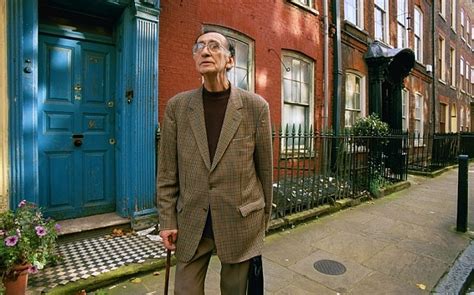
William J. Fishman

Bill Fishman was born in Stepney, the son of a Jewish immigrant tailor and grew up in London’s East End. He  was educated at the Wandsworth Teacher Training College [where my father did a one-year training course after the war], and then at the LSE. After the war he gained rapid promotion as a teacher, and became principal of what became Tower Hamlets College of Further Education. In 1965 he spent a year as Schoolmaster Student at Balliol, and in 1967 he was Visiting Professor of History at Columbia University, New York. He subsequently resigned his job at Tower Hamlets to become Visiting Professor at the University of Wisconsin at Madison, and then Barnet Shine Memorial Research Fellow in Jewish Labour Studies at Queen Mary College, London.

I never met Bill at Balliol. Which is odd since he was a distinctive character; tall with dark wavy hair, heavy spectacles, and a loud voice. But I got to know him during my time at George Allen and Unwin, as we had a publishing agreement with the Acton Trust who at the time were sponsoring Bill’s research into late nineteenth century labour history. Bill introduced me to Bloom’s, the longstanding kosher Jewish restaurant in Whitechapel High Street. [It closed in 1996.] After a lunch of well-done salt beef with chips and latkes, Bill would lead us on a tour of the surrounding streets drawing attention to the sites of long gone anarchist printing presses and of Jack the Ripper murders.

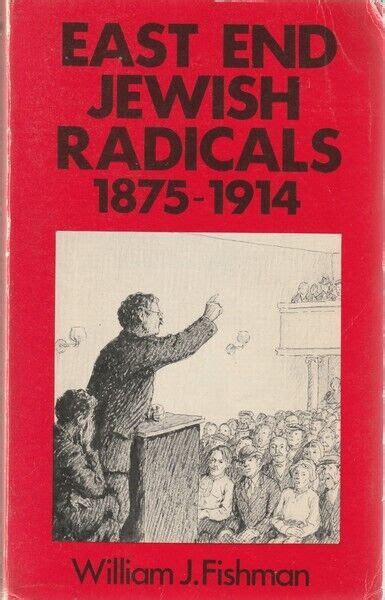
William J. Fishman: East End Jewish Radicals, 1875-1914

The publishing link with the Acton Trust did not survive my departure from George Allen and Unwin, and Bill’s book was published in 1975 by Duckworth, of the Old Piano Factory in Camden Town. [Duckworth, notable British literary publishers,  was run at the time by Colin Haycraft, once described as “a one-man university press”, husband of the writer Alice Thomas Ellis, and the brother of John Haycraft, the founding director of International House language schools.]

East End Jewish Radicals tells the story of how London’s East End became the home to tens of thousands of Jewish immigrants, driven from Russia and eastern Europe by successive pogroms. They settled into the grim tenements of Whitechapel and Stepney and worked in tailoring sweatshops often under appalling conditions. Some of the immigrants had already been political radicals in Russia and they now sought radicalise and unite the Jewish workers of the East End.

Successive measures had eased the restrictions on Jews in public life: in 1833 Jews were allowed to practise at the Bar; in 1845 Jewish schools were permitted; from 1858 Jews could be elected to the Home of Commons; in 1871 the University Test Acts enabled Jews to graduate. But now in the 1870s the marked increase in the number of Jewish immigrants was a source of fear and embarrassment to Anglo-Jewry. Who felt threatened by the arrival of a mass of peculiarly clad, Yiddish-speaking paupers. A letter in the Pall Mall Gazette in February 1886 warned that “the foreign Jews of no nationality whatever are becoming a pest and a menace to the poor native-born East Ender”. The Jack the Ripper murders provoked a minor outbreak of Judophobia. After the third murder, an editorial in the East London Gazette declared that “no Englishman could have perpetrated such a horrible crime as that of Hanbury Street, and that it must have been done by a JEW – and forthwith the crowds began to threaten and abuse such of the unfortunate Hebrews as they found in the streets …”. 

Against this background Jewish socialists and radicals assumed the role of fighting advocates for their people in the daily struggle against exploitation and prejudice. The earliest record of a Jewish workers’ organisation was a Union of Lithuanian Tailors founded in Whitechapel in 1872. In 1876 came the foundation of the first Hebrew Socialist Union. The secretary was Aron Lieberman, born in 1849 in the Grodno district of Russia, who had studied at the Petersburg Institute of Technology and at a rabbinical seminary in Vilna. Lieberman was a socialist prophet, fluent in Yiddish and classical Hebrew, rabidly anti-clerical, thoroughly committed to educating Jewish workers, and a scathing critic of the Jewish financial aristocracy. The brotherhood of man could only be achieved under Socialism. Lieberman subsequently moved to Berlin, was arrested in Vienna under anti-Socialist laws, and was imprisoned in Austria and in Prussia before being expelled back to England. Following an attractive [but married] young woman to New York, Lieberman was rejected by her and shot himself in a cheap lodging-house in Syracuse in November 1880.

Jewish immigration continued to rise between 1881 and 1891. The tolerance of the hosts diminished as numbers grew and the demands for work and for housing. In 1884 came the appearance of the Poilishe Yidl, the first Socialist newspaper in Yiddish. But this was supplanted a year later by the Arbeter Fraint [Worker’s Friend], a Yiddish monthly tabloid, open to all radicals, social democrats, communists, and anarchists. The paper was linked to an International Workers’ Educational Club, at 40 Berner Street, off the Commercial Road, which offered a base for radical and trade union movements in the East End.

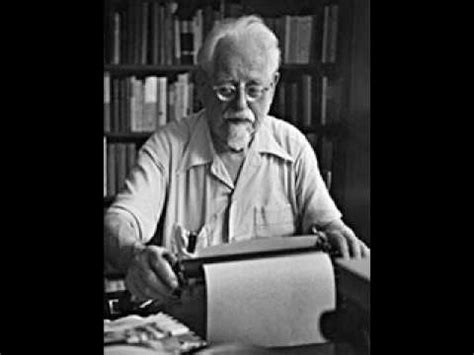
The most influential leader in the decades before the First War was Rudolf Rocker, an unlikely phenomenon in Jewish life, born a Roman Catholic in Mainz in 1873, who for sixty years devoted himself to the Jewish working class and to Yiddish language and literature.  As a young man Rocker was an apprentice bookbinder and a Social Democrat. His first contact with Jews and with Jewish radicals came in Paris in 1893 when he was invited to attend a Jewish Anarchist meeting. Anti-anarchist pressures drove him out of France. He came to London and in 1895 became Librarian of the First Section of the Communist Workers’ Educational Union [Marx, Engels, and William Liebknecht had been members]. In Shoreditch Rocker became intimate friends with Millie Witkop, an attractive young Jewish immigrant from Zlatopol in Ukraine. They thought to emigrate together to the States, but were held at Ellis Island as an unmarried couple. Rocker was a persistent critic of the bourgeois institution of marriage and a longstanding advocate of Free Love. The American Press was heavily critical of the Rockers, holding to the established American puritan ethic; and the couple were shipped back to England. Rocker became editor of the influential Yiddish periodical Germinal,  a mouthpiece for libertarian socialism which temporarily replaced Arbeter Fraint. 

Rudolf Rocker

Fishman interviewed men and women who recalled Rudolf Rocker as “a handsome presence – tall, blonde, sturdy, recognisably German … …  he opened up the vision to us of a new society – no persecution, no hunger, only warmth and generosity.” Social evenings were held in the Crown Hall in Reddens Road. There would be classical opera and Edelstadt’s lieder accompanied by an anarchist pianist, and afterwards Rocker would lecture on some topic of political or literary interest. The Russo-Japanese War and the Russian Revolution of 1905 brought new immigrants and political refugees. By 1906 the Rocker group opened a Workers’ Club in Jubilee Street, which included a gallery that accommodated 800 people, a library, adjoining classrooms, and a reading room.

Millie Sabel recalled some curious customers:

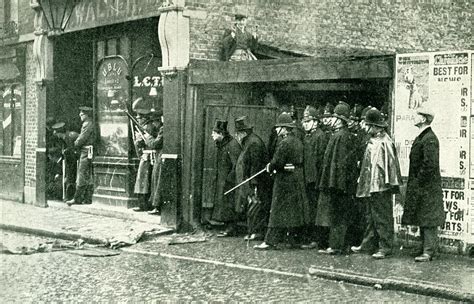
I occasionally saw a small, intense man who sat alone at a table in the corner. He has slant eyes, balding reddish hair, drank Russian tea and spoke little. He was Lenin. There was also a handsome, dapper man who came later and helped paint the props at our theatrical – a quiet attractive comrade we called Peter the Lett. He was supposed to be Peter the Painter … … “ [subsequently thought to be the brains behind the robbery in December 1910 that led to the Sidney Street siege.]

The outbreak of war in August 1914 was a death blow to East End anarchism. As it was for the Second [Socialist] International. Though, as Fishman notes, in London’s West End French and German anarchists co-operated to open a Community soup kitchen to feed unemployed German workers. But shortly afterwards Rocker was interned for four long years, and was subsequently repatriated via Holland to Germany. His departure spelt the end of the London Jewish movement.

The siege of Sidney Street

There may be parallels to be drawn between radical Jewish immigrants who are the focus of this book and the  radical Muslim immigrants of a century later. Firman notes the tension between the ideal of educative growth combined with militant action, as proposed by Kroptkin and Rocker, against the concept of ‘propaganda by the deed’ proposed by the men of violence. The murder of the three policemen in Sidney Street certainly forfeited a lot of support among the moderates. Though Peter the Painter became a legendary anti-hero in East End folklore. It is a fascinating and colourful story. But I fear that Fishman’s book scarcely does it justice. He was a lively and captivating speaker, but his writing style is rather dull. Which is why the book is now heading for the OXFAM shop.

Envoi

The garden looks a bit scruffy as we come to the end of ‘no mow May’. We have had ten days of strong winds and squally showers, and I am now waiting for a dry couple of days to cut the grass. But the roses are magnificent. 

AbFab rose

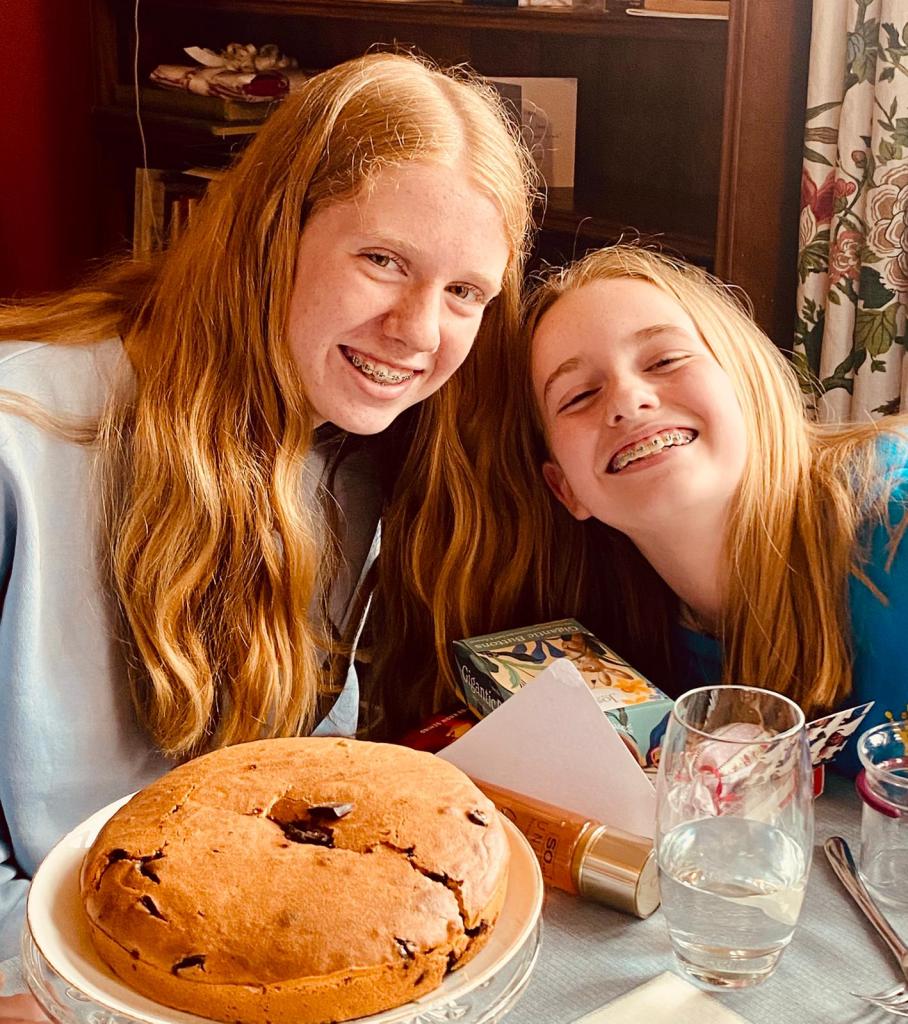
We were sorry not to be away in Normandy with the family for summer half-term,, as we have been for the past three years. But we were delighted to see Craig and the girls, who were up in Scotland for a wedding. And delighted to share a big family meal with them for Amelia’s 14th birthday. 

The girls, like all our grandchildren, are a delight. Joanna would be so proud of them.

June 2025

Through a glass darkly – 152

I’m often given books as presents, and sometimes I don’t want to read them. A few years ago I was given Thomas Piketty’s Capital in the Twenty First Century. And although I would like to have read it, I didn’t actually want to open it. And it sat reproachfully unopened on the shelves for a couple of years before I took it along to the OXFAM shop. More recently I was given a copy of a commentary on the book of Job, written in French by a conservative reformed pastor. I have looked at the early pages. But I know that I won’t live long enough to read the rest of it. And I’m aware that it may not sell very fast in the Edinburgh OXFAM shop. On the other hand I have just read, with great interest, a book that I was given for my birthday last summer.

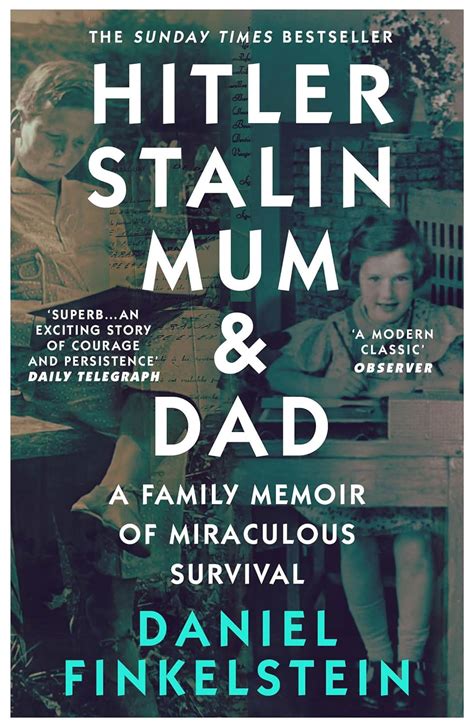
Daniel Finkelstein: Hitler Stalin Mum and Dad

I am not predisposed to like a book by a Tory member of the House of Lords [elevated by David Cameron in 2013]. Who is also a journalist, political commentator, and supporter and director of Chelsea football club. 

[Aside.  When did it became the norm for politicians to make known their football allegiances ?  Did it start with Tony Blair, who claimed unconvincingly to have bunked off school to watch the Newcastle centre forward Jackie Milburn ? He didn’t; the dates don’t work. The prolific Alastair Campbell, onetime journalist and Blair’s right hand man, is known as a lifelong Burnley supporter. David Cameron claimed to be an Aston Villa supporter, but in an interview confused them with that other claret-and-blue team West Ham United.  [Or CSBJ, the Bourgoin rugby club ?] Keir Starmer claims to be an Arsenal supporter, like Jeremy Corbyn and Pritti Patel. He used to have a season ticket at the Emirates, though he may not have paid for it. Rishi Sunak supports Southampton – who have just been relegated. That sounds about right. I don’t think that Clem Attlee or Harold Macmillan ever talked about standing on the terraces at Highbury or at Villa Park.]

But Daniel Finkelstein’s family memoir is an extraordinary and gripping book. He tells the story, in some detail, of how his parents and grand-parents survived events in Europe during the 1930s and 1940s. His maternal grand-father, Alfred Wiener, was a German Jew, born in 1885 in Potsdam. He was committed to the development of a modern liberal Germany and of modern Judaism, and saw these things are mutually supportive. After the First War, in which he fought for Germany and was decorated, he became General Secretary of the CV, the Central Association of German Citizens of the Jewish Faith. The CV campaigned against anti-Semitism and sought to develop ideas of tolerance, liberalism, and social equality. But after Hitler became Chancellor in January 1933, Alfred realised that he would have leave Germany. He settled in Amsterdam where he was joined by his wife and their three daughters. The youngest, Mirjam Emma Wiener, Finkelstein’s mother, was born in Berlin in June 1933. 

His paternal grand-father, Adolf Finkelstein [Dolu] was born in Lwow, in Poland, in 1890. The Finkelsteins were a wealthy Jewish family, fluent German speakers, partners in the dominant iron and steel business, who also owned property in Vienna.  Prior to the creation of an independent Polish state, Lwów had been a provincial centre of the vast Austro-Hungarian Empire. Half of its population were Polish, the other half divided equally between Jews and Ukrainians. Dolu married Luisa, the daughter of wealthy landowners, and they had one son, Ludwig, Finkelstein’s father, who was born in 1929. The business prospered and Dolu because known as ‘The Iron King’.

What happened next is an epic tale of survival. Timothy Snyder and Anne Applebaum have written about the suffering of central European Jews under Nazi Germany and Communist Russia, under  Hitler and Stalin, the two genocidal dictators of the twentieth century. Finkelstein retells the story in terms of his own ancestors.

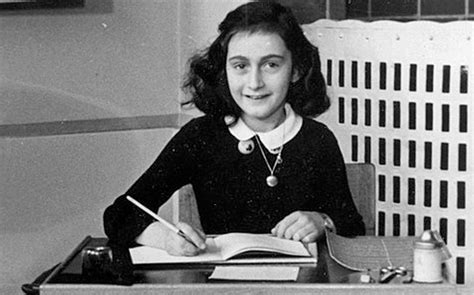
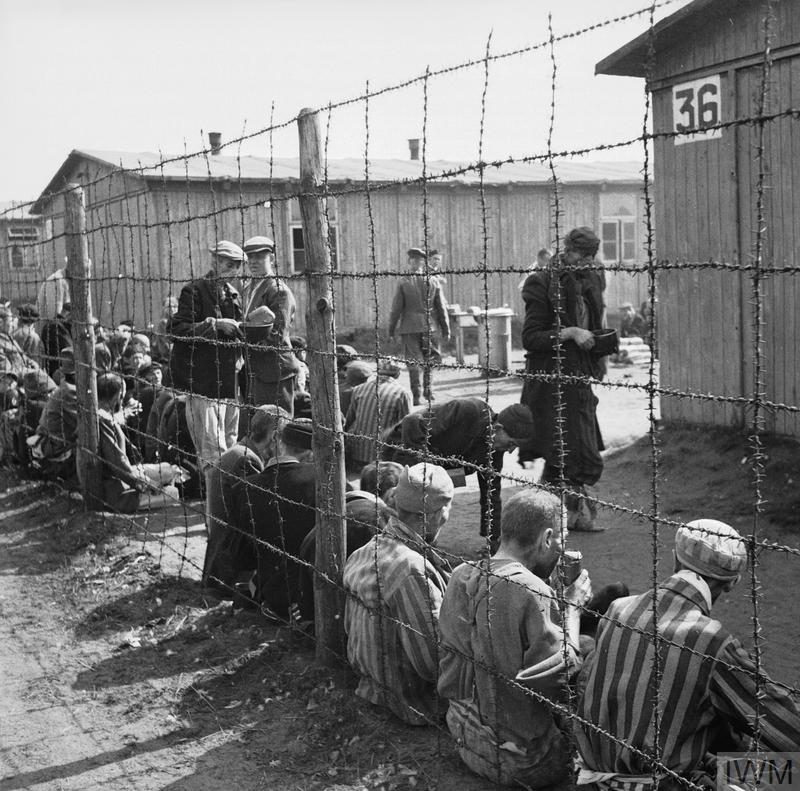
Alfred Wiener spent his years in Amsterdam assembling documents and data about persecution in Nazi Germany. The collection eventually became the Wiener Library. He himself relocated again to London, and then to the United States, before the war broke out. He was preparing to bring over his wife and daughters when Germany invaded the Netherlands. His wife Grete and their three daughters are trapped in occupied Amsterdam. Their friends included Anne Frank and her family. Of their predominantly Jewish neighbours in Jan van Eijckstraat 90 were murdered in the camps, in Auschwitz and Belsen, in Sobibor and Mauthausen. In June 1943 Grete and her girls were rounded up and sent first to Westerbork camp and then to Bergen-Belsen.

Three years earlier, in April 1940, Adolf Finkelstein had been arrested in Lwów by Soviet troops and militia as part of a bigger round-up. He was held in prison in Poltava and in Starobelsk, and was then sent north to a Siberian gulag, a labour camp, near Ukhta. Very shortly afterwards the NKVD came for Adolf’s wife, Luisa, and their son Ludwig, and they were forcibly relocated to a remote settlement in eastern Kazakhstan to work on a sovkhoz, a Soviet state farm. It was a place of hunger and death. There Ludwig and his mother along with some 100 other exiled Poles survived the freezing winters in a primitive shed built from cow dung. 

That any of his ancestors survived, and that some of them were reunited after the war, is a miracle. Though that is not a word that Finkelstein uses. It is a long story, and I was grateful for the four family trees at the start of the book. The book overlaps thematically and chronologically with Philippe Sands’ East West Street. The authors share a common past in Lwów/Lviv, and Finkelstein acknowledges that they are almost certainly cousins.

Through the detailed story of the Wiener and Finkelstein families, the book underlines the almost unbelievable suffering of the European Jews in the 1930s and 1940s. It evenhandedly accuses both Hitler and Stalin of awful crimes against humanity.  Very unfortunately, lingering western guilt about doing too little too late to halt the Nazi holocaust means that world leaders are again doing too little to bring an end to the Israeli offensive against the Palestinians, Which to me looks very like ethnic cleansing. As tens of thousands of Palestinian women and children are sacrificed to save the political career of the odious Benjamin Netanyahu. The book ends with the survivors leading unremarkable lives in the respectable north London suburbs of Hendon and Swiss Cottage.

As I write this, I realise how little I was affected by any of this history when I was younger. I remember that when I was hitchhiking in Europe in the summer of 1963, I went out for a drink in Munich with a Jewish girl from Canada. Who told me that 17 of her immediate family had died in the camps. But I didn’t really take in the horror, and I didn’t make much of it at the time. And I can’t now remember her name.

Envoi

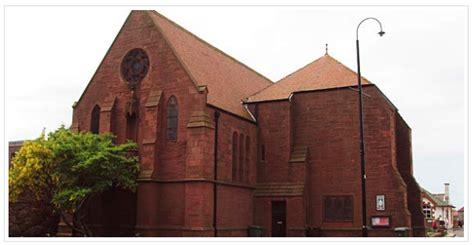
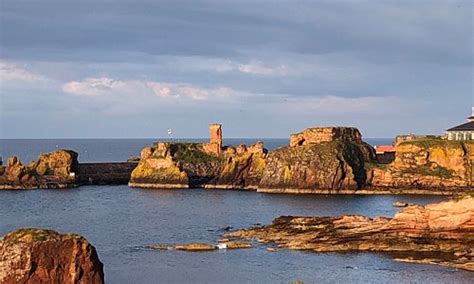
Susie and I continue to limp around on poles, like senior citizens practising for a three-legged race. Unusually, on two successive Sundays, I have been preaching out of town at St Anne’s Episcopal Church, Dunbar. Squeezing into a tiny Car Club car is an effort. But it was lovely on sunny mornings by the sea. And the congregation were very welcoming. Closer to home the roses are coming out, the garden is as good as it gets, and has required regular watering. We have been casting about trying to find a [replacement] skiffle band for a Celebration in July. And we are looking forward to seeing Craig and the girls here next week. It will be Amelia’s fourteenth birthday on Wednesday.

May 2025 

Through a glass darkly – 151

The days go by, each day getting a little longer. Passion Week began with an appointment with the diabetic nurse. continued through a series of early morning services at Newington Trinity, and ended with a walk of witness from Mayfield Church to Nicholson Square. And a sombre service of Tenebrae on Good Friday evening. During which I thought mainly about Joanna. 

The Pope died on Easter Monday. [As did my younger brother 3 years ago.] Probably a kindness for him, but a great loss to the Roman Catholic church. [The Pope, not my brother Peter.]  And beyond, as he was evidently loved by a multitude of people around the world. I read that viewings of Conclave went up by some 250% following his death. Incidentally I think that Robert Harris is a diligent researcher, but not much of a novelist. Ralph Fiennes might be an outside bet as the next Pope. Almost relatedly, I read someone saying in the Church Times that Monty Don displayed many of the desirable characteristics to be the next Archbishop of Canterbury. I have little idea as to who that might be. But I think the Bishop of Newcastle has probably put herself out of the running.

Fare Well in Christ

Last month I wrote about two slim books by the English theologian W.H. Vanstone, Love’s Endeavour, Love’s Expense and The Stature of Waiting. In recent days I’ve been reading his third and final book, Fare Well in Christ, [published in 1997]. It’s a bit of a mixed bag.

Vanstone starts with a reflection on the word grace. The phrase ‘the grace of God’ is absent from the Old Testament. The Prologue to John’s Gospel clearly states that the grace of God came into the world with the birth of Jesus Christ. Vanstone argues that grace is not just another divine power or attribute. Rather it is the way in which powers and virtues are expressed. The grace of God, Vanstone suggests, is that which elicits from men a response of joy and gratitude.

We then move on to what Vanstone calls the ‘power of stories’. Stories, he suggests, affect us more powerfully than general statements about the way the world is or ought to be. And the Christian church came into being as the evangelists told, and as people received, stories about Jesus Christ.

These stories could not be replaced by summaries of ‘what the story means’.

This leads Vanstone on to the Saxon poem The Dream of the Rood, in which the Cross on which Jesus was crucified tells its own story. The image of the “Cross of Christ towering above the skies”  became for centuries afterwards a prominent Christian symbol. Vanstone notes that the Cross has been largely removed from public view, privatised, in our generation. But he offers us six powerful stories, from his own experience, that demonstrate the healing power of the Cross. The power to heal things like anger and obsession. Sermon illustrations really.

Vanstone points to the story of Jesus’s encounter with Zacchaeus as a powerful example of the grace of Jesus Christ. There is no mention of repentance from Zacchaeus, and no mention of forgiveness from Jesus. But Jesus’s words and actions win from Zacchaeus the change of mind and outlook that we call salvation. This healing is a free gift which enlarges the freedom of the person who receives it. God’s healing is never burdensome.

In a final chapter Vanstone reflects on our [largely negative] attitudes towards death and dying. He points to some words found on a tombstone on Oronsay in the Hebrides: “Sleep after toyle, port after stormy seas, ease after warre, death after life doth greatly please.” The words are a quotation from a poem by Edmund Spencer. Vanstone takes issue with the common assumption ‘you only live once’. He encourages us to wonder what life might like when the earthly body is reduced to dust and ashes. It is a challenge to reflect on the mystery of existence.

It sometimes seems that everyone knows everyone in the Church of England. [Except for me. I don’t know anyone.] [Bishop] Donald Allister, whom I see at church most weeks, told me that Bill Vanstone was Rector of the neighbouring parish in Chester Diocese when he was just a curate. And that he, Donald, was once called on to preach for Vanstone at short notice after an accident with a hover-mower while mowing the grass in sandals. Which sounds painful. [Bishop] Richard Holloway with whom I had coffee a week or so ago [lots of laughter and lots of reminiscence] told me that he used to ask Vanstone to preach at St Mary Mags in Oxford [I lived across the road in the 1960s]. And that he was always stimulating.

Envoi

We have had a week of glorious sunshine. I cut the grass and the garden looks as good as it gets. Friends from down south have been staying here for a few days. Nigel was in the youth group at St Nicks, Sevenoaks, when Donald was the curate there. So they caught up a bit over dinner a couple of nights ago. We are invited to a VE Garden Party at the Prestonfield House hotel on Monday, so I hope it will warm up a bit. A piece in The Times today reflects that the Second World War was a novelists’ war, unlike the First War which was a poets’ war. That might be an excuse to re-read Evelyn Waugh’s Sword of Honour trilogy. And perhaps also Irwin Shaw’s The Young Lions [published in 1948] and Olivia Manning’s [published 1960-65]. Neither of which have I read. And to make sure to leave time to reflect on the mystery of life !

May 2025
Through a glass darkly – 150

I’m ambivalent about mountains. On the one hand I’m very acrophobic around bridges, high buildings, and mountain roads: as a child I baulked at going  up the Monument in London, more recently I used to be nervous about driving across the Forth Road Bridge, and driving over the Viaduct de Millau is the stuff of nightmares. When I drove from Lyon to Geneva two decades ago, with a long stretch of elevated motorway, my hands had to be prised off the steering wheel when we arrived in Geneva. Visiting the Grand Canyon in 2016 made my toes curl.

Viaduc de Millau

On the other hand I like looking at mountains. ICS conferences at Beatenberg with recurrent views of the Jungfrau were a pleasure, once I had negotiated the rather scary busy ride up from Interlaken. Sitting in Grenoble a year ago, with snow-capped mountains at the end of every street and in every direction, was a delight. And, somewhat perversely, I enjoy books about mountains. Think Nan Shepherd and Robert Macfarlane. And books about mountaineering.

Grenoble 2024

Wade Davis: Into the Silence

This book has sat unread on my shelves upstairs for several years. Wade Davis is a Canadian  anthropologist, a writer and photographer, with a string of books to his name. Into the Silence, subtitled The Great War, Mallory, and the Conquest of Everest, is an ambitious and prodigiously researched account of the three Everest expeditions of the 1920s. The unifying thread is the person of George Mallory “the scatter-brained Adonis and Bloomsbury favourite whose fate would enthral the nation” [John Keay in The Literary Review].

Davis gives us the historical background. Although Britain had ruled [and transformed] India, very little was known of the mountains to the north. Tibet was uncharted and unknown. Only three Europeans had visited Lhasa between 1750 and 1900. Britain had no territorial designs on Tibet. But Curzon authorised [what was in effect] an invasion of the country in 1903-04 in order to establish diplomatic relations and to resolve a border dispute between Tibet and Sikkim, a British protectorate. Younghusband’s mission was a complete military success and forbade Tibet to have any relations with other foreign powers. After opening up the road to Lhasa Younghusband authorised two great thrusts of exploration into the whole mountainous wilderness between Tibet and Nepal. From one of these expeditions came the first clear photographs of the snowy summits of Makalu, Chomo Lonzo, and Everest. “Towering up thousands of feet”, wrote Captain Cecil Rawlings of Everest, “a giant among pygmies, and remarkable not only on account of its height, but for its perfect form. No other peaks lie near or threaten is supremacy : : It is difficult to give an idea of its stupendous height, its dazzling whiteness and overpowering size, for there is nothing in the world to compare with it”.

As early as 1912 questions were being asked as to why the summit of Everest had yet to be conquered. In the previous century, it was noted, more than £25 million had been spent on the fruitless quest for the North Pole. Four hundred men had died, and two hundred ships had been lost. But there had been no serious attempt on Everest. No European had reached its base. The immediate surrounds of the mountain remained uncharted. Little was understood of its structure, the character of its snow and ice, its topography, or the nature of its rock formations that made up its imposing bulk and which narrowed into its imposing ridges.

Descending, 1922

The Everest expeditions of the 1920s

Shortly after the end of the 1914-18 war, Sir Thomas Hungerford Holdich, President of the Royal Geographical Society was urging the government to consider the possibilities of launching an Everest expedition. In January 1921 the Mount Everest Committee came into being, sponsored by the Royal Geographical Society and the Alpine Club. The RGS was primarily interested in mapping the largely unknown surrounding area; the Alpine Club in the climb itself. 

The committee was very much an imperial body, and the members of the expeditions that followed were primarily military men. As Wade Davis explores in considerable detail, many of the expedition’s personnel were scarred, psychologically if not physically, by their experience in the Great War. The leader of the 1921 Reconnaissance Expedition was Colonel Charles Howard-Bury, a wealthy Old Etonian aristocrat, a fighting soldier mentioned in dispatches seven times and the holder of every medal for valour short of the Victoria Cross. Howard-Bury had survived four years on the Western Front, at Ypres, on the Somme, and at Arras; and ended the war as a German prisoner-of-war in a camp at Clausthal in the Harz mountains. The expedition doctor and naturalist was Alexander Wollaston, who in 1914 had [aged 39] volunteered as surgeon on an armed merchant cruiser in the North Sea; and who subsequently fought in the bloody but little-known campaign in German East Africa. Another early recruit was Dr Alexander Kellas, an Aberdonian and a specialist in physiology with an impressive track record of Himalayan expeditions. Kellas should never have been considered, at 53 was simply too old for Everest, and would die in Tibet.

Colonel Charles Howard-Bury

When after the Reconnaissance Expedition Howard-Bury was unavailable, leadership of the 1922 and 1924 expeditions passed to General Charles Bruce, an Old Harrovian and career soldier, who had commanded a Gurkha battalion at Gallipoli where he was severely wounded. Bruce was good-humoured, said to be an excellent raconteur and fount of bawdy stories. He had experience in the Himalayas and was in 1923 President of the Alpine Club. But his age [he was 56 in 1922], his health record, and his high blood pressure raised questions about his appointment. Bruce’s leadership of the 1922 expedition was generally admired, and he was reappointed in 1924. But in the latter year he contracted malaria while tiger shooting before the expedition and had to be stretchered out of Tibet, the leadership passing to his deputy, Major Edward Felix [Teddy] Norton. Another career soldier, an Old Carthusian, who had survived four years on the Western Front, fighting on the Marne, at Ypres, Loos, the Somme, and Arras, and then surviving the great German Spring Offensive of 1918 when he was at Bapaume. 

General Charles Bruce

George Mallory

They weren’t all military men. George Mallory, the finest rock climber of his generation to survive the war, was an obvious candidate for Everest. Mallory was the eldest son of an Anglican vicar, who won a maths scholarship [aged 13] at Winchester in 1900. He loved everything about Winchester: “the games at which he excelled, the spirit of ardent patriotism, the value placed on honour, loyalty, sportsmanship, and duty, the prayers and hymns, and the rousing renditions of the national anthem that summoned the boys to higher imperial challenges”. At Cambridge Mallory entered a cloistered world, monastic in its ideals, in Arthur Benson’s words “a place of books, music and beautiful young men”. In the homo-erotic world of the Cambridge of that time the good-looking Mallory [“the heavily lashed, thoughtful eyes … reminiscent of a Botticelli Madonna” according to one obituary notice] attracted an enormous amount of attention. At Cambridge he was pursued by the fraternity of the Apostles, among others by Rupert Brooke and Geoffrey Keynes, James and Lytton Strachey, Duncan Grant, Eddie Marsh, and E.M. Forster. Arthur Benson, the son of an Archbishop of Canterbury, tormented scholar and prolific writer, who had been sacked from teaching at Eton under scandalous circumstances, became Mallory’s tutor at Magdalene. Mallory’s passion for climbing was strengthened at Cambridge by his involvement with the Cambridge University Mountaineering Club, a group that clustered around Geoffrey Young, the most prominent climber of the pre-War years. [Young like Benson had been sacked from Eton for indiscretions.]

George Mallory

From 1910 Mallory taught at Charterhouse, a job for which he was ill-suited. In late 1915, now married with a small daughter, Mallory was given leave to join up and was given a commission in the Royal Artillery. He survived the fighting on the Somme and was spared from Passchendaele by a broken foot from a motor-cycle accident. When he returned after the war Charterhouse had become intolerable. Geoffrey Young proposed Mallory to the Everest Committee, as a route out of school-mastering onto a bigger stage. And Mallory in spite of his wife Ruth and young children was irresistibly attracted to the cause of Everest. It seemed like a good career move.

George Finch

If Mallory was Britain’s finest rock climber in 1921, the finest climber on snow and ice was thought to be George Finch, an Australian from an unorthodox family background. Finch had studied in Paris and then in Switzerland, and had earned a strong reputation in the Alps in the years before the war. During the war Finch had served in France and in Egypt with the Royal Artillery, and then in Salonica with the Royal Army Ordnance Corps. For his work in Macedonia Finch was awarded the MBE. Where British climbers still wore Norfolk tweed jackets, Finch designed and produced a windproof anorak and then the first down coat. Finch and Mallory had met in Wales at Pen y Pass in 1912, and in 1920 they climbed together in the Alps. In marked contrast to most of his fellow climbers, Finch was an expert in and an enthusiast for supplementary oxygen, working with academics at Oxford University on the design of high-level Primus stoves and bottled oxygen cylinders.  In 1921 Finch had a complicated personal life. In June 1915 he had contracted a highly unsuitable marriage to an aspiring actress in Portsmouth. In his absence overseas his wife had a baby boy, fathered by the landlady’s brother, to whom Finch gave his own name. [This was the subsequent Australian actor, Peter Finch.] In 1920 he married again, but this too was very short-lived. In December 1921 he was divorced a second time, and within two weeks married his third wife, Agnes Johnston, a woman who remained by his side for the rest of his life. 

George Finch

For the 1921 expedition Finch was initially chosen, but then dropped at the last moment under controversial circumstances following a dubious Harley Street medical review process. Finch was returned to the team for 1922, performed well, and climbed the North Ridge and North Face to a height of 8,320 metres with Geoffrey Bruce, both using oxygen for the first time. But Finch was then dropped again in 1924, officially following a dispute over the reproduction rights of Everest photographs, but seemingly more for being a vulgar Australian and an outsider.

What the expeditions achieved

Nepal was closed to climbers, so these early expeditions all approached  Everest from the north through Tibet. None of the expeditions succeeded in reaching the summit. For the 1921 Reconnaissance Expedition Mallory and Guy Bullock and Edward Wheeler all reached the North Col, at about 7,020 metres, before being forced back by strong winds. Mallory thought that the North East ridge looked feasible for a fresher party. The following year Mallory and Lieutenant Colonel Edward Strutt climbed to above 8,000 metres on the North Ridge before being forced back. And the following day George Finch and Geoffrey Bruce, both using oxygen, climbed to 8,320 metres before turning back. These four were the first to climb above 8,000 metres.

The 1922 expedition

In 1924 Norton and Somervell, climbing without oxygen, reached a height of  8,573 metres before being forced back. Four days later Mallory and Andrew Irvine left their high level camp for a further summit bid, using the oxygen apparatus that Irvine had modified. They were last seen by another climber, Noel Odell, apparently approaching the summit pyramid and attempting to climb the very difficult Second Step. They were never seen again.

The 1924 expedition

The disappearance of Mallory and Irvine has spawned a sizeable library of books. Some people think they might have reached the summit, others are sure that they did not. [For both climbers, and especially for the novice climber Irvine, the Second Step would have been a major challenge. Mallory’s body was uncovered decades later, but the evidence as to what had happened is unclear.] Wade Davis is not really interested in whether they reached the summit. He is more concerned to ask what it was that kept the climbers moving onwards and upwards to an almost certain death. He suggests that Mallory had become obsessed by the mountain, and makes a comparison with Captain Ahab and the great white whale. And he argues that for Mallory, and for the majority of members of those early expeditions, their experience of the Great War had given them a familiar [and somewhat casual] attitude towards death. Norton wrote later, “From the first we accepted the loss of our comrades in that rational spirit which we all our generation had learnt in the Great War … the tragedy was very near. As so constantly in the war … Death had taken its toll from the best.”

Envoi

It is a big book [560 pages] and a big read. ‘Majestic’, said Michael Palin. The winner of the Samuel Johnson prize for Non-Fiction in 2012. Though Jim Perrin suggests somewhere that the book is most admired by those who know least about mountaineering. Which includes me.

The photos of the climbers, totally inadequately clothed and equipped by modern standards, are wonderfully evocative. The expedition members look “like a Connemara picnic caught in a snow storm”, said George Bernard Shaw. I find it impossible not to admire the sheer pig-headed courage of these men in the days long before risk assessment and Health and Safety. But at the same time a phrase of Bertrand Russell’s comes to mind, I think from his book on Education and the Social Order; to the effect that the English public schools produced men whose bravery was only matched by their stupidity. Of never wanting to lose face in front of your peers.

Arthur’s Seat from Prestonfield House

The nearest I’ll get to mountains in the near future is looking at Arthur’s Seat from the back garden.

April 2025

Through a glass darkly – 149

The amaryllis on the dining table has come out in a big way. And we’ve been out too; we took a Car Club car out along the coast in East Lothian. I couldn’t get my left leg under the steering wheel, so Susie had to drive. After a standard trip to the charity shop, we drove out to Gullane and walked by the sea and had a picnic on Goose Green in glorious sunshine. And then returned via Haddington.

Canon W.H. Vanstone

W.H. [Bill] Vanstone, born in 1923, was the product of an English vicarage. His father was vicar of a working-class parish in an industrial Lancashire town, and his mother was in effect the unpaid parish worker. As he later wrote, their wholehearted commitment to the church could either have inspired him or alienated him. As things turned out they were the model for his own ministry. After taking two Firsts at Balliol in the immediate post-war years, he trained for ordination at Westcott House [a starred First in the Cambridge Tripos] and at General Theological Seminary, New York. He was ordained in 1950. Vanstone was said to be one of the most academically gifted ordinands of his generation, and Oxbridge colleges were keen to recruit him. But, following in his father’s footsteps, he served in two working-class parishes in Lancashire for the next three decades. After a heart attack in 1978 he was persuaded to become a Residentiary Canon at Chester Cathedral, where he remained until his retirement in 1991. He died in Cirencester in 1999. 

In both his Lancashire parishes, Vanstone established a strong reputation through boys’ clubs, and oversaw a celebrated series of summer camps in Wales and in the Western Isles of Scotland. In a camp on Coll the boys went to the Wee Frees in the morning and the Church of Scotland in the evening. There had been a severe storm the previous night, and this was the focus of the Sunday sermons. The Wee Free minister saw the storm as a sign of God’s judgement on sinful men. The Church of Scotland minister emphasised the loving care of Jesus the Good Shepherd. Vanstone and his lads agreed that the latter homily was both shorter and more Christian ! In both his parishes Vanstone made long-lasting friendships, promoted the discipline of regular Sunday worship, and encouraged many men into ordination.

The latter part of his ministry was different. Vanstone’s colleagues at Chester were puzzled by him, and although he loved cathedral worship and gave much appreciated homilies, he clearly found teamwork difficult. He was averse to changes in routine or worship, and unenthusiastic about both liturgical reform and about the changing role of laity following the Second Vatican Council. As his obituary in the Independent noted, he was quick to find reasons to ‘leave well alone’. He is remembered today, if at all, for two slim theological books published in the 1970s and the 1980s.

Love’s Endeavour, Love’s Expense

My copy of this book suggests that I started to read it in Duns in the 1990s but didn’t finish it. Love’s Endeavour, Love’s Expense starts with Vanstone contemplating his new parish. He is going to a new housing estate where there is no church building. He visits the new district and  he wonders why so few people show any interest in the new church project. What, he asks, is the purpose of the church ? And he answers the question not in missiological or in sociological terms, as I might have attempted, but in theological terms. He decides that the key question is: How might people respond to the love of God ? [I guess that in the 1990s I found the following chapters, The Phenomenology of Love and The Kenosis of God a bit difficult to grasp..]

Vanstone explores the nature and the cost of authentic love, ‘broader than the measure of man’s mind’. False love is love that lays down limits or conditions; it is love which seeks to maintain an element of control; it is love which is offered with an air of detachment. By contrast authentic love is limitless, and it is precarious, and it is vulnerable. This is the nature of God’s love. 

We are wrong to see God’s work in creation as serene and effortless activity. God’s love is costly, an emptying of himself, a refusal to abandon those who suffer and die. [He instances the children who died at Aberfan.] God’s love does not demand recognition. But rather it awaits a creative response. “Thus we may say that the creativity of God is dependent, for the completion and triumph of its work, upon the emergence of a responsive creativity … … That by which, or in which, the love of God is celebrated may be called the Church”. The supreme task of the church is to enable men and women to respond to the love of God in their lives.

The book won the Collins Biennial Religious Book Award in 1979. As Harry Williams wrote in a foreword, it is a book based on many years of parish experience, of Vanstone’s wrestling with God. The book ends with a wonderful hymn which I have never heard sung.

Morning glory, starlit sky

1.  Morning glory, starlit sky,

soaring music, scholar’s truth,

flight of swallows, autumn leaves,

memory’s treasure, grace of youth.

2.  Open are the gifts of God,

gifts of love to mind and sense;

hidden is love’s agony,

love’s endeavour, love’s expense

3.  Love that gives, gives ever more,

gives with zeal with eager hands,

spares not, keeps not, all outpours,

ventures all, its all expends.

4.  Drained is love in making full,

bound in  setting others free,

poor in making many rich,

weak in giving power to be.

5.  Therefore he who shows us God

helpless hangs upon the tree;

and the nail and crown of thorns

tell of what God’s love must be.

6.  Here is God: no monarch he,

throned in easy state to reign;

here is God, whose arms of love,

aching, spent, the world sustain.

The Stature of Waiting

Vanstone’s second book is perhaps more accessible. He starts with the Passion Story, and argues [he was a classical scholar] that the Greek verb describing Judas’s action is mis-translated. Jesus was handed over, rather than betrayed. Crucially in both Mark’s and John’s gospels, from his arrest in the garden of Gethsemane Jesus ceases to be in charge; instead of being the subject of verbs, he is the object. He becomes a person to whom things are done by other people. He moves from action to passion; from acting in freedom to waiting on the decisions and actions of others.

This leads Vanstone into a lengthy reflection on the status of a patient. Perhaps someone who is suddenly cut down by a serious accident or a debilitating illness. Or by retirement ? But we are easily embarrassed and ashamed of being dependent on others; of not being in charge of our lives. Thus many retired people are anxious to tell people they are now “busier than ever”. Retirement can be thought acceptable. But unemployment can be seen as degrading.

Vanstone is concerned to reject the identification of work and self value. He points to a bed-ridden mother of five children, almost wholly dependent on her neighbours, whose helplessness created a social effect that other agencies had tried in vain to achieve. He suggests that we model ourselves on God whom we wrongly perceive as all action, always the subject and never the object. But this is the wrong model. “The long-taught Christian doctrines of the image of God in man and the impassibility of God do seem to imply … … that the role in the world that is uniquely appropriate to man is the role of active subject, of initiator, creator, and achiever; and that in the opposite role of patient, of recipient, of dependent object man falls below his proper stature and status and dignity”.

The climax of Jesus’s life, Vanstone argues, is the Passion rather than the Crucifixion. In ‘handing himself over’ Jesus discloses a free activity of God which culminates in the surrender of freedom. A state where he must wait on the deeds and decisions of men. So too for us. In loving we commit ourselves to waiting on others. Vanstone offers us an example from Dostoevsky’s Crime and Punishment: Sonia Marmeladov follows Raskolnikov to a Siberian prison camp and waits for him by the prison fence. When she falls ill and fails to appear, Raskolnikov loiters by the fence and as he waits for Sonia realises that he loves her.

Waiting is not a degraded condition. Although it can lead to frustration, it can also be both caring and productive. The glory of God is revealed in the waiting figure in Gethsemane. He is not diminished but invested with enormous dignity. And we too must wait with God, handed over to the world to receive its meaning, its beauty and squalor, its good and evil.

Envoi

The Stature of Waiting is an appropriate book for someone who is retired and waiting, almost patiently, for hip surgery. If there is a biography of Vanstone, I am not aware of it. It seems that he was an elusive man, not universally liked. His slim books, though a bit dated and a bit repetitive, are a corrective to the unfocused activism that sometimes passes for Christian ministry. I was intrigued to read that, according to David Wyatt’s obituary notice in the Church Times, Jürgen Moltmann apparently said that “Love’s Endeavour, Love’s  Expense is the book I’d most like to have written had I still been a pastor in the Lutheran Church.” Robert Runcie was a lifelong friend who preached at Vanstone’s funeral. According to Humphrey Carpenter, he greatly admired Vanstone, saying he was the priest that Runcie would like to have been.

There is a third and final book by Vanstone, Fare Well in Christ, published in 1997, which I shall now try and track down. Meanwhile the garden needs some attention. The grass needs cutting. And we are trying to organise some kind of celebration for the summer to mark the passing years.

April 2025

Through a glass darkly – 148

The good news is that the magnolia is about to come out in the front garden. I’m reluctant to write about Donald Trump. Seeing him on the television news fills me with revulsion. [I feel the same way about Benjamin Netanyahu.] Back in October 2020, when I had started writing this blog, I addressed the question, ‘Why do so many American Christians vote for Trump ?’  Catholics as well as Evangelicals apparently. I described Trump as “a greedy, boastful narcissist with a limited understanding of the world and a greatly inflated idea of his own abilities. … … who presents himself as a Christian, as a Presbyterian, and as a Pro-Life candidate, which plays well with his supporters.” And I was promptly assailed by an American reader, whom I don’t know, who told me very clearly that, whatever Trump’s deficiencies, Joe Biden had definitely lost his marbles. Sadly, she may have been right.

Learning lessons from history is sometimes a dangerous way to proceed. But in view of the ongoing and very difficult problems in Ukraine. I was interested to pick a book off the shelves which I don’t ever remember reading. A book that tells the complicated story of American foreign policy in the 1990s, specifically in the days when Bill Clinton succeeded George Bush senior as president..

David Halberstam: War in a time of Peace: Bush, Clinton, and the Generals

Halberstam is an American journalist, who wrote The Best and the Brightest, a long and complex [and, I think, brilliant] book about how the States became embroiled in the Vietnam War. The book won a Pulitzer Prize. In this more recent book [published in 2001] he tells the story of the making of American foreign policy in the post Cold War era. As in his earlier work, he explores in some details the internecine conflicts and the struggles for dominance among the key players in the White House, in the State Department, and in the military. An abiding theme is the tension between the military, who were determined never again to be trapped in an inconclusive ground war; and civilian advisors and officials, most of whom had never served in the military. And who thought for a mix of reasons that America should ‘do something’. The book offers fascinating mini-biographies of the men [and they were mainly men] involved; Bush senior, Reagan, Kissinger, Clinton, Colin Powell, General John Shalikashavili, and Madeleine Albright among others.

One aspect of the story that struck me is the enduring heritage of the Vietnam war. For both civilians and military. Clinton and the Democrats were intensely aware that it was Democratic presidents who had committed [for whatever motives] to Vietnam, that is John Kennedy and Lyndon Johnson. Yet most of the anti-war protests had come from the left-liberal wing of the party. Making the Democrats a family seriously in conflict with itself. By the time Clinton was elected, the Democrats had been out of office for twelve years and the Clinton campaign had been very much focussed on domestic issues. On the other hand Bush had negotiated the end of the Cold War and overseen the relative success of the Gulf War, and Bush himself had been a hero as the youngest naval pilot in World War II. But he fought a terrible campaign, was handicapped by his lack of eloquence; and he and his people significantly underestimated their opponent, Bill Clinton. [Halberstam compares Bush losing in 1992 with Churchill losing the General Election in 1945 to Clement Attlee. Though I didn’t think anyone could ever confuse Attlee and Clinton !]

Bill Clinton was the first true post-World War II, post-Cold War president. The defining personal issue for him was racial change in the south. He had been a Rhodes scholar at Oxford, an experience that was designed to introduce talented young Americans to the rest of the world, especially England and Europe. But foreign policy remained distant to him. When Lee Hamilton, the veteran congressman who headed the House Foreign Affairs Committee, tried to engage with him on issues like post-Soviet Russia and relations with China, Clinton interrupted him: “Lee, I just went through a whole election campaign, and no-one talked about foreign policy at all … except for a few journalists”. Hamilton, who was a bit put out, responded: “You know every president’s tenure is marked by foreign policy issues whether they like it or not. It just happens that way. No American president can avoid it because he’s the leader of the free world. They think they can, but they can’t”.

And Hamilton’s words were prescient. Unrest in Somalia had escalated in to a full-blown civil war in 1991. Bush had sent 25,000 soldiers there as part of a UN peace-keeping force, and 4,000 were still there in late 1993. But in October 1993 a failed attempt by US special forces to capture warlord Mohammed Farrah Aidid led to the deaths of eighteen American soldiers. In addition seventy four soldiers were wounded and two helicopters lost. Questions were asked about the value of US troops in Somalia, and Clinton removed all US military from the country in early 1994. Somalia was a fiasco: it was a tragedy for the families of the young men killed, a tragedy  for an uncertain administration, and a tragedy for the Somalis themselves. It was also a tragedy for anyone who believed that America had an increased role to play in humanitarian peacekeeping operations.

The geopolitical consequences of what had happened in Somalia tragedy were soon felt elsewhere, first in Haiti and then in Rwanda. In Haiti Clinton made an election pledge to confront the junta led by General Raoul Cedras, and to restore the elected president Jean-Bertrand Aristide. But many Americans were opposed to military intervention in a country which posed no risk to the United States, and Clinton stood down troops who had already embarked for Port-au-Prince. 

In 1994 the Hutsis in Rwanda embarked on a genocidal killing of the minority Tutsis, killing some 800,000 people in the course of three months. There was a clear need for some kind of outside, peacekeeping  intervention, but the Clinton  administration wanted no part of it. There was a very limited force sent by the UN to provide aid, but the American feeling was that “we had no dog in the fight”. Clinton some years later said that the failure of the United States to intervene in Rwanda  was the biggest mistake of his administration. 

The other long-running problem of the 1990s was the fighting in the Balkans following the break-up of the former Yugoslavia. After Slovenia and Croatia, and then Bosnia-Herzegovina, had all declared their independence, the Serbs under their nationalist leader Slobodan Milosevic invaded their neighbours on behalf of fellow Serbs. Ethnic cleansing campaigns were initiated by the Bosnian Serbs, and their policy of concentration camps and the widespread killing of civilians aroused worldwide condemnation. Whether or not America should intervene in the former Yugoslavia was the great foreign affairs question of the Clinton years.  

The situation deteriorated in spring 1995. The Bosnian Serbs laid siege to the three, predominantly Muslim, Bosnian towns that lay outside their control. Of the three the one that had the dubious honour of becoming the best known was Srebrenica. It came to symbolise the evil and the suffering of events in Yugoslavia, and entered the list of tragic places like Lidice and Katyn and Nanking in World War II  which were the sites of state-ordered genocide. Halberstam traces the tortuous evolution of American policy in Bosnia and subsequently  in Kosovo in considerable detail. As the military told the civilians that it might be ‘quite easy to go in, but a lot more difficult to get out again …’ without a lot of casualties.

1990s characters

Halberstam is wonderfully long-winded, if you like that kind of thing; reluctant to limit himself to one word where three will do.  He can’t introduce a new character without offering us a mini-biography and character sketch. And the background of some of the lead characters is fascinating. Colin Powell was Chairman of the JCS under Clinton, the senior military man, an imposing and charismatic figure, popular across party lines and potentially a future presidential candidate [and rival to Clinton]. He was the son of Jamaican immigrants, and a product of the Bronx and CCNY’s ROTC programme, a very different background from many of his fellow military.

His successor, John Shalikashvili had arrived in the States as an immigrant in 1952 and had learned much of his English from John Wayne films. His father was from the Soviet republic of Georgia and his mother was a Polish national of German extraction. His father had fought with the Polish cavalry against the Germans early in World War II, but subsequently served in the Georgian Legion under the German flag, fighting in Normandy to repel the Allied invasion. And then with the Waffen SS in Italy. [This was a piece of family history that was kept carefully secret when the family later emigrated to the United States.] 

Madeleine Albright, who became Clinton’s Secretary of State in 1997, and who became the leading hawk on Bosnia and Kosovo, was another who had arrived as an immigrant in the States. Her father had been a Czech government official in the years after World War II, but the family arrived in the States in 1948 to escape a Soviet coup. Both her parents were of Jewish origin, but in 1941 they had become Roman Catholics and they kept their ethnic origins a secret from their children. It was only after she became Secretary of State, and a Washington Post journalist started to investigate her background, that Albright discovered her Jewish origins. And that many of her family had perished in the Nazi death camps.

Lessons to learn ?

There is much  fascinating stuff in this book. I guess the first thing that I came to appreciate is that many parts of the world seem very remote to Americans. Ukraine today is as remote from the concerns of many Americans, as were Somalia and Rwanda, Bosnia and Kosovo in the 1990s. James Baker’s verdict on the Balkans, “We don’t have a dog in that fight” echoed down the years. I think that Clinton’s idealism perhaps did make him want to step in where there was obvious injustice or genocidal acts. But the post-Cold War world was a messy place, and there were always good reasons not to intervene in situations that might turn nasty. Better to ignore them. 

Secondly, I was greatly impressed by the calibre of policy makers under Clinton. Men like Warren Christopher [at State], William Perry [at Defense], Tony Lake, and Richard Holbrooke [the architect of the Dayton Agreement that ended the Bosnian War] were all educated, experienced professionals, with lengthy careers in public service. Totally unlike the bunch of Trump cronies, whose main talents seem to be money making and tax evasion. Halberstam notes approvingly that Clinton himself had invariably read everything, books and background papers. While Trump is seemingly proud of the fact that he has never read a book in his life.

And the American electorate has changed too. Halberstam notes that Clinton faced virulent opposition from the very start of his first administration. Part of which was driven by the new force of talk radio; it was right wing, it was populist, and it was angry. 

It represented a new kind of disenchanted American, more often than not white male and middle to lower middle class, who thought he was disenfranchised by the current culture, which flouted what the right wing called family values, and the current economy, which favoured those who had a certain kind of education over those who did not; it was often rural and small town and nativist. It was also anti-feminist, anti-gay, anti-liberal and as such vehemently anti-Clinton. Its constituents had not always been to Vietnam, although they sometimes sounded as if they had, often referring to it as Nam … people who believed that they were the forgotten men and women of America”.

This sounds to me much like the Trump supporters who invaded the White House four years ago. And who strongly resent any notion that the States should be the world’s policeman, willing to intervene in conflicts around the world on behalf of democracy and justice. And peace.

Envoi

I enjoy Halberstam’s books. But I need a break from American politics. As the magnolia stellata comes into flower, and as we journey slowly through Lent,I am going to look again at two profound books by the English theologian W.H. Vanstone.

March 2025

Through a glass darkly – 147

When I was growing up, alpha was the first letter of the Greek alphabet. And the self-appellation of the risen Christ in Revelation 22. But for the past few decades it is best known as an extraordinarily successful course in Christian apologetics. Launched and resourced and promoted by that phenomenon of a church, Holy Trinity, Brompton.

Alpha has been around for the thirty five years of my ordained ministry. But my contact with it has been quite limited. During the 1990s we ran at least one Alpha course in Duns, as a joint enterprise between Christ Church, Duns [Scottish Episcopal] and the parish church [Church of Scotland]. It was promoted, if I remember correctly, as a refresher course for existing church members to encourage them in their faith. And I’m reasonably sure that we ran at least one Alpha course during our time in Lyon, 2000 to 2013. But I suspect that it was led by lay members of the congregation. And what I remember more clearly is that we used the Emmaus course with a small group of newcomers to the church. And that we ran more than one series of The Marriage Course, again led by laity, a marriage enrichment course which also derived from Holy Trinity, Brompton. I have some reservations about Alpha [see below]. But because the Alpha course been so successful I fell with interest on a book which I found a couple of weeks ago at the Faith Mission bookshop.

Repackaging Christianity: early days at Holy Trinity, Brompton

Repackaging Christianity is a 2022 book by Andrew Atherstone, Professor of Modern Anglicanism at Oxford, who has been on the staff at Wycliffe Hall  since 2007. The book starts at Holy Trinity, Brompton, located in an elegant and genteel part of west London. It is close by Harrods, an icon of luxury, where HTB members allegedly do their shopping. For much of the twentieth century HTB was a ‘society church’, favoured by the Knightsbridge elite for christenings and weddings, and memorial services; which offered a very traditional form of worship with sound preaching and good music.

Holy Trinity, Brompton

But things changed significantly with the advent of Alexander ‘Sandy’ Millar, who was Vicar from 1985 to 2005. Millar was an upper class Scot [his father was a major general], educated at Eton and Trinity, Cambridge, who practised as a barrister for ten years before his ordination in 1976. Millar was much influenced in his early Christian life by his experience of charismatic ministry at the London Medical Mission [known in Soho as the London Miracle Mission]. And then by his contacts with Californian renewal movements, and in particular the ministry of John Wimber, the rock musician turned evangelist, the author of Power Evangelism and Power Healing.

John Wimber

Meanwhile, in the mid-1970s, a remarkable group of conversions took place in Cambridge. This group included Nicky Gumbel and Nicky Lee, two old Etonians who had rooms next for to each other at Trinity. Both were converted at the Cambridge Inter-Collegiate Christian Union [CICCU], who had organised a major mission called Christ Alive led by David MacInnes. Gumbel, not yet fully persuaded, took advice from Jonathan Fletcher, a curate at the Round Church, Cambridge. Another new convert at CICCU was Ken Costa, a graduate law student at Queen’s College, of Lebanese and South African descent.  And another was Justin Welby, another Old Etonian, who arrived at Trinity College in 1974, and who had been baptised as an infant at HTB. After graduating many of this group migrated to London to make their way in secular professions; Nicky Gumbel in law, Nicky Lee in teaching, Ken Costa in investment banking. They found their way to HTB, where they were strong attracted by Sandy Millar’s teaching.

From the mid-1970s the culture of HTB began to change, under the leadership first of Raymond Turvey and then of John Collins. HTB and its linked congregation of St Paul’s, Onslow Square, both began to see a growing, younger congregation and to plan for growth. In 1977 Turvey asked his new curate, Charles Marnham. another who had read law at Cambridge, to develop a Christian beginners’ course. This was the first edition of Alpha. Two years later, in 1979, HTB celebrated its 150th anniversary with a two-week Parish Mission. Supper party evangelism. The missioner was John Collins [David Watson had declined the invitation] and 105 supper parties were arranged during the two weeks. The following year HTB was instrumental in organising a one week Mission to London. This time David Watson was the main speaker. Amid the excitement Sandy Millar discerned that the Holy Spirit was beginning to renew the congregation, bringing “a new freedom, a new love, a new joy, and a new power”. God was promising that “very special days” lay ahead.

Sandy Millar

Repackaging Christianity: Alpha and the Building of a Global Brand

Nicky Gumbel trained for ordination at Wycliffe Hall, Oxford, from 1983 to 1986. [I arrived there in 1986 but don’t remember hearing his name.] Atherstone says that he was unhappy at Wycliffe; that he struggled with insecurity and a “lack of self-worth”, and that the academic study of theology with exposure to liberal theologians  was threatening his faith. After college he found it difficult to find a curacy, and looked at nine possibilities before being allowed to return as curate to HTB. After powerful advocacy [prayer? ] from Sandy Millar and John Collins. In September 1990 Gumbel was given responsibility for Alpha.  Atherstone suggests that he was reluctant to take it on, as he wanted to be involved in evangelism to those totally outwith the church.  But he soon recognised the evangelistic value of the materials, and reshaped it as a course of ten sessions each based on a question. Starting with Who is Jesus ? and culminating in What about the church ? Each of the sessions was shaped around a shared meal, usually pasta. And there was a residential weekend, usually about half-way through the course, focussing on the Holy Spirit. Heavily influenced by John Wimber, the weekend  was not an academic discussion, but moved directly to the question, How can I be filled with the Spirit ? Let’s do it. 

Gumbel compared running Alpha to driving a sports car that had several previous owners. But under his leadership take-up of the course accelerated dramatically. By early 1992 there were over 200 people at the Wednesday evening Alpha. From HTB the course spread by word of mouth to churches in Milton Keynes, in Buckhurst Hill in Essex, to Southampton, and to Edinburgh. In the summer of 1993 came the first Alpha conference to help church leaders to set up their own courses. Over a thousand people packed HTB for this first conference, with delegates coming from across Britain and from as far afield as France, Germany, Spain, Switzerland, Singapore, New Zealand, and the United States.Among the delegates was Justin Welby, who brought four members from his parish in the Coventry Diocese. Who returned “buzzing and excited”. 

Nicky Gumbel

The bulk of Atherstone’s book is concerned with the marketing and the relentless growth of the Alpha course. There are a lot of facts and figures. In September 1998 Alpha posters were placed on 1,700 billboards in the UK.  The whole promotion cost £682, 000. Local celebrities, well-known sportsmen, television and entertainment stars [Samantha Fox], and disgraced politicians [Jonathan Aitken] all featured in Alpha events and press cuttings.` ITV broadcast an Alpha course in 2000, fronted by Sir David Frost. But they got cold feet after seeing the early reviews. [The New Statesman thought it “the worst programme of the year”.] In 2005 Alpha hit cinema screens with a 60-second promotion featuring Bear Grylls along with a footballer and a model. From the mid-2000s Grylls, another Old Etonian, and ex-SAS soldier and adventurer, became synonymous with Alpha. He and Gumbel were good friends, and they played squash together four times a week.

One of the more interesting parts of the book [for me] is the way in which the Roman Catholic church embraced Alpha. After the materials were enthusiastically picked up by members of the CCR. the Catholic Charismatic Renewal movement. The Chemin Neuf community, another Catholic renewal community, founded in Lyon in 1973 by Laurent Fabre, were also early adopters. As was Charlie Cleverly, a church planter then working in the church in Belleville. Atherstone looks carefully at the modifications that Gumbel made to the course [particularly the chapter Why did Jesus die ?,  in order to gain the approval of the French Catholic bishops. Which in turn offended Northern Ireland Protestants. It is clear that Gumbel negotiated a tricky tightrope.

Alpha:  my reservations

There is no doubt that the Alpha course has been an enormous blessing to thousands of people, in a host of different countries and different confessional settings. People have come to a new and vibrant faith and lives have been transformed. I think, for example, of my [late] friend Alyson, who came to faith on an Alpha course HTB, was subsequently ordained, and had a very fruitful ministry in Paris and in churches in the Chichester and Newcastle dioceses. So – why am I bit sceptical.

First, it is just my prejudice. Can the world be transformed for the better by Old Etonian lawyers ? When Justin became Archbishop of Canterbury in 2013, I thought that with David Cameron as Prime Minister and Boris Johnson as Mayor of London, Justin might be one old Etonian too many.

Secondly, I was unhappy with the original Alpha teaching materials and the accompanying videos. The ten sessions were wholly propositional, overly didactic, taking no account of the learner’s own background. There was no attempt to find out where people were coming from, nor of how God might already be working in their lives. Rather, this is the teaching that you have to take on board to be a Christian. And the videos [which were later reshot] were lengthy monologues, largely devoid of colour or of humour. Although the course was said to be about ‘Asking questions’, there wasn’t any obvious space for doing so. Anecdotally, Tam, a military man attached to the Foreign Office, whose son I baptised in Kyiv three years ago, told me that he was once thrown off an Alpha course for asking too many questions. 

Thirdly, I found the course intensely individualistic. It seemed to me to be all about my individual faith, about Me and Jesus. In the early versions [and this may well have been modified since], there was virtually nothing about Community, very little about the sacraments, nothing about Belonging. All I had to do was to invite the Holy Spirit into my life and to pray a prayer of commitment. But my experience in church life in the Scottish Borders and even more so in Lyon is that, in Grace Davey’s terms, Belonging can often precede Believing. That many people are attracted into a fellowship that offers love and support and encouragement. Especially in times of difficulty. Here again I am uneasy about Alpha. For me the concept of Journeying is a key metaphor; walking with Jesus in the way of the Cross. Does Alpha Christianity allow for times of suffering and of failure ? Or is it more akin, say, to the seductive promises of the Prosperity Gospel ?

Envoi

Atherstone suggests that Gumbel’s retirement from HTB in 2022 is another moment of transition in the Alpha story. Leaders are already looking forward to a mega celebration of the 2000th anniversary of the Resurrection in 2023. [I shall be 88.If still alive.]  “Although born in English Anglicanism, Alpha now embraces every part of the global church from Peruvian Pentecostals to Japanese Catholics, and from Bulgarian Orthodox to Zambian Brethren”. Yes, there is much to be thankful for and to celebrate. But I am uneasy about the notion of a a future church that is populated and led by people reared on this rather narrow, and somewhat partial, repackaging of the Gospel. Buying into the package is not the way that I came to faith.

March 2025

Through a glass darkly – 146

We are just back from a week down south, with the children and grand-children, and I have been re-reading Evelyn Waugh’s Brideshead Revisited, published in 1945 the year I was born. I guess this book has been around all my life. There was certainly a paperback copy in our house in Wimbledon Park Road, the house in which I grew up. [Though my father was more interested in leather bindings than in paperbacks.]  I read most Waugh books when I was at school; and preferred the early books, like Decline and Fall and Scoop, to the later ones. Brideshead Revisited is a turning point in Waugh’s writing; turning away from his early, lightweight books, he now embarks on his A La Recherche du Temps Perdu, with an intimate, first-person narrator. The book presents as a  clear lament for the past, but also a statement of faith.

Brideshead Revisited

The book is divided into three parts, book-ended by a short prologue and epilogue.The epilogue sets the scene; it is the middle of the Second World War, and the narrator, Charles Ryder, has de-trained after an overnight journey into a setting which is deeply familiar to him.The new billet for his troops is Brideshead Castle. From where he looks backwards, thoughtfully and painfully.

Ryder is not dissimilar to Waugh, however much he denied it; a middle-class student at Oxford, in an obscure college. a gifted artist, living out a difficult relationship with his elderly father. In Book One, Et in Arcadia Ego, Ryder falls in love with his enchanting fellow undergraduate Lord Sebastian Flyte, the second son of Lord Marchmain. Sebastian lives high up in Christ Church, and introduces Ryder, first to Aloysius his ubiquitous teddy-bear, and then to a string of extravagant old Etonians, and then to the whole Marchmain family and their estate at Brideshead Castle. Ryder is enthralled. He and Sebastian spend much of their first long vacation painting murals on the walls of the castle and drinking their way through some of the older wines in the castle cellars. After which they go to Venice to stay with the long-exiled Lord Marchmain and his mistress in their palazzo on the Grand Canal. Sebastian’s family are all Catholics, which surprises Ryder who is a convinced atheist. Lord Marchmain had converted from Anglicanism to Catholicism, but abandoned the church when he left his wife for Venice. Lady Marchmain holds  tenaciously to her faith, and this faith is shared by her elder son, the Earl of Brideshead [Bridey], and her younger daughter, Lady Cordelia.

In Book Two, Brideshead Deserted, Sebastian’s relentless heavy drinking puts all the family relationships under a great strain. Lady Marchmain sees Ryder’s support for Sebastian as a betrayal. Lady Julia, the older daughter, marries Rex Mottram, a rich but vulgar Canadian businessman, who is not only a Protestant but a divorcee with a wife alive in Canada. Ryder goes to Paris to study painting. His relationship with the family is only restored when Lady Julia asks him to track down Sebastian, now seriously ill in a monastery in Morocco. Ryder is commissioned by Bridey to paint pictures of Marchmain House in London which is going to be demolished. The paintings are a great success and Ryder achieves fame and fortune as an architectural painter.

At the start of Book Three, A Twitch upon the Thread,  Ryder is a successful artist, married with two children, returning from America with his wife Celia. The marriage is loveless. And Celia has been unfaithful. Ryder falls in love  [on a transatlantic liner] with Lady Julia, who is now separated from Rex Mottram. Lady Marchmain is dead. Sebastian is reported to be dying in a Tunisian monastery. The aged Lord Marchmain, terminally ill, returns to Brideshead to die in the ancestral home. He determines to make Julia [and by extension Charles Ryder as both are now divorced] heirs to the estate. But the dying Lord makes [arguably] a sign of faith on his deathbed. Which causes Julia, much moved, to realise that she cannot after all marry a divorcee of no faith.

In the Epilogue Ryder, now an army officer, is to be billeted at Brideshead Castle. He is “homeless, childless, middle aged, and loveless”. Although the house has suffered at the hands of the military, the private chapel, which had been closed after the death of Lady Marchmain a decade earlier, is to be re-opened for the use of the troops. Which causes Charles Ryder, now himself a nascent Catholic, to reflect that God’s purposes will ultimately be fulfilled.

This is the first self-consciously Catholic of Evelyn Waugh’s books.  He wrote that the novel is essentially “about the operation of Grace’, that is to say, “the ways in which which God continually calls souls to Himself“. Many of the characters in the book undergo some form of conversion or of reconciliation, including ultimately Ryder himself.

In various letters, Waugh refers to the novel a number of times as his magnum opus. But , in 1950 he wrote to Graham Greene stating “I re-read Brideshead Revisited and was appalled.” In his  preface to the revised edition of Brideshead (1959), the author explained the circumstances in which the novel was written:  “It was a bleak period of present privation and threatening disaster – the period of soya beans and Basic English – and in consequence the book is infused with a kind of gluttony, for food and wine, for the splendours of the recent past, and for rhetorical and ornamental language which now, with a full stomach, I find distasteful.

The ‘real Brideshead’

Waugh’s friends and contemporaries would have had no trouble in identifying the ‘real Brideshead’.  During the 1930s, after the collapse of his marriage to ‘She-Evelyn’, Waugh spent a great deal of time with the Lygon family at their turreted, ancestral home at Madresfield Court. Hugh Lygon, the younger son, was a friend of Waugh from Oxford, and Waugh’s friendship with the Lygon sisters would last for the rest of his life. Madresfield, like the mythical Brideshead, is a much renovated country house, part Jacobean, part Victorian Gothic, with 136 rooms set in 4,000 acres of parkland, surrounded by avenues of oaks, cedars, poplars, and cypresses, a rock garden, a yew maze, and statues of Roman emperors. For Waugh it was an enchanting world.

So, Sebastian is Hugh Lygon, a languid and lascivious aristocrat [although Waugh also draws on his close Oxford friend Alistair Graham]; Bridey is Elmley Lygon, onetime President of the Hypocrites Club at Oxford, but now a dull and rather pompous MP; while the Marchmain sisters Julia and Cordelia are the Lygon sisters, Maimie and Coote, known as the Beauchamp belles. The younger girls had the Madresfield house largely to themselves as their father, Lord Beauchamp, Lord Steward of the Royal Household, an artist and craftsman, and well-known homosexual, had been driven into exile by his vindictive brother-in-law, the Duke of Westminster,  in order to avoid a public scandal. Maimie, tall and blonde, like Hugh, was Waugh’s favourite. 

Of the minor characters, Rex Mottram is an unattractive amalgam of Brendan Bracken and of Lord Beaverbrook. [Sibell, the oldest Lygon sister, was the on-off mistress of Beaverbrook.]  Lady Lygon’s pet Oxford don, Sammy Samgrass, is clearly an unflattering portrait of Maurice Bowra. Anthony Blanche, Charles and Sebastian’s friend from Oxford, is equally clearly based on the witty, flamboyant homosexual, Brian Howard.

There is a disclaimer in the book’s prelims, signed with Waugh’s initials, which reads: “I am not I: thou art not he or she: they are not they.” But I think we can take this with a pinch of salt.

The reception of the book

The publication of Brideshead made Waugh rich. The book’s success in the United States enabled Waugh to fix his income at £5,000 a year for the next 5 years. But reactions to the book were varied. His ‘fan club’, Osbert Sitwell, Graham Greene, Christopher Sykes, and Nancy Mitford all proclaimed the book to be his masterpiece. {His wife] Laura’s family made favourable noises, though they were not people whose judgement Waugh respected. The community at Campion Hall thought Brideshead Waugh’s best book. But Martin D’Arcy and Katharine Asquith and some stricter Catholics found the book distasteful and some episodes embarrassing.

The conscious Catholic apologetic confused some critics. Rose Macaulay complained that Waugh equated “the divine purpose of God at work in the universe … … with obedient membership of a church”. Henry Green was appalled by Lord Marchmain’s deathbed conversion; “my heart was in my mouth all through the deathbed scene, hoping against hope that the old man would not give way, that is, take the course he eventually did”. Edmund Wilson objected strongly to the snobbery of Brideshead, and suggested that the final scenes might have been Waugh at his satirical best were it not painfully clear that Waugh meant us to take them seriously !

Revisiting Brideshead

I have enjoyed re-reading this book. And I certainly enjoyed it when I first read it some sixty years ago. I liked the depiction of the privileged life of Oxford students in the 1920s; and throughout the book there are lavish descriptions of food and drink. Such as the dinner that Charles Ryder selects for  Rex Mottram in a Paris restaurant that sounds very like the Tour d’Argent. Life in an ancestral country house was beyond my imagining. But I was able to envy the glimpse of life on a transatlantic liner. [Susie and I stayed on the Queen Mary in Long Beach, California, a decade ago. And it isn’t as luxurious as I had imagined.]

So – does this book qualify Evelyn Waugh as a great novelist ? Sadly, I think the answer is No. For two reasons. First, I find the central characters of the book unconvincing. Charles Ryder is a dry stick. While Lady Julia Flyte, the love of his life [played in the much-lauded 1981 television series by Diana Quick, the acknowledged beauty of my student years in Oxford], stubbornly remains a two-dimensional character. She is essentially a composite of the tall, blonde, aristocratic women to whom Waugh was so often drawn  –  Maimie Lygon, [Lady] Diana Guinness [née Mitford], and [Lady] Diana Cooper. None of these women reciprocated Waugh’s romantic attentions. The coup de foudre between Ryder and Julia, in the middle of a storm on a transatlantic liner after their respective marriages have broken down, is embarrassingly badly written. [Waugh later rewrote it.]

Secondly, given the conscious catholic apologetic, I find that aspect of the book unsatisfactory. The Marchmain family are Roman Catholics, and it is the Catholic church to which Ryder has come in the Epilogue, but this faith seems to consist only of rules, mainly concerning divorce and remarriage, and of attendance at the Mass. For me there is nothing compelling about the characters’ faith; nothing that speaks of a living relationship with God in Jesus Christ. [Waugh’s loudly proclaimed conversion and catholic faith remains a mystery to me. But that is anther story.] Brideshead Revisited is certainly a good read. But not a great novel.

March 2025