Through a glass darkly – 116

Moby Dick

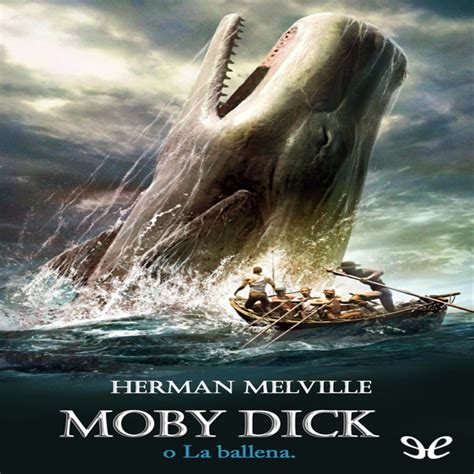
It sounds like rhyming slang ! But it isn’t, as far as I know. [Although moby is used in some circles to mean enormous.]About ten years ago I read somewhere that Moby Dick was the great American novel. So I bought a copy at the OXFAM bookshop on South Clerk Street, where I was working, and took it to Brussels with me. I am often fearful that when I am away on locum work I’ll be short of reading material, and I can always persuade myself that this is the moment to catch up with books I feel that I ought to have read.

Sadly Moby Dick remains ten years on in the ought-to-have read category. I did have two attempts at reading it. And I found some of the early passages riveting: Ishmael’s encounter with Queequeg, the tattooed Polynesian harpoonist, with whom he shares a bed; Father Mapple’s sermon; the delayed appearance of Captain Ahab, bent on revenge on the great white whale who took his leg. Who now stumps across the quarter-deck with a prosthesis shaped from a whale’s jawbone.

But I found that the non-narrative chapters, with lengthy digressions on the make-up of whales and the history of whaling, and on the significance of the colour white, and the nature of fire, failed to hold my attention. And so, as with Lord of the Rings several decades earlier, I just gave up.

Moby Dick: the movie

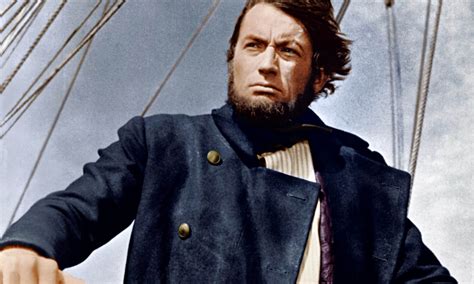
When I was at school, probably in the late nineteen fifties, we had a showing of John Huston’s 1956 film of Moby Dick with Gregory Peck as the narrator Ishmael. Little of the film stays with me other than Orson Welles’ strong performance as Father Mapple. I read that many of the exterior scenes were filmed at Youghal in Ireland, in County Cork, which was thought to have a passable likeness to the nineteenth century whaling town of New Bedford. But some of the filming took place at Fishguard in West Wales, using an artificial 75 foot long, 12 ton white whale, constructed by Dunlop in Stoke-on-Trent. When we were in holiday in Fishguard a decade ago we heard the story of how the artificial whale came loose from its tow line, drifted away in the fog, and was never seem again. The boat they used to represent the Pequod had already been used in the 1950 film Treasure Island. Which I also saw as a child and remember rather better.

The tragedy of the whale-ship Essex

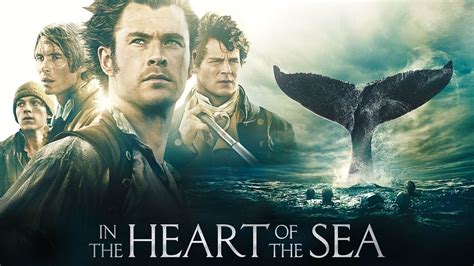
Here in Chantilly I’ve been reading a book that I picked up in the OXFAM bookshop in South Clerk Street last month; In the heart of the sea by Nathaniel Philbrick. The author sounds like a Dickensian undertaker or a teaching colleague of Paul Pennyfeather in Decline and Fall. But in reality he is an American historian [b. 1956] who has lived on the island of Nantucket for the past three decades. The book is set in nineteenth century Nantucket, then the centre of the American whaling industry; and his two earlier books are studies of the island’s history.

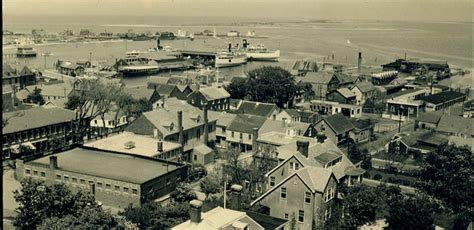
The book’s sub-title is The Tragedy of the Whaleship Essex. It is a story that may be known to generations of American children, but it was new to me. The book tells how after the Revolution and the War of 1812 Nantucket became the whaling capital of the world. The local whale population had already been wiped out, but whale boats regularly sailed south round Cape Horn and into the southern Pacific. The most prized catch were sperm whales, whose heads contained a vast reservoir of a prized oil called spermaceti, which provided a brighter and clearer-burning light. Voyages now lasted for two to three years, and could yield as many as two thousand barrels of oil.  Whale oil prices were rising, and Nantucket was becoming one of the richest towns in America.

In 1819 the 238-ton ship Essex set sail from Nantucket. It carried a crew of some twenty people, a mix of Nantucketers, off-islanders, and black sailors, under a first-time Captain George Pollard Jr. The youngest was the cabin boy Thomas Nickerson, an orphan aged fourteen. Fifteen months later, in November 1820, in the farthest reaches of the south Pacific, the Essex was rammed and sunk by an enraged sperm whale. A mammoth whale eighty feet in length. The boat was a thousand miles west of the Galapagos. It was an unthinkable event. Seemingly a deliberate attack by the whale.

The crew took to their three small lifeboats. Fearing cannibals on the islands to the west, they set out for South America almost 3,000 miles away. Three months later, only eight were left alive, suffering terribly from dehydration and starvation. The survivors having been forced to eat the bodies of their dead shipmates. In Pollard’s boat, in February 1821, the youngest of them, sixteen-year-old Charles Ramsdell uttered the unspeakable; they should cast lots to see who should be killed that the others might live. The lot fell to Owen Coffin, an eighteen-year-old, the captain’s cousin. His friend Ramsdell dispatched him.

The book is a fantastic story of survival and adventure, steeped in the culture of Nantucket and nineteenth century whaling. Philbrick tells the story well. He leans on the account of the cabin boy Thomas Nickerson, a memoir written in his old age but not authenticated until 1980. And also the account published by another survivor, Owen Chase, the ship’s first mate. It is the story of a real-life maritime disaster which clearly inspired Herman Melville’s Moby Dick.

St Peter’s, Chantilly

Neither sperm whales nor cannibalism play any part in church life here. The community is coming together slowly after a difficult few years. Attendances were very thin on Christmas Eve, especially the Midnight Service. But we had an over-flowing church for the Carol Service the previous Sunday evening. Space was at a premium, and a late arriving, outsized golden retriever sat on my feet. The music arranged once again by Michelle was much appreciated by a congregation who were reluctant to leave. And we had a decent turnout on Christmas Day with a sprinkling of children and three delightful babies. Looking ahead, Abigail will be baptised on the first Sunday in January.

Susie and I feel much welcomed by the congregation. Susie was delighted that Craig and the two girls, Amelia and Eloïse, joined us here for Christmas. They have now gone to Paris for a couple of nights in an Air B&B; the Eiffel Tower, Sacré Coeur, the Musée d’Orsay, Notre Dame.  We shall join them in Paris tomorrow, for lunch at one of the city’s oldest [and cheapest] restaurants. More in due course.

December 2023.

Through a glass darkly – 115

Advent

It is Advent again. One of my favourite times of year. In church terms it is a time for looking back, to the Incarnation, the birth of Jesus Christ;  but also for looking forward to the Eschaton, the Last Days. to Christ’s return. It is a season of anticipation, and a season of waiting. But many of us find waiting difficult, for a variety of reasons: we do not know the outcome, of a prayer or a job application; we do not know how long the waiting time will last; and we can find it difficult to cope with things that are out of our control. Which I guess is true of our dealings with God.

In his book The Stature of Waiting, W.H. Vanstone compares God’s waiting on us [waiting for us to turn to him] to the story of Sonia in Crime and Punishment. She follows her lover Raskolnikov across Russia to the Siberian prison camp where he is imprisoned. And then she can only wait with the other women on the prison fence for him to acknowledge her and to speak to her.

Looking backwards, in church terms, is the easier option. The traditional readings for the service of Readings and Carols recount what the Germans call Heilsgeschichte, Salvation History, culminating in the birth of the baby at Bethlehem. The readings draw equally from the infancy narratives of Matthew and of Luke; each offering an annunciation, to Joseph and to Mary respectively; an account of the birth; and then a response, of the travellers  from the east in Matthew, and of the rough-sleeping shepherds in Luke. I sometimes flirt with changing the readings at the Carol Service. But I’ve never had the courage to do so.

Looking forwards is more problematic. The gospel reading for Advent Sunday was the Marcan Apocalypse, the signs that will precede the Lord’s return. We have to acknowledge that there is a yawning gap between biblical teaching and  the secular culture in which we live. The biblical account of the Last Days seems as incredible now as did the Biblical account of Creation a  century and a half ago.  Theologians like Herbert McCabe and Jörgen Moltmann have pointed out that the early church had a great deal to say about eschatology and very little about ethical questions. But in many churches in today’s world it is exactly the other way around. The Church of England produces reports on human sexuality on an almost weekly basis. [Reminiscent of There was a young queer from Khartoum …] And the Church Times writes about little else. But has nothing to say about what happens when we die.

Here in Chantilly

My vantage point for this reflection is Chantilly once again. This is my fifth visit here and I am here for the second Advent running. Susie and I spent 12 weeks here in 2017, and I was here, mainly by myself,  for another 14 weeks last year. Not always happily. Because of Joanna.

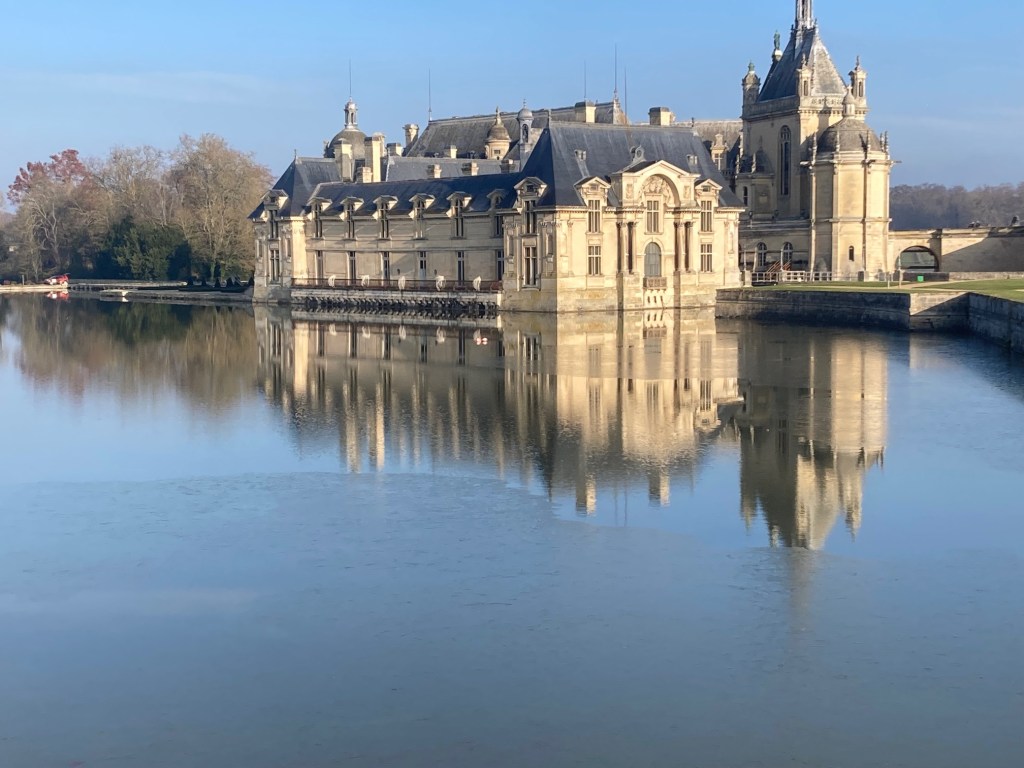
Chantilly is a  delightful, comfortable, bourgeois kind of place, a town of 11, 000 people, not very far from Charles de Gaulle airport. It is twinned with Epsom and is big on horse-racing. [Even on my fifth visit I can scarcely ride a horse.] The church, St Peter’s, is an English-speaking church within the Diocese in Europe. It has been here since 1863. It is a neo-Gothic building, very English in style, built on land gifted by the fabulously wealthy Duc D’Aumale; an anglophile who inherited a fortune from his uncle, the Prince Condé. The church was originally built to serve the needs of expat English-speakers who worked in the horse-racing industry. At one time a significant proportion of the population were British. But the racing establishment of the Aga Khan is much diminished and there are fewer Brits than in the past. And fewer people in church too.

Looking backwards and forwards

Looking back in personal terms I am very much aware that this time last year Joanna was in a hospice, Florence Nightingale house, in Aylesbury. She went into the hospice on November 21st, 2022. I stayed here in Chantilly until mid-December. Just a year ago I went down to Paris to take some photos for her; of the hospital in the 14ème where she was born, and of the street where we lived when she was very small. And of a few Parisian tourist attractions. I stayed in Chantilly for the St Peter’s Carol Service and went back to the following day. Three days later Joanna died. I carry a burden and a degree of guilt about not going back to the UK earlier.

Looking forward Susie, who has joined me here in Chantilly, is delighted that Craig and Amelia and Eloïse are coming to join us here for Christmas. It may only be a short visit, but it will be lovely to spend Christmas Day with them. I am not sure that the church apartment has sufficient pots and pans for a traditional Christmas meal. So Susie is on the phone to Picard, in the hope that they will deliver next week. [I hope it will go better than the year we ordered Christmas lunch things from Sainbury’s in Edinburgh. And nothing arrived because the order was stuck in the trolley !]

After Christmas we hope to get a day down the road in Paris. And will probably eat at Chez Janou. Amelia, who has I think been in Paris twice, says “I always eat there when I am in Paris”. 

A new chaplain

For the congregation at St Peter’s, looking forward means looking forward to the appointment of a new chaplain. The selection process, conducted by representatives of the Church Council in conjunction with ICS and the Diocese in Europe, is coming towards a close. And, all being well, the identity of the new chaplain, he or she, should be known in the near future. We will be praying, with the members of the community, for the person appointed. That he or she will be equipped for the task. And that the church may rebuild numerically and spiritually; and become a place where people’s lives are transformed [Psalm 73:17 et seq.].  That the church may get stuck into the Behavioural Organisation mantra: forming, norming, performing, and storming. And that any skewed relationships may be healed.

As for Susie and me, we are being asked about going back to St Mark’s, Grenoble, around Lent or Easter. I am hoping to go to a school reunion down at CH in April, to meet up with such school-friends as are still alive. And 2024 may be the last time that our friendly garage in Dalkeith are willing to allow us to hire a car. So, it may be a final summer trip somewhere up the west coast.

Patient Advent waiting. Happy Christmas !

December 2023

Through a glass darkly – 114

Anti-Fascism in the English Public Schools 1933-’39

Often enough the public school system is attacked from the outside, but it is surely remarkable to find a boy of fifteen launching a critical magazine to mend the faults of his own and other schools … It will, I am assured, openly champion the forces of progress against the forces of reaction on every front, from compulsory military training to propagandist teaching.”

These insignificant paragraphs, which appeared in the Daily Telegraph on January 26th, 1934, gave little warning of the impact that Esmond Romilly, the boy reformer, was to make not only on the lives of numerous headmasters but also on the pages of the national press in the coming months.

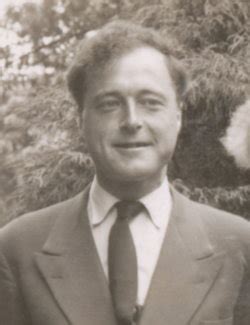
Esmond Romilly was a chubby schoolboy with dirty finger-nails. He might be seen as one more in a  long line of ex-public school iconoclasts. But his criticism was not confined  to the public schools. Which he loathed on the grounds that “their admitted object is to provide a new generation of empire-builders (or rather empire-savers)”. His attack on the reactionary forces that permeated these schools was allied with propaganda for left wing political beliefs; and it was these that brought him into disrepute. In the first issue of Out of Bounds, in March 1934, Esmond wrote:

The editors of Out of Bounds make no attempt to disclaim their political convictions. They believe that … nearly every one of the things they are fighting for is there because of the position the Public Schools hold within the framework of the capitalist state. Consequently they are vehemently opposed to a more vigorous offensive of capitalism under the emblem of the Fasces.

Romilly was an energetic rebel, a nephew of Clementine Churchill, who had run away from his school Wellington to live over a bookshop in Parton Street, Bloomsbury from where he edited the magazine. He and his brother Giles were not alone in their views. The Daily Mail published a hysterical article entitled Red Menace in the Public Schools.. The first issue of Out of Bounds contained reports from nineteen schools, including Eton where over a hundred copies were sold. The number of schools contributing grew steadily; with grievances expressed about compulsory military training and about the suppression of political opinion “of a dangerous nature”. The correspondent at Aldenham  was threatened with expulsion, and Out of Bounds came to be banned there, as it was at Cheltenham, Uppingham, the Imperial Service College, and Wellington. 

Writing the essay

Why was I interested in all this stuff in 1963 ? Partly because, with time to spare between A levels and Oxbridge entrance exams, I was working towards a Trevelyan Scholarship. As a History Grecian at CH, I had written a very long [and probably confused] essay about political thinking in England in the 1930s. About the appeal to different groups of Fascism and of Communism. And Michael Cherniavsky, my history teacher, suggested that I should try and build on this. Partly too because I shared many of these questions about the culture of English public schools, including my own. If ‘fascist’ is thought inappropriate, and it has subsequently become an overused term of abuse, ‘bolshy’ was in common use in my school days. Used, especially by my housemaster, as a pejorative epithet to describe anyone who questioned authority or expressed mildly left-wing views.

Michael Cherniavsky

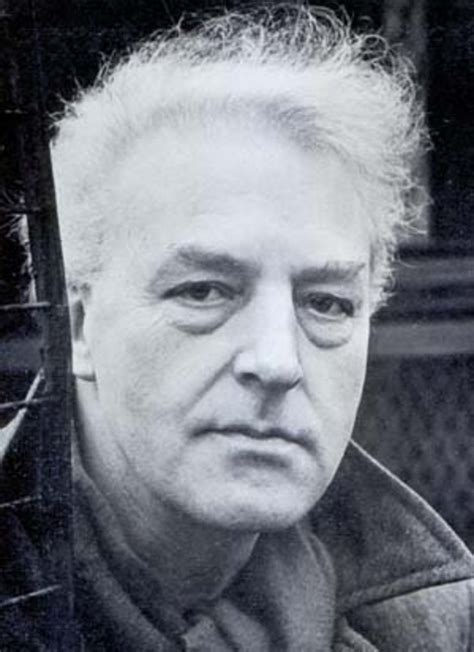
Michael was, I suppose, an unusual teacher, at CH or anywhere else. He was a white Russian, born in 1920 in Buenos Aires, Argentina. His father was the celebrated Ukrainian Jewish cellist, Mischel Cherniavsky, whose trio had played before Tsar Nicholas II of Russia. His mother was the daughter of a Canadian sugar baron from Vancouver. Michael was educated at Westminster School, and was then Brackenbury scholar at Balliol. He taught history at Christ’s Hospital from 1948-66, more specifically English and European medieval history; and then moved to become Professor of History at the University of Waterloo, Ontario, from 1967-83. During his years at CH, Michael’s pupils won a stream of awards at Oxford. His years in Canada were arguably less successful. Later Michael retired back to the UK, to Horsham; and his ashes are scattered Christ’s Hospital.

As one of Michael’s pupils I benefitted enormously from his teaching. And I no doubt acquired some of his prejudices; a love of books; an enthusiasm for Europe, and for France in particular; a sceptical attitude towards most forms of authority. In his time at Westminster, Michael had been a founder member of the United Front of Progressive Forces.  Known to its contemporaries as UffPuff ! It was a broad-based coalition of anti-fascist pupils; the chairman was a Communist, while Michael as secretary of the group was a Liberal-Pacifist. Which probably helps to explain why he nudged me in the direction of my [modest enough] research.

Anti-Fascism in the English Public Schools, 1933-’39

So I spent quite a big chunk of 1963 doing more reading about the 1930s. [As I write that sentence I am amazed that there was only  a thirty-year time lag between the events and my schooldays.] I had already read Julian Symons book on The Thirties, and Colin Cross on The Fascists in Britain. Now I was delighted to secure a ticket for the Reading Room at the British Museum, where I read all four issues of Out of Bounds, the magazine that had so excited the Daily Mail. And I also read the book of the same name co-authored by Esmond Romilly and his brother Giles.

The anti-fascist movement in the public schools was most obviously opposed to Oswald Mosley and the nascent British Union of Fascists. In a letter to me, Cosmo Rodewald wrote:

“… what he [John Cornford] and I felt impelled to rebel against was the established economic, political, and social order in this country; an order characterised by mounting unemployment; an order which seemed destined to increase the misery of the working classes, as Marx had predicted, in spite of the oppression of the colonial peoples as a source of wealth; an order which was nevertheless so powerful that labour reformism could achieve nothing substantial against it; an order which existing internationally had caused one world war and would probably cause another; an order which the public schools existed to train each new generation to perpetuate.”

In June 1934 Esmond Romilly attended the British Union of Fascists mass rally at Olympia, along with Philip Toynbee, who had just run away from Rugby to join him. Toynbee recalled that they made a preliminary visit to a Drury Lane ironmonger to equip themselves with knuckle-dusters. Both were ejected forcibly, but the visit was described at length in the second issue of Out of Bounds.

Fascism meant not only Mosley and the home-grown variety but equally Mussolini in Italy and Hitler’s National Socialism in Germany. The outbreak of the Spanish Civil War in 1936 made many boys more politically conscious. Christ’s Hospital as a whole during the thirties took little interest in party politics and Out of Bounds did not circulate there. But John Morpurgo recalled:

… for my own generation which was a little later, I would say it was never much excited by party politics. There was a fairly substantial leftishness, especially among History Grecians, but it came out as an interest in the cultural avant-garde more than it ever did in political activity … … 

But the one political experience which really aroused us was the Spanish Civil War. We were all without exception pro-Government.

Many of the anti-Fascists were demonstrating as much against features of the public school tradition as they were against Mosley, Hitler, and Mussolini. In the Michaelmas term 1934 Sedbergh held a debate with the motion ‘This house deplores the basis of Fascism on which the Public School system is founded’. WH Auden, commenting on the ‘honour system’ at his own school, Gresham’s, Holt, wrote that: “The best reason I have for opposing Fascism is that at school I lived in a Fascist state.” In his book Godliness and Good Learning, David Newsome suggested that these aspects of school tradition were really the remnants of the late Victorian cult of Godliness and Manliness:

These three men – Kingsley, Hughes, and Leslie Stephen – were none of them schoolmasters. Yet, if we put together the various ideals which they upheld in their writings … the result is this: the duty of patriotism; the moral and physical beauty of athleticism; the cultivation of all that is masculine, and the expulsion of all that is effeminate, un-English, and excessively intellectual. Thirty or forty years later the same ideals or something very like them might be taken to be the creed of the typical housemaster of the typical pubic school.”

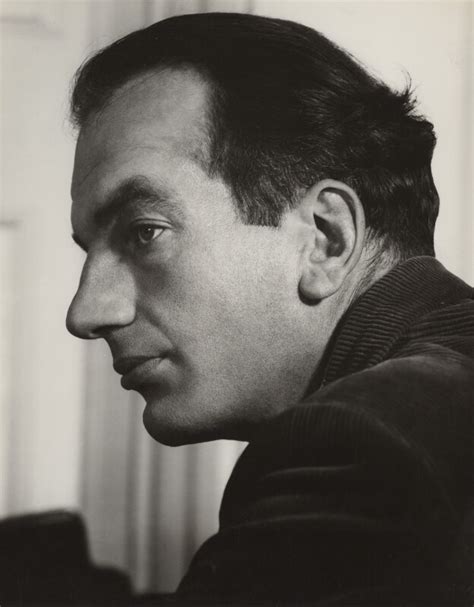
I enjoyed working through all this stuff. In addition to reading whatever books I could find, I was pleased to correspond with a variety of men [and they were all men] who had lived through these events; including Cosmo Rodewald and John Morpurgo. And I was a bit star-struck when I met up with Philip Toynbee, in a pub off Fleet Street. Though I can’t remember much of our conversation. And I had dinner, at the National Liberal Club, with Sydney Carter, a contemporary of John Morpurgo at Christ’s Hospital, but recall nothing of what he said. Carter was at the time a free-lance radio producer and occasionally folk singer. I would have been amazed had I known that he would become best known as a hymn-writer. When Lord of the Dance and One more step along the road, I go became two of the best-known hymns of the 1970s. But then I would have been equally amazed had I known that I would become a Church of England vicar.

What happened next ?

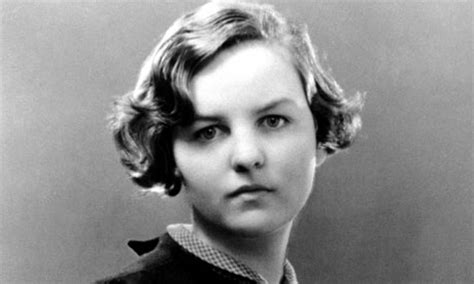
Of the lead characters in the story, John Cornford left his research scholarship at Cambridge to fight in the Spanish Civil War, as one of the first British volunteers, fought with POUM and with the International Brigades, and was killed at Lopera, near Cordoba, in December 1936. Esmond Romilly also fought in Spain in autumn 1936; and then eloped [back] to Spain with his second cousin Jessica Mitford. ‘Peer’s Daughter elopes to Spain’ was the headline in the Daily Express, and Anthony Eden as Foreign Secretary sent a warship to bring them back.

Esmond and Jessica were married in a civil ceremony in Bayonne, later emigrated to the United States; and Esmond was lost while flying as a navigator in a Whitley bomber over the North Sea in November 1941.  His brother Giles was captured as a war correspondent in Narvik in May 1940, and spent the remainder of the war as one of the Prominente [well-connected prisoners] in Colditz castle.

John Morpurgo points out that eight of his contemporaries at Christ’s Hospital, who at school were mainly anti-militarist following the famous Oxford Union debate, had a distinguished cumulative war record with two DSOs, one DSC, and four ‘Mentions in Dispatches’ between them. Winston Churchill, the uncle of Giles and Esmond, adds his own unmistakeable postscript:

Little did the foolish boys who passed the resolution dream that they were destined quite soon to conquer or fall gloriously in the ensuing war, and prove themselves the finest generation ever bred in Britain. Less excuse can be found for their elders, who had no chance of self-redemption in action.”

As for me: I was pleased to win a Trevelyan Scholarship, for the only piece of historical research I ever did. I promptly left school and spent the next six months working for the Inner London Education Authority at County Hall [as then was] and going to the cinema. After which I read history at Oxford, at Balliol, to no great profit. And over three years my enthusiasm for history steadily declined. And remained dormant for the next few decades.

December 2023

Through a glass darkly – 113

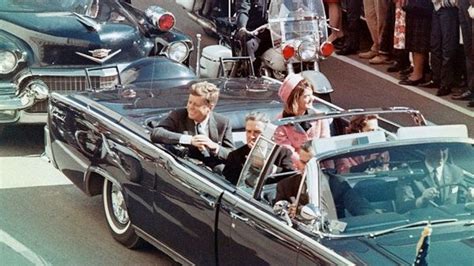
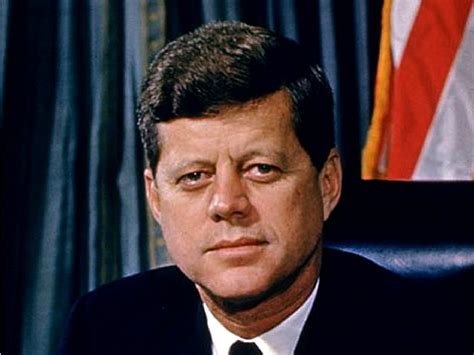
60 years ago: the killing of President Kennedy

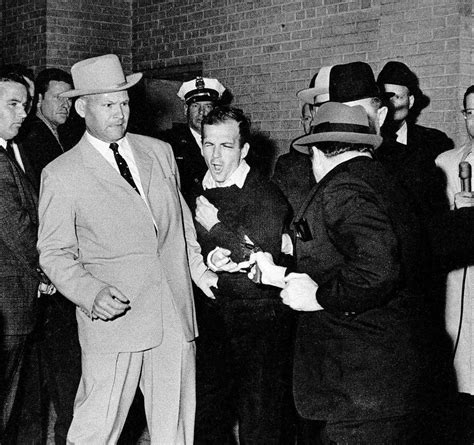
There was a programme on tv a few days ago about the shooting of President Kennedy. Which happened  in Dallas, Texas, on November  22nd, 1963, exactly 60 years ago today. The official story is that Kennedy was shot by a lone gunman, Lee Harvey Oswald, a 24-year old former US Marine, firing from the Texas School Book Depository. Oswald had lived in both the Soviet Union and in Belarus, and had unclear links to Castro’s Cuba. An hour or two after the shooting of the President, Oswald, who had also shot a Dallas policeman, was arrested in a Dallas cinema showing the film War is Hell. Two days later Oswald was shot while in police custody by Jack Ruby, a local nightclub owner. Ruby died in prison in 1967 of a pulmonary embolism while awaiting retrial.

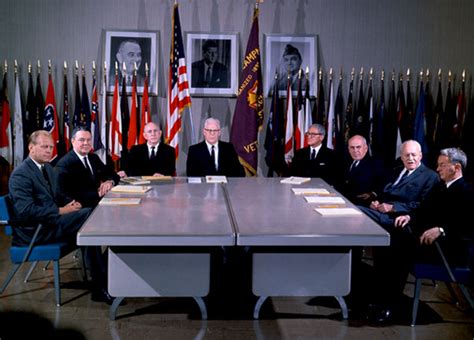
The killing of Kennedy was carefully investigated by the Warren Commission, set up by [President] Lyndon Johnson.  The report ran to 888 pages with 26 volumes of supporting documents. The report concluded that there was no conspiracy; and that both Oswald and Ruby acted entirely alone. But a substantial number of Americans believe that there was a conspiracy. That Kennedy was killed at the instigation of the Soviets. Or Cuba. Or with the connivance of the FBI. Or of the CIA. Or was killed by the Mob. In retaliation for a host of perceived slights. The television programme was based on extensive interviews with doctors at the Parkland Memorial Hospital. To which Kennedy and his wife were driven.. And where the President was declared dead at 1.00pm local time. 

None of the doctors present in the autopsy room at Parkland Hospital are still alive. But the consensus of these doctors was that the post-mortem carried out at Bethesda Naval Hospital  was rigged. That the two doctors in charge were seriously under-qualified. That the injuries described at Bethesda did not correspond to what they had seen in the autopsy room in Dallas. They insisted that the post mortem failed to acknowledge that Kennedy was shot in the front, in the neck, as well as from the back, in the head. Which means that there must have been a second gunman involved. Most probably from behind the picket fence on the grassy knoll in Dealey Plaza.

I guess it doesn’t matter that much now. But I’ll look at Jim Garrison’s book, on which the film JFK  was based,  when I can find a second-hand copy. Kennedy was a more flawed character than we knew at the time. He put himself about with a variety of people, mainly women; some of whom were clearly linked to the Mafia. But he was young and attractive, and surrounded by a bunch of talented people and good speech-writers. And he seemed, in an era of Macmillan and de Gaulle and and Krushchev, to offer the hope of a new and better world. As I look at the likely presidential candidates in the States now, I think his death was a tragedy.

60 years ago: elsewhere in the world

Two other people died on the day that President Kennedy was shot. Aldous Huxley died of laryngeal cancer aged 69 in California. Huxley was an English writer and philosopher who wrote some 50 books, most of which have faded from public sight. He was quite briefly an incompetent teacher of French at Eton where George Orwell was among his pupils. I remember reading Brave New World about 60 years ago without much enjoyment or profit. His other novels, Chrome Yellow and Antic Hay, were on my father’s bookshelves in the sitting room. After emigrating to the States in 1937, Huxley became increasingly interested in  eastern religion; and he became a Vedantist alongside his friends Gerald Heard and Christopher Isherwood. He also developed an interest in mescaline and other psychedelic drugs; and I was intrigued to learn that, at his own request,  his wife injected him with two generous doses of LSD just a few hours before his death,

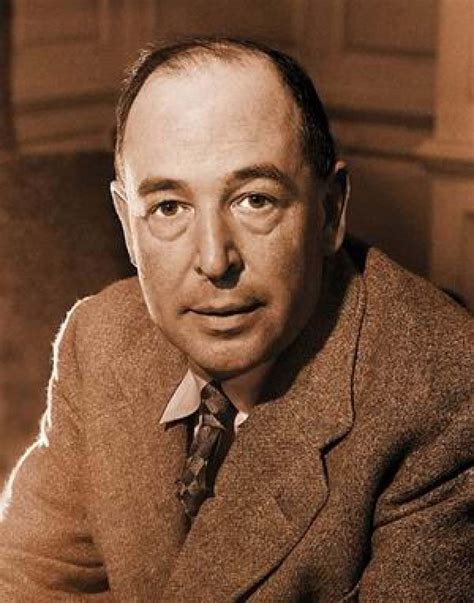
And CS Lewis died in Oxford on the same day, of kidney failure, a few days before his 65th birthday. I think it is unlikely that CS Lewis ever experimented with LSD. Or any other psychedelic drugs. Though he did drink a a lot of beer and for much of his life was a heavy smoker. Lewis was a literary scholar, who held academic posts at both Oxford and Cambridge. His pupils at Magdalen, Oxford, included John Betjeman, who loathed him, and Ken Tynan, who had a lifelong admiration for him. CS Lewis came back to the [Anglican] faith in his early thirties, through the work of the Scottish writer George MacDonald, and through the influence of JRR Tolkien and other friends. And is best known for his Christian books such as The Chronicles of Narnia and The Screwtape Letters. Unlike Huxley, Lewis’s reputation and sales figures have grown very substantially since his death. In the past few decades Lewis has become one of the most influential Christian apologists of his time. And Mere Christianity was voted the ‘best book of the century’ by Christianity Today in 2000.

I have a bit of a blind spot about Lewis. His writing doesn’t attract me. And AN Wilson’s life of Lewis put me off him. But one of these days I’ll perhaps have another look at The Problem of Pain. And maybe at The Great Divorce.

What I was really interested in in November 1963 or thereabouts was Anti-Fascism in the English Public Schools, 1933-’39.  About which I wrote what may be the definitive [if rather slim] work. But more of that another time … 

November 2023

Through a glass darkly – 112

News from the Middle East

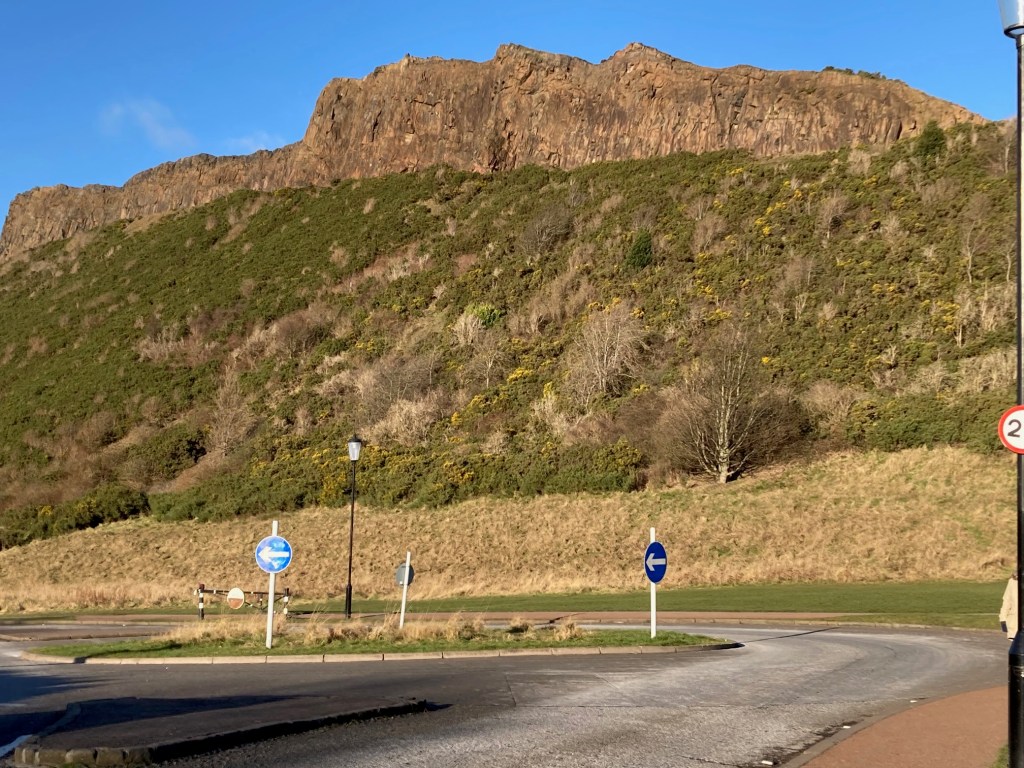
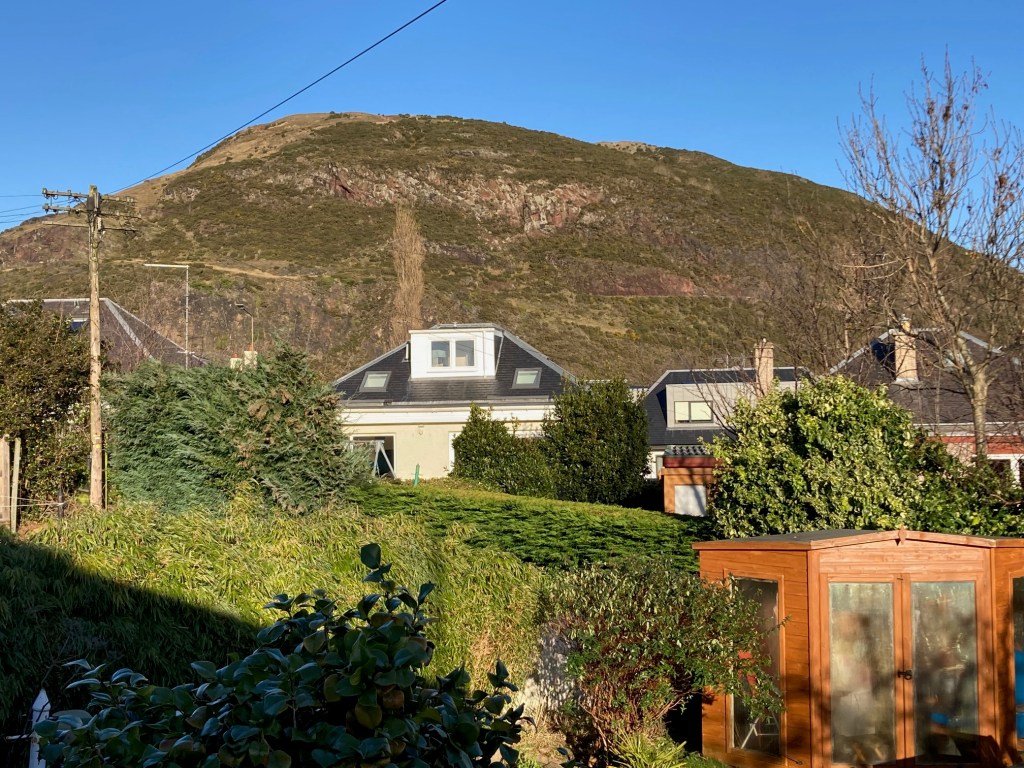
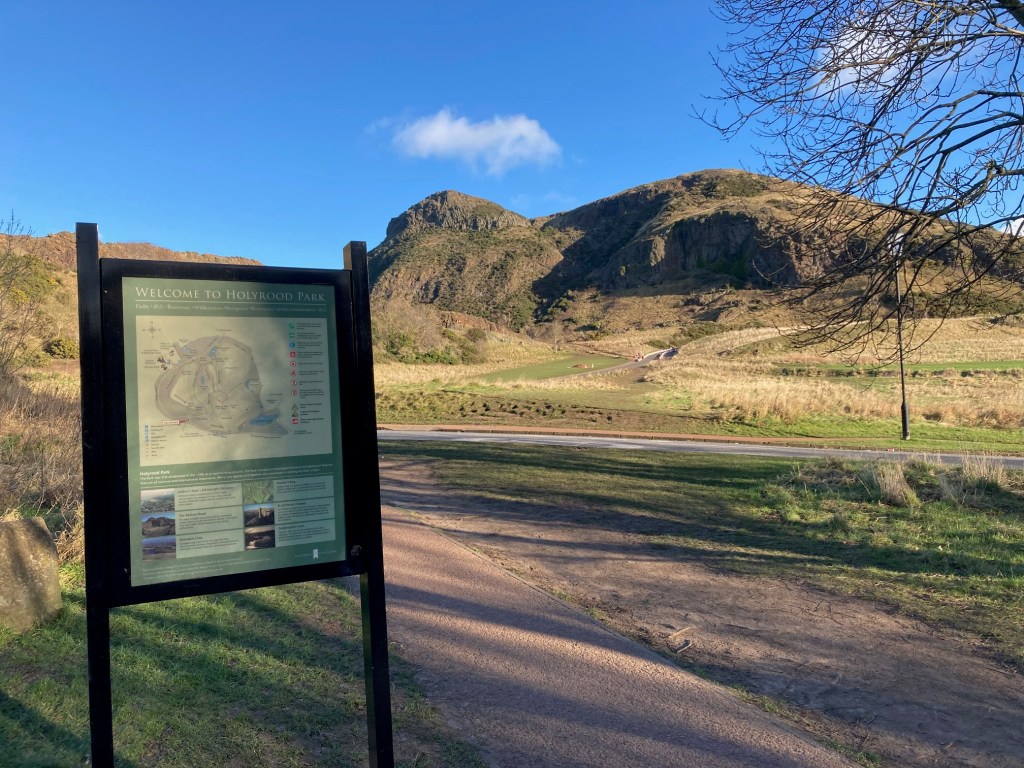
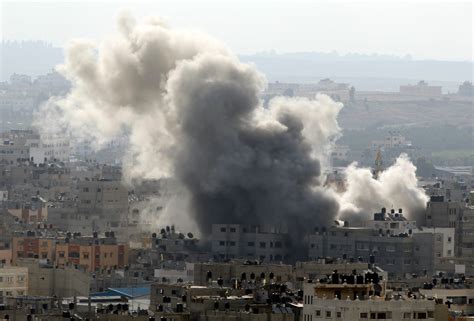
We are very fortunate to live comfortably here in Edinburgh with a lovely view of Arthur’s Seat. But I find the nightly news broadcasts from the Middle East harrowing. Especially the contributions of Jeremy Bowen and Fergal Keane to theNews at Ten.  There was a heartbreaking piece the other night about a very small boy who had been pulled from the rubble in Gaza. Then the camera panned down to show that he had no feet. No lower legs. And a slightly older girl with a serene face, who might have been his sister. Her back injuries mean that she may never walk again.

God’s Promise to Abraham

God chose Abram. He called him from his home town of Ur in the Chaldees, and promised that he would go with him and bless him and turn his descendants into a great nation [Genesis 12]. More specifically God promised that God would give to Abram’s descendants”this land, from the river of Egypt to the great river the Euphrates” [Genesis 15:18]  The promises is reiterated two chapters later: “… the whole land of Canaan, where you are now an alien, I will give as an everlasting possession to you and your descendants after you; I will be their God”. [Genesis 17] It is on the basis of this promise, and these verses in Genesis, that Israel, and their right-wing, American-Christian supporters, claim the Israelis’ inalienable right to possess the land of Palestine.

But it is not quite that simple.  First, it is not clear  to me that Abram was a Jew. He was born in Ur of the Chaldees, in northern Mesopotamia, and his ancestors were most probably moon-worshippers. Although Abram is acknowledged as a patriarchal figure in the three great monotheistic religions of the Middle East, he lived long before the exodus from Egypt and the giving of the Torah, which are generally regarded as the defining events in Jewish history. 

More relevantly Abram and his family lived a semi-nomadic life in the hill country of Palestine, moving with his flocks between Shechem, and Bethel, and Hebron. He didn’t actually own any land until his wife Sarah died. At which point he chose to purchase the cave in Hebron where Sarah was buried [Genesis 23]. The Biblical account underlines that he did not want to receive the burial cave as a gift; a formal contract was drawn up in the presence of witnesses for the purchase of Ephron’s field in Machpelah near Mamre [Genesis 23: 17-18].

Jacob’s sons left the land to settle in Egypt, escaping from a famine and under the protection of Joseph who has become an important official there. Generations later the Israelites return to the land, initially under the leadership of Moses, and complete the conquest of the land under his successor Joshua. The Biblical book of Joshua is unattractive reading. But Israeli politicians quote from it to support their claim to the West Bank. And the Israeli government made the book of Joshua, the story of the military occupation, compulsory reading in all schools.

In other words Palestine has not belonged to the Jews and their ancestors since time immemorial. The land had been a gift from God. Of which they took possession in a military campaign.

A conditional promise

When he gave the land to the Israelites under Joshua, God was fulfilling the promise made to Abraham several centuries earlier. In part because the inhabitants of the land were ‘abominable’, and because Canaan was a corrupt society with a degraded religion. [Leviticus 18: 24-27]

But God’s gift was conditional. If they were disobedient and turned their backs on him, he would punish them as severely as those who had gone before them. “”And if you defile the land, it will vomit you out as it vomited out the nations that were before you”. [Leviticus 18:28] God specifically warned them not to absorb the Canaanite culture: “when you enter the land the Lord your God is giving you, do not learn to imitate the detestable ways of the nations there”. [Deuteronomy 18:9]. [What Dennis Lennon used to call ‘the urge to merge’.] The children of Israel were not to assume that they had the right to live in the land for ever regardless of the way they lived; it would be possible for them to forfeit the land if they turned away from God. And this warning was emphasised at the dedication of Solomon’s Temple: “If you or your sons turn away from me and do not observe the commands and decrees that I have given you and go off to serve other gods … then I will cut off Israel from the land I have given them”. [[1 Kings 9: 6-7]

These were no idle threats. When the Assyrians invaded the northern kingdom of Israel in 721 BC and captured the capital Samaria, the people of Israel were sent into exile and scattered. An exile from which they never returned. A century later, when the Babylonian army captured Jerusalem in 597 BC, the people of Judah went into exile; the king was deported, the temple left in ruins. “By the rivers of Babylon we sat and wept when we remembered Zion …”. [Psalm 137] God was applying the sanctions which he had written into the covenant long ago. And although the exiles were later permitted to return by Cyrus, the Jews had no king and only a limited amount of land around Jerusalem. It was effectively the end of the independent state of [Judah and] Israel.

The Messiah and the Land

In Mary’s Song, the Magnificat, Mary declares that God is now fulfilling the promises made to Abraham and his descendants. [Luke 1: 54-55] Similarly, after the birth of John the Baptist, his father Zechariah praises God who has “raised up a horn of salvation for us … to remember his holy covenant, the oath he swore to our father Abraham” [Luke 1: 68-75] But Jesus himself had remarkably little to say about the land. In the Sermon on the Mount, Jesus, borrowing an expression from Psalm 37, declares: “blessed are the meek, for they will inherit the earth”. Apart from predicting the fall of Jerusalem and the destruction of the Temple [Mark 13], Jesus has nothing to say about the land. When in Matthew 8 Jesus enlarges on words from Psalm 107 and from Isaiah 43, he seems to be clearly referring to the end times, when men of all races from the north, south, east, and west, will all be gathered into the kingdom of God.

Where the book of Joshua describes the gradual conquest of the land starting from Jericho, the Acts of the Apostles describes the gradual spread of the Christian church outwards from Jerusalem to the rest of the Mediterranean world. The risen Jesus commands the disciples: “… you will be my witnesses in Jerusalem, and in all Judea and Samaria, and to the ends of the earth”. [Acts 1:8] They are to be a light to the Gentiles. Paul the great apostle to the Gentiles shows no interest in the land, which is totally absent from his letters. For Paul, political freedom for the Jewish people has nothing to do with the kingdom of God. The author of the Letter to the Hebrews makes clear that Abraham and his successors “were longing for a better country – a heavenly one”. [Hebrews 11:16] Once the New Testament writers had understood that God’s promises were fulfilled in Jesus, they ceased to look forward to a return to the land and a restored Jewish state.

Where now ?

Looking at the Bible can help us to see that ‘God’s land for God’s chosen people’ is a seductive slogan, but at best a misleading half-truth. But the Bible offers no clear way forwards.

Chaim Weizmann, a Russian Jewish leader of the Zionist movement, who settled in Britain in 1904 and was one of the architects of the Balfour Declaration, was at pains to underline what he felt should be the inclusive nature of the future Jewish homeland:

The Zionists are not demanding in Palestine monopolies or exclusive privileges … It always was and remains a cardinal principle of Zionism as a democratic movement that all races and sects in Palestine should enjoy full justice and liberty …

“ Palestine must be built up without violating the legitimate rights of the Arabs … not a hair of their heads shall be touched”.

As an ordained minister in the Church of England I can believe in many strange things. But I do not think that a democratic, federal state in which Israelis and Palestinians are equal under the law, are guaranteed religious freedom, and have equal voting rights is ever going to be realistic.

So  we are back with a two-state solution, with the two states of Israel and Palestine existing side by side,  as the least bad option. The problem is that no progress has been made since the talks brokered by John Kerry, the then Secretary of State, collapsed in 2014. And the [illegal] proliferation of Jewish settlers in the West Bank has made that solution even more difficult.

A two-state solution is anathema to Netanyahu and his right-wing allies. But he may not be in power for much longer. Mahmoud Abbas, the leader of the Palestinian Authority, is ineffectual and lacks credibility. He is 87, and, after being elected for a four-year term, has been in power for 19 years. His notional successor is in prison in Israel serving five life sentences for murder.

As Christians we need to go on praying for a ceasefire and an end to the fighting. But we need to pray too for the emergence of a new generation of leaders on both sides. Who will find the moral energy and the political will to work towards a two-state solution that will not involve acts of terrorism and the repeated killing of innocent women and children.

November 2023

Through a glass darkly – 111

Brussels

RyanAir don’t make it easy for their customers. The only flight to Brussels from Edinburgh is at 7.00am, with check-in from 5.00am onwards. The taxi came at 5.10am. The driver had never been to Belgium. I found myself pompously delivering a mini-lecture; the country dates from 1830, and for the first hundred years the political power and the wealth were concentrated in the south, in French-speaking Wallonia, with all the coal-mines and the steel mills. Now the situation is largely reversed, with Wallonia missing out against the hard-working and more dynamic Flemings in the northern part.

Boarding was very punctual, and we waited on the tarmac in plastic poly-tunnels. The flight was uneventful. The queue for the airport shuttle bus at Charleroi moved quickly, and the bus dropped us off at the back of the Gare du Midi. There was time to buy a pair [another pair ! red this time] of reading glasses from Hema before meeting David in the Bistro facing Porte de Hal. We ate a very Belgian meal, carbonnades de boeuf with chips followed by dame blanche as David brought me up to date with their story. And then it was time to visit Jane in her stroke patient unit in a specialist clinic out behind Erasmus metro. Thankfully she was looking a great deal better than when I last saw her in Glasgow.

I was staying with John and Susie, in their apartment out beyond La Chasse. John told me about his recent surgery, about which I knew nothing; and we caught up with news about Holy Trinity and about shared friends. By 10.30pm I was more than ready for bed. And I slept like a log.

Maredsous 

Maredsous Abbey occupies an enormous set of neo-Gothic buildings set on top of a wooded plateau, above the Molignée valley in the Ardennes, in the province of Namur. The Benedictines came here in the 1870s, I believe from Germany, building a huge chapel, and a set of cloisters flanked by accommodation blocks, a refectory etc. In addition to their daily Office, the monks are involved in teaching, computer technology, and theological research. And there is a Visitors’ Centre, comprising a cafeteria and shop selling Maredsous beer and cheese. The Centre is always very busy as Christmas approaches.

There were slightly fewer men this year, in part as a result of clashing with Bishop Sarah’s visit to Holy Trinity. [She is the Patron, and the church is starting to look for a new Chancellor.] But the dynamic worked well with the slightly smaller group. Armin and Frank and Philipp had once again done all the hard work planning.

The theme this year was Living with the Psalmist. My once-upon-a-time training Rector Dennis Lennon used to say that the Christian life is lived at the point where our learnt Christian faith comes into contact [and into conflict] with the reality of everyday life. ‘Where the Rubber hits the Road’. Certainly the palmist is honest and up-front with God about his sufferings and his frustrations. We looked in some detail at Psalms 23 and 73 and 150; living with fearfulness, living with doubt, and living with gratitude. And in small groups we wrote psalms of lament and of praise, which were incorporated into the Sunday morning eucharist. An innovation that worked well. The weather forecast had promised rain, but we enjoyed a splendid Saturday afternoon walk in autumn sunshine.  

Bloodshed and butchery in the Middle East

Bloody Israel ! Joe Biden and Rishi Sunak and Emanuel Macron are all queuing up to shake hands with Israeli leaders and assure them that we all stand with them following the savage attack by Hamas at the start of the month. Well they don’t speak for me. President Benjamin Netanyahu is a devious crook, who has held power in Israel for much of the past three decades, but who is widely disliked and distrusted by the majority of his own people. Of course the Hamas attacks were savage, as they killed civilian men, women, and children indiscriminately.. But, as António Guterres has made plain, the attacks did not take place in a vacuum. They are a consequence, perhaps inevitable, of Israeli policies towards the Palestinians in recent years.  The Gaza Strip is a tiny enclave on the shore of the Mediterranean, some twenty five miles long and six miles wide, inhabited by some two million Palestinians, mainly Sunni Muslims. Many of the inhabitants are descendants of the Palestinians who  were evicted from what is now Israel following the Arab-Israeli War in 1947-48. The strip is entirely dependent on Israel for supplies of water, electricity, and medication – all of which have now been cut off; and is separated by Israel from the West Bank, the other [larger] half of the  territory under the Palestinian Authority. The plight of the Palestinians has been largely ignored for the past decade by successive right-wing Israeli administrations – and by most world leaders.

Whose Promised Land ?

Modern Zionism was in part a reaction to Jewish persecution in Russia in the late nineteenth century. Jews could not be assimilated in the countries in which they were scattered. The solution was to be the establishment of a Jewish state. Argentina, fertile and thinly populated, was one possible country. But Palestine was felt to be their historic homeland. The Zionist Congress in Basle in 1897 adopted the creation of such a state in Palestine as part of its programme. “A land without a people for a people without a land” was a potent slogan. And a seductive lie.

Britain’s role was complex. In November 1917 Arthur Balfour, the British Foreign Secretary, wrote to Lord Rothschild, to give British support to the creation of a Jewish  national home in Palestine, which was then still part of the Ottoman Empire. He did this partly to secure support from Jews in Britain and American in the Allied war against Germany. Partly to try and avoid a large influx of Jewish refugees into Britain. Arthur Koestler described the Balfour Declaration as “a document in which one nation solemnly promises to a second nation the country of a third nation”.

Unfortunately, in 1915, Sir Henry MacMahon, the British High Commissioner in Egypt, had already written to Sherif Hussein of Mecca, to support after the war [and the dismemberment of the Ottoman Empire] the establishment of an Arab State in all territories of the  Arabian Peninsula, Iraq,  Syria, Jordan, Lebanon, and Palestine. And that Britain would guarantee such a state against all external aggression.  In racing parlance, Britain had sold the same horse twice.

Jewish immigration to Palestine grew in the 1930s, in response to persecution by the Nazis. By 1947 the Jews numbered 31% of the population and owned 6% of the land. Most of it purchased from absentee landlords. In 1947 Britain announced it was giving up its mandate over Palestine. A United Nations commission drew up plans for a two-state solution. Under heavy diplomatic pressure from the USA, the United Nations plan proposed the establishment of a Jewish state with 52% of the land alongside an Arab state with the remaining 48%. Jerusalem and the surrounding area would be an international zone. In effect the Palestinian Arabs were paying the price for western [European and American] guilt about the Holocaust.

The UN Partition Plan was accepted by the Jews in Palestine, and flatly rejected by the Palestinian Arabs. In 1948 Dr Chaim Weizmann raised the flag of David and proclaimed the new state of Israel. Which has been in a state of uneasy peace and intermittent war with its Arab neighbours for the past seventy years.

I’ve been going back to this story by re-reading  Colin Chapman’s 1983 book Whose Promised Land ?. Chapman taught university students in Egypt and in the Lebanon back in the 1970s and the 1980s, and was later on the staff of Trinity College, Bristol. [Susie and I talked to him when I was thinking to apply to Trinity, Bristol. And he advised us to stay put in Woodstock and for me to apply to Wycliffe Hall.] The book is a generation out of date. But is worth reading for Chapman’s careful assessment of Biblical prophecies and promises.

Family matters

Susie and I have been in Watlington and Wycombe for a week with family, being not very useful during half-term. It is good to see the children and grand-children; and I even managed lunch in Leamington Spa with my brother and both sisters-in-law.  But it is easy to be more aware of Joanna’s absence when we are down south. This is the first time I have stayed in Wycombe since before she was ill. Next weekend we go home to Edinburgh. And start to think about Chantilly …

October 2023

Through a glass darkly – 110

A time capsule from the garage

Mayfield Church [shortly to be reborn as Newington Trinity] are having a paperback sale in November. Which encouraged me to ferret around in the garage, where I found a couple of shelves of elderly paperbacks which had never made it onto the bookcases in the house. It is instructive to see what I was reading three and four decades ago. But it is difficult to resist the temptation to re-read all the books before putting them out.

Christopher Isherwood

Christopher Isherwood was a bit of a hero from my late school days. I was fascinated by the intellectual and political life of the Nineteen Thirties. And by the thirties’ intellectuals and writers. It was admittedly all a bit cliquey. Spender admired Auden. And Auden admired Isherwood, his prep school friend. And Isherwood admired his school-friend Edward Upward, the ’Chalmers’ ofLions and Shadows. [It is unnerving to realise that in the sixties, that era was only thirty years ago. The same distance as we are now from the early nineties; John Major as Prime Minister; John Smith as leader of the Labour Party; a massive Lib-Dem by-election win in Newbury; the first high speed train through the Channel Tunnel. It all feels like yesterday !]

After an unfinished degree at Cambridge, and brief, unhappy spells as a medical student and a private tutor, Isherwood joined his friend Auden in Berlin in 1929. It was the closing years of the Weimar Republic, marked by high unemployment, social unrest, and a simmering tension between the Communist Party and the burgeoning Nazi Party. From 1923 onwards Berlin was characterised as much by its partying and decadent night-life as by economic depression. Wild parties, the cabaret scene, drugs, especially cocaine, deregulated prostitution, male homosexuality, and androgyny all helped to make Berlin a party-lovers’ paradise. This is the background to two of Isherwood best books, Mr Norris changes trains and Goodbye to Berlin. Mr Norris [published in 1933] stems from a chance encounter on a train with the sinister Arthur Norris. His new friend is a man of contradictions: lavish with hospitality, but heavily in debt; excessively polite, but sexually deviant. Norris is a flabby rogue, but personally engaging. Against the background of pre-Hitler Germany he symbolises a society moving towards dissolution. Goodbye to Berlin [published in 1939] continues Isherwood’s picture of that vanished city; scenes range from the tenements and night-bars of the slums to the opulent villas of the very rich, mainly Jewish, families. Isherwood himself is the first-person narrator, working as an impecunious English teacher. Both books, beautifully written, were originally intended as part of a bigger, panoramic novel The Damned. Which remained unwritten. Goodbye to Berlin introduces us to Sally Bowles. Her story was the basis for the New York stage play I am a camera, which  later morphed into the musical Cabaret.

Lions and Shadows [published in 1938] is a thinly fictionalised autobiography. It is the story of a writer finding his literary feet; tells of holidays on the Isle of Wight; and records his relationships with the thinly fictionalised W.H. Auden and Edward Upward. I like the book less now than I did when I first came across it. It was followed by Prater Violet [published 1945], an extended portrait of Isherwood’s working with the imperious, charismatic Austrian film director Friedrich Bergman. As they work on a frothy story set in nineteenth-century Vienna, Hitler annexes the real world Vienna, where Bergmann’s family are at risk.

I was less interested when Isherwood and Auden emigrated to the States in January 1939, After which Isherwood became increasingly involved with Vedanta, a Hindu form of philosophy and meditation, to which he had been introduced by Gerard Heard. But if time allows before the November book sale, I shall look again at Down there on a visit [published in 1962], an extended account of his travels around Europe with his young German boy-friend, Heinz, with whom he had left Berlin in 1933. And then, time permitting, at A Single Man [published in  1964], hailed by some critics as Isherwood’s best novel. I guess the truth is that most of his work is autobiographical, and that after he left Berlin I lost interest. 

The Flashman books

On a very different plane, a shelf of Flashman books are also heading for the sale. George Macdonald Fraser [b.1925] was a Scottish novelist and screen-writer. After leaving school in 1943, he served as a junior officer in the Burma campaign. His account of his time in Burma, Quartered Safe Out Here, published in 1993, is one of the minor classics of the literature of the Second World War. In the 1960s he embarked on his series of Flashman books. These purport to be the memories of the nonagenarian Sir Harry Flashman, V.C., the fictional bully and coward of Thomas Hughes’ Tom Brown’s Schooldays. He is an endearing rotter.After leaving Rugby in disgrace, Flashman fought his way around the world in the British Army, serving in virtually all of [what one writer calls] ‘Queen Victoria’s little wars’, displaying a high degree of funk in the face of danger and a willingness to bed every woman he encountered. The books drew admiring reviews, and were notable for their historical accuracy and the detail supplied in the historical footnotes.

I’ve been enjoyably re-reading Flashman and the Redskins [first published in 1982]. It is the seventh of the series, set partly in 1849-50 and then again in 1875-76.  Flashman is trapped in New Orleans after crossing the Atlantic on a slave-ship, the Balliol College, owned by his father-in-law, John Morrison of Paisley.  He is given shelter by a susceptible English matron, Susie Willinck, who runs a New Orleans bawdy house. Susie decides to relocate, and Flashman, travelling as Captain Beauchamp Comber, R.N., is the military escort to her harem as they join the crowds of Forty-Niners travelling westwards from Kansas City into what was then the great unknown of the Far West. In the course of his adventures, Flashman marries both his employer, Susie Willinck, and then the Apache princess Sonsee-array,  fourth and favourite daughter of Chief Mangas Colorado. The Yawner, later known as Geronimo, is their best man.

On a return visit to the States some twenty years later, the Sioux chief Spotted Tail takes a shine to the flirtatious Elspeth [née Morrison]. And Flashman is inveigled by the seductive Mrs Arthur B. Candy into making an inspection for the Upper Missouri Development Corporation. A trip that takes him up into the badlands of North Dakota, where he is one of the few survivors of Custer’s disastrous sally at the Battle of Little Bighorn. Partially scalped on the battlefield Flashman is rescued by the mysterious half-Indian scout Frank Grouard. It’s all clean-ish good fun.

I wonder when boys stopped playing Cowboys and Indians. Presumably at least a generation ago, maybe two.  When I was just six, I spent a couple of months living with my grandparents in Minety, in Wiltshire, where my grandfather was the station-master. I don’t remember much about it. But someone whom I only knew as ‘Old Man Meakin’ lent me a book about the Wild West and about Red Indians [presumably no longer permissible usage]. And it was said hat he had been out there in his youth, and had met people who are now just names like Sitting Bull and Buffalo Bill. That was about seventy years ago. And there’s no-one alive with whom I could check the story.

Here we go again

The rugby world cup has been a bit of a disappointment. It’s been going a month; we still haven’t reached the quarter-finals, there have been two good games so far [France v. New Zealand, and Ireland v. South Africa], and the best four teams in the world are all in the same half of the draw. England have reverted to [unattractive] type under Steve Borthwick [Baldrick]. Might the best Scotland team for a generation be in with a chance against Ireland tomorrow ?

I walked along the river Tyne from East Linton to Haddington the other day, a bit over six miles. At the end I nearly got stuck in the cemetery at Haddington. But I suppose that happens to people of my age ! And Susie and I met up for lunch in The Loft, one of my favourite cafes. They do an excellent Ploughman’s Lunch, and there was enough to bring the rest home for tea. 

I can’t bear to write about the political scene. The Tory Party conference shows us that the Conservative Party is morphing into an unattractive bunch of UKIP-style, xenophobic, self-serving, English nationalists. All demanding that we lock up immigrants. And tax cuts. It was dreadful seeing the gormless Liz Truss reappear the other day, still peddling the Trussonomics which precipitated a financial collapse a year ago. But possibly even worse the video clip of Pritti Patel and Nigel Farage dancing together to Sinatra’s I can’t keep my eyes off you. Crumbs ! I see that Rishi Sunak’s new slogan is Action not words. Which he has followed up by writing a letter to The Times [co-written with Signora Water Melon] asking why people aren’t doing anything about the migrant problem. You couldn’t make it up.

I’m leaving the country soon …

October 2023

Through a glass darkly – 109

Up North

South Uist which is a three hour boat trip from Mallaig is not over-burdened with tourist attractions. And this year was a good year [a bad year ?] for midges which would discourage many people. There are magnificent, deserted beaches on the western side of the island, flanked by the machair, a distinctive form of grass dunes generously sprinkled with wild flowers.

It grows very thickly, as I discovered when I played golf at Askernish. Which is a links course originally laid out by ‘Old’ Tom Morris in 1891 and since painstakingly restored. The American golf writer John Garrity ranks Askernish top of his list of the world’s top fifty golf courses, describing it as “closer to a perfect 10 than any other course”.  I lost three balls before I even reached the first fairway ! And was quite relieved to be only playing the first six holes.

Eriskay which has been joined to South Uist by a causeway since 2001 is a small island with a population of about a hundred and fifty. It was on Eriskay, at Coilleag A’ Phrionnsa [Prince’s Cockle Strand] that Bonnie Prince Charlie first set foot in Scotland in July 1745. [The story is that Alasdair MacDonald of Boisdale promptly advised him to go home again.] It was also on the rocks off Eriskay that the SS Politician ran aground in 1941 with a cargo of 28, 000 bottles of whisky destined for Jamaica and New Orleans. The thirsty islanders saw this as an unexpected godsend, and managed to salvage several hundred cases, in spite of attempts by the Home Guard to prevent them. The episode provided the basis for a novel by Compton Mackenzie, published in 1947. Which in turn became a film, Whisky Galore, made by Ealing Studios in 1949, starring Basil Radford and Joan Greenwood. And a more recent re-make in 2016 with Eddie Izzard. On a gloriously sunny day we walked across the beach to have lunch in the island pub, Am Politician, and then back to the car collecting a bag full of razor clams to use as slug deterrent.

Back on South Uist we visited the RSPB reserve at Loch Druidibeg. An information hoard told me how to distinguish male and female hen harriers, but we found only a gaggle of inquisitive wild ponies. Hoping for food. We passed close to the birthplace of Flora MacDonald at Milton;”… a name that will be mentioned in history, and if courage and fidelity be virtues, mentioned with honour” [Samuel Johnson]. And we spent a couple of hours in the small museum at Kildonan, which has a mass of information about crofting and other aspects of life in Benbecula and the Uists.

Our first day on Skye was very wet, with mist down to knee-level. Our B&B was fifteen minutes drive out of Portree, at Camusnavaig overlooking the sea. We had a delightfully decorated room, excellent service from Ian and Jackie, and, when the mist lifted, a lovely view across the sea from the terrace.

We drove into Portree on Sunday morning and were warmly welcomed at the Church of Scotland. The minister who is Hungarian was away, in Hungary with his wife. In his absence one of the elders preached, very well, from Ephesians 3 on the height and the depth and the width of the love of God. My eyes filled with tears as we sang the closing hymn, Stuart Townend’s How deep the Father’s love for us.

Compared with the rest of the Hebrides Skye has an enormous number of visitors. They say that on Skye, quite a large island, you are never more than five miles from the sea. And never more than five yards from a Chinese or Japanese tourist. Many of whom congregate on the Trotternish peninsula, which includes two of Skye’s best-known landmarks, the Old Man of Storr, an isolated rock pinnacle, and the Quiraing, a dramatic collection of crags. We drove round the peninsula, stopping to see Flora MacDonald’s grave in Kilmuir Cemetery.

[The fashion designer Alexander McQueen is buried in the same cemetery.] W.H. Murray whose guide-book invariably comes with us on trips up north describes her memorial as a monstrosity. It is a great spot, but was ferociously windy. Afterwards, and after a restorative coffee, we looked unsuccessfully for the dinosaur footprints on the rocks at An Corran beach.

On our final morning we drove down to Sleat and made a sentimental return visit to Kinloch Lodge hotel at Isleornsay. Which is where we got engaged in 1974. We hadn’t then initially intended to stay there. After a night in a primitive caravan at Broadford we had thought to stay in a temperance hotel at Ord, with a palm tree outside, run by two old ladies from Lewis. But they were full, and recommended us to Kinloch Lodge, which had opened two years previously. Godfrey Macdonald, the 8th Lord Macdonald and 35th High Chief of his clan, and his wife Claire, a renowned cook and cookery writer, had set out to provide a hotel “with comfy beds, endless hot water, attentive service and delicious food”. The prices, I noticed,  when it opened were £5.00 per person per night and 27/6d for a three course dinner ! What I remember best about our first visit was delicious food and getting stuck in the bar afterwards tasting a range of single malts, egged on by Ian the barman and an alcoholic dentist from Portree. Neither Susie nor I have drunk whisky since. 

The hotel is in a white-washed building, a former shooting lodge, that dates from the mid-16th century, set on the shores of Loch na Dal  We were warmly received by Isabella Macdonald, the daughter of Godfrey and Claire now retired, and were offered coffee and champagne on the house. Sadly I was driving. But we are tempted to explore the idea of a short-stay return visit for our Golden Wedding anniversary in January 2025. Isabella said that she would arrange a special price for us. But I guess it will be more than £5.00 each a night.

From Iselornsay we had time to take the [very] minor road over the hills to Toksavaig and Tarskavaig, which offers great views of the Black Cuillins.

And so to the ferry from Armadale back to Mallaig. I drove past Ben Nevis up the road through Glencoe in brilliant sunshine. But Susie was fast asleep. Probably too much champagne. 

September 2023

Through a glass darkly – 108

Going North

We started at Arisaig, on the Road to the Isles. It is full of memories. Susie and her family camped there each summer for about a decade, on Alasdhair MacDonald’s croft at Port Na Dorn. From what I gather the facilities were a bit primitive in those days, with a separate latrine tent. And George had to get up on wet nights [of which there were plenty] to dig a ditch to drain away the water from the fly-sheet. A decade or so later I rang Oxford University Press from the call-box in the village, on a reverse charge, person-to-person call, to be offered a job with them in Paris. And we celebrated with  a pair of kippers from the smoke-house at Mallaig. A year or three later we rented Johnny MacDonald’s house at Cuillin View on the road towards Traigh Golf Course for a month [it cost £120 for the month]. And Joanna, five months old, was small enough to be bathed in  the washbasin.

We drove up in a car hired from Short’s, a very friendly garage in Dalkeith. It was a gold Suzuki Vitara. Gold in colour, that is. On a sunny morning we stopped for coffee in Callander, at Mhor Bakery, coming away with a large crusty sour-dough loaf. And we stopped again for lunch at The Real Food Cafe in Tyndrum, a jumped up chippy which does excellent fish and chips. The girls taking the order were both Ukrainians, who were amazed to hear that we had been in Kyiv over Christmas 2021-22. After the meal I suggested to Susie that she say ‘Thank you very much’ to them in Ukrainian. So we scratched our heads to come up with the phrase. She said ‘çok tesherkurla’ to them twice  Leaving them looking totally bewildered. I didn’t think Susie’s pronunciation would be that bad. Twenty miles up the road  realised that she had spoken Turkish to them !

It rained a bit after Callander, but that is quite normal. And the road down through Glencoe is usually a bit dark and hostile. At Glenfinnan, where Bonnie Prince Charlie raised his standard on August 19th, 1745, there used to be a small car-park. And a chance to climb a narrow, spiral staircase to the top of a commemorative tower. Now there is an enormous car-park to cater for Harry Potter fans who assemble on the hillside to take photos of the Hogwarts Express on the Glenfinnan Viaduct. I bought a day-return on the train from Glasgow up to Mallaig about fifteen years ago. It is a spectacular journey. But the train windows were too dirty to get good photos. We caught up with the Hogwarts Express in Mallaig the following day; as a couple of hundred tourists disgorged from the train for a three hour stop-over in Mallaig. Time enough to buy fish and chips and to take a couple of photos.

In Arisaig we stayed in The Old Library, in the centre of the village, in a superior room with a glorious view of the sea. [I reflected ruefully that one night there cost exactly twice as much as a two week full-board package holiday, flights included, in Cefalu in the mid-1970s.] In the evening we walked down towards Rhu. In the morning, fortified by the first of several copious Scottish breakfasts, we walked a bit on the beach at Camusdarrach, made famous by the film Local Hero. In the Fishermen’s Mission bookshop in Mallaig, which is by some distance the most chaotic second-hand bookshop that I know, I bought a clean copy of Ben MacIntyre’s book A Foreign Field for £1.00. [This is one of MacIntyre’s early books, written I think when he was Paris correspondent for The Times. If that is true, it supports my contention that for many authors their first or early books are their best. Before they start churning out new books every year.]

And from Mallaig we sailed past Eigg and mountainous Rhum towards South Uist …

September 2023

Through a glass darkly – 107

It is Festival time here once again.Edinburgh has been swarming with tourists for the past month. And it takes ages coming back across town, across Princes Street and The Bridges on the bus. Just writing that makes me sound like a sour-tempered native.

I escaped the crowds one morning to walk down the Water of Leith. There were very few people on the more rural, Balerno stretch of the river.  But the Colinton [former railway] tunnel was closed for repairs, which necessitated a lengthy detour. And then more people closer to town.

We have had visitors here. Louis and Anne passed through on their first visit to Scotland. We braved the crowds to look at the Royal Mile and the statue of John Knox in New College. And we went up Arthur’s Seat to admire the view. They left us for Glasgow, and thence to Mull and Iona before heading north towards the Highlands. The Lyon connection was carried forward by Diana on her annual visit. We went to a fringe event in St Cuthbert’s, a concert by The Really Terrible Orchestra. Largely the creation of Alexander McCall Smith. They are not as terrible as they claim. And they do, Susie tells me, audition prospective musicians these days.

Diana’s visit coincided with a visit from Pete, my oldest school-friend. One day he was asked to write an essay on All art is illusion. Discuss; and in frustration he rode away from school, permanently, on his 1960s scooter, to work on Oz magazine and Melody Maker. After which as a ‘60s entrepreneur he set up The Big O poster company. These days he runs a [very small] business producing art postcards, like the Scottish water colourists, and comes to Scotland a handful of times a year to drum up business with a few discerning bookshops.

We have been to a few Fringe shows. I am extraordinarily conservative about what we see. Many years ago my mother-in-law gave us tickets for a new play, set on a Scottish island, in which the female lead stripped off quite gratuitously after a few minutes and lay on the dining table. I’m not sure if Eileen was aware of this in advance. Other horrors include an unfunny comic from Brighton who did things with beer bottles in a very late night show at the bottom of the High Street. And some enthusiastic, but not very artistic, break dancing. 

This year we took in a Beach Boys tribute band in George Street. They came all the way from Essex. I had forgotten just how repetitive all that surfing stuff is. And Surfin’ USA is a straight steal from Chuck Berry’s Sweet Little Sixteen. And we went with Mike and Wendy to hear Jacqui Dankworth singing in Stockbridge Church, accompanied by a classy pianist [her husband] and a very cool Brazilian bass player. Pete opined that she’s nothing like as good as her mum, Cleo Laine. Who is still singing, Jacqui told us, ate the age of 96.

Also in Stockbridge, but in the church hall, we saw the Soft Shoe Skiffle band; guitar, banjo, bass, and washboard. The band are, I think, even older than me. Much of what they play is from 1959, or thereabouts. I asked them to play at my 75th birthday party a few years back. But the COVID lockdown put an end to that idea, and to any party. Their guitarist and singer had a ‘minor incident’ earlier this year. But it doesn’t really matter as most of the audience know all the words.

Last night Susie’s band No Strings Attached played their inaugural Fringe concert in Broughton St Mary’s. Quite stressful for a novice clarinettist. But the music went down very well with quite a substantial audience. I am going to Murrayfield to watch Scotland v. Georgia tomorrow. We are going to a Salvation Army band concert on Sunday night. And then on Tuesday we head for Arisaig,  just for one night, and then from Mallaig to the Outer Hebrides. Unlike the Ardèche, where Craig and the girls have been holidaying this past fortnight, there is little chance of heat-stroke. Nor of forest fires. Thankfully.

August 2023